

The Best Account Executive Tools in 2026: What's Actually Worth Your Budget
$187 per rep per month. That's the average spend across 8.3 tools in a typical AE's stack - and 73% of teams waste $2,340 per rep per year on overlapping features they never touch. The account executive tools market keeps growing, but rep performance keeps sliding: 69% of reps missed quota recently, average B2B win rates sit at just 28%, and sales cycles have stretched 16% longer since 2022.
The tools are supposed to fix this. Most of the time, they're part of the problem.
Here's the real gap: organizations with 90%+ quota attainment see reps spending 34% of their time actively selling. Lower-performing orgs? Just 23%. That 11-point difference isn't about talent. It's about tooling. Salesforce's State of Sales report puts it bluntly: reps spend 70% of their time on non-selling activities. McKinsey found that automation has freed up roughly 20% of seller capacity at top-performing organizations, while the bottom performers are still drowning in manual data entry, tab-switching, and fighting with clunky software.
The top 17% of reps generate 81% of revenue. What separates them is they spend more time selling and less time wrestling with bad data, redundant tools, and CRMs built for managers instead of closers.
This guide is organized by the workflow stages that actually matter to account executives - with real pricing, opinionated picks, and clear guidance on what's worth your budget versus what just looks good in a vendor demo. It focuses on new-business AE tools; if you're looking for account management and retention platforms (Gainsight, ChurnZero, Kapta), that's a different category entirely.
Our Picks - The 5-Tool AE Starter Stack
If you don't want to read 5,000 words, here's the shortcut. This stack covers every core AE workflow for roughly $130-180 per rep per month - well under the $187 average, with zero overlap.
| Workflow Stage | Our Pick | Monthly Cost |
|---|---|---|
| CRM | HubSpot (free) or Pipedrive | $0-$49/user |
| Prospecting & Data | Prospeo | ~$50-80/mo |
| Sales Engagement | Salesloft | ~$75-125/user |
| Conversation Intel | Fireflies.ai | ~$19/user |
| Proposals & E-Sign | PandaDoc | ~$35/user |
Why these five? HubSpot's free CRM is genuinely usable (not a bait-and-switch demo). Prospeo delivers 98% email accuracy on a 7-day refresh cycle with no contracts - that data quality advantage is the single biggest ROI lever in this stack. Salesloft gets reps sequencing within weeks, not months. Fireflies.ai gives you most of Gong's core value at a fraction of the price. And PandaDoc handles proposals and e-signatures in one tool.
Total: roughly $130-180/rep/month for five tools that cover the full AE workflow. Compare that to an enterprise stack running Salesforce + ZoomInfo + Outreach + Gong + Clari, which easily clears $700/rep/month before implementation fees.
Hot take: If your average contract value is under $15K, you almost certainly don't need the enterprise stack. The budget stack above will outperform it for most mid-market teams - because tools your reps actually use beat tools your CRO admires on a dashboard.
The Best Sales Tools for Account Executives by Workflow Stage
CRM - Your Pipeline's Operating System
Every tool in your stack connects to your CRM. Pick the wrong one and you'll feel it in every downstream workflow for years.
| CRM | AE-Relevant Tier | Price | Best For |
|---|---|---|---|
| Salesforce | Enterprise | $165/user/mo | 200+ rep orgs |
| HubSpot | Professional | ~$100/user/mo | Growth-stage |
| Pipedrive | Professional | $49/user/mo | SMB teams |

Salesforce
Salesforce is the CRM that 19% of the market runs on, and for good reason - nothing else matches its customization depth, reporting flexibility, and ecosystem of integrations. Enterprise at $165/user/month is the standard AE tier, and it earns that price for organizations with complex sales processes, multiple business units, and dedicated RevOps teams to maintain it.
But here's my honest take: Salesforce prioritizes organizational reporting over rep experience. It's built for the VP of Sales who needs pipeline rollups and the CRO who needs board-ready forecasts. The actual AE clicking through it daily? They're fighting a UI that hasn't fundamentally changed in years. If you've got a Salesforce admin and 50+ reps, it's the right call. If you're a 15-person sales team, you're paying for complexity you don't need.
Time to Value is the killer stat: 90 days to full implementation for Salesforce versus 45 days for HubSpot. That's a full quarter of ramp time.
HubSpot
Use this if: You want a genuinely free CRM that scales into a full platform. HubSpot's free tier isn't a toy - it includes contact management, deal tracking, and basic reporting. When you're ready, Sales Hub Professional at ~$100/user/month adds forecasting, sequences, playbooks, and custom reporting. The unified data model means marketing and sales share one source of truth without middleware.
Skip this if: You need deep CPQ, complex territory management, or you're already embedded in the Salesforce ecosystem. Migrating CRMs mid-growth is painful, and HubSpot's enterprise features, while improving, still trail Salesforce for large orgs.
Pipedrive
Use this if: You're an SMB team that wants a CRM reps will actually use. Pipedrive Professional at $49/user/month includes AI-powered features, automation, and a visual pipeline that makes deal management intuitive. It's the CRM with the highest rep adoption rates I've seen in sub-30-person teams.
Skip this if: You're scaling past 50 reps or need enterprise-grade reporting. Pipedrive's simplicity is its strength, but it becomes a limitation when you need multi-team forecasting or complex approval workflows.
Prospecting and B2B Data - Where Pipeline Actually Comes From
This is where most AE stacks either win or bleed money. 43% of salespeople who use sales intelligence tools are top performers - and bad data doesn't just waste credits. It tanks deliverability, burns your domain reputation, and poisons every downstream metric.
I've seen teams running 35-40% bounce rates on their outbound sequences and wondering why reply rates are in the gutter. The answer is always the same: garbage data in, garbage results out.
| Tool | Database Size | Email Accuracy | Data Refresh | Pricing & Terms |
|---|---|---|---|---|
| Apollo.io | 275M contacts | 65-80% | ~4-6 weeks | $0-$119/user/mo |
| ZoomInfo | 420M+ contacts | ~87-90% | ~4-6 weeks | $14K-$35K+/yr, annual |
| Cognism | Not disclosed | 85%+ | Varies | ~$1K-$3K/mo, annual |
| Lusha | Not disclosed | ~85% | Varies | $0-$29/user/mo |

Use this if: You care about data quality more than database vanity metrics. Prospeo's 300M+ professional profiles are backed by a 5-step verification process with proprietary email-finding infrastructure - no reliance on third-party email providers, which is why it hits 98% email accuracy versus 87-90% at ZoomInfo and 65-80% at Apollo. The 125M+ verified mobile numbers deliver a 30% pickup rate, roughly 2.5x what competitors achieve.
Search filters include buyer intent powered by 15,000 Bombora topics, technographics, job changes, headcount growth, and funding signals. CRM enrichment returns 50+ data points per contact at a 92% match rate, with native integrations into Salesforce, HubSpot, Outreach, Salesloft, Lemlist, and Clay. Pricing is credit-based at roughly $0.01 per email. Free tier available. No contracts, cancel anytime.
Pair it with Salesloft or Outreach for sequencing and you've got a stack that outperforms any all-in-one platform.

Your CRM data is stale. Fix it in 60 seconds. Try Prospeo free - no credit card, no sales call, no contracts. Start your free trial
Apollo.io
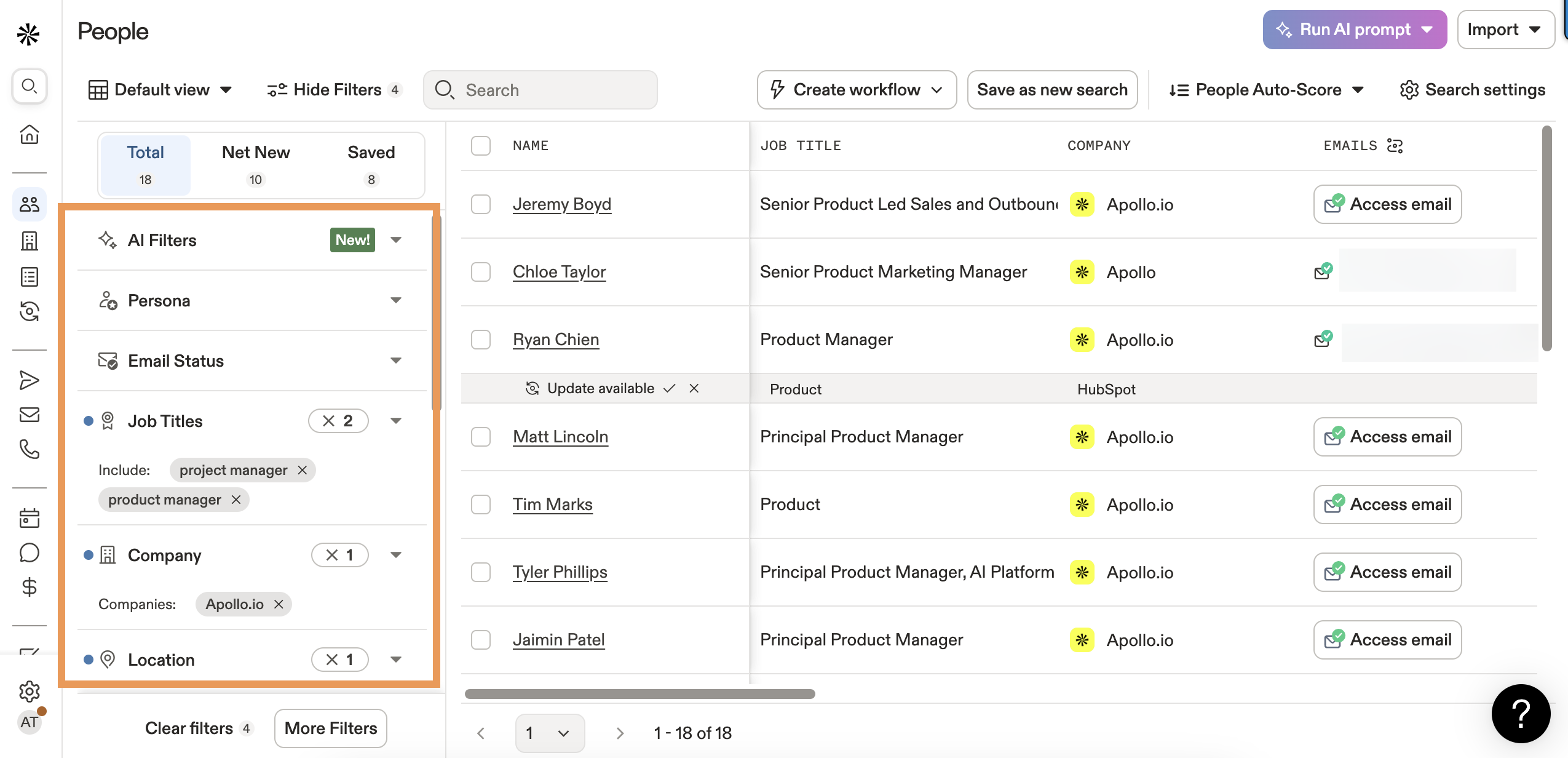
Apollo is the obvious starting point for budget-conscious teams that want prospecting and basic sequencing in one platform. The free plan is genuinely generous - 60 mobile credits and 120 email credits per month, plus access to the full database of 275M contacts and 60M companies. Paid plans run $49-$119/user/month billed annually.
Where Apollo shines is breadth. It's a prospecting tool, a sequencer, a dialer, and a basic CRM all in one. For a solo AE or a 5-person team that can't afford five separate tools, that consolidation is real value.
Where Apollo falls short is data accuracy. The 65-80% email accuracy range means you're bouncing 1 in 5 to 1 in 3 emails. At 500 emails a week, that's 100-175 bounced contacts eroding your sender reputation. For teams running high-volume outbound, the "savings" on Apollo's pricing get eaten by deliverability damage. If you're trying to fix bounce rates and protect deliverability, start with an email deliverability guide and work backward into your data layer.
ZoomInfo
Why it wins: The largest B2B database at 420M+ contacts, with the deepest US coverage and the most mature intent data product. If you're a 200+ rep enterprise org running ABM plays, ZoomInfo's breadth is hard to replicate.
Key tradeoff: You're paying for a platform, not a data tool. A mid-market contract runs $14,000-$35,000+ per year with rigid annual commitments. The #1 complaint on Reddit and G2? Paying for modules you don't use - intent, chat, workflow features that sit untouched while you just need the search bar. Users also report outdated contact information despite the premium price.
Cognism - Strong EMEA coverage with phone-verified mobile numbers and GDPR compliance baked in. Typically $1,000-$3,000/month. If you're selling into the UK or EU, Cognism's European data is better than ZoomInfo's. Skip it if your ICP is US-only.
Lusha - Simple Chrome extension with accurate phone numbers and a free plan. Paid plans from $29/user/month. Good for individual AEs who need quick lookups, but the database depth doesn't compete for scaled prospecting.
Sales Engagement - Sequencing That Doesn't Annoy Buyers
The fact that neither Outreach nor Salesloft publishes pricing is endlessly frustrating. You're committing to a tool your entire team will live in daily, and you can't even see a price before talking to sales. Both platforms know this is annoying. Neither seems to care.
Outreach
Pros:
- Unmatched orchestration power for complex, multi-threaded sequences
- Deep Salesforce integration that syncs activities bidirectionally
- Best-in-class A/B testing for messaging optimization
- Strongest option for high-volume SDR/AE teams running 200+ touches per day
Cons:
- Steep learning curve - expect months, not weeks, to full adoption
- Requires dedicated admin resources to maintain workflows
- Pricing runs ~$100-130/user/month, with enterprise deals pushing $120-150/user/month
- Overkill for teams under 20 reps
Salesloft
Pros:
- Faster onboarding - weeks versus months for Outreach
- Strong coaching visibility with built-in conversation intelligence
- AI-powered forecasting included in higher tiers
- More intuitive UI that reps actually adopt without hand-holding
Cons:
- Less sequencing depth for complex multi-stakeholder plays
- Pricing ~$75-125/user/month for core tiers, up to $175+/user/month for advanced
- Onboarding fees of $3K-$5K on top of per-seat costs
Look: if you're a mid-market team (20-100 reps) that values coaching and fast ramp, pick Salesloft. If you're a high-volume outbound machine with a dedicated RevOps team, Outreach earns its complexity. And if you're already in HubSpot? Sales Hub Professional includes sequences at $100/user/month - less powerful, but zero integration headaches. If you want a practical rollout plan, follow an Implementing a Sales Engagement Platform playbook before you sign.
Conversation Intelligence - Turning Calls Into Closed Deals
Gong
Gong is the gold standard in conversation intelligence, and it knows it. The platform captures calls, analyzes talk patterns, surfaces deal risks, and gives managers coaching insights that genuinely improve win rates. We've watched teams transform their discovery calls within a quarter of implementing Gong.
But here's the uncomfortable truth: Gong is a luxury for teams under 50 reps.
At ~$250/user/month all-in (platform fee plus per-seat licensing), a 20-seat deployment runs $60,000/year. Implementation takes 8-12 weeks. That's a six-figure commitment in time and money before a single rep gets value. For enterprise sales orgs with complex deal cycles and dedicated enablement teams, Gong pays for itself. For everyone else, the ROI math gets shaky fast.
Chorus - Stagnated since the ZoomInfo acquisition. Now a ~$40/user add-on that requires ZoomInfo infrastructure. Users consistently report it can't identify contextually similar phrases or understand nuance. It's a checkbox feature inside a platform deal, not a standalone product worth evaluating.
Fireflies.ai - The budget play that delivers outsized value. At ~$19/user/month, it handles automated transcription, meeting summaries, action items, and searchable call libraries. You won't get Gong's deal intelligence or coaching workflows, but for AEs who need their calls recorded, transcribed, and searchable, Fireflies covers the core use case at a fraction of the cost.
Revenue.io - Worth a look if you're Salesforce-native. G2 rating of 4.8/5 with real-time coaching during live calls, not just post-call analysis. Pricing runs ~$50-85/user/month. A strong middle ground between Fireflies and Gong.
Revenue Intelligence and Forecasting
Clari dominates this category, but it's a management tool masquerading as a rep tool.
The core forecasting module runs $100-120/user/month. Stack on Copilot for conversation intelligence ($60-110/user/month) and Groove for engagement ($50-80/user/month), and you're looking at $200-310+ per user per month - plus $15,000-$75,000 in implementation fees.
The G2 reviews tell a consistent story: executives love Clari's clean rollups and pipeline visibility. Reps tolerate it. One verified G2 reviewer put it perfectly: "Over the past year Clari has done several updates which has caused all of my views to reset." That's the kind of thing that makes reps stop logging in.
For mid-market teams, HubSpot Sales Hub Professional includes forecasting at ~$100/user/month - less sophisticated than Clari, but it lives inside the CRM your reps already use daily. That matters more than most RevOps leaders want to admit. If you’re comparing options, use a shortlist of sales forecasting solutions before you default to Clari.
Digital Sales Rooms - The Most Underrated AE Category
If you're still sending prospects a PDF deck and a DocuSign link in separate emails, you're leaving deal intelligence on the table.
Digital sales rooms replace static attachments with trackable, interactive hubs where buyers can view content, interact with proposals, and see next steps - and you can see exactly who opened what, when, and for how long. If you’re new to the category, start with a clear definition of a digital sales room and why many rollouts fail.
Gartner predicts DSRs will become standard in B2B sales within the next 18 months. I'd argue they're already expected for enterprise AEs running multi-stakeholder deals.
Trumpet holds the #1 DSR spot on G2 with a 4.9/5 rating. UK-based, launched in 2021, and built around "Pods" - personalized buyer hubs that give you 3x more engagement insights than static decks. The visual personalization is fast to set up, and the free trial lets you test before committing. Pricing runs ~$30-50/user/month for paid tiers.
Dock takes a broader approach - lifecycle workspaces that span sales, onboarding, and renewals. At $49/user/month (minimum 5 seats plus a $250 platform fee), it's positioned for startups and mid-market teams that want one workspace tool instead of three. G2 rating: 4.8/5.
Flowla - AI-powered dynamic deal rooms focused on mid-funnel automation. Worth a look if you want AI to handle the room setup. Pricing ~$35-55/user/month.
Aligned - SOC 2 compliant, configurable DSR for structured enterprise sales motions. Pricing ~$40-60/user/month. Good for teams with rigid sales processes that need the room to enforce methodology.
Sales Enablement - Content Your Buyers Will Actually Open
Here's a checklist before you spend $30,000+ on an enablement platform:
- Do you have 50+ reps? If not, you probably don't need Highspot, Seismic, or Showpad.
- Do you have a dedicated enablement team to manage content? If not, the platform will become a graveyard.
- Are reps actually struggling to find content, or are they struggling with content quality? A $50K platform won't fix bad collateral.
| Tool | Price | G2 Rating | Min. Contract |
|---|---|---|---|
| Highspot | ~$45-65/user/mo | 4.7/5 | ~$30K/yr |
| Seismic | ~$40-75/user/mo | 4.7/5 | ~$30K/yr |
| Showpad | ~$50-65/user/mo | 4.6/5 | ~$30K/yr |
All three are enterprise-grade platforms targeting 1,000+ employee companies. They follow the same CMS + LMS model, none publish pricing, and all require annual commitments.
For teams under 50 reps, Dock doubles as a lightweight enablement tool alongside its DSR functionality - at $49/user/month with no $30K floor, it covers most of what mid-market teams actually need. If you’re building enablement from scratch, align it with your sales process optimization work so content maps to stages.
Proposals, E-Signatures, and CPQ - Closing the Deal Faster
| Tool | Free Tier | Paid From | Best For |
|---|---|---|---|
| PandaDoc | Free e-sign | ~$35/user/mo | Proposals + e-sign |
| DocuSign | No | ~$25/user/mo | E-sign only |
| Proposify | No | ~$49/user/mo | Branded proposals |
| Qwilr | No | ~$35/user/mo | Interactive proposals |
Every tool in this category serves the same goal: eliminate friction between verbal agreement and signed contract. The faster you move from "yes" to ink, the fewer deals stall in legal limbo. If you want the full framework, map this stage to the steps to close a sale.
PandaDoc wins on value for AEs who need proposals and e-signatures in one tool. The free e-sign tier is legitimately useful for early-stage teams, and the paid plan at ~$35/user/month includes templates, content libraries, analytics, and CRM integrations. It's the proposal tool we recommend most often for teams under 100 reps.
DocuSign from ~$25/user/month is the safe choice if you only need signatures. Everyone's seen a DocuSign envelope, which reduces buyer friction. But it doesn't do proposals, so you'll need a separate tool for that.
Proposify at ~$49/user/month creates polished, branded proposals with approval workflows. Worth it if proposal design is a competitive differentiator in your sales process. Skip it if your deals close on a standard order form.
Qwilr at ~$35/user/month takes a different approach - interactive, web-based proposals that feel more like landing pages than documents. Strong for teams selling design-forward products.
LinkedIn Sales Navigator - The Social Selling Layer
| Tier | Monthly (Annual) | Key Additions |
|---|---|---|
| Core | $89.99/mo | Advanced search, 50 InMails |
| Advanced | $139.99/mo | TeamLink, buyer intent |
| Advanced Plus | ~$1,600/seat/yr | CRM sync, embedded profiles |
Core is enough for most AEs. You get advanced search filters, 50 InMails per month, lead recommendations, and alerts when prospects change jobs or post updates. That's the 80/20 of social selling.
Advanced adds TeamLink (see who your colleagues are connected to) and buyer intent signals. Worth it for teams running coordinated ABM plays. Advanced Plus at ~$1,600/seat/year adds CRM integration - useful, but expensive for what amounts to a data sync. If you’re running ABM, it helps to ground this in account-based selling best practices.
How AI Is Changing the AE Toolkit in 2026
Reps who effectively partner with AI tools are 3.7x more likely to meet quota. That's not a marginal improvement - it's a different league. And tools with AI-native architectures achieve 2.8x higher ROI than legacy tools with AI bolted on.
Meanwhile, 84% of customers say being treated like a person, not a number, is key to winning their business. AI that enables personalization beats AI that enables volume every time.
Here are the five AI use cases actually changing AE workflows right now:
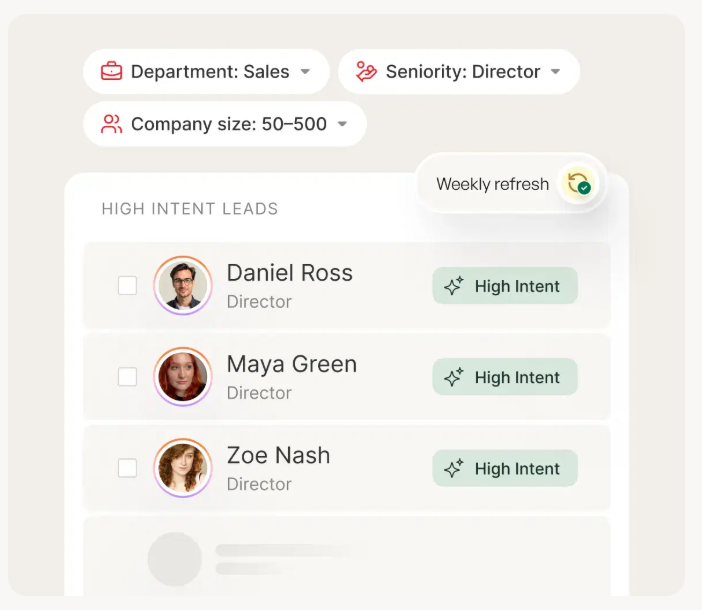
Lead scoring and opportunity prioritization. AI surfaces which accounts are most likely to close based on engagement patterns, firmographic signals, and intent data - letting AEs filter prospects by active buying signals before they ever pick up the phone. (If you want to go deeper, see lead scoring.)
Personalized outreach at scale. AI generates first drafts of emails, call scripts, and social touches tailored to each prospect's role, industry, and recent activity. The rep edits and sends - cutting research time from 15 minutes to 2. If you need a system for this, use a personalized outreach workflow.
Conversation intelligence and real-time coaching. Tools like Gong analyze call patterns post-hoc; newer platforms like Revenue.io offer live suggestions during calls. 83% of AI-using sales teams saw revenue growth versus 66% without.
Forecasting and deal risk detection. AI flags deals that are stalling based on engagement velocity, stakeholder coverage gaps, and historical patterns. This is where Clari and HubSpot's forecasting tools earn their keep.
Proposal and contract support. AI auto-populates proposals with relevant case studies, pricing configurations, and terms based on deal context. PandaDoc and Proposify are both building this out aggressively.
The best AI sales tools share one trait: they reduce non-selling time without adding complexity. If an AI feature requires a 3-week training program, it isn't saving anyone time.
How to Build Your AE Tech Stack Without Wasting Money
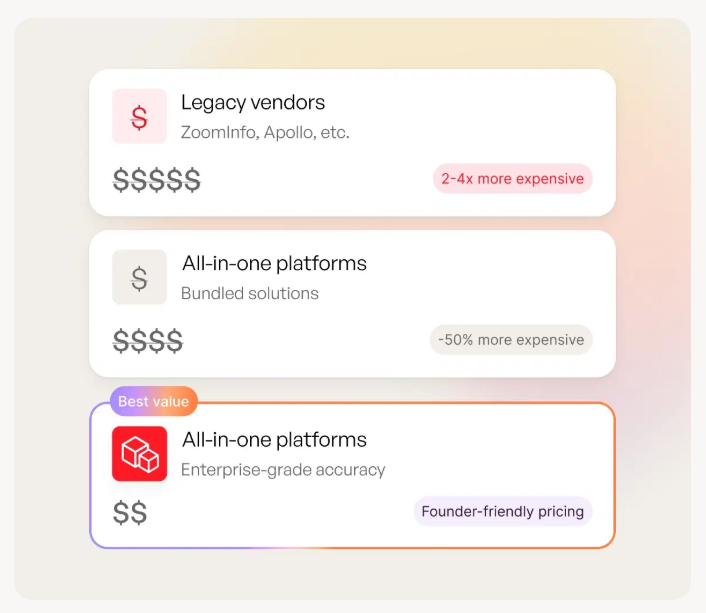
The average AE stack runs 8.3 tools at $187/rep/month. But 73% of teams have overlapping tools with 40-60% functional redundancy, wasting $2,340 per rep per year. The most common overlaps: email automation plus sales engagement (35% of teams) and conversation intelligence plus video recording (28%).
Here's how to build smart.
Budget Stack (~$130-180/rep/month):
| Tool | Role | Cost |
|---|---|---|
| HubSpot CRM (free) | Pipeline management | $0 |
| Prospeo | Prospecting & data | ~$50-80/mo |
| Salesloft | Sequencing | ~$75-100/user/mo |
| Fireflies.ai | Call intelligence | ~$19/user/mo |
| PandaDoc | Proposals & e-sign | ~$35/user/mo |
Enterprise Stack (unlimited budget):
Salesforce Enterprise + ZoomInfo or Cognism + Outreach + Gong + Clari + Highspot + Trumpet. Expect $600-800+/rep/month before implementation fees.
The budget stack covers every core AE workflow. The enterprise stack adds depth in coaching, forecasting, and enablement - but only justifies the 4x price increase if you have the RevOps team to maintain it and the deal sizes to absorb the cost.
Three rules for stack decisions:
Prioritize Time to Value under 14 days. Tools that deploy in under two weeks achieve 92% one-year retention versus 67% for tools that take longer. If a vendor says "8-12 week implementation," that's a quarter of selling time lost.
Audit quarterly. Tools accumulate like browser tabs. Every quarter, ask: "Which tools did every rep use last week?" Anything that doesn't make the list gets evaluated for removal.
Start with data quality. Bad contact data poisons every downstream tool. Your sequencer, your CRM, your forecasting - all of it degrades when 1 in 3 emails bounce. Fix the data layer first. Everything else gets easier. If you’re cleaning and standardizing records, consider dedicated data enrichment services instead of manual updates.
Mistakes That Kill Your Stack ROI
1. Buying tools designed for management, not reps. Clari's forecasting is beautiful for the CRO. The AE who has to manually update deal fields to feed it? They're spending 30 minutes a day on data entry that doesn't close deals. Always ask: "Does this tool make the rep's day easier or harder?"
2. Ignoring data quality. We've seen teams spend $35,000/year on ZoomInfo and still run 25%+ bounce rates because nobody's verifying the data before it hits sequences. A 35% bounce rate doesn't just waste credits - it damages your domain reputation, which tanks deliverability for every email your company sends. If you need benchmarks and fixes, start with email bounce rate.
3. Stacking overlapping tools. If your sales engagement platform has email automation and you're also paying for a standalone email automation tool, you're burning money. Map every tool's features against each other before renewal season.
4. Chasing features over adoption. The best tool is the one your team actually uses. A $250/user/month platform with 30% adoption delivers less value than a $19/user/month tool with 95% adoption. I've run bake-offs where the "best" tool on paper lost because reps refused to log into it.
FAQ: Account Executive Tools
How much should an AE tool stack cost in 2026?
A well-built 5-7 tool stack should run $150-250 per rep per month. The industry average is $187/rep/month across 8.3 tools, but 73% of teams waste money on overlapping features. Aim for fewer tools with higher adoption rather than more tools with broader feature lists.
Do account executives need a separate prospecting tool if they have a CRM?
Yes - CRMs manage pipeline, they don't build it. Contact data inside your CRM decays at roughly 30% per year. A dedicated prospecting tool with fresh, verified contact data and a short refresh cycle is critical for any outbound-dependent team running sequences.
What's the single highest-ROI tool for an AE?
Your prospecting data source delivers the highest measurable ROI because bad data poisons every downstream activity - sequences bounce, forecasts skew, and reps waste hours chasing dead contacts. Teams that fix data quality first typically see 20-35% improvements in reply rates within 30 days.
Are digital sales rooms worth it for account executives?
DSRs replace static PDFs with trackable buyer hubs showing who viewed what and when, and Trumpet reports 3x more engagement insights versus static decks. For AEs running multi-stakeholder deals above $25K ACV, DSRs are quickly becoming a competitive requirement rather than a nice-to-have.