

How to Build Automated Email Follow-Up Campaigns for Lead Generation
You set up a five-step follow-up sequence last quarter. Open rates looked fine. Then bounce rate crept past 4%, replies dried up, and your sending domain quietly landed on a blocklist. The automation worked perfectly - it just automated failure.
Building automated email follow-up campaigns for lead generation isn't about more touches. 42% of all replies come from follow-ups, not the first email. Skip them or do them badly, and you're cutting your pipeline nearly in half. The strategy isn't more follow-ups. It's better ones.
Three Pillars Before You Touch a Sequencer
Deliverability foundation. Authenticate your domains with SPF, DKIM, and DMARC. Warm up inboxes over 7+ weeks. Cap sends at 50 emails per day per inbox. No shortcuts here - every shortcut costs you a domain eventually. If you need a deeper checklist, use this email deliverability checklist.
Sequence design. Build 4-7 touch sequences spaced 3-4 days apart. Every follow-up adds new value. No "just bumping this" emails. Ever. For more examples, see these best sales sequences.
Data quality. Verify your list before enrolling anyone. Bounces above 2% wreck sender reputation and kill the entire campaign. Aim for 98% email accuracy as your baseline - anything less and you're building on sand. If you're comparing vendors, start with this list of email ID validators.
2026 Follow-Up Benchmarks
The Instantly 2026 benchmark report analyzed millions of cold emails and found an average reply rate of 3.43%. Top-quartile performers hit 5.5%+. Elite campaigns exceed 10%.
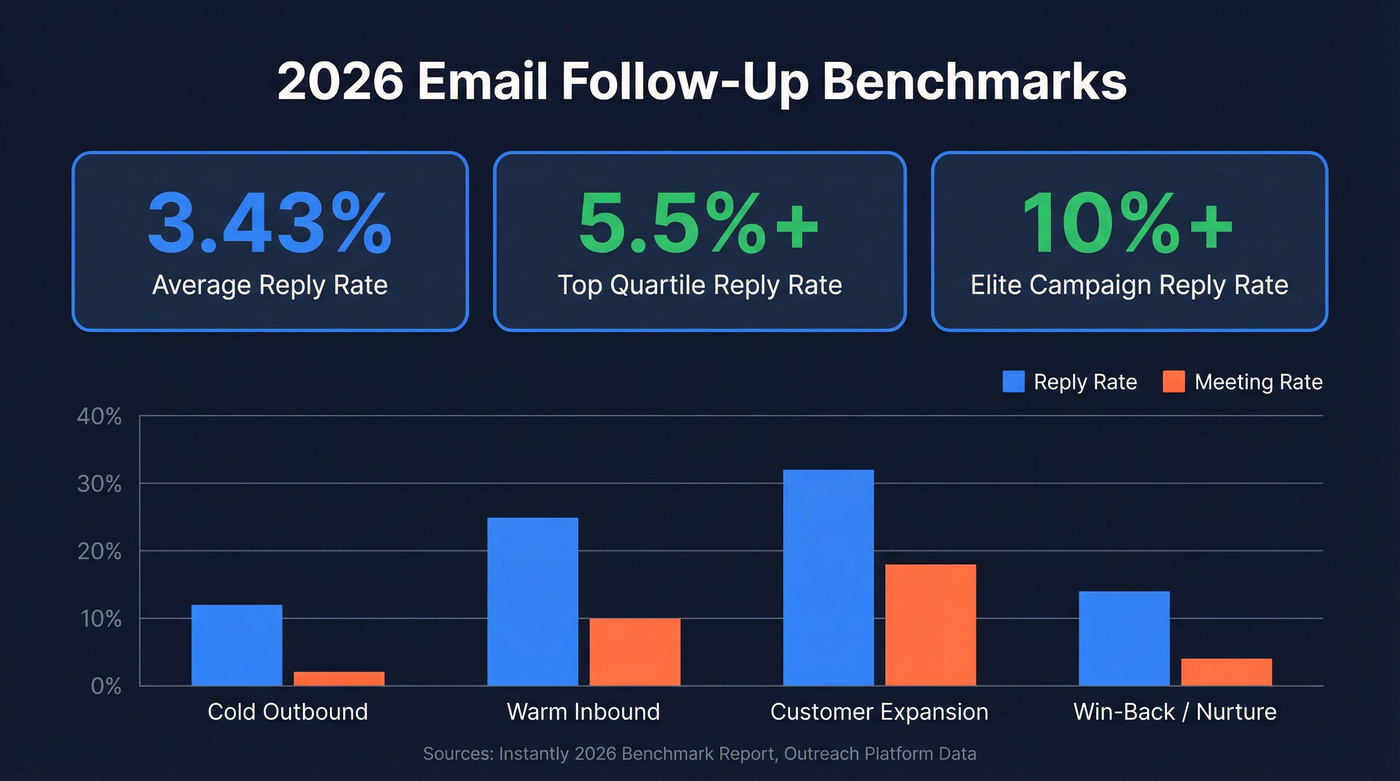
Outreach's platform data tells a similar story from the enterprise side: 27.2% average open rate, 2.9% reply rate, 2.8% bounce rate, and 1.1% opt-out rate. Those averages mask huge variation by sequence type:
| Sequence Type | Reply Rate | Meeting Rate |
|---|---|---|
| Cold outbound | 8-15% | 1-3% |
| Warm inbound | 20-30% | 8-12% |
| Customer expansion | 25-40% | 15-20% |
| Win-back/nurture | 10-18% | 2-5% |
If your cold outbound is below 8% reply rate, the problem is almost always deliverability or list quality - not your copy. Fix the infrastructure before you rewrite subject lines. (If you want a playbook, start with cold email tactics.)

Deliverability Guardrails
Set these up before you send a single automated follow-up. SPF, DKIM, and DMARC must all be configured on every sending domain. If even one is missing, inbox providers treat your mail as suspicious.
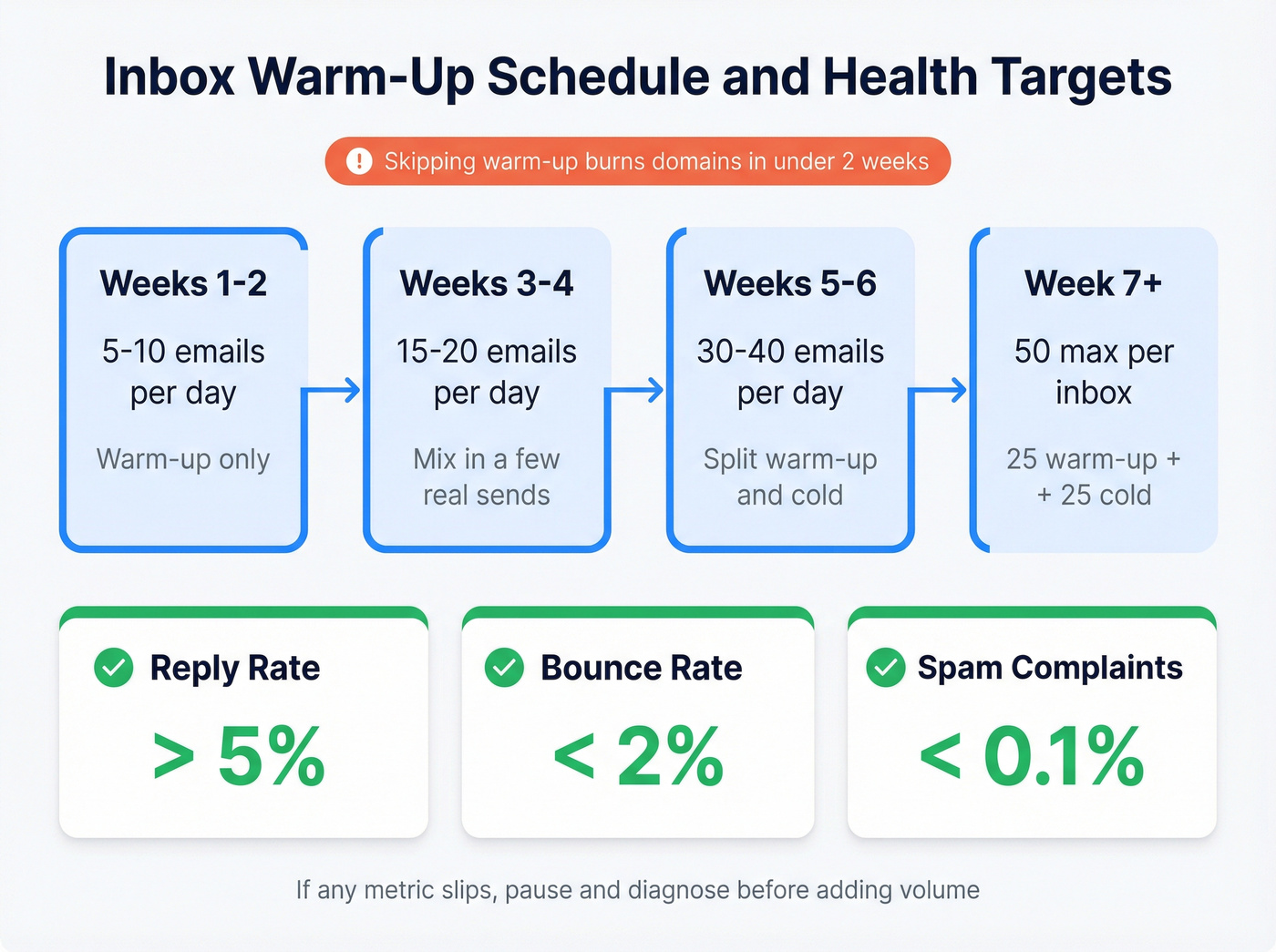
Warm up your inboxes on this schedule:
| Week | Daily Volume | Notes |
|---|---|---|
| 1-2 | 5-10 emails | Warm-up only |
| 3-4 | 15-20 | Mix in a few real sends |
| 5-6 | 30-40 | Split warm-up and cold |
| 7+ | 50 max per inbox | 25 warm-up + 25 cold |
We've watched teams skip the warm-up phase and burn through domains in under two weeks. It's the most common mistake we see - and the most expensive, because once a domain's reputation tanks, you're starting over from scratch with a new one. If you're building this from scratch, follow an automated email warmup plan.
Your health targets: reply rate above 5%, bounce rate under 2%, spam complaints under 0.1%. If any slip, pause and diagnose before adding volume.
For scaling, use domain and inbox rotation so no single domain absorbs all the risk. Monitor with Google Postmaster Tools, Microsoft SNDS, and Sender Score. And skip open-rate tracking on cold email entirely - tracking pixels trigger spam filters, and the deliverability cost outweighs the data you get back. (More on that here: does open tracking hurt cold email.)
Automation Workflow Design
Every follow-up campaign needs clear entry points, branching logic, and exit conditions. Without these, you're just blasting emails on a timer.
Entry triggers fall into four buckets: inbound form submissions, outbound prospect lists, pricing-page visits, and webinar or event attendees. A practical threshold we use: lead score crosses 100 points OR the prospect visits your /pricing or /request-demo page.
ENTRY: Lead score ≥100 OR visits /pricing or /request-demo
  → Tag: MQL → Notify sales
  → Day 1: Rep email + case study / 15-min call offer
  → Day 3: Feature/pain-point follow-up
  → Day 5: Value asset (ROI calculator, whitepaper)

EXIT: Reply or meeting booked → Stop sequence, hand to sales

NO REPLY: → Move to long-term nurture (monthly cadence)
Stop the sequence on reply, meeting booked, unsubscribe, or manual removal. If none of those fire after the sequence completes, move the contact to a long-term monthly nurture. Don't let them fall into a black hole. If you need a full system, use this drip campaign flowchart.

You just read that bounces above 2% wreck sender reputation and kill entire campaigns. Prospeo's 5-step email verification delivers 98% accuracy - refreshed every 7 days, not 6 weeks. That's how teams like Snyk dropped bounce rates from 35% to under 5% and generated 200+ new opportunities per month.
Stop automating failure. Start with emails that actually land.
Cadence and Copy That Earns Replies
Timing: 4-7 touches spaced 3-4 days apart. Launch new sequences on Monday. Tuesday and Wednesday are peak days, with Wednesday consistently highest for engagement. Use Friday to triage auto-replies, bounces, and out-of-office responses.
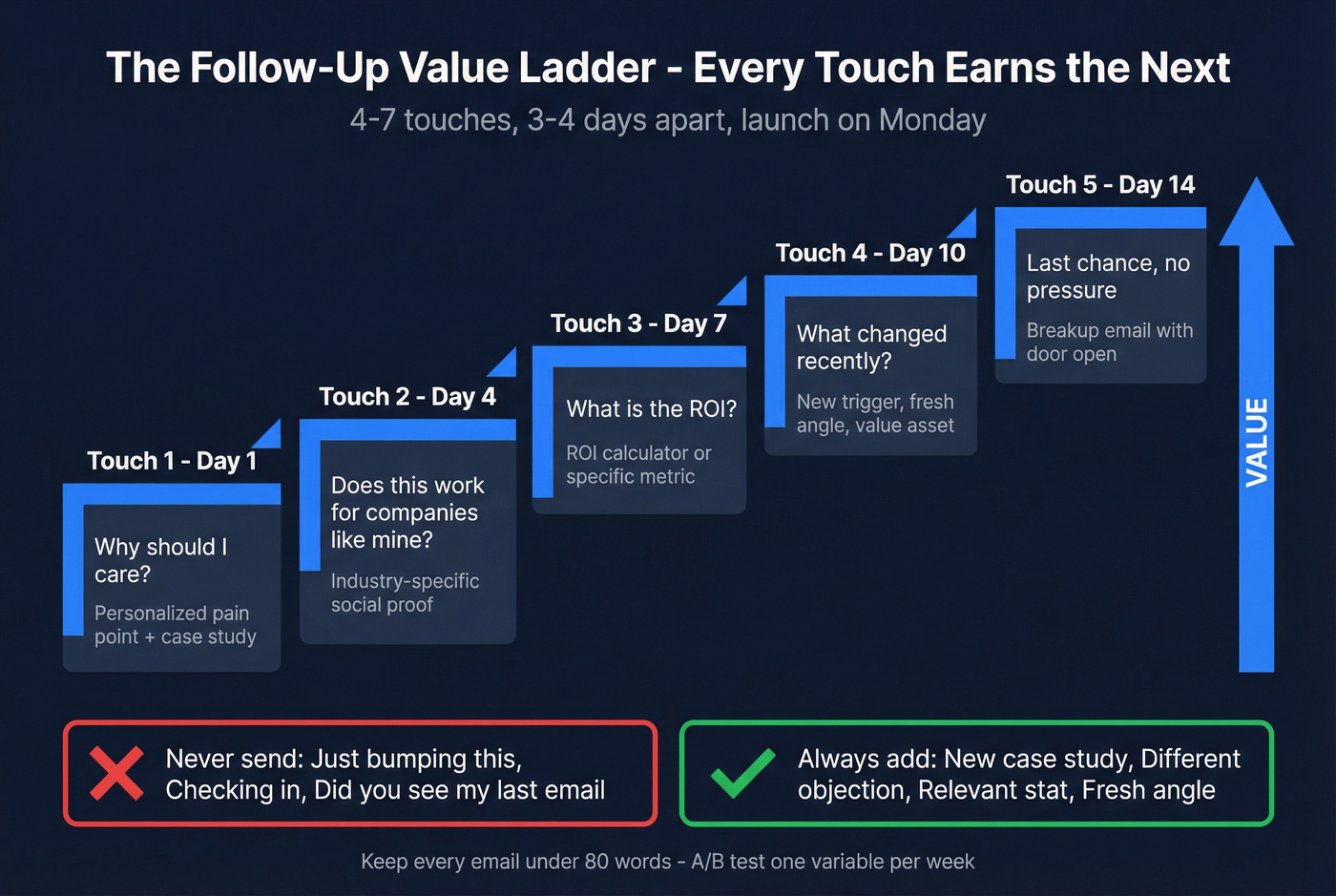
Here's the thing about "bump" emails: they train prospects to ignore you. "Just wanted to make sure you saw my last email" adds zero value and signals that you've got nothing new to say. Every follow-up must climb the value ladder - a new case study, a different objection addressed, a relevant stat, a fresh angle on their problem.
Keep emails under 80 words. A/B test one variable weekly - subject line, CTA, or opening line. Not all three at once. If you want a tighter framework, use this sales email structure.
Format matters more than most people think. Follow-ups should look like real replies: plain text, short paragraphs, reply-threaded when possible. The moment an email looks like a marketing blast, it gets treated like one.
Address a different objection in each touch. Touch 1 handles "why should I care." Touch 2 tackles "does this work for companies like mine." Touch 3 answers "what's the ROI." Each email earns the right to send the next one.
Follow-Up Templates
Cold Lead - Social Proof
Subject: Quick result from [similar company]
Hi {{firstName}}, {{similar company}} used [your solution] to [specific result, e.g., "cut prospecting time by 60%"]. They were dealing with the same {{pain point}} your team likely faces. Worth a 15-min look?
Demo No-Show - Reschedule
Subject: Missed you - here's what we planned to cover
Hey {{firstName}}, no worries on missing the call. Here's a 2-min walkthrough of what we planned to demo - {{link}}. If it's relevant, grab 15 minutes this week: {{calendar link}}.
Pricing-Page Visitor - ROI Angle
Subject: The math on {{solution category}}
{{firstName}}, if your team's evaluating {{solution category}}, most teams in your space see [specific ROI metric, e.g., "3-5x pipeline increase within 90 days"]. I built a quick ROI estimate for {{company}} - want me to send it over?
Win-Back - New Trigger
Subject: Things changed since we last talked
Hi {{firstName}}, since we last connected we've [launched X / added Y / published Z result]. Given {{company}}'s recent [trigger: funding round, new hire, expansion], figured it was worth a fresh look. Open to a quick call?
Why Data Quality Makes or Breaks Automation
Let's run the math most guides skip. A 5-step sequence sent to 200 verified prospects at a 3.43% reply rate generates roughly 7 replies. At a 40% meeting conversion, that's about 3 meetings from a single batch.
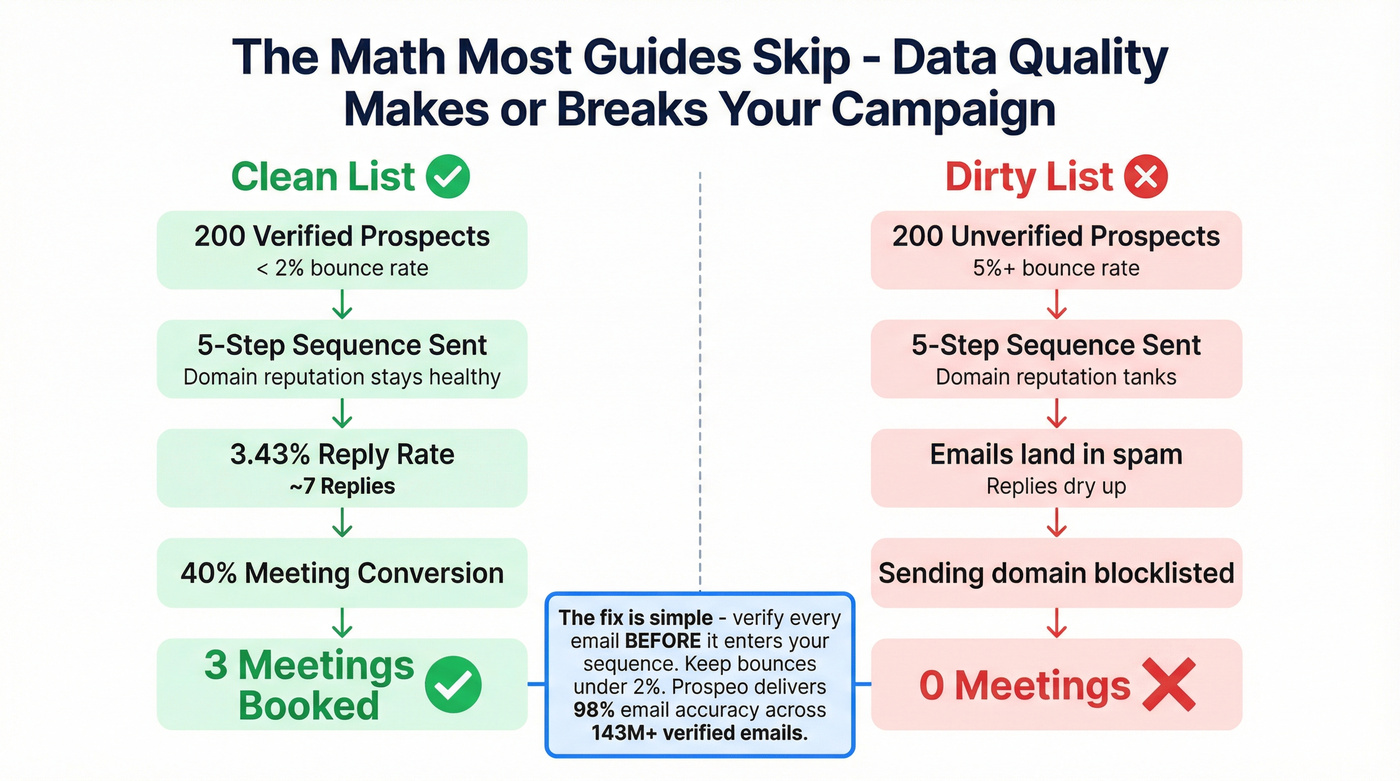
That math only works if your list is clean.
One bad batch with a 5% bounce rate can damage your sending domain for weeks, turning those 3 meetings into zero. I've watched teams rewrite subject lines for weeks when the real issue was 30% of their list was dead on arrival. They didn't have a copy problem or a sequencer problem. They had a data problem. If you want the underlying benchmarks, see B2B contact data decay.
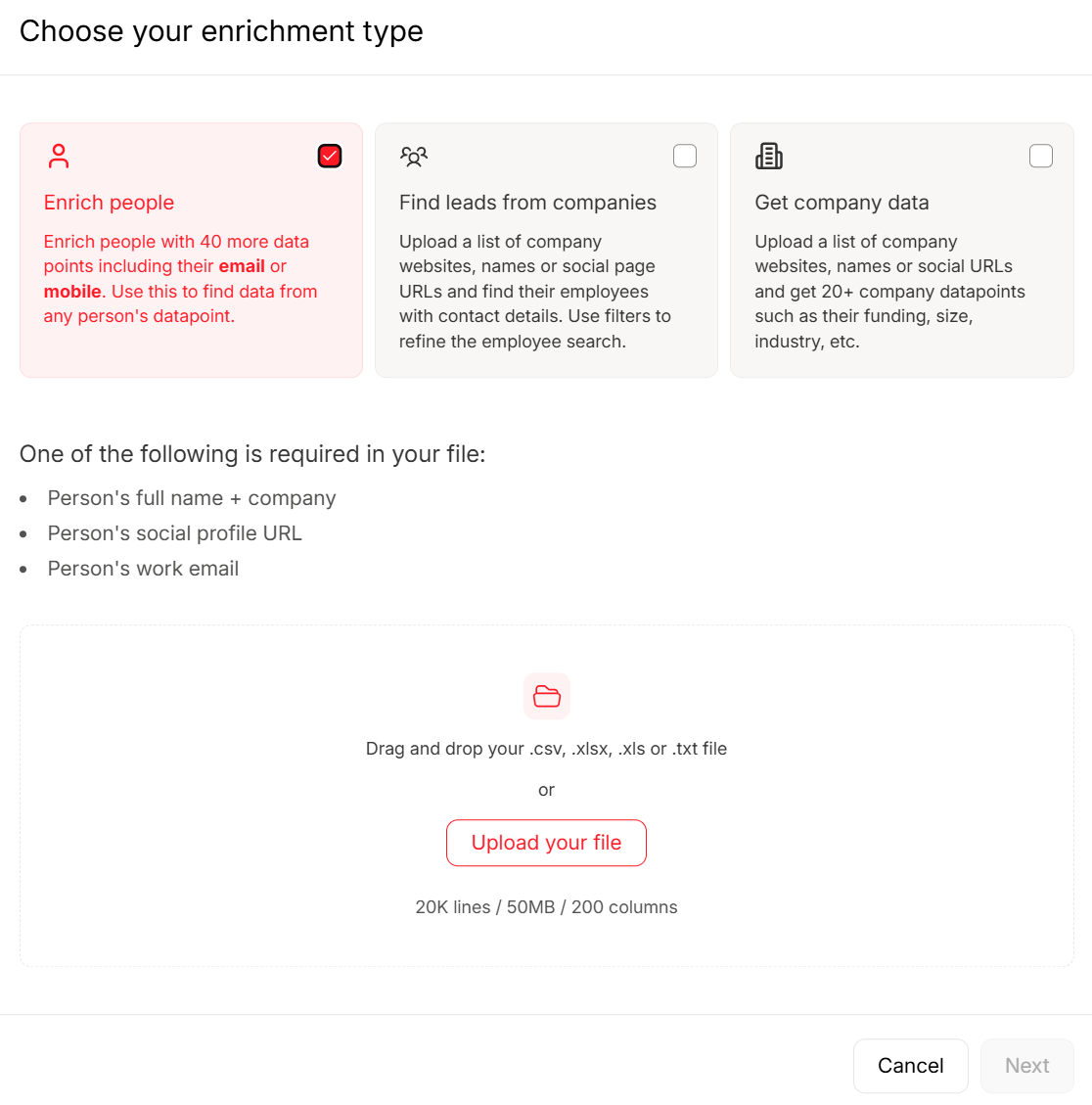
The threshold is clear: keep bounces under 2%. That means verifying every email address before it enters any automated sequence. Not after. Not "eventually." Before. Tools like Prospeo run 5-step verification with catch-all handling and spam-trap removal, delivering 98% email accuracy across 143M+ verified emails. The workflow is straightforward: upload a CSV or paste a URL, verify in real time, enrich missing fields like job title, company, and phone, then push clean leads directly to your sequencer via native integrations with HubSpot, Salesforce, Smartlead, Instantly, Lemlist, Clay, Zapier, and Make.
For context on what clean data does in practice: one agency using verified data went from a 35% bounce rate to under 3%, maintained 94%+ deliverability across all client accounts, and never flagged a single sending domain. That's the difference between data you trust and data you hope works.
Tool Stack for Follow-Up Automation
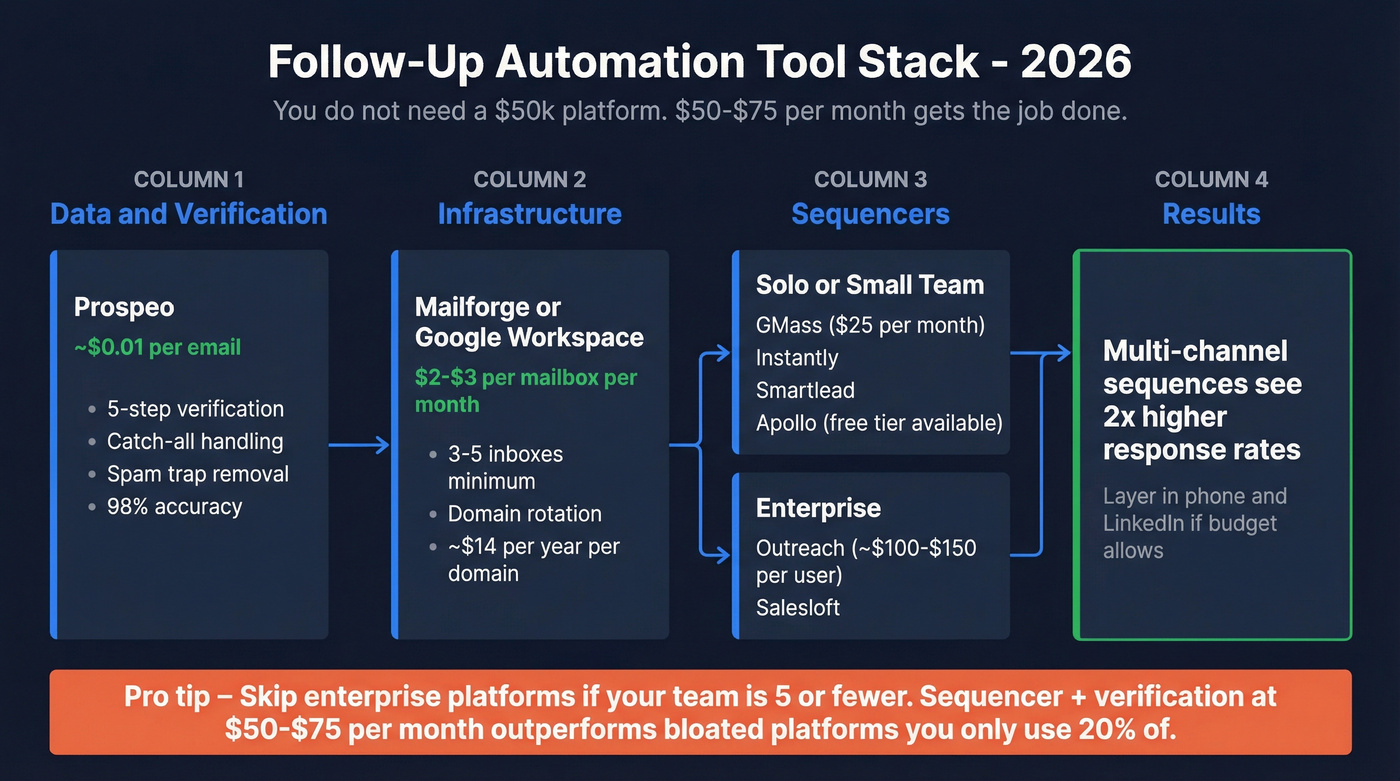
Pricing as of Q1 2026. You don't need a $50k platform:
| Category | Tools | Starting Price |
|---|---|---|
| Infrastructure | Mailforge, Google Workspace | $2-$3/mailbox/mo |
| Sequencers | GMass, Instantly, Smartlead, Saleshandy, Apollo | $25-$100+/mo |
| Sales engagement (enterprise) | Outreach, Salesloft | ~$100-$150/user/mo |
| Data verification | Prospeo | ~$0.01/email; free tier available |
For infrastructure, budget $2-$3 per mailbox per month plus about $14/year per sending domain. You'll want 3-5 inboxes minimum to rotate volume safely.
Sequencers are where most spend goes. GMass starts at $25/mo and works directly inside Gmail - solid for solo operators. Instantly and Smartlead handle inbox rotation and sending at scale. Apollo offers a free tier with 100 credits/month, paid plans from $59/user/mo with a built-in lead database.
For enterprise teams running multi-channel sequences, Outreach and Salesloft are the standard. Multi-channel approaches see 2x higher response rates than email-only sequences, so if budget allows, layering in phone and other touches is worth the added complexity. If you're evaluating options, start with these cold email marketing tools.
Skip the enterprise platforms if you're a team of five or fewer. The sequencer-plus-verification combo at $50-$75/mo total will outperform a bloated platform you're only using 20% of.
That 5-step sequence you're building needs 200 verified prospects to generate 3 meetings. Prospeo gives you 300M+ profiles with 30+ filters - buyer intent, technographics, job changes, funding - so every contact entering your sequence is worth the send. At $0.01 per email, bad data is a choice.
Build follow-up lists that convert, not lists that bounce.
FAQ
How many follow-ups should I send?
Four to seven touches is the sweet spot. 42% of all replies come from follow-ups, not the initial email. Beyond seven, returns diminish sharply unless every touch introduces genuinely new information.
What reply rate should I expect from cold email in 2026?
Average cold email reply rate is 3.43%. Top performers hit 5.5%+ and elite campaigns exceed 10%. Warm inbound sequences should target 20-30%. If you're below these benchmarks, prioritize deliverability fixes and list verification before rewriting copy.
How do I keep follow-ups out of spam?
Authenticate with SPF, DKIM, and DMARC - all three. Warm up each inbox over 7+ weeks, cap sends at 50/day per inbox, and verify every address before sending. Keep bounce rates under 2%, which is the threshold where sender reputation starts degrading.
What's the best day to send follow-up emails?
Tuesday and Wednesday consistently outperform other days, with Wednesday showing the highest engagement. Launch new sequences on Monday so your first follow-up lands mid-week. Reserve Friday for triaging bounces, auto-replies, and out-of-office responses rather than sending new touches.