Automation vs Manual Follow-Ups (2026): When to Use Each - and the Hybrid That Wins
Your "automated follow-up machine" works right up until it doesn't. Then you get spam placement, fewer replies, and a domain reputation mess that drags down everything else.
The win in 2026 isn't picking a side in automation vs manual follow ups. It's using automation for the boring, repeatable work and forcing humans into the moments that move deals.
This one's for B2B teams running inbound + outbound follow-ups (SDRs/AEs/CSMs + RevOps).
What you need (quick version)
Deliverability + compliance (non-negotiable)
- Keep spam complaints under 0.3% (Gmail/Yahoo bulk-sender threshold).
- Use one-click unsubscribe and honor it within 2 days (Google/Yahoo requirement).
- Authenticate before scaling: SPF + DKIM + DMARC.
Pick your follow-up mode by scenario
- Inbound high-intent (demo/pricing/contact sales): manual-first, 1-5 minute SLA. Automation's only a confirmation + routing backstop.
- Outbound cold: hybrid by default - automate baseline touches, then escalate to a human on intent/objection signals.
- Renewals / CS: manual for risk + negotiation; automation for reminders and no-response loops.
- Event/webinar: automate recap instantly; humans focus on the engaged segment.
Cadence guardrails
- Start with 6 touches over ~3 weeks, then shorten if negative signals rise.
- Treat touches 4-6 as earned by relevance; don't "just add follow-ups" to fix weak targeting.
One practical step before you scale volume
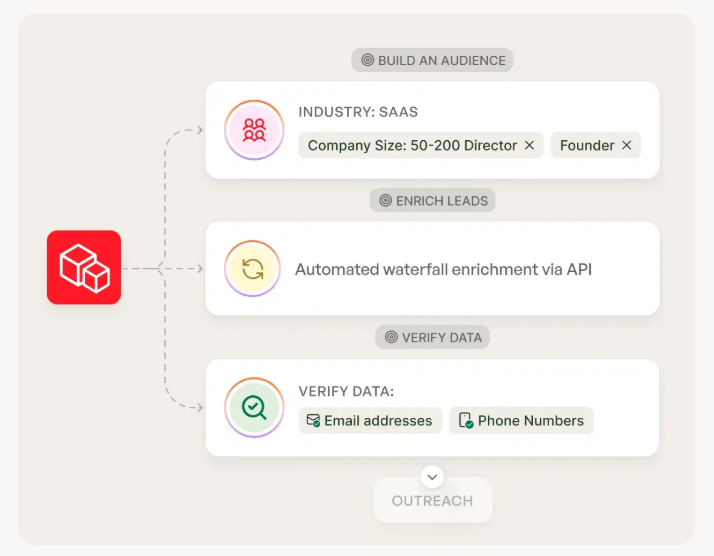
Verify and enrich your list first. Prospeo, "The B2B data platform built for accuracy", verifies emails at 98% accuracy, which keeps bounces down and protects your domain when automation ramps.
Automation vs manual follow ups: why it's the wrong question
The real question isn't "automation vs manual follow ups." It's: what can be automated safely, and where do humans have to stay in the loop?
Automation wins at consistency. It never forgets a touch, never misses a reminder, and never lets a lead sit untouched because someone got pulled into meetings.
Manual follow-up wins at context. Humans can read tone, handle nuance, and move a deal forward with one well-timed sentence.
Most teams don't fail because they chose the wrong mode. They fail because they automated the wrong step--usually the high-stakes moments (pricing, security, competitor mentions) and left the low-stakes stuff (routing, reminders, CRM hygiene) to "rep discipline." That's also where teams overestimate how far CRM follow-up automation can replace human judgment: it's great for repeatable admin and reminders, but it can't make decisions in deal-critical conversations.
Here's the ugly truth: when automation fails, it fails at scale. A bad subject line sent manually to 20 people is a lesson. The same mistake shipped to 20,000 is a deliverability incident.
Look, if you're selling a lower-priced product, you probably don't need "more automation." You need cleaner targeting and faster human response on the few leads that matter.
Automation amplifies whatever you feed it - good or bad.
Automation vs manual follow ups (comparison table): manual, automated, hybrid
Manual and automation aren't opposites. They're ingredients. Hybrid is what serious teams converge on because it balances speed, coverage, and judgment.

Also: manual follow-ups aren't "free." A genuinely good manual touch takes 5-10 minutes once you include context switching and CRM updates, which is why "we'll just do it manually" collapses the moment volume rises.
| Mode | Best for (be specific) | Biggest risk | Setup you must have | Human handoff rule |
|---|---|---|---|---|
| Manual | Inbound demo requests, renewals at risk, procurement/security threads | Slow + inconsistent coverage | SLA + tasks + "next step date" discipline | Always (you are the system) |
| Automation | Top-of-funnel outbound coverage, reminders, no-response loops | Spam placement + "sequence fingerprints" | SPF/DKIM/DMARC, unsubscribe, suppression lists | Escalate on intent, objections, risk keywords |
| Hybrid | Most B2B inbound routing + outbound at scale | Process drift (handoffs get fuzzy) | Triggers + QA + weekly review | Explicit triggers + owner + SLA |
KPIs to track (keep it simple):
- Primary: reply rate, meeting rate, positive reply rate
- Deliverability health: bounce rate (operator baseline: <2%), spam complaint rate
- Audience fit: unsubscribe rate by segment and by step number
Decision matrix by scenario (with SLAs)
Speed-to-lead is where manual follow-up still embarrasses most automated systems. Chili Piper's benchmarks are blunt: leads are 21x more likely to qualify when you respond fast versus waiting 30+ minutes, and average B2B response time is still 42 hours.

Inbound high-intent leads (demo/pricing/contact sales)
Run manual-first
- SLA: respond in 1-5 minutes. Put it on a dashboard. Miss it and you're donating pipeline.
- Automation backstop: instant confirmation + calendar link + routing + internal reminders if no human touch happens fast.
Skip automation-only
If someone asked for a demo, a 6-step nurture sequence isn't "efficient." It's negligent.
Outbound cold (new pipeline)
Default: hybrid
- Automate touches 1-3 for coverage.
- Escalate to a human when the prospect gives you anything to work with.
Escalation triggers that actually matter
- Positive intent: timing, budget, evaluation, intro, "send info"
- Objections: already have a vendor, not a priority, "stop emailing me"
- High-stakes language: pricing, security, legal, procurement
- Multi-threading: wrong persona but right account
Skip heavy manual at scale
If reps hand-write every first touch for hundreds of prospects/week, quality drops and burnout spikes. Pick your human moments instead.
Customer success / renewals
Manual-first moments
- Usage decline, champion change, support escalations
- Negotiation: pricing, terms, legal/security review
Automation role
- Reminder sequences, QBR scheduling nudges, no-response loops
- Internal nudges: tasks when health score drops or renewal date approaches
Event/webinar follow-up
Automation role (immediate)
- Recap + recording + resources within minutes
- Segment: attended live, watched replay, registered/no-show
Manual role (targeted)
Follow up personally with: asked a question, stayed >50%, visited pricing, booked a meeting.

Automation amplifies whatever you feed it - good or bad. Feed it 98% verified emails from Prospeo and watch bounces stay under 2% while your sequences scale safely. Bad data at volume is a deliverability incident waiting to happen.
Clean data before you automate. Start with 100 free credits.
Benchmarks: how many follow-ups is too many?
Two things are true at the same time:

- Most replies come early.
- Follow-ups still create incremental lift.
The trick is separating incremental lift from incremental risk.
Belkins analyzed 16.5M cold emails across 93 domains (Jan-Dec 2024). Their headline: the highest reply rate (8.4%) comes from just one email, and performance declines with each follow-up. More importantly, sending 4+ emails in a sequence more than triples unsubscribe and spam complaint rates.
That risk isn't evenly distributed. SMBs tolerate more touches if the message is relevant and the offer is clear, while enterprise punishes persistence faster because filters are stricter, stakeholders are more numerous, and generic follow-ups get flagged quickly.
Yesware's analysis of 10M email threads lands on a practical cadence: six touches over ~three weeks, with follow-ups around days 3/7/11/15/19/22.
In our experience, the best starting point is six touches with tiered rules: SMB can often handle the full cadence, mid-market needs tighter segmentation, and enterprise needs fewer emails plus earlier channel switching. If unsubscribes spike after touch 3, you don't "power through." You cut the sequence and fix targeting.
Channel switching beats "more emails." If email stalls after touch 2-3, a short call, a tight social message, or a quick "who owns this?" forward often outperforms another "just bumping this" email without stacking deliverability risk.
Automation only works if you can deliver (2026 guardrails)
If you send at any real scale, deliverability isn't a nice-to-have. It's the whole game.

Google/Yahoo bulk-sender rules (practical version)
Litmus has a clear summary of Google/Yahoo's bulk-sender requirements. If you send >5,000 emails/day to Gmail/Yahoo addresses, you need SPF, DKIM, and DMARC, plus one-click unsubscribe, unsubscribes honored within 2 days, and spam complaints under 0.3%.
Deliverability hygiene (the stuff teams skip, then regret)
- Maintain a suppression list (unsubs, complainers, hard bounces) and enforce it everywhere.
- Avoid role accounts (info@, sales@) and watch for spam traps.
- Run seed tests when you change domains, copy patterns, or tracking settings.
- Warm domains like adults: gradual volume ramps, stable sending patterns, and clean lists.
Red flags that mean "pause automation today"
- Bounce rate creeping above ~2%
- Sudden open/reply drop across multiple campaigns
- Unsub spikes after follow-up #3 or #4
- You're adding more personalization tokens instead of fixing targeting
The hidden variable: list quality (where most teams lose)
I've watched teams spend weeks arguing about sequencers while quietly sending to a list that was never verified. One client had a "simple" problem - reply rates fell off a cliff - and it turned out their bounce rate had drifted up after a list import, which started a slow inboxing death spiral that no copy tweak could fix.
Fix the inputs before you scale.
If you're scaling outbound, it also helps to understand contact data decay so your list doesn't rot between refreshes.
Pricing anchors (so you can budget without a sales call)
- Outreach automation tools: entry tiers often land around $50-$150/user/month; mid-market setups commonly end up $300-$1,500/month as seats and sending infrastructure grow. Instantly's Hypergrowth Outreach plan is $97/month.
- Data verification/enrichment: Prospeo works out to ~$0.01 per email.
A simple cost/throughput model (manual vs automation)
If you want a clean way to decide "manual vs automated," do the math for a week.

Back-of-napkin model
- Assume 7 minutes per quality manual follow-up (writing + context + CRM).
- If a rep does 40 follow-ups/day, that's 280 minutes/day (~4.7 hours).
- Over 5 days, that's 23+ hours/week--more than half a full-time week spent just pushing follow-ups.
Now compare that to a hybrid setup: automation handles baseline touches and reminders, one operator (RevOps or a senior SDR) spends 2-4 hours/week maintaining templates, triggers, and deliverability hygiene, and reps spend their time on human-only moments like replies, objections, multi-threading, and moving deals forward with clear next steps.
That's why "manual everything" feels high-quality for two weeks and then quietly turns into missed touchpoints and stale pipeline. Hybrid isn't trendy. It's the only model that survives volume.
Why automated follow-ups underperform (and how to fix it)
Automated follow-ups underperform for two predictable reasons: deliverability signals and automation fingerprints.
Operators notice this constantly: sequences can "feel different" in the inbox even with identical copy. The usual suspects are tracking, link redirects, and overly consistent patterns.
Problem: tracking artifacts
- Open tracking uses a pixel.
- Click tracking uses redirect links.
Fix
- Turn off open tracking when deliverability's fragile.
- Disable click tracking (avoid redirect links).
- Keep links minimal. If you need one, make it count.
Problem: robotic consistency
Same send time every day. Same structure. Same closings. Same "just bumping this" language.
Fix
- Use 2-3 send windows (don't be a metronome).
- Rotate 2-3 closings and subject patterns.
- Stop stuffing tokens everywhere; one clean personalization beat's enough.
- Add manual steps for high-stakes touches (pricing/security/competitor).
Problem: automating the wrong step
Teams automate the moment that requires judgment and keep the admin work manual. That's backwards.
Fix
- Automate routing, reminders, and no-response nudges.
- Keep humans for intent, objections, and next-step alignment.
We've run bake-offs where the "best" sequence tool didn't matter. The winning team removed tracking, tightened the list, and inserted two manual steps in the right places.
Process beat software.
The hybrid workflow that actually scales (HITL operating model)
Hybrid only works when the handoff rules are boringly specific.
The branching recipe (copy/paste this logic)
Use a baseline 3-touch automated sequence, then branch:
- If no open after 48-72 hours: resend with a new subject line or stop and re-target (don't keep hammering).
- If open but no click/no reply: send a shorter reply-style follow-up with one question.
- If click but no reply: human step - send a 2-3 sentence note referencing the clicked asset and propose a next step.
- If reply is positive ("timing," "send info," "loop in"): human step within 15 minutes; ask one question + propose one meeting option.
- If reply is an objection ("already have vendor," "not priority"): human step; handle objection and offer a clean off-ramp.
- If reply is "remove me" / unsubscribe: suppress immediately across all tools.
- If out-of-office: pause sequence, reschedule to the return date, and avoid stacking touches while they're away.
Failure modes + fixes (quick checklist)
- Failure mode: reps ignore handoffs. Fix: assign an owner + SLA for "human-needed" tasks.
- Failure mode: too many triggers. Fix: start with 5 triggers max; add only after weekly review.
- Failure mode: sequences keep running after replies. Fix: enforce reply detection + thread-level stop rules.
- Failure mode: step 4 causes unsub spikes. Fix: delete step 4 before you rewrite step 1.
Real talk: if you can't explain your handoff rules in 60 seconds, your reps won't follow them.
Manual follow-ups that don't fall apart (the "next-step rule")
Manual follow-up fails for one reason: it becomes optional. Optional work doesn't get done.
The fix is simple and strict: every active record has a dated next step. No next step date = pipeline risk.
The playbook
- Every call/email ends with a next step: "Send security doc by Thu," "Follow up next Tue," "Loop in finance next week."
- Put the date in the CRM task, not in your head.
- If the prospect won't commit, your next step is still dated: "Close the loop on Friday."
Weekly audit checklist (30 minutes)
- Open opportunities with no next task
- Tasks overdue >7 days
- 10-record spot check for stage drift (stage doesn't match reality)
If your manual follow-up process needs a training deck, it won't survive Q4.
Cadence + copy templates (manual-first and automation-safe)
Mobile reality check: 81% of emails are opened on mobile (Sopro). Long emails don't feel "thoughtful" on a phone. They feel like work.
Sopro's macro benchmark puts typical cold email response rates around 1-5%, with an average around 5.1% depending on list quality and relevance. If you're below 1%, the fix's almost never "add more follow-ups." It's targeting, offer clarity, and deliverability hygiene.
If you want a cleaner baseline to start from, use a proven follow-up email sequence strategy and then tune by segment.
Operator rules I'd enforce
- Keep cold follow-ups under ~80 words.
- Use one CTA.
- Reply-style follow-ups usually beat formal reminders because they read like a real thread.
- Don't optimize for opens; optimize for positive replies.
A safe baseline cadence (email-only)
Use Yesware's spacing as the default, then apply Belkins' risk guardrail.
- Day 0: Email #1 (initial)
- Day 3: Follow-up #1
- Day 7: Follow-up #2
- Day 11: Follow-up #3
- Day 15: Follow-up #4
- Day 19 or 22: Breakup / last touch
Belkins' guardrail: once you're at 4+ emails, unsubscribe/spam risk jumps. If you're not getting engagement by touch 3, your targeting or offer's the problem, not your persistence.
Automation-safe follow-up templates (reply-style)
Template 1: "Quick bump + choice"
Subject: Re: {{topic}}
Hi {{first_name}} - quick bump.
Worth a 10-min chat this week, or should I close the loop?
-- {{your_name}}
Template 2: "Tiny value + one question"
Subject: Re: {{topic}}
{{first_name}}, quick thought: teams like {{peer_company}} usually fix {{pain}} first because it leads to {{outcome}}.
Is {{pain}} on your radar this quarter?
-- {{your_name}}
Template 3: "Permission + redirect"
Subject: Re: {{topic}}
If I'm reaching the wrong person, who owns {{area}} on your side?
Happy to reach out to them instead.
-- {{your_name}}
Manual-first templates for high-intent moments
Template 1 (inbound demo request): respond in 1-5 minutes
Subject: Re: your request
{{first_name}} - saw your note and can help.
Two quick questions so I bring the right resources:
- What are you using today for {{category}}?
- What deadline's driving this?
If it's easier, grab a time here: {{calendar_link}}
-- {{your_name}}
Template 2 (objection: "already have a vendor")
Subject: Re: {{topic}}
Totally fair.
When you say "covered," is it working well for:
- {{use_case_1}}
- {{use_case_2}}
If yes, I'll back off. If not, I can share what we see others do differently in 10 minutes.
-- {{your_name}}
Channel-mix note (email + call/SMS)
Email-only's simplest for compliance and scale. If you add call/SMS, do it intentionally: use phone for high-intent or stalled deals, and treat SMS as consent-first and geography-aware.
If you're going multi-channel, build it as a system (not random touches) with multi-channel sales automation.
Compliance and risk (email + SMS) - the non-negotiables
Automation doesn't just scale conversion. It scales liability.
Email (baseline rules)
Do
- Include one-click unsubscribe
- Process unsubscribes within 2 days
- Keep identity clear (real sender, real address, no deceptive subject lines)
Don't
- Hide unsubscribe behind a login
- Keep emailing after an opt-out
SMS (where teams get burned)
TCPA penalties run $500-$1,500 per violation--per message. At scale, that's catastrophic.
Highest-standard compliance posture (the only sane one)
- Get prior express written consent for marketing texts sent via automated systems.
- Keep audit trails: consent source, timestamp, opt-out logs.
- Quiet hours baseline: 8am-9pm local time.
- Florida FTSA is stricter: 8am-8pm and a 3/day cap.
Courts have disagreed on key TCPA interpretation issues in recent years. Until there's clearer appellate guidance, operate to the highest standard and sleep at night.
What to measure (stop optimizing for opens)
Open rate's the most seductive metric in follow-ups - and the least reliable.
Open tracking relies on a 1-pixel image loading. Many corporate inboxes block images by default, so "no open" often means "no pixel," not "no interest." Click tracking uses redirect links, which can hurt trust and deliverability.
Measure what actually matters:
KPI hierarchy
- Primary: reply rate, meeting rate, positive reply rate
- Deliverability health: bounce rate, spam complaint rate
- Audience fit: unsubscribe rate (especially by segment)
- Sequence quality: negative signals by step number
Instrumentation rules
- Track by segment (persona, industry, company size). Averages lie.
- If step 4 is where unsub spikes, fix step 4 or delete it. Don't "power through" with more touches.
If you want to go deeper on measurement, use a tight set of sales sequence metrics so you don't drown in dashboards.
You just read that 4+ emails triple spam complaints. The fastest fix isn't fewer touches - it's better targeting. Prospeo's 30+ filters and intent data let you reach the right buyers so every follow-up earns its place in the sequence.
Stop burning domain reputation on the wrong prospects.
FAQ
Is automation or manual follow-up better for inbound leads?
Manual follow-up's usually best for inbound leads because speed and context drive conversions; aim for a 1-5 minute response SLA and use automation only for instant confirmation, routing, and reminders. If you can't reliably hit that SLA, your "automation" is just covering a process gap.
How many follow-up emails should I send before stopping?
For most B2B outbound, start with 6 touches over about three weeks, then cut steps when unsubscribes or complaints rise. Belkins found that 4+ emails in a sequence can more than triple unsubscribe and spam complaint rates, so touches 4-6 should be earned by relevance and segmentation.
Why do my automated sequences get fewer opens than manual emails?
Automated sequences often carry tracking pixels, redirect links, and consistent sending patterns that create deliverability and "automation fingerprint" issues. Turn off open tracking when you're fragile, disable click tracking, vary send windows, and insert 1-2 human steps when prospects show intent or raise objections.
Should I verify emails before running automated follow-ups?
Yes. Verification reduces bounces and protects your domain reputation when you increase volume, which directly impacts inbox placement and replies. Prospeo verifies emails at 98% accuracy, refreshes records every 7 days, and returns enrichment data at scale (83% enrichment match rate), making it a practical first step before you ramp sending.
Summary: the real answer to automation vs manual follow ups
Automation vs manual follow ups isn't a binary choice in 2026. Automate the repeatable baseline (routing, reminders, no-response loops) and keep humans for intent, objections, and deal-critical moments, then protect the whole system with clean data, tight suppression, and deliverability guardrails.
If you do one thing before scaling, fix your list quality so automation multiplies good inputs instead of bad ones.