

Best B2B Data Enrichment Services in 2026 (Tested)
Last quarter, we ran a four-tool enrichment bake-off. The "premium" database bounced 34% of emails on the first sequence, torched a sending domain, and set the outbound program back six weeks. The cheapest tool in the test had better deliverability. The B2B data enrichment services you pick aren't a back-office decision - they're a pipeline decision.
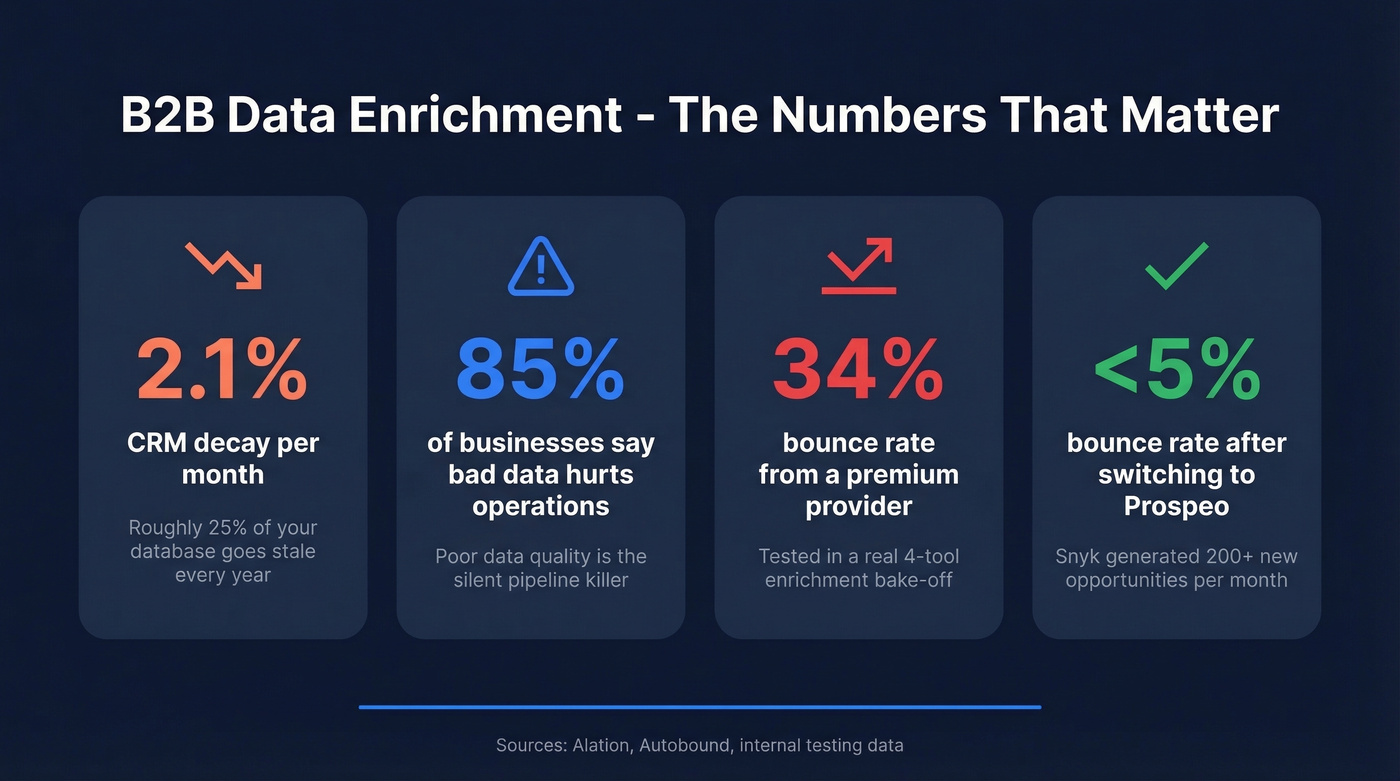
85% of businesses say poor-quality data directly harms operational efficiency. CRM data decays at roughly 2.1% per month - that's about a quarter of your database going stale every year. If you're not enriching continuously, those records are dead weight by December.
Our Picks (TL;DR)
| Rank | Pick | Best For | Starting Price |
|---|---|---|---|
| 🏆 | Prospeo | Email accuracy + value | Free; ~$0.01/email |
| 2 | Clay | Waterfall enrichment | $185/mo |
| 3 | Cognism | EMEA + phone data | ~$8,000/yr |
| 4 | ZoomInfo | Enterprise-scale DB | $14,995/yr |
| 5 | Lusha | Quick Chrome lookups | Free (40 credits/mo); paid from $22.45/user/mo |
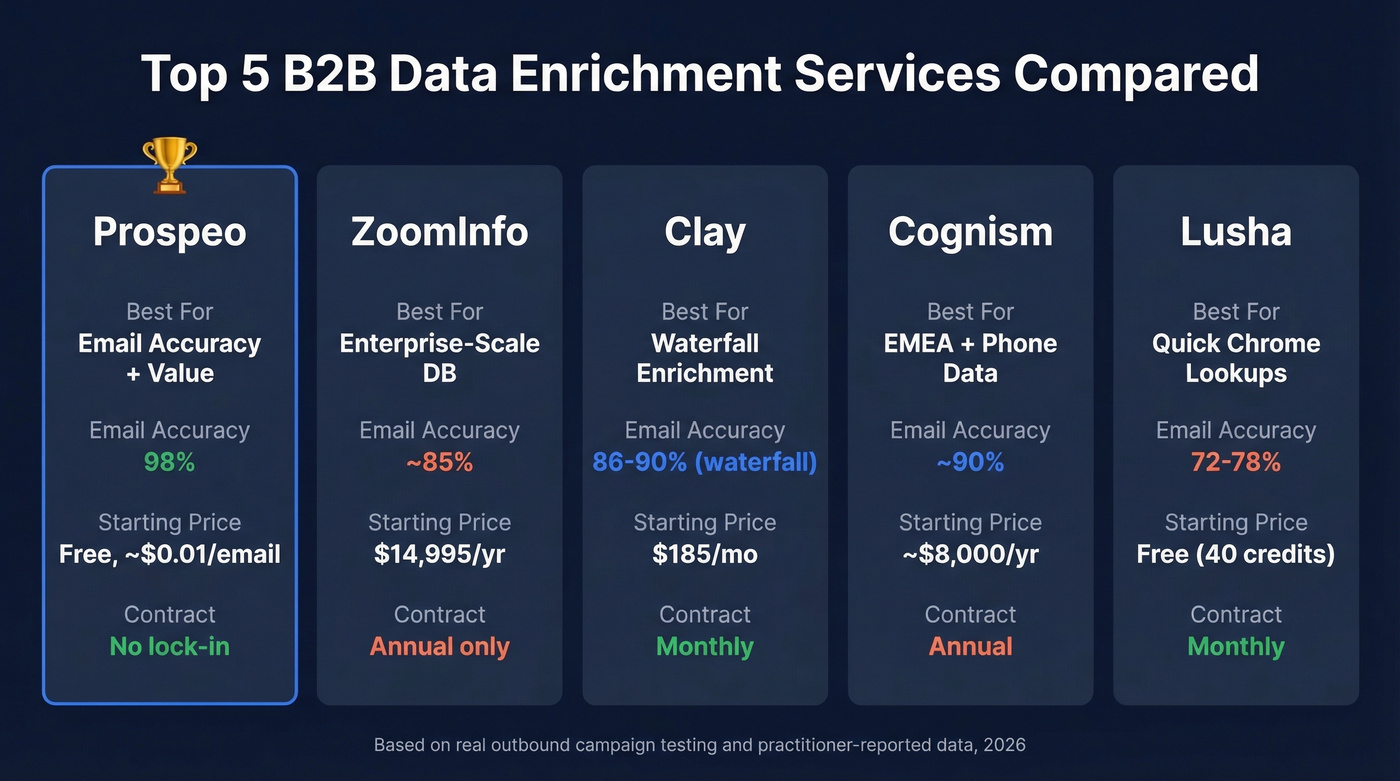
Here's the thing: ZoomInfo is still the biggest all-in-one platform. But most teams don't need all-in-one - they need accurate emails that actually land. We've tested these tools across real outbound campaigns, and the results consistently favor a two-tool stack over a single bloated platform.
Top B2B Data Enrichment Services Compared
Prospeo - Best for Email Accuracy
Use this if: You need the highest email deliverability in the market without enterprise pricing. Your outbound depends on emails that don't bounce, and you want enrichment that refreshes weekly - not monthly.
If you're still evaluating providers, start with this broader breakdown of the best B2B databases by accuracy.
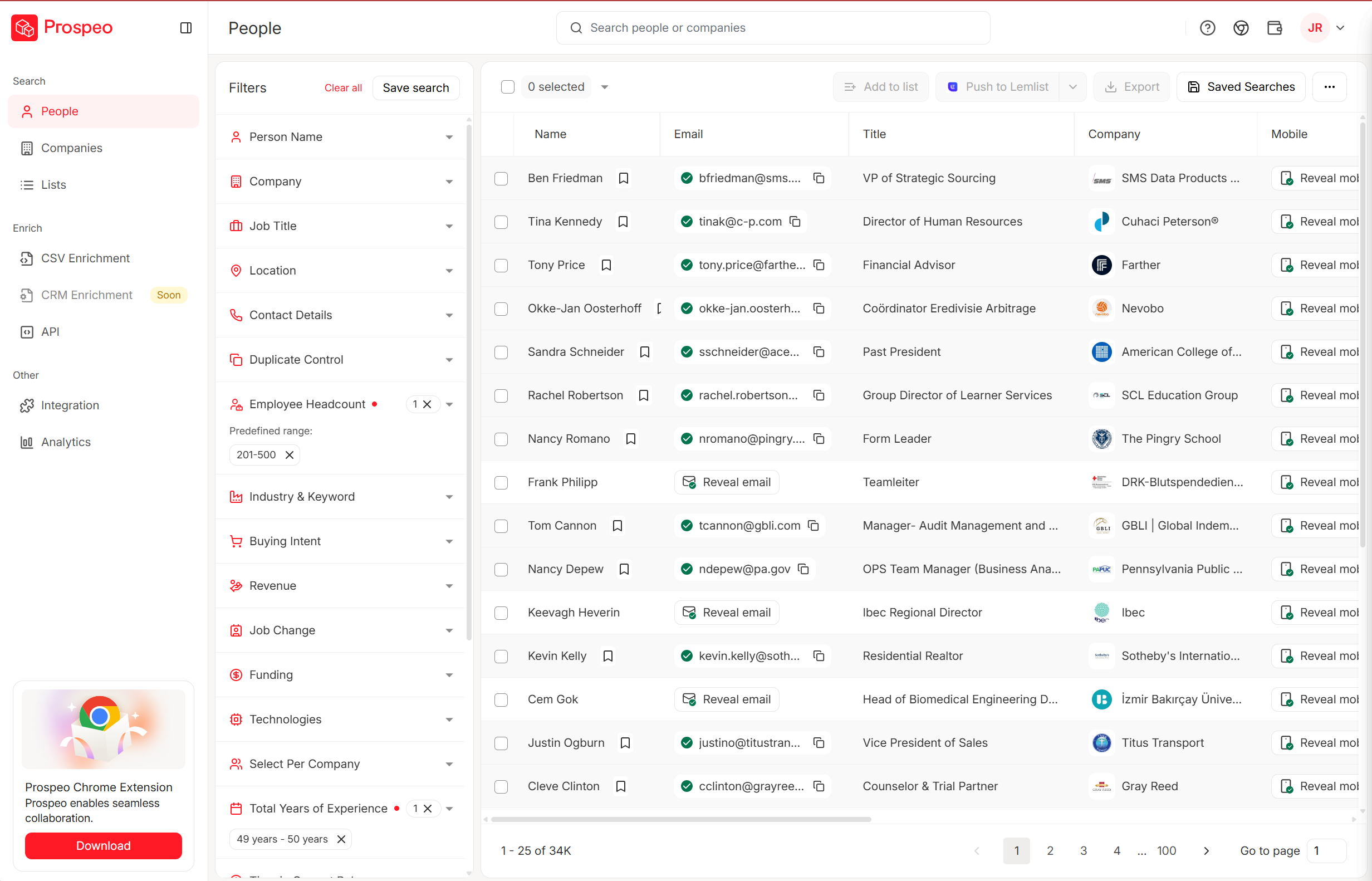
Prospeo's database covers 300M+ professional profiles with 98% email accuracy, the highest we've seen in production. The Search/Enrich API returns a 92% match rate with 50+ data points per record, and every record refreshes on a 7-day cycle. The industry average is six weeks. That gap matters when you're prospecting into fast-moving segments where people change roles constantly - a record that was accurate on Monday can be worthless by the time your sequence fires on Friday if the person just switched companies. The platform also includes 125M+ verified mobile numbers with a 30% pickup rate, directly competitive with Cognism's phone data without the enterprise price tag.
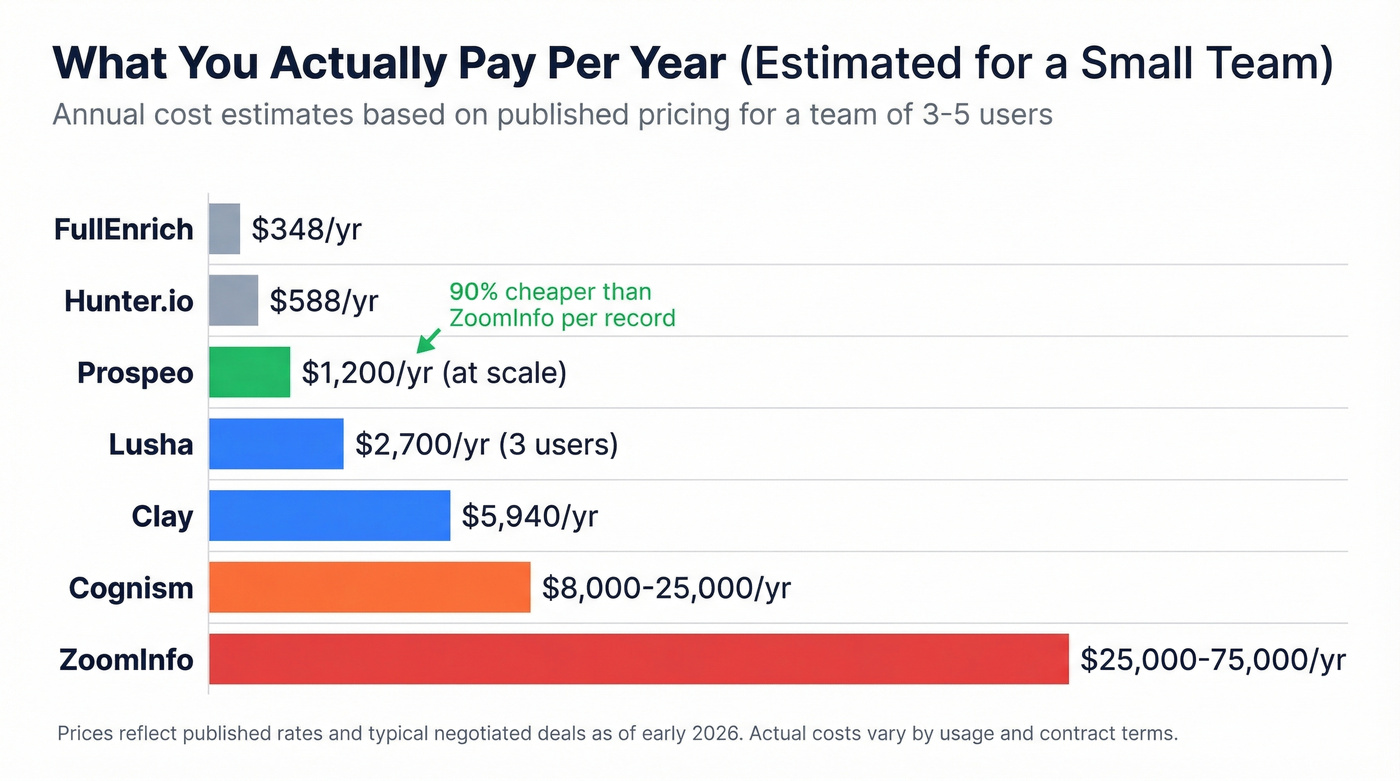
The proof is in the bounce rates. Snyk's 50-person AE team went from 35-40% bounce rates to under 5% after switching, generating 200+ new opportunities per month. At $0.01 per lead, the unit economics speak for themselves - that's 90% cheaper than ZoomInfo on a per-record basis. The free tier gives you 75 emails and 100 Chrome extension credits monthly, so you can validate accuracy before spending a dollar.
Intent data covers 15,000 topics via Bombora, and 30+ search filters include buyer intent, technographics, job changes, and headcount growth. Native integrations push directly into Salesforce, HubSpot, Lemlist, Instantly, and Clay. No annual contracts. No sales calls required.
Pair with your sequencer of choice if you need built-in sending - Prospeo is purpose-built for data accuracy, not email sequences. If you want a dedicated verification layer, compare options in our guide to the best email verifier tools.

CRM data decays 2.1% per month. Most enrichment tools refresh every 6 weeks - by then, a quarter of your records are stale. Prospeo refreshes every 7 days, returns 50+ data points per contact at a 92% match rate, and keeps bounce rates under 5%.
Run your CRM through Prospeo and see how much dead data you're sitting on.
ZoomInfo - Biggest Database, Biggest Price Tag
Use this if: You're an enterprise org that needs 260M+ contacts across 100M companies, plus intent, chat, and workflow tools under one roof - and you have the budget and ops team to implement it.
ZoomInfo is the default. It's also the most expensive option on this list by a wide margin. List pricing starts at $14,995/year for Professional+ with 3 seats, jumps to $29,995 for Advanced+, and hits $35,995 for Elite+. But list price is fiction - most teams pay $25,000-$75,000/year after negotiation, with typical discounts running 30-65% off list. Expect renewal increases of 10-20%.
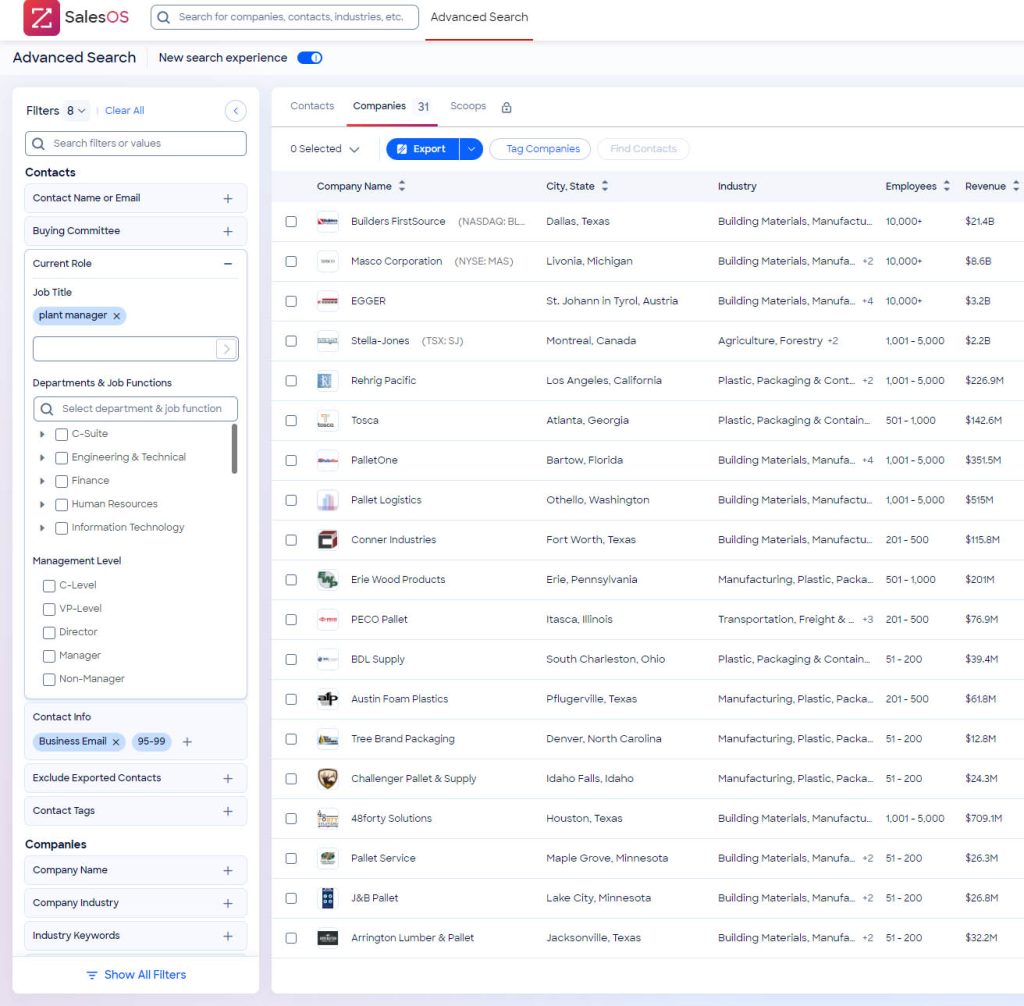
The database is genuinely massive, and US coverage is best-in-class. But accuracy isn't what you'd expect at this price point. In our experience, email accuracy lands around 85%. G2 reviews tell the same story - with 9,031 reviews at 4.5/5, "Inaccurate Data" and "Outdated Data" are the two most common complaints, each mentioned 232 times.
Skip this if: You're under 50 seats and your primary use case is email-first outbound. You'll pay for intent, chat, and workflow features your team won't touch.
If you're building a leaner stack, this guide to pay-as-you-go B2B data can help you avoid annual lock-ins.
Clay - Best for Waterfall Enrichment
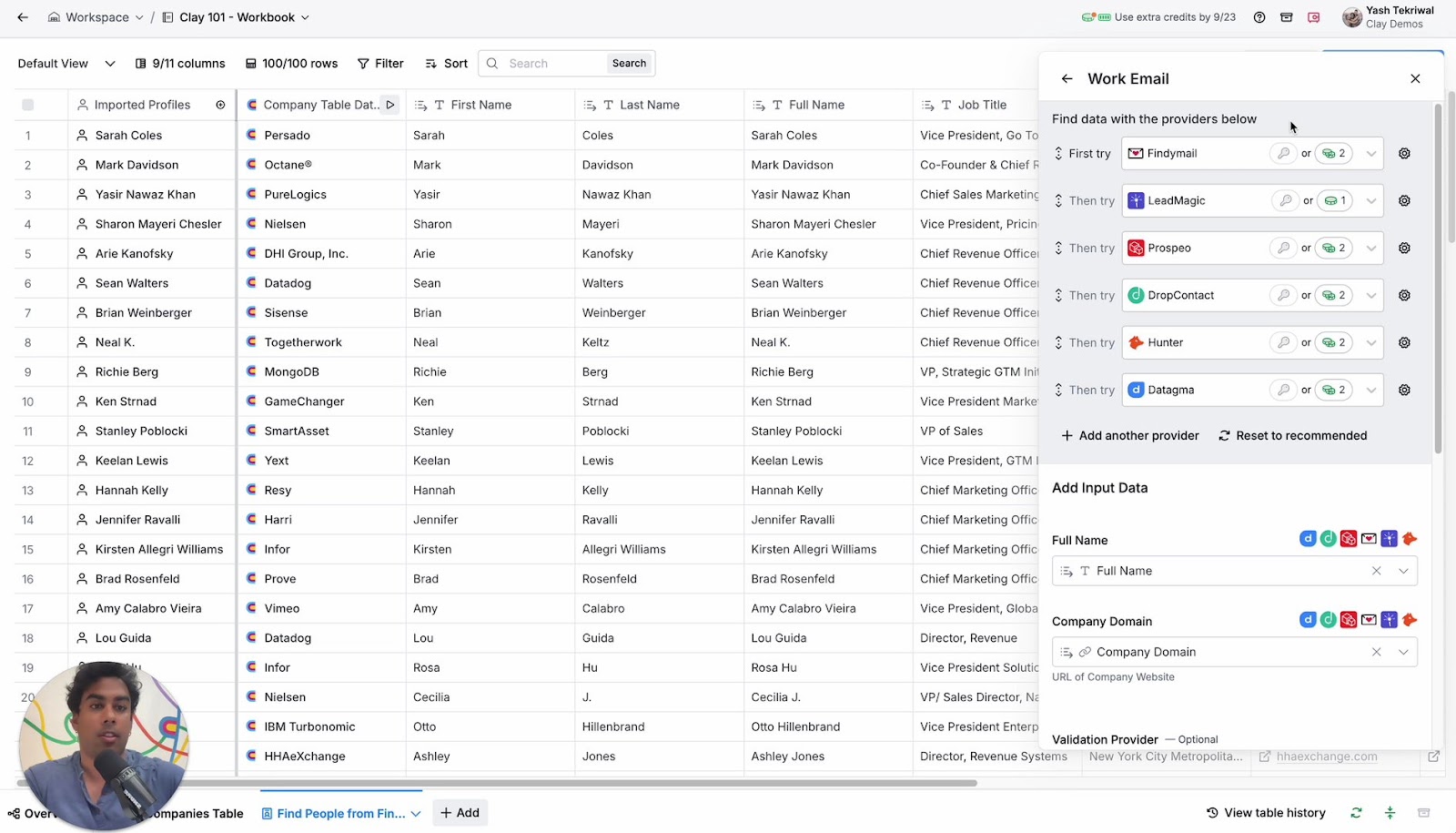
Use this if: You want to stack 15+ data providers in a single workflow and only pay for records that actually return results. Your team has the technical chops to build enrichment tables.
If you're new to this approach, start with our walkthrough on Clay list building to understand real costs and workflows.
Clay changed its self-serve pricing model on March 11, 2026. Launch starts at $185/month and Growth at $495/month. The big change: usage now splits into Data Credits for third-party lookups and Actions for orchestration like running enrichments, API calls, and CRM pushes. Data marketplace costs dropped 50-90%, and Clay no longer charges for failed lookups. Given that 20-30% of lookups typically fail, that's meaningful savings.
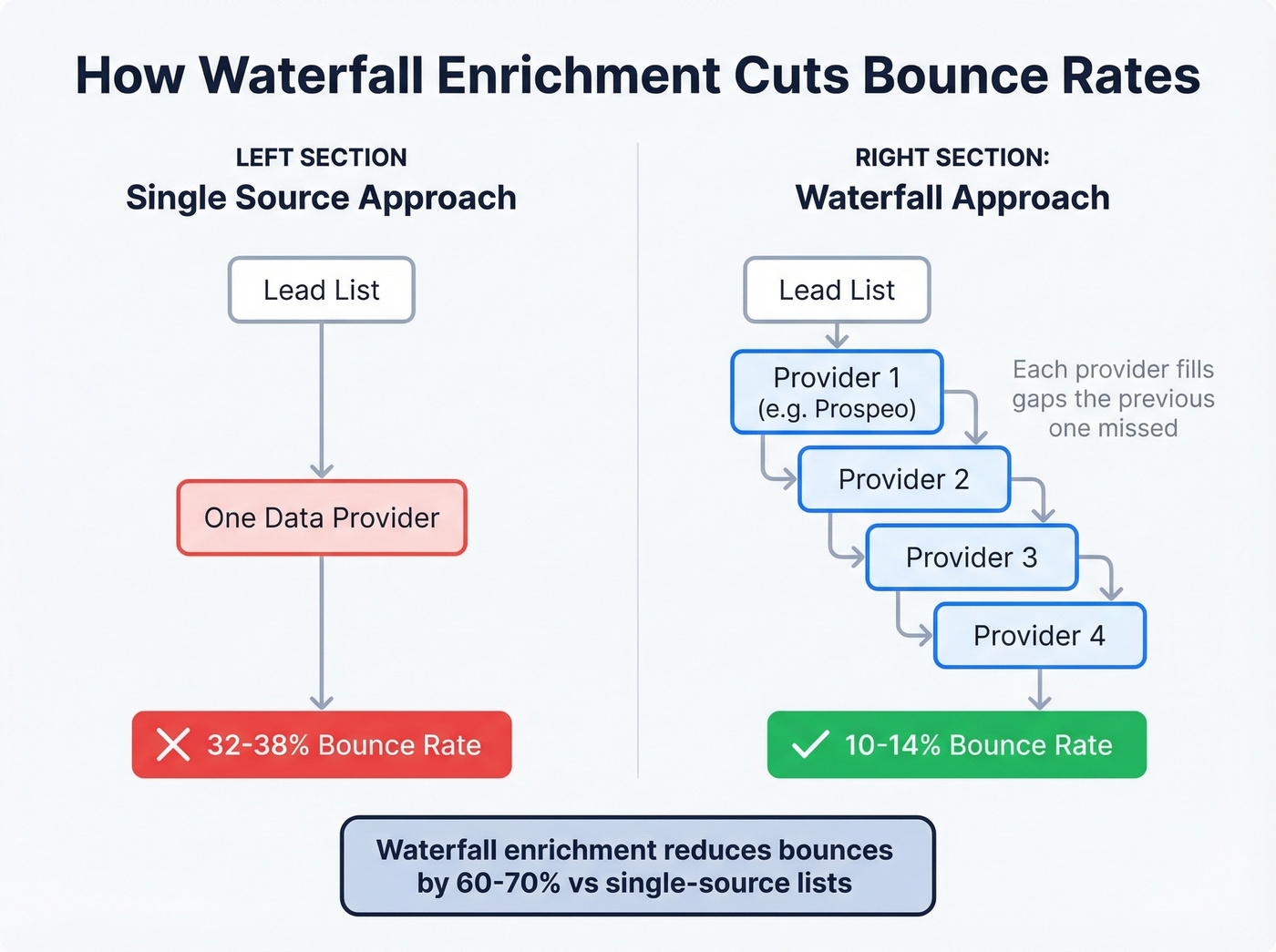
The waterfall approach works. In practitioner-led testing that's been circulating in the cold email community, a Clay-style multi-source waterfall produced bounce rates of 10-14%, compared to 32-38% from Apollo lists. That's not a marginal improvement.
Skip this if: You want plug-and-play simplicity. Clay has a learning curve, and the two-currency pricing model adds complexity. Former Explorer users at $349/month who need HTTP API access now pay $495/month for Growth.
Apollo.io - Best Free Tier for Startups
Apollo gives you 100 free credits per month - enough to test your ICP before committing budget. Paid plans run $49/$79/$119 per user per month on annual billing, with extra credits at $0.20 each. The built-in sequencer is genuinely useful for early-stage teams running everything from one tool.
The catch: deliverability. Practitioner-reported bounce rates run 32-38%, which is rough for cold email at scale. The consensus on r/sales and r/coldemail is pretty clear - one user summed it up: "No single tool is perfect anymore... the real win came from better verification + not relying on one database." Apollo wins on accessibility, but if your sending reputation matters, pair it with a verification layer or look elsewhere.
If you're scaling outbound, use this outbound email spam prevention guide to protect deliverability.
Cognism - Best for European Coverage
Cognism's Diamond Data program manually verifies mobile numbers, delivering an 87% connect rate versus 30% industry averages. That's the real differentiator - not the database size, but the phone pickup rate. If you sell into Europe and need GDPR-compliant data with direct dials, Cognism is the play.
Coverage across EMEA markets is unmatched, particularly in the UK, DACH, and Nordics where other providers fall short. G2 ratings sit at 4.5/5 from 1,318 reviews, with strong marks for ease of use and support. Pricing runs $8,000-$25,000/year - roughly 40-60% less than ZoomInfo for comparable seat counts. Skip it if your market is primarily North America and you don't need phone data.
If phone is a core channel, train reps on the fundamentals in our phone sales skills guide.
Clearbit/Breeze - HubSpot Shops Only
Since HubSpot acquired Clearbit, it's now Breeze Intelligence - a HubSpot-only add-on starting at $45/month for 100 credits on annual billing. Credits expire monthly with no rollover, which makes spend unpredictable. The minimum viable cost is realistically $60-75/month when you factor in HubSpot Starter. Strong on firmographics and technographics, but if you use any CRM other than HubSpot, this isn't for you.
Lusha - Quick Chrome Lookups
Lusha's free tier offers 40 credits per month. Pro runs $22.45/user/month. Practitioner bounce rates land around 22-28% - better than Apollo, worse than waterfall approaches. Lusha's strength is mobile and personal email data, but credits run out fast at any volume. Think of it as a lookup tool, not an enrichment platform.
If you're comparing similar tools, see our breakdown of best contact extensions.
FullEnrich
Starts around $29/month. Solid budget option for low-volume prospecting.
Hunter.io
25 free searches per month, with Starter plans at $49/month. Best for domain-level email finding: paste in a company domain and get associated emails. Less useful for enrichment at scale, but reliable for what it does.
If you want more options in this category, check our Hunter alternatives roundup.
SalesIntel
Starts at $99/month for individuals, with team plans around $5,000/year. The differentiator is human-verified contacts - actual researchers checking records. Good for teams that prioritize accuracy on smaller, targeted lists.
Pricing at a Glance
| Tool | Starting Price | Contract | Credits Expire? |
|---|---|---|---|
| Prospeo | Free; ~$0.01/email | Monthly, no lock-in | No |
| Clay | $185/mo (Launch) | Monthly | Per-plan quotas |
| Apollo | Free (100 credits) | Annual for discounts | Yes (monthly) |
| Cognism | ~$8,000/yr | Annual | Per contract |
| ZoomInfo | $14,995/yr | Annual only | Per contract |
| Clearbit/Breeze | $45/mo (100 credits) | Annual | Yes (monthly) |
| Lusha | Free (40 credits) | Monthly | Yes (monthly) |
| FullEnrich | ~$29/mo | Monthly | Varies by plan |
| Hunter.io | Free (25 searches) | Monthly | Yes (monthly) |
| SalesIntel | $99/mo (individual) | Annual for teams | Per contract |
Managed enrichment services - where a vendor cleanses and enriches your data for you - run $0.02-$0.10 per record with monthly retainers of $1,000-$5,000 and 5,000-10,000 record minimums.
If you're still comparing vendors, this list of the best data enrichment tools covers more options and test notes.
You just read the bake-off results: 34% bounce rates from a "premium" provider. Prospeo delivers 98% email accuracy and 125M+ verified mobiles at ~$0.01/lead - 90% cheaper than ZoomInfo. No contracts, no sales calls. Snyk's 50 AEs proved the model with 200+ new opportunities per month.
Stop subsidizing bad data. Start your own bake-off with 75 free emails.
Managed Services vs. Self-Serve Tools
Managed enrichment providers handle the heavy lifting: you send a list, they cleanse, deduplicate, and enrich it, then send it back. Expect 2-10 business day turnaround and minimum project sizes of 5,000-10,000 records.
If you're modernizing your ops, consider pairing enrichment with CRM automation software to keep records fresh without manual work.
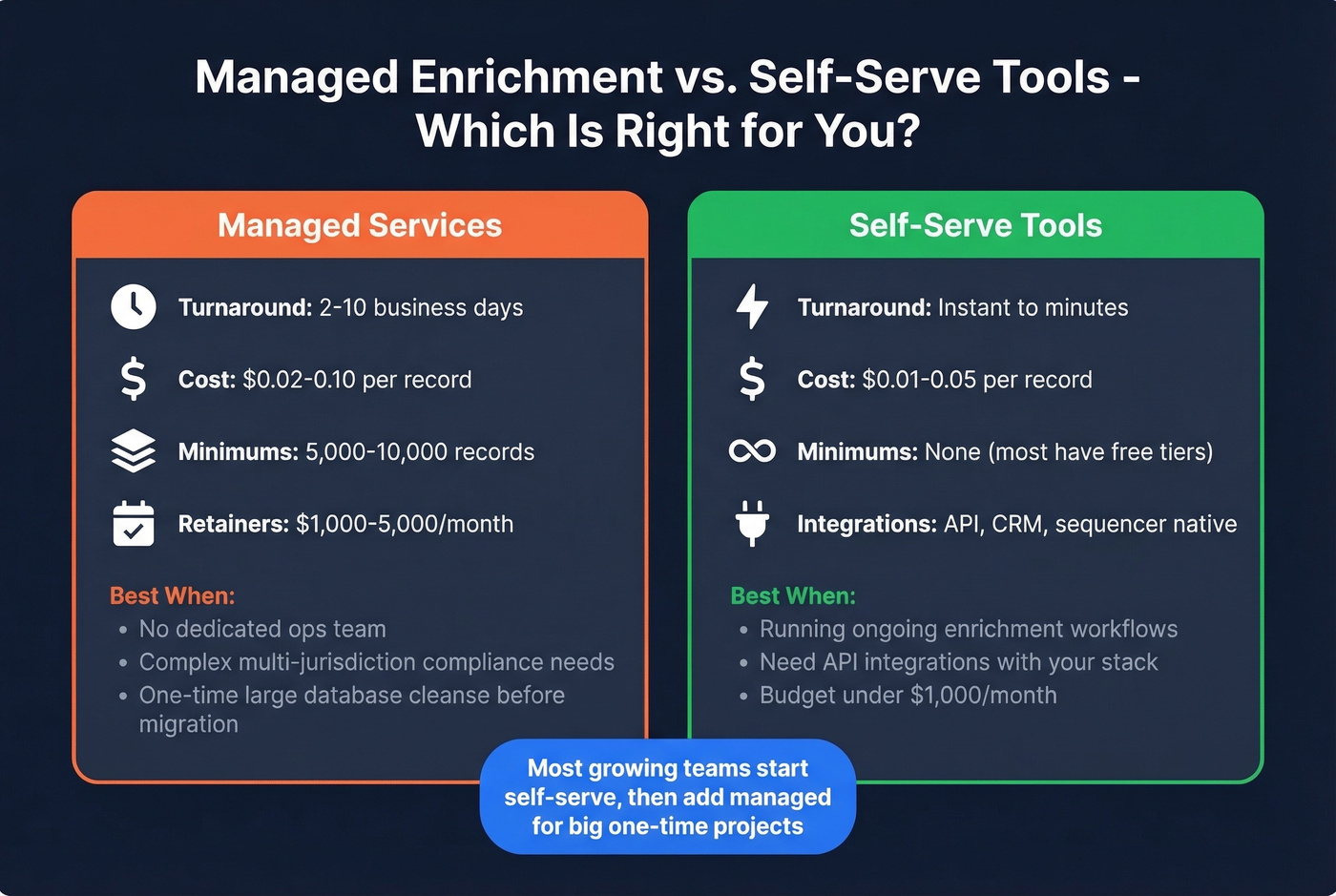
Outsourcing makes sense when your team lacks dedicated ops bandwidth, you have complex multi-jurisdiction compliance requirements, or you need a one-time large-scale database cleanse before a migration. For everyone else - teams running ongoing enrichment, needing API integrations, or operating on budgets under $1,000/month - self-serve tools eliminate the need for managed services entirely. You get faster turnaround in seconds instead of days, lower per-record costs, and direct control over your data pipeline.
Waterfall Enrichment Explained
Single-source enrichment queries one database and typically covers 50-70% of records. Waterfall enrichment queries multiple providers sequentially - if Provider A doesn't have the email, try Provider B, then C - pushing coverage to 85-95% using 15+ sources.
The math is compelling. Both approaches land around $0.17 per usable record in common benchmarks, but waterfall yields about 300 more usable contacts per 1,000 records processed. In practitioner testing, Clay's waterfall approach bounced at 10-14% versus Apollo's single-source 32-38%. That's the difference between a healthy sending reputation and a blacklisted domain.
The trade-off is compliance complexity. When you're pulling data from multiple providers, tracking where each record originated and whether each source collected data lawfully gets harder. This is a real concern under GDPR. Run your waterfall through Clay, then verify the output through a dedicated email verification step before it hits your sequencer. That two-step approach catches the bad records that slip through multi-provider stacking.
Compliance Essentials
Don't treat compliance as a checkbox. The penalties are real.
GDPR fines reach EUR 20M or 4% of global annual revenue - whichever is higher. CPRA statutory damages run $100-$750 per violation, and those add up fast at scale. B2B emails tied to identifiable individuals count as personal data under GDPR - there's no blanket B2B exemption.
Your enrichment provider's compliance posture matters as much as your own. Verify that they collected data lawfully under either consent or legitimate interest. Require a Data Processing Agreement. Check whether they honor opt-outs globally, not just in the EU. If your provider can't answer these questions clearly, that's a red flag. Teams handling enrichment in the UK face additional nuance post-Brexit, since the UK GDPR mirrors EU rules but is enforced independently by the ICO - make sure your provider covers both jurisdictions.
For a deeper audit checklist, use our GDPR compliant database guide.
How to Choose the Right Provider
Look, no single database covers everything. You need two to three tools max, and one of them should be a verification layer. The "consolidate everything into one platform" pitch sounds great until you realize no single provider covers every region, role level, and data type equally well.
Budget under $1,000/month: Prospeo gives you the best email accuracy at $0.01/lead with intent data included. Lusha works for quick lookups but runs out of credits fast.
$1,000-$5,000/month: Cognism for EMEA and phone-first teams, Clay for waterfall orchestration. Add a verification layer regardless - bad emails will tank your sequences no matter which database you pick.
$5,000+/month: ZoomInfo for US-heavy enterprise orgs, but verify on top. At 85% accuracy, you're still bouncing 15 out of every 100 emails.
For geography, EMEA-heavy teams should lean toward Cognism. US-focused teams get more value from ZoomInfo. For use case, email-first outbound points to accuracy-focused tools, phone-first to Cognism, and orchestration-heavy workflows to Clay. Let's be honest - no matter which B2B data enrichment services you combine, always run a test batch of 500-1,000 records before signing an annual deal. We've seen teams lock into $25K contracts based on a demo, only to discover the data didn't hold up against their actual ICP.
If you need a system for list building and outreach, start with these B2B prospecting strategies.
FAQ
What is B2B data enrichment?
B2B data enrichment appends missing or outdated information - emails, phone numbers, firmographics, technographics, intent signals - to your existing CRM records. It fills gaps so sales and marketing teams reach the right people with accurate contact data. Without it, CRM decay makes roughly 25% of your database unusable each year.
How fast does CRM data decay?
Roughly 2.1% per month, or 22-25% per year. Without enrichment on at least a monthly cycle, a quarter of your database goes stale annually - meaning bounced emails, wasted rep time, and damaged sender reputation.
What's the difference between waterfall and single-source enrichment?
Single-source queries one database and covers 50-70% of records. Waterfall queries multiple providers sequentially, pushing coverage to 85-95%. Practitioner tests show waterfall bounce rates of 10-14% versus 32-38% for single-source - but waterfall adds compliance complexity around data provenance.
Which enrichment service has the best email accuracy?
Prospeo delivers 98% email accuracy in practitioner testing - the highest among major providers. ZoomInfo tests around 85%, Apollo around 80%, and Lusha around 72-78%. Run a test batch of 500-1,000 records against your ICP before committing to any annual contract.