

8 B2B Marketing Mistakes That Actually Cost You Pipeline
Finance asked why 5,000 MQLs last quarter produced 12 customers. The SDR team said the leads were garbage. Marketing said sales never followed up. Sound familiar?
These are the B2B marketing mistakes that compound silently - and 79% of marketing leads never convert because nobody's asking whether the problem is upstream of both teams. We've watched this play out across dozens of go-to-market orgs, and the pattern is always the same: the real leak isn't where anyone thinks it is.
Most B2B marketing failures trace back to three root causes: you're not on the buyer's shortlist before they start looking, your data is garbage, and you're measuring the wrong things. Fix those three and the rest gets easier.
1. Not Being on the Day One Shortlist
86% of B2B buyers start from a "Day One list" of roughly three brands, and the winning vendor comes from that list 95% of the time. If you're not on it, your odds drop to 8%.
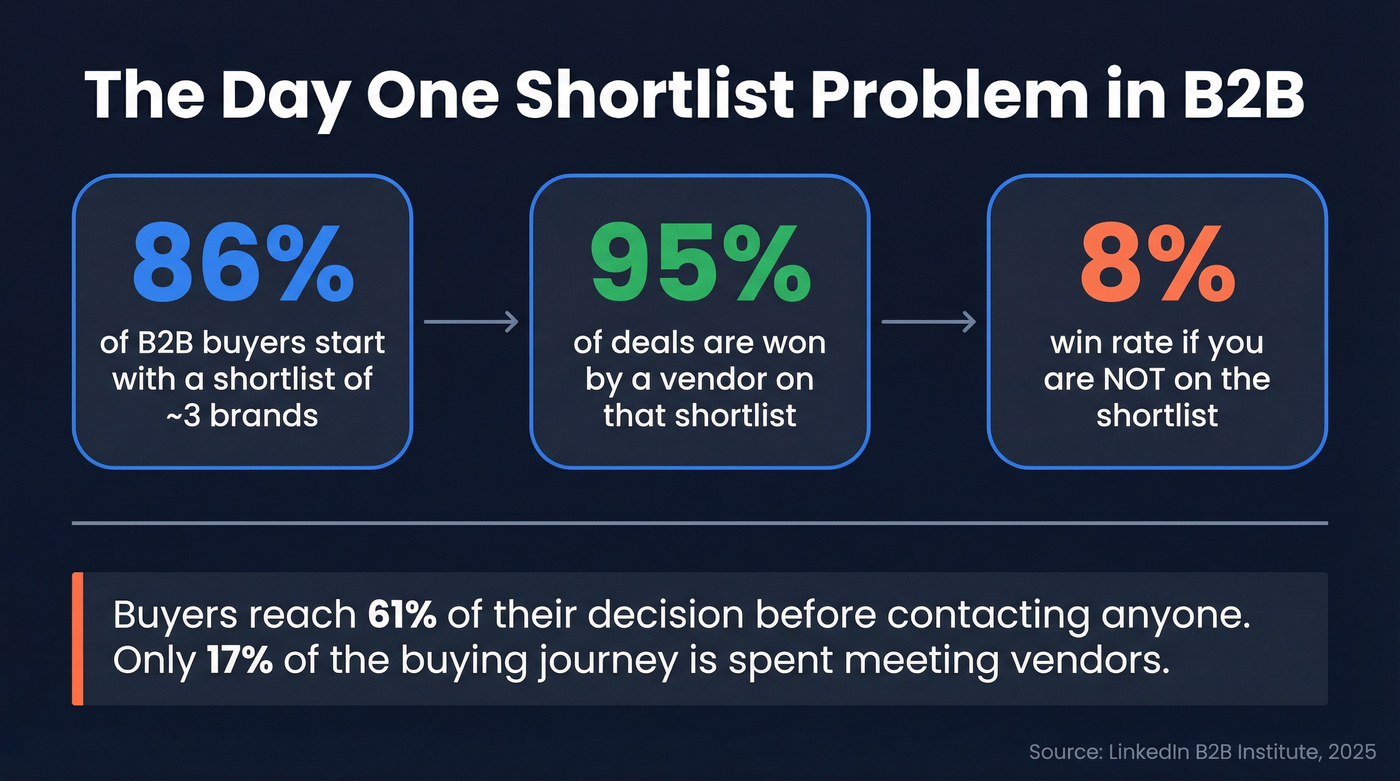
Buyers spend only 17% of their purchase journey meeting with potential suppliers - they reach 61% of their decision before contacting anyone. Brand investment isn't a "nice to have." It's the single highest-leverage activity in B2B marketing, and it's chronically underfunded because it doesn't show up in last-click dashboards. Every dollar you shift from bottom-funnel demand capture to top-of-mind brand building pays back in pipeline you never have to fight for.
2. Spray-and-Pray Outbound with Bad Data
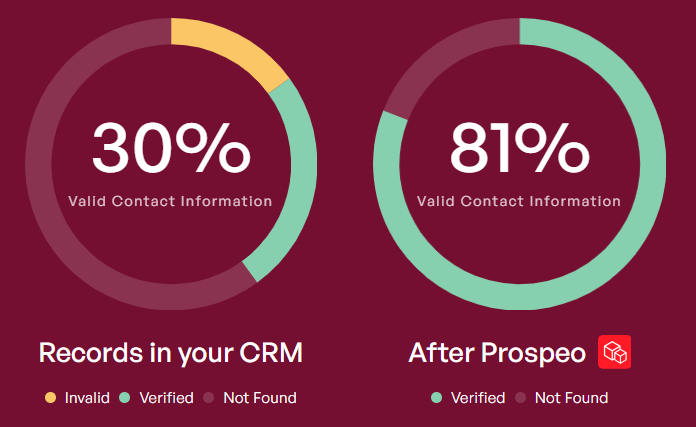
B2B practitioners on r/b2bmarketing consistently report cold email reply rates around 2%. That's the baseline with decent data. When your list is full of outdated contacts and phone numbers that are wrong 70% of the time, you're actively damaging your domain reputation. Every bounce chips away at deliverability for your entire org.
Here's the thing: 49% of B2B buyers are invisible to most targeting methods. The fix isn't "buy a bigger database." It's verify before you send and layer in intent signals - job changes, funding rounds, hiring surges - so you're reaching accounts that are actually in-market. When Meritt switched to Prospeo, their bounce rate dropped from 35% to under 4%, and pipeline tripled from $100K to $300K per week.
If you're rebuilding your list-building process, start with sales prospecting techniques that prioritize signal over volume.
3. Messaging for Investors, Not Buyers
A SaaS launch we analyzed targeted 1,000 qualified leads in Q1 with a $5M pipeline goal. It flopped. Buyer feedback was brutal: "It felt like it was written for investors, not me." Features everywhere, outcomes nowhere.
When the team rewrote messaging around buyer problems, MQL-to-SQL conversion doubled on the next launch. Let's be honest - most B2B homepages still read like pitch decks. If your first fold talks about what you built instead of what the buyer is struggling with, you've already lost them.
This is also where B2B brand positioning does more work than most teams expect.
4. Looking Like Everyone Else
Dell ran blue-themed ads. 25% of viewers attributed them to Microsoft, Amazon, or IBM. That's a quarter of your ad spend building someone else's brand.
Only 52% of B2B companies even have a clearly defined differentiating value proposition, and it shows - same stock photos, same geometric patterns, same "we help companies do X" headlines. Contrast that with Salesforce's Astro character, which drove a +6% uplift in brand attribution, or the finding that brands using video alongside influencer partnerships are 2.2x more likely to be trusted by buyers. Distinctive assets aren't a luxury. When everything looks identical, buyers default to the vendor they already know.
If you need a practical framework, borrow from how teams build a B2B brand without relying on performance ads.
5. Sales and Marketing Misalignment
This one is staggering. 60-70% of B2B marketing content is never used by sales. The average overlap between sales and marketing target audiences is just 10%, meaning the two teams are often pursuing entirely different buyers.
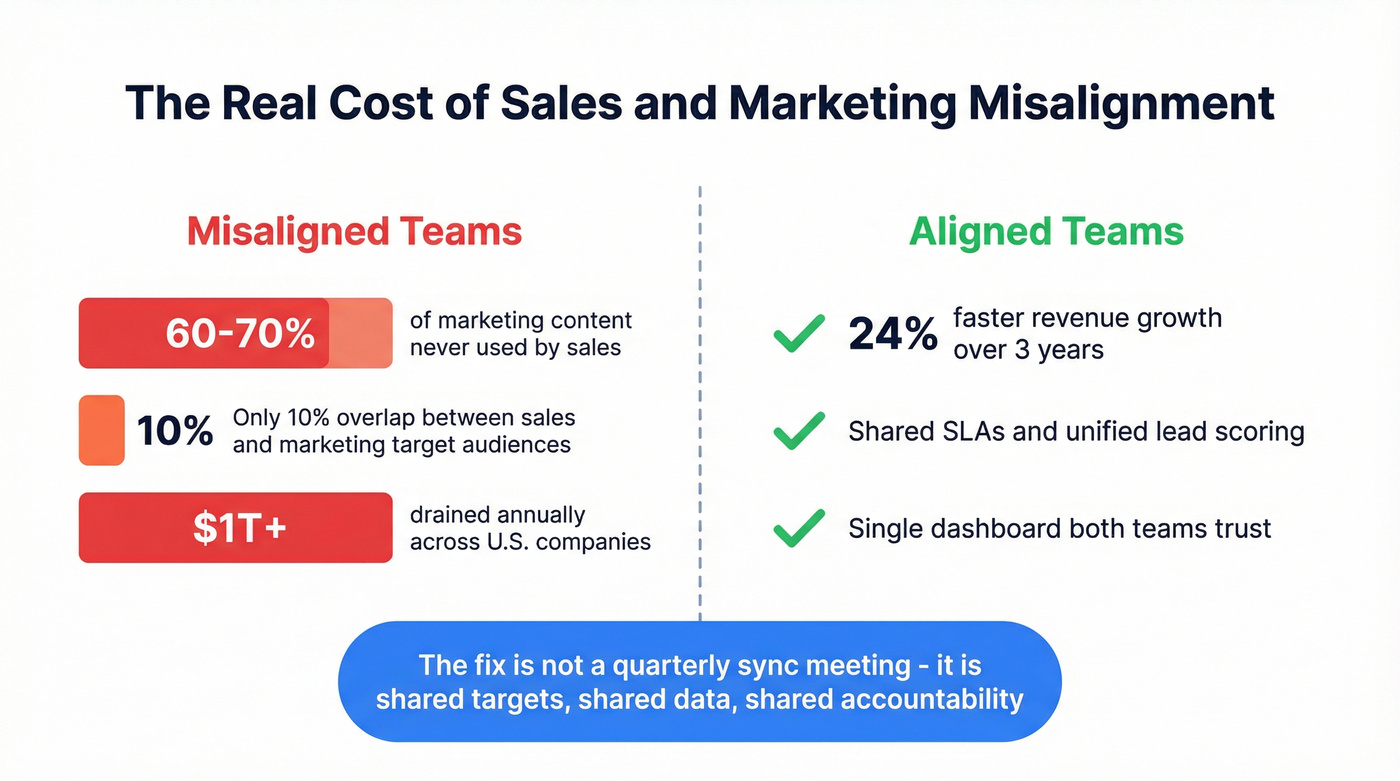
The cost? Misalignment drains an estimated $1T+ annually across U.S. companies, while aligned teams see 24% faster revenue growth over three years. The fix isn't a quarterly sync meeting. It's shared SLAs, unified lead scoring, and a single dashboard both teams trust. Skip this if your org already has a joint revenue target that both teams are compensated against - you're ahead of 90% of companies.
If you're formalizing the handoff, a clear lead status model prevents most downstream blame games.

Spray-and-pray outbound with bad data is mistake #2 on this list - and the most expensive one to ignore. Prospeo's 5-step verification delivers 98% email accuracy, cutting bounce rates from 35% to under 4%. When Meritt made the switch, pipeline tripled from $100K to $300K per week with the same team.
Stop burning your domain reputation. Start with data you can trust.
6. Measuring Clicks Instead of Pipeline
Stop measuring impressions, CTR, raw MQL count, and cost-per-click. Start measuring what Demandbase calls the three that matter: efficacy (are you reaching the right accounts?), amplitude (are those accounts engaging more?), and value (what pipeline and revenue resulted?).
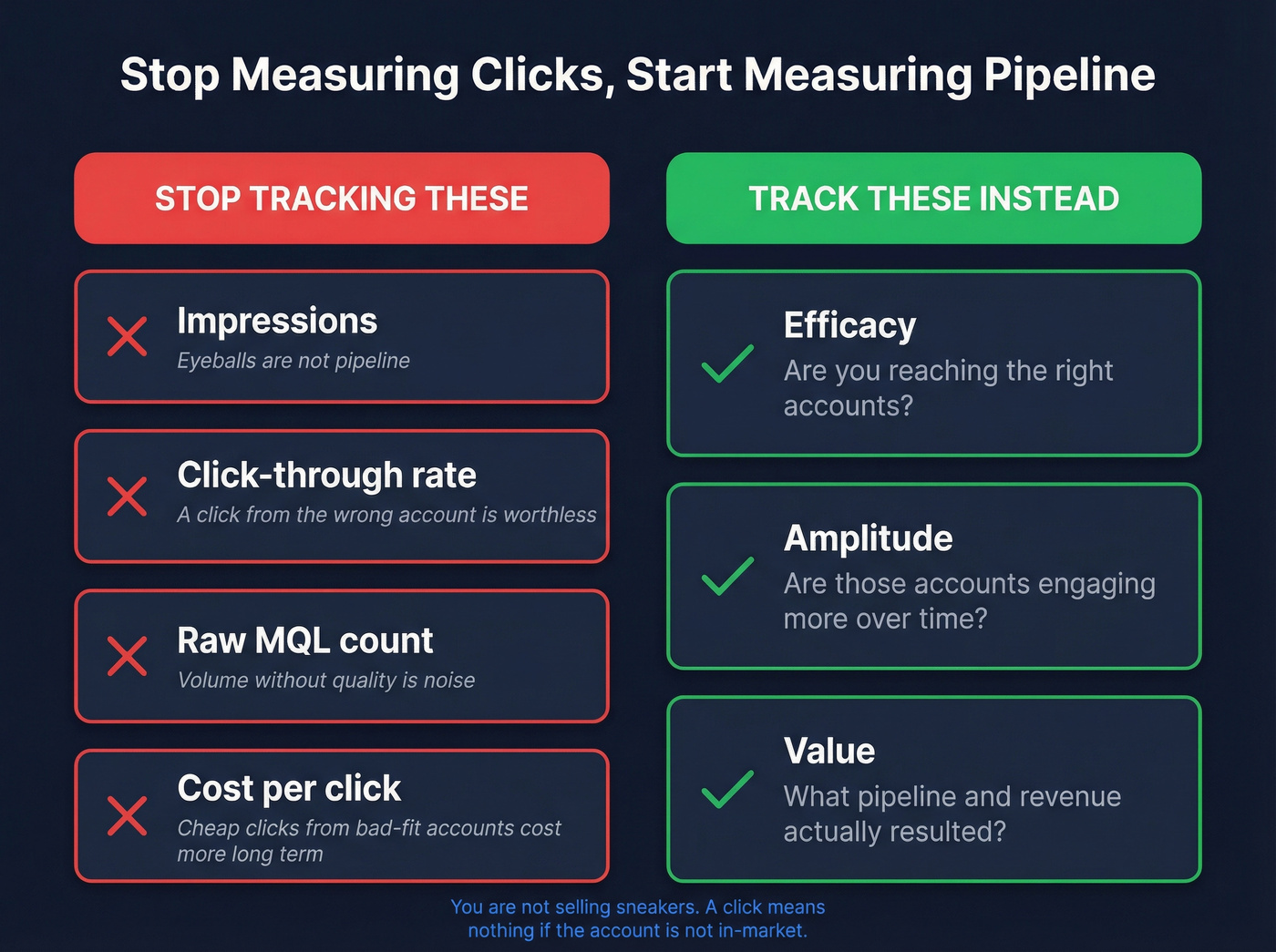
You're not selling sneakers. A click means nothing if the account isn't in-market.
To pressure-test your reporting, align on funnel metrics that map to revenue stages.
7. Wrong Attribution, Wrong Budget
Customers touch your brand 20+ times across devices before buying. Last-click attribution ignores all of them except the final one. We've seen teams put 60% of budget into Google Ads because the dashboard shows conversions - when deeper analysis reveals those ads are intercepting demand that email and content already created.
Real talk: meaningful multi-touch attribution requires roughly 1,000 conversions per month plus tracking across every touchpoint. Most B2B companies don't have that volume. If you don't, use self-reported attribution ("how did you hear about us?") and pipeline source tracking. It's imperfect but honest, and it'll tell you more than a last-click model ever will.
If you're trying to diagnose where deals stall, use a simple pipeline health scorecard before you reallocate budget.
8. Automating Without Guardrails
McDonald's ended its AI drive-thru ordering pilot after public ordering mishaps. Southwest's 2022 holiday meltdown - 17,000 canceled flights, a $140M DOT fine - still surfaces in AI-generated answers in 2026. Once AI recirculates a negative narrative, it doesn't stop.
The mistake isn't using AI. It's automating without deciding what should never be automated. Mango ran an AI-generated campaign but kept humans in charge of final creative decisions. Automate the repetitive work - list building, data enrichment, scheduling. Keep human judgment on anything that touches brand perception.
If you're automating outreach, make sure your email deliverability fundamentals are locked first.
B2B Benchmarks That Matter
In our experience, most teams don't know if their numbers are good or bad. Here's a reference point:
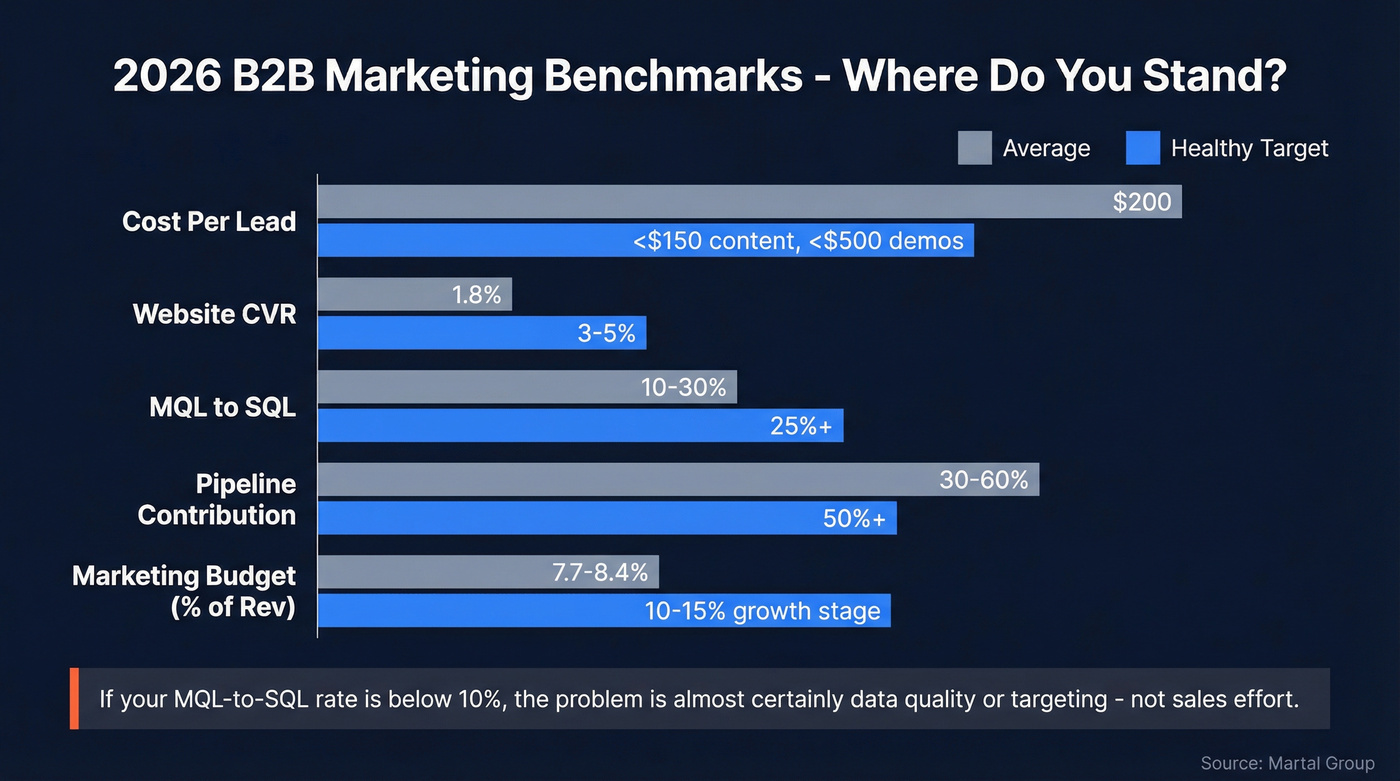
| Metric | Average | Healthy Target |
|---|---|---|
| CPL | ~$200 | <$150 content offers, <$500 demos |
| Website CVR | 1.8% | 3-5% |
| MQL to SQL | 10-30% | 25%+ |
| Pipeline contribution | 30-60% | 50%+ |
| Marketing budget (% rev) | 7.7-8.4% | 10-15% (growth stage) |
Benchmarks via Martal. If your MQL-to-SQL rate is below 10%, the problem is almost certainly data quality or targeting - not sales effort.
If you're evaluating vendors, compare options across data enrichment services before you commit.
The One Fix That Compounds
SAP's "Inspire the Future" campaign generated EUR 924.4M in pipeline with 48% higher engagement than their other social campaigns. They didn't do it by adding five new channels. They went deep on the channels they were already on.
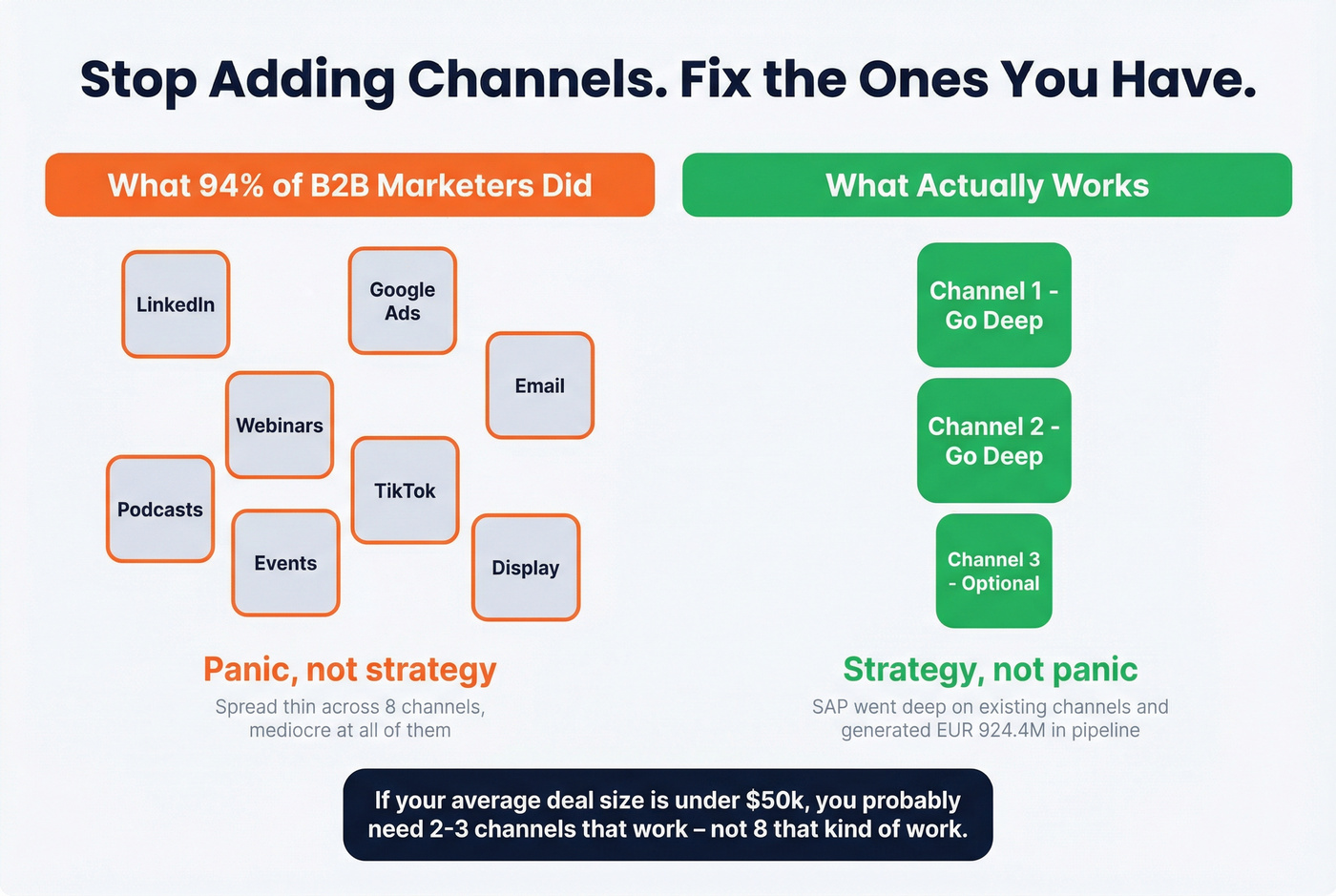
Here's our hot take: 94% of B2B marketers diversified their channel mix last year. That's panic, not strategy. If your average deal size is under $50k, you probably don't need eight channels - you need two or three that actually work. Stop adding. Fix the ones you have.
If outbound is one of those channels, build a tighter B2B cold email sequence instead of blasting more volume.
Sales and marketing misalignment costs $1T+ annually - and bad data makes it worse. Prospeo gives both teams a single source of truth: 300M+ profiles with intent signals, job changes, and funding data refreshed every 7 days. Layer in 15,000 Bombora intent topics so you're only targeting accounts that are actually in-market.
Align your teams around data that's accurate, not data that's available.
FAQ
What's the most expensive B2B marketing mistake?
Sales-marketing misalignment. It costs U.S. companies over $1T annually. When 60-70% of marketing content goes unused and 79% of leads never convert, you're burning budget at every stage. Shared SLAs and unified lead scoring are the minimum fix.
How do I know if my B2B data is bad?
Check your email bounce rate. If it's above 5%, your data provider is the problem. A quick test: pull 100 contacts from your current database and run them through a verification tool. If more than five bounce, it's time to switch providers.
How long is the average B2B buying cycle?
About 10.1 months. Buyers reach 61% of their decision before contacting a vendor, and 86% start from a shortlist of roughly three brands. If you're not investing in brand awareness before buyers are in-market, you're already behind.
Can these B2B marketing mistakes be fixed quickly?
Data quality and attribution fixes show results within 30-60 days. Brand awareness and alignment take two to three quarters. Start with your bounce rate and MQL-to-SQL conversion - those two metrics reveal whether your biggest leak is upstream (data) or downstream (process).