

The 6 B2B Sales Models That Actually Matter in 2026
Every guide on the B2B sales model starts with "B2B sales is when one business sells to another." You already know that. What you actually need is a framework for choosing the right model - because 77% of buyers describe their last B2B purchase as complex or difficult, and 80% of B2B interactions now happen in digital channels.
Your ACV determines your model. Under $5K, go self-serve or PLG. Between $5K and $25K, run a hybrid motion. Over $25K, you need a sales-led approach. The rest of this article explains why, with benchmarks.
Why B2B Sales Models Are Shifting
Buyers don't want to talk to your reps. That's not an insult - it's data. 33% of all buyers prefer a seller-free experience, and among millennials that number jumps to 44%. Meanwhile, 57% of purchase decisions are made before a buyer ever speaks to a supplier. And 84% of reps missed quota last year.
Organizations with a formalized sales process see 18% higher revenue growth than those winging it.
McKinsey's "rule of thirds" captures the new reality - buyers split time roughly equally between in-person, remote, and digital self-serve. The old model where a field rep owned the entire relationship from first touch to close still exists, but it's the exception now. In our experience, the shift hits hardest in the $10K-$25K ACV range where neither pure PLG nor pure sales-led works cleanly.
The 6 Core Types of B2B Sales
Transactional
Short cycles, high volume, standardized offering. This is your SMB SaaS motion - renewals, commoditized products, anything where the buyer already knows what they want. The goal is efficiency, not relationship-building. One stat worth internalizing: 87% of sales training knowledge evaporates within 30 days. Running the wrong model wastes far more than running the wrong training program.
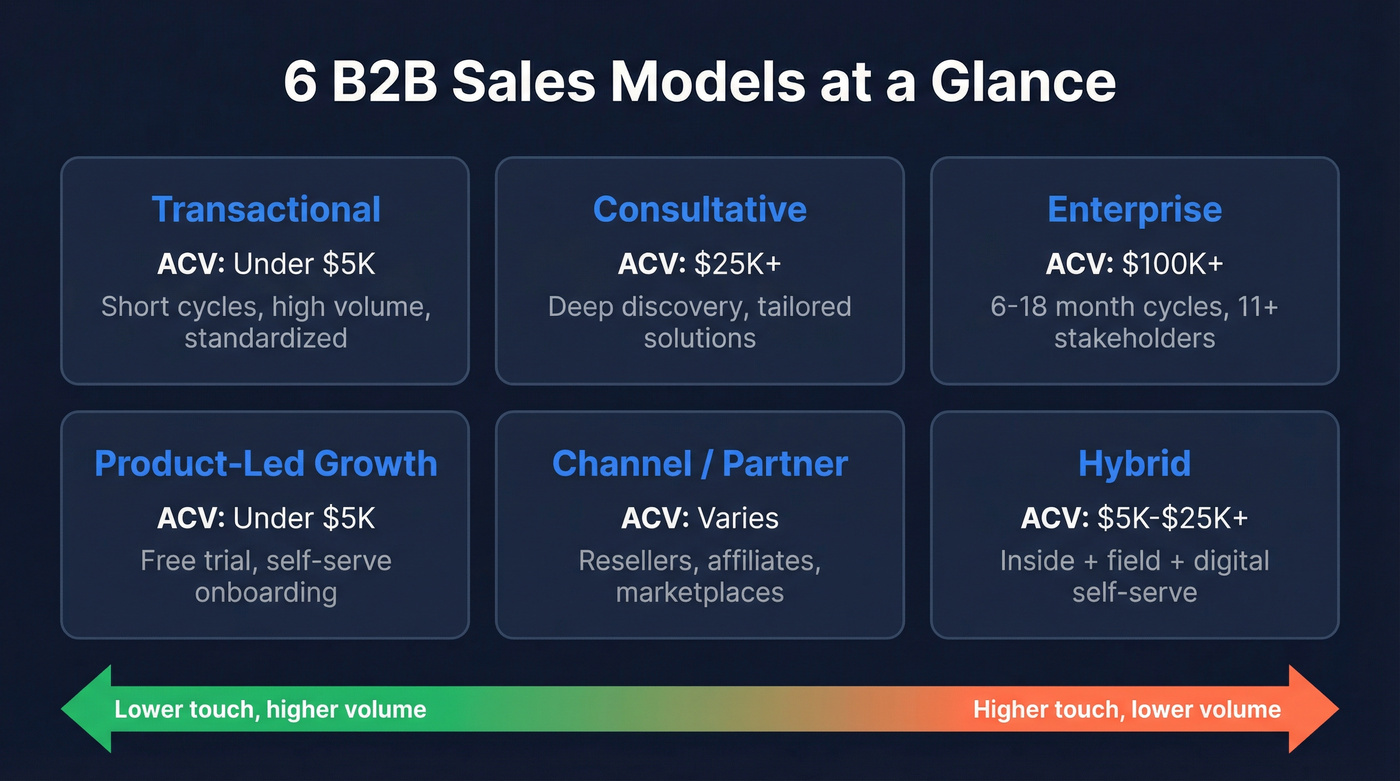
Consultative
The trusted-advisor approach. Your rep researches the account, runs deep discovery, and presents a tailored solution - then collaborates on implementation and follows up post-sale. It's best for $25K+ contracts where the buyer needs confidence, not a demo link.
The ability to switch styles within the same deal matters more than most people realize. You're consultative with the CTO, transactional with procurement. Reps who can't code-switch lose deals they should've closed.
Enterprise
Six-to-eighteen-month cycles. Around 11 stakeholders per deal on average, and buying committees can stretch much higher. Multi-threaded selling isn't optional - it's survival. Enterprise is for $100K+ ACV deals where a single champion can't push the deal through alone. If your reps aren't mapping the org chart and building relationships across multiple departments, they're losing to someone who is. (If you want the operator view, see multithreading.)
Product-Led Growth (PLG)
58% of SaaS companies now run a PLG motion, and 91% plan to increase that investment. The model works when users can experience value without a demo - sub-$5K ACV with simple onboarding. (More context: B2B sales trends.)
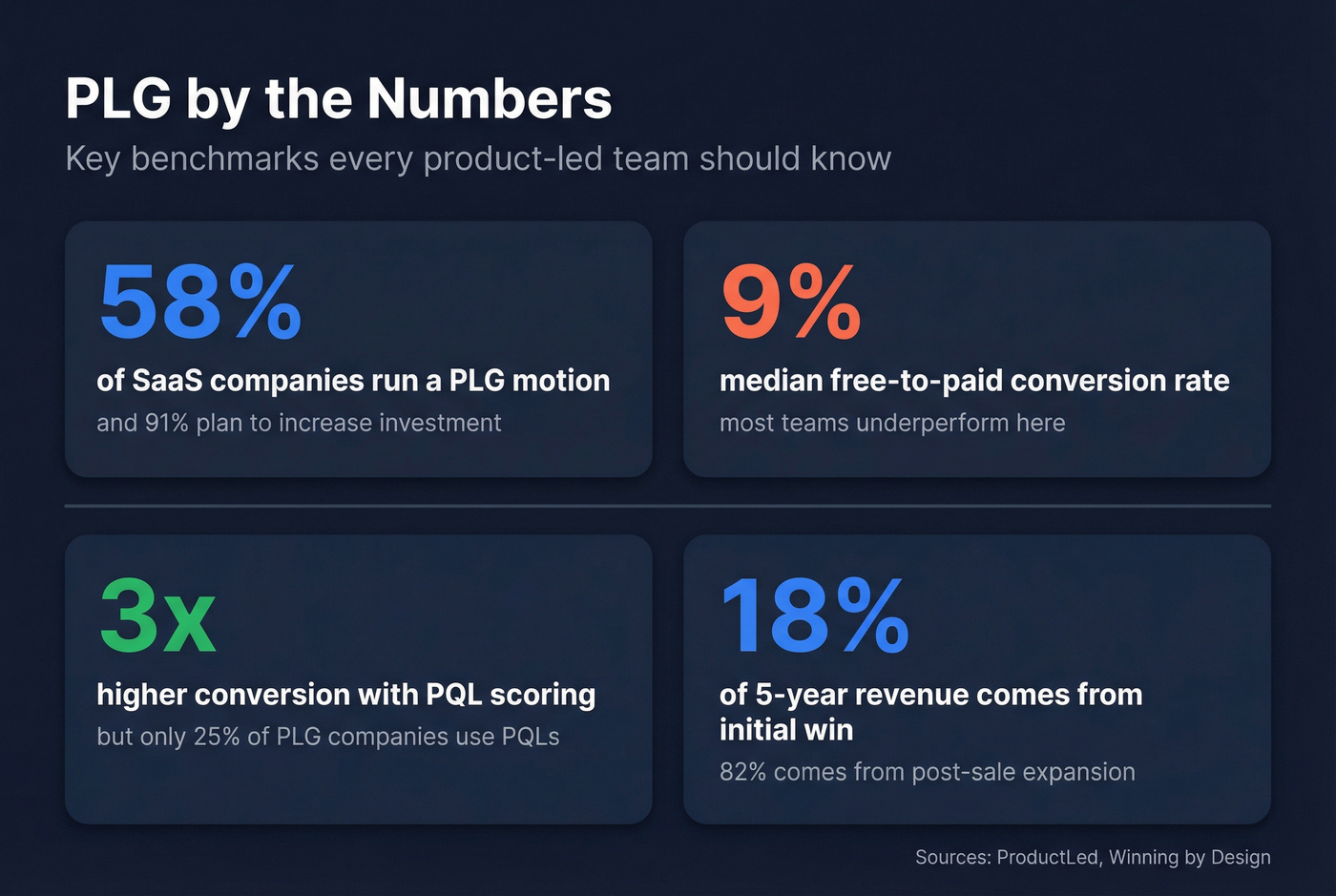
The benchmarks are sobering, though. Median free-to-paid conversion sits around 9%. PQL-based qualification drives roughly 3x higher conversion rates, but only about a quarter of PLG companies actually use PQLs. If you're running PLG without product-qualified lead scoring, you're leaving conversion on the table. (Related: how to build a lead scoring system.)
Channel / Partner
Resellers, affiliates, service providers, marketplaces - channel sales extends reach without scaling headcount. B2B SaaS companies derive 20%+ of revenue from channel partners on average. Typical channel economics: reseller discounts run 20-30%, while referral partners earn 10-20% commissions depending on deal complexity. (If you're building this motion, use channel sales incentive programs.)
Here's the thing: own the sales cycle yourself first. Learn how customers buy, nail the messaging, build repeatable playbooks - then layer partners on top.
Hybrid
This is where the market's heading. 85% of companies expect hybrid to be the most common sales role within three years. Inside reps cover 4x the prospects at 50% the cost of field reps, and up to 80% of accounts can be served by inside sales. (See also: inbound vs outbound sales.)
And here's what most vendors won't tell you: in a recurring revenue business, only 18% of total 5-year revenue is captured at the initial win. Post-sale expansion isn't a "nice to have" - it's the majority of your revenue. Hybrid models that span acquisition through expansion aren't just trendy; they're structurally necessary. I've watched teams waste 12+ months running enterprise-style discovery on $8K deals before someone finally checks the unit economics. (If you're tightening execution, start with B2B sales best practices.)

Whether you run transactional, consultative, or hybrid - every B2B sales model breaks down when reps can't reach buyers. Prospeo gives you 300M+ profiles with 98% email accuracy and 125M+ verified mobiles, refreshed every 7 days. Use 30+ filters like buyer intent, technographics, and headcount growth to match the right contacts to your model.
Stop losing deals to bad data. Start reaching real buyers today.
How to Choose the Right Model
Most guides skip the actual decision framework. Let's fix that.
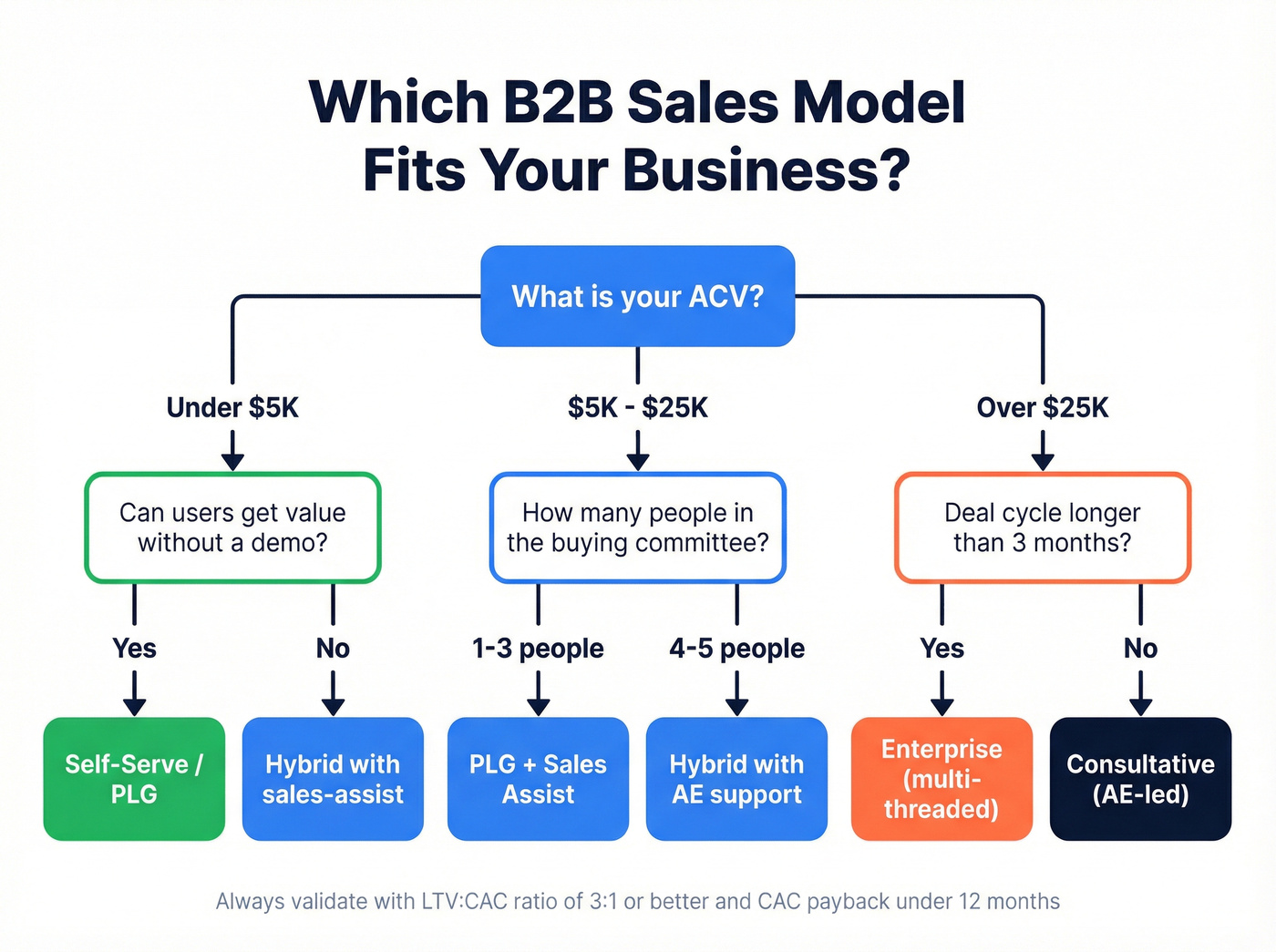
| Signal | Self-Serve / PLG | Hybrid | Sales-Led |
|---|---|---|---|
| ACV | Under $5K | $5K-$25K | Over $25K |
| Cycle length | Days to weeks | Weeks to months | Months to quarters |
| Buying committee | 1-2 people | 2-5 people | 6-10+ people |
| Primary motion | Product trial | PLG + sales-assist | AE-led discovery |
| Post-sale emphasis | In-app expansion | CS + upsell | Strategic acct mgmt |
Your LTV:CAC ratio needs to be at least 3:1, and CAC payback should land under 12 months. If you're running a sales-led motion on sub-$5K deals, the math collapses. If you're running self-serve on $50K deals, you're leaving money on the table because nobody's guiding the buyer through a complex evaluation. (Benchmarks and fixes: CAC LTV ratio.)
For teams in the messy middle - $5K to $25K ACV - we've found the best approach is starting with PLG for acquisition and layering a sales-assist motion once product usage signals hit a threshold. That way you're not burning rep time on tire-kickers, but you're also not abandoning high-intent users to a self-serve flow that can't handle their questions about security, compliance, or custom integrations.
Sales Model vs. Methodology
SPIN, Challenger, MEDDICC, Sandler - these are methodologies, not models. The model is the structure: who sells, how the team's organized, what the buyer journey looks like. The methodology is the how: discovery frameworks, qualification criteria, negotiation tactics. (If you're standardizing structure, use a sales process blueprint.)
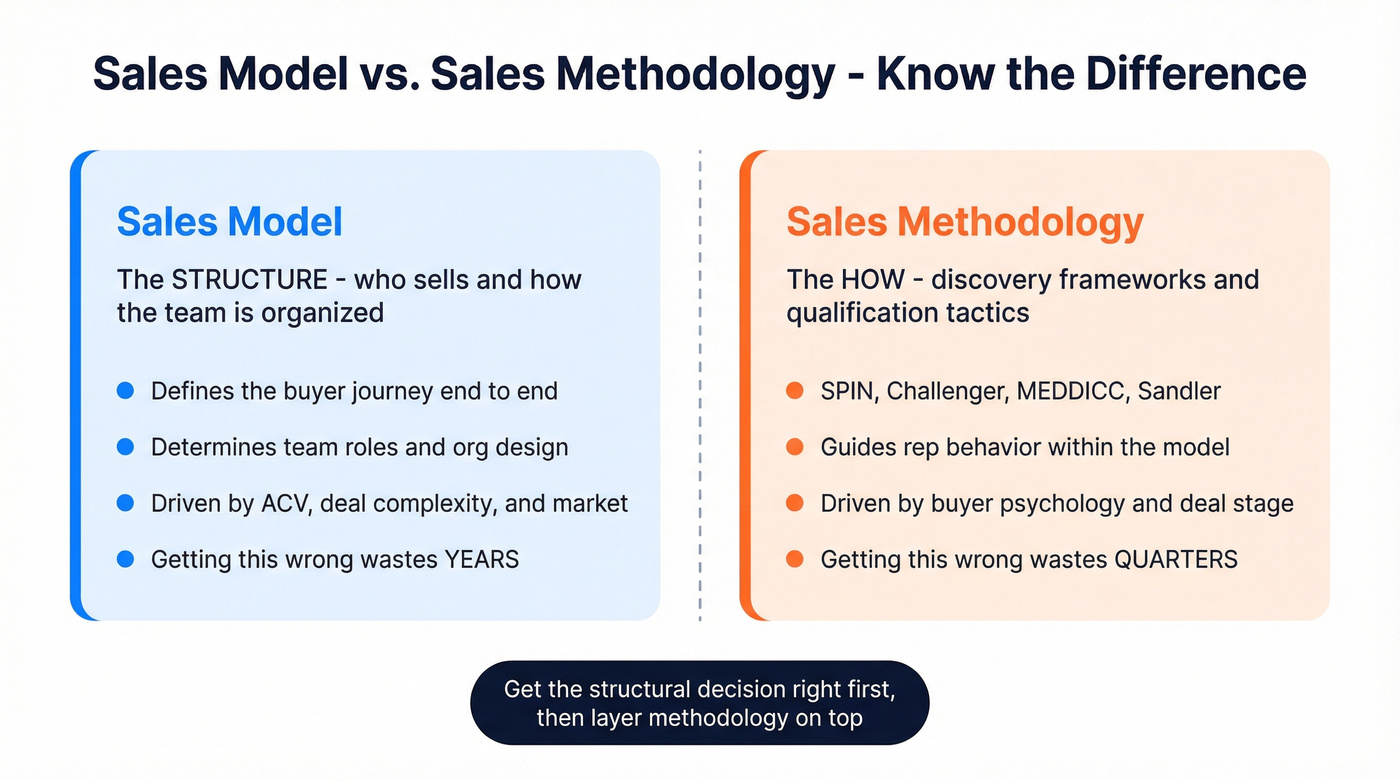
Choosing the wrong B2B sales model wastes years. Choosing the wrong methodology wastes quarters. Get the structural decision right first.
The Data Layer Behind Every Model
Every go-to-market structure depends on reaching the right people with accurate contact data. Transactional needs volume. Consultative needs precision targeting of senior decision-makers. PLG needs enrichment for the PQL-to-sales handoff - when a product-qualified lead triggers a sales touch, your rep needs a verified direct dial, not a generic info@ address. (More on that: direct dial.)
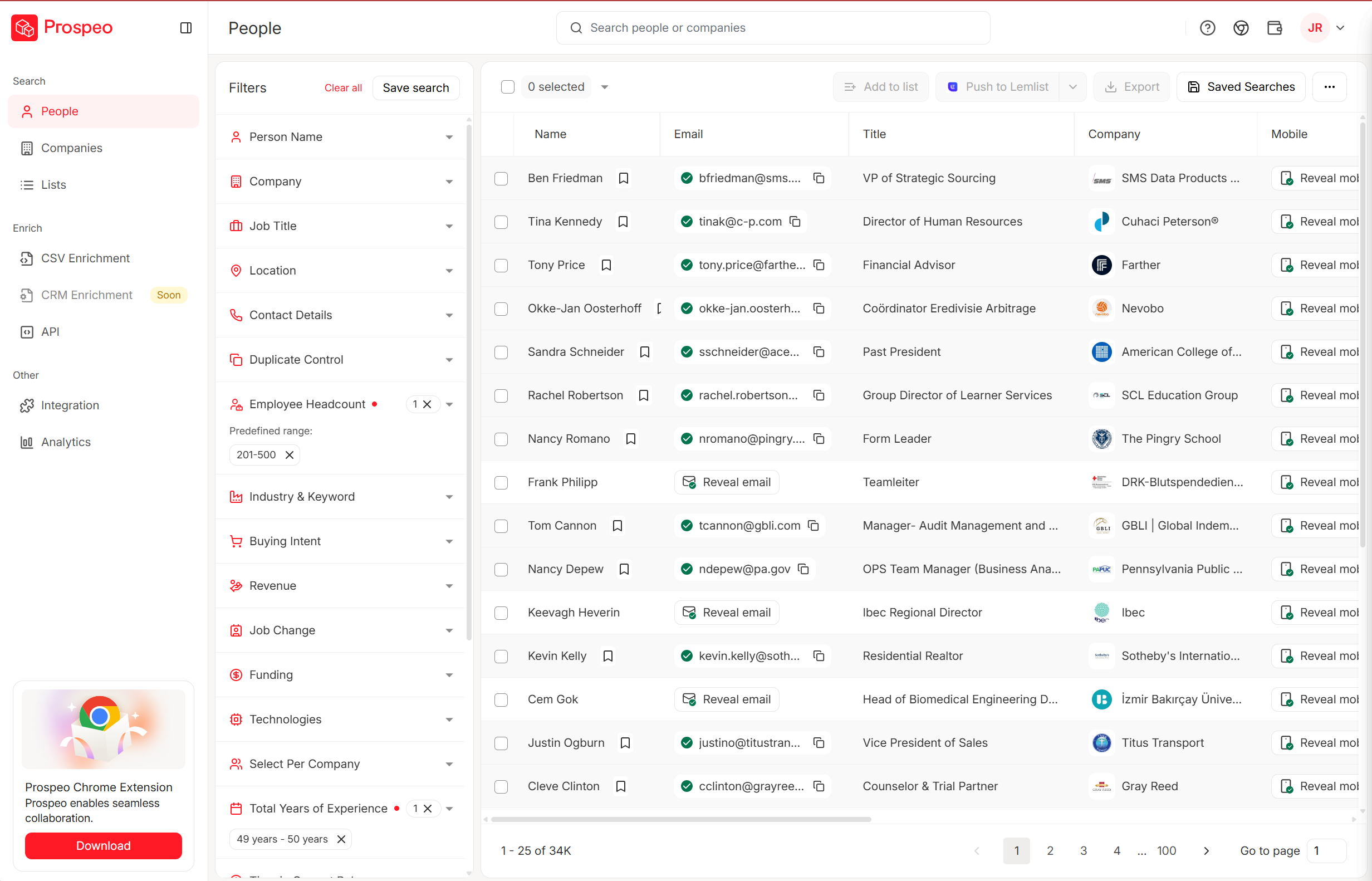
This is where we've seen teams stumble the hardest. They'll spend months perfecting their sales model, building playbooks, hiring the right reps - then feed the whole machine bad data. One customer came to Prospeo after their bounce rates hit 35%; within weeks, that dropped to under 4% on 98%-accurate emails refreshed every 7 days. With 30+ search filters including buyer intent signals across 15,000 topics, reps target accounts showing active purchase behavior instead of just firmographic matches. The 125M+ verified mobile numbers carry a 30% pickup rate, and the enrichment engine returns contact data on 83% of leads - all pushed into your CRM or sequencer without friction. (If you're fighting decay, read B2B contact data decay.)
PLG needs enrichment for the PQL handoff. Enterprise needs multi-threaded contact maps. Hybrid needs both at scale. Prospeo's enrichment API returns 50+ data points per contact at a 92% match rate - so every model gets the data layer it depends on, at $0.01 per email instead of $1.
Fuel any sales model with data that actually connects you to decision-makers.
FAQ
What's the most common B2B sales model in 2026?
Hybrid dominates. McKinsey found 85% of companies expect a mix of inside, field, and digital self-serve within three years. Pure PLG or pure enterprise is increasingly rare - most teams blend motions based on deal size and buyer stage.
How do I know if PLG is right for my product?
PLG fits when your ACV is under $5K and users can experience value without a demo. 58% of SaaS companies already run a PLG motion, but median free-to-paid conversion is only 9%. Layer PQL scoring to triple that rate.
What tools do I need to execute a B2B sales model?
At minimum: a CRM like HubSpot or Salesforce, a prospecting data platform for verified emails and direct dials, and a sequencing tool for outreach. PLG motions lean on product analytics, while enterprise requires conversation intelligence and multi-threading tools.
What's the biggest mistake teams make when picking a model?
Running an enterprise-style, high-touch process on deals under $10K ACV. The unit economics collapse - CAC payback stretches past 18 months and reps burn cycles on deals that can't justify the cost. Match your model to your deal size first, then refine methodology.