

Should You Buy Qualified Leads? The 2026 Math Says Probably Not
Your sales team burned through 500 "qualified leads" and booked 3 meetings. Cost per meeting: $8,000. Half the phone numbers were disconnected; the other half had already talked to three competitors. That's the reality of buying qualified leads in 2026 - and there's a better way to spend that budget.
The Short Version
- Go exclusive or don't bother. Shared leads are a race to first contact, and conversion craters when the same prospect gets sold to multiple buyers.
- Verify everything. Run any purchased data through real-time verification before it touches your CRM.
- Build your own list instead. SEO-driven leads close at 14.6% vs 1.7% for outbound. A B2B data platform lets you build targeted, verified lists at a fraction of what you'd pay per bought lead.
What "Buying Qualified Leads" Actually Means
Three very different things get sold under this label.
B2B contact data/lists - names, emails, and phone numbers from a database. You do the outreach. "Qualified" means the contacts match your filters.
Service-generated leads - an agency runs outbound on your behalf and delivers booked appointments. You're paying for meetings, not data.
Lead marketplaces (pay-per-lead) - a vendor generates inbound leads via ads or content, then sells those form fills to you. "Qualified" usually just means someone filled out a form. Real qualification means BANT: Budget, Authority, Need, Timeline. Most marketplace vendors check zero of those boxes, which is why teams that purchase high-intent leads from these sources are often disappointed by the actual pipeline impact.
What Qualified Leads Cost in 2026
FirstPageSage's 2026 CPL report tracks blended cost-per-lead across 30 industries:
| Industry | Paid CPL | Organic CPL | Blended CPL |
|---|---|---|---|
| Higher Education | $1,261 | $705 | $982 |
| Financial Services | $761 | $555 | $653 |
| Legal Services | $784 | $516 | $649 |
| Real Estate | $480 | $416 | $448 |
| B2B SaaS | $310 | $164 | $237 |
| HVAC | $115 | $69 | $92 |
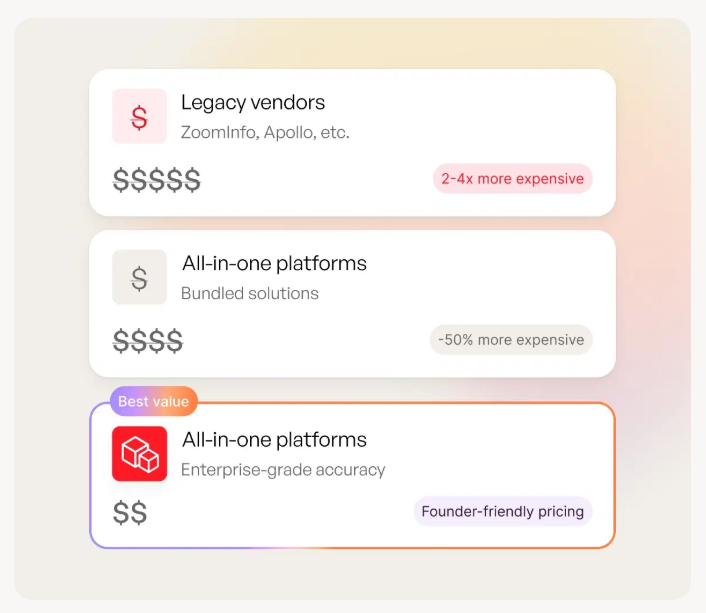
Channel matters just as much as industry. Per Sopro's benchmarks, trade shows average $840/lead while referrals come in at $25. Cold email sits at $225, SEO at $206. Company size shifts the math dramatically too - businesses with fewer than 50 employees typically pay $146/lead, while enterprise companies can see CPLs climb to $429. And these are averages for leads you generate yourself. Buying from a marketplace adds a markup on top.

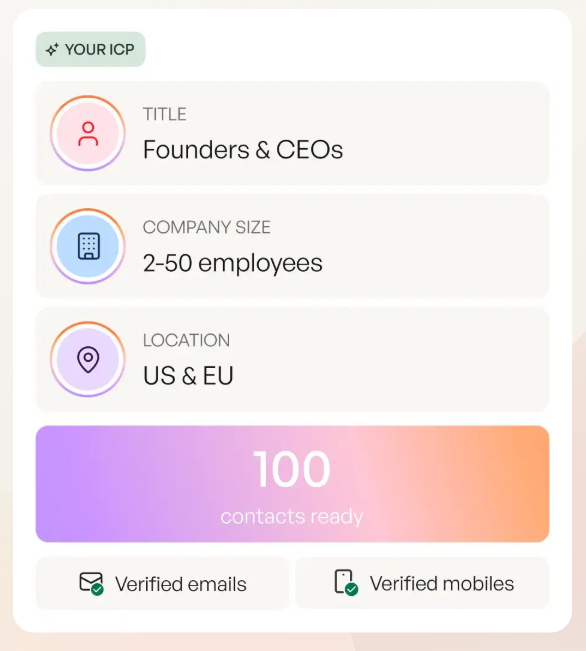
You just saw the CPL math - $237 blended for B2B SaaS, $653 for financial services. Prospeo gives you 300M+ profiles with 98% verified emails at ~$0.01 each. Layer 30+ filters including buyer intent, technographics, and job changes to build lists that are actually qualified - on your terms, not a marketplace's.
Skip the middleman. Build qualified lists that convert for pennies.
Shared vs Exclusive - The Real Math
This is where most teams get burned. The price difference looks manageable. The conversion gap isn't.
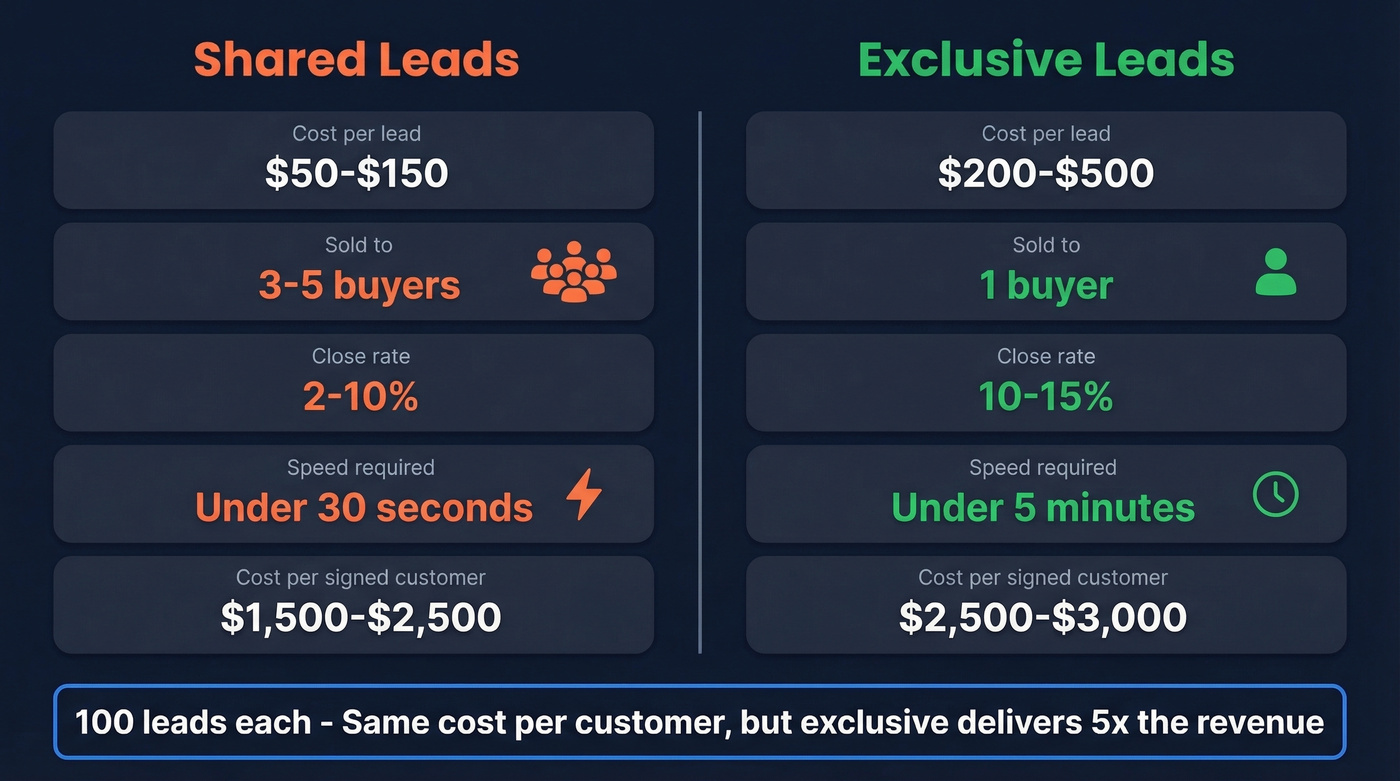
Here's what shared vs exclusive looks like in legal MVA leads, a vertical where these numbers are tracked closely:
| Factor | Shared Leads | Exclusive Leads |
|---|---|---|
| Typical cost | $50-$150/lead | $200-$500/lead |
| Sold to | 3-5 buyers | 1 buyer |
| Close rate | 5-10% | 10-15% |
| Speed required | Under 30 seconds | Under 5 minutes |
| Cost per signed customer | $1,500-$2,100 | $2,500-$3,000 |
Let's run the numbers. 100 shared leads at $50 each ($5,000) at a 2% close rate = 2 customers at $2,500 each. 100 exclusive leads at $250 each ($25,000) at 10% = 10 customers at $2,500 each. Same cost per customer, five times the revenue.
In mortgage, the gap is even uglier - shared leads convert at just 0.5-2%.
The recurring theme across r/sales and outbound communities: vendors recycle the same leads across 3-5 buyers, and by the time your rep calls, the prospect is already annoyed. Calling within 60 seconds boosts conversion by 391%. Miss that window and you've already lost.
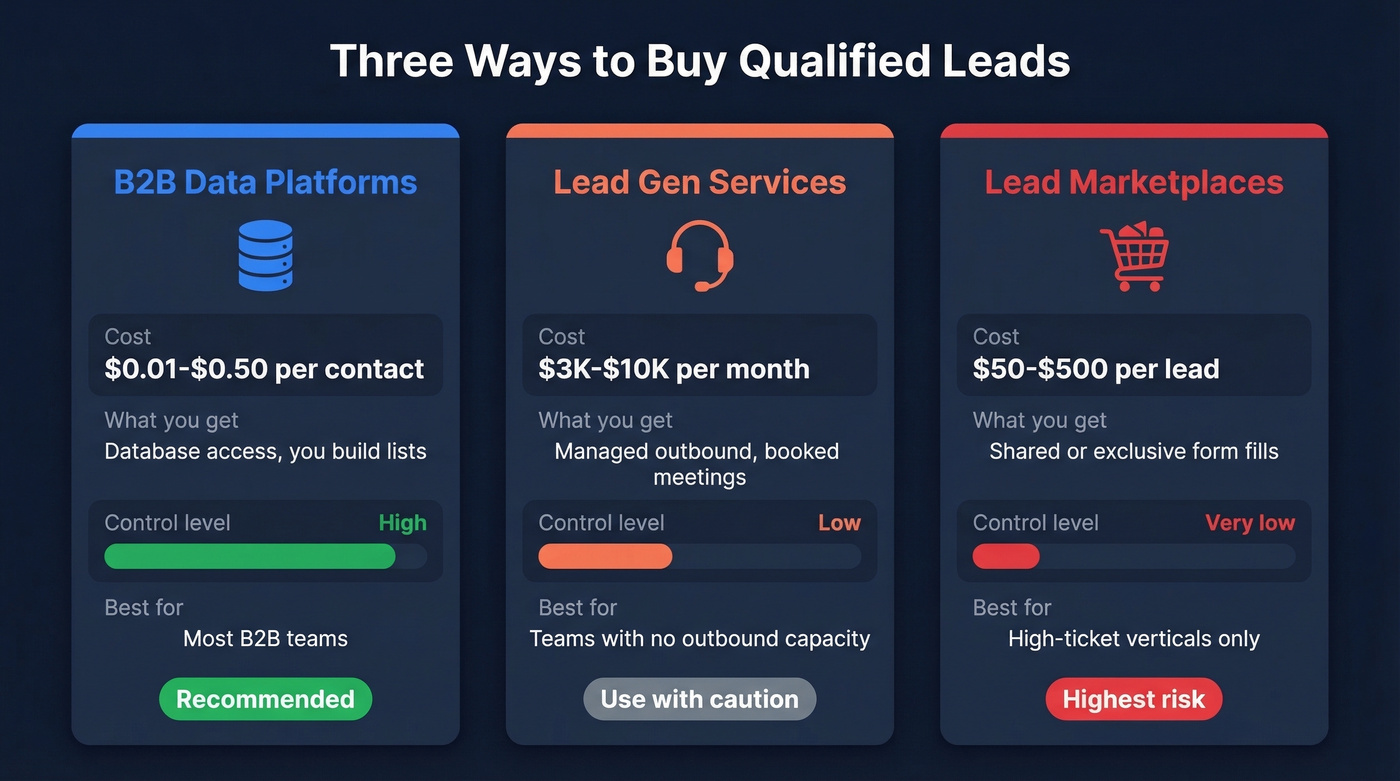
Three Ways to Buy Qualified Leads
B2B Data Platforms
This is the approach we recommend for most B2B teams. You're not buying "leads" - you're buying database access and building targeted lists yourself. You control every filter and own the data from day one.
Prospeo starts at roughly $0.01/email with a free tier of 75 verified emails/month plus 100 Chrome extension credits. The database covers 300M+ professional profiles with 30+ search filters, including buyer intent powered by Bombora across 15,000 topics, technographics via Wappalyzer, job changes, and headcount growth - all on a 7-day data refresh cycle. Email accuracy runs 98% thanks to a proprietary 5-step verification process with catch-all handling, spam-trap removal, and honeypot filtering. In our testing, teams using Prospeo book 26% more meetings than ZoomInfo users and 35% more than Apollo users.

Apollo.io offers a generous free tier and paid plans from roughly $49-$99/mo per user - strong for SMB teams starting outbound. ZoomInfo is the enterprise default at $15K-$40K/year, though you're paying for features most teams never activate. UpLead starts at $99/mo for 170 credits, decent for small teams needing verified emails without a big commitment.
If you're comparing vendors, start with a shortlist of sales prospecting databases and validate accuracy with data enrichment services before you commit.
Lead Generation Services
Belkins charges $3K-$10K/mo with a pay-per-appointment option. CIENCE runs $5K-$8K/mo for managed outbound. SalesRoads comes in around $4K/mo.
The tradeoff: you're outsourcing your pipeline. If the vendor's targeting is off, you're burning months and five figures before you know it. We've seen teams lock into six-month contracts only to realize the vendor was targeting the wrong ICP by month three.
If you do outsource, make sure your ideal customer profile is explicit and your lead scoring rules are agreed in writing.
Lead Marketplaces
Pay-per-lead marketplaces sell shared leads to multiple buyers and exclusive leads to one. Vendors like Modernize (home services) and EverQuote (insurance) dominate this space.
Here's the thing: we've watched teams pour $10K/month into marketplaces and struggle to break even. The leads are real people, but they've already been contacted by your competitors.
If your average deal size sits below $10K, you almost certainly don't need to purchase leads at all. A $237 blended CPL on a $5K deal is a losing formula. Build your own list and run your own sequences.
To make self-sourced outbound work, lean on proven sales prospecting techniques and tighten your sequence management.
How to Spot Bad Leads and Stay Compliant
Three fraud patterns to watch: bot-generated form fills, form spamming where the same person gets submitted to dozens of vendors, and identity misuse where real names are paired with wrong contact info. On your first batch from any new vendor, check 20-30 leads by hand before scaling. Negotiate replacement credits for invalid numbers and duplicates - most vendors offer 24-72 hour dispute windows.
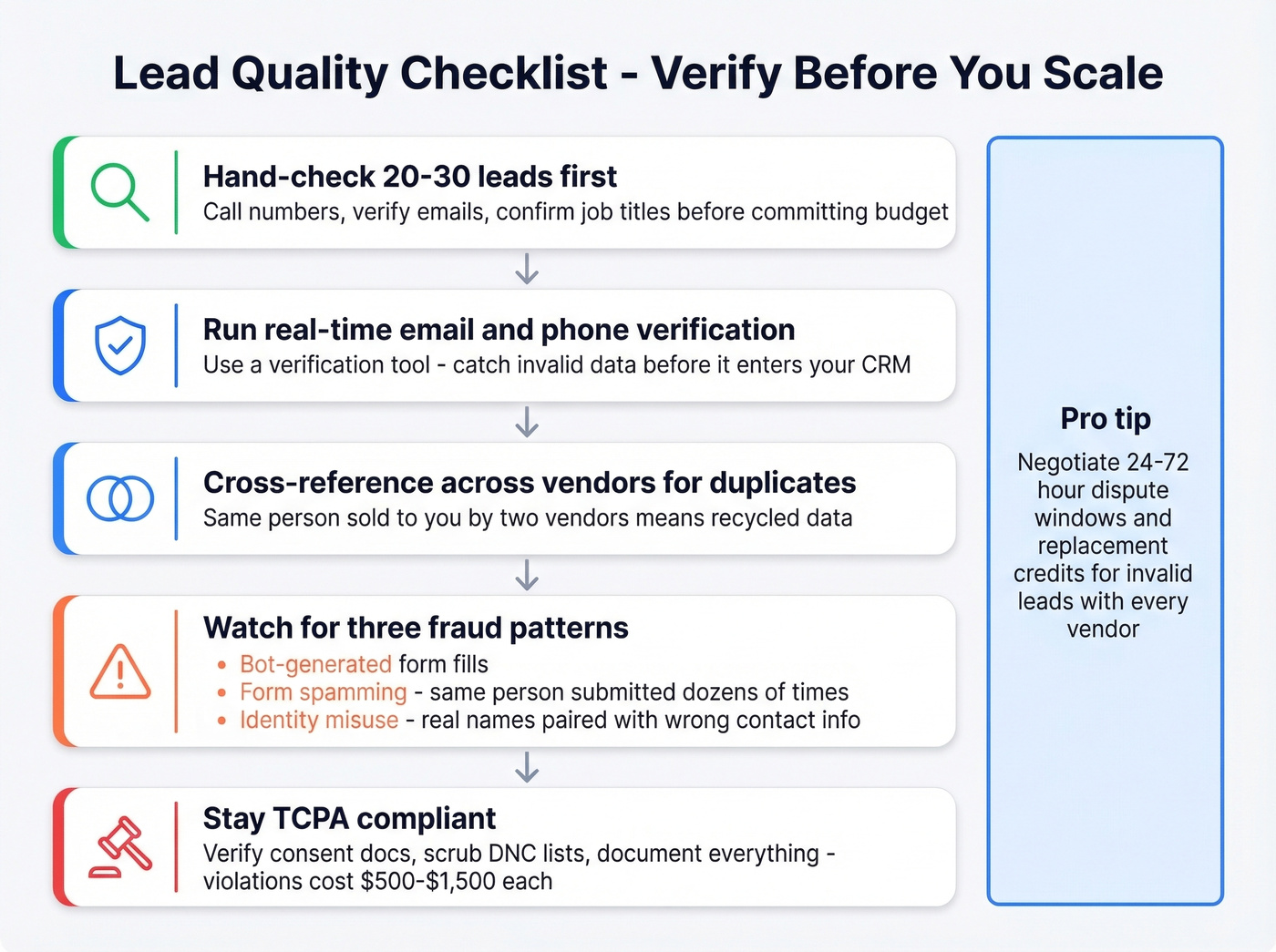
Your prevention stack: CAPTCHA on all forms, real-time email and phone verification, cross-referencing across vendors to catch duplicates, and quality scoring before leads hit your CRM.
On the legal side, TCPA still carries $500-$1,500 per violation in statutory damages. The Eleventh Circuit struck down the FCC's one-to-one consent rule in Insurance Marketing Coalition v. FCC, but that doesn't mean you can skip consent documentation. Verify consent, validate phone and email, and scrub against DNC lists before making a single call.
If you're unsure where the line is, read our breakdown on Is It Illegal to Buy Email Lists?.
Build Your Own List Instead
The data makes this argument pretty clearly. SEO-driven leads close at 14.6% compared to 1.7% for outbound. But even within outbound, self-built lists using a B2B data platform convert multiples better than purchased leads - because you control targeting, data quality, and timing.
At $0.01/lead, a 1,000-contact list costs $10. Compare that to $20,000-$150,000 for 1,000 shared marketplace leads, or $100,000-$500,000 for 1,000 exclusive ones. The economics aren't even close.
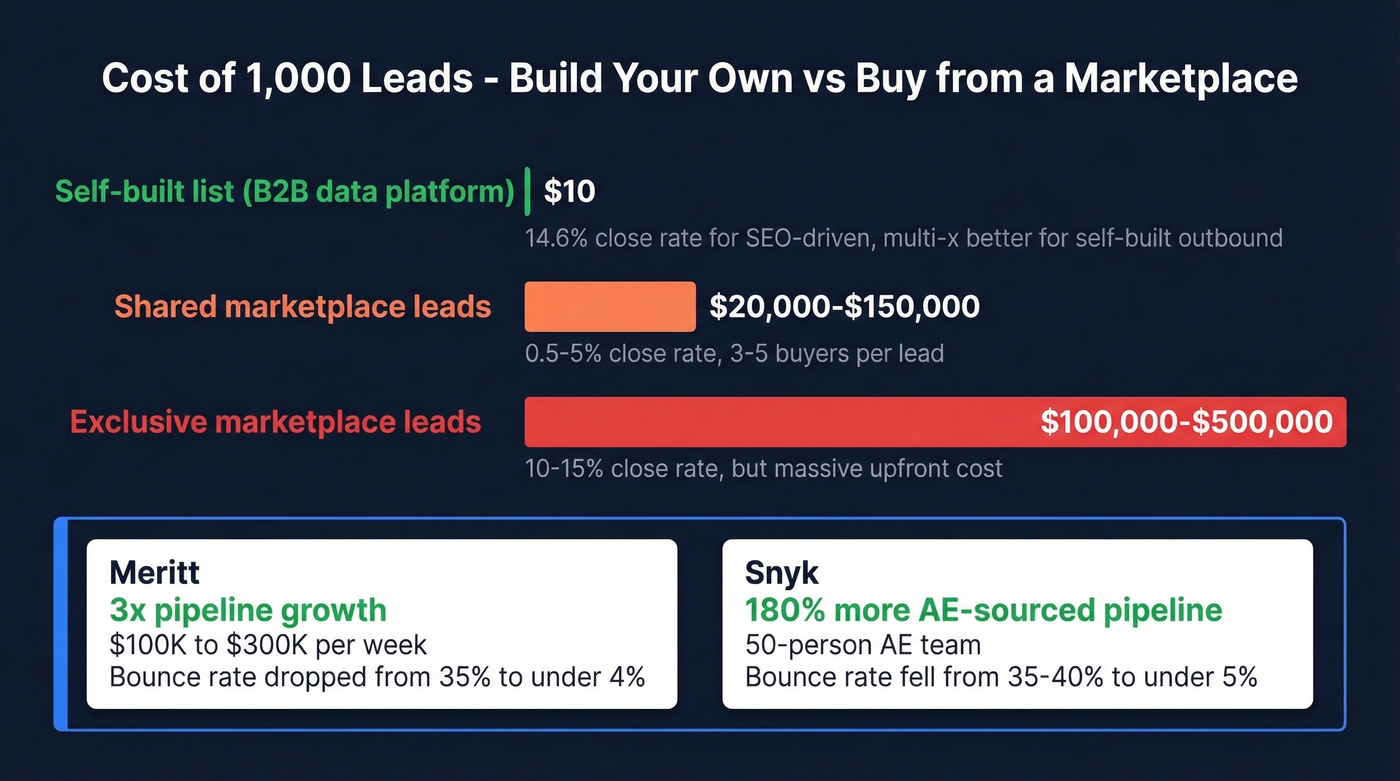
Meritt tripled their pipeline from $100K to $300K/week after switching to self-built lists, and their bounce rate dropped from 35% to under 4%. Snyk's 50-person AE team saw similar results - bounce rates fell from 35-40% to under 5%, and AE-sourced pipeline climbed 180%.
Buying leads isn't inherently wrong. For teams in high-ticket verticals like insurance or legal with strong speed-to-lead processes, exclusive marketplace leads can work. But for most B2B teams, building your own list with verified data, running your own sequences, and owning the entire pipeline is the smarter play. You'll convert better, spend less, and never race four competitors to the same phone number.
If you want to pressure-test the economics, model it against your cost to acquire customer and your current sales conversion rate.
Shared leads convert at 2% because your prospect already talked to three competitors. With Prospeo's 7-day data refresh and proprietary 5-step verification, you reach decision-makers first - with accurate contact data. Teams using Prospeo book 26% more meetings than ZoomInfo users and 35% more than Apollo users.
Own your pipeline instead of renting someone else's recycled list.
FAQ
Is it legal to buy qualified leads?
Yes, purchasing lead data is legal in the US and EU. However, TCPA penalties run $500-$1,500 per violation for improper contact. Always verify consent documentation and scrub against DNC lists before calling. The risk isn't in buying - it's in reaching out without proper consent.
What's a good cost per lead in 2026?
B2B SaaS averages $237 blended CPL; financial services runs $653; HVAC comes in at $92. The number that actually matters is cost per customer - divide total lead spend by closed deals. A $50 lead that never converts is infinitely more expensive than a $500 lead that closes.
What's a cheaper alternative to buying leads from a marketplace?
B2B data platforms let you build verified lists for roughly $0.01/email - thousands less than marketplace leads. Apollo.io and UpLead are also solid options. You control the targeting filters, data freshness, and outreach timing instead of competing with other buyers for the same prospect.
Do shared leads actually convert?
Rarely well enough to justify the spend. Shared leads convert at 0.5-5% in most industries because 3-5 buyers contact the same prospect simultaneously. Exclusive leads cost 2-4x more upfront but deliver 2-5x higher close rates, often resulting in the same or lower cost per customer. Skip shared leads unless you can guarantee sub-30-second response times.