How to Build a Channel Partner Strategy That Actually Works
Microsoft generates 95% of its commercial revenue through partners. Cisco: 80%. Salesforce: 75%. These aren't outliers - they're the blueprint. If your GTM motion doesn't include a channel partner strategy, you're leaving pipeline on the table that your competitors are already picking up.
The 2026 Ecosystem Compass Report, based on data from 5,000+ partner programs, found that 68% of companies report higher close rates when partners are involved, and 64% say more than half of their new customers come through partner-influenced or co-sold deals. Channel isn't a nice-to-have. It's the primary revenue engine for the companies winning right now.
What You Need (Quick Version)
- Define your ICP first. If you can't describe your ideal customer in one sentence, you're not ready for channel.
- Start with 3-5 partners, not 30. Build a playbook that works, then scale it.
- Measure CAC payback, not partner count. Fifty inactive partners are worse than three productive ones.
Here's the thing most channel guides won't tell you: 75% of global B2B transactions flow through channel partners, but most early-stage programs fail because they recruit too fast and enable too slowly. If your ACV sits below $25K and you haven't closed 50 direct deals yet, you probably don't need a partner program at all - you need a better direct sales motion. The framework below is built for teams that have crossed that threshold.
What Is a Channel Partner Strategy?
A channel partner strategy is a structured plan for selling your product through third-party companies - resellers, integrators, referral partners, or marketplace listings - rather than, or alongside, your direct sales team. It defines who you partner with, how you compensate them, and how you prevent conflict between your direct and indirect motions.
Most teams miss a critical distinction. Partner-sourced pipeline, where the partner originates the deal, and partner-influenced pipeline, where your team sources but the partner helps close, are different animals requiring different tracking, different compensation, and different enablement. Treating them the same is how you end up with attribution fights that poison the program.
Types of Channel Partners
Not all partners serve the same function:
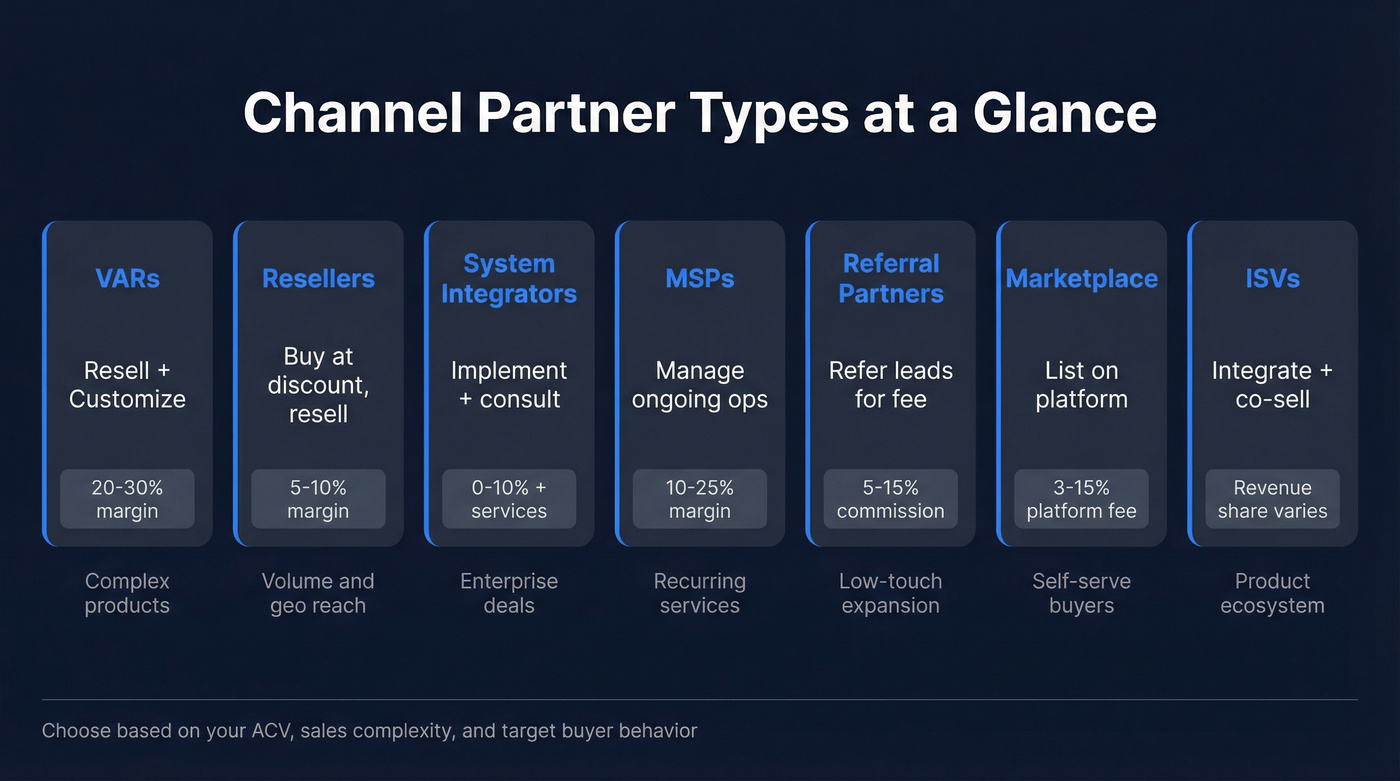
| Type | Role | Typical Margin/Fee | Best For |
|---|---|---|---|
| VARs | Resell + customize | 20-30% | Complex products |
| Resellers/Distributors | Buy at discount, resell | 5-10% | Volume, geo reach |
| System Integrators | Implement + consult | 0-10% + services | Enterprise deals |
| MSPs | Manage ongoing ops | 10-25% | Recurring services |
| Referral Partners | Refer leads for fee | 5-15% commission | Low-touch expansion |
| Marketplace | List on platform | 3-15% platform fee | Self-serve buyers |
| ISVs | Integrate + co-sell | Revenue share varies | Product ecosystem |
TD Synnex and Ingram Micro dominate two-tier distribution - they're the middlemen between you and thousands of resellers. AWS Marketplace and Salesforce AppExchange are the marketplace plays, where buyers increasingly consolidate spend through existing cloud commitments. Marketplaces are projected to drive $45B+ in revenue by 2026.
The BVP guide to SaaS channel partnerships draws a useful line between service partners - SIs who implement but don't necessarily resell - and VARs who resell and add services. Getting this distinction wrong leads to misaligned compensation and frustrated partners.
When to Build a Channel Program
You're ready if:
- You've proven product-market fit with direct sales
- Your ICP is defined and documented
- You have a repeatable sales motion, not just a few hero deals
- Someone on your team can own partner enablement full-time
You're not ready if:
- You can't articulate your ICP in one sentence
- You don't have a direct sales playbook yet
- No one has bandwidth to manage partners
Channel partners amplify your GTM motion. An undefined motion means you're amplifying chaos. We've seen teams launch partner programs before they've closed 50 direct deals, and it almost always ends with a dead portal and burned relationships. Skip this until you have a repeatable direct engine.
7-Step Framework
Step 1: Set Revenue Targets
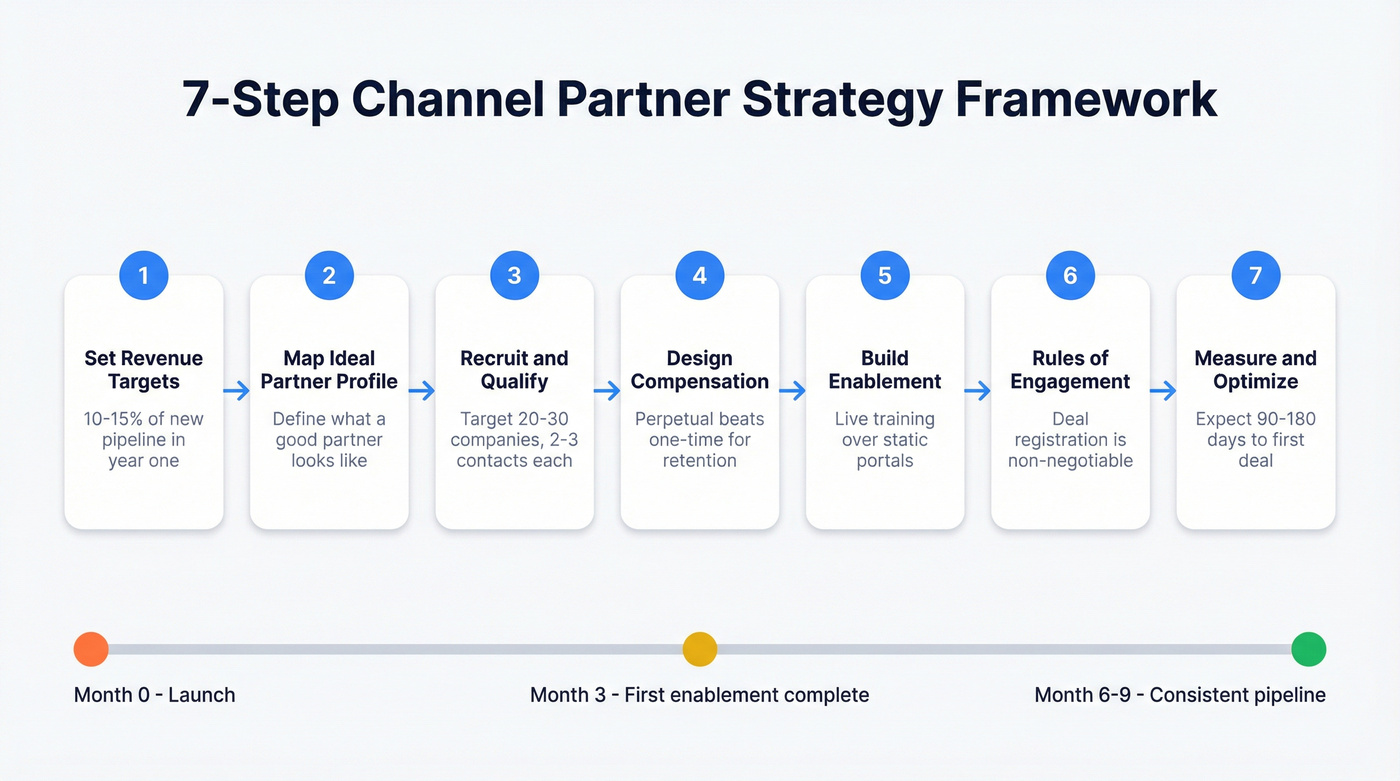
Start with a number. What percentage of new ARR should channel contribute in 12 months? Mature programs contribute up to 28% of total company revenue, but a realistic first-year target is 10-15% of new pipeline.
Your checklist before recruiting a single partner:
- First-year channel ARR target defined
- Target verticals or geos selected
- Internal channel owner assigned
- Direct sales playbook documented
"We want partners" isn't a strategy. "We want 3 VARs generating $500K in partner-sourced pipeline in healthcare by Q4" is.
Step 2: Map Your Ideal Partner Profile
This mirrors your ICP exercise, but for partners. Consider their customer base overlap with your ICP, technical capabilities, sales capacity, and geographic footprint. A referral partner serving 200 mid-market SaaS companies is more valuable than a massive SI who'll shelve you next to 400 other vendors.
Be specific about what "good" looks like before you start recruiting. We've found that writing a one-page ideal partner profile - just like you'd write a buyer persona - saves weeks of wasted outreach later.
Step 3: Recruit and Qualify
Here's where most programs stall. Not because they can't find partners, but because they reach out to the wrong people with bad contact data. You need verified contact information for VP of Alliances, Head of Partnerships, and Channel Manager titles at your target companies. Prospeo's database lets you filter by job title, company size, and industry across 300M+ profiles with 98% email accuracy and a 7-day data refresh, so you're reaching people who are actually still in the role.

Build a target list of 20-30 potential partner companies. Reach out to 2-3 contacts at each. Lead with what's in it for them - revenue opportunity, customer demand, competitive differentiation - not a pitch about your product features. The consensus on r/sales is clear: partners ignore cold outreach that reads like a vendor pitch. Open with a specific revenue opportunity tied to their existing customer base.
Step 4: Design Compensation
Compensation drives behavior. Get this wrong and partners will deprioritize you.
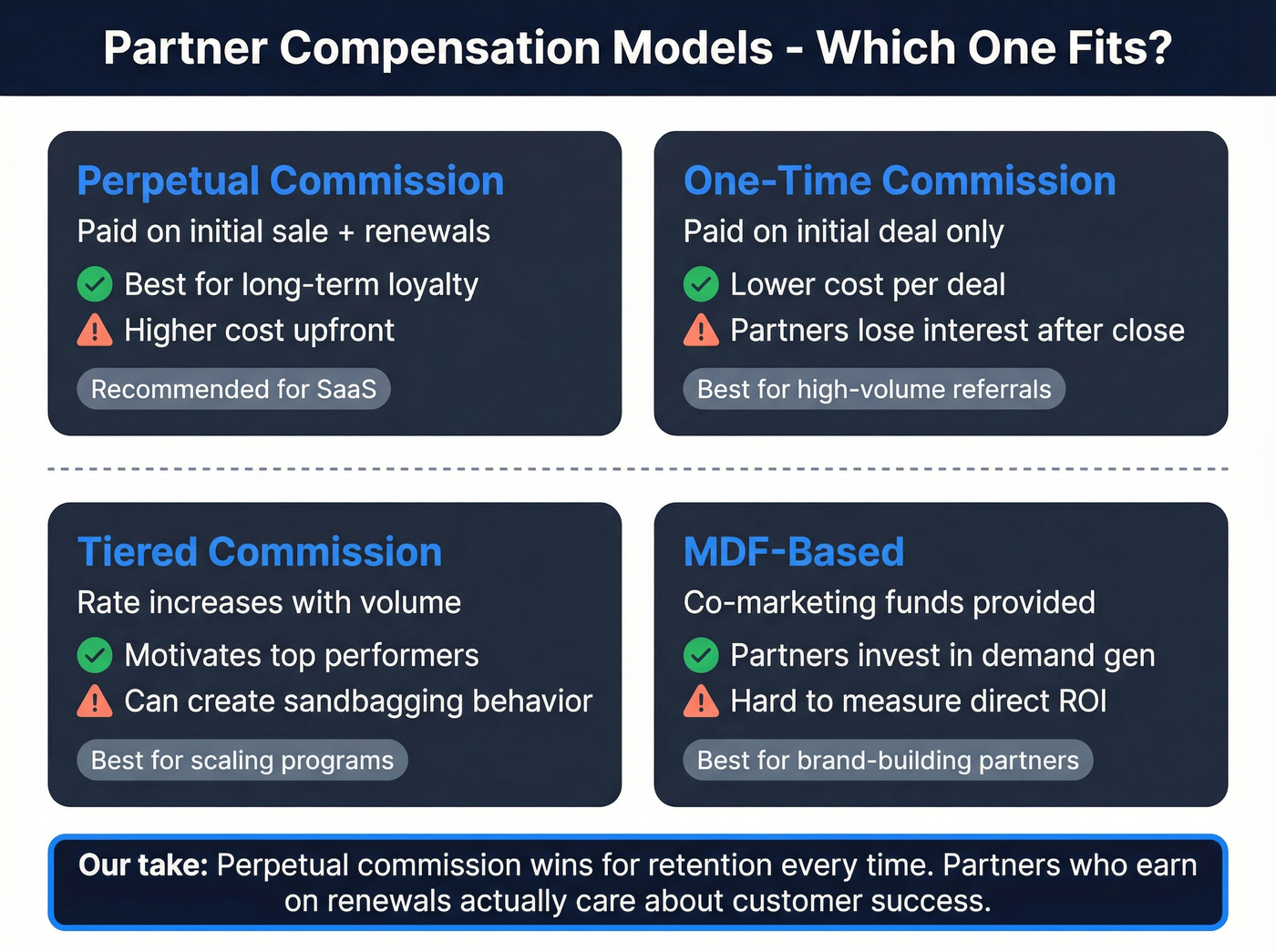
| Commission Type | Structure | Best For |
|---|---|---|
| Perpetual | Paid on initial + renewals | Long-term partner loyalty, retention |
| One-time | Paid on initial deal only | Lower cost, high-volume referrals |
| Tiered | Rate increases with volume | Motivating top performers |
| MDF-based | Co-marketing funds | Partners investing in demand gen |
We've tested both perpetual and one-time commission models across multiple programs - perpetual wins for retention every time. It costs more upfront but creates partners who actually care about customer success, not just deal closing.
Step 5: Build Enablement
Real talk: most partner portals are graveyards. The "portal nobody logs into" is the most common failure mode in channel.
A shared Google Drive with organized folders beats a $1,000+/month PRM that nobody uses. At minimum, you need sales playbooks, competitive battle cards, co-branded marketing assets, and a clear demo environment. Invest in live training sessions over static documentation - partners remember conversations, not PDFs. Schedule monthly office hours where partners can bring live deals and get help positioning. That single tactic does more for activation than any portal redesign.
Step 6: Rules of Engagement
Deal registration is non-negotiable. Without it, partners and AEs fight over the same accounts, and the partner always loses.
Do: Require deal registration. Make AE comp neutral - same payout regardless of deal source. Add a kicker for partner-assisted deals.
Don't: Let AEs "take back" registered deals. Run parallel direct outreach into accounts a partner is working. Change territory rules mid-quarter without partner input.
If AEs see partners as competition for quota, the program is dead on arrival. A well-defined go-to-market approach ensures your direct team and indirect team pull in the same direction rather than fighting over the same accounts.
Step 7: Measure and Optimize
Expect 90-180 days for your first partner-sourced deal and 6-9 months before consistent pipeline. In our experience, the first 90 days should be about enablement, not revenue. Front-load training and co-sell on early deals to compress ramp time. Start with 3-5 partners. Build a playbook. Then scale.

Your channel partner recruitment stalls when you're emailing outdated contacts. Prospeo's 300M+ profiles refresh every 7 days - so when you search for VP of Alliances or Head of Partnerships titles, you're reaching people who actually hold that role today. Filter by company size, industry, and job title to build your ideal partner list in minutes.
Stop pitching partnership leads who changed roles six weeks ago.
Preventing Channel Conflict
Simon-Kucher's research on partner strategy frames the core tension well: the shift from "sell and run" to "sell and care" in SaaS means partners aren't just closing deals - they're supporting onboarding, adoption, and renewal. Conflict that burns a partner relationship doesn't just cost you one deal. It costs you the entire lifecycle revenue that partner would've influenced.
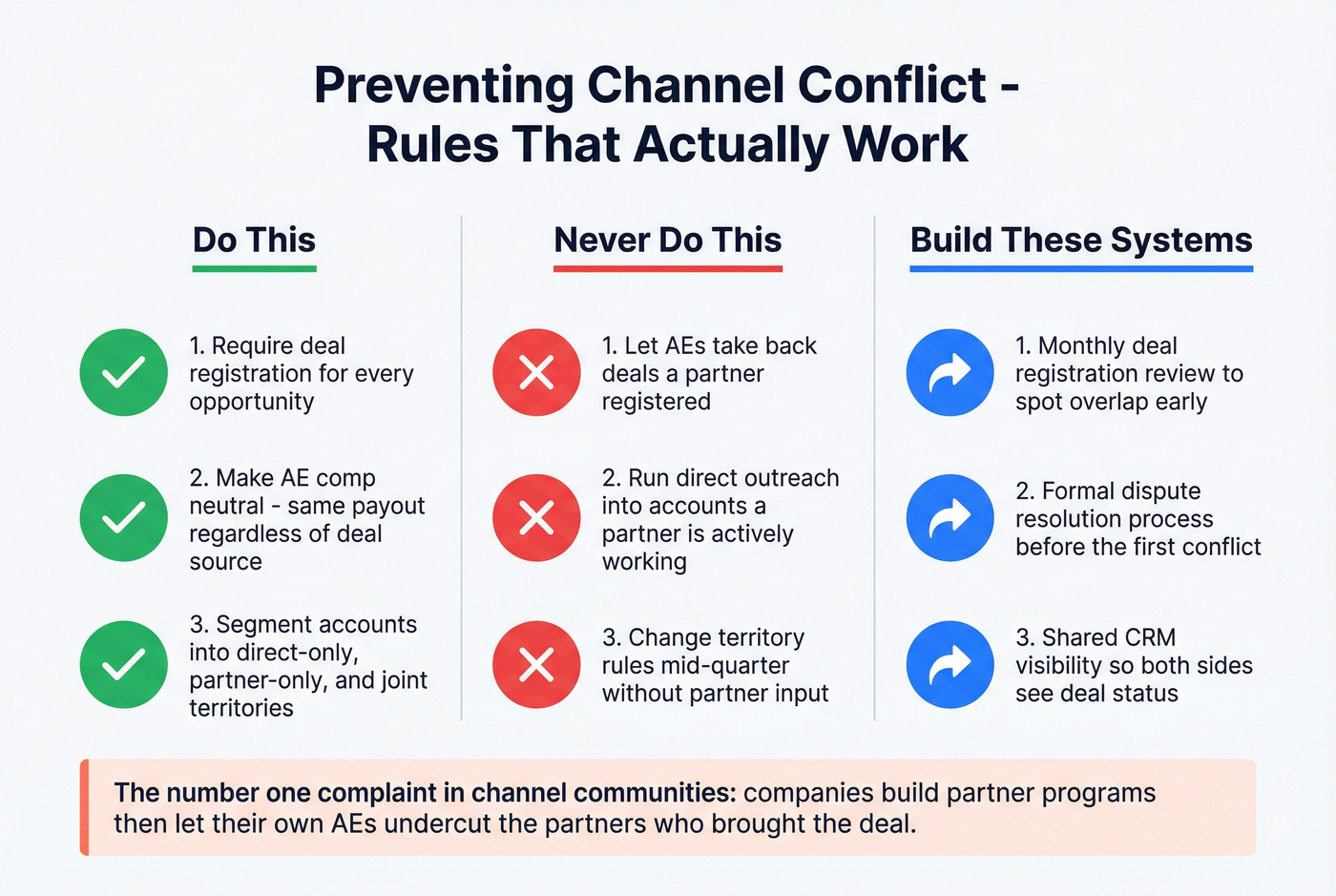
Segment accounts into direct-only, partner-only, and joint territories based on deal size, vertical, or geography. Review deal registration data monthly to spot overlap patterns early. Establish a formal dispute resolution process before the first conflict happens - not after. This is the #1 complaint in channel sales communities: companies build partner programs, then let their own AEs undercut the partners who brought the deal.
How to Measure Channel ROI
Five KPIs separate programs that get budget from programs that get cut.
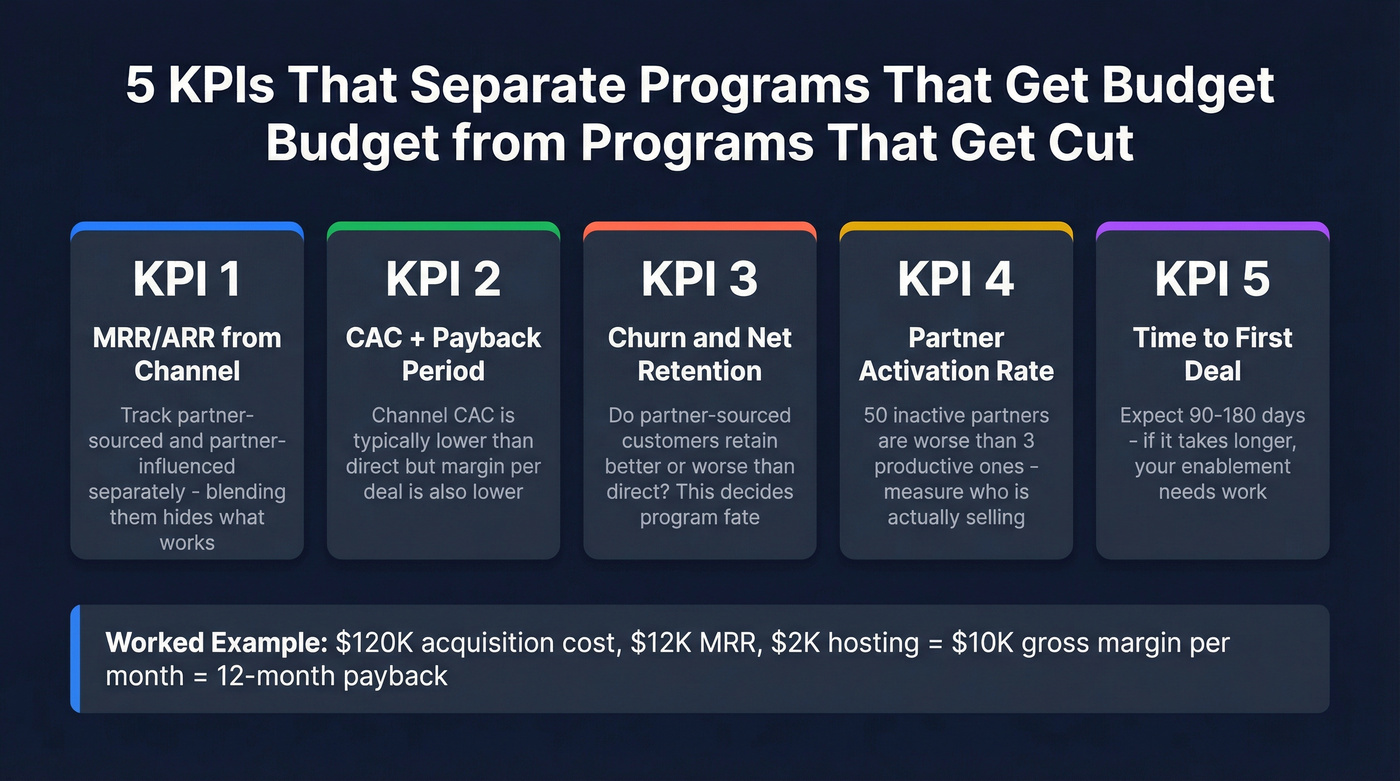
MRR/ARR Growth from Channel - Track partner-sourced and partner-influenced revenue separately. Blending them makes it impossible to know what's working.
CAC + Payback Period - Worked example: $120K acquisition cost, $12K MRR, $2K hosting = $10K gross margin/month. That's a 12-month payback. Channel CAC is typically lower than direct because you're paying variable commissions instead of fixed salaries, but margin per deal is also lower.
Churn and Net Retention - A 97% vs 103% net retention rate looks like a 6-point gap. Over three years, it's the difference between a shrinking book and a growing one. Partner-influenced customers often retain better because the partner provides ongoing support.
Customer Lifetime Value - $10K gross margin/month x 60 months = $600K CLV. This is the number that makes executives fund channel.
CLV:CAC Ratio - $600K / $120K = 5x return. Anything above 3x is healthy. The Partnership Leaders framework breaks down each metric with worked examples worth bookmarking. For a deeper dive into which channel partner metrics to track at each program stage, Impartner's analytics guide is a solid reference.
PRM Tools and Costs
| Tool | Starting Price | Best For |
|---|---|---|
| Kiflo | $299-$799/mo | SMBs, early programs |
| Leadfellow | ~$199/mo | Referral-focused |
| Channeltivity | $1,199-$1,699/mo | Mid-market, structured |
| Salesforce PRM | $10-$25/user/mo | Salesforce-native orgs |
| Allbound | $500-$2,000+/mo | Content-heavy enablement |
| PartnerStack | $1,500+/mo + % | Affiliate/marketplace |
| Impartner | $2,000+/mo | Enterprise, 50+ partners |
Look, PRM software is overpriced for most early-stage programs. For your first 10 partners, a well-configured CRM with custom objects for deal registration works fine. Save the $1,000+/month until you have 50+ active partners and your spreadsheet-based tracking is genuinely breaking. Salesforce PRM at $10-25/user/month is the exception - if you're already on Salesforce, the add-on cost is reasonable.
Mistakes That Kill Programs
Recruiting too many partners too fast. The 80/20 rule is brutal in channel: 20% of partners drive 80% of revenue. Start small, prove the model, then scale.
Granting exclusivity in year one. Exclusive partnerships create dependency that limits growth and future M&A options. Keep your options open until a partner proves they can deliver consistent pipeline.
Running unpaid pilots. If a partner won't commit to a paid trial, they're not serious. Unpaid engagements drain resources and rarely convert.
No rollback clauses. Every partner agreement needs an exit ramp. Without them, you're locked into relationships that aren't working with no clean way out.
Ignoring activation. You launched a partner portal six months ago. Twelve partners signed up. Two have logged in. Zero deals closed. Sound familiar? Signing partners isn't the hard part - activating them is. Partner-referred leads often arrive with incomplete contact data, so run them through a CRM enrichment tool before your sales team wastes cycles on dead leads.
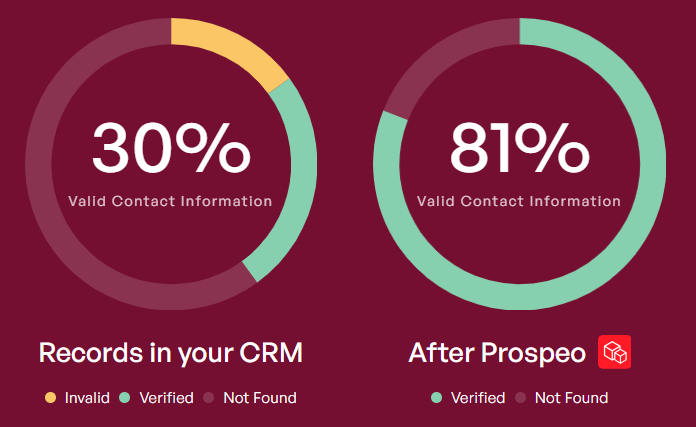
The framework says recruit 20-30 target partner companies and reach 2-3 contacts at each. That's 60-90 verified emails you need before a single conversation happens. At $0.01 per email with 98% accuracy, Prospeo gets you there for under a dollar - with direct dials from 125M+ verified mobiles when email alone won't cut it.
Recruit your first five channel partners without a single bounce.
Partner Agreement Checklist
Every partner agreement should cover these essentials (have legal review each one):
- Partnership terms - scope, duration, renewal conditions
- Commission structure - rates, payment timing, perpetual vs one-time
- Roles and responsibilities - who owns what in the sales cycle
- Decision-making - unanimous vs majority, escalation paths
- Deal registration - submission process, approval timeline, expiration
- Market development funds - budget, eligible activities, reimbursement
- Territory and segmentation - geographic, vertical, or account-based boundaries
- Pricing guardrails - minimum advertised price, discount authority
- Brand usage - logo usage, co-marketing approval process
- Dispute resolution - mediation first, then arbitration
- Exit and dissolution - notice period, customer transition, data handling
- Rollback clauses - conditions for unwinding specific commitments
FAQ
How long before a channel program generates pipeline?
Expect 90-180 days for your first partner-sourced deal and 6-9 months before consistent pipeline appears. Front-loading enablement - live training, co-selling on early deals - compresses ramp significantly. Don't judge the program on revenue in the first quarter.
How many partners should I start with?
Three to five. That's enough to test your playbook across different partner types without spreading enablement too thin. Scale only after at least two partners are consistently sourcing pipeline.
Channel partners vs direct sales - which wins?
They're complementary, not competing. Channel delivers lower CAC but narrower margins. Most B2B companies above $10M ARR run both - channel handles geographic expansion while direct covers strategic accounts. The strongest programs layer indirect distribution on top of a proven direct motion.
What's the biggest channel program mistake?
Over-recruiting. Signing 30 partners in month one creates admin overhead with zero pipeline. The 80/20 rule applies ruthlessly - invest deeply in a small cohort before scaling.
How do I find contacts at potential partner companies?
Search for VP of Alliances, Head of Partnerships, or Channel Manager titles at your target organizations. Prospeo lets you filter by job title, company size, and industry across 300M+ profiles to find verified emails and direct dials, so your outreach lands instead of bouncing.