How to Launch ABM - The Practitioner's Playbook for Teams Without a $50K Platform Budget
A lot of teams run their first ABM pilot with a small account list, the CRM they already have, and a modest data budget - and still create real pipeline fast. Other teams spend weeks evaluating 6sense and Demandbase before sending a single personalized email. If you're figuring out how to launch ABM, that gap is the whole story: teams confuse buying a platform with launching a program.
66% of companies are increasing ABM spend, yet only 52% actually measure ROI. Money's flowing in, but process isn't keeping up. Salesloft documented a deal with 32 people in the buying group that took nearly two years to close - the final blocker was a newly hired project manager nobody had mapped. That's what ABM is really about: reaching the right humans inside complex accounts, not running display ads at logos.
What You Need Before Launch
Before you read another word, here's the starter kit:
- Sales-marketing alignment on 10-25 target accounts. Not 500. Not "the TAM." A short list everyone agrees on.
- A scoring model to tier those accounts. Even a simple spreadsheet with fit + intent signals works (see ABM lead scoring if you want a tighter model).
- Verified contact data for the buying committee. This is where most programs die - 43% of ABM practitioners cite unreliable data as their top challenge. If you’re troubleshooting bounces, use an email checker tool or a dedicated email ID validator.
- Two channels and a 30-day timeline. Email plus one more. That's it.
You don't need a $50K ABM platform. You need a process.
7 Steps to Launch ABM
Step 1: Align Sales and Marketing on Goals
46% of ABM practitioners say sales-marketing alignment is their biggest challenge, and 93% say full alignment is crucial to success. Everyone knows alignment matters. Nobody does the boring work to make it happen.
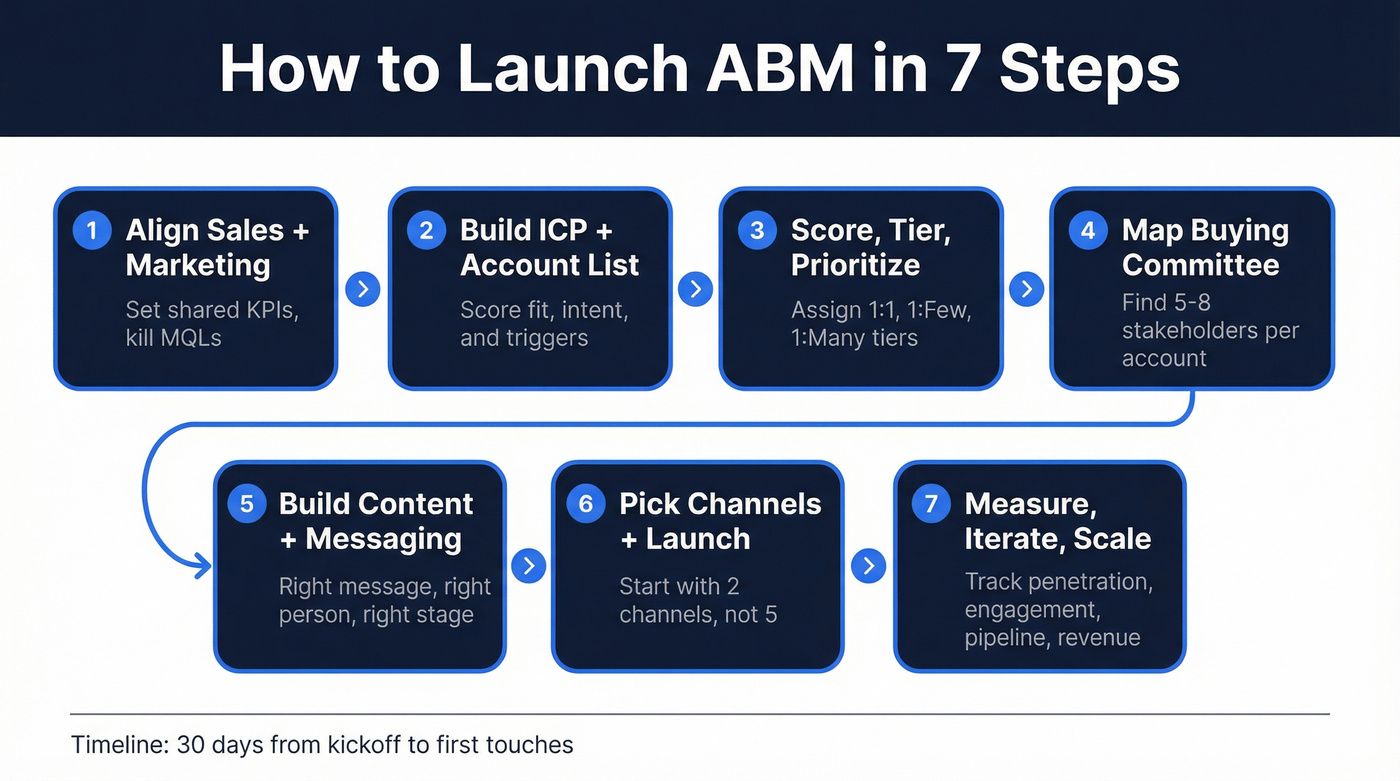
Start with a single meeting. Get sales and marketing leadership in a room and agree on three things: which accounts you're targeting, what "success" looks like in 90 days, and who owns what. Set specific pipeline targets, not vague "increase engagement" aspirations.
Shared KPIs matter more than shared Slack channels. Track pipeline generated, account engagement scores, and meetings booked. Kill MQLs as a metric for ABM - they incentivize volume over precision. Then set a monthly ABM forum where both teams review progress, surface blockers, and adjust the account list (a lightweight internal QBR format works well here). Cognism reported generating $700K+ pipeline from ABM in H1 2025 using this exact cadence. We've seen similar results with our own clients who commit to that monthly rhythm - the teams that skip it invariably drift back into siloed workflows within two quarters.
Step 2: Build Your ICP and Account List
Your ICP isn't a persona doc gathering dust in Google Drive. It's a scoring model with weighted criteria across three dimensions: firmographic (industry, revenue, headcount, geography), technographic (what tools they use), and behavioral (intent signals, job changes, funding rounds). If you need a refresher on the data layer, start with firmographic and technographic data.
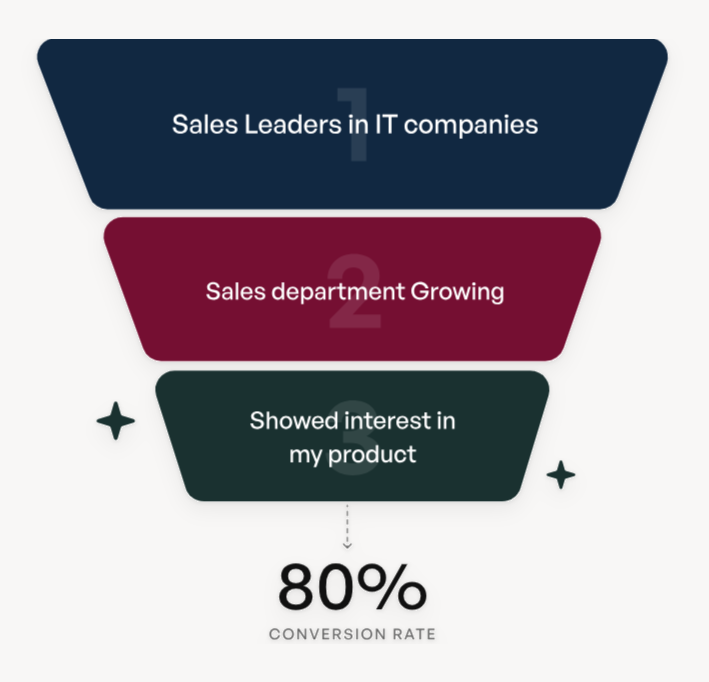
The best account selection uses what's often called signal stacking - blending a fit score with a trigger score. A Series B fintech that just hired a VP of Revenue and is researching your category? Tier 1. A Fortune 500 that technically fits your ICP but shows zero buying signals? Park it.
One critical constraint from Walker Sands' ABM framework: select no more than 5 accounts per person. If your SDR is "managing" 50 accounts, they're doing outbound with extra steps.
Step 3: Score, Tier, and Prioritize
Once you've got your account list, build a scoring model using the xGrowth framework. Choose parameters based on your ABM goal - acquisition scoring weights fit signals like industry and tech stack, while expansion scoring weights buying signals like website visits and RFP participation. Define a scoring scheme with max and min points for each parameter, then assign weights. If you're selling into mid-market SaaS, company size carries 3x the weight of geographic location. For a deeper scoring walkthrough, see ABM account prioritization.
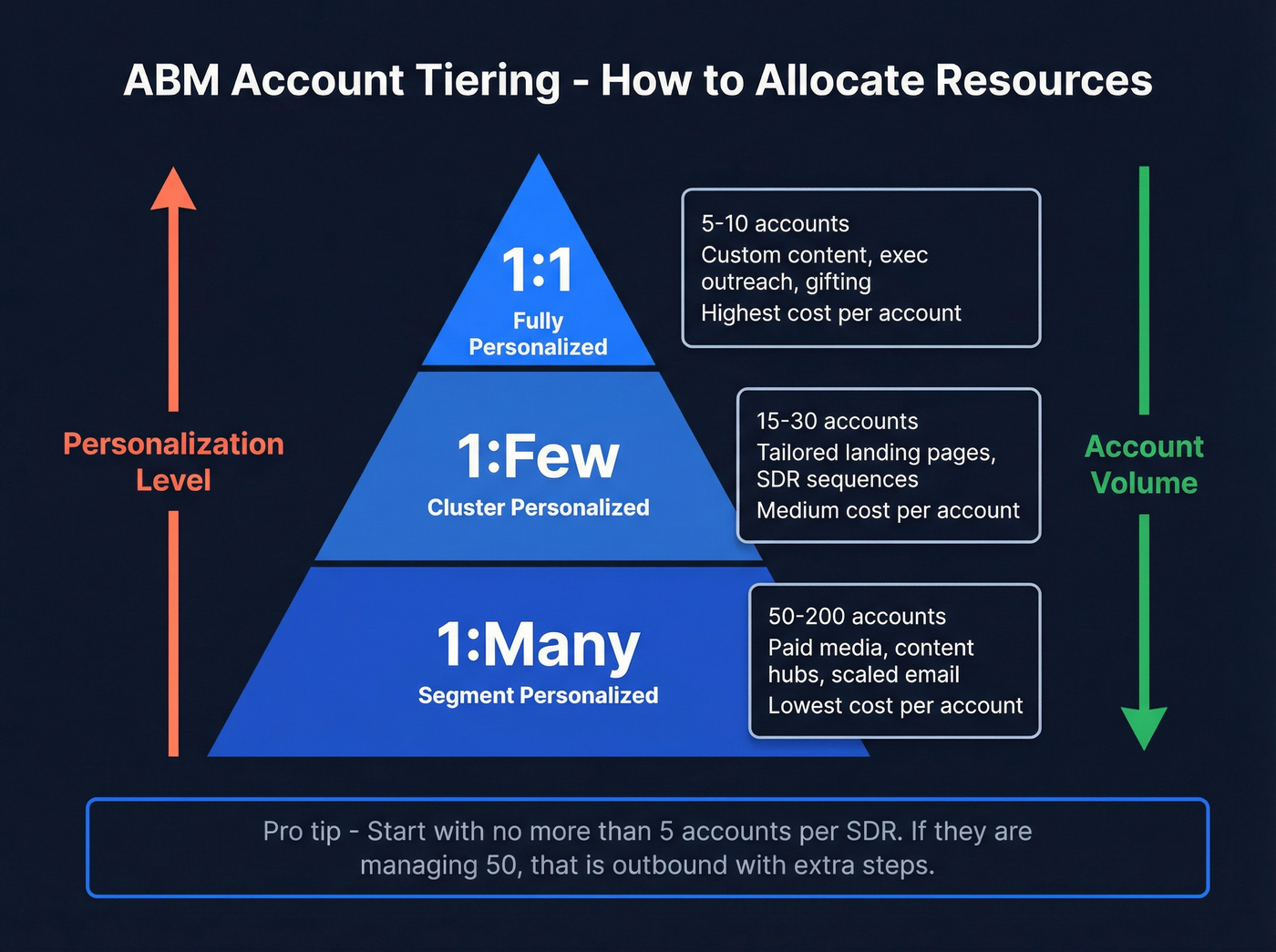
Then tier your accounts:
| Tier | Approach | Resource Level | Example |
|---|---|---|---|
| 1:1 | Fully personalized | High | Custom content, exec outreach, gifting |
| 1:Few | Cluster-personalized | Medium | Tailored landing pages, SDR sequences |
| 1:Many | Segment-personalized | Low | Paid media, content hubs, scaled email |
This tiering determines everything downstream - content, channels, and budget allocation. Don't overthink it. The point is to stop treating every account the same.
Step 4: Map the Buying Committee
Remember that 32-person buying group? You don't need to map 32 people for every account. But you do need 5-8 stakeholders per target account:
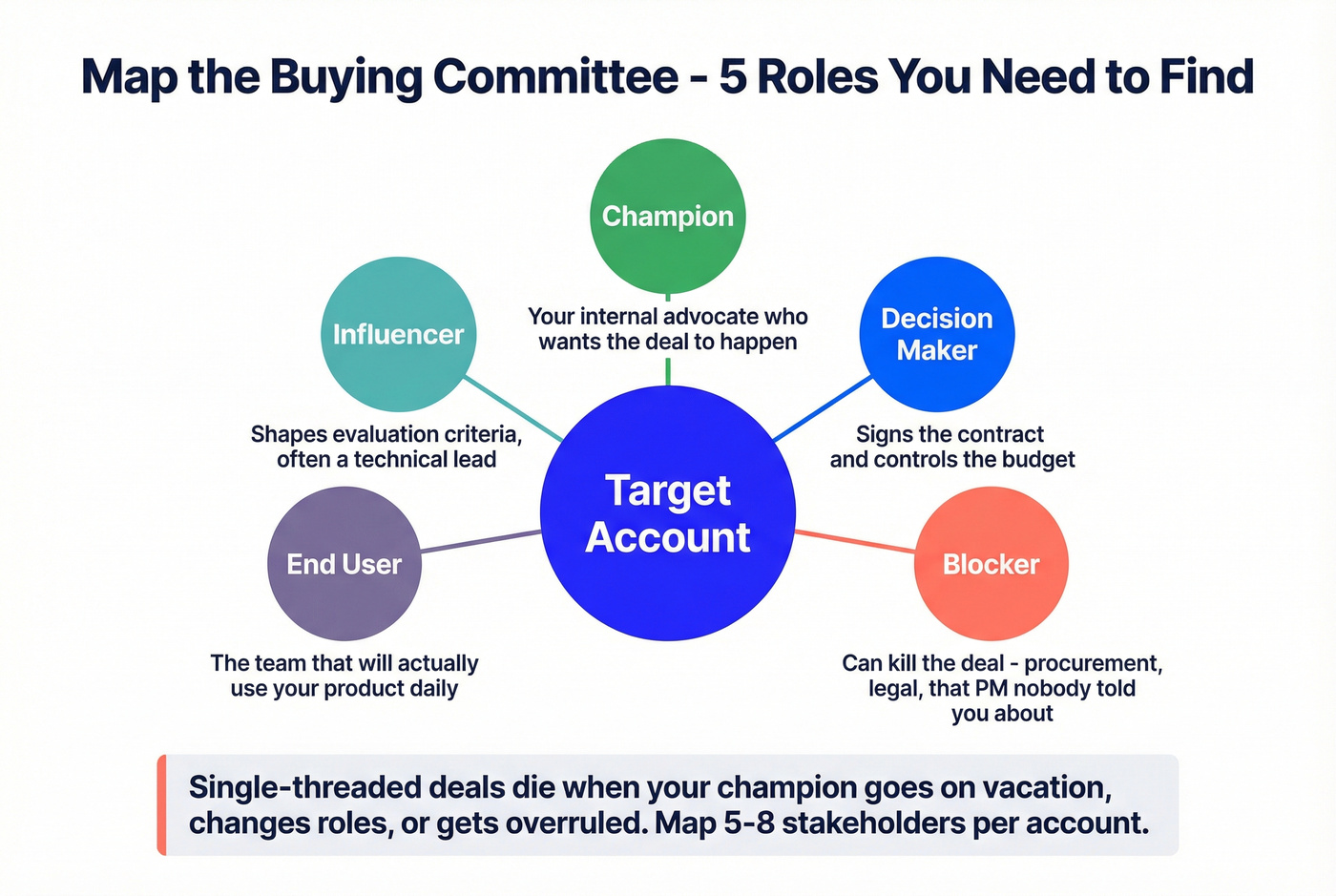
- Champion - your internal advocate who wants the deal to happen
- Decision-maker - signs the contract, controls the budget
- Influencer - shapes evaluation criteria, often a technical lead
- Blocker - the person who can kill the deal (procurement, legal, that PM nobody told you about)
- End user - the team that'll actually use your product daily
Multithreading isn't optional. Single-threaded deals die when your champion goes on vacation, changes roles, or gets overruled. The whole point of account-based marketing is treating the account as a unit, not a single contact. If you want a tighter definition + plays, see what is multithreading in sales.
Here's the thing: this step is where we see most teams stall. They've got the account list, they've tiered it beautifully, and then they can't find verified contact info for the buying committee. Use Prospeo's Chrome extension to pull verified emails and direct dials for each stakeholder - 98% email accuracy on a 7-day data refresh cycle, so your buying committee info isn't stale by launch day.
Step 5: Build Content and Messaging
Content in ABM isn't "more blog posts." It's the right message for the right person at the right stage, calibrated to your tier.
| Tier | Top of Funnel | Mid-Funnel | Bottom of Funnel |
|---|---|---|---|
| 1:Many | Industry reports, thought leadership | Webinars, case studies | ROI calculators |
| 1:Few | Custom landing pages | Tailored demos | Competitive battlecards |
| 1:1 | Personalized video | Account-specific research | Executive briefings, gifting |
Don't create content in a vacuum. Walker Sands recommends a content audit before you build anything new - you already have case studies, decks, and blog posts that can be repurposed with account-specific framing. Start at account-level personalization for Tier 1 and segment-level for 1:Many. Individual-level only makes sense for your top 5-10 accounts. If you’re building the outbound layer alongside content, borrow a few patterns from these outreach email templates.
Step 6: Pick Channels and Launch
Start with two channels. Not five. Not "omnichannel orchestration" on day one.
Owned channels like email sequences are cheapest and most controllable. Paid channels - targeted display ads or sponsored content - extend your reach. For most teams launching an account-based program, personalized email sequences plus one paid channel is the winning combination. Tier 1 accounts might also get direct mail through a platform like Reachdesk.
Let's be honest about orchestration: if a prospect sees an ad about your platform's reliability and then gets a cold email about pricing with no context, you've wasted both touches. Your SDR's email, your display ads, and your content should tell a coherent story to the same account. That sounds obvious, but in our experience, it's the first thing that breaks when marketing and sales operate on different calendars. If you’re expanding beyond email, use a simple B2B omnichannel marketing plan so touches don’t conflict.
Step 7: Measure, Iterate, Scale
ABM measurement follows a four-stage funnel that's fundamentally different from demand gen.
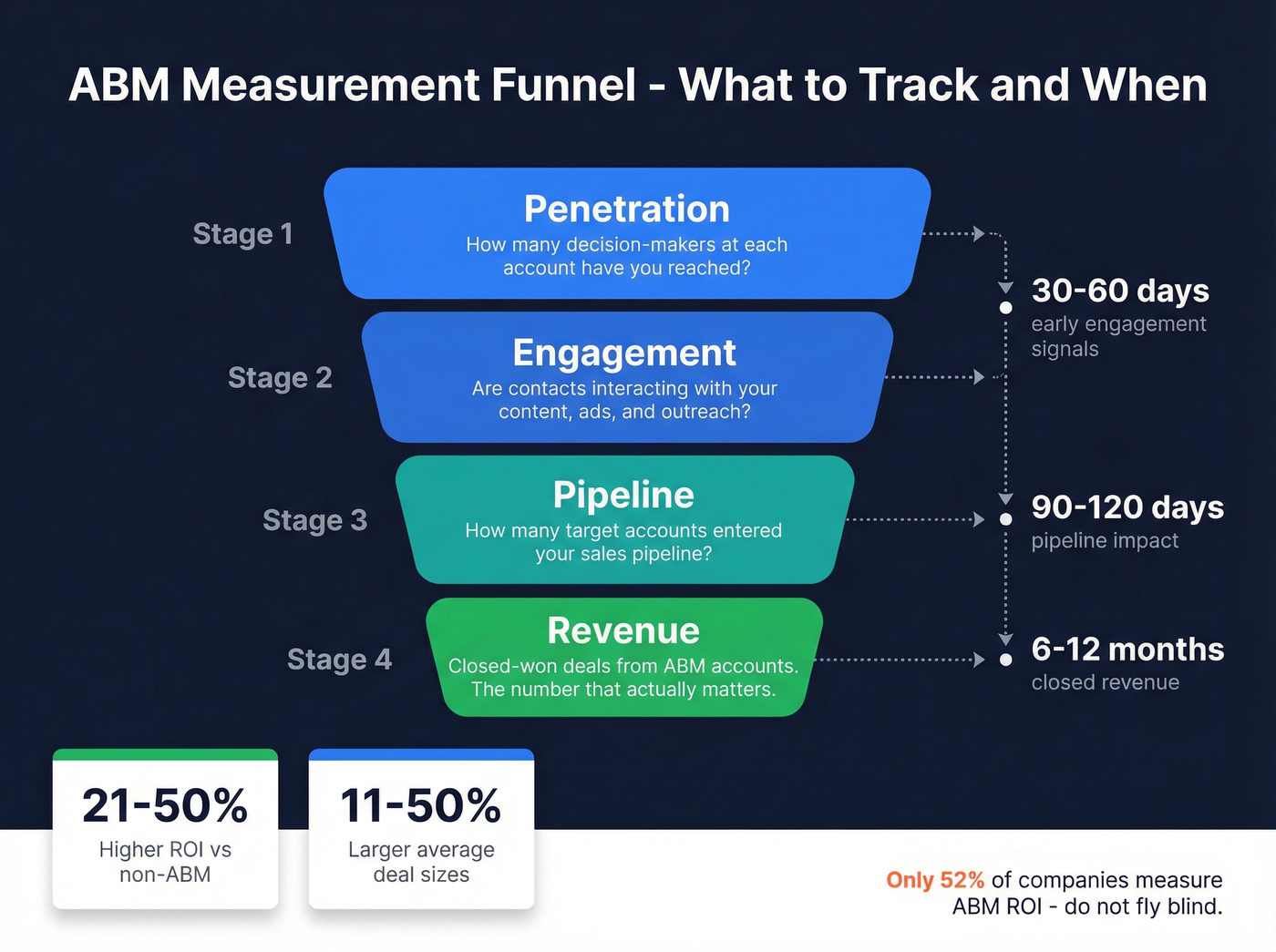
Penetration - How many decision-makers at each target account have you reached? If you've mapped 6 stakeholders but only contacted 2, your penetration is 33%.
Engagement - Are those contacts interacting with your content, ads, and outreach? Track account-level engagement scores, not individual click rates.
Pipeline - How many target accounts have entered your sales pipeline? What's the average deal size compared to non-ABM accounts?
Revenue - Closed-won deals from ABM accounts. The number that actually matters.
ABM programs deliver 21-50% higher ROI versus non-ABM approaches, with 11-50% larger average deal sizes. Expect early engagement signals in 30-60 days and pipeline impact at 90-120 days. Review monthly. Only 52% of companies measure ABM ROI - don't fly blind. If you want the dashboard formulas, use this ABM reporting guide.

43% of ABM programs fail because of bad contact data. Prospeo gives you 98% verified emails and 125M+ direct dials on a 7-day refresh cycle - so your buying committee map is accurate on launch day, not outdated before your first sequence sends.
Stop stalling at Step 4. Map every stakeholder with data you trust.
Your 30-Day ABM Launch Plan
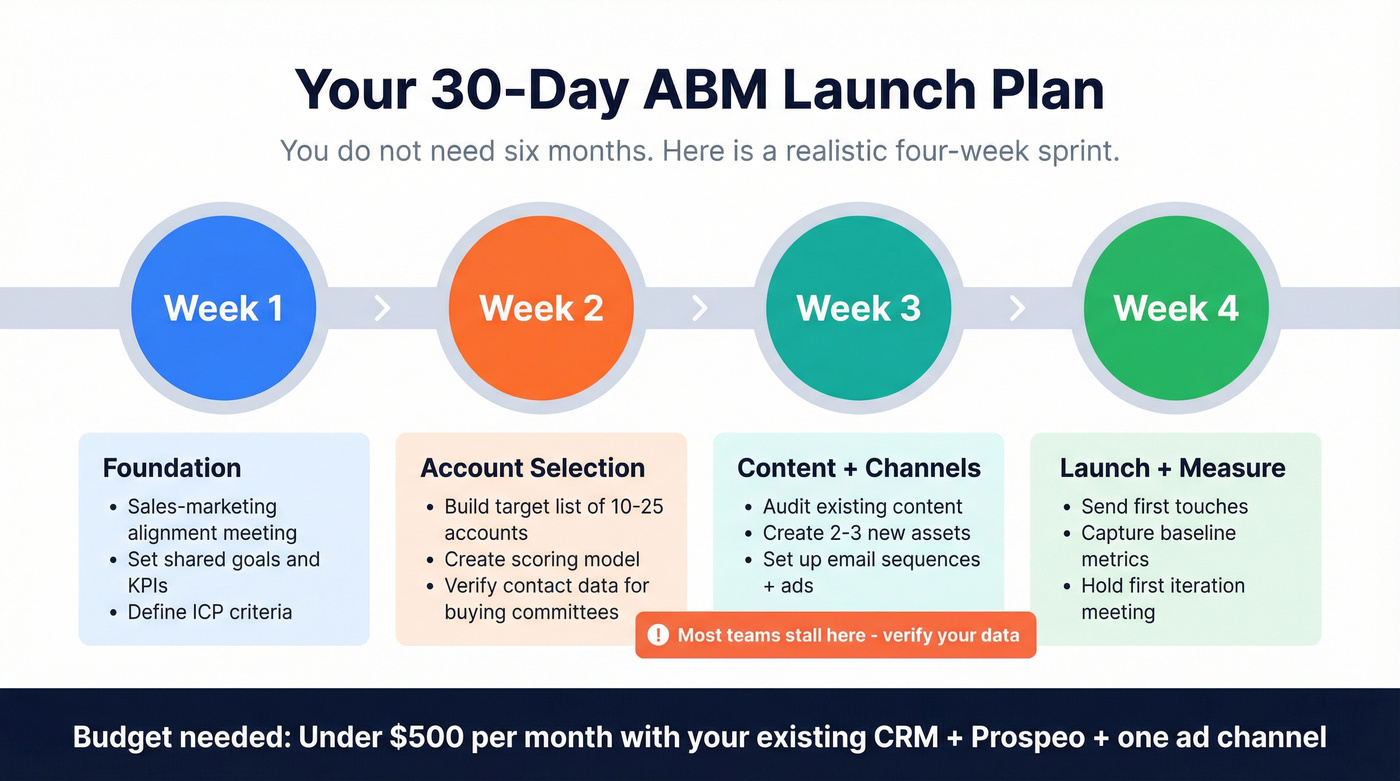
You don't need six months. Here's a realistic four-week sprint:
| Week | Focus | Key Deliverables |
|---|---|---|
| Week 1 | Foundation | Sales-marketing alignment meeting; shared goals and KPIs; ICP criteria defined |
| Week 2 | Account selection | Target account list of 10-25; scoring model built; contact data verified |
| Week 3 | Content + channels | Content audit; 2-3 new assets created; channel setup for email sequences + ads |
| Week 4 | Launch + measure | First touches sent; baseline metrics captured; first iteration meeting |
This is adapted from Walker Sands' 10-day sprint, expanded to give teams breathing room for content creation and data validation. Week 2 is where most teams stall - they pick accounts but don't verify the contact data. Smartsheet offers free ABM templates for strategy, campaign calendars, and reporting that work well as scaffolding for your first launch.
ABM Tech Stack for 2026
64% of B2B marketing teams now run an account-based or target-account strategy, but that doesn't mean you need an enterprise platform to start.
Bare-bones stack (launch-ready for under $500/month): the CRM you already have - HubSpot, Salesforce, whatever - plus a data platform like Prospeo and one ad channel. Prospeo's free tier gives you 75 emails/month to start, and paid plans run roughly $0.01/email with no contracts. Layer in intent data tracking 15,000 topics via Bombora to prioritize accounts showing active buying signals before you spend a dollar on ads. (If you’re new to the concept, start with intent signals.)
Full stack (scale when you've proven the model): Add a dedicated ABM platform, standalone intent data, gifting, and conversation intelligence.
| Tool | Role | Approx. Annual Cost |
|---|---|---|
| HubSpot Pro | CRM + ABM features | ~$10K+/yr depending on seats and modules |
| Salesforce Enterprise | CRM | ~$20-30K/yr for ~10 users (before add-ons) |
| RollWorks | ABM platform (mid-market) | ~$10-25K/yr |
| 6sense | ABM platform + intent | ~$30-100K+/yr depending on modules |
| Demandbase | Full ABM suite | ~$30-100K/yr (enterprise pricing) |
| Bombora | Intent data (standalone) | ~$20-60K/yr depending on segments |
If your average contract value is under $20K, skip 6sense and Demandbase. The ROI math doesn't work until you're closing deals large enough to justify $30K+ in platform spend. Prove the model with a starter stack first, then upgrade once you've got pipeline data to back the investment.
You don't need a $50K platform to launch ABM - but you do need accurate data for 5-8 stakeholders per account. Prospeo's 30+ search filters let you stack intent signals, technographics, and job changes to build and score your account list at $0.01 per email.
Build your tiered account list with intent data and verified contacts in minutes.
ABM Mistakes That Kill Programs
Launching without clean data. If a large share of your emails bounce on the first sequence, you've tanked your domain reputation and your SDRs' confidence in one shot. Aim for under 4% bounces - verify before you send. One of our clients, Meritt, saw their bounce rate drop from 35% to under 4% after switching to verified data, and their pipeline tripled from $100K to $300K per week. If you’re diagnosing bounce causes, start with hard bounce.
Targeting 500 accounts instead of 25. That's not ABM. That's demand gen with a fancier name. Start narrow, learn what works, then expand.
No sales buy-in. If your sales team didn't help pick the accounts, they won't work them. ABM without sales alignment is just marketing running ads at a list. Involve reps from day one - they need to co-own the target list, not inherit it.
Measuring MQLs instead of account engagement. MQLs reward individual form fills. ABM rewards coordinated engagement across a buying committee. Track account-level metrics - penetration, engagement depth, pipeline velocity.
FAQ
How long before ABM shows results?
Expect early engagement signals - ad clicks, email replies, meeting requests - within 30-60 days. Pipeline impact typically hits at 90-120 days. Enterprise deals with $100K+ contract values can take 6-12 months to close.
How many accounts should I start with?
Start with 10-25 accounts. That's enough to generate meaningful data but few enough to personalize effectively. Scale after your first 90-day measurement cycle confirms which tiers and channels are working.
Do I need an ABM platform to start?
No. A CRM, a verified data provider, and one ad channel is enough to launch. Add a dedicated ABM platform once you've proven the process and have pipeline data to justify $30K+ in annual spend.
What's the biggest reason ABM programs fail?
Bad data. 43% of ABM practitioners cite unreliable data as their top challenge. If emails bounce and phone numbers are wrong, nothing downstream works - fix the data layer first.
How does account-based sales differ from marketing adoption?
Account-based sales requires reps to shift from lead-level workflows to account-level plays - researching buying committees, multithreading outreach, and coordinating with marketing on shared accounts. Marketing adoption starts with targeting and content; sales adoption starts with changing how reps prioritize and work their pipeline.