


Cognism Reviews: What 1,300+ Users Say (and What the Sales Rep Won't Tell You)
You just got off the Cognism demo. The product looked sharp: Diamond Data, AI search, DNC cleaning baked in. Then the rep said they'd "send over a custom proposal after the second call." No ballpark. No pricing page. Just vibes and a calendar invite.
We get why they do it. Cognism sits in that enterprise-ish tier where pricing depends on seats, regions, add-ons, and how hard you negotiate. Still, it drives buyers nuts, and in our experience it also makes teams overbuy features they won't use.
Let's break it down: what 1,300+ Cognism reviews point to, what the proposal usually looks like in real numbers, and who should skip it entirely in 2026.
30-Second Verdict
| G2 rating | 4.5/5 (1,318 reviews) |
| Trustpilot | 3.2/5 (357 reviews) |
| Our rating | Data: 8/10 EMEA, 5/10 US · Value: 6/10 · Ease of use: 8/10 |
| Best for | EMEA-focused mid-market teams with budget for annual contracts |
| Skip if | US-focused, under 10-person team, or allergic to opaque pricing |
What Cognism Actually Does
Cognism is a B2B sales intelligence platform built around one core promise: accurate, compliant contact data for European markets. The product's evolved a lot with Sales Companion, which adds AI search and recommended contacts on top of the core database.
The headline feature is Diamond Data: phone-verified mobile numbers. Unverified mobiles in B2B databases are famously unreliable, so the pitch is simple: verify the number, call more real humans. Cognism says Diamond Data helps teams connect with 87% of their list, and their customer stories lean hard on that outcome.
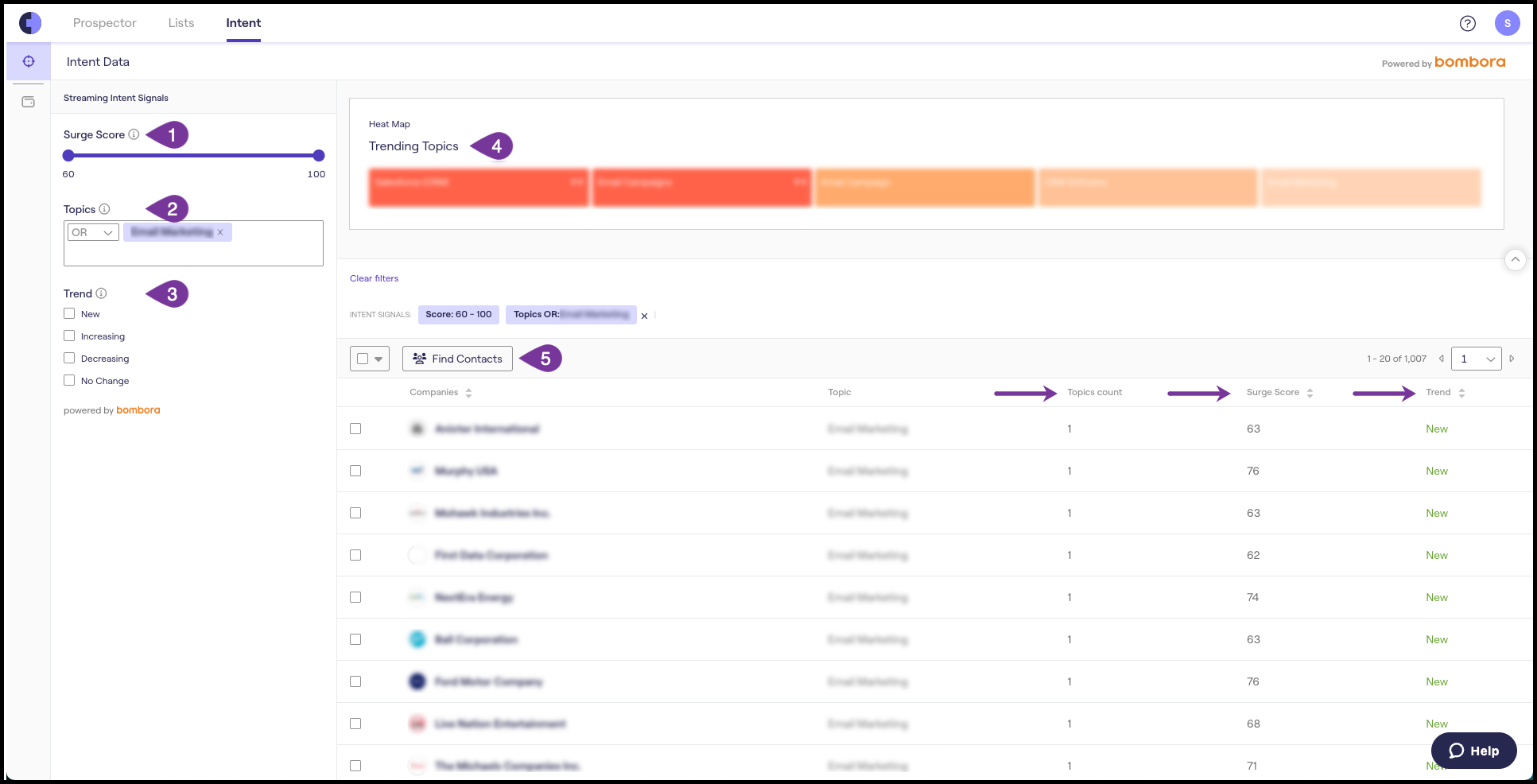
Beyond the database, you get a Chrome extension for quick lookups, DNC list cleaning across multiple countries, CRM integrations (Salesforce and HubSpot), and intent data powered by Bombora. Cognism also positions itself as compliance-first, with GDPR/CCPA alignment and do-not-call screening as a core part of the product, not an afterthought.
The tool's good at what it's built for. The real question is whether it's good enough for your territory mix and your budget.
What Cognism Actually Costs
Cognism doesn't publish pricing. That's frustrating, but it's also the norm once you're in annual-contract land.
Below are typical ranges based on Vendr benchmarks (March 2026) plus what buyers consistently report in sales communities and procurement threads. Treat these as "sanity check" numbers, not a quote.
Grow vs. Elevate
| Grow | Elevate | Enterprise | |
|---|---|---|---|
| Platform fee | ~$15,000/yr | ~$25,000/yr | Not public |
| Per-seat cost | ~$1,500/user/yr | ~$2,500/user/yr | Not public |
| 5-user total | ~$22,500/yr | ~$37,500/yr | ~$30k-$100k+ |
| Fair-use cap | ~2,000 records/user/mo | ~2,000 records/user/mo | Negotiable |
| Contract | Annual prepay | Annual prepay | Annual prepay |
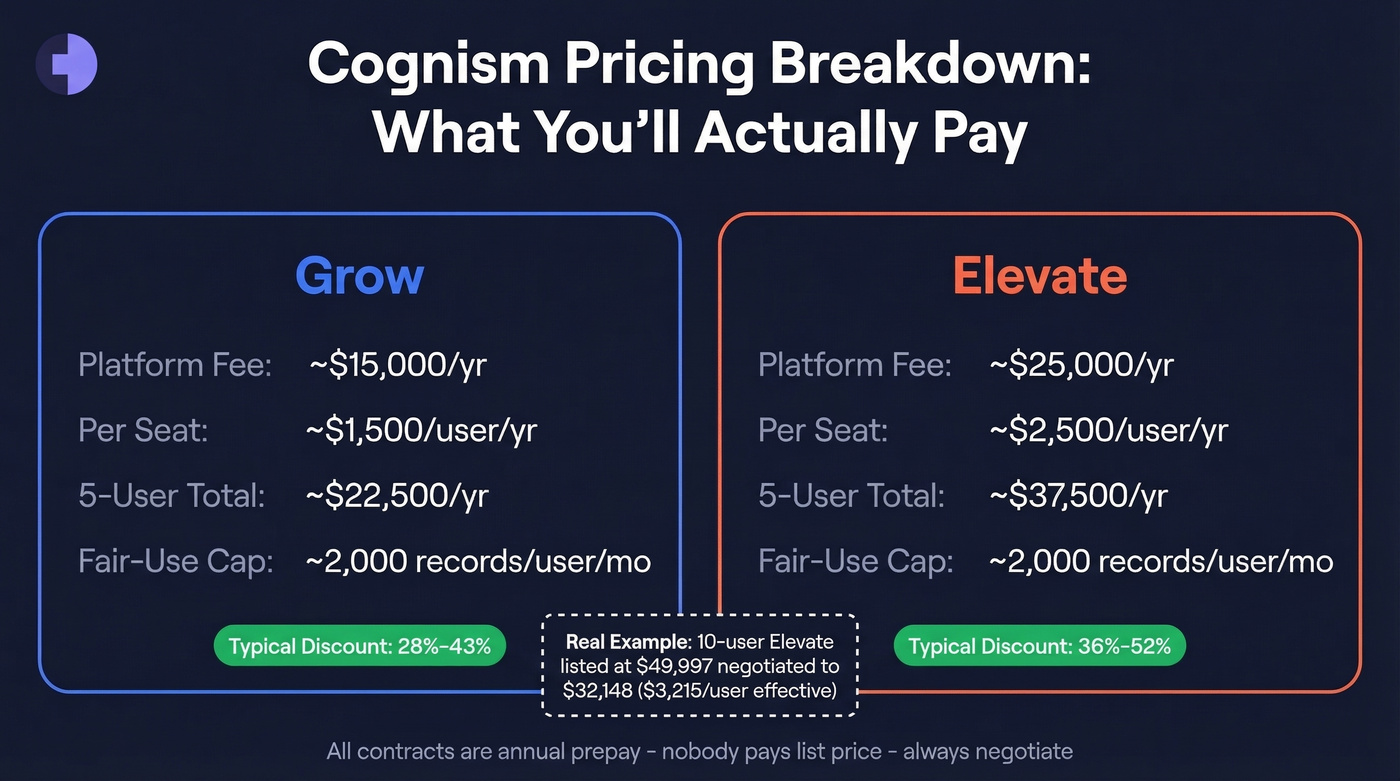
Grow gets you the core database, extension, and standard integrations. Elevate is the tier most teams actually want because it's where Diamond Data typically shows up, and it's also where more of the "intelligence" add-ons start to appear in the bundle.
That premium between tiers is steep. If you aren't buying for Diamond Data (or you won't actually use it in your day-to-day motion), you're paying enterprise money for a database that has real competition.
What You'll Pay After Negotiating
Nobody pays list price. Discounting is common, and it's one of the few parts of this market that's refreshingly predictable.
Vendr's benchmarks show Grow discounts often landing around 28%-43%, and Elevate discounts around 36%-52%. One example buyers cite a lot: a 10-user Elevate deal listed at $49,997 negotiated down to $32,148 (about $3,215 per user effective).
Two negotiation notes we wish more teams knew before the first call:
- Enrichment credits are often sold in 1,000-credit increments. Typical annual usage runs 3,000-8,000 credits. If you're unsure, buy credits a la carte first. It's usually cheaper than committing to a bigger module you won't burn through. (If you’re comparing vendors, see our guide to data enrichment.)
- Intent topics often price in the $200-$400/topic/year range, but bundles can push that down. Negotiate intent in the first deal. Add-ons after signature are where your pricing power goes to die. (Related: anchor in negotiation and setting a walk away point.)
Hidden Costs (the stuff that shows up later)
Look, this is the part that annoys us: teams compare "Cognism vs X" on platform fees, then get surprised by the rest of the bill.
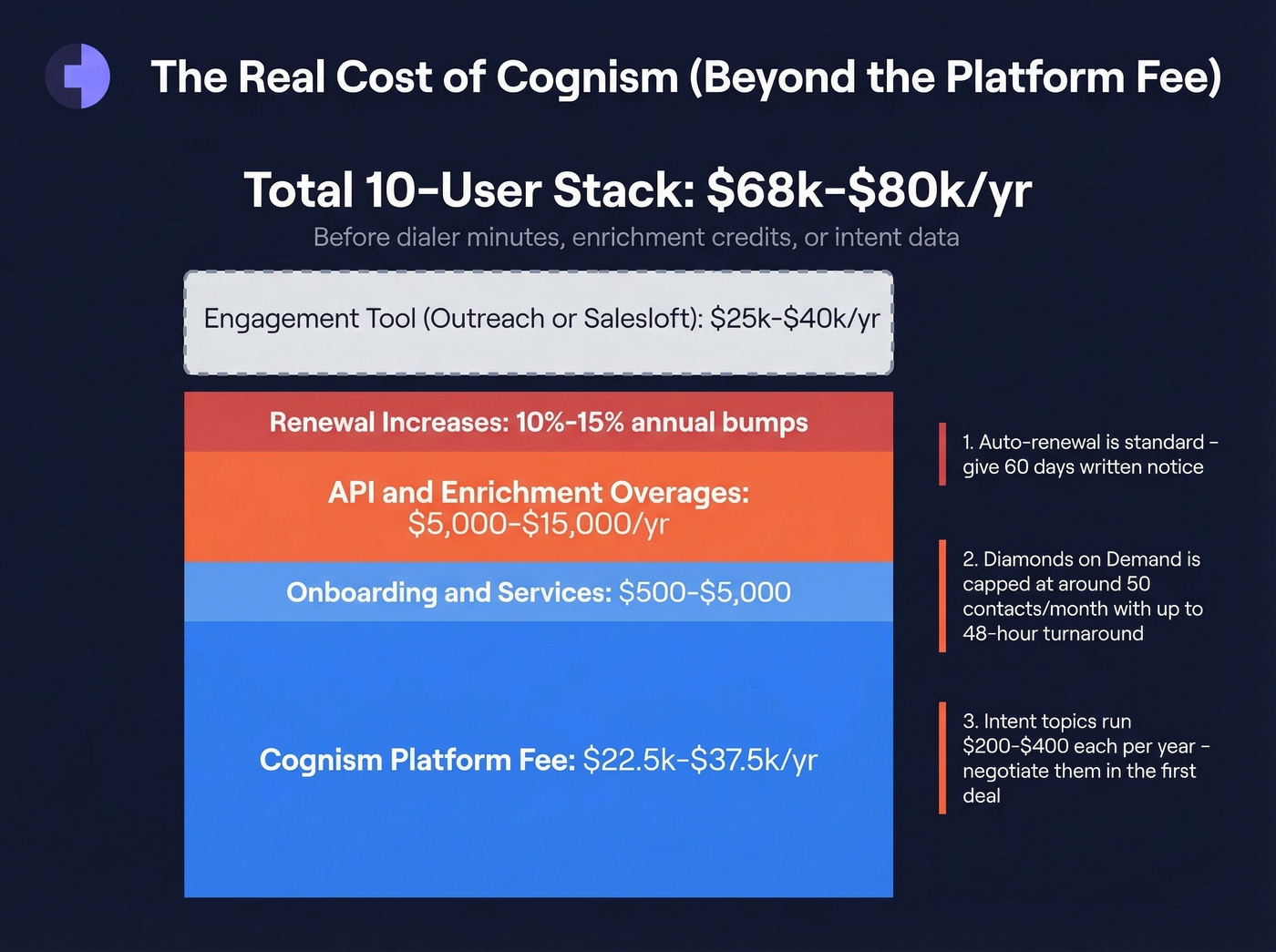
Common extras include:
- Onboarding / services: ~$500-$5,000 depending on package and how much hand-holding you want
- API/enrichment overages: ~$5,000-$15,000/year once you scale workflows
- Renewal increases: 10%-15% bumps are common, and auto-renewal is standard unless you give written notice (often 60 days). (More on the metric itself: renewal rate.)
- Diamonds on Demand limits: often around ~50 contacts/month with up to 48-hour turnaround, which isn't the instant "click and call" feeling you get in the demo
And here's the cost most teams underestimate: Cognism is a data platform. It feeds your engagement tool; it doesn't replace it. Add Outreach or Salesloft and a 10-user team can end up in the $68k-$80k/year range for the stack, before you count dialer minutes, enrichment, or intent. (If you’re building the stack, start with a shortlist of SDR tools.)
Data Accuracy: The Real Picture
Accuracy is both Cognism's biggest selling point and its most common complaint.
In G2 reviews, "data accuracy" shows up frequently as a positive theme, and "inaccurate data" shows up frequently as a negative theme. That's not a contradiction. It's the reality of B2B data: accuracy varies by region, seniority, and how fast your target market churns. A VP who changes jobs every 14 months is a moving target for every provider on earth. (If you’re pressure-testing your targeting, use an ideal customer profile scorecard.)
Diamond Data helps because it focuses on phone-verified mobiles. But anything outside that verified subset still decays like normal database records do.

One thing to be clear about: you won't find an independent, transparent, apples-to-apples benchmark that "proves" Cognism accuracy across regions with a published methodology. The big accuracy numbers you see on affiliate comparison pages are marketing. Useful for a vibe check, not for a buying decision.
Europe vs. US vs. APAC
EMEA is Cognism's home turf. Across reviews and community chatter, the pattern is consistent: UK, DACH, Nordics, and broader Europe are where Cognism earns its reputation. If you're calling into Europe and you care about compliance workflows, Cognism is often the cleanest experience.
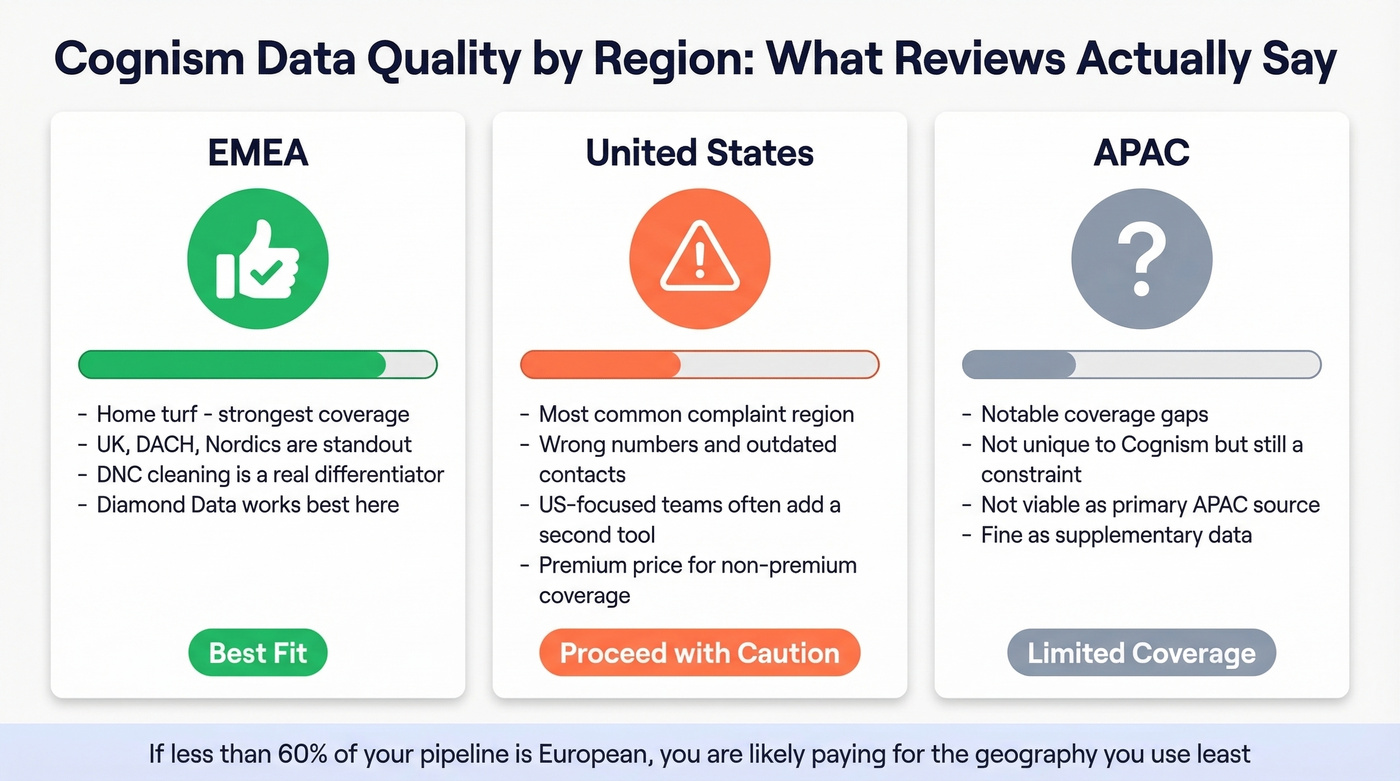
US quality is where buyers get grumpy. The complaints about wrong numbers and outdated contacts skew heavily toward North America. If your ICP is mostly US-based, you're paying a premium for a database that's optimized for a different geography, and the ROI math gets ugly fast.
APAC coverage has gaps. That's not unique to Cognism, but it's still a real constraint if APAC is a core territory rather than "nice to have."
What 1,300+ Users Actually Say
| Platform | Rating | Reviews | Skew |
|---|---|---|---|
| G2 | 4.5/5 | 1,318 | 72% five-star |
| Trustpilot | 3.2/5 | 357 | Privacy complaints |
| Gartner Peer Insights | 4.4/5 | 23 | Small sample |
G2 tells the clearest story because the volume's there. The praise clusters around ease of use and the feeling that verified contact info saves reps time. The complaints cluster around wrong phone numbers, stale contacts, and missing fields in certain verticals.
A scenario we've seen (and it's almost boring how often it happens): an SDR team runs Cognism for six months. Europe connects well. The US reps start complaining that half the mobiles are dead ends. Three months later, the US team quietly adds a second tool "just for the US." Now you're paying for two databases, and nobody wants to admit it in the QBR. (If you’re trying to avoid that, compare options in our roundup of sales prospecting databases.)
The Trustpilot score looks worse for a different reason: it's dominated by data subjects, not paying customers.
The GDPR Elephant in the Room
Cognism markets itself as compliance-first. For customers, the compliance tooling is a big part of the appeal: DNC cleaning, opt-outs, and a posture that's clearly built for European markets.
Trustpilot's 3.2/5 rating is largely driven by people who were contacted, not people who bought the product. The recurring theme is some version of: "How did you get my number?" plus frustration about removal requests.
This isn't unique to Cognism. It's a category problem. ZoomInfo, Apollo, and Seamless-style databases all attract the same kind of scrutiny because the underlying business model is the same: collect, verify, and resell contactability.
One specific flashpoint was the Kis v. Cognism class action settlement, which increased attention on how contact data was handled and displayed in certain contexts. It's not the only legal story in the data world, and it won't be the last.
If your legal team cares about data sourcing risk (and in 2026, more of them do), don't accept vague answers. Ask direct questions about provenance, opt-out handling, and what happens when a prospect challenges your right to contact them. (Related: ethics in sales.)
For background reading on the rules themselves, start with the primary sources:
- GDPR overview from the EU: https://commission.europa.eu/law/law-topic/data-protection/data-protection-eu_en
- UK ICO guidance on direct marketing: https://ico.org.uk/for-organisations/direct-marketing/
- CCPA/CPRA overview from California: https://oag.ca.gov/privacy/ccpa
Who Should (and Shouldn't) Buy Cognism
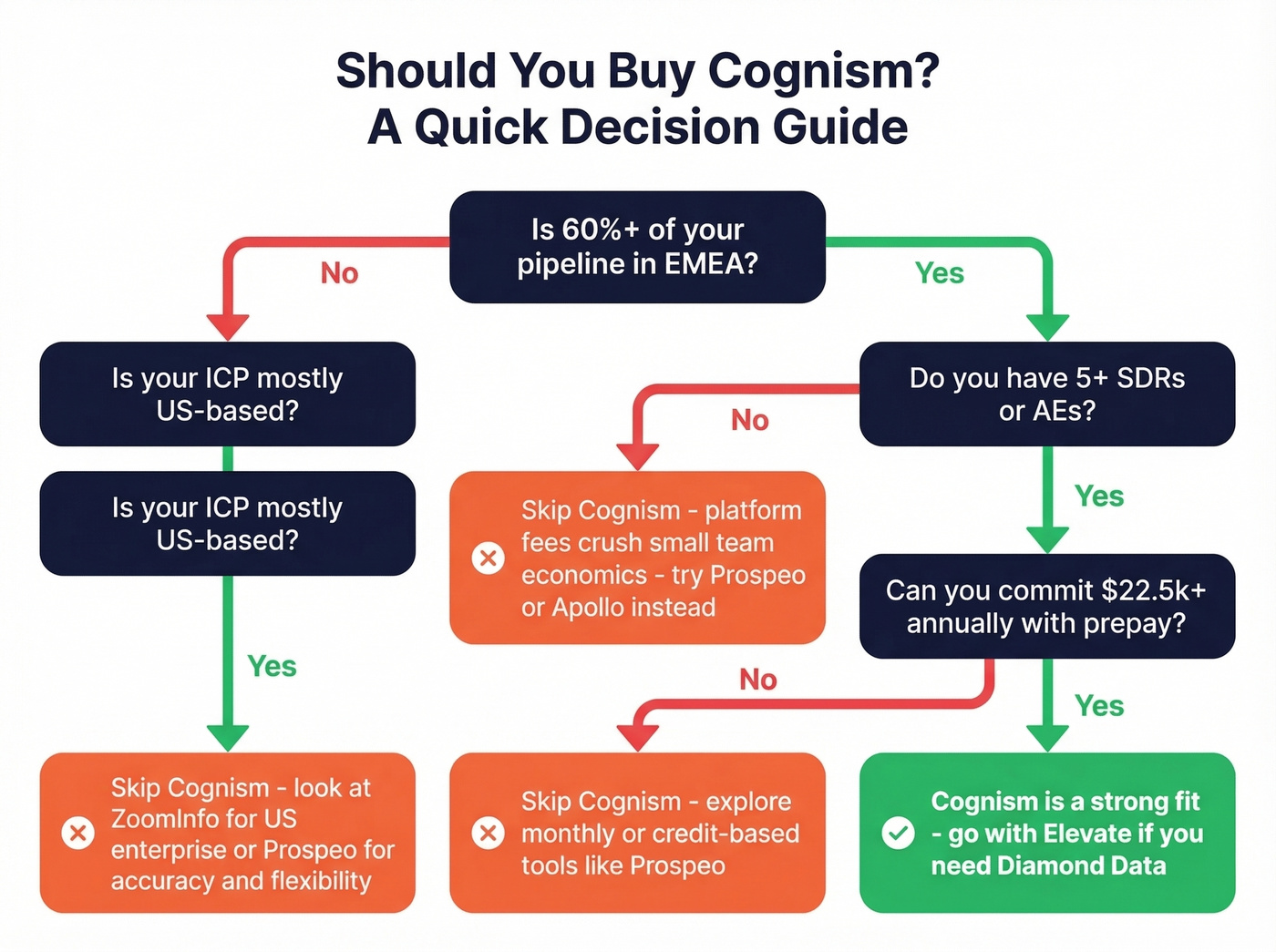
Buy Cognism if:
- Your team prospects primarily into EMEA markets
- You need phone-verified mobile numbers for European decision-makers
- You can stomach $22,500+/year (Grow) or $37,500+/year (Elevate) and an annual prepay
- DNC list cleaning across multiple countries is non-negotiable
- You're mid-market or enterprise with 5+ SDRs/AEs
Skip Cognism if:
- Your ICP is US-focused (the quality gap shows up in reviews for a reason)
- Your team is under 5 reps (platform fees crush the per-seat economics)
- You need transparent, self-serve pricing without procurement theater
- Annual contracts + auto-renewal are a fight with finance every year
- APAC is a meaningful part of your territory
One strong opinion: Cognism is one of the best EMEA-first data platforms on the market. The problem is that a lot of teams buying it aren't actually EMEA-first. If less than ~60% of your pipeline is European, you're often paying for the geography you use least.
Cognism vs Alternatives (What We'd Actually Pick)
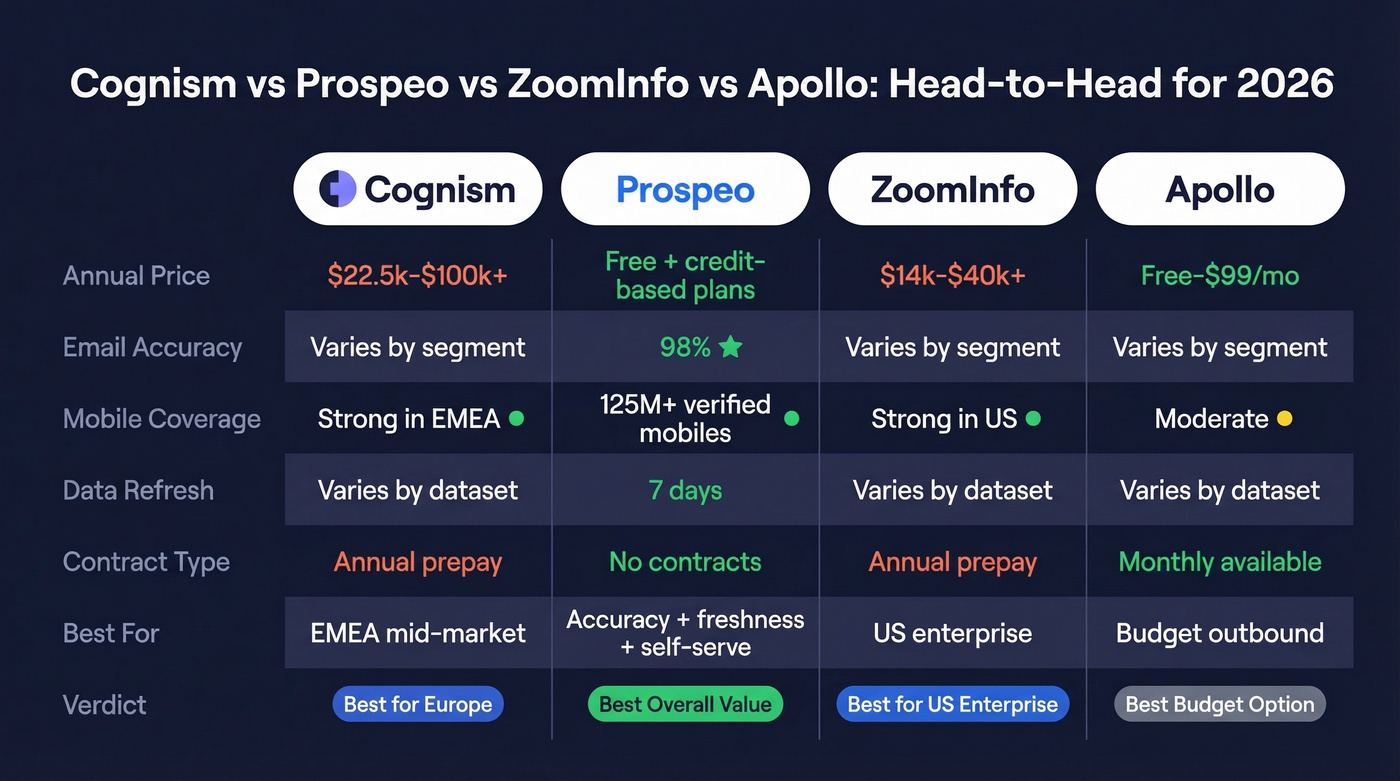
| Cognism | Prospeo | ZoomInfo | Apollo | |
|---|---|---|---|---|
| Price (annual) | ~$22.5k-$100k+ | Free + credit-based paid plans | ~$14k-$40k+ | Free-$99/mo |
| Email accuracy | Varies by segment | 98% | Varies by segment | Varies by segment |
| Mobile coverage | Strong in EMEA | 125M+ verified mobiles | Strong in US | Moderate |
| Data refresh | Varies by dataset | 7 days | Varies by dataset | Varies by dataset |
| Contract | Annual prepay | No contracts | Annual prepay | Monthly available |
| Best for | EMEA mid-market | Accuracy + freshness + self-serve | US enterprise | Budget outbound |
ZoomInfo
ZoomInfo is the obvious comparison, and the deciding factor is geography and workflow breadth.
Both tools are annual-contract, sales-led, and priced for teams that can handle procurement. ZoomInfo tends to win for US depth and for teams that want a bigger "platform" feel (more workflow products around the data). Cognism tends to win for EMEA mobile coverage and compliance-forward features.
If you're US-heavy, ZoomInfo's usually the safer bet. If you're EMEA-heavy, Cognism is hard to beat.
Prospeo (self-serve, accuracy-first)
If you want verified emails and direct dials without signing a $22k+ annual contract, Prospeo is the first thing we'd test.
It's self-serve, starts free (75 emails + 100 Chrome extension credits/month), and runs on transparent credit-based pricing at about $0.01 per email. The database includes 300M+ professional profiles, 143M+ verified emails, and 125M+ verified mobile numbers, with 98% email accuracy and a 7-day refresh cycle. For teams that care about deliverability, that weekly refresh plus verification is the difference between "we're booking meetings" and "why did our domain get cooked in two weeks?" (If deliverability is a priority, use an email deliverability guide and track email bounce rate.)
Prospeo also fits nicely as a second source when you don't want to pay for two enterprise contracts: keep Cognism for EMEA calling, then use Prospeo for fast list building, verification, and enrichment workflows across regions. (For list ops, see Clay list building.)
Apollo (budget play)
Apollo's appeal is simple: free tier, low monthly pricing, and a huge database. For high-volume outbound where deal sizes are smaller, it can be plenty.
Skip it if your deliverability is already fragile or your domain reputation matters to revenue. Bad data doesn't just waste rep time; it can wreck inbox placement, and that takes real time to fix. (If you’re scaling outbound, pair it with sales prospecting techniques.)
Lusha (quick lookup)
Lusha's best thought of as a quick lookup tool. It's fast when you need "this person's number right now" and you aren't trying to run heavy bulk prospecting.
If your motion is list building at scale with strict deliverability targets, you'll want something built for verification and refresh, not just convenience.

Cognism's US data gaps are a dealbreaker for most teams reading this. Prospeo covers 300M+ profiles with 98% verified email accuracy and 125M+ mobile numbers - refreshed every 7 days, not 6 weeks. No annual contracts. No custom proposals. Just $0.01/email.
Stop overpaying for data optimized for a different geography.
FAQ
Is Cognism worth the price?
For EMEA-focused teams with 5+ reps and budget for annual contracts, yes. Diamond Data can be a real differentiator for European prospecting.
For US-focused SMBs, the ROI often doesn't pencil out once you compare it to self-serve options and factor in the rest of the outbound stack.
How accurate is Cognism's data?
Reviews show accuracy as both a top pro and a top con, which tracks with how B2B data behaves in the real world. EMEA coverage is where Cognism shines. US and APAC are where teams report more inconsistency.
Is Cognism GDPR compliant?
Cognism positions itself as GDPR/CCPA-aligned and includes DNC list cleaning across multiple countries. Trustpilot feedback shows ongoing frustration from data subjects about unsolicited outreach and removal requests, which is a category-wide issue, not just a Cognism issue.
For the underlying rules, see the EU's GDPR overview (https://commission.europa.eu/law/law-topic/data-protection/data-protection-eu_en) and the UK ICO's direct marketing guidance (https://ico.org.uk/for-organisations/direct-marketing/).
Can you cancel Cognism mid-contract?
Generally, no. Cognism is typically sold as annual prepay with auto-renewal language. Watch notice periods closely (60 days is common) so you don't get stuck for another year.
What's the best Cognism alternative for small teams?
If you want monthly billing and a free tier, Apollo's the common pick.
If you care most about verified email accuracy, freshness, and avoiding annual lock-ins, Prospeo is a strong alternative to test first: 98% email accuracy, 7-day refresh, and transparent credit-based pricing with no contracts.