

Cold Call Connect Rate: 2026 Benchmarks and How to Improve It
You're making 200 dials a day and booking one meeting. At some point you start wondering if you're terrible at this - or if something fundamental shifted.
It's the game. Carrier spam filtering, data decay, and STIR/SHAKEN verification have gutted the numbers everyone used to cite, and the benchmarks from 2021-2022 don't match what teams actually see anymore. We've spent months digging into the data, talking to SDR leaders, and testing fixes. Here's what's real.
The Short Version
Your connect rate is probably 5-8%. That's what most SaaS SDR teams doing manual dialing report right now.
The old 15-20% benchmarks are dead - carrier spam filtering killed them. And the single biggest fix isn't your script, your timing, or your opener. It's your phone data. Verified mobile numbers change everything.
What Is Connect Rate?
Connect rate measures the percentage of dials that result in a live human conversation:
Live conversations / Total dials x 100
Don't confuse this with "connection rate" or "contact rate," which some vendors define to include voicemails in the numerator - giving you a much more generous and misleading number.
It's also not your conversion rate (meetings booked per dial) or your success rate, which tracks call-to-deal outcomes at roughly 2-5%. Connect rate is purely about reaching a live person. Everything downstream depends on it.
2026 Benchmarks by Team Type
| Metric | Benchmark |
|---|---|
| Average across all teams | ~5-6% |
| SaaS SDR (manual dialing) | 5-8% |
| Top teams (verified mobile data + clean caller ID) | 12-18%, best-in-class 20-25% |
| Mobile vs. office/direct lines | Mobile numbers: 61% higher connection rates |
| "Spam Likely" labeled calls | Under 5% answer rate |
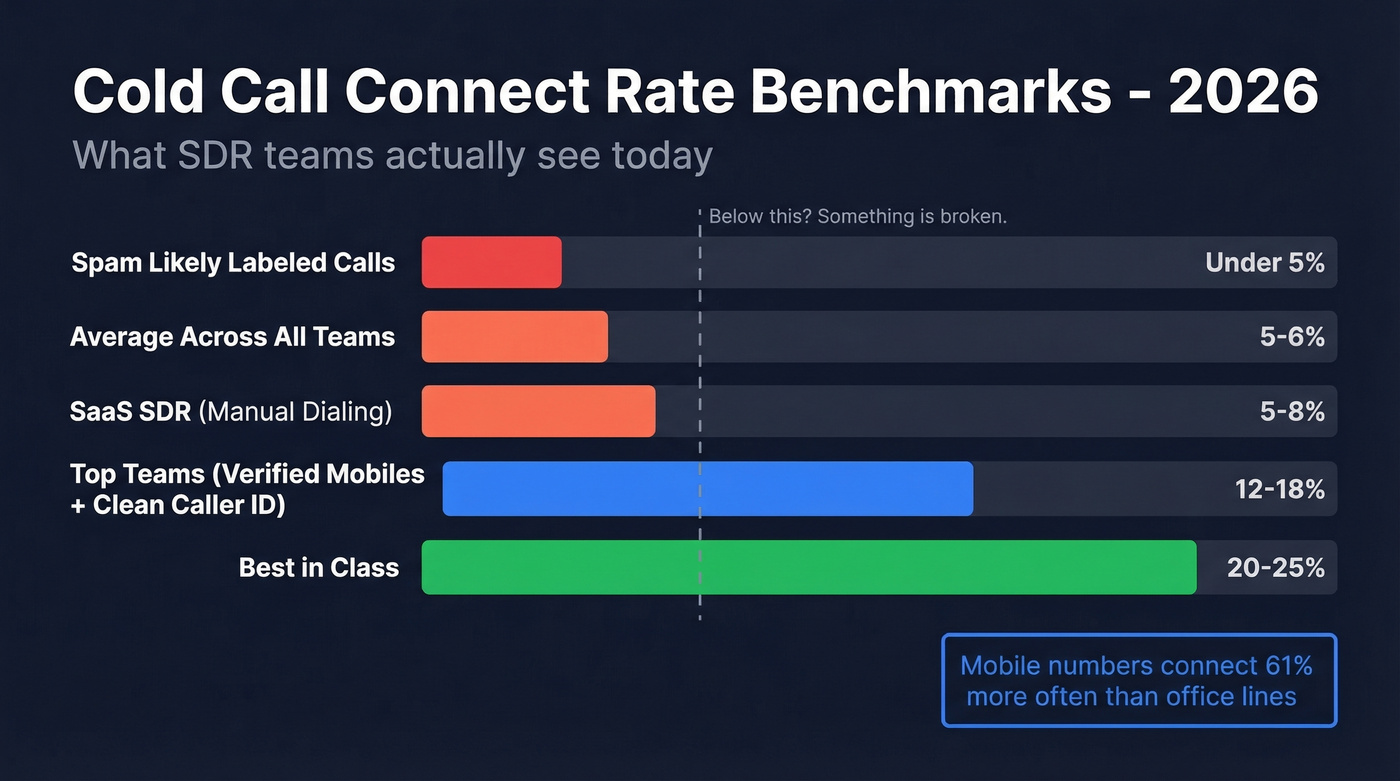
A SalesOps leader running a 12-person SDR team reported roughly 6% and openly questioned whether the benchmarks from a few years ago are obsolete. They are. On r/sales, SDRs doing 180-200 manual dials per day consistently report the same 5-8% range.
These numbers shift by industry. SaaS and tech companies typically land in that 5-8% band. Industries with heavy gatekeepers - healthcare, financial services - often see 3-5%. Companies selling to SMBs where founders answer their own phones can push 10-15%, which makes sense because there's no assistant screening calls and the founder's mobile is often the only number on file. If you're benchmarking against a generic average without accounting for your market, you're diagnosing the wrong problem.
The average live conversation lasts about 93 seconds. Barely enough to qualify interest. Every connect matters, and most teams waste the vast majority of their dials on numbers that will never pick up.

Most teams dial at 5-8% connect rates because they're calling numbers that decayed weeks ago. Prospeo's Mobile Finder gives you 125M+ verified mobile numbers on a 7-day refresh cycle - not the 6-week industry average. Teams like Meritt jumped from single digits to 20-25% connect rates overnight.
Stop burning caller ID reputation on dead numbers.
Why Connect Rates Have Dropped
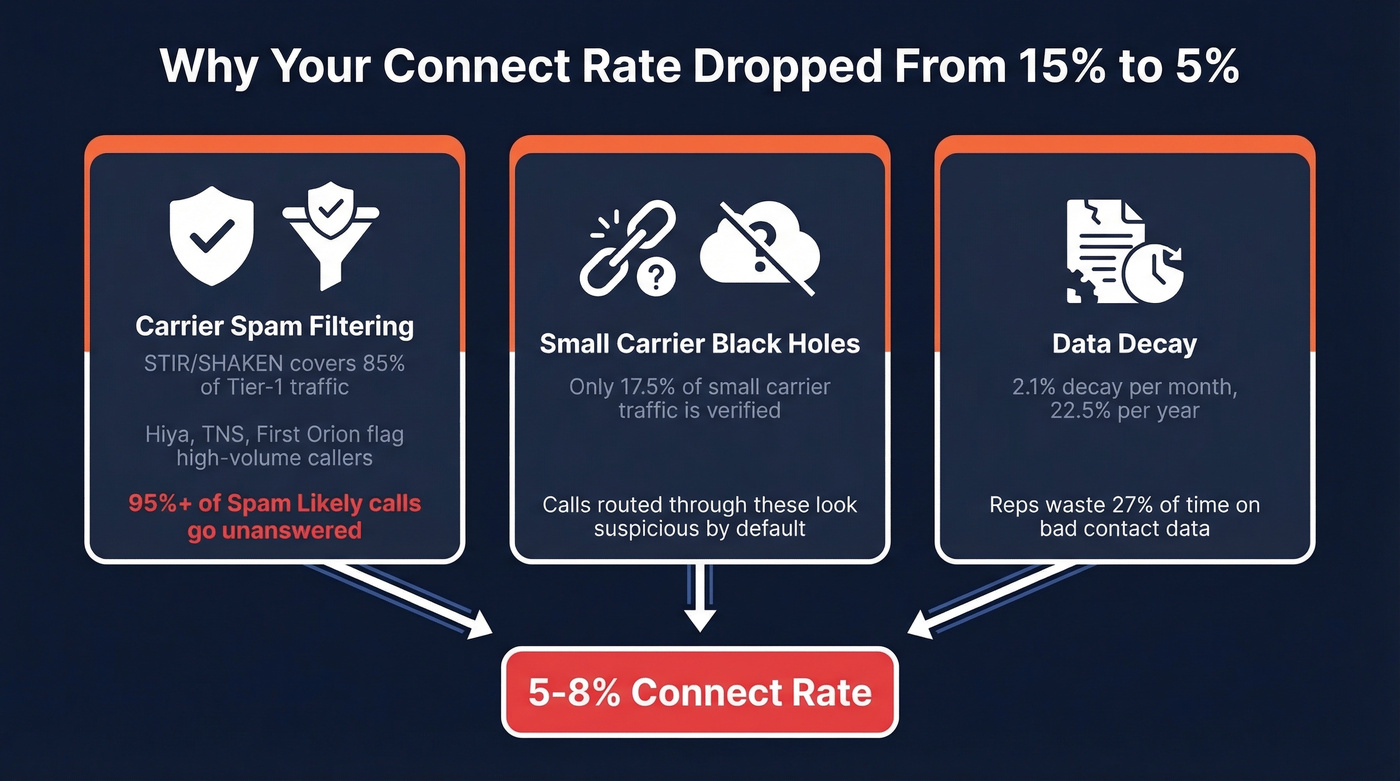
Three forces converged to crush cold call connect rates, and none of them have anything to do with your pitch.
Carrier Spam Filtering Got Aggressive
STIR/SHAKEN verification covers 85% of voice traffic between Tier-1 carriers, with 93% at A-level attestation. Each major carrier runs its own analytics engine - Hiya powers AT&T's spam detection, TNS handles Verizon, and First Orion runs T-Mobile's.
These systems flag outbound callers based on volume spikes, average call duration under 30 seconds, and neighbor spoofing patterns. Once your number gets labeled "Spam Likely," more than 95% of those calls go unanswered.
Smaller Carriers Are a Black Hole
Only 17.5% of traffic between smaller providers is signed and verified. If your dialer routes through these carriers, your calls look suspicious by default.
Your Data Is Rotting Faster Than You Think
B2B contact data decays at roughly 2.1% per month - that's 22.5% annually. Nearly a quarter of your phone list is wrong by year-end. Sales reps waste 27.3% of their productive time on bad contact data, according to Gartner's research on data quality.
Here's the thing: parallel dialers don't improve connect rates. They amplify whatever your data quality gives you. If you're dialing garbage numbers faster, you're just burning caller ID reputation faster.
How to Improve Your Cold Call Connect Rate
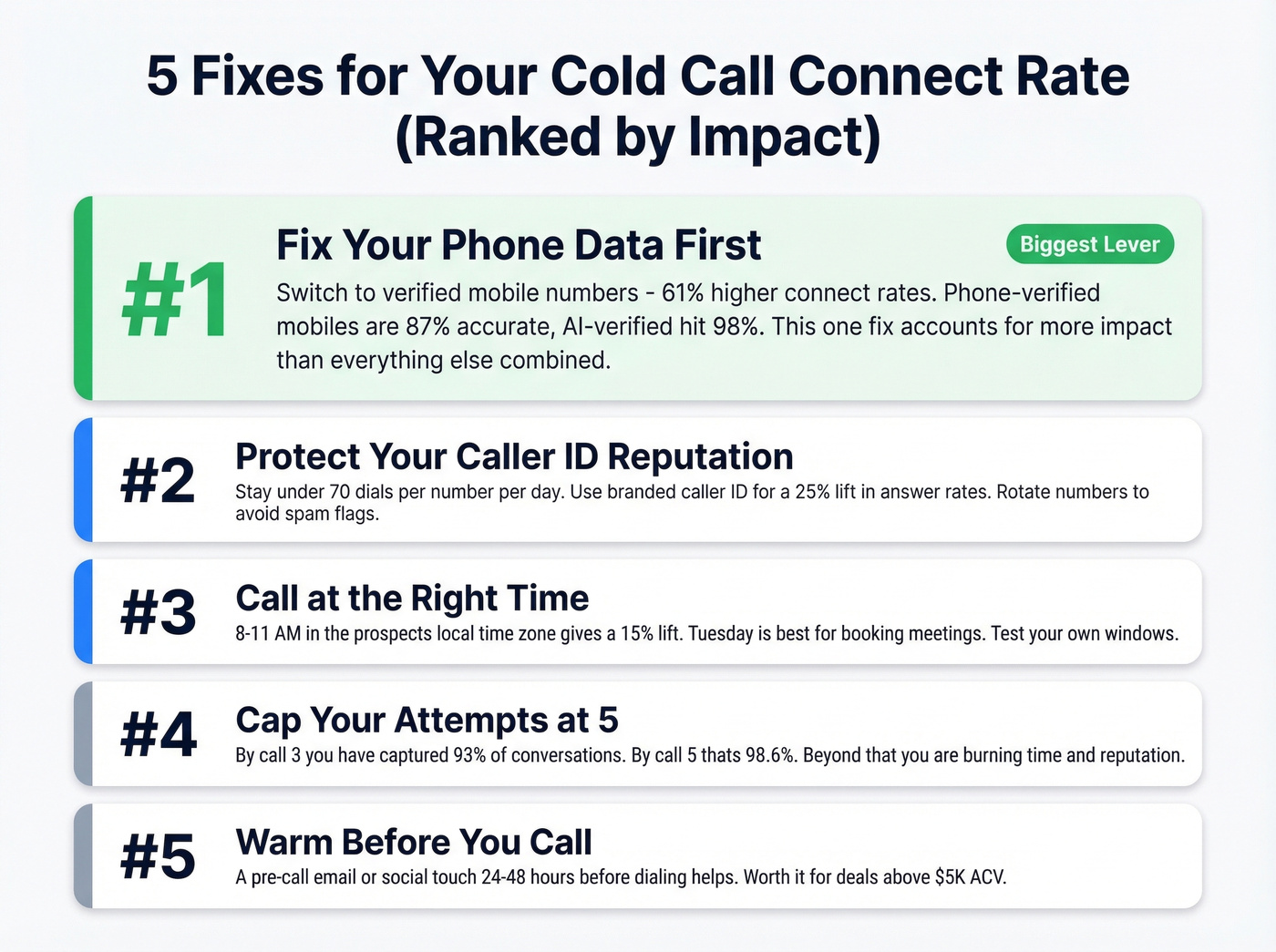
Most "how to boost your connection rate" articles give you 15 tips. You need three. The first one accounts for more than the other two combined.
Fix Your Phone Data First
This is the lever. Mobile phones achieve 61% higher connection rates than office or direct lines.
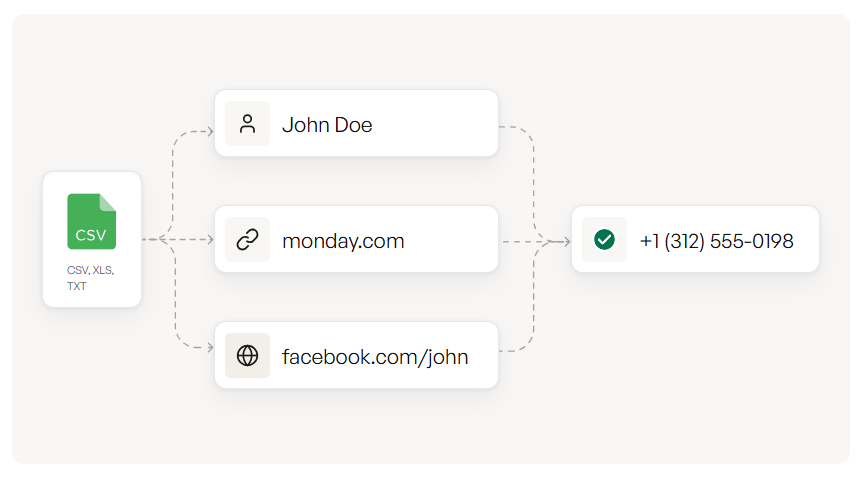
Phone-verified mobile numbers are 87% accurate, and AI-powered verification pushes accuracy to 98%. The math is obvious - if you're still dialing switchboard numbers and direct office lines, you're fighting with one hand tied behind your back.
We've watched teams triple their connect rates just by switching to verified mobiles. Meritt is the clearest example: they moved to Prospeo's Mobile Finder - 125M+ verified mobile numbers on a 7-day refresh cycle - and their connect rate jumped from single digits to 20-25%. When data decays at 2.1% per month and the industry average refresh is six weeks, weekly verification directly counters the number-one connect-rate killer.
If you're still building lists from scratch, start with your calling lists and validate numbers before you ever load them into a dialer.
Protect Your Caller ID Reputation
In our experience, the 70-call-per-day threshold per caller ID number is real. Go above it and carrier analytics engines start flagging you within days. Use local presence dialing and rotate numbers to scale volume without tripping spam filters.
Branded caller ID is worth the investment. One case study showed a 25% lift in answer rates and 4x longer median call duration when prospects saw a company name instead of an unknown number. That tracks - 68% of people never answer calls from unknown numbers.
If you're getting flagged, dig into caller ID cold calling and fix the root cause before scaling volume.
Call at the Right Time
The 8-11 AM window in the prospect's local time zone delivers a 15% lift in connection rates. Some internal datasets show late-afternoon peaks too, so test your own windows.
Tuesday is the best day for actually booking meetings, per Cognism's WHAM data. Friday shows high conversation rates but weak conversion - people pick up but don't commit. Optimizing your call timing is one of the easiest ways to move your connect rate without spending a dime.
If you want tighter timing guidance, compare your results against the best time to cold call B2B and the best day to cold call.
Cap Your Attempts
By call three, you've captured 93% of total conversations you'll ever get from a prospect. By call five, that's 98.6%. Beyond five attempts, you're burning time and caller ID reputation for almost zero incremental return. Set a hard cap. Move on.
This is easiest to enforce when you run structured calling campaigns with attempt caps and disposition rules.
Warm Before You Call
A pre-call email or social touch 24-48 hours before dialing lifts connect rates meaningfully. Even a 5-7 touch sequence over 10-14 business days gives the prospect a reason to pick up instead of screening you. Skip this step if your deal sizes are tiny and velocity matters more than per-call conversion - but for anything above $5K ACV, the warm-up is worth the extra day.
If you want a tighter system, pair dialing with a cold calling email and a simple follow-up call after email cadence.
Is Your Connect Rate Normal?
Here's a quick diagnostic:
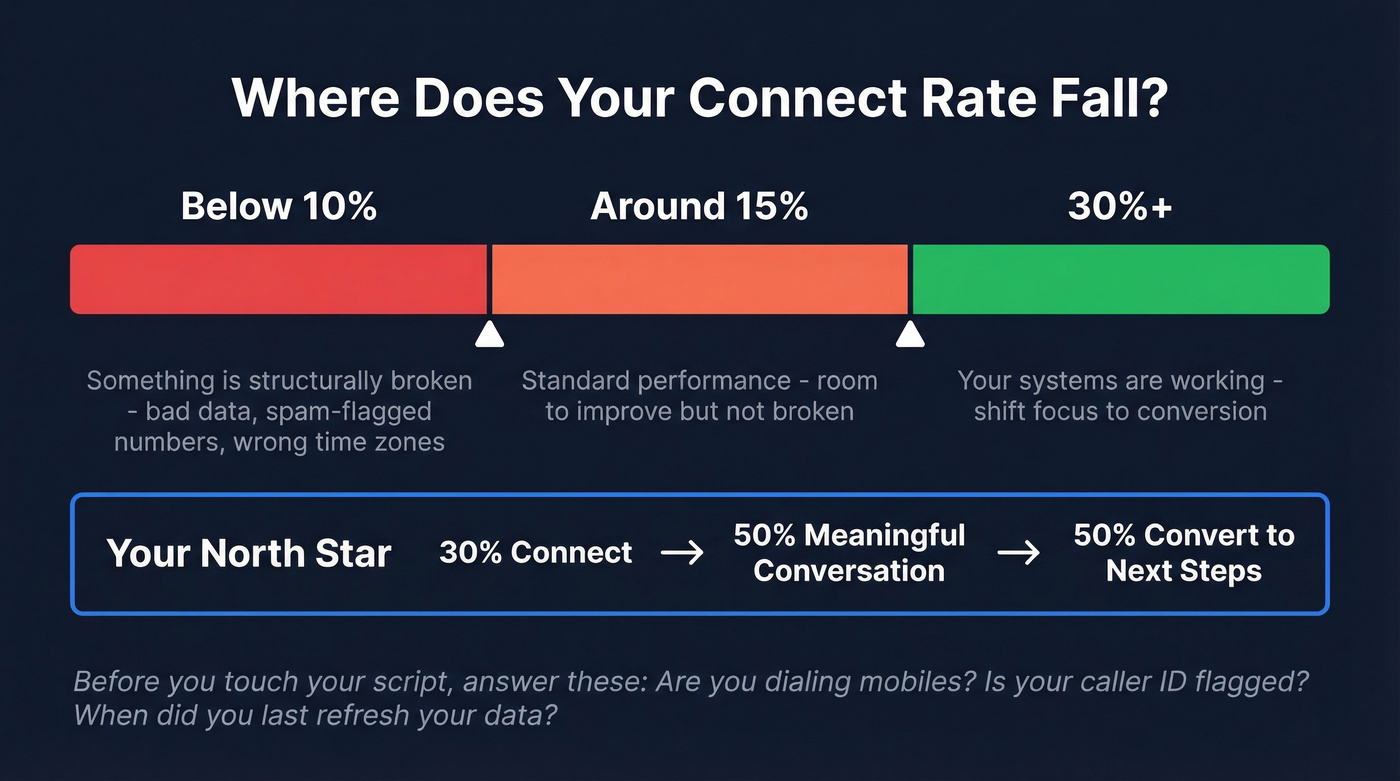
- At or below 10%: Something is structurally broken - bad data, spam-flagged numbers, wrong time zones.
- Around 15%: You're standard. Room to improve, but not broken.
- 30%+: Your systems are working. Focus on conversion instead.
A good north star: aim for 30% connect, 50% meaningful conversation, 50% of those converting to next steps.
I'll say something that might be unpopular: if your deal sizes are under $10K, you probably don't need a power dialer or a $30K+/year data contract. A clean list of 500 verified mobiles will outperform a database of 50,000 unverified office lines every single time. I've watched teams spend six figures on parallel dialing infrastructure when the real problem was a $200/month data quality issue.
If you're evaluating dialing tools anyway, start with a power dialer or compare options in our best sales dialer roundup.
Let's be honest about the three questions that actually matter. Are you dialing mobile numbers or office lines? Has your caller ID been flagged? When did you last refresh your phone data? If you can't answer all three confidently, start there before touching your script, your cadence, or your talk track.
If your cold call connect rate is below 10%, the problem isn't you. It's your data infrastructure.
Data decays at 2.1% per month, and your parallel dialer just amplifies bad numbers faster. Prospeo delivers 98% verified accuracy across 125M+ mobile numbers with a 30% pickup rate - the highest in the industry. At $0.01 per lead, fixing your phone data costs less than one wasted hour of dialing.
Replace your rotting phone list in under five minutes.
FAQ
What's a good cold call connect rate in 2026?
5-8% is average for most SDR teams dialing manually. Top performers using verified mobile data and clean caller IDs hit 12-18%, and best-in-class teams reach 20-25%. If you're below 5%, the problem is usually data quality or spam-flagged numbers - not your pitch or opener.
Why is my connect rate lower than older benchmarks?
The 15-20% benchmarks from 2021-2022 predate aggressive carrier spam filtering. STIR/SHAKEN verification and analytics engines like Hiya, TNS, and First Orion now flag high-volume outbound callers automatically. Those old numbers aren't coming back - recalibrate to 2026 baselines.
What's the fastest way to improve connect rates?
Switch to verified mobile numbers - they connect 61% more often than office lines. Pair that with caller ID hygiene: stay under 70 dials per number per day, use branded caller ID, and rotate numbers. Most teams that fix their data see measurable improvement within a week.