

25+ Cross Selling Examples by Industry (2026)
Cross-selling drives around 35% of Amazon's total sales. It lifts ecommerce order values by 10-30%. And it costs a fraction of what you'd spend acquiring a new customer. Yet most guides recycle the same McDonald's fries analogy and three Shopify checkout widgets.
This collection of cross selling examples covers ecommerce, SaaS, banking, insurance, and professional services - named brands, specific mechanics, no filler.
Cross-Selling by the Numbers
- Around 35% of Amazon's sales come from product recommendations
- Cross-selling increases ecommerce revenue 10-30%
- Acquiring a new customer costs 5x more than expanding an existing one
- Personalization lifts customer spending ~34% (Twilio Segment)
Here's the thesis running through this entire piece: cross-selling is a data problem, not a sales technique. The companies that cross-sell best - Amazon, HubSpot, top-tier banks - win because they have better data infrastructure, not better copywriting.
Cross-Selling vs. Upselling vs. Bundling
| Definition | Example | When to prioritize | |
|---|---|---|---|
| Cross-sell | Complementary product | Phone case with a phone | When your catalog has natural add-ons |
| Upsell | Higher-tier version | 128GB phone vs. 64GB | When margins are better on premium SKUs |
| Bundle | Products sold together | Internet + TV + mobile | When adoption of product B depends on product A |
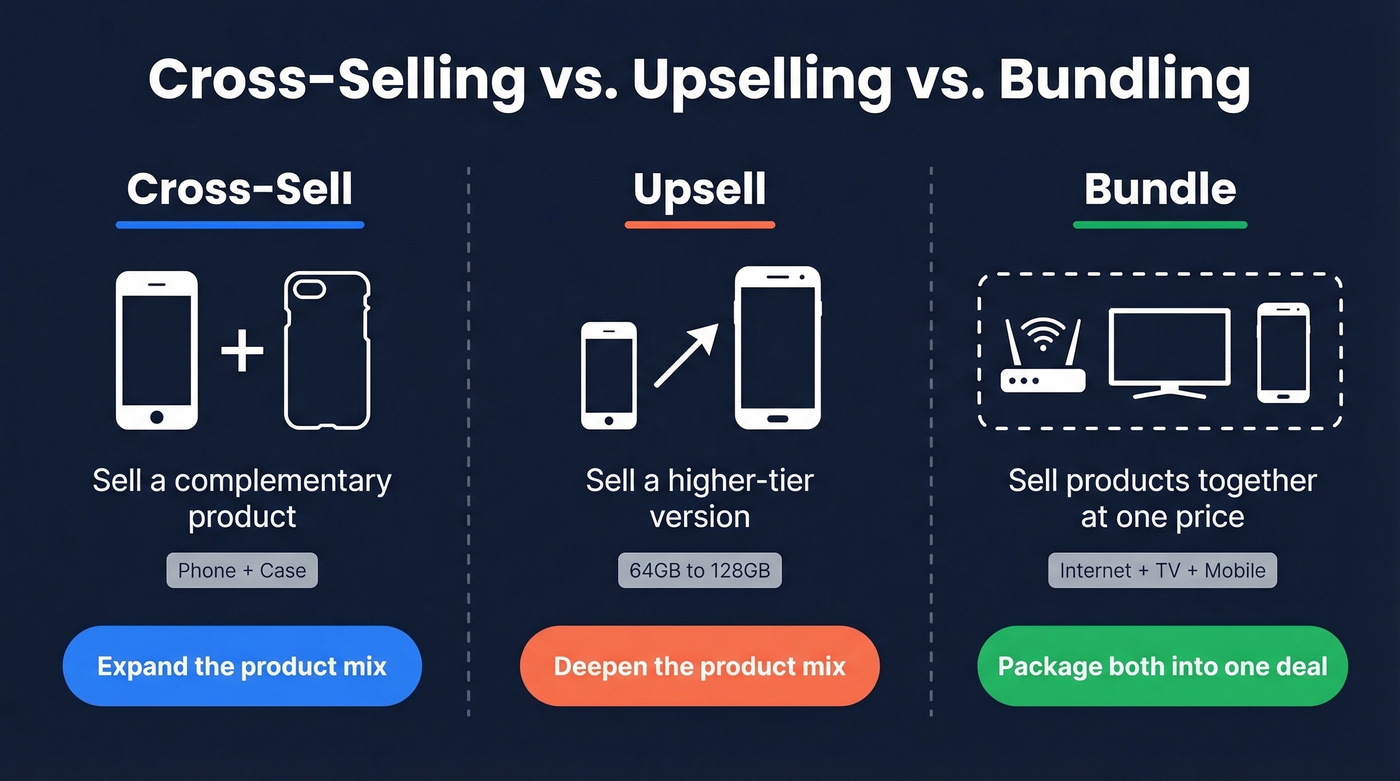
Cross-selling expands the product mix, upselling deepens it, and bundling packages both into a single price. They require different timing and different data - don't treat them as interchangeable. (If you want the deeper breakdown, see Cross-Selling vs. Upselling vs. Bundling.)
Ecommerce Cross Selling Examples
Amazon's "Frequently Bought Together" widget uses item-to-item collaborative filtering. That's the canonical example. Here's what other brands are doing with the same principle.
Product Page Recommendations
Amazon catches shoppers during active research with "Frequently Bought Together" and "Customers Who Bought This Also Bought." Zappos positions shoe care kits and matching accessories below the main product images. Etsy surfaces "You may also like" recommendations pulled from seller catalogs and buyer behavior.
The pricing heuristic worth remembering: recommended add-ons should cost 10-50% of the primary item. A $15 phone case on an $800 phone listing feels natural. A $400 accessory triggers a separate purchase decision entirely.
In-Cart Cross-Sells
Chubbies runs an in-cart popup with up to 10 complementary products in a scrollable format - one-click add, no page redirect. Every extra click between "that looks good" and "it's in my cart" costs conversions.
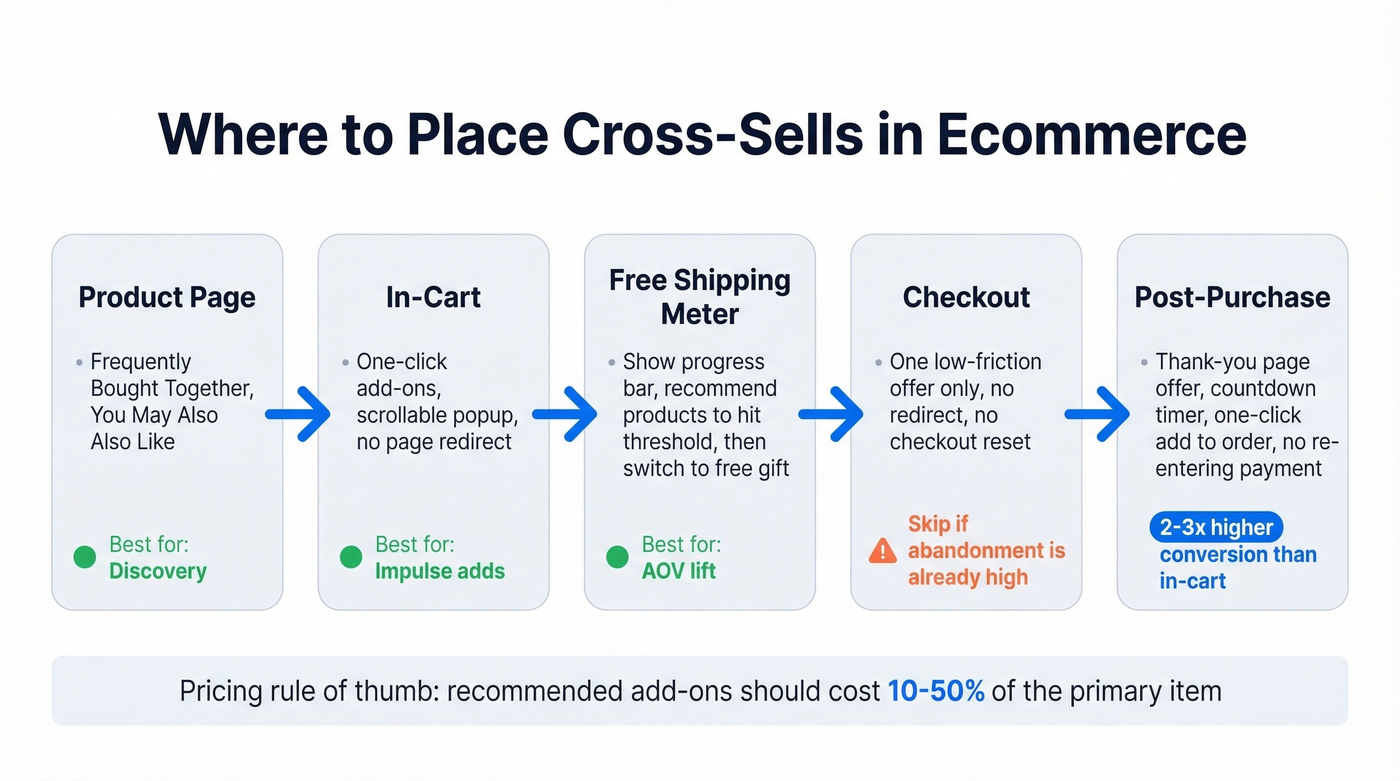
Kosas takes a smarter approach with a free-shipping progress meter. It recommends specific products to hit the threshold, then once you reach free shipping, the meter switches to a free gift incentive and adjusts the recommendations accordingly. One goal at a time keeps the offer feeling achievable instead of overwhelming.
Checkout Cross-Sells
The checkout page is underused because brands fear cart abandonment. That fear is mostly unfounded if you keep it to one low-friction offer: a tightly relevant add-on, one-click add, no redirect, no reset of the checkout flow. Skip this placement if your checkout already has a high abandonment rate - fix that first.
Post-Purchase Offers
This is one of the highest-converting placements in ecommerce because the buyer has already committed.
True Classic shows a 50% off 3-pack offer on the thank-you page with a 5-minute countdown timer and one-click add-to-order. No re-entering payment info. No risking the initial sale. We've seen similar post-purchase flows outperform in-cart widgets by 2-3x in our testing - the psychology is simple: the hardest decision is already made.
Email Cross-Sells
Blue Bottle Coffee uses transactional follow-ups to recommend add-ons like filter papers and a glass serving carafe after a purchase. Mack Weldon emails accessory recommendations based on previous apparel orders.
The key: the email arrives after the customer has received and used the product, not 30 minutes after checkout when buyer's remorse peaks.
SaaS & B2B Cross Selling Examples
90% of cross-selling content is written for Shopify stores. If you're selling B2B, you've been underserved.
SaaS Bundling & Add-Ons
HubSpot's Growth Suite bundles Marketing, Sales, and Service Hubs at 25% less than buying separately. Customers who came in for CRM get pulled into marketing automation at a discount that makes the individual purchase feel wasteful. It's a brilliant lock-in mechanism disguised as a deal.
Zoom layers add-on modules on paid plans: large meetings up to 1,000 participants, expanded cloud storage, and premier support. Each add-on solves a scaling pain that surfaces after teams adopt the core product - not before. (Related: Upsell vs Cross-Sell in SaaS.)
B2B Enterprise Cross-Selling
Let's be honest: most B2B cross-selling fails, and it's rarely because the pitch was bad.
A Blue Ridge Partners case study shows exactly why. A portfolio tech company was off target by nearly 30% at midyear. The problem wasn't the product portfolio. Sellers stuck to legacy products, comp plans rewarded individual deals over team selling, and territory ownership created friction between reps who should've been collaborating.
The interventions were structural: cross-sell incentive accelerators, clarified deal ownership rules, CRM-based account identification, and earlier deal review panels. Average deal size jumped 25% in the first quarter. Win rates for complex enterprise deals rose 40% in the second half. The fiscal year ended at 107% of the annual growth target.
Cross-selling fails in B2B because of incentive structures and bad data, not bad pitches. Reps can't sell into accounts they don't understand. Enriched CRM data - job titles, tech stack, headcount changes, intent signals - is what lets reps identify expansion-ready accounts before they pick up the phone. In practice, this means running your CRM through an enrichment layer like Prospeo, which returns 50+ data points per contact and refreshes every 7 days. That infrastructure is what separates teams that cross-sell from teams that guess. (If you’re comparing vendors, start with data enrichment services and the basics of lead enrichment.)

If your average deal size is under $10K, you probably don't need a complex cross-sell playbook. You need better data on which accounts can actually expand. Most B2B teams over-invest in sales methodology and under-invest in the data that tells reps where to aim. (See: data-driven selling and firmographic and technographic data.)
Banking & Insurance Cross Selling Examples
Financial services lives and dies on cross-selling. The product catalog is deep, switching costs are high, and customer lifetime value compounds with every additional product.
Banking Cross-Sells by Persona
The best banks map cross-sell paths to customer personas, not product catalogs.
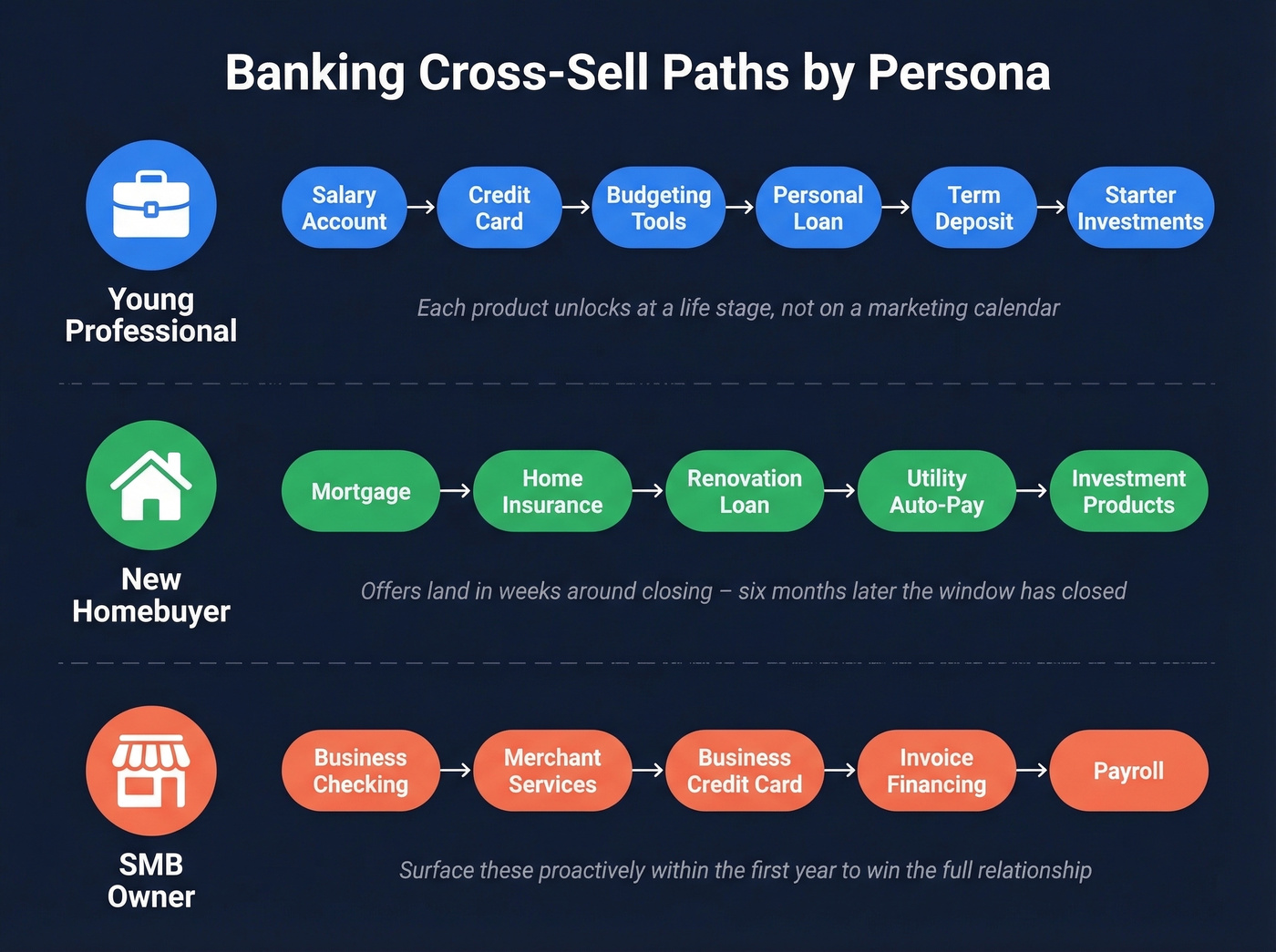
A young professional opens a salary account and the cross-sell path unfolds from there: credit cards, budgeting tools, personal loans, term deposits, then starter investment products. Each product unlocks at a life stage, not on a marketing calendar. The bank that gets this sequencing right earns a relationship that lasts decades - the one that pitches investment products to a 23-year-old with student debt loses credibility immediately.
For a new homebuyer, the mortgage is the anchor product. Home insurance, renovation loans, and utility bill auto-pay all attach to the homeownership event. These offers land in the weeks around closing - six months later, the window has closed.
SMB owners start with business checking, and within their first year they'll need merchant services, business credit cards, invoice financing, and payroll. The bank that surfaces these proactively wins the full relationship.
Insurance Cross-Sells by Life Event
Auto to home bundle. Bundling auto and home saves the customer 10-20%, and the agent locks in two policies. The trigger is a new home purchase or a lease-to-own transition.
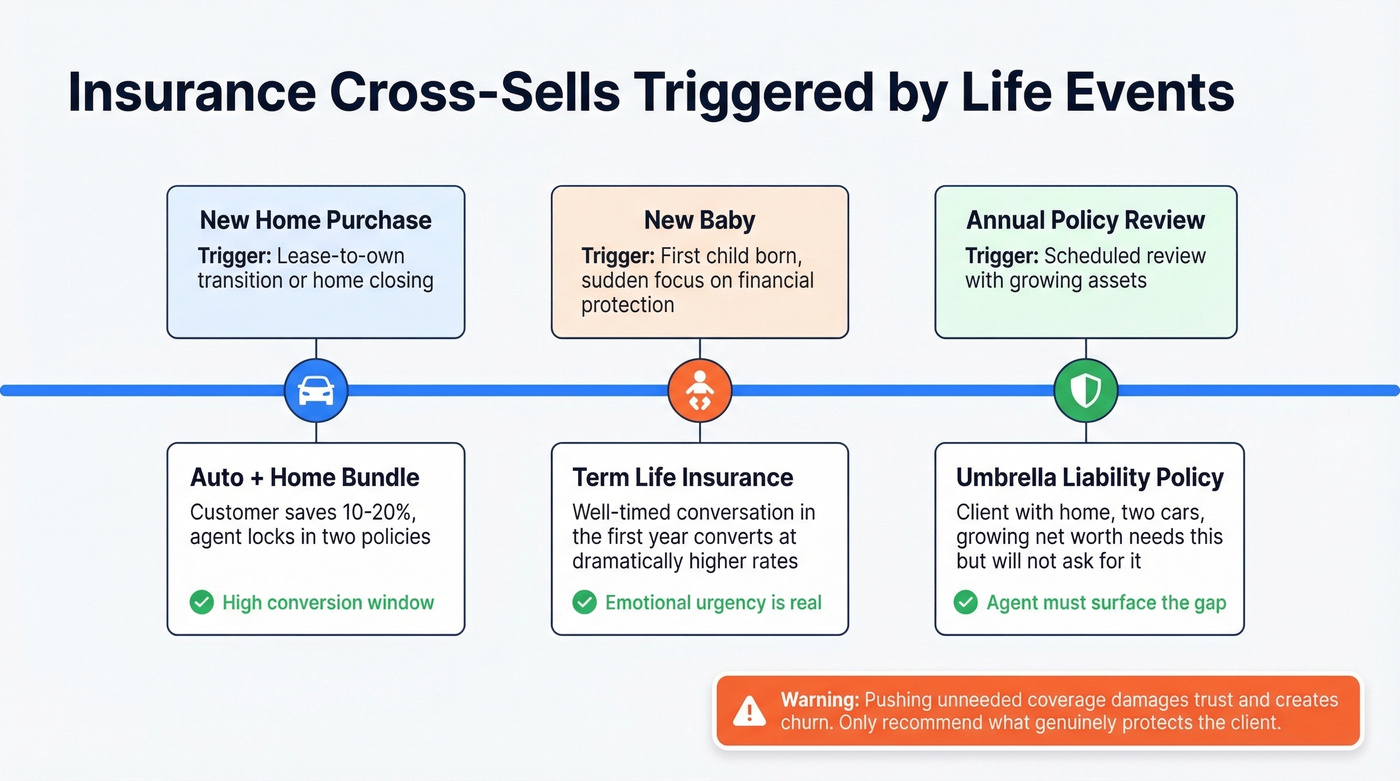
Baby to life insurance. New parents are suddenly thinking about financial protection. A well-timed conversation about term life insurance during the first year converts at dramatically higher rates than cold outreach.
Annual review to umbrella policy. The annual policy review is the natural moment to identify coverage gaps. A client with a home, two cars, and a growing net worth needs umbrella liability coverage - but they won't ask for it. The agent has to surface the gap.
The warning is real: pushing unneeded coverage damages trust and creates churn. Insurance cross-selling only works when the recommendation genuinely protects the client.

Cross-selling fails when reps don't know which accounts can expand. Prospeo enriches your CRM with 50+ data points per contact - job titles, tech stack, headcount growth, intent signals - refreshed every 7 days. 83% of leads come back with contact data. That's the infrastructure behind real cross-sell revenue.
Stop guessing which accounts are ready to expand.
Service-Based Cross Selling Examples
Professional services cross-selling is the section nobody writes about. The timing matters more than the pitch.
A financial advisor cross-sells estate planning after the client's retirement plan is funded and on track. During the first meeting? Too early. While the client is still in debt reduction mode? You're upselling problems they can't afford to solve yet. The right moment is when the client starts asking "what else should I be thinking about?" - that's earned trust converting into expanded scope.
For an IT provider, the security audit is the natural cross-sell trigger. You've just shown the client where their infrastructure is vulnerable - recommending data backup and cloud migration is a logical next step, not a sales pitch. But check first: if they signed a 3-year contract with another backup vendor last quarter, you'll look like you didn't do your homework.
An HR consultant earns the right to cross-sell training programs by first delivering on recruitment. Once candidates are placed and onboarded, performance management training becomes a natural extension. Rush it, and you'll seem more interested in billing hours than solving problems.
Cross-Selling Mistakes That Kill Conversions
Most cross-sell failures aren't creative failures. They're data and timing failures.
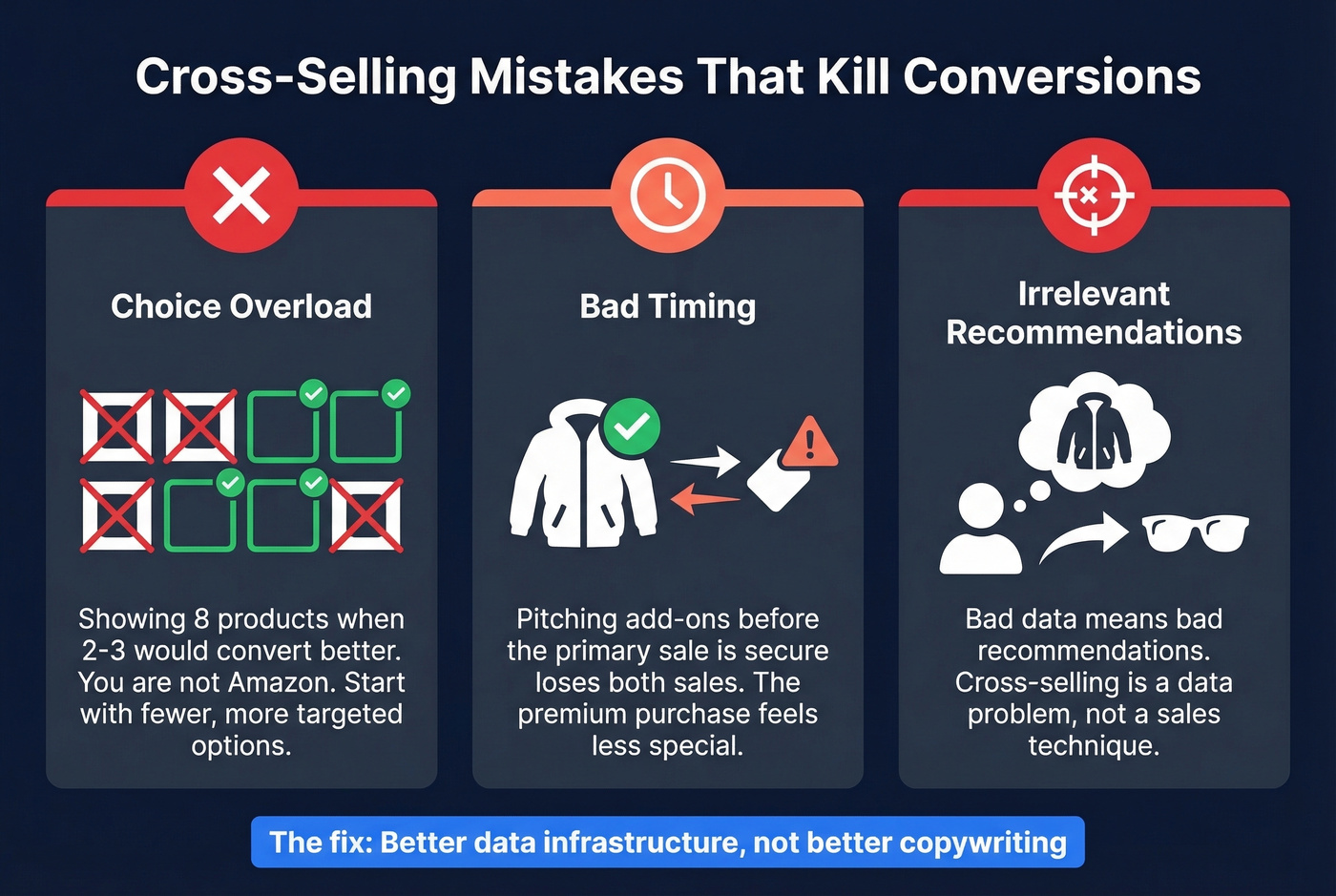
Choice overload. Showing 8 recommended products when 2-3 would convert better. Amazon can show more because its relevance engine is world-class. You're not Amazon. Start with fewer, more targeted options.
Bad timing. Pitching complementary products before the primary sale is secure is the fastest way to lose both sales. A customer is deciding on a $200 jacket, and you interrupt with a $15 clearance item. Now they're distracted, the premium purchase feels less special, and you've introduced doubt into a decision that was nearly made.
Irrelevant offers. Recommending laptop bags to someone buying enterprise software sounds absurd, but algorithmic recommendations produce exactly this kind of mismatch when the underlying data is thin or stale.
Pushing too hard. In insurance, this means recommending coverage the client doesn't need. In SaaS, it means pitching add-ons during onboarding before the customer has adopted the core product. Aggressive cross-selling trades short-term revenue for long-term churn. (Related: churn analysis.)
Ignoring data quality. Sending a cross-sell email to a contact who left the company six months ago doesn't just waste the send - it damages your sender reputation. In B2B, stale data is the silent killer of expansion campaigns. Weekly data refreshes should be the baseline, not a nice-to-have. (See: email bounce rate and email deliverability guide.)
Cross-Selling Best Practices
Personalize ruthlessly. Personalization increases customer spending by ~34%. Generic "you might also like" performs dramatically worse than "customers in your industry who bought X also added Y."
Use behavioral triggers. Purchase signals, usage milestones, and life events outperform calendar-based campaigns every time. The best cross-sell offer arrives when the customer needs it, not when your marketing calendar says to send it. (For B2B, this overlaps heavily with identifying buying signals.)
Cap recommendations at 2-3. More options create choice overload. If you must show more, use algorithmic relevance to keep them tightly related to the primary purchase.
Start with your highest-value customers. They're the most likely to buy additional products and the least likely to churn from a well-timed offer. Work down from there.
Test placement and timing obsessively. In our experience, post-purchase thank-you pages consistently outperform in-cart widgets, and transactional emails beat promotional blasts. Your audience might differ - test before you commit.
Treat it as a data problem. The companies with the best cross selling examples have the best data infrastructure. Clean CRM records, enriched contact profiles, and real-time intent signals are the foundation. Everything else is optimization on top.
The Blue Ridge case study proved it: cross-sell success comes from CRM-based account identification, not better pitches. Prospeo returns 50+ data points at a 92% match rate for $0.01 per email - so your reps see headcount changes, tech stack shifts, and buyer intent before they pick up the phone.
Give your sales team the data to cross-sell with confidence.
Cross-Selling FAQ
What's the difference between cross-selling and upselling?
Cross-selling offers a complementary product - a phone case with a phone. Upselling offers a higher-tier version of the same product - 128GB instead of 64GB. Both increase order value, but cross-selling expands the product mix while upselling deepens it. Most effective revenue strategies use both.
What's a good cross-sell conversion rate?
Post-purchase offers typically convert 3-8%, while pre-purchase product page widgets average 1-4%. Performance depends heavily on placement, relevance, and friction. Post-purchase consistently outperforms because the buyer has already committed.
How many cross-sell recommendations should you show?
Two to three. Research on choice overload shows conversion drops sharply beyond three options. Unless your recommendation engine is extremely strong, fewer and more relevant beats more and generic every time.
How do you identify cross-sell opportunities in B2B?
Enrich your CRM with firmographic and intent data - job titles, tech stack, headcount changes, and buying signals. Layer in intent signals tracking thousands of topics to prioritize accounts actively researching adjacent solutions. The reps who consistently hit expansion targets aren't better closers; they're working better data.