

Customer Profile Template PDF: Free Downloads & How to Fill It Out
Most customer profile template PDFs are blank boxes behind a gate with zero guidance on what to write. You download them, stare at empty fields, and close the tab. Below you'll find full templates rendered as copyable HTML tables, filled-out examples with realistic data, and a five-step process to build profiles that actually drive revenue.
Download these templates as a PDF →
What Your Template Needs
B2B fields: company name, industry, revenue, employee count, tech stack, buying committee, pain points, buying triggers, budget range, decision timeline.
B2C fields: name or archetype, age, location, lifestyle, psychographics (Psychographics (fears, dreams, beliefs)), purchase history, communication preferences, motivations, objections.
These templates are in HTML - copy them directly, no download wall. Need data to fill them? Skip to the data sourcing section.
B2B vs. B2C Templates Compared
Generic templates from sites like Business-in-a-Box cover demographics and purchase history. That's fine for B2C. For B2B, it misses everything that closes deals.
B2B Customer Profile Template
| Field | What to Enter |
|---|---|
| Company Name | Legal entity name |
| Industry | Primary vertical |
| Annual Revenue | Range (e.g., $5M-$20M) |
| Employee Count | Headcount range |
| Tech Stack | Key tools they use |
| Buying Committee | Roles involved in purchase |
| Primary Pain Points | Top 2-3 business problems |
| Buying Triggers | Events that create urgency |
| Budget Range | Estimated spend capacity |
| Decision Timeline | Typical sales cycle length |
| Financial Readiness | Can they actually pay right now? |
| Urgency Level | Active search vs. future consideration |
B2C Customer Profile Template
| Field | What to Enter |
|---|---|
| Name / Archetype | Representative persona name |
| Age Range | Demographic bracket |
| Location | City, region, or urban/rural |
| Lifestyle Preferences | Hobbies, habits, routines |
| Psychographics | Fears, dreams, beliefs |
| Purchase History | Frequency, avg. spend, recency |
| Communication Pref. | Email, SMS, social, phone |
| Motivations | Why they buy |
| Objections | What holds them back |
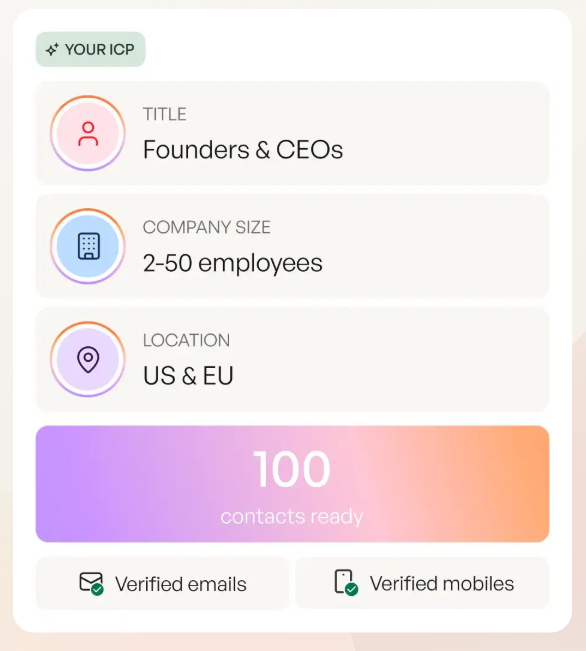
The B2B template leans on firmographics and technographics. The B2C template leans on psychographics - forget your product for a moment and understand human motivations first. Mixing these two approaches is the most common mistake we see teams make, and it produces profiles that are too vague for either sales or marketing to act on.
Filled-Out Examples
B2B Example: Relay (Mid-Market Logistics SaaS)
| Field | Entry |
|---|---|
| Company Name | Relay |
| Industry | Logistics / Supply Chain |
| Annual Revenue | $12M-$25M |
| Employee Count | 120-200 |
| Tech Stack | Salesforce, NetSuite, Slack, legacy WMS |
| Buying Committee | VP Ops (champion), CFO (budget), IT Director (security) |
| Primary Pain Points | Manual shipment tracking, 3+ disconnected systems, no real-time visibility |
| Buying Triggers | New warehouse opening, failed audit, competitor adopting automation |
| Budget Range | $40K-$80K/year |
| Decision Timeline | 60-90 days |
B2C Example: Mia Chen (DTC Fitness Brand)
| Field | Entry |
|---|---|
| Name / Archetype | Mia Chen |
| Age Range | 30-36 |
| Location | Austin, TX (urban) |
| Lifestyle Preferences | CrossFit 4x/week, meal preps, follows fitness creators |
| Psychographics | Fears: losing progress after injury. Dreams: completing a Hyrox race. Believes quality gear prevents injury. |
| Purchase History | Buys activewear quarterly, avg. $85/order, last purchase 3 weeks ago |
| Communication Pref. | Instagram DMs, email (opens morning newsletters) |
| Motivations | Performance edge, community belonging |
| Objections | Skeptical of new brands without athlete endorsements |
These are built from the kind of patterns you'd find after interviewing ten real customers - not a conference room brainstorm where everyone projects their assumptions onto a whiteboard.

You just built your customer profile template. Now fill it with real data. Prospeo's CSV enrichment returns 50+ data points per contact at a 92% match rate - firmographics, tech stack, verified emails, and direct dials. Upload your target list and get back complete profiles in minutes, not weeks.
The template is 10% of the work. Let Prospeo handle the other 90%.
ICP vs. Buyer Persona vs. Customer Profile
Ideal Customer Profile (ICP): Describes the company you sell to. Firmographics, technographics, behavioral signals. Build this first. If you want a scoring-ready version, start with an Ideal Customer Profile (ICP) rubric.
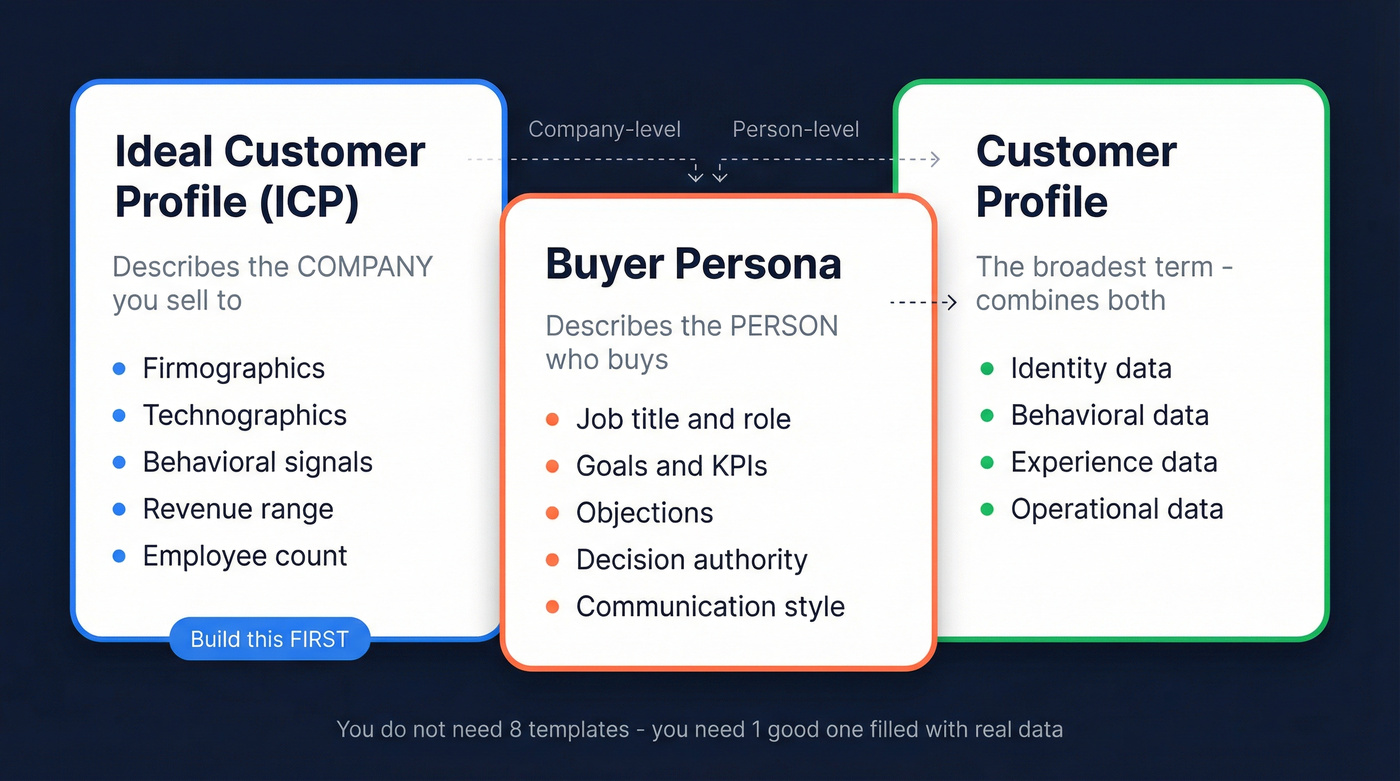
Buyer Persona: The person within that company who buys. Role, goals, objections.
Customer Profile: The broadest term. As HubSpot frames it, personas tell you who you're speaking to, ICPs tell you which companies are worth speaking to. You don't need eight templates. You need one good one filled with real data.
How to Fill Out Your Template (5 Steps)
- Identify your 10 best customers. Highest LTV, fastest close, lowest churn from the last 12 months.
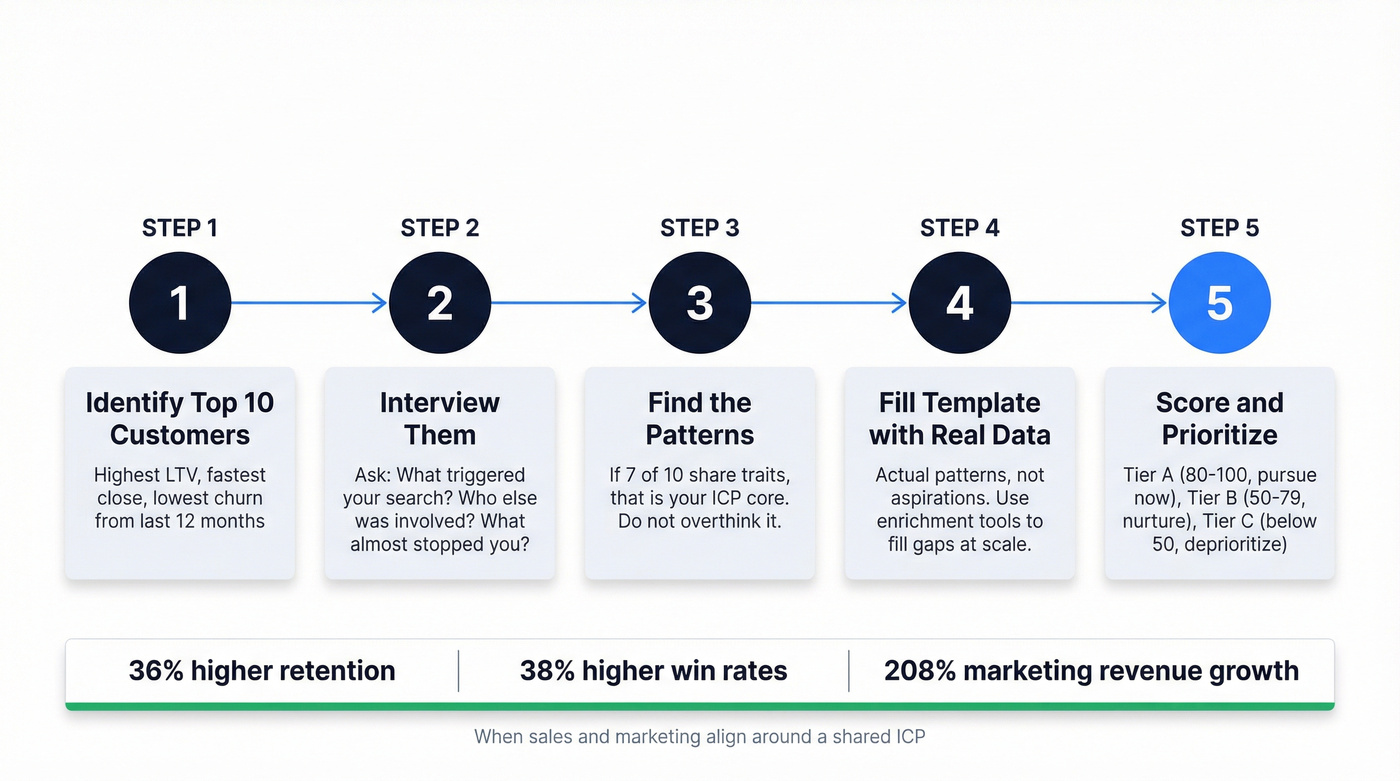
Interview them. Ask: What triggered your search? Who else was involved? What almost stopped you from buying? (A structured set of discovery questions helps.)
Find the patterns. If 7 of 10 best customers are 50-200 person SaaS companies, that's your ICP core. Don't overthink it.
Fill the template with real data. Not aspirations. Actual patterns from step 3.
Score and prioritize. Tier your accounts: Tier A (80-100, pursue now), Tier B (50-79, nurture), Tier C (below 50, deprioritize). If you need a system, use a simple lead scoring model.
Teams that align sales and marketing around a shared ICP see 36% higher retention, 38% higher win rates, and 208% growth in marketing-generated revenue. Those numbers aren't aspirational - they're what happens when everyone stops arguing about who to target.
Where to Source the Data
Customer data falls into four categories: identity (who they are), behavioral (what they do), experience (how they interact with you), and operational (how their business runs). You need all four for a complete profile.
Your CRM is the starting point - closed-won records reveal firmographics, deal size, and objection patterns. Customer interviews surface the "why" behind buying decisions that no database captures. Aim for ten. Enrichment tools fill the gaps at scale: upload a target account list and get back verified emails, company size, tech stack, and funding data. Prospeo's CSV enrichment returns 50+ data points per contact at a 92% match rate, so you can go from a bare-bones spreadsheet to a fully populated profile in minutes. If you're comparing vendors, see our roundup of data enrichment services.
Here's the thing: most teams spend weeks perfecting their customer profile template and zero hours enriching it with real data. The template is 10% of the work. The data is 90%.
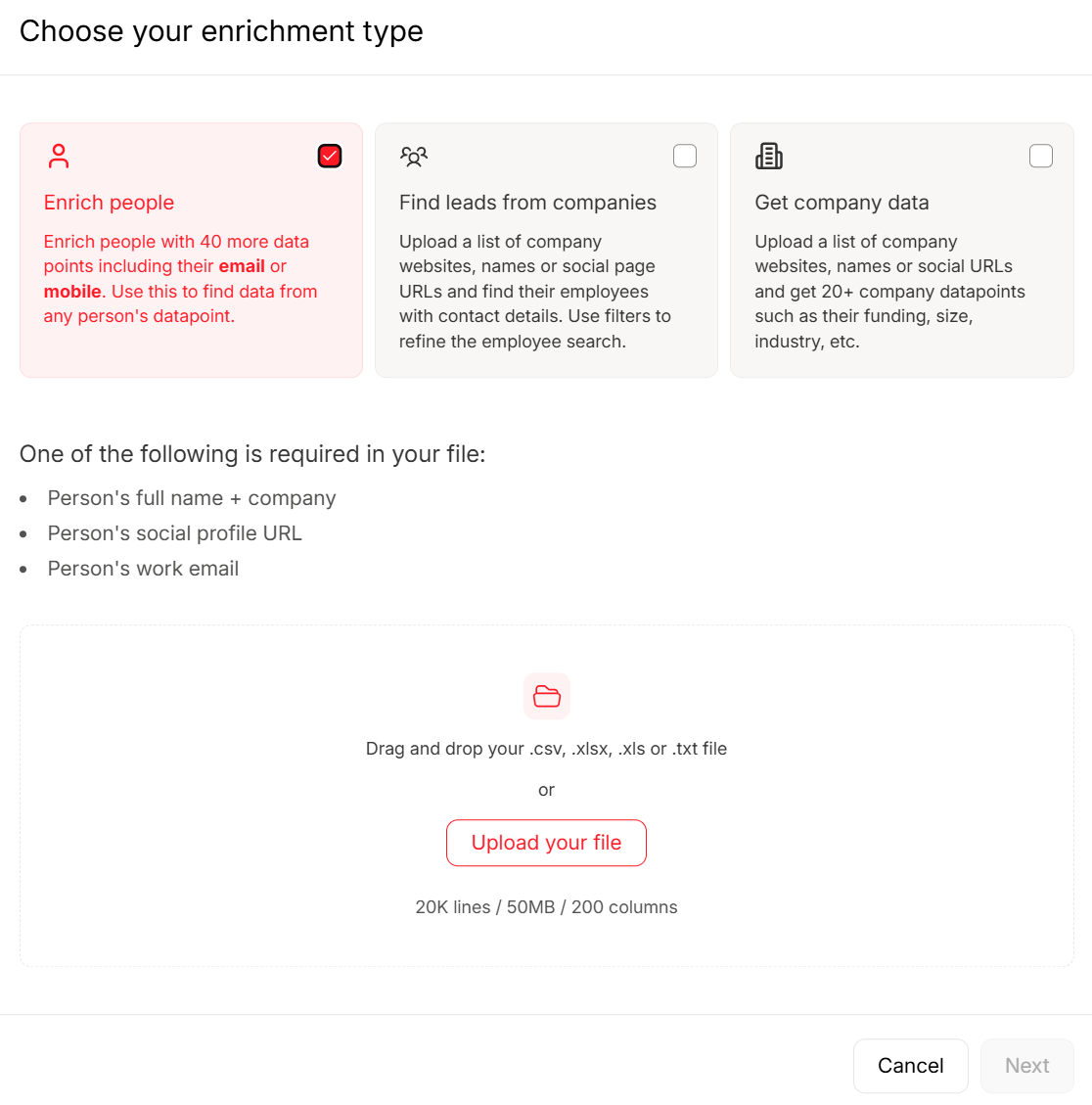
Every empty field in your customer profile is a guess your sales team has to make. Prospeo fills those gaps with 300M+ verified profiles, 30+ filters for firmographics and technographics, and intent data across 15,000 topics - all refreshed every 7 days. Start at ~$0.01/email with no contracts.
Stop guessing. Start building profiles with verified data.
3 Mistakes That Kill Profiles
Fairytale personas. Built without a single customer conversation. The consensus on r/b2bmarketing is blunt: profiles created without talking to customers become shelfware. We've watched it happen at companies with six-figure martech stacks.
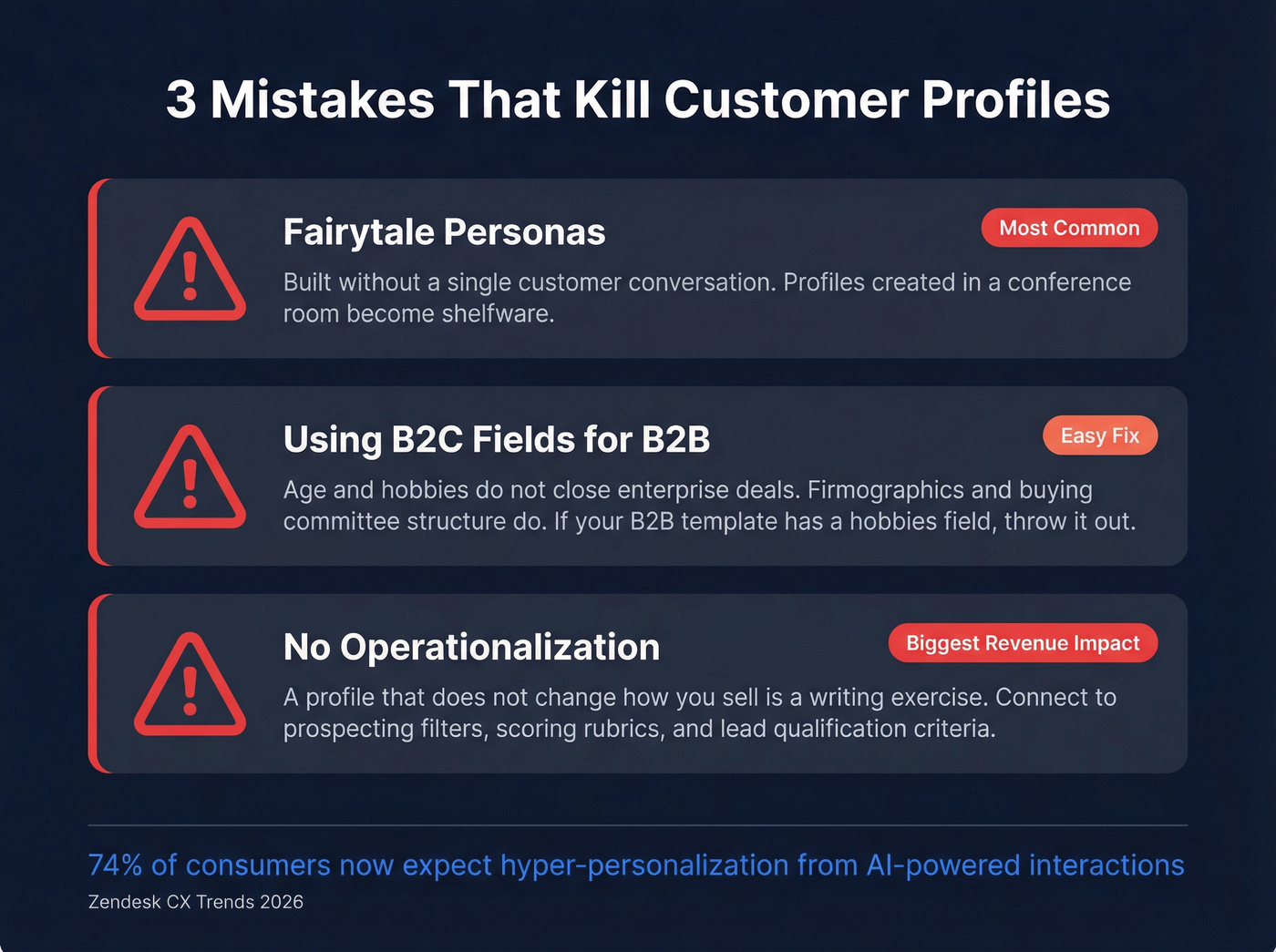
Using B2C fields for B2B. Age and gender don't close enterprise deals. Firmographics and buying committee structure do. If your B2B profile template has a "hobbies" field, throw it out.
No operationalization. This is the one that frustrates us most. We've seen teams build profiles in 30 minutes and never open them again. Connect yours to prospecting filters, scoring rubrics, and lead qualification criteria. A profile that doesn't change how you sell is a writing exercise, and with 74% of consumers now expecting hyper-personalization from AI-powered interactions (per Zendesk's CX Trends 2026 report), the cost of a bad profile isn't just wasted time - it's lost revenue. To make it actionable, bake it into your sales prospecting techniques and your lead generation workflow.
FAQ
What fields should a B2B customer profile include?
At minimum: industry, revenue range, headcount, tech stack, buying committee roles, pain points, budget range, buying triggers, and decision timeline. Demographics alone won't close enterprise deals - firmographics and technographics are what separate useful profiles from shelfware.
How many customer profiles do I need?
Two to four ICPs for most B2B companies, one per market segment you actively sell into. More than five means you haven't prioritized, and your sales team won't use any of them. Start with one, validate it against closed-won data, then expand.
How do I keep customer profiles accurate over time?
Review quarterly against your latest closed-won deals. Markets shift, buying committees change, and tech stacks evolve. Enrichment tools that refresh contact and company data on a weekly cycle keep profiles current without manual re-research - a major upgrade over the 6-week industry average for data freshness.
Can I use a free customer profile template PDF for B2B prospecting?
Yes. The templates above work for both strategic planning and active prospecting. Download the PDF version, fill it with real customer data, then use the firmographic criteria as filters in your outbound tools to find lookalike accounts at scale.