

The Best Email Cadence Software for Sales Teams in 2026
A BDR posted on Reddit about going from 30-40% open rates and a 5-10% reply rate to 3% opens and zero replies - overnight. The culprit wasn't a new spam filter or a bad subject line. It was a cadence overhaul: emails stuffed with 4-5 links, broken personalization tokens sending "Hi first_name" to hundreds of prospects, and bounce rates through the roof. The tool didn't change. The data and the strategy did.
That story captures the two things most email cadence software guides get wrong. They obsess over features and ignore the two variables that actually determine whether your sequences work: the quality of the data going in and the structure of the cadence itself. Decision-makers receive an average of 15 cold emails per week. Your sequencing tool doesn't matter if your emails bounce, your copy is bloated, or your follow-up timing is off.
Here's my hot take: the best cadence tool for your team depends on your size, your budget, and whether you're running cold email only or true multichannel outreach. But most teams would get better results spending $0 on a fancier tool and $50 on cleaner data. I've broken down 12 tools in depth - plus 5 quick mentions - with real pricing, benchmarks that actually matter, and the data quality layer that most guides completely ignore.
Our Picks: Best Sales Cadence Tools in 2026
Best all-in-one for SMBs: Apollo.io - prospecting, database, and sequencing in one platform. Generous free tier, $79/user/month for multichannel sequences. The obvious starting point for teams under 20 reps.
Best for high-volume cold email: Instantly - unlimited email accounts, built-in warmup, starts at $37/month on annual billing. If you're sending at volume and deliverability is your top concern, this is the default.
Best multichannel for mid-market: Lemlist - email, LinkedIn automation, and a dialer from $87/user/month. The best balance of multichannel capability and price.
Enterprise default: Salesloft and Outreach remain the enterprise standards - but expect $20K-$120K/year and a long implementation cycle. If your team is under 20 reps, you're overpaying.
What You Need to Know Before You Buy
Cold Email Benchmarks That Actually Matter
Average B2B cold email reply rates sit at 3-5.1%. That's the baseline. Top-quartile performers hit 15-25%, but they're doing things most teams skip: tight ICP targeting (use an Ideal Customer Profile scoring rubric), timeline-based hooks, and segmentation into cohorts of 50 contacts or fewer (which alone increases reply rates by 2.76x).
The hook type matters more than most reps realize. Timeline-based hooks - referencing a trigger event like a funding round, a new hire, or a product launch - pull a 10.01% reply rate. Problem hooks, the generic "are you struggling with X?" approach, land at 4.39%. That's a 2.3x gap from one sentence.
Follow-up cadence is equally non-negotiable. The 3-7-7 pattern (send on Day 0, follow up Day 3, Day 10, Day 17) captures 93% of total replies by Day 10. Your first follow-up alone adds 40-50% more replies. If you're sending one email and moving on, you're leaving half your pipeline on the table. (If you want plug-and-play copy, steal these sales follow-up templates.)
Why do emails get ignored in the first place? 71% lack relevance to the recipient, 43% fail on personalization, and 36% lack trust signals. Deep personalization - not just merge tags - drives 52% higher reply rates. That means your data source needs to give you more than a name and email; you need company context, trigger events, and technographic signals to write emails that actually land. (More on firmographic and technographic data if you're building better segments.)
A few more quick-reference numbers:
- Subject lines under 40 characters with a quantified claim: 37% higher open rates (see more cold email subject line examples)
- Email length of 50-125 words: highest response rates
- Send time between 7-9:30 AM in the prospect's timezone: 58% of adults check email first thing (use this best time to send cold emails breakdown)
- Best ICP role for reply rates: CEO/Founder at 7.63%
- Best industry for reply rates: Consulting at 7.88%
Sample 3-7-7 Cadence Template
Here's a concrete cadence structure you can steal. Most guides tell you to "follow up more" without showing you what that looks like. Any decent cadence builder should let you set this up in minutes:
Day 0 - Initial Email
Subject: [Trigger event] -> quick question
Body: 2-3 sentences. Reference a specific trigger (funding round, new VP hire, job posting). One question. No links. Under 80 words.
Day 3 - Follow-up #1
Subject: Re: [original subject]
Body: "Bumping this up - [one-line restatement of value prop]. Worth 15 minutes this week?" Under 40 words.
Day 10 - Follow-up #2 (new angle)
Subject: [Peer company] is doing this differently
Body: Share a relevant case study or data point. Social proof works here. One clear CTA. Under 90 words.
Day 17 - Breakup email
Subject: Should I close your file?
Body: "I'll assume the timing isn't right and close this out. If anything changes, here's my calendar link." Under 50 words.
This structure captures 93% of total replies by Day 10. The breakup email on Day 17 often generates a surprising number of responses from prospects who were on the fence.
Why Multichannel Cadences Win
Cold email alone isn't enough anymore.
A practitioner test across 300 cold emails, 200 cold calls, and 100 LinkedIn DMs over two weeks showed the gap clearly: cold calling hit a 17% reply rate and 6.5% meeting rate. Cold email came in at 8% reply and 2.33% meetings. LinkedIn DMs trailed at 6% reply and 2% meetings. None of those channels alone is great. Combined, they compound - a prospect who sees your email, then your LinkedIn profile view, then picks up your call is far more likely to engage than one who only got an email.
McKinsey's B2B Pulse Survey found buyers engage across an average of 10 channels during their purchase journey. The recommended structure for cold outreach is 6-8 touchpoints over 2-3 weeks, mixing email, phone, and social. For inbound leads, stretch to 8-12 touchpoints over 10-15 business days.
The practical implication: your cadence automation software needs to either support multichannel natively (Lemlist, Salesloft, Outreach) or integrate cleanly with tools that do. I've seen teams running Instantly for email, a separate dialer, and manual social touches outperform Salesloft deployments that took three months to configure. This kind of BDR outreach automation doesn't require a six-figure platform - it requires discipline.
The Data Quality Problem Nobody Talks About
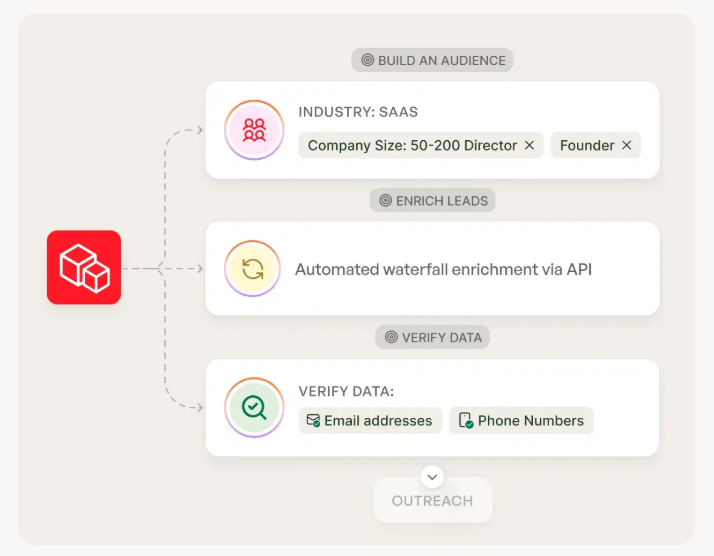
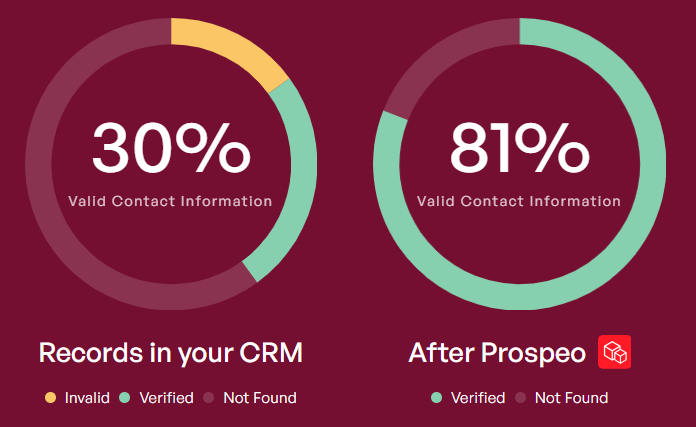
Here's the part every cadence software guide skips: none of these tools matter if your contact data is garbage.
Apollo users on G2 report bounce rates of 15-20% on certain segments. That's not a minor inconvenience - it's a domain reputation killer. Bounce rates need to stay under 2%, and spam complaints below 0.3%. Exceed those thresholds and your emails start landing in spam across your entire domain, not just the bad addresses. (If you want the full breakdown, start with email bounce rate benchmarks and fixes.)
Your automated sales cadence is only as good as the data you feed it.
Before you evaluate any cadence tool on this list, get your data layer right. A 5-step verification process with catch-all handling, spam-trap removal, and honeypot filtering is the minimum bar. Everything downstream depends on it. (This email deliverability guide goes deeper on the mechanics.)
The Best Email Cadence Tools Compared
Apollo.io - Best All-in-One for SMBs
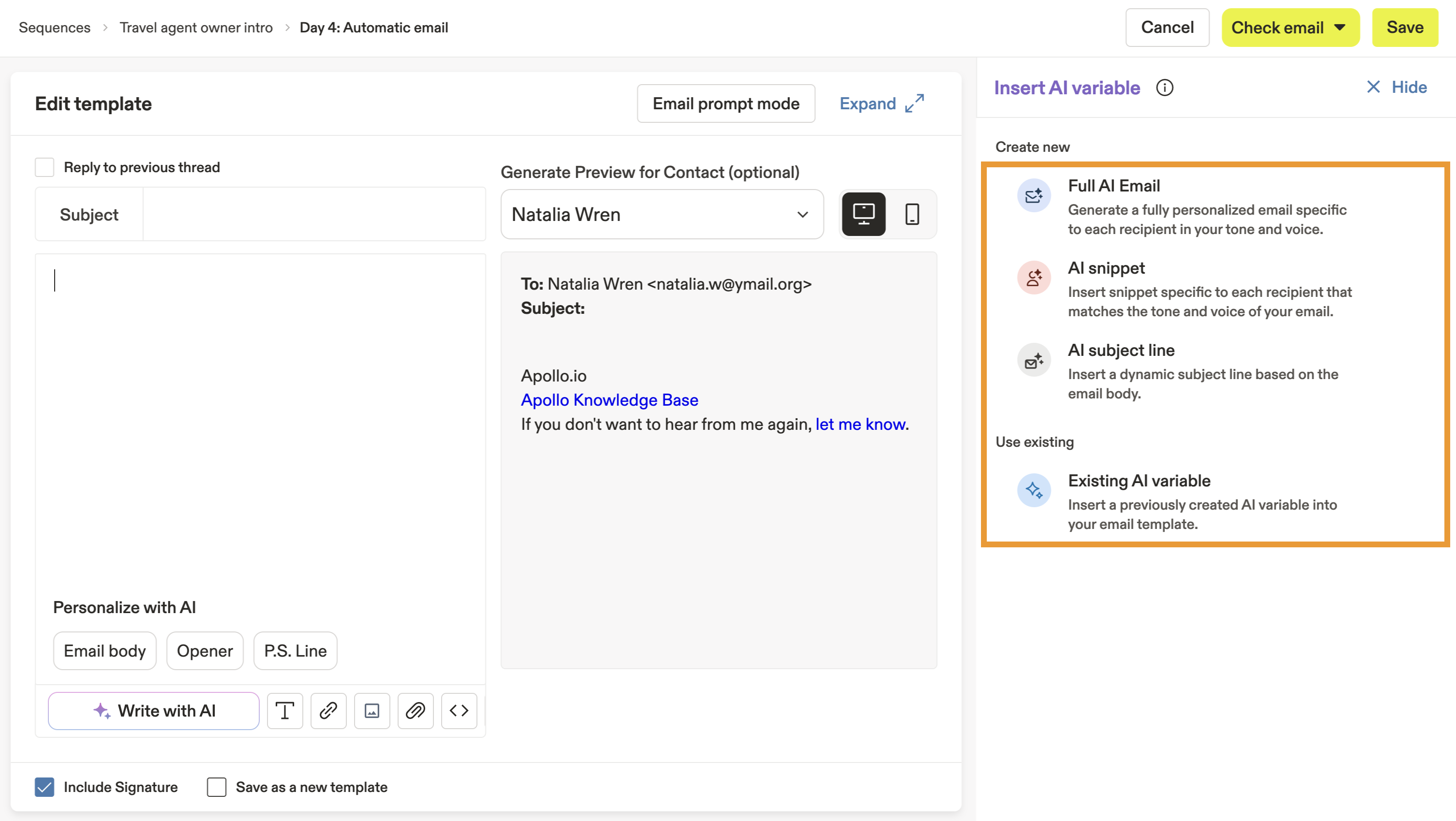
Apollo is the obvious starting point for most SMB teams, and for good reason. It combines a 275M+ contact database with built-in multichannel sequences, a dialer, and a CRM - all in one platform. The free tier is genuinely useful (10,000 email credits/month, 250 sends/day), and the Professional plan at $79/user/month unlocks A/B testing, multichannel sequences, and the auto-dialer.
Pros:
- All-in-one means fewer tools to manage and fewer integration headaches
- G2 rating of 4.7/5 - reps genuinely like using it
- Generous free tier for testing before committing
- Multichannel sequences on Professional plan
Cons:
- Email bounce rates hit 15-20% on some segments - verify externally
- The credit system creates "credit anxiety" - SDRs start rationing mid-month
- A 5-person team on Professional with typical credit overages runs ~$7,140/year
- Mobile numbers are unreliable for mid-market and enterprise contacts
Real talk: Apollo is great for getting started fast. But we've run bake-offs where Apollo's data quality created more bounces than meetings in the first week. Pair it with an external verification layer and it's a different story. (If you're comparing providers, start with data enrichment services.)
Pricing: Free / $49 / $79 / $119 per user/month (annual). Organization plan requires minimum 3 users.
Instantly - Best for High-Volume Cold Email
Use this if: You care about one thing above all else - getting emails into the primary inbox at scale. You're comfortable assembling a stack from separate products.
Skip this if: You want multichannel outreach or a built-in lead database in the same product. Instantly is email only, and the lead finder is a separate purchase.
Instantly has become the default for high-volume cold email teams. Unlimited email accounts and warmup on every plan, inbox rotation that distributes sends automatically, and a Growth plan starting at $37/month (annual) for 5,000 emails/month. The Light Speed plan handles 500,000 emails/month for serious volume operations.
The split-product pricing is the catch. You see "$37/month" and think that's your total cost, but you'll likely need SuperSearch for leads ($47/month) and eventually the CRM ($47/month). Budget $84-150/month for a realistic setup. No built-in dialer or multichannel capabilities - it's email only.
Pricing: Outreach from $37/mo (annual). SuperSearch from $47/mo. CRM from $47/mo.
Smartlead - Best for Agencies
I watched an agency try to scale cold email across 15 clients using Lemlist. The per-inbox costs ate their margins alive. They switched to Smartlead and cut their sending costs by 60%.
Smartlead fills a gap most sales cadence tool roundups ignore. If you're managing multiple client campaigns or sending at serious volume, the unlimited inbox model saves real money compared to per-seat tools. Unlimited email accounts with intelligent rotation from $39/month, Pro plan handles 150,000 emails/month, and white-label campaigns for agency client management. In testing across 10,000+ emails: 0.5% bounce rate.
The tradeoffs: the campaign editor is basic with limited dynamic personalization, the built-in CRM is bare-bones, and there's no B2B data enrichment included. The UI feels slightly dated. But for agencies, the economics are unbeatable.
Pricing: From $39/month. 14-day free trial, no credit card required. Higher tiers unlock API access and more volume.
SalesLoft - Enterprise Standard
Use this if: You're a 20+ rep team with budget for a full engagement platform, you need conversation intelligence baked in, and you want a tool your CRO has heard of.
Skip this if: Your team is under 20 reps. You're overpaying. A 50-seat Advanced plan lists at $108,000/year. Even negotiated, you're looking at $62,000-$75,000/year (35-60% off list). For a 10-seat team, that's still $12,000-$15,000/year after discounts - and the dialer is a paid add-on.
Salesloft's strength is the full platform: pipeline generation, rep coaching, conversation intelligence, and customer lifecycle workflows all in one. The Premier plan adds forecasting and revenue management. Multi-year commitments unlock 35-60% discounts.
The frustrating part: pricing isn't transparent. You can't see a number without talking to sales. And the DNC/block list management is inflexible - contacts can become permanently uncontactable, which drives RevOps teams crazy.
Pricing: $20,000-$120,000/year depending on seats and tier. Expect to negotiate hard.
Outreach - Enterprise Alternative
Use this if: You're already evaluating Salesloft and want a competitive quote, or you need AI-powered deal scoring and forecasting alongside your sequences.
Skip this if: You want to send your first email this week. Outreach requires a demo, an implementation fee ($1,000-$10,000+), and a 12-month annual contract before you send anything.
Standard plan starts at $100/user/month. Professional adds AI-triggered content cards and improved forecasting. Enterprise and Unlimited pricing isn't public - expect $160+/user/month based on market positioning.
The #1 complaint: complexity. The UI has a steep learning curve, onboarding takes months, and CRM integrations are limited. Customer support is notoriously slow. If you're a 50-person sales org with a dedicated RevOps team to manage the implementation, Outreach is powerful. For everyone else, it's overkill.
Pricing: From $100/user/month + $1K-$10K+ implementation. Annual contract required.
Lemlist - Best Multichannel for Mid-Market
Lemlist is the tool that actually tries to deliver on the multichannel promise at a mid-market price point. Email Pro runs $63/user/month (annual), and Multichannel Expert at $87/user/month adds LinkedIn automation, a call dialer, and a unified inbox.
| Where Lemlist wins | Where Salesloft wins |
|---|---|
| Price (3-5x cheaper) | Depth of analytics |
| Speed to value | Conversation intelligence |
| 600M+ leads database built in | Enterprise-grade workflow customization |
| 3-5 min support response times | Forecasting and revenue management |
Caveats: LinkedIn automation caps at ~100 prospects - doesn't scale for heavy LinkedIn outreach. WhatsApp is a $20/month add-on per user. Cold calls require a separate platform despite the "multichannel" branding - the built-in dialer is limited. Reporting is more complicated than it needs to be.
Pricing: $63/user/month Email Pro, $87/user/month Multichannel Expert (annual). 14-day free trial, no credit card.
Saleshandy - Best Budget Scaling Option
For a solo founder or a small SDR team that needs to get emails out the door without overthinking the stack, Saleshandy is hard to beat on value. Starts at $25/month (Starter), $69/month (Pro), $139/month (Scale) on annual billing. No credit systems, no per-inbox surcharges.
I've seen solo founders book their first 10 meetings using nothing but Saleshandy and a verified contact list. It's not flashy, but it works. The database and enrichment features are basic compared to Apollo or Lemlist, and there's no built-in multichannel - it's email only. But for under $75/month total (tool + verified data), you've got a functional outbound setup that punches above its weight.
Pricing: From $25/month (annual). Pro at $69/month. Scale at $139/month. Free trial available.
Reply.io - AI-Powered Outreach With Caveats
Reply.io's pitch is compelling: a massive contact database, multichannel sequences, and Jason AI SDR - a fully automated AI agent that handles outreach for $500/month. The Email Volume plan starts at $49/user/month (annual), and Multichannel at $89/user/month. The database is large, and Jason AI SDR automates prospecting end-to-end - making it one of the more ambitious attempts at fully automated sales cadences.
The dealbreaker for many teams: a hidden 3-month minimum contract that isn't clearly disclosed upfront, plus a no-refunds policy. You sign up thinking it's month-to-month, then discover you're locked in. The LinkedIn integration is buggy and has caused account restrictions for users. No built-in email warmup either.
Pricing: $49/user/month Email Volume, $89/user/month Multichannel (annual). Jason AI SDR from $500/month.
Mailshake - Clean Cold Email Without the Complexity
Mailshake doesn't try to be everything. Starter at $25/month gets you one email address, 1,500 sends/month, unlimited contacts, and AI email writing via SHAKEspeare. The Sales Engagement tier at $85/month (annual) adds LinkedIn automation, a power dialer with unlimited North American minutes, and 10 email addresses. No free trial - you pay upfront, which is annoying but at least the pricing is transparent. If you want a no-frills sequencing tool without the complexity of Outreach or the feature sprawl of Apollo, Mailshake does the job.
Pricing: $25/month Starter, $45/month Email Outreach, $85/month Sales Engagement (annual).
HubSpot Sales Hub - Best If You're Already in HubSpot
Use this if: You're already paying for HubSpot Professional ($90/seat/month) and want sequences without adding another tool to your stack.
Skip this if: You're on HubSpot Free or Starter. Sequences aren't available below Professional, and upgrading just for cadences means paying $90/seat/month plus a $1,500 onboarding fee. That's an expensive way to get a feature that Instantly offers for $37/month.
HubSpot's sequences are solid for teams living inside the CRM - the data flows naturally, reporting is unified, and reps don't need to context-switch. But they aren't best-in-class for cold outreach. The sending limits, personalization options, and deliverability features lag behind dedicated cold email tools.
Pricing: Sequences require Professional at $90/seat/month + $1,500 onboarding. Starter ($9/seat) does NOT include sequences.
Woodpecker - Transparent Pricing, Simple Tool
Woodpecker starts at $29/month and scales based on the number of contacted prospects - not seats, not emails, not credits. That pricing model is refreshingly clear in a market full of hidden costs and credit anxiety. Free trial available. The tool does cold email well without trying to be a CRM, a dialer, or an ABM platform. One caveat: support during the trial period is slow (12-24 hour response times), which is frustrating when you're trying to evaluate quickly.
Pricing: From $29/month, scales by contacted prospects.
Quick Mentions: Tier 3 Tools
Yesware - Lives inside your Gmail or Outlook inbox. From $19/user/month. Good for individual reps who want tracking and templates without leaving their email client. Not built for team-scale outbound.
EngageBay - Budget all-in-one CRM with sequences starting at $13.79/user/month. Free plan available. Best for tiny teams that need CRM + email in one and can't justify separate tools.
QuickMail - Starts at $49/month. Bare-bones cold email with solid deliverability. If you literally just need to send and follow up, it's a straightforward option.
Klenty - Starts at $50/month. Sales engagement platform with phone, email, and LinkedIn steps. Solid middle ground between Lemlist and Salesloft for teams that want multichannel without enterprise pricing.
Snov.io - Starts at $30/month. Combines a lead database with email sequences. Similar positioning to Apollo but with a smaller database. Worth evaluating if Apollo's credit system frustrates you.
Pricing Comparison Table
Apollo + a verified data source + Instantly runs under $300/month for a 5-person SDR team. That's less than one Salesloft seat.
| Tool | Starting Price | Multichannel | Free Tier/Trial | Best For |
|---|---|---|---|---|
| Apollo.io | $49/user/mo | $79/user/mo | Free plan | SMB all-in-one |
| Instantly | $37/mo | Email only | No | High-volume cold email |
| Smartlead | $39/mo | Email only | 14-day trial | Agencies |
| Salesloft | ~$20K/yr+ | Included | No | Enterprise (20+ reps) |
| Outreach | $100/user/mo | Included | No | Enterprise w/ forecasting |
| Lemlist | $63/user/mo | $87/user/mo | 14-day trial | Mid-market multichannel |
| Saleshandy | $25/mo | Email only | Free trial | Budget scaling |
| Reply.io | $49/user/mo | $89/user/mo | 14-day trial | AI-automated outreach |
| Mailshake | $25/mo | $85/mo | No | Simple cold email |
| HubSpot | $90/seat/mo | Limited | Free CRM (no seq) | Existing HubSpot users |
| Woodpecker | $29/mo | Email only | Free trial | Transparent pricing |
| Yesware | $19/user/mo | Email only | Free plan | Individual reps |
| EngageBay | $13.79/user/mo | Basic | Free plan | Tiny teams, tight budget |
| QuickMail | $49/mo | Email only | 14-day trial | Simple cold email |
| Klenty | $50/mo | Included | 14-day trial | Mid-tier multichannel |
| Snov.io | $30/mo | Email only | Free trial | Apollo alternative |
Notes: All "starting price" figures reflect annual billing where available. Salesloft and Outreach require annual contracts.
The math is simple. A mid-market Salesloft contract for 20 seats runs $40,000-$60,000/year after negotiation. The same team on Apollo Professional ($79/user/month x 20 = $18,960/year) plus a verified data layer ($500-$1,000/year) gets comparable functionality for a third of the price. The tradeoff is conversation intelligence and enterprise reporting - which matters at scale but not for most teams reading this.
How to Choose the Right Sales Cadence Tool
You need a maximum of three tools: a data source, a sequencing tool, and maybe a dialer. That's it. Every tool beyond three adds integration complexity, data sync issues, and another login your reps won't use. (If you're building the full stack, start with these SDR tools.)
Solo or 2-5 reps, under $100/month: Instantly ($37/month) or Saleshandy ($25/month) paired with a verified data source. This gets you reliable sending and clean contacts for under $75/month total. If you need a built-in database, Apollo's free tier works but verify the emails externally before loading them into sequences.
6-20 reps, $100-$500/month: Apollo Professional ($79/user/month) for the all-in-one approach, or Lemlist Multichannel Expert ($87/user/month) if you want LinkedIn + email + phone in one tool. At this size, the data quality gap starts costing real money - a 15% bounce rate across 20,000 emails/month means 3,000 bounced emails actively damaging your domain. Invest in verification. Sales cadence management also becomes critical here: you need clear ownership of who's editing sequences, A/B tests, and follow-up timing so reps aren't stepping on each other. (If you need a process, use this sequence management guide.)
20+ reps, $500+/month: Salesloft or Outreach become reasonable at this scale. The conversation intelligence, coaching features, and enterprise reporting justify the cost when you have enough reps to benefit from the analytics. Negotiate hard - multi-year commitments unlock 35-60% discounts. But here's the thing: if your average deal size is under $15K, you probably don't need an enterprise-grade platform. The ROI math doesn't work until your deal sizes justify the platform cost.
Agencies managing multiple clients: Smartlead ($39/month) with unlimited inboxes. The per-client economics are unbeatable compared to per-seat tools.

Whatever sequencing tool you pick, pair it with verified data. I've seen teams spend months optimizing subject lines and cadence timing while sending to a list with a 15% bounce rate. Fix the data first. Everything else is optimization on top.
Common Mistakes That Kill Your Cadence Results
1. Loading unverified data. Bounce rates above 5% destroy your domain reputation. Once you're flagged, every email from your domain suffers - not just the ones to bad addresses. Verify your list before you hit send. This is the single highest-ROI action you can take. Stack Optimize built from $0 to $1M ARR by maintaining 94%+ client deliverability and bounce rates under 3% - they credit their verification workflow as the foundation.
2. Over-engineering your cadences. Remember that Reddit BDR whose open rates crashed from 40% to 3%? The cadence admin stuffed emails with 4-5 links, broke personalization tokens, and introduced spelling errors. More complexity doesn't mean more results. The best-performing cold emails are under 90 words with 2-sentence paragraphs, one link maximum, and a 3rd grade reading level. Keep it simple. (If you want to tighten copy, use this email copywriting playbook.)
3. Ignoring follow-up timing. The 3-7-7 cadence (Day 0, Day 3, Day 10, Day 17) captures 93% of total replies by Day 10. Your first follow-up alone adds 40-50% more replies. If you're sending one email and moving on, you're abandoning half your potential pipeline. Set the follow-ups and let them run - that's the entire point of an automated sales cadence.
4. Sending too many words. Emails between 50-125 words get the highest response rates. 80% of people only scan emails - they're deciding in 2.7 seconds whether to read or delete. Short sentences. White space. One clear CTA.
5. Ignoring why prospects delete you. 71% of ignored cold emails lack relevance. 43% fail on personalization. 36% lack trust signals. Your data source needs to give you more than a name and email - you need company context, trigger events, and technographic signals to write emails worth reading. Personalization depth (not just first-name merge tags) drives 52% higher reply rates.
Look, the email cadence software you pick matters less than most people think. Data quality and cadence structure account for 80% of your results. Get those right and even a $25/month tool will outperform a $100K/year platform running on bad data with bloated emails.

Your cadence tool is only as good as your data. Verify your list free with Prospeo - 98% email accuracy, native integrations with Instantly, Lemlist, and Smartlead. Verify your list free
FAQ
What is a sales cadence tool?
A sales cadence tool automates multi-step outreach by scheduling sends, follow-ups, and tracking across a defined sequence. Unlike marketing drip platforms, these tools are built for 1-to-1 sales outreach - personalized emails from a rep's inbox, not bulk newsletters. Most modern options add multichannel touchpoints like phone and social alongside email.
How many touchpoints should a sales cadence have?
Cold outreach cadences should include 6-8 touchpoints over 2-3 weeks, mixing email, phone, and social. For inbound leads, stretch to 8-12 touchpoints over 10-15 business days. The 3-7-7 follow-up pattern (Day 0, Day 3, Day 10, Day 17) captures 93% of total replies by Day 10.
What's a good reply rate for cold email cadences?
Average B2B cold email reply rates are 3-5.1%. Top performers hit 15-25% through tight ICP targeting, timeline-based hooks (10.01% reply rate vs. 4.39% for generic problem hooks), and segmenting into cohorts of 50 contacts or fewer. Your first follow-up alone adds 40-50% more replies.
Do I need a separate data tool alongside my cadence software?
In most cases, yes. Most sequencing tools either lack built-in data or have unreliable data - Apollo users report 15-20% bounce rates on some segments. A dedicated verification layer with 98% email accuracy and a 5-step verification process keeps bounces under 2%, protecting your sender reputation. Bounce rates above that threshold actively damage your domain.
What's the cheapest cold email sequencing tool that actually works?
Saleshandy starts at $25/month, Woodpecker at $29/month, and Snov.io at $30/month - all on annual billing. For high-volume sending, Instantly at $37/month with unlimited email accounts is hard to beat. Pair any of these with a verification tool to make sure you're not torching your domain reputation on bad addresses.