

Email Sequence Strategy: What Actually Works in 2026
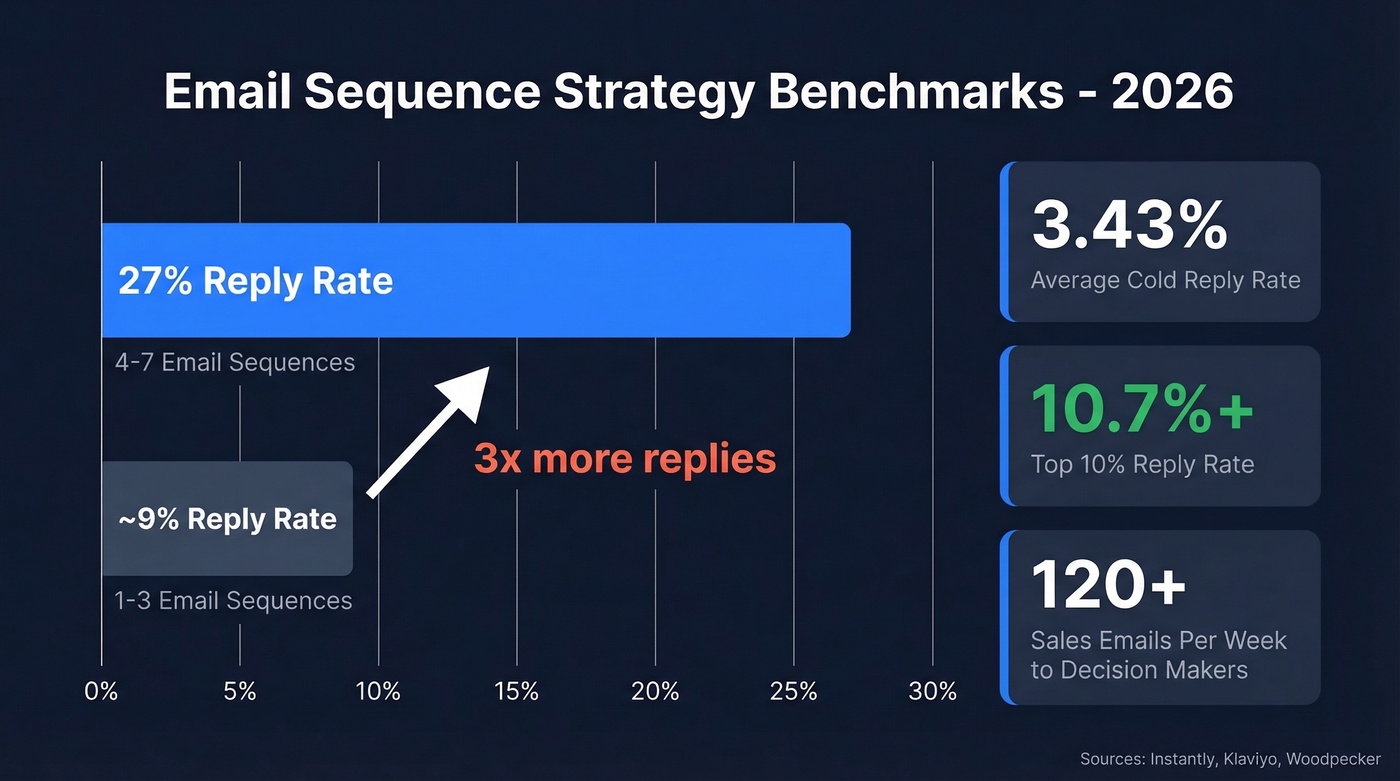
Decision-makers get 120+ sales emails per week. If your email sequence strategy isn't performing, it's not because email is dead - it's because most sequences haven't adapted to an inbox where the average cold reply rate has cratered to 3.43%.
What You Need (Quick Version)
- Build sequences of 4-7 emails, spaced 3-4 days apart, each under 80 words.
- Verify every contact before the first send. Bad data kills deliverability before your copy even matters. (If you need bounce-rate targets, see bounce rate.)
- Apply the 50% Rule: no more than half your sequence steps should be email. The rest are calls and social touches.
That's the framework. Now the numbers behind it.
2026 Benchmarks Worth Knowing
A lot of "best practices" content is opinion dressed up as data. These benchmarks come from platform-level datasets spanning billions of sends.
| Metric | Average | Top 25% | Top 10% |
|---|---|---|---|
| Cold reply rate | 3.43% | 5.5%+ | 10.7%+ |
| Flow click rate | 5.58% | - | 10.48% |
| Campaign click rate | 1.69% | - | 3.38% |
| 4-7 email reply rate | 27% | - | - |
| 1-3 email reply rate | ~9% | - | - |
These numbers come from Instantly's 2026 benchmark report (billions of cold email interactions), Klaviyo (183K+ brands), and Woodpecker (20M+ emails).
The headline takeaway: sequences with 4-7 emails hit a 27% reply rate - three times higher than sequences with 1-3 emails. If you're sending two emails and giving up, you're leaving replies on the table.
Anatomy of a High-Performing Sequence
Sequences vs. Drip Campaigns
Quick distinction that matters. Email sequences adapt based on recipient behavior - someone replies, and the sequence stops or branches. Drip campaigns fire on a fixed schedule regardless of engagement. If you're running drips for cold outreach, you'll keep emailing people who already responded unless you manually suppress them. Use sequences. (More on building cold sequences: B2B cold email sequence.)
Cadence and Spacing
Here's the thing: 58% of all replies come from step one. Your first email carries the sequence. Follow-ups matter, but they're additive - not a rescue plan for a weak opener.
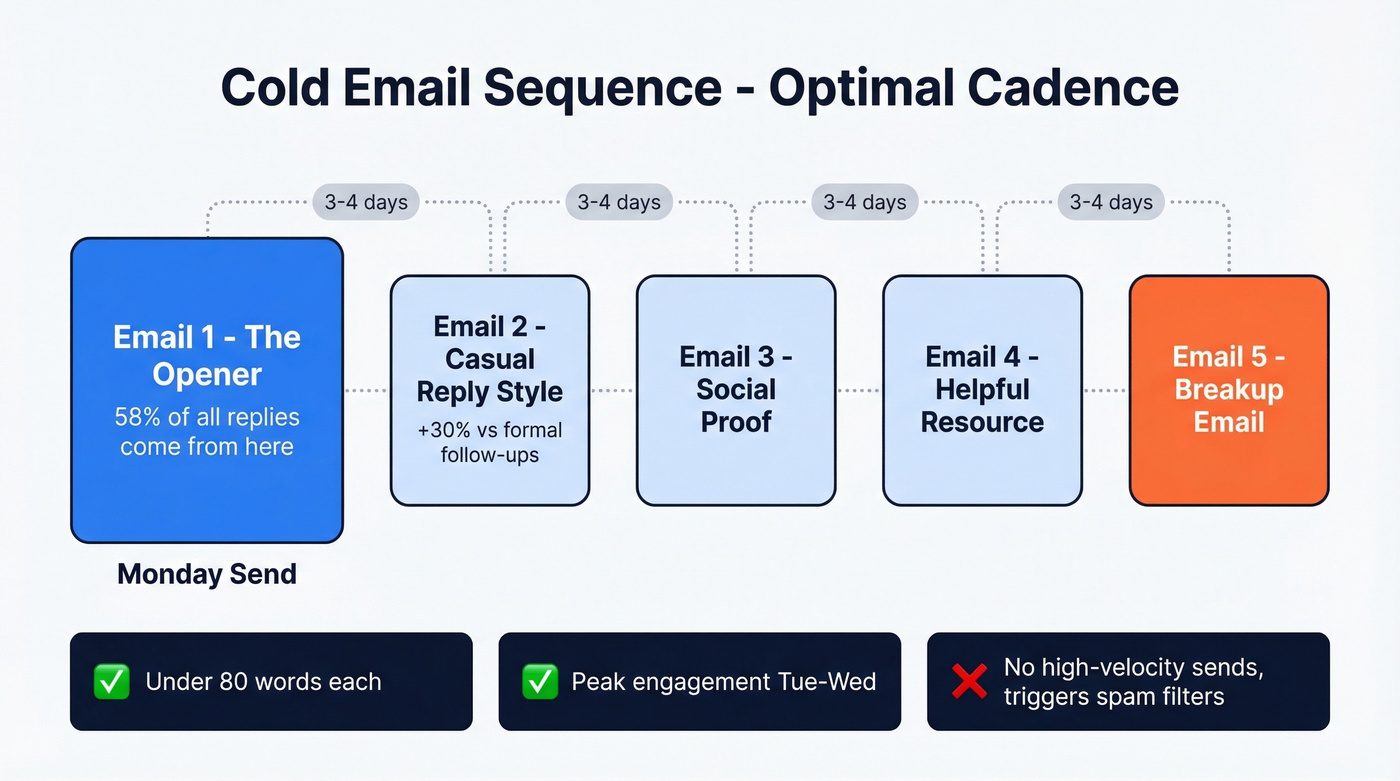
Space touches 3-4 days apart. Launch sequences on Monday; expect peak engagement Tuesday through Wednesday. Keep each email under 80 words. High-velocity follow-ups don't signal persistence - they create the kind of velocity patterns inbox providers flag. Allegrow's research shows that sending too many emails too fast creates "template fingerprints" that spam filters detect automatically. If you want to quantify safe sending speeds, use email velocity.
One underrated tactic: Step 2 emails that read like casual replies outperform formal follow-ups by roughly 30%. Drop the formatting, skip the signature block, and write like you're bumping a thread with a friend. For more examples, pull from cold email follow-up templates.
The 50% Rule
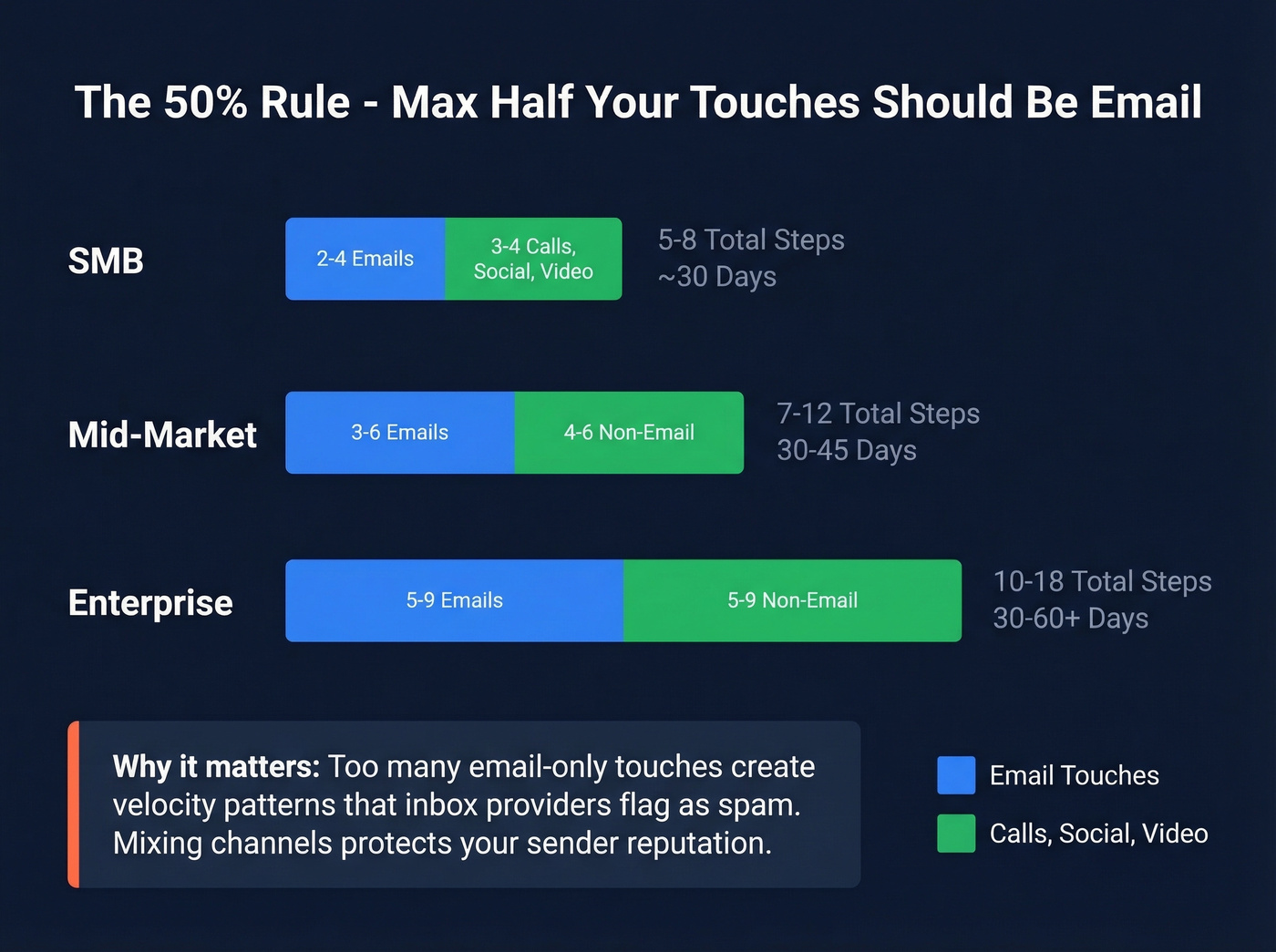
No more than 50% of your sequence steps should be email. The rest should be calls, video messages, or social touches. This isn't optional anymore - it's how you stay out of spam folders and actually reach people across channels.
| Segment | Total Steps | Duration | Max Emails | Non-Email |
|---|---|---|---|---|
| SMB | 5-8 | ~30 days | 2-4 | 3-4 |
| Mid-Market | 7-12 | 30-45 days | 3-6 | 4-6 |
| Enterprise | 10-18 | 30-60+ days | 5-9 | 5-9 |
This framework comes from Allegrow's cadence research. Even enterprise sequences cap email at roughly half the total touches.
Structure by Sequence Type
Cold outreach is where most teams live. Personalization plus value prop, then social proof, then a helpful resource, then a breakup email. Four to five emails total. The Cognism framework nails this - each step adds new value rather than restating the ask. Personalized cold sequences hit 17% reply rates vs. 7% for generic templates, so front-load your research into email one. A sample subject line progression: "Quick question about [specific initiative]" then "Saw this and thought of [company]" then "Worth 15 min?" then "Should I close the loop?" (Need more ideas? See cold email subject line examples.)
Welcome/onboarding sequences should be three to five emails, front-loaded with quick wins. Value-first, not pitch-first.
Re-engagement is shorter. Two to three emails with a direct ask or a clean breakup. If they haven't engaged in a while, a long drip won't change that.

A 4-7 email sequence hits 27% reply rates - but only if those emails actually land. Prospeo's 5-step verification delivers 98% email accuracy with spam-trap and honeypot removal, so every step in your sequence reaches a real inbox.
Fix your data first. Your sequence will thank you.
Deliverability Checklist
None of the above matters if your emails land in spam. Run through this before launching any sequence:
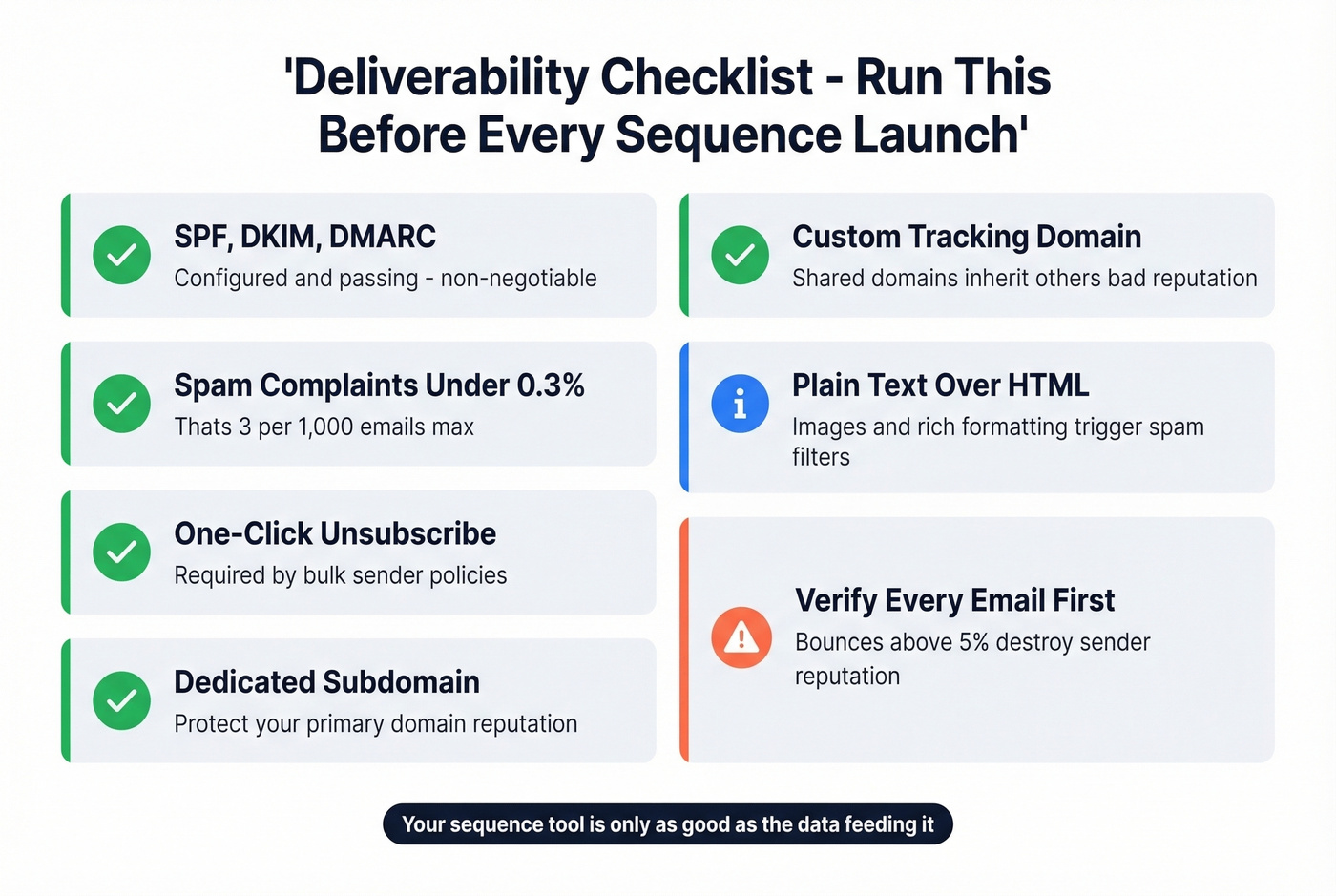
- SPF, DKIM, and DMARC configured and passing. Non-negotiable. (Deep dive: email deliverability.)
- Spam complaint rate under 0.3%. That's three complaints per 1,000 emails. Cross it and you're in the enforcement zone.
- One-click unsubscribe in every email. Required by bulk sender policies.
- Dedicated subdomain for cold outreach. Protect your primary domain.
- Custom tracking domain. Shared tracking domains inherit other senders' reputation. (Setup details: tracking domain.)
- Plain text over heavy HTML. Multiple images, links, and rich formatting are spam triggers.
- Verify every email before sending. Prospeo's 5-step verification catches spam traps and honeypots, delivering 98% email accuracy so your sender reputation stays intact. (If you’re cleaning lists, start with spam trap removal.)
How to A/B Test Sequences
Test one variable at a time. Subject line OR body copy OR send time - never all three. You need 250+ contacts per variant to get a meaningful signal, and 500+ is better.
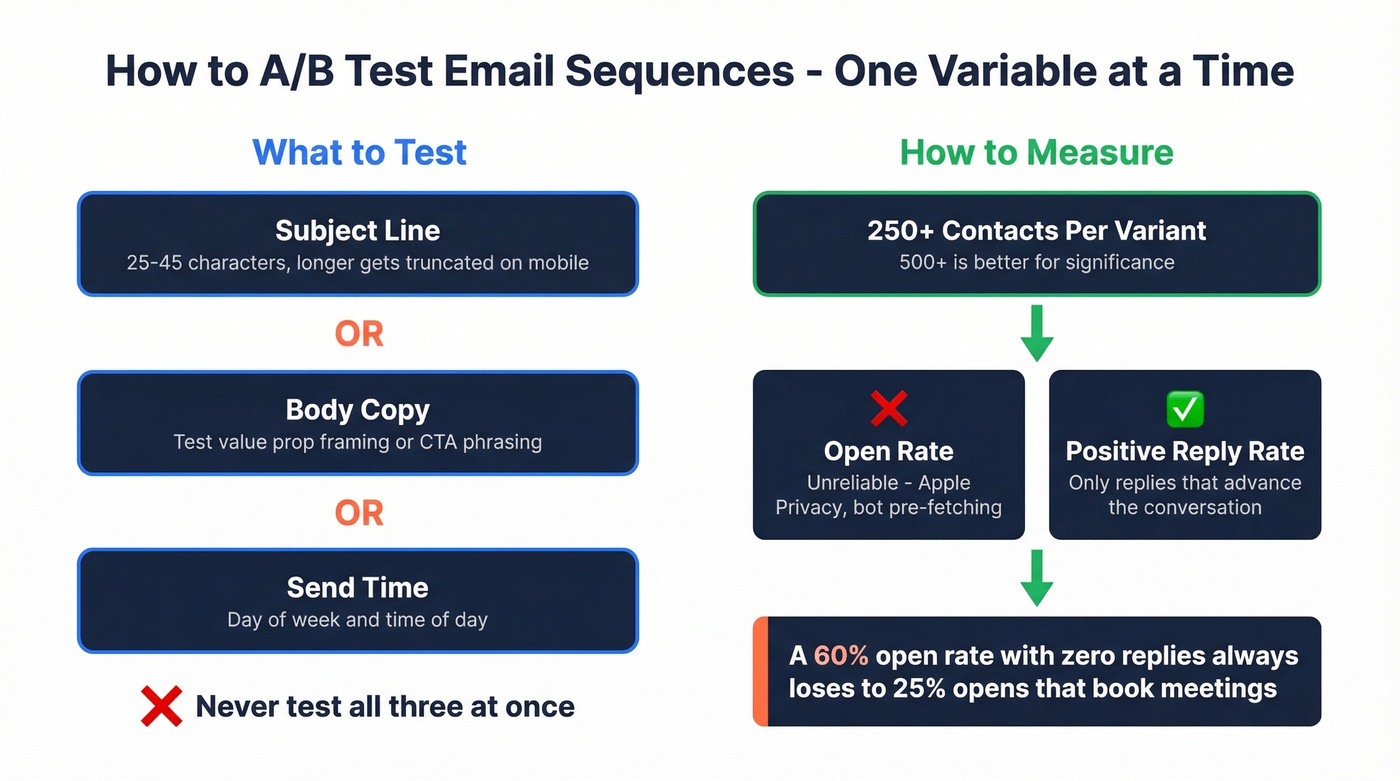
Measure positive reply rate, not open rate. Opens are unreliable thanks to Apple Mail Privacy Protection and bot pre-fetching. Positive replies exclude opt-outs and "not interested" responses - count only replies that advance the conversation. In our testing, a subject line that gets "opened" 60% of the time but generates zero replies always loses to one opened 25% that books meetings. If you want a tighter framework for copy, use email copywriting.
Keep subject lines between 25-45 characters. Anything longer gets truncated on mobile, and mobile is where most people triage their inbox.
Fix Your Data Before Your Copy
Real talk: if your bounce rate is above 5%, stop tweaking subject lines. Your list is the problem.
We've seen this pattern over and over - teams spend weeks optimizing copy and cadence while sending to lists full of dead addresses, role-based emails, and spam traps. Every bounce chips away at your sender reputation. Enough bounces and even your best emails land in spam for everyone, including the valid contacts on your list. (If you’re sourcing contacts, compare email list providers and data enrichment services.)
Let's be honest about something the "sequence optimization" crowd doesn't want to say: if your average deal size is under five figures, you don't need a 15-step AI-personalized sequence. You need 4-5 tight emails sent to verified contacts. Complexity is a tax on small teams. Simplicity plus clean data wins.
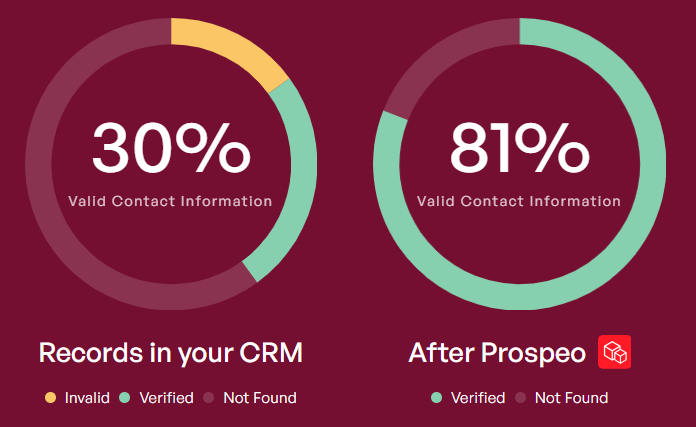
Prospeo fixes this at the source - 143M+ verified emails go through a 5-step verification process with catch-all handling, spam-trap removal, and honeypot filtering on a 7-day refresh cycle. Meritt's bounce rate dropped from 35% to under 4%; Snyk's from 35-40% to under 5%. That's not a copy improvement. That's a data improvement.
Your sequence tool - whether it's Instantly, Smartlead, or Outreach - is only as good as the data feeding it. Building smart sequences means nothing if half your list bounces before anyone sees your message.
The Bottom Line
Fix your first email and fix your data. Everything else is optimization. A dental marketing agency's simple follow-up sequence generated $100K in 30 days with emails spaced every three days - no complex branching, no AI-generated personalization at scale. Clean execution on clean data beats a sophisticated email sequence strategy built on a broken list every single time. (If you want plug-and-play copy, use sales follow-up templates.)
The teams seeing the best results in 2026 aren't running the most elaborate playbooks. They're running targeted sequences backed by verified contact data, tight copy, and disciplined multichannel cadences. Skip the complexity. Nail the fundamentals.
Stop optimizing copy for contacts that don't exist. Prospeo gives you 143M+ verified emails refreshed every 7 days - not the 6-week-old data that's spiking your bounce rate above 5% and killing your sender reputation.
Clean data at $0.01/email beats a perfect sequence sent to dead inboxes.