How to Ask for a Meeting in a Cold Email - and Actually Get One
40% open rate. 1% reply rate. Your emails are getting read, but the ask is what's killing you. 82% of B2B buyers say they're open to meetings when contacted by outbound sellers, yet the average cold email reply rate sits at just 3.43%. The gap between those two numbers is enormous, and it comes down to how you ask for the meeting - not whether you ask at all.
Here's the uncomfortable truth: the reps booking the most meetings aren't better writers. They've got better data and they follow up faster. Copy is maybe 20% of the equation. The rest is email deliverability, targeting, and speed.
What Good Reply Rates Actually Look Like
An outreach study across multiple campaigns found an average cold email response rate of roughly 8.5%. For cold meeting requests specifically, 5-10% reply rate is good, 10-15% is excellent, and 15%+ means you've nailed a tight segment with strong personalization.
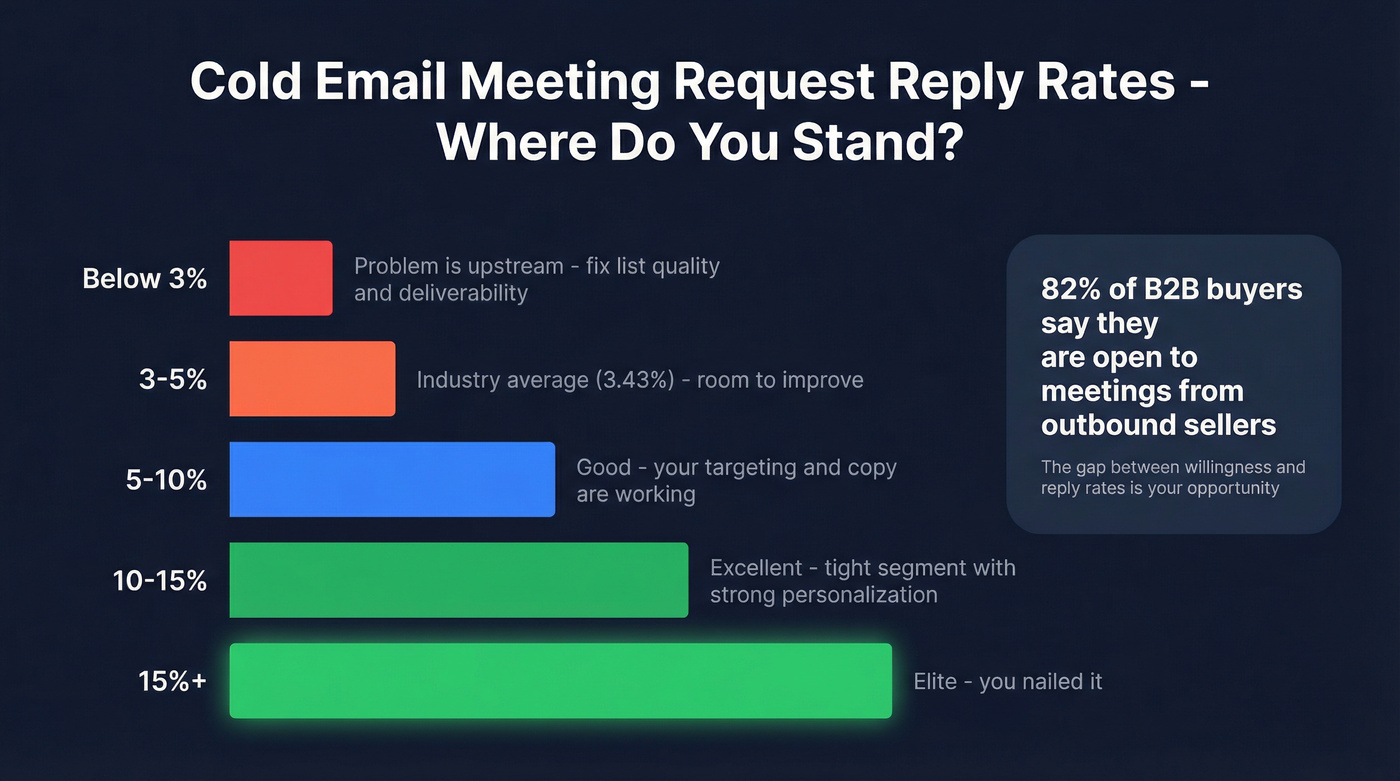
Below 3%? Don't rewrite your CTA. Your problem is upstream - list quality, deliverability, or targeting.
Fix Deliverability Before Copy
Your meeting ask doesn't matter if the email bounces. Most cold email guides skip straight to templates and never mention that a 35% bounce rate will torch your domain reputation in days.
Before you send anything:
- SPF/DKIM/DMARC authenticated on every sending domain
- Bounce rate under 2%, spam complaints under 0.3%
- Every email address verified before it touches a sequence (use an email verification workflow)
We've seen teams dramatically improve reply rates just by fixing deliverability before touching a single word of copy. One team, Meritt, dropped their bounce rate from 35% to under 4% by running lists through Prospeo's Email Finder first - 98% accuracy with catch-all handling, spam-trap removal, and honeypot filtering built in. Their pipeline tripled from $100K to $300K per week.

Subject Lines That Get Opened
An analysis of 85M+ cold emails found the sweet spot: 1-4 words, all lowercase. Salesy tactics like "Exclusive Offer Inside" reduce open rates by up to 17.9%. And 47% of recipients decide whether to open based on the subject line alone.
On mobile, you've got about 33 characters of visible real estate. That's it. Your subject should look like something a colleague sent, not a marketer. Personalized subject lines deliver 26-50% higher open rates, so use the prospect's name or company when it fits naturally (more ideas in our guide to how to start an email).
Examples that work:
- quick question
- {{first_name}} - timing
- your outbound team
One counterintuitive finding: empty subject lines boost opens by 30% but tank replies by 12%. Not worth the tradeoff. A/B test your subject lines and CTAs - even basic split testing lifts conversion by about 28% (see split testing cold emails).

Every bounced email kills your domain reputation and your chance at a meeting. Prospeo's 5-step verification catches bad addresses, spam traps, and honeypots before they torch your sender score. 98% email accuracy at $0.01 per lead - because the best cold email copy in the world is worthless at a 35% bounce rate.
Fix your deliverability first. The meetings will follow.
Crafting the Meeting Ask
Keep the body between 50 and 125 words. One CTA - not two, not three. A single CTA can increase click-through by up to 371% compared to multiple asks. Personalized CTAs convert 202% better than generic ones, and placing your ask above the fold drives 84% more engagement.
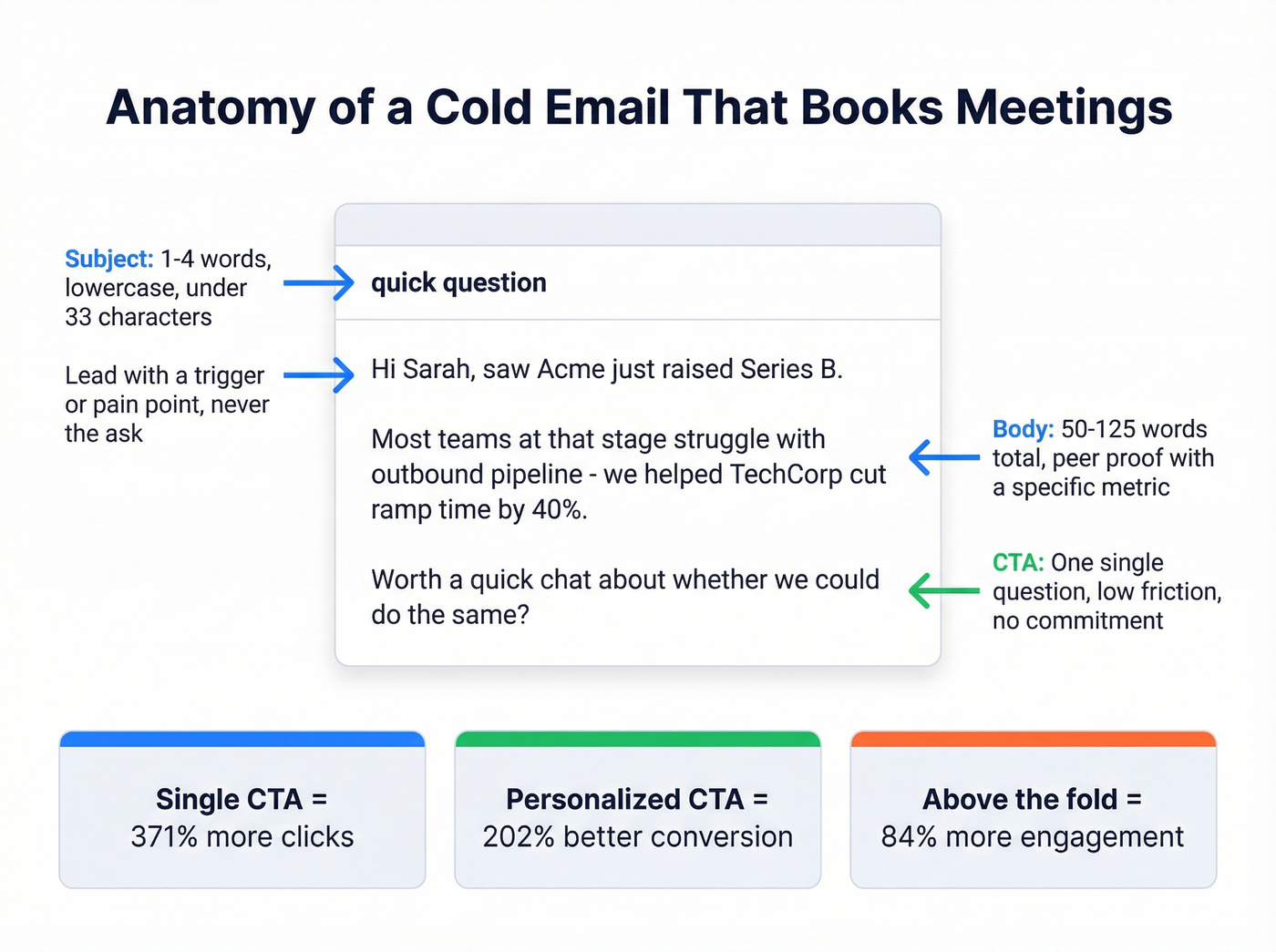
Phrase that CTA as a question. "Worth a quick chat?" feels easier to say yes to than "Can we meet Tuesday at 2pm?" Your ask should make it feel safe to respond - no commitment, no pressure, no 45-minute demo trap. The 5-minute chat framing works especially well for executive outreach because it minimizes perceived risk (more on structure in sales email structure).
Template 1 - Trigger-based outreach:
Hi {{first_name}}, saw {{company}} just {{trigger event}}. Most teams at that stage struggle with {{pain point}} - we helped [similar company] cut that by {{metric}}. Worth a quick chat about whether we could do the same?
Template 2 - Executive outreach (3 sentences, peer proof):
{{first_name}}, [peer company] reduced {{metric}} by {{number}} in {{timeframe}} using our approach. Given {{company}}'s recent {{trigger}}, there's likely a similar opportunity. Open to 10 minutes to explore it?
Template 3 - The breakup email. Don't write this like you're performing a sales tactic. Write it like you're genuinely closing a loop:
{{first_name}}, I've reached out a few times and haven't heard back - totally get it. I'll close your file. If {{pain point}} becomes a priority, happy to pick this back up.
Breakup emails see a 33% response rate. They work because they remove all pressure.
The Yes Trap
The prospect replies "Sure, let's chat." You send a calendar link. Silence.
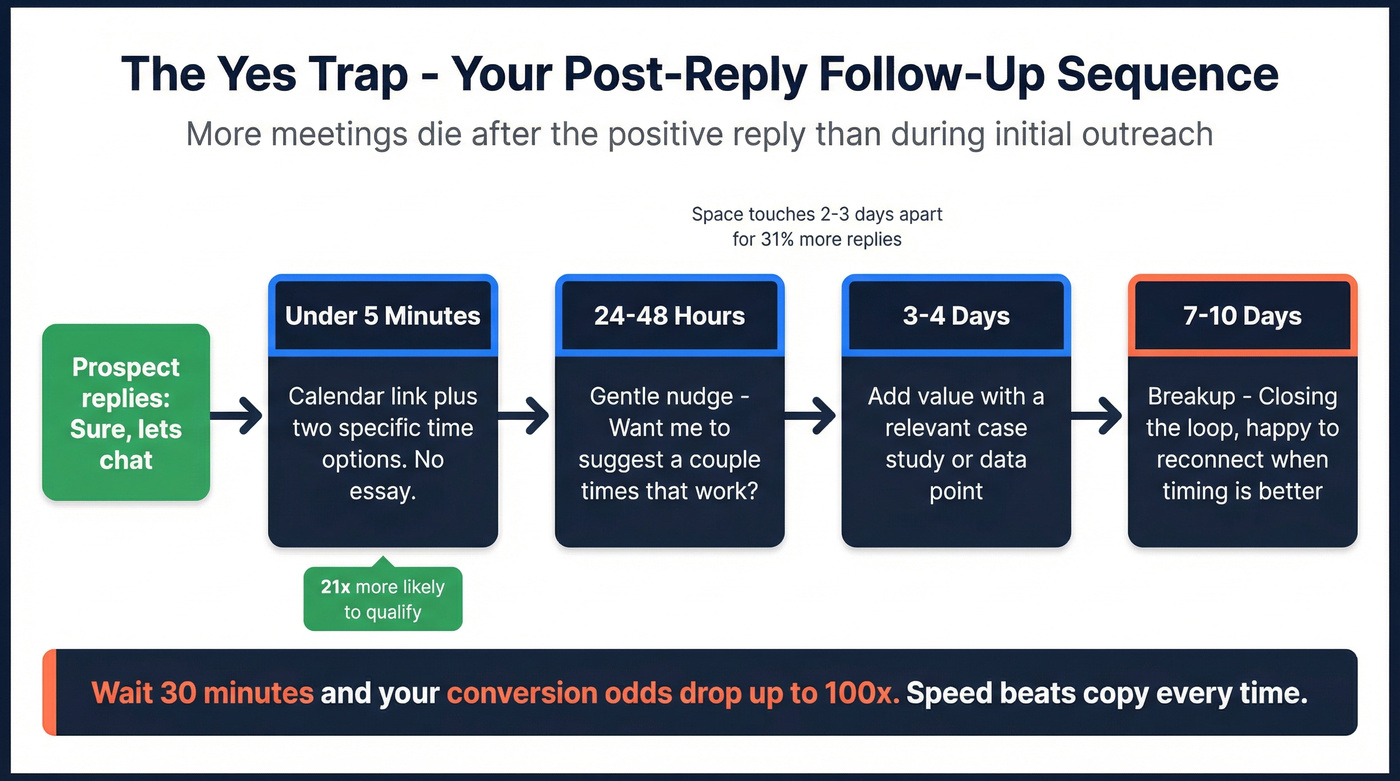
This is the yes trap - more meetings die here than in the initial outreach. In our experience, it's the most overlooked part of the entire cold email meeting request process, and it's maddening to watch pipeline evaporate at the finish line.
The 5-minute response rule isn't a suggestion. Responding within 5 minutes makes you 21x more likely to qualify the lead. Wait 30 minutes and your conversion odds crater - up to 100x worse than a sub-5-minute reply.
After a positive reply:
- Immediate (under 5 min): Calendar link plus two specific time options. No essay.
- 24-48 hours: Gentle nudge - "Want me to suggest a couple times that work?"
- 3-4 days: Add value with a relevant case study or data point.
- 7-10 days: Breakup. "Closing the loop - happy to reconnect when timing's better."
Spacing those touches 2-3 days apart boosts reply rates by 31%. The first follow-up alone adds 40-50% more replies to any sequence. The consensus across sales communities on Reddit echoes this - the reps booking the most meetings aren't the best copywriters. They're the ones with the cleanest lists and fastest follow-up (see SDR follow-up strategy).
When the email thread goes cold entirely, a verified direct dial can rescue the meeting. Sometimes a 45-second phone call does what three follow-up emails can't. Prospeo's 125M+ verified mobile numbers carry a 30% pickup rate for exactly this scenario (more context: direct dial).
Quick Reference
- Subject lines: 1-4 words, lowercase, under 33 characters
- Body: 50-125 words, one clear question CTA
- Respond to positive replies in under 5 minutes
- Follow up 3-4 times max, spaced 2-3 days apart
- Bounce rate under 2% - verify every address before sending
- Authenticate domains with SPF/DKIM/DMARC
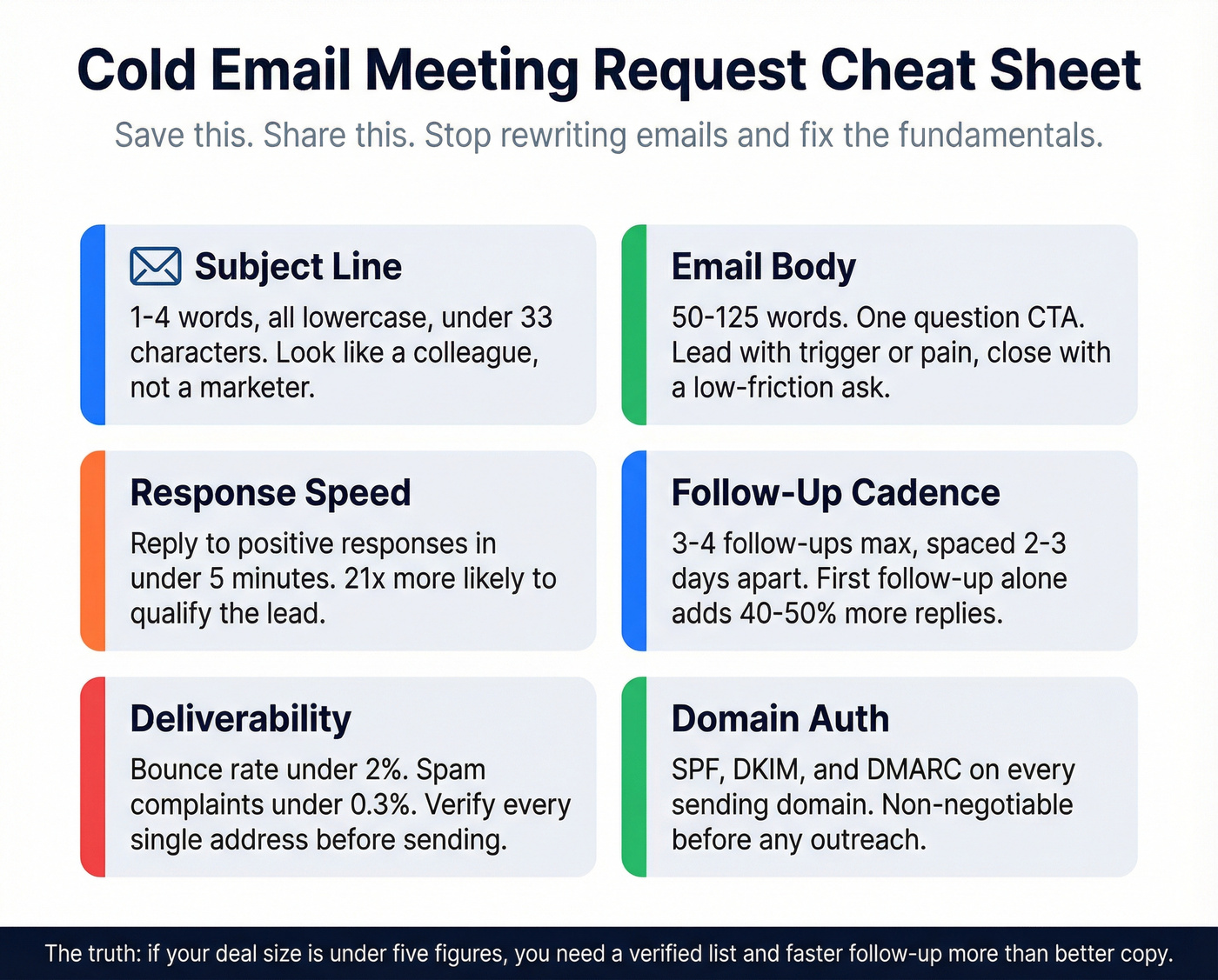
Let's be honest: if your deal size is under five figures, you don't need a better email template. You need a verified list and a faster trigger finger on follow-up. I've watched teams rewrite emails for weeks while sitting on a 15% bounce rate. Fix the pipes first. The words matter less than you think. If you want more levers beyond the meeting ask itself, start with cold email tactics.
When a positive reply goes cold, three more follow-up emails won't save it - a phone call will. Prospeo gives you 125M+ verified mobile numbers with a 30% pickup rate so you can rescue stalled meetings with a 45-second direct dial instead of watching pipeline evaporate in your inbox.
Turn ghosted replies into booked meetings with verified direct dials.
FAQ
How many follow-ups should I send after a cold email meeting request?
Send 3-4 follow-ups spaced 2-3 days apart. The first follow-up alone adds 40-50% more replies to any sequence, but going beyond four touches yields diminishing returns and risks spam complaints.
What reply rate should I expect from cold meeting requests?
For B2B cold meeting requests, 5-10% is a solid reply rate, 10-15% is excellent, and the industry average sits at 3.43%. If you're below 3%, focus on list quality and deliverability before rewriting copy.
How do I make sure my cold emails actually reach the inbox?
Authenticate every sending domain with SPF, DKIM, and DMARC, keep your bounce rate under 2%, and verify every address before it enters a sequence. Catch-all domain handling and spam-trap removal are non-negotiable - a single bad batch can tank your sender reputation for weeks.
Should I ask for the meeting in the first line?
No - lead with a relevant trigger or pain point, then close with a low-friction question CTA like "Worth a quick chat?" Asking for the meeting upfront without context feels presumptuous and typically lowers reply rates by 15-20% compared to a value-first structure.