

How to Be a Good Sales Leader: The Operating System Nobody Gave You
69% of reps missed quota last year. Win rates sit at 19-21%, down from 23% in 2022. Sales cycles have stretched 24-32% for mid-market deals and up to 36% for enterprise. If you're figuring out how to be a good sales leader, start with this reality: the difference between teams that grind through it and teams that collapse almost always traces back to one person.
Here's the thing - companies investing in sales coaching generate 16.7% greater annual revenue growth. One of the highest-leverage activities for any leader is a well-structured weekly 1:1. Get that right and most other leadership qualities follow naturally. Stop listing traits. Start running better 1:1s.
Manager vs. Leader (60-Second Version)
| Sales Manager | Sales Leader | |
|---|---|---|
| Focus | Tasks and metrics | People and capability |
| Approach | Directs and controls | Coaches and inspires |
| Time horizon | This quarter's number | Next year's team |
| Default mode | Maintains activity | Builds systems |
If your team can't hit quota without you jumping on calls, you're a manager. If they can hit it while you're on vacation, you're a leader. The goal is to kill heroic selling and replace it with a repeatable system that doesn't depend on any single person - including you. (If you want a deeper systems view, see our guide to sales leadership.)
Your First 90 Days
Average sales rep ramp time is now 5.7 months - up 32% since 2020. Leaders ramp even slower because the stakes of moving too fast are higher.
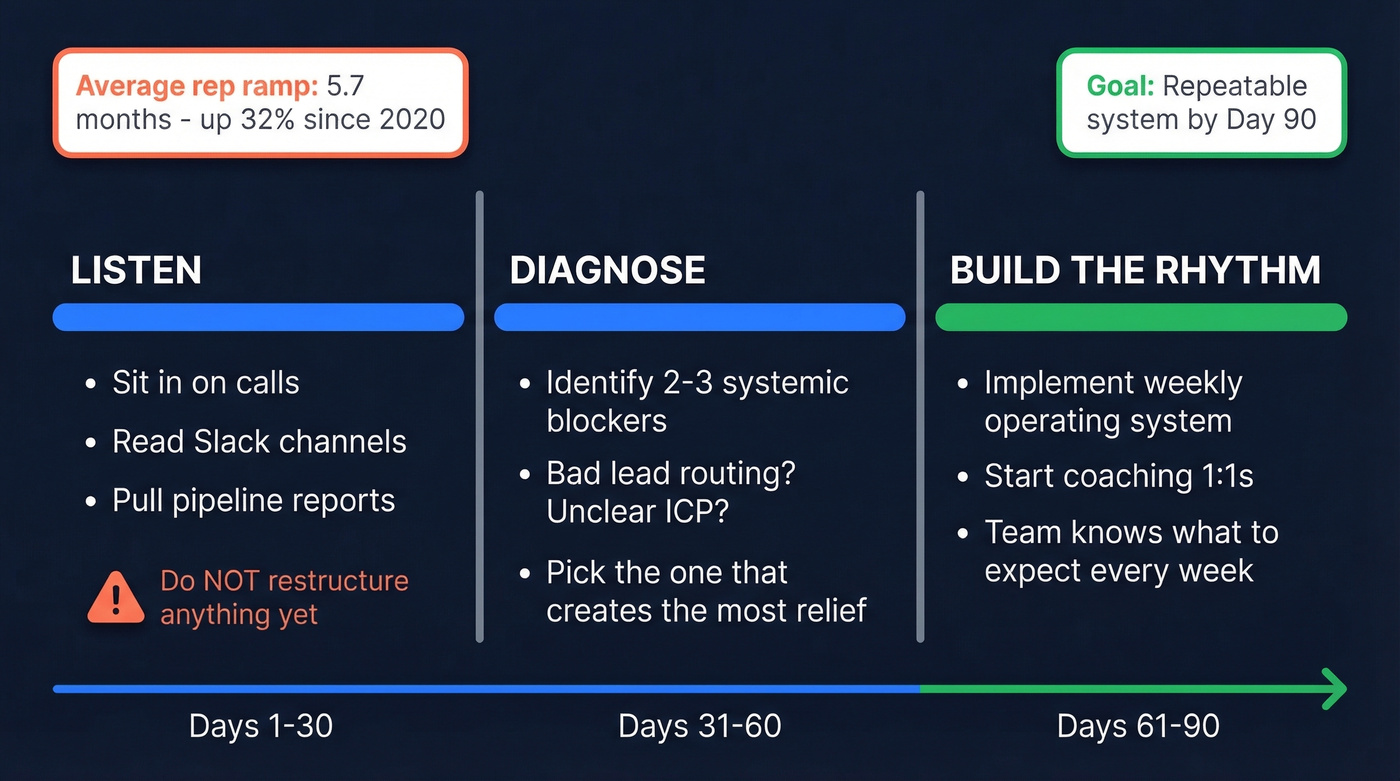
Days 1-30: Listen. Don't change anything. Sit in on calls, read Slack channels, pull pipeline reports. The biggest mistake new leaders make is restructuring before they understand the culture. Shut up and observe. You'll lose trust you haven't earned yet. (If you're building your onboarding plan, borrow structure from a 30-60-90 day plan.)
Days 31-60: Diagnose. Identify two or three systemic blockers - bad lead routing, unclear ICP, broken handoff from marketing. Pick the one that'll create the most relief for your reps.
Days 61-90: Build the rhythm. Implement your weekly operating system. Start coaching 1:1s. By day 90, your team should know exactly what to expect from you every week. This is where you transition from studying leadership into actually practicing it.
Your Weekly Operating System
Only 47% of managers coach reps for more than 30 minutes per week. The other 53% run status updates and call them 1:1s. We've seen this pattern over and over - the leader thinks they're coaching, the rep thinks they're being audited.
A real operating rhythm looks like this: 20-30 minutes of coaching per rep every week, one 15-20 minute team huddle covering wins and stuck points, and one skill scrimmage session in pods.
The 45-Minute 1:1 Template
| Block | Time | What Happens |
|---|---|---|
| Quick wins | 5 min | Celebrate something specific |
| Performance | 10 min | Review KPIs, not interrogate |
| Pipeline deep dive | 15 min | Pick 2-3 deals, coach next steps |
| Strategic | 10 min | Career growth, skill development |
| Action items | 5 min | Both sides commit to specifics |
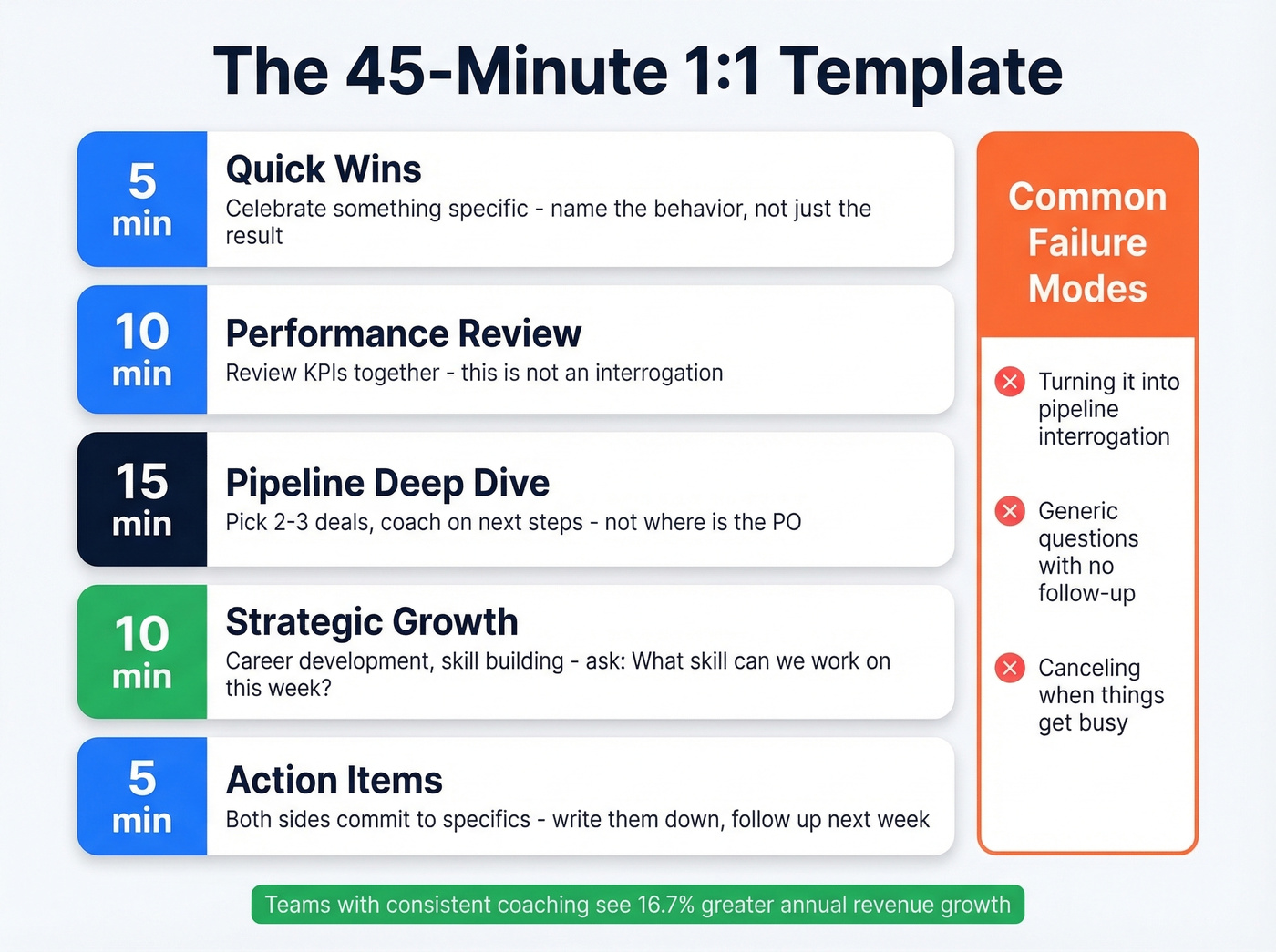
The most common 1:1 failure modes? Turning it into a pipeline interrogation, asking generic questions with no follow-up, and inconsistent cadence. If you cancel 1:1s when things get busy, you're telling your reps that coaching only matters when it's convenient.
Ask every rep to complete this sentence: "I could sell more if ______." You'll get answers ranging from "we had better lead data" to "marketing gave us case studies for financial services." Those are the barriers you exist to remove.
Then in every 1:1, ask: "What skill can we work on together this week?" This comes from David Priemer's framework - the rep picks the skill, you coach on it. That's the deal.
One note on practice: "scrimmaging" isn't role-playing. Role-playing feels fake and reps hate it. Scrimmaging means practicing a specific skill - objection handling, discovery questions, value articulation - in a low-stakes team setting where feedback is immediate. Call it a scrimmage and watch participation go up.
How to Actually Coach Reps
Pick one framework and commit. Two are worth your time.
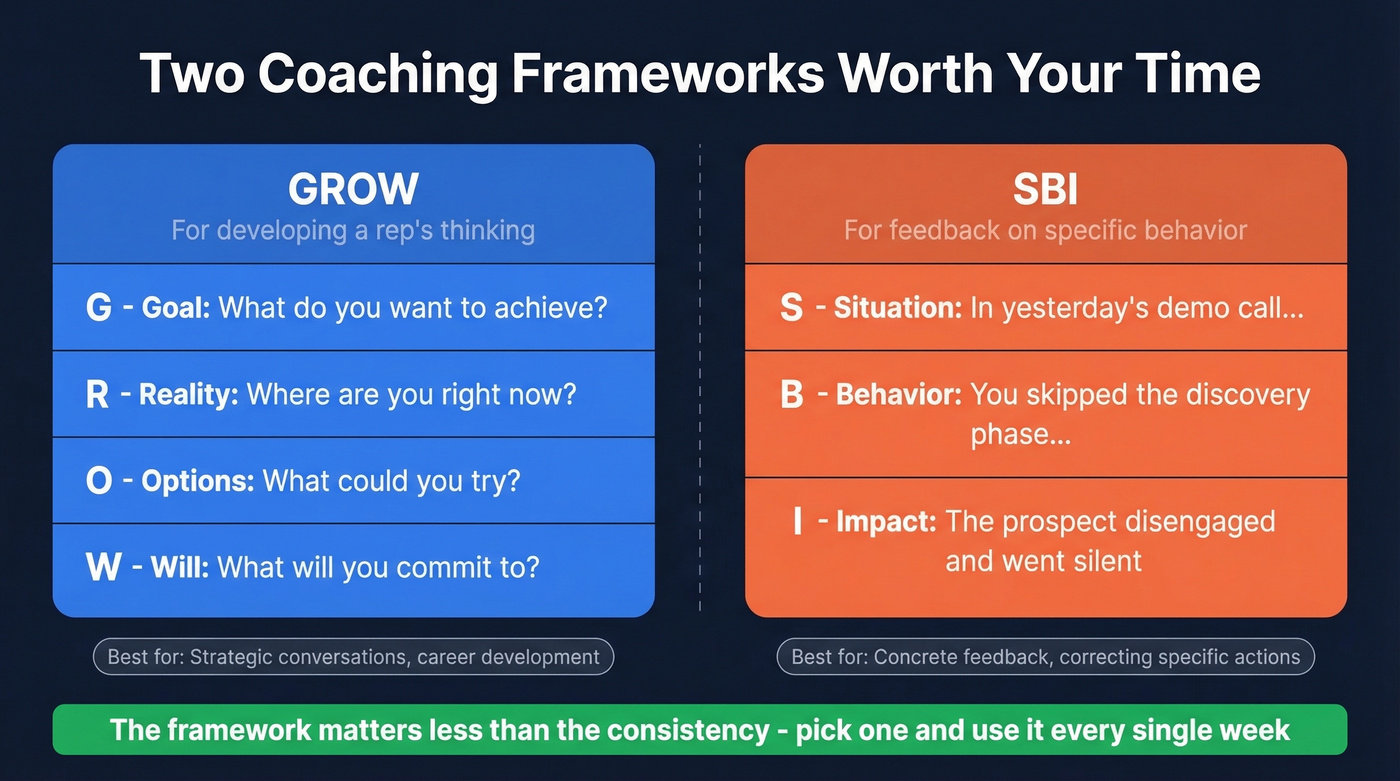
GROW for developing a rep's thinking: Goal, Reality, Options, Will. This works for strategic conversations and career development. SBI for feedback on specific behavior: Situation, Behavior, Impact. SBI keeps feedback concrete and non-personal - no "you always" or "you never."
Remember that 16.7% revenue growth stat? That's the business case for doing this consistently, not treating 1:1s like sporadic check-ins when you happen to have a free slot.
Coaching isn't theoretical, either. In our experience, we've watched a team replace urgency-based closing with data-backed proposals and tailored value maps - win rate climbed 20% over two quarters. The framework matters less than the consistency. Adapt your style to the rep: a ten-year veteran needs a different conversation than someone six months in. Recognizing that is what separates effective leaders from average ones.
One tactic that compounds: deputize your team. Give reps ownership of specific responsibilities - spiff budgets, onboarding buddies, team social events. It builds leadership muscle across the org and takes work off your plate.

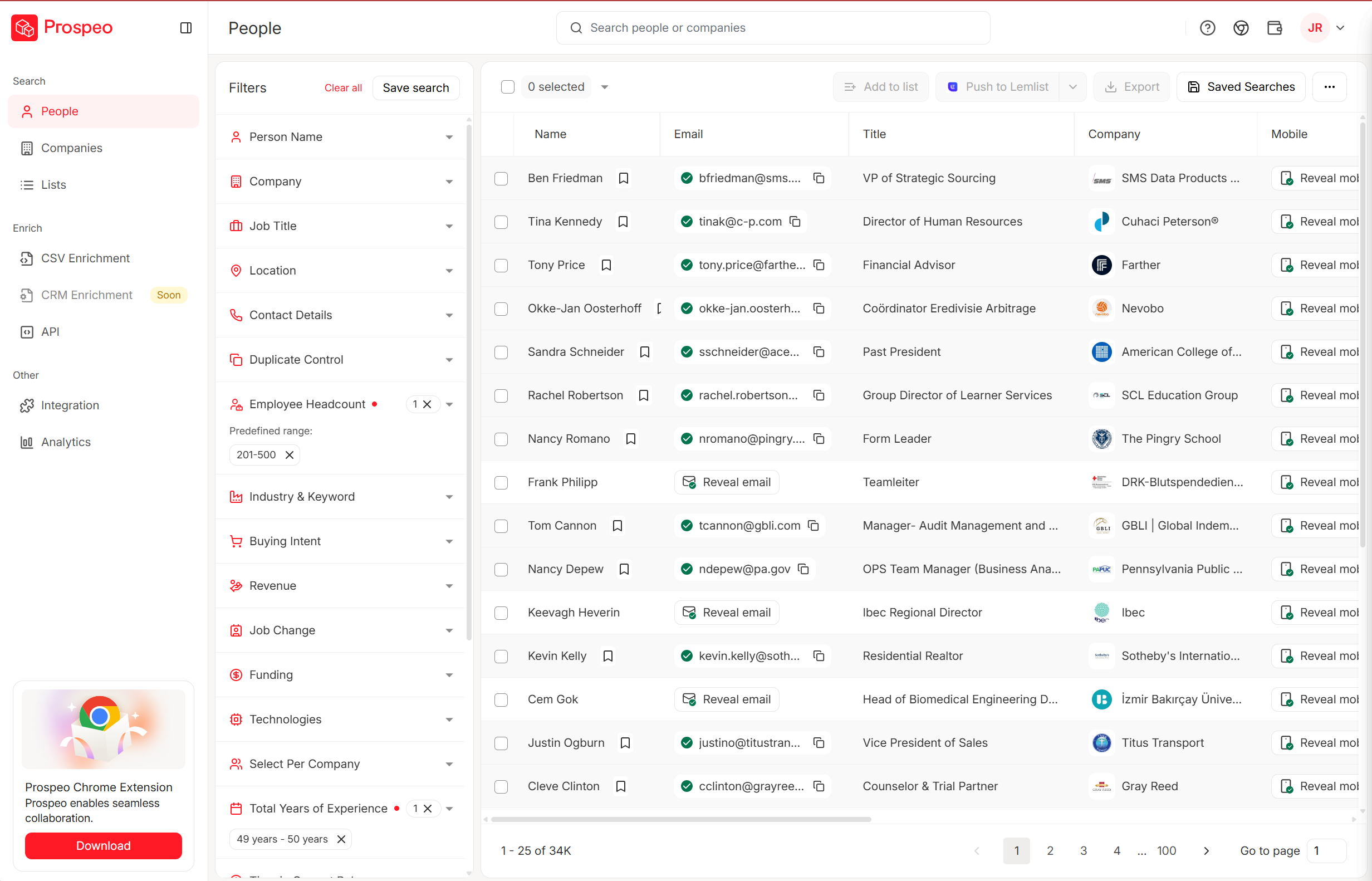
When reps say "I could sell more if we had better lead data," that's your cue. Prospeo gives your team 300M+ profiles with 98% email accuracy and 125M+ verified mobiles - refreshed every 7 days. Remove the data barrier so your coaching actually converts.
Great leaders remove blockers. Start with the data.
Five Mistakes That Destroy Sales Teams
1. "Everyone works like me." You were a top rep. Your team isn't you. Set explicit standards for outcomes, not for mimicking your style.
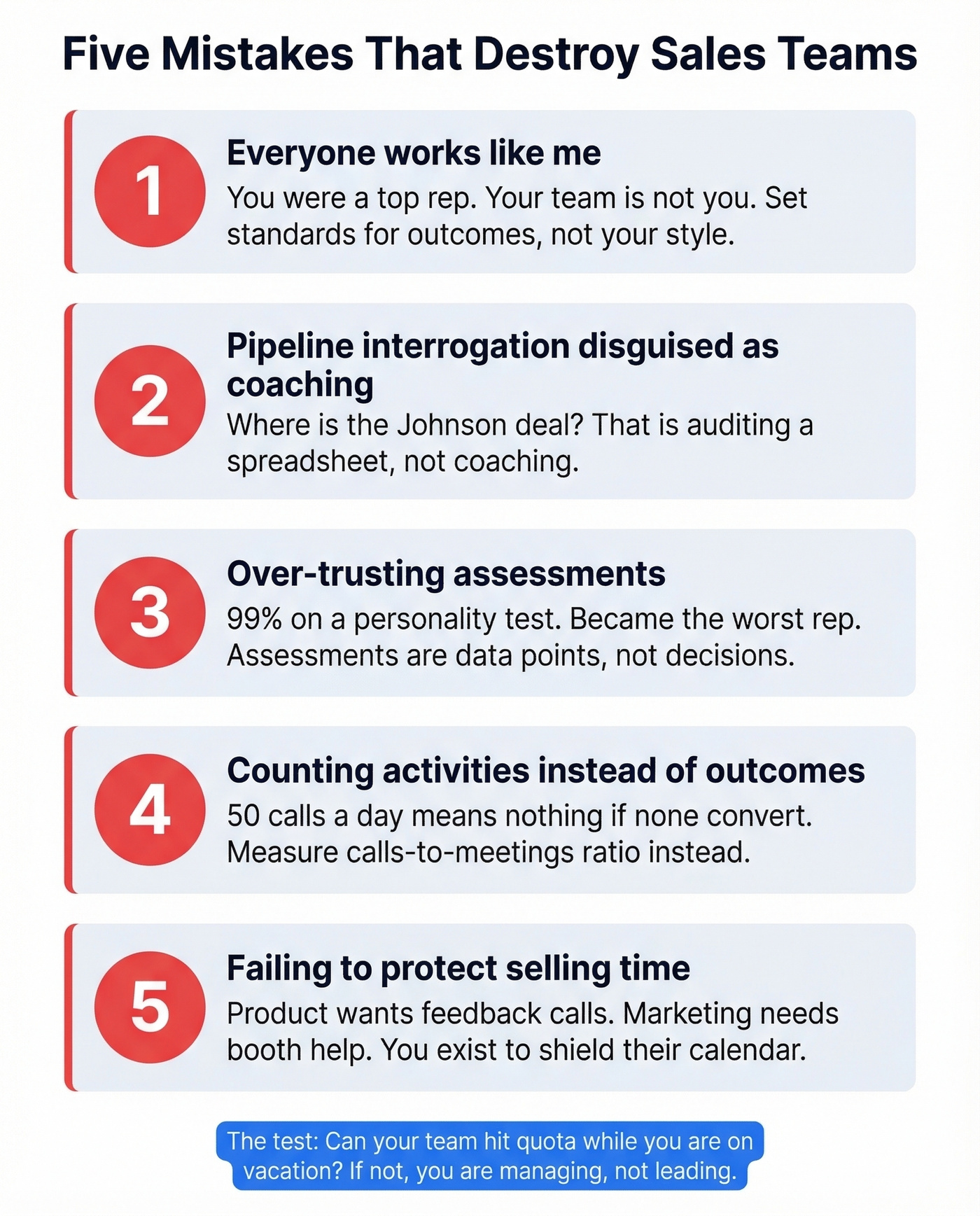
2. Pipeline interrogation disguised as coaching. "Where's the Johnson deal? When's that PO coming?" That's auditing a spreadsheet. Coach on skills and behaviors. Manage the pipeline separately. (If your pipeline is messy, start with these sales pipeline challenges.)
3. Over-trusting assessments. I once heard a sales leader describe hiring someone who scored 99% on a personality test. That person became his worst rep. Assessments are data points, not decisions.
4. Counting activities instead of outcomes. Fifty calls a day means nothing if none convert. Calls-to-meetings ratio matters more than raw call volume. (If you need better definitions, here are practical sales activities examples.)
5. Failing to protect selling time. Product wants reps on feedback calls. Marketing needs them at the booth. Your job is to shield your team from every internal distraction that isn't directly tied to closing revenue. Let's be honest - if you don't protect their calendar, nobody will.
Emotional Intelligence Erodes at the Top
Here's a frustrating truth: emotional intelligence matters more than sales methodology, and most senior leaders are getting worse at it. A JCA Global study of 28,000+ professionals found that EI tends to plateau and then erode at senior leadership levels. Leaders score high on self-awareness and resilience but weaker on interpersonal regard and empathy.
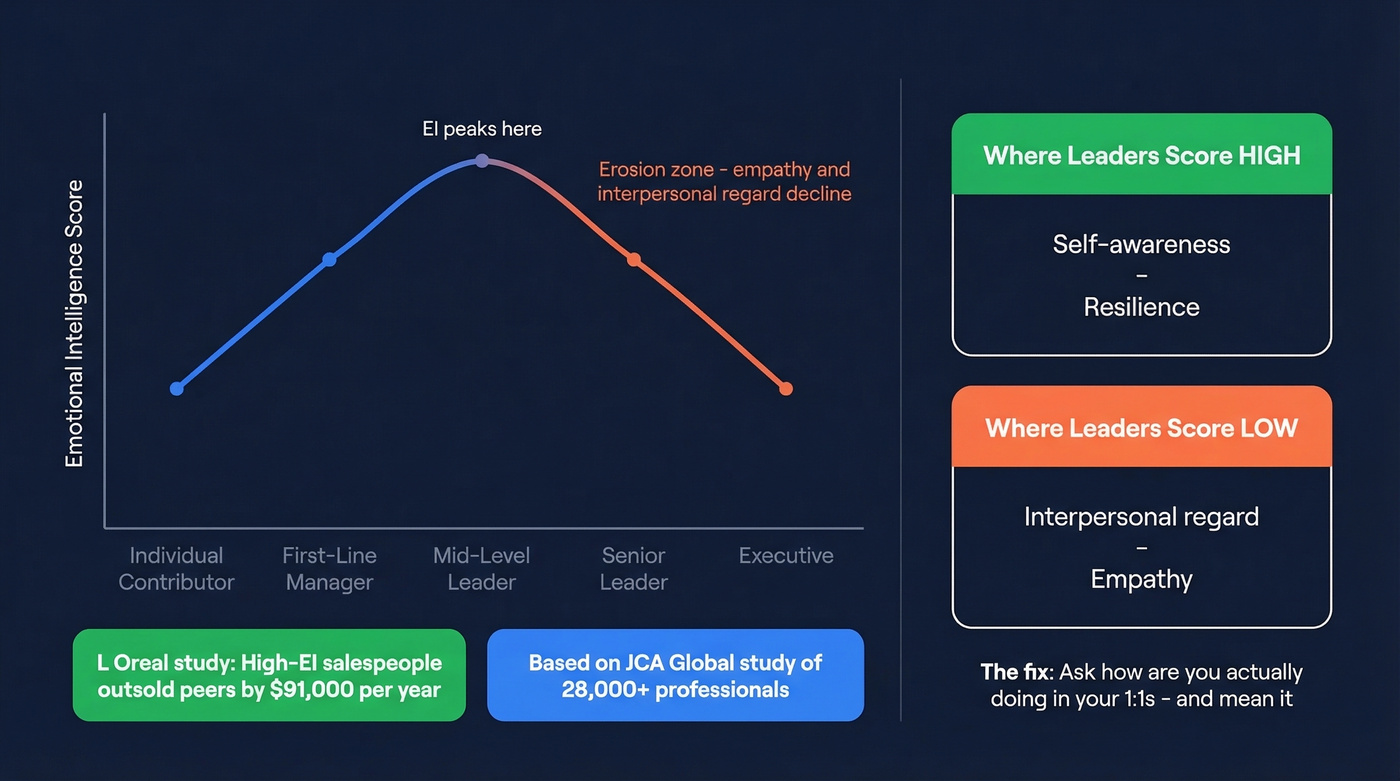
The higher you climb, the more you risk losing the human skills that got you promoted.
The business case is concrete. A classic study at L'Oreal found that salespeople selected for high emotional intelligence outsold peers by more than $91,000 per year. EI isn't soft - it's revenue.
The fix isn't a weekend retreat. Use SBI feedback to stay grounded in observable behavior. Honestly, just asking "how are you actually doing?" in your 1:1s - and meaning it - goes further than most leadership development programs. The consensus on r/sales backs this up: reps consistently say the best managers they've had were the ones who treated them like people first and quota carriers second.
Fix Your Team's Data Problem
One of the fastest ways to remove a barrier for your team is fixing the data they sell from. Reps waste hours chasing bounced emails and disconnected numbers. If you're asking reps to complete "I could sell more if ______" and the answer is "we had accurate contact data," that's on you to solve.
Prospeo runs a 98% email accuracy rate across 143M+ verified emails and 125M+ verified mobile numbers, all refreshed on a 7-day cycle. It's self-serve, starts free, and integrates directly with Salesforce, HubSpot, Instantly, and Lemlist. For a leader trying to remove barriers, clean data is the lowest-hanging fruit. GreyScout cut rep ramp time from 8-10 weeks down to 4 after switching - the kind of operational win that compounds across every hire you make. (If you're evaluating vendors, start with data enrichment services and best sales prospecting databases.)
Skip this section if your team's bounce rate is already under 5%. But if it's north of 15%, this is probably the single biggest drag on your pipeline that doesn't require changing anyone's behavior - just their data source. (Benchmarks and fixes: email bounce rate.)
Start With the 1:1
You don't need another leadership book. Build the 45-minute 1:1 template into your calendar this week. Ask your reps what's blocking them. Pick GROW or SBI and use it every single week. The emotional intelligence, the team protection, the data quality - it all layers on top of that foundation. Great sales leaders aren't born. They're built one Tuesday afternoon 1:1 at a time. (If you want to formalize the behavior side, use a sales leadership trust playbook.)
You're building a repeatable system that doesn't depend on heroic selling. That system breaks the moment your reps waste hours chasing bad contact data. Prospeo's 30+ filters - buyer intent, job changes, headcount growth - let reps spend time selling, not list-building. At $0.01/email, it's the highest-ROI tool you can hand your team.
Protect your team's selling time with data that actually connects.