

How to Find Leads in 2026: A System, Not a List
Your SDR team says they need more leads. But reply rates are sitting at 2%, half the list bounced last quarter, and the "leads" marketing handed over haven't opened an email in six months. Connection requests go ignored. Cold emails bounce. You don't have a volume problem - you have a signal problem.
Here's the uncomfortable truth about how to find leads: only about 5% of your total addressable market is actively buying at any given time. The B2B Institute calls this the 95/5 rule, and it changes everything. Blasting 10,000 contacts with a generic pitch means 9,500 of them couldn't care less right now. The system that works in 2026 isn't about collecting more names - it's about finding the 5% showing buying signals and reaching them with verified data before your competitors do.
The Framework (Quick Version)
Define your ICP with enough specificity that you could describe your best customer to a stranger in 30 seconds. Pick 2-3 channels based on your deal size and timeline (table below). Build a verified list before you send a single message. Score responses by engagement level so sales works the hottest leads first.
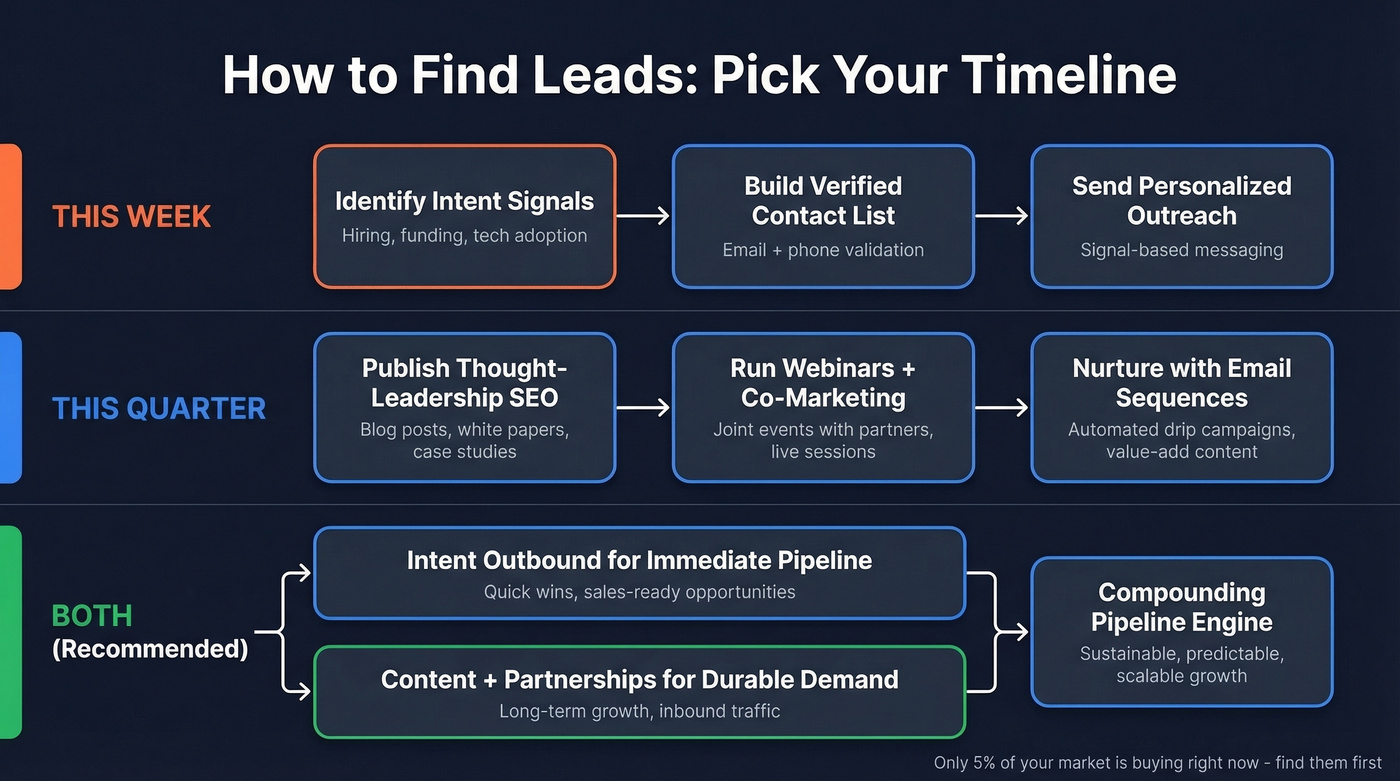
Need leads this week? Intent-signal outbound. Find companies hiring, raising funding, or adopting new tech. Build a verified contact list. Send personalized outreach.
Need leads this quarter? Layer in thought-leadership SEO and webinars. These compound over time but won't fill pipeline tomorrow.
Need both? Run intent-signal outbound for immediate pipeline while investing in content and partnerships for durable demand.
Leads vs. Prospects - Know the Difference
The industry throws around "lead" and "prospect" interchangeably, but they're different stages. A lead is anyone who's entered your orbit - downloaded something, visited your site, showed up in a database search. A prospect is a lead you've qualified and are actively working. The distinction matters because 68% of companies haven't identified their funnel, which means they're treating every name the same.
| Term | What It Means | When It Matters |
|---|---|---|
| MQL | Marketing Qualified Lead | Engaged with content, fits ICP |
| SQL | Sales Qualified Lead | Budget, authority, need confirmed |
| PQL | Product Qualified Lead | Used free tier, hit activation |
Two stats worth internalizing together: 50% of qualified leads aren't ready to purchase at first contact, and 48% of companies say leads require a long sales cycle before converting. That's not a failure of your outreach - it's the nature of B2B buying. Your system needs to account for nurture, not just capture.
Pick Your Path: SMB, Mid-Market, Enterprise
The channels that work for a 10-person startup selling $5k deals are completely different from what works for an enterprise team closing $200k contracts over 18 months.
| Segment | Company Size | Typical Cycle | Stakeholders | Best Channels |
|---|---|---|---|---|
| SMB | <100 employees | 30-90 days | 1-3 | Outbound, referrals, self-serve |
| Mid-Market | 100-1,000 | 3-9 months | 3-6 | Webinars, ABM, content |
| Enterprise | 1,000+ | 6-18 months | 6-13 | ABM, events, multi-threading |
SMB deals close fast but churn fast. Enterprise deals take forever but compound. Mid-market is the sweet spot for many teams - long enough cycles to justify personalization, short enough to see results within a quarter.
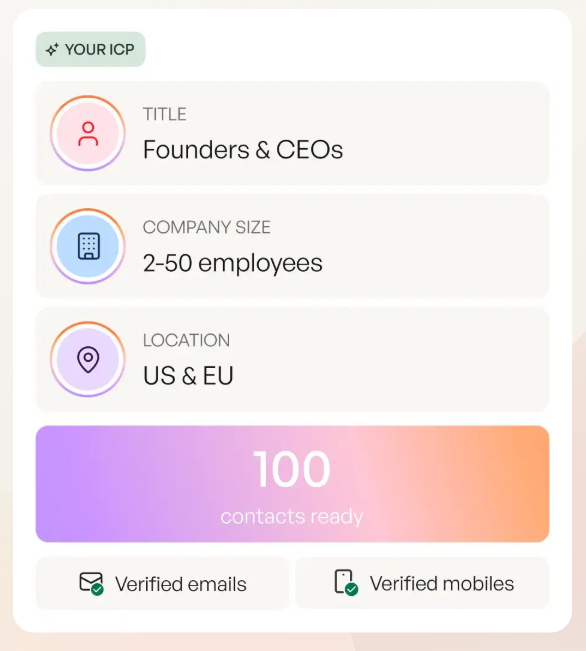
Roughly 80% of B2B sales interactions now happen through digital channels, and B2B buyers engage across 10 channels before purchase - up from 5 in 2016. Your lead-finding system has to match their research behavior, not your sales team's preferences.
Which Channels Actually Convert?
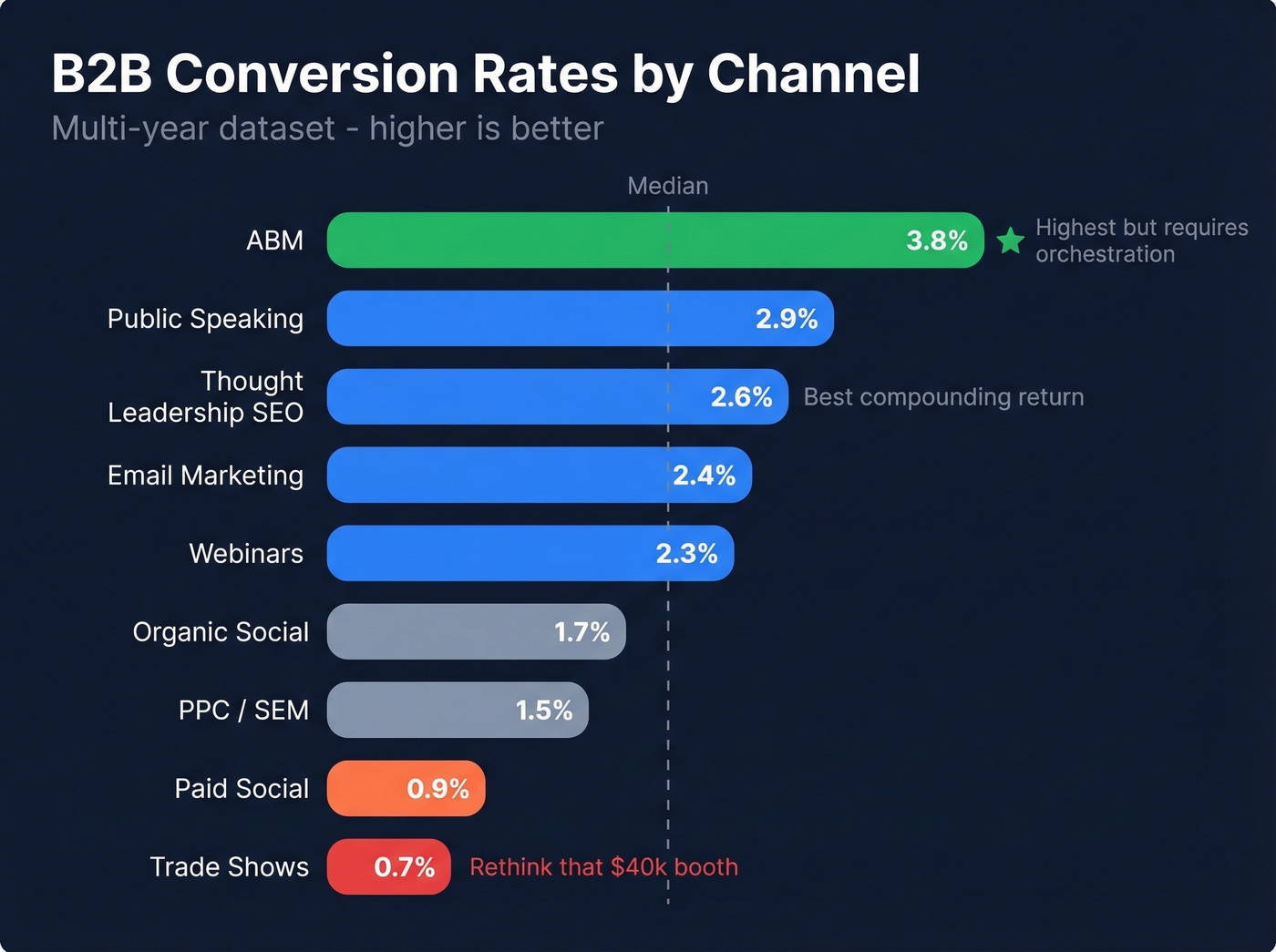
Here are B2B conversion rates by channel from a multi-year dataset:
| Channel | B2B Conversion Rate |
|---|---|
| ABM | 3.8% |
| Public Speaking | 2.9% |
| Thought Leadership SEO | 2.6% |
| Email Marketing | 2.4% |
| Webinars | 2.3% |
| Organic Social | 1.7% |
| PPC / SEM | 1.5% |
| Paid Social | 0.9% |
| Trade Shows | 0.7% |
ABM tops the list, but it requires a known target account list and serious orchestration. For most teams starting from scratch, the three best ways to find leads this week are intent-signal outbound (fastest time-to-pipeline), thought-leadership SEO (highest compounding return), and webinars or partner co-marketing (strong conversion with built-in audience sharing).
Trade shows at 0.7% should make every marketing leader reconsider their event budget. That $40k booth looks great on the event recap, but the math rarely works unless you're running targeted meetings alongside it.

The article says only 5% of your market is buying right now. Prospeo's intent data tracks 15,000 topics so you find that 5% first - then gives you 98% accurate emails and verified mobiles to reach them. At $0.01 per email, your CPL drops to a fraction of the benchmarks above.
Stop paying $237 per lead when verified intent-driven contacts cost a penny.
What Should a Lead Cost?
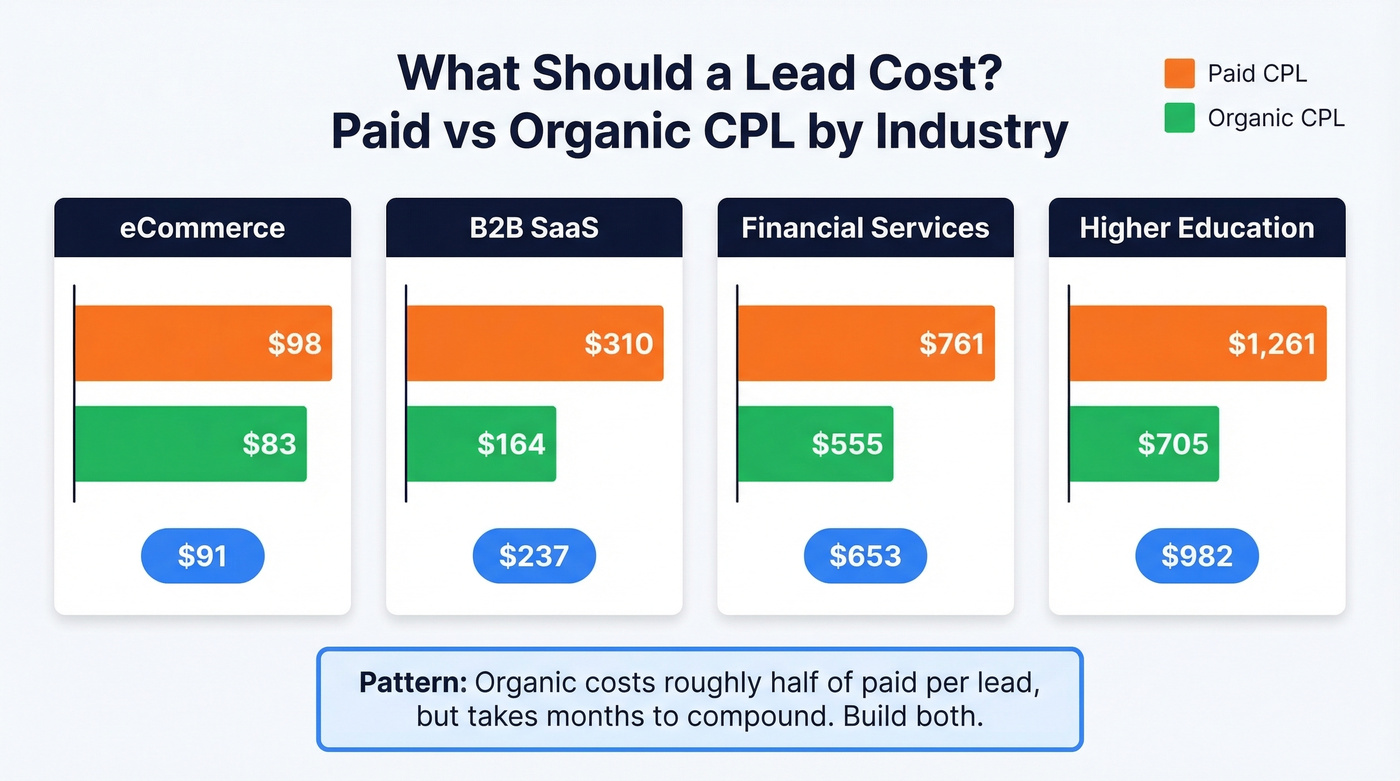
Before you invest in any channel, you need a CPL baseline. Here are blended benchmarks by industry:
| Industry | Paid CPL | Organic CPL | Blended CPL |
|---|---|---|---|
| B2B SaaS | $310 | $164 | $237 |
| Financial Services | $761 | $555 | $653 |
| eCommerce | $98 | $83 | $91 |
| Higher Education | $1,261 | $705 | $982 |
The pattern is clear: organic channels cost roughly half of paid channels per lead. But organic takes months to compound while paid delivers volume immediately. If you're a Series A SaaS company burning $50k/month on paid with a $310 CPL, you'd better be closing those leads at a healthy rate - or that math breaks fast.
Here's the thing: if your average deal is under $10k, you probably don't need ZoomInfo-level data or enterprise ABM tooling. A self-serve data platform, a solid outreach tool, and a disciplined ICP will outperform a bloated tech stack every time.
7 Methods That Actually Work
1. Intent-Signal Outbound
Best for: leads this week. Skip this if you haven't defined your ICP yet - you'll just burn through credits on the wrong accounts.
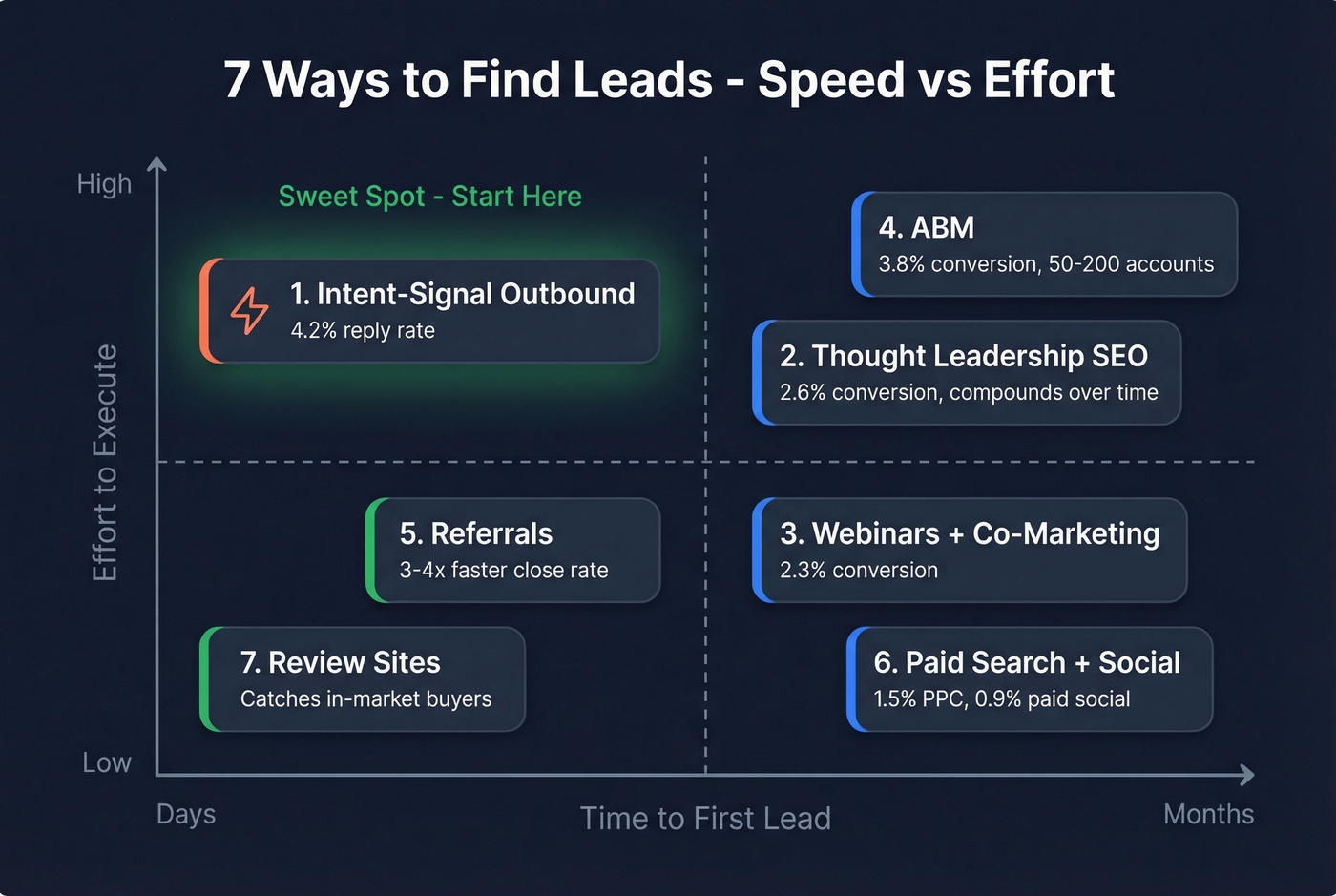
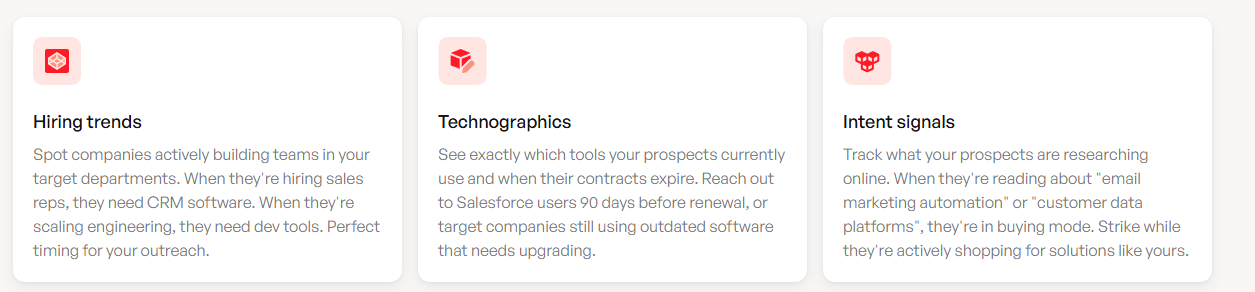
This is the fastest path to pipeline. Instead of spraying cold emails at a static list, you identify companies showing buying signals - hiring for roles your product supports, raising funding, adopting complementary tech, or growing headcount in relevant departments. The signal is the starting point, not the send.
We've seen teams double their reply rates just by switching from static lists to intent-triggered outreach, and the reason is simple: you're reaching people during the window when they actually care about what you sell. Pair intent data with verified contact info and you've got the highest-ROI outbound motion available right now. If you want a deeper playbook, start with identifying buying signals and then operationalize it with how to track sales triggers.
2. Thought-Leadership SEO
At 2.6% conversion, SEO-driven content outperforms most paid channels - and the leads keep coming months after you publish. The catch is time: expect 3-6 months before content starts generating meaningful inbound. Focus on bottom-of-funnel keywords like comparison pages and "how to" guides for your category rather than vanity traffic. One well-optimized article can generate more pipeline over 12 months than a $10k ad campaign. For a full workflow, see SEO sales leads.
3. Webinars & Partner Co-Marketing
Webinars convert at 2.3%, and co-marketing with complementary vendors gives you instant access to their audience. The key is picking partners whose customers overlap with your ICP but don't compete with your product.
A mid-market SaaS team we know partnered with a complementary analytics vendor for a joint webinar. They split the promotion, shared the attendee list, and each generated 40+ SQLs from a single 45-minute session. Neither could have reached that audience alone.
4. ABM (Account-Based Marketing)
ABM's 3.8% conversion rate is the highest on the board, but it's not a beginner play. You need a named account list (typically 50-200 accounts), multi-channel orchestration, and tight alignment between sales and marketing. If you're selling six-figure deals to a known universe of 200 companies, ABM is the move. For teams still figuring out their ICP, start with intent-signal outbound first and graduate to ABM once you've validated your target accounts. If you're building this motion, use account-based selling best practices as your operating system.
5. Referrals & Communities
The lowest-cost, highest-trust channel. Warm introductions convert at multiples of cold outreach - in our experience, referred leads close 3-4x faster than cold ones. Build a systematic referral ask into your post-sale process: ask every closed-won customer for two introductions within 14 days of signing, while the goodwill is fresh.
Join communities where your buyers hang out and contribute before you pitch. Slack groups, niche subreddits, and industry Discord servers are goldmines if you lead with value. The consensus on r/sales is that community-driven leads are the most underrated channel in B2B - low volume, but the close rates are absurd.
6. Paid Search & Social
Immediate volume, precise targeting, easy to test messaging. But PPC converts at 1.5% and paid social at 0.9%. Expensive at scale. No compounding returns - the moment you stop paying, the leads stop.
Use paid channels to test messaging and fill gaps while organic compounds. The teams that get burned are the ones who treat paid as their only channel and never build the organic engine underneath.
7. Review Sites & Directories
G2, Capterra, and similar directories matter because 87% of B2B decision-makers look online for honest reviews before purchasing. This isn't a lead generation channel in the traditional sense - it's a conversion channel that catches buyers already in-market. Claim your profiles, solicit reviews from happy customers, and keep your feature lists current. If you're not listed, you're invisible during the comparison stage.
What Cold Outreach Actually Looks Like
Let's ground this in real numbers. A practitioner on r/coldemail shared a case study: 732 emails sent over 4 weeks for a recruitment agency. Results: 33 replies (4.2% reply rate), 14 bookings, 3 paid conversions in the first month, with 5 more closing the following month.
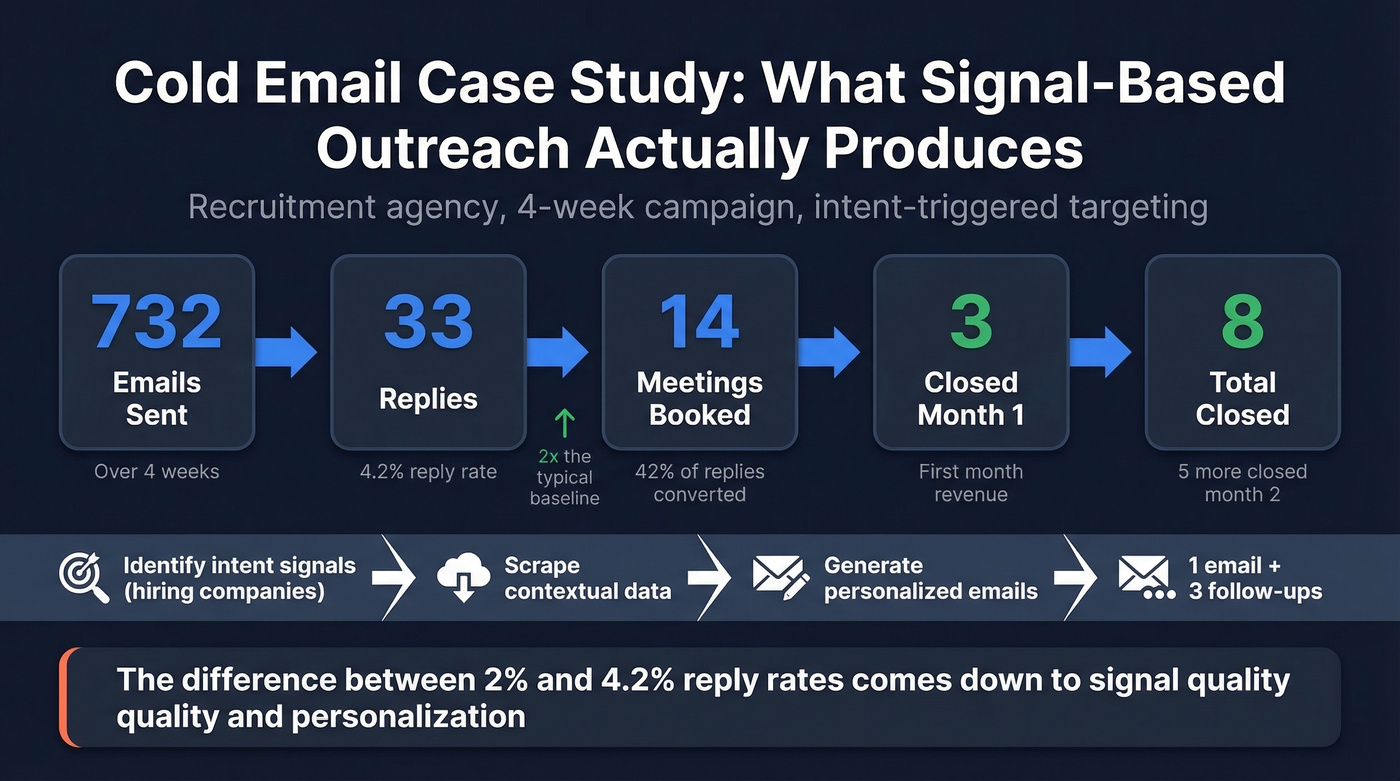
The workflow: identify companies showing high-intent signals (actively hiring), scrape contextual data from their web presence, generate hyper-personalized emails, and run a sequence of 1 email plus 3 follow-ups. Compare that 4.2% reply rate to the ~2% baseline many teams see. The difference comes down to signal quality and personalization - how you source contacts matters as much as how you message them. If you need a structure, start with a B2B cold email sequence and tighten your messaging with cold email subject line examples.
Here's a cold email framework you can steal:
Subject: [Specific signal - e.g., "Saw you're hiring 3 SDRs"]
Line 1: Reference the signal. ("Your team's growing fast - 3 new SDR roles posted this month.")
Line 2: Connect it to a pain point. ("Scaling outbound usually means data quality tanks. Bounce rates creep up, reply rates drop.")
Line 3: Bridge to your solution. ("We help teams like [similar company] keep bounce rates under 4% while tripling pipeline.")
CTA: Low-friction ask. ("Worth a 15-minute look?")
The difference between 2% and 4% reply rates often comes down to data quality. Verified emails mean your messages actually land. Teams running outbound on 90-day-old lists are burning deliverability on stale contacts, and one bad campaign can take months to recover from. If you're troubleshooting, use this email deliverability guide and track your email bounce rate.
Compliance: Don't Skip This
This is the section every "30 tips" article ignores, and it's the one that can cost you the most.
| Regulation | Penalty Range | Key Requirement |
|---|---|---|
| TCPA | $500-$1,500 per violation | Prior consent for calls/SMS |
| CAN-SPAM | Up to $53,088 per violation | Unsubscribe within 10 days |
| GDPR | Up to EUR 20M or 4% revenue | Explicit opt-in for EU contacts |
| CCPA | $2,663-$7,988 per violation | Opt-out of data sale |
To put TCPA in perspective: 1,000 contacts without proper consent creates $500K-$1.5M in exposure. GDPR enforcement alone has hit EUR 1.2B in fines - this isn't theoretical.
Document consent for every contact before outreach and honor opt-outs immediately. Maintain suppression lists synced across every tool in your stack, and build a right-to-erasure process for GDPR Article 17 requests. Run compliance audits weekly, not quarterly. Compliance isn't a checkbox you handle once; it's a workflow that runs alongside every campaign.
Your Lead Gen Tool Stack
The lead gen software market hit $7.4B in 2025 and is projected to reach $16.2B by 2034. That's a lot of tools competing for your budget. Here's how we think about it in five layers:
| Layer | Recommended Tool | Starting Price |
|---|---|---|
| Data + Verification | Prospeo | Free tier; ~$0.01/email |
| CRM | HubSpot | Starter from $15/mo/user |
| CRM (Enterprise) | Salesforce | Sales Cloud from $25/user/mo |
| Outreach | Smartlead, Instantly, or Lemlist | ~$30-$99/mo |
| Automation | Zapier | From $19.99/mo |
| Scheduling | Calendly | Free; from $10/mo |
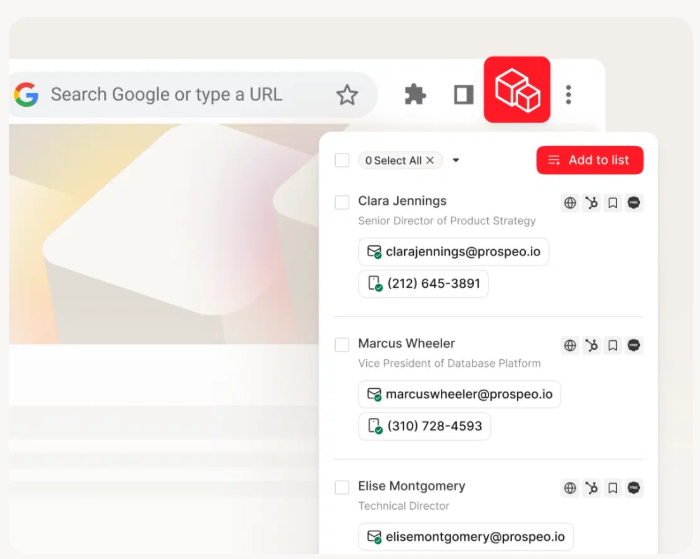
Your data layer is the foundation everything else depends on. Prospeo covers this with 300M+ professional profiles, 143M+ verified emails, and 98% email accuracy on a 7-day refresh cycle. The Chrome extension pulls verified emails and phones from any website, and native integrations with Salesforce, HubSpot, Smartlead, Instantly, Lemlist, Clay, Zapier, and Make mean your data flows directly into whatever tools you're already running. If you're comparing options, start with data enrichment services and outbound lead generation tools.
Stack cost reality for a small team: data + outreach + CRM + automation runs a few hundred to a couple thousand per month before ad spend. The expensive mistake isn't the tools - it's paying for a $40k/year data platform when a self-serve option with better accuracy exists at a tenth of the cost.
Intent-signal outbound only works if the data connects. Prospeo combines buyer intent, technographics, funding signals, and headcount growth filters with 143M+ verified emails refreshed every 7 days - not the 6-week-old lists that caused last quarter's 35% bounce rate.
Replace bounced emails with a 98% accurate pipeline engine.
FAQ
How do I find leads fast (this week)?
Focus on intent-signal outbound: identify companies actively hiring, raising funding, or growing headcount in your target departments, then build a verified contact list and send personalized outreach. Skip SEO and content for speed - those compound over months. Intent signals plus verified data is the fastest path to booked meetings.
Where can I get leads without a huge budget?
Referrals, community engagement, and organic SEO deliver qualified leads at a fraction of paid CPL - organic B2B SaaS CPL averages $164 vs. $310 paid. For outbound, Prospeo's free tier (75 emails/month) lets you build verified lists without an enterprise contract. Disciplined ICP targeting beats a massive spend every time.
How many touches does it take to book a meeting?
Most B2B sequences need 4-7 touches across email and phone to generate a response. The Reddit case study above used 1 email plus 3 follow-ups and hit a 4.2% reply rate - well above the ~2% baseline. Consistency and personalization matter more than volume.
What's a good cost per lead?
B2B SaaS averages $237 blended ($310 paid, $164 organic). eCommerce runs around $91. Financial services hits $653. Organic channels cost less long-term but take months to compound - paid delivers volume immediately at a higher per-lead cost.
Is cold email still legal in 2026?
Yes, with guardrails. CAN-SPAM requires a visible unsubscribe link and opt-out processing within 10 business days. GDPR requires explicit consent for EU contacts, with fines up to EUR 20M or 4% of global revenue. Build compliance into your workflow from day one - penalties are steep enough to sink a small company.