

How to Overcome Cold Calling Fear: A Psychology-Backed Guide
It's 9:02 AM. You're staring at the dialer, coffee going cold, scrolling through your list for the "perfect" first call. You know what's happening - you're stalling. 48% of B2B salespeople are afraid of making cold calls, and learning how to overcome cold calling fear isn't about willpower. It's about understanding why your brain fights you and using proven techniques to rewire the response.
Most cold calling fear advice tells you to "embrace rejection." That's terrible advice for someone whose hands are shaking. What follows actually works, backed by psychology research and thousands of hours on the phones.
Three Things That Matter Most
- Build a 35-second opener so you never freeze wondering what to say. Structure kills hesitation. (If you want more plug-and-play options, borrow from these elevator pitches.)
- Set hourly dial targets, not daily ones. Start with low-stakes calls and build momentum in small blocks. (Here are more sales activities that build pipeline without overwhelm.)
- Verify your contact list before every call block. Wrong numbers create fake rejection that compounds fear. (This is exactly why data enrichment services matter in outbound.)
Why SDRs Are Afraid of Cold Calling
Cold calling fear isn't a character flaw. It's a predictable anxiety response with two distinct drivers.
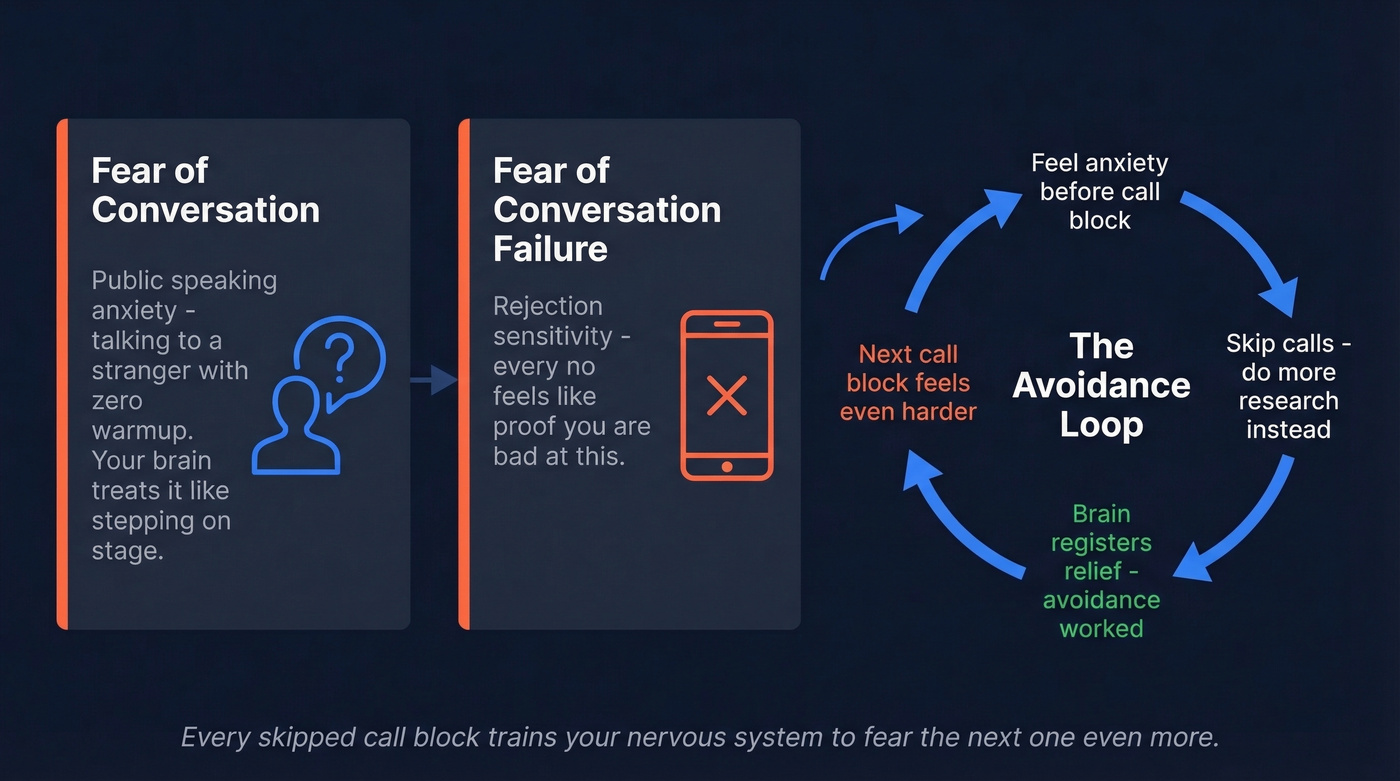
Ryan Reisert, who's coached hundreds of SDRs, breaks it into two categories: fear of conversation and fear of conversation failure. The first is public speaking anxiety - talking to a stranger with no warmup. The second is rejection sensitivity - your brain treats each "no" as evidence that you're bad at this. (If you’re building a repeatable process, a cold calling system helps reduce “blank page” stress.)
CBT research shows that avoidance reinforces anxiety. When you skip a call block because you "need to do more research," your brain registers short-term relief. That relief teaches your nervous system avoidance works - so the next call block feels even harder. Every time you dodge the phone, you're training yourself to be more afraid of it. The fear isn't irrational. It's a learned response that strengthens each time you give in to it.
What Research Says Actually Works
A study of 171 salespeople published in the Journal of the Academy of Marketing Science identified two coping strategies that actually reduce call anxiety.
For reps whose anxiety is mostly cognitive - racing thoughts, catastrophizing, expecting the worst - task concentration works best. Narrow your focus to the mechanics of the call itself. Not the outcome, not the quota. Just the next sentence you're going to say. You're shifting attention from "what might happen" to "what I do next," and that reframe alone makes the fear manageable.
For reps whose anxiety is more physiological - sweaty palms, tight chest, shaky voice - sale perseverance is the move. Keep dialing. The physical symptoms decrease through repeated action. This is the habituation principle: your nervous system gets used to the stimulus when you expose it enough times.
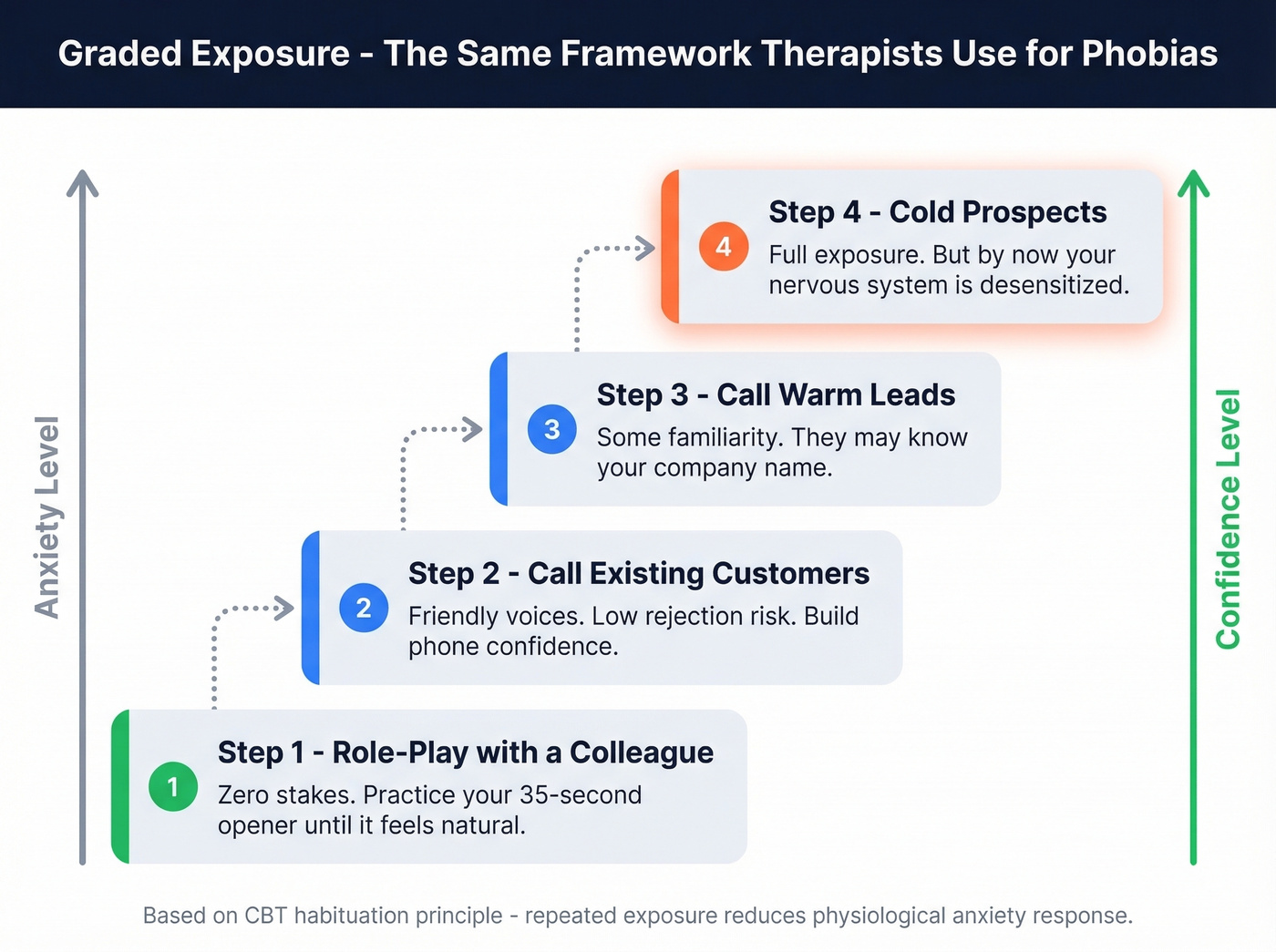
We've watched new SDRs build from "avoiding the phone" to consistent daily calling using graded exposure - the same framework therapists use for phobias. Role-play first, then call existing customers, then warm leads, then cold prospects. Each step desensitizes you for the next one. This graduated approach is the most reliable path to dialing with confidence. (For a full ramp plan, use a 30-60-90 day plan for sales reps.)
The Numbers That Should Calm You Down
HubSpot's survey of 379 sales professionals found that only 22% say cold calling is a major part of their daily activities. Among those who do, 30% make just 20-50 calls per week. You don't need 200 dials a day to be effective.
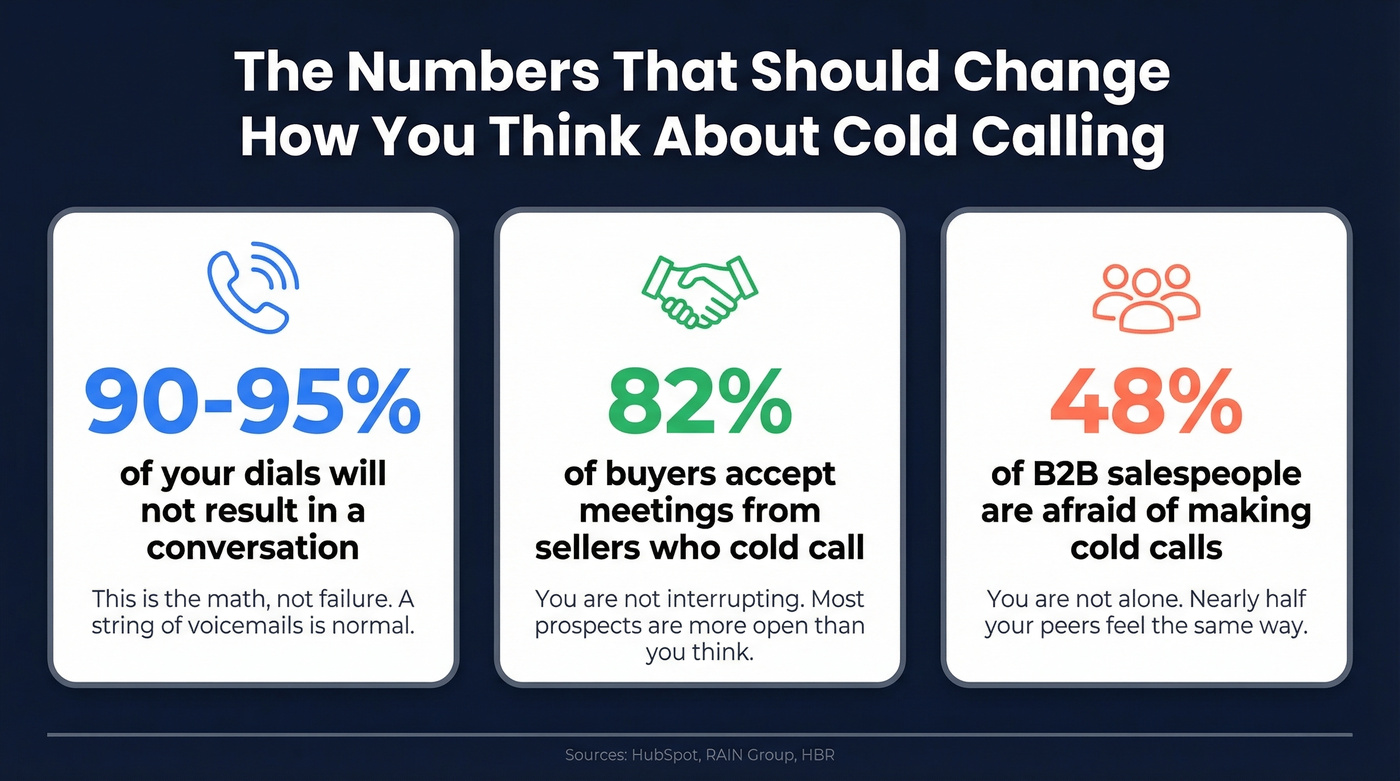
The connect rate in most B2B outbound motions runs about 5-10%. That means 90-95% of your dials won't result in a conversation. This isn't failure - it's the math. Once you internalize that, a string of voicemails stops feeling like personal rejection. (If you want to improve the rest of the funnel too, track your sales conversion rate.)
And the stat that should reframe your guilt about "bothering people": 82% of buyers accept meetings from sellers who cold call (RAIN Group research). 71% want to hear from sellers when they're looking for ways to improve their business. You're not interrupting. Most prospects are more receptive than you think.

Bad data is the hidden anxiety amplifier this article warns about. Every disconnected number and wrong-person pickup trains your brain to dread the next dial. Prospeo's 125M+ verified mobile numbers deliver a 30% pickup rate - so more of your calls reach real prospects, not dead ends.
Replace fake rejection with real conversations starting today.
Practical Techniques for Beating Call Anxiety
The 35-Second Opener
The fastest way to reduce call anxiety is to eliminate the "what do I say?" problem. Answer three questions in under 35 seconds: Who are you? Why are you calling? What do you want?
"Hey [Name], this is [Your Name] from [Company]. How are you?" - pause - then immediately into why you're calling, tailored to their role or industry. Close with a clear ask: "I'd love 15 minutes this week to show you how we're helping [similar companies] with [specific problem]."
If that feels too aggressive, try a permission-based opener: "Do you have 30 seconds for me to tell you why I'm calling?" This gives the prospect control, which paradoxically makes them more likely to listen - and it takes pressure off you. (You can also build a tighter talk track using these talk track examples.)
Structured Call Blocks
Don't set a goal of "50 calls today." Set a goal of "10 calls this hour." Hourly targets create urgency without overwhelm.
Start with 2-3 low-stakes calls - existing customers, warm referrals - to build momentum. Stand up or walk while you dial; posture affects vocal confidence more than you'd expect. Never put the phone down between calls. The gap is where anxiety creeps back in.
Here's the thing: we've seen reps lose an entire afternoon because they paused after one rough call to "regroup." Don't regroup. Dial. Getting past cold call anxiety is less about mental tricks and more about never giving your brain a window to spiral. (If you’re still building fundamentals, start with cold calling for beginners.)
Handling Objections Without Spiraling
An objection isn't rejection - it's engagement. Someone who says "I'm not interested" is still talking to you. The hang-up with no words? That gave you nothing to work with. The objection is the better outcome. (For more scripts and reframes, see cold call rejection.)
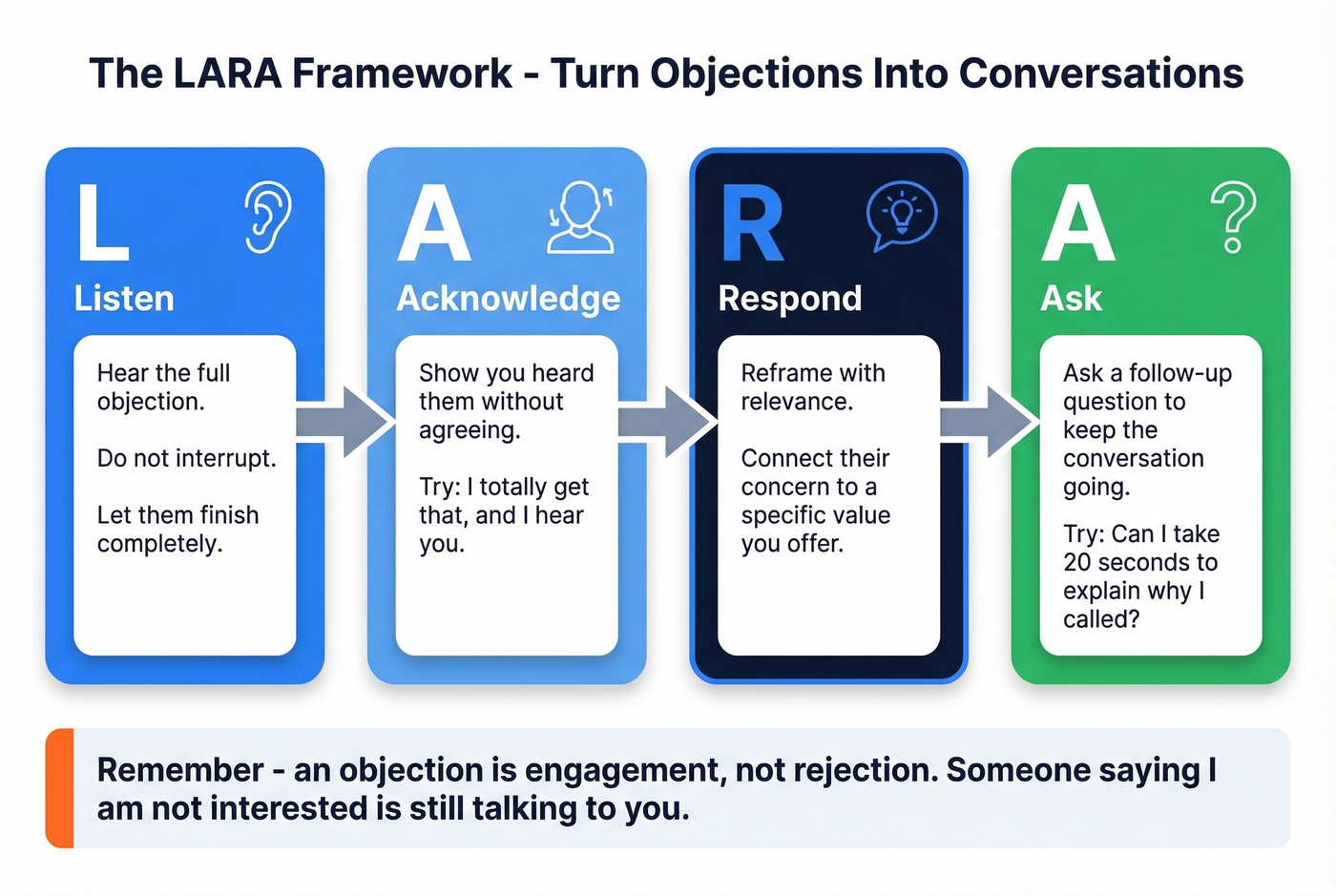
Use the LARA framework: Listen to the full objection. Acknowledge it without agreeing. Respond with a relevant reframe. Ask a follow-up question. On the first objection, don't over-qualify - re-sell the time: "Totally fair. Can I take 20 seconds to explain why I called, and you can tell me if it's worth a longer conversation?"
Habits That Make Fear Worse
A few patterns that actively amplify call anxiety:
- Not researching the prospect. Even 2-3 minutes of prep gives you a relevance hook that makes the call feel less random. (This gets easier with a clear ideal customer profile.)
- Pitching too early. Launching into features before you've earned 30 seconds of attention guarantees a hang-up, which your brain logs as rejection.
- Giving up after one objection. The first "no" is usually reflexive, not considered.
- Calling from bad data. This one deserves its own section.
The Hidden Anxiety Amplifier: Bad Data
You make 15 dials. Three numbers are disconnected. Two connect to the wrong person. Four go to voicemail at numbers that haven't been active in months. That's nine calls that never had a chance - but your brain doesn't distinguish between "disconnected number" and "I got rejected." It all goes into the same emotional bucket.
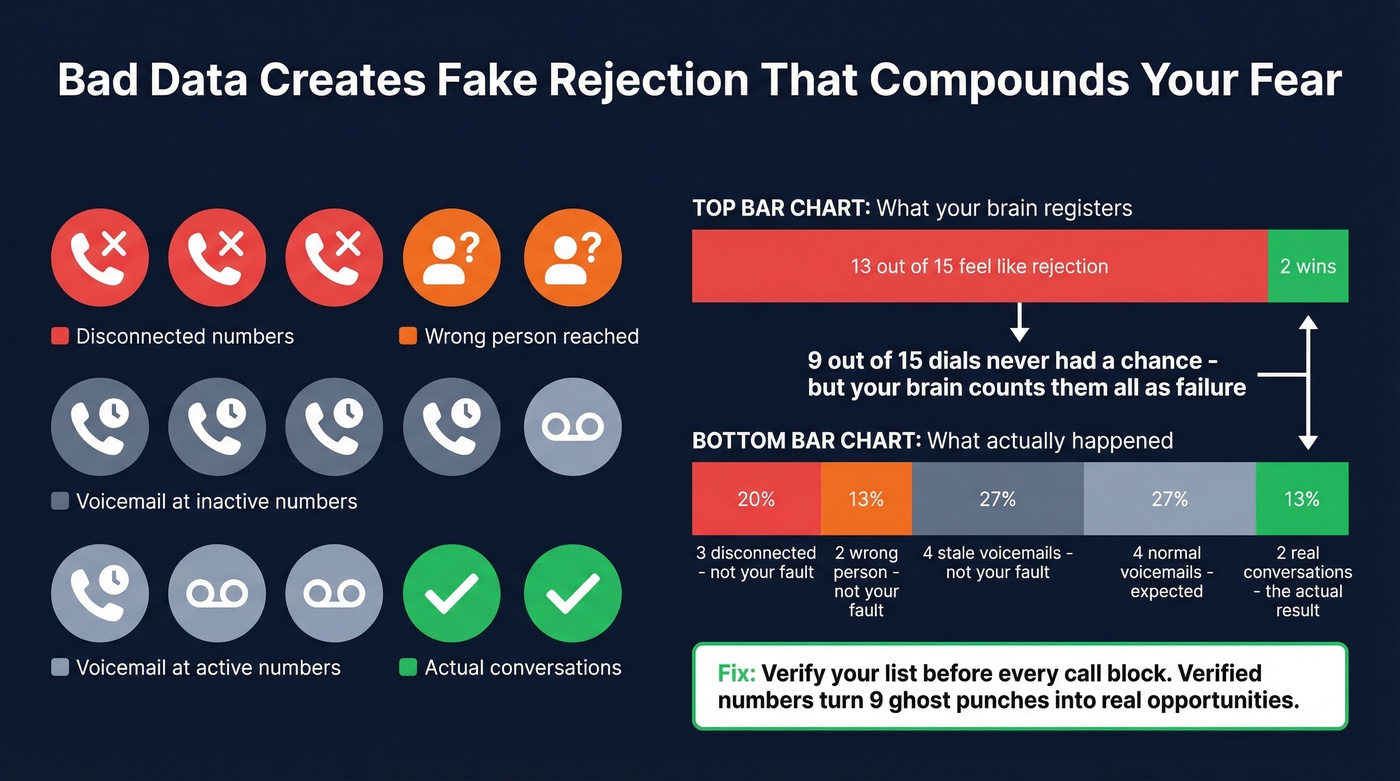
Bad contact data creates artificial rejection that compounds fear. If you're scared of cold calling, stale numbers make everything worse by stacking fake failures on top of real ones. The consensus on r/sales backs this up - threads about call reluctance almost always surface data quality as a hidden factor. One rep described it as "getting punched by a ghost," which is about right.
Before your next call block, run your list through a verification tool like Prospeo's Mobile Finder. With 125M+ verified mobile numbers and a 30% pickup rate - far above the industry average - you're dialing numbers where someone is actually likely to answer. Data refreshes every 7 days, so you aren't working off stale records. (If you’re evaluating options, compare sales prospecting databases before you commit.)
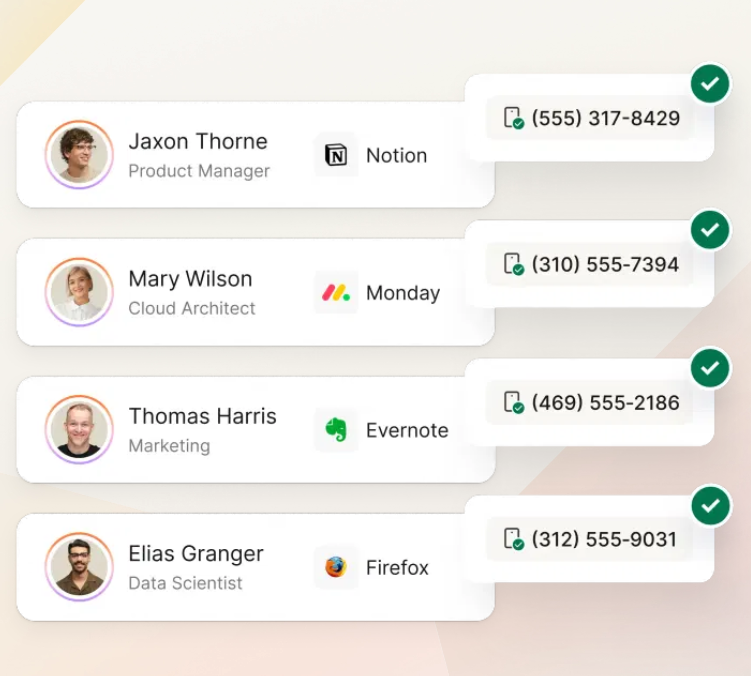
You just learned that 90-95% of dials won't connect - so the ones that do need to reach the right person. Prospeo refreshes contact data every 7 days (not 6 weeks like competitors), giving you numbers and emails that are accurate when you dial. At $0.01 per email, clean data costs less than the pipeline you lose to call anxiety.
Dial with confidence when every number on your list is verified.
For Managers: Coaching Through Call Anxiety
Most sales orgs hand a new SDR a phone, a list of unverified numbers, and a "just be confident" pep talk. That's a management failure, not a rep failure.
Cold call alongside your reps. Let them watch you get rejected. Let them hear you stumble. Nothing reduces a rep's fear faster than seeing their manager take the same hits. If you haven't picked up the phone yourself in six months, you've lost the credibility to coach through this.
Set activity-based targets, not outcome-based ones. "Make 15 calls this morning" is controllable. "Book 3 meetings today" creates performance anxiety stacked on call anxiety - a combination that paralyzes even experienced reps.
Equip your team with verified data. Every disconnected number erodes confidence. This is a solvable problem, and it's on you to solve it before blaming rep mindset. (If you’re standardizing the stack, start with best contact management software.)
Celebrate small wins. A rep who made 15 calls today after making zero last week just climbed a rung on the exposure ladder. Treat it like progress, because it is. Overcoming cold calling fear is incremental - managers who recognize small gains keep reps moving forward.
Most Reps Have a Data Problem, Not a Fear Problem
Let's be honest. If your connect rate is below 5%, the issue probably isn't your mindset. It's your list. In our experience, teams can double their confidence in a week just by switching from a stale CRM export to verified contacts. Fix the data first. The courage follows.
Skip the mindset hacks if you haven't audited your data quality yet. No amount of breathing exercises will fix a list full of disconnected numbers.
FAQ
Is cold calling anxiety a real condition?
Yes - it's a documented anxiety response recognized in CBT literature. The avoidance-anxiety loop means skipping calls actually intensifies the fear over time. A study of 171 salespeople identified task concentration and sale perseverance as two coping strategies that measurably reduce its impact.
How do beginners overcome cold calling fear?
Use graded exposure: role-play with a colleague first, then call existing customers, then warm leads, then cold prospects. Pair that with a memorized 35-second opener so you never freeze on the line. Most beginners find anxiety drops sharply once they remove unknowns - knowing exactly what to say and having verified numbers to dial.
How many cold calls should a new rep make daily?
Start with 10-15 calls broken into 2-3 hourly blocks. HubSpot's survey found 30% of active callers make just 20-50 calls per week. Graded exposure beats brute force - consistency matters more than volume.
Does verified contact data reduce call anxiety?
Disconnected numbers and wrong contacts get internalized as personal failure. Reps using clean, verified data report higher confidence within the first week because they're eliminating artificial rejection from their daily experience.
It's 9:02 AM again tomorrow. This time, pick up the phone.