

How to Sell as a Founder: The Tactical Playbook From $0 to Your First Sales Hire
It's week three after launch. You've got a product, a landing page, and a Slack channel with your co-founder where you're both pretending the pipeline isn't empty. You've read the YC advice about "doing things that don't scale," but nobody told you what to actually do at 9am on a Tuesday when you have zero customers and no sales experience.
Here's the thing most first-time founder sales advice gets wrong: they tell you to optimize your copy, your subject lines, your CTA buttons. The real lever is your list. Learning how to sell as a founder isn't about persuasion - it's about targeting. Nail who you're reaching out to, and mediocre copy still books meetings.
This playbook covers everything from your first cold email to your first sales hire, with real benchmarks instead of platitudes.
What You Need (Quick Version)
You must sell the first 10-20 customers yourself. No outsourcing, no agencies, no "let's hire someone who knows sales." Outbound works when you use micro-lists of 10-100 hyper-specific prospects with verified data, not 2,000-email CSV blasts that torch your domain. Plan to transition to a sales hire around ~$1M ARR, and never hire a VP Sales first.
Your founder sales stack needs exactly three tools:
- CRM - HubSpot free tier. It's enough until you have a real pipeline problem.
- Sending tool - Instantly (~$30-$40/month) or Smartlead (~$30-$50/month) for cold email sequencing.
Three tools. Nothing else until you've closed 10 deals.
Why Founder-Led Sales Is Non-Negotiable
Founder outreach outperforms SDR outreach by 20-30%. At early-stage volumes, that's the difference between two meetings a week and zero.
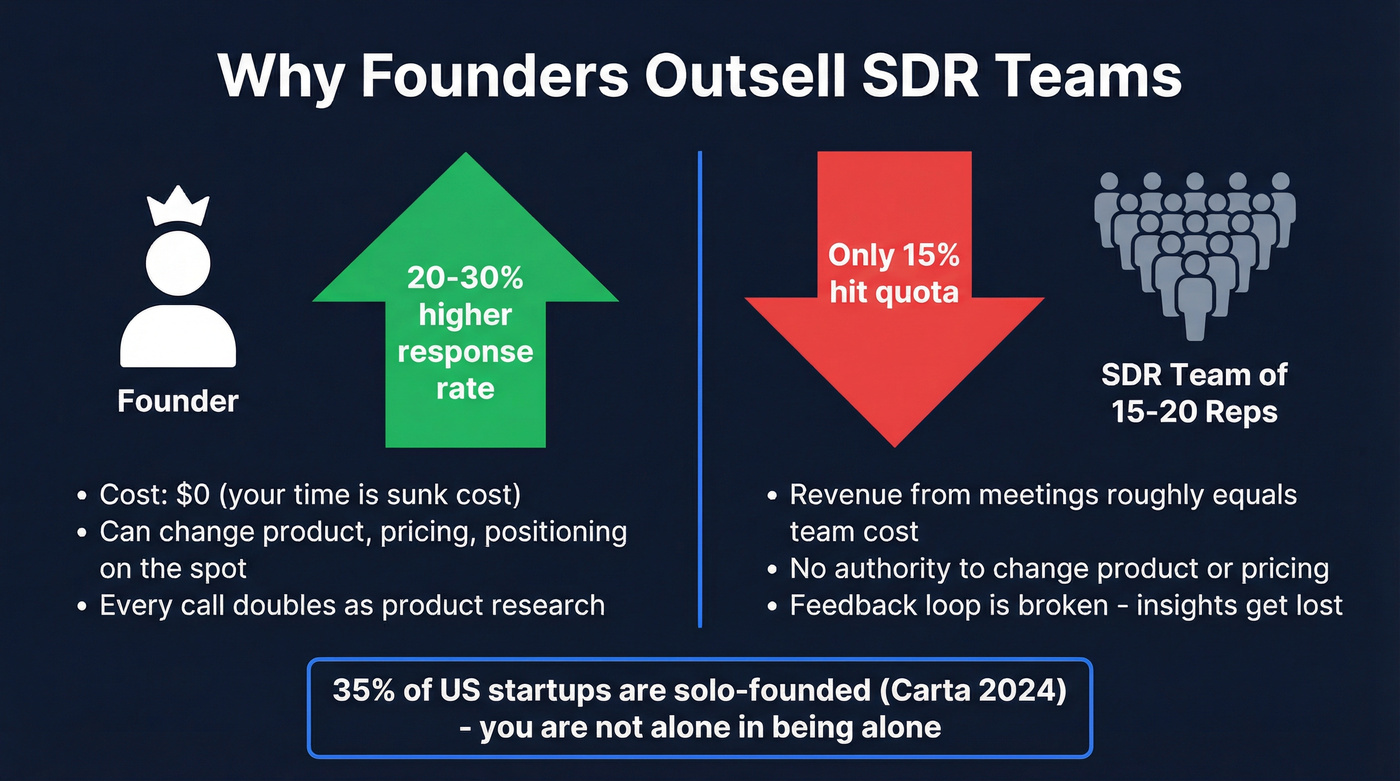
Let's look at the math. SDR teams of 15-20 reps typically see only ~15% hitting quota, with the revenue from booked meetings roughly equaling the cost of the entire team. You're already paying yourself. Your time selling is sunk cost with massive upside - an SDR team at this stage is just burning cash to break even.
The deeper reason is product-market fit. When you outsource sales early, you lose the feedback loop that tells you whether your product actually solves a real problem. PostHog's founders put it bluntly: you need to be in the trenches because you can change the product, the pricing, and the positioning on the spot. An SDR can't do that. An agency definitely can't. Every sales conversation doubles as product research, which is why selling and customer development are inseparable at the earliest stages - the insights you get from a prospect saying "no, but if it did this..." are worth more than any market research report you could commission.
And if you're thinking "but I'm a solo founder, I can't do everything" - 35% of US startups are solo-founded according to 2024 Carta data. You're not alone in being alone. The ones who win are the ones who pick up the phone anyway.
Your First 10 Customers
Forget about scale. Your first 10 customers come from relationships, not systems.
The most effective early approach is what one founder called the "founder asking for advice" method - you're not selling, you're learning. Here's what that looks like in practice:
"Hey [Name], I'm building [product] for [ICP]. I noticed you [trigger]. Would you have 15 minutes to tell me if this is a real problem or I'm wasting my time?"
Half of those conversations turn into "wait, can I actually use this?"
Rank your channels from easiest to hardest and work down the list:
- Friends and former colleagues who fit your ICP or know people who do
- Building in public - share what you're building on social, attract inbound curiosity
- Customized DMs to specific people with a 2-3 sentence meeting ask
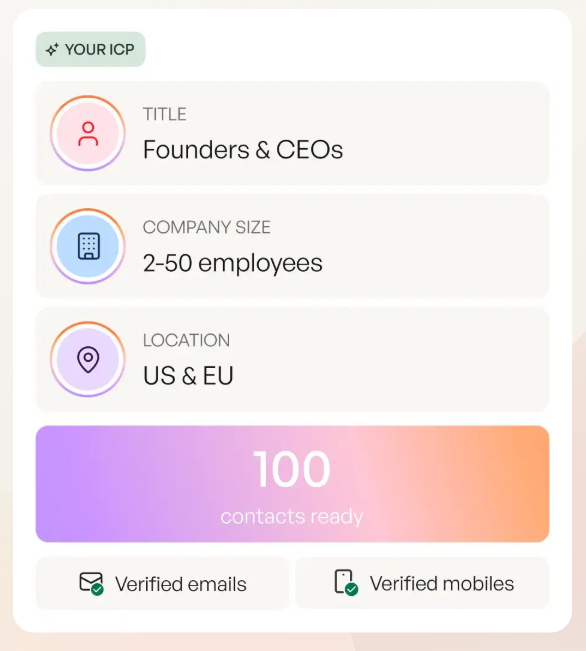
- Customized cold emails to a tight list of 50-100 prospects
- Niche communities - forums, Slack groups, wherever your users already hang out
What consistently underperforms at this stage: networking events and automated DM sequences. Skip both.
Narrow your ICP ruthlessly. One founder found the sweet spot at 50-100 employee companies because decision cycles were faster and there was less procurement bureaucracy. You don't have the bandwidth to chase 500 leads. Chase 50 of the right ones.
Before any sales meeting, define what you want the prospect to think, feel, and do by the end. That simple frame keeps you from rambling through a demo nobody asked for.
Outbound That Actually Works
Build Micro-Lists, Not Mega-CSVs
The biggest mistake founders make with outbound is starting with volume. They export 2,000 contacts from some database, blast a generic sequence, get six replies and zero customers, and conclude that "cold outreach is dead." We've seen this pattern play out dozens of times in founder communities on Reddit - the r/SaaS and r/startups threads are full of these post-mortems.
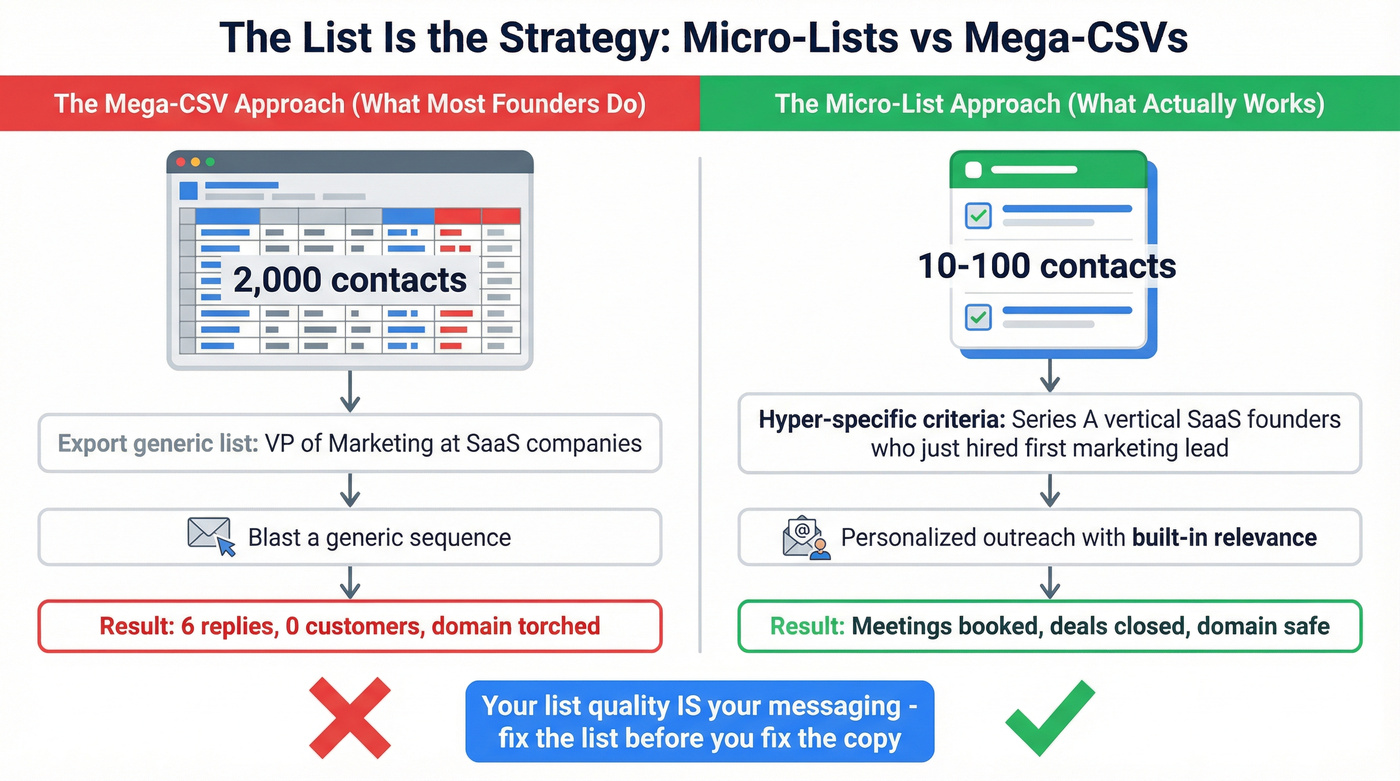
The fix isn't better copy. It's a better list.
Start with 10-100 prospects who match hyper-specific criteria. Not "VP of Marketing at SaaS companies" - that's a category, not a list. Try "Series A founders in vertical SaaS who recently hired their first marketing lead." When your list is that tight, relevance is built in. Your list quality IS your messaging.
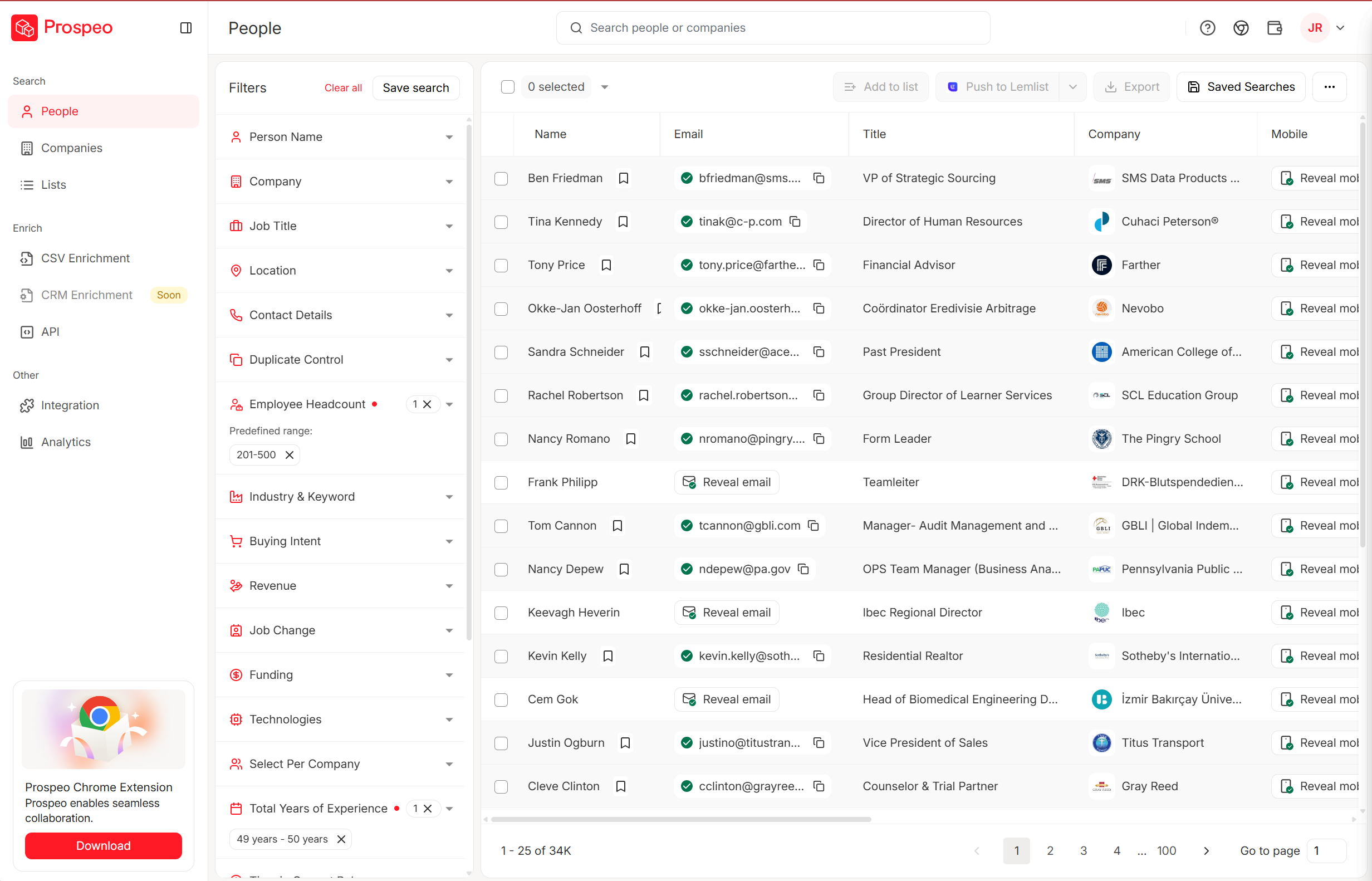
Once you have your criteria, get verified emails from a B2B database with tight filters - company size, funding stage, job changes, tech stack - so every contact actually matches. Prospeo's database offers 30+ filters including technographics and headcount growth, which makes building these micro-lists fast even on the free tier.
Cold Email Structure and Deliverability
Before you write a single subject line, understand this: 17% of cold emails never reach the inbox. Gmail and Yahoo now enforce mandatory deliverability rules - sloppy senders get blocked at the server level, not just filtered to spam.
Verify every email before you send. A 5-step verification process that catches invalid addresses, spam traps, honeypots, and catch-all domains is what separates founders who book meetings from founders who get blacklisted.
What does that look like in practice? Stack Optimize built from $0 to $1M ARR using Prospeo data - their client deliverability runs 94%+, bounce rates stay under 3%, and they've had zero domain flags across all clients. At $0.01 per lead, that's 90% cheaper than ZoomInfo's ~$1/lead with higher accuracy.
Your email structure should follow four parts:
- Subject - Spark curiosity. No buzzwords, no urgency tricks, no "Quick question." (If you need ideas, start with proven subject lines.)
- Opening - Reference a specific trigger: a funding round, a recent hire, a product launch. This proves you didn't batch-send to 2,000 people.
- Value - One sentence on the outcome you deliver, ideally with social proof.
- CTA - Single, low-friction ask. "Worth a 10-minute chat this week?" Not "Let me know if you'd like to schedule a 30-minute demo at your earliest convenience."
One tactic that consistently breaks through: include a 30-second personalized video. It's weird enough to get attention and personal enough to get replies. (If you want a repeatable workflow, use a Loom video cold email approach.)
Multi-Channel Sequencing
Email alone isn't enough. Combining email, social touches, and phone boosts results by 287% vs email alone.
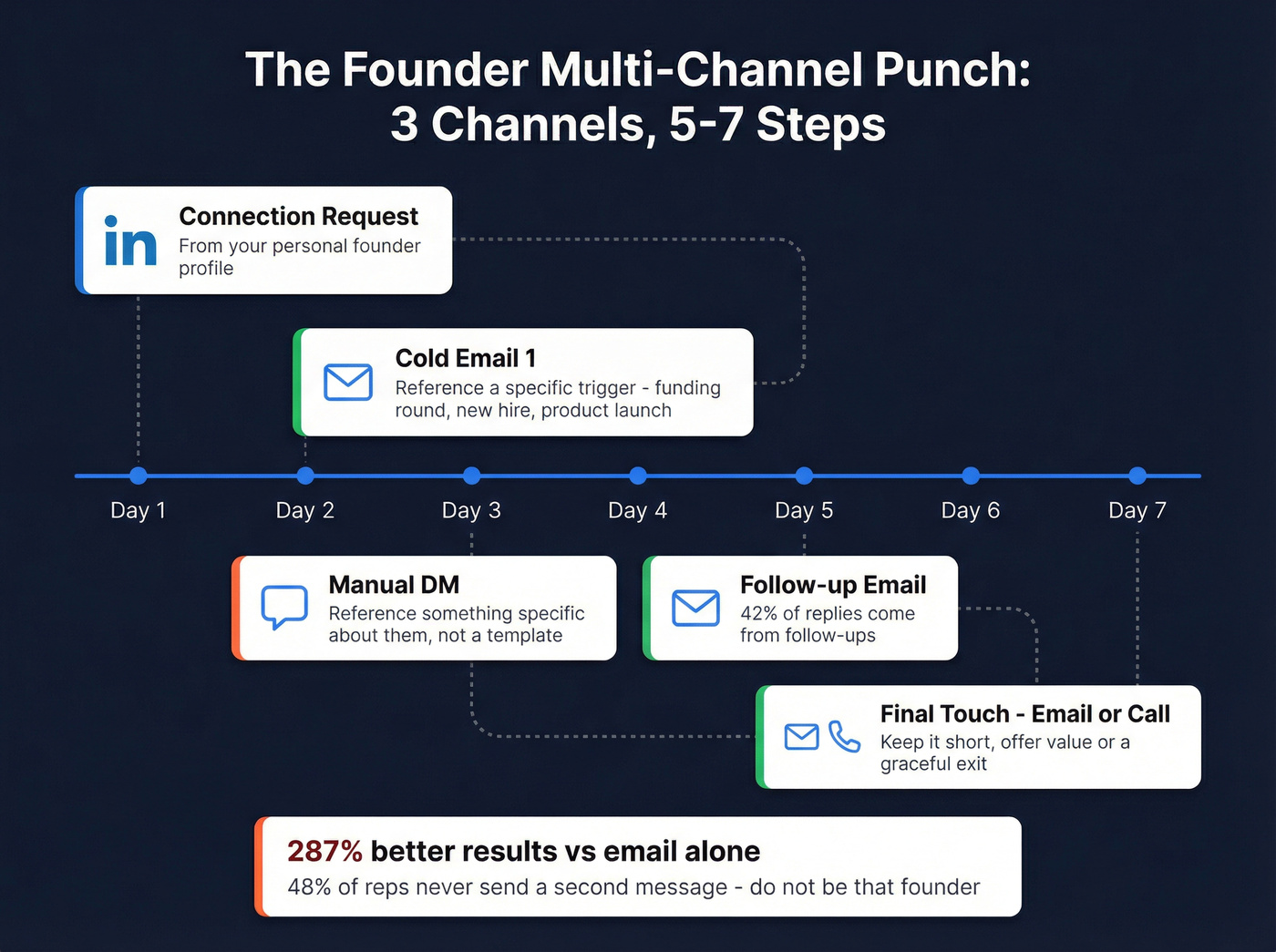
Run your micro-lists through a multi-channel punch: connection request from your founder profile, a manual DM referencing something specific, and a cold email - all within a tight window. The prospect sees your name three times in three days across three channels. That's how you break through noise without being annoying.
Keep sequences to 5-7 steps. We've seen founders build 15-20 step sequences with calls, voicemails, and carrier pigeons. Shorter sequences consistently outperform longer ones for founder-led outbound.
The stat that should haunt you: 42% of replies come from follow-ups, but 48% of reps never send a second message. Don't be that founder. Use simple sales follow-up templates so you actually send the second touch.
Benchmarks - Is Your Outreach Working?
Cold outbound benchmarks (2024-2026 averages):
| Metric | Average | Good | Excellent |
|---|---|---|---|
| Open rate | 27.7% | 35%+ | 50%+ |
| Reply rate | 3.43% | 5-8% | 10%+ |
| Conversion | 0.2-2% | 2%+ | 5%+ |
| Positive replies | ~20% of replies | 30%+ | 50%+ |
Founders typically outperform these averages by 20-30% thanks to title authority and authenticity. If you're a founder selling product directly and you're below the "average" column, your list is the problem - not your copy.
Sending 100 emails with no results is expected. Patterns become predictable at ~1,000 emails. Best send times: launch sequences on Monday, follow up on Wednesday, send between 9:30-11:30am in the prospect's local time. (More detail: best time to send cold emails.)


This playbook says your list quality IS your messaging. Prospeo gives founders 30+ filters - funding stage, tech stack, headcount growth, job changes - to build hyper-specific micro-lists of 10-100 prospects with 98% verified emails. Start on the free tier. No sales calls, no contracts.
Stop blasting 2,000 contacts. Target 50 of the right ones.
Running the Sales Call
You booked the meeting. Now don't blow it.
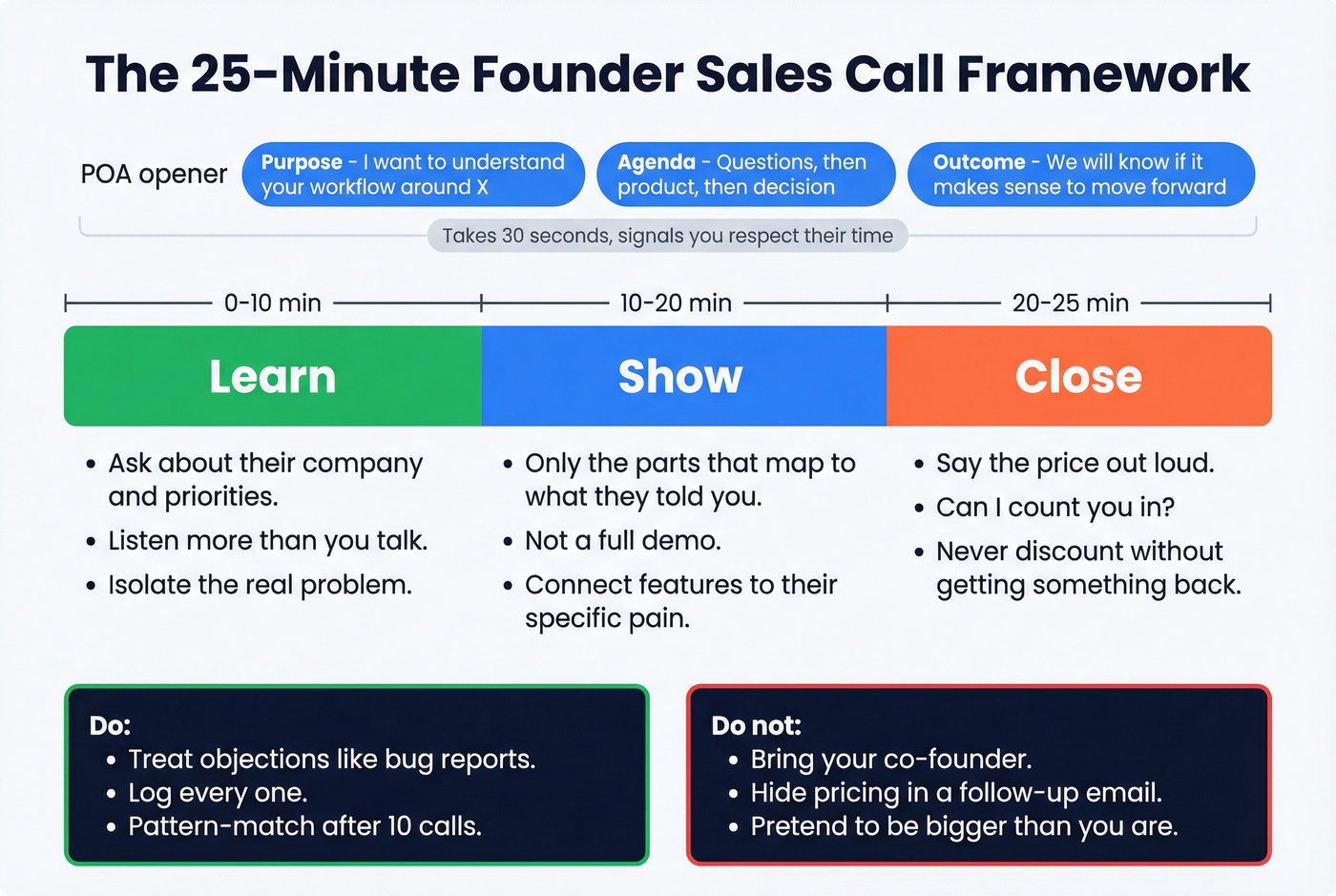
Start every call with the POA framework: Purpose ("I want to understand your workflow around X"), Agenda ("I'll ask a few questions, show you what we're building, and we'll figure out if it's a fit"), Outcome ("By the end, we'll know if it makes sense to move forward"). This takes 30 seconds and immediately signals that you respect their time.
A 25-minute agenda that works: spend the first 10 minutes learning about their company and priorities. Spend the next 10 on the problem space and showing the relevant parts of your product - not a full demo, just the pieces that map to what they told you. Use the last 5 to close or set next steps.
Treat your sales calls like debugging sessions. You're isolating the variable that makes someone buy. Each objection is a bug report - it tells you exactly where the product, the positioning, or the pricing breaks down. Log every objection and pattern-match across calls. After 10 conversations, you'll know your three most common objections cold, and you'll have tested responses for each one. This is sales as an engineering discipline, and it's the unfair advantage technical founders don't realize they have.
If you're a technical founder, lean into it. "I'm an engineer doing sales" is disarming, not embarrassing. Prospects trust founders who are honest about being early-stage more than they trust polished sales reps reading scripts. Don't pretend to be bigger than you are. And don't bring your co-founder to early calls - it's harder to build a closing relationship with two people in the room.
When it's time to close, say the price out loud: "This costs $X per month. Can I count you in?" Don't hide behind "I'll email you the pricing." Never discount without getting something in return - a testimonial, a case study, a longer commitment. (If you want a clean closing flow, follow the steps to close a sale.)
Speed-to-lead matters more than most founders realize. Responding within 5 minutes gives you a 90% better chance of booking time than responding an hour later. One founder closed a Walmart contract because they replied to a lead email at 11pm. Be that founder.
Build Inbound While You Outbound
Outbound gets you your first customers. Inbound gets you your next hundred.
One founder who shared their journey from $0 to $2M ARR said inbound was the single biggest inflection point - but it took 2.5 years to start investing in it and another year to set up. Once running, inbound leads closed 2-3x faster than outbound. They launched a waitlist early and had 130 companies signed up within a month.
Contrast that with the "cold outreach is dead" crowd. One founder sent 2,000 cold emails, got zero customers, deleted Apollo, and switched entirely to community engagement and long-form content. Result: $4.7k MRR, no ads, no cold outreach. The lesson isn't that outbound doesn't work - it's that lazy outbound doesn't work, and inbound compounds.
Start building inbound on day one, even if it won't pay off for months. Post 4-5 times per week where your buyers spend time. Try "engager outbound" - find people who engage with relevant content, enrich their profiles, and run a targeted sequence if they match your ICP. It's the bridge between inbound and outbound, and it converts better than either alone. (This is basically personalized outreach with an inbound trigger.)
Numbers You Need to Track
If you're not tracking your funnel, you're guessing. Track calls made, emails sent, meetings booked, and your meetings-to-close ratio every single week.
| Metric | Target |
|---|---|
| Website to signup | 2-5% |
| Trial to paid | 10-20% |
| CAC:LTV ratio | 3:1+ |
| Monthly churn | <5% |
Beyond conversion rates, track pipeline volume and velocity, sales cycle duration, and conversion rates by stage. The moment you stop tracking, you start making decisions based on vibes instead of data. In our experience, founders who review these numbers weekly close 2x more in their first six months than those who check in monthly. (If you want a tighter system, use funnel metrics and pipeline health as your weekly dashboard.)
When to Make Your First Sales Hire
Signals You're Ready
Close your first 10-20 customers yourself. Non-negotiable. You need to understand the objections, the buying triggers, and what actually resonates before you can teach someone else to sell your product.
The typical transition point is around ~$1M ARR, or when you physically can't handle the lead volume. Look for these signals:
- Revenue plateaus despite consistent effort
- You're dropping the ball on warm leads because you're too busy
- Your pipeline depends entirely on your personal network
- You're spending so much time selling that the product is suffering
One thing worth knowing: $10k and $100k enterprise contracts often take the same amount of time to close because of procurement, security, and legal. For teams selling to enterprise, factor that sales cycle into your hiring timeline.
How Not to Screw It Up
Hire two reps, not one. With one rep, you can't tell if poor performance is the person or the process. With two, you can compare and learn faster. Get both hitting quota before you even think about hiring a Head of Sales.
"Hire a player, then add a coach." Don't reverse this. A VP Sales who hasn't sold your product will hire AEs they can't train effectively - that's the death spiral that kills more early-stage sales orgs than any other mistake.
Before you write a job description, define success at 3, 6, and 12 months. What does the rep need to close? How many meetings? What pipeline value? Your first hire should have startup experience, comfort with ambiguity, and coachability. Skip the candidate with the impressive enterprise logo on their resume who's never worked without a playbook. (A simple 30-60-90 day plan for sales reps helps you define this clearly.)
Compensation: 50/50 base/commission split. Be relatively generous early - you're asking someone to take a risk on an unproven sales motion.
Document your ICP, a basic playbook, and your CRM process before they start. And remember: you never get to leave sales entirely. Your time shifts from closing to coaching and joining key calls, but the founder is always selling.
Mistakes That Kill Founder Sales
1. Hiring a VP Sales as your first sales hire. The VP hasn't sold your product, hires AEs they can't train, and everyone churns within 6 months.
2. Refusing to be the first salesperson. If you won't sell your own product, why would anyone else?
3. Stopping selling too soon. CEOs never stop selling. You shift from closing deals to closing partnerships, investors, and key accounts - but you're always in the room.
4. Outsourcing the PMF search. Agencies and SDR firms can scale what works. They can't figure out what works. That's your job.
5. Listening to late-stage advice. A Series C playbook will actively hurt a pre-seed company. Ignore advice that assumes you have a brand, a budget, and a team.
6. Misjudging PMF strength. Ten customers who love you isn't PMF if they all came from your personal network. Test with strangers before you scale.
7. Trying to save money on sales talent. Your first reps are building the foundation of your entire revenue engine. Cheap hires produce cheap results.
Look, if your average deal size is under $10k, you probably don't need ZoomInfo-level data or a complex sales stack. A free CRM, a verified email tool, and a sequencer will outperform a $30k/year tech stack because at low deal sizes, speed and volume matter more than sophistication. Startup sales is about staying lean and iterating fast, not buying the same tools as a 500-person sales org.
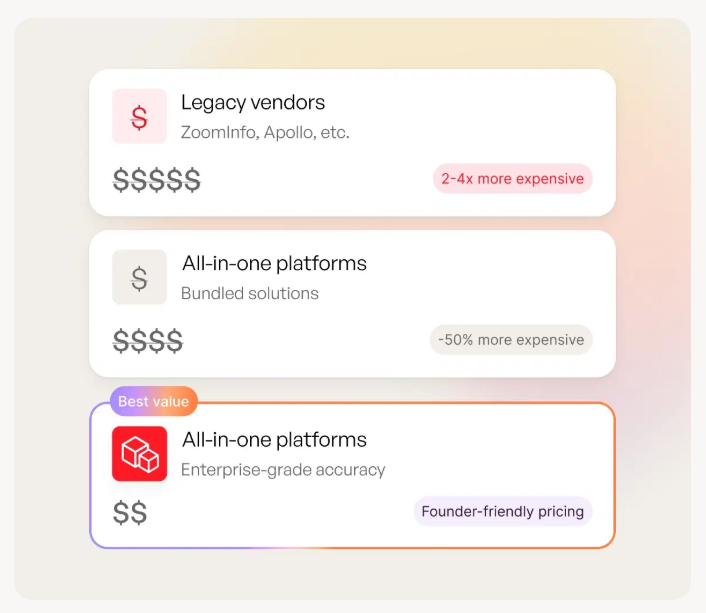
Stack Optimize used Prospeo data to go from $0 to $1M ARR with 94%+ deliverability and under 3% bounce rates. At $0.01 per email, you get 98% accuracy without torching your domain - exactly what founder-led outbound demands.
Protect your domain reputation from day one. Verify before you send.
FAQ
How many cold emails should a founder send per week?
Start with 50-100 per week to micro-targeted lists. At ~1,000 total emails, conversion patterns become predictable. Fifty emails to perfect-fit prospects outperform 500 to a generic list every time.
What's a good reply rate for founder cold outreach?
The average cold email reply rate is 3.43%. Founders typically hit 5%+ thanks to title authority and authentic messaging. Above 10% means your list and copy are both dialed. Below 3%, revisit your ICP before touching subject lines.
How long should I sell before hiring a rep?
Close 10-20 customers yourself and reach roughly ~$1M ARR first. You never fully leave sales - you shift to coaching reps, joining strategic calls, and closing key accounts. Expect this phase to last 12-18 months.
Is cold outreach dead in 2026?
Lazy cold outreach is dead. Blasting 2,000 generic emails gets you flagged by Gmail and ignored by prospects. Micro-targeted, multi-channel outreach with verified data still works - founders see 20-30% better response rates than SDRs, and combining email with social touches lifts results by up to 287%.