

How to Use CRM Software: The Operator's Manual Nobody Gave You
It's Monday morning. You open your CRM dashboard and the pipeline says $1.2M. Your gut says $400K. Half the deals haven't been touched in six weeks, three duplicate accounts exist for the same prospect, and your forecast is a work of fiction. Up to 70% of CRM implementations fail to meet business objectives, and companies lose an average of 16 sales deals per quarter due to bad CRM data. The tool isn't the problem - how you use it is.
What You Need (Quick Version)
Pick any top-5 CRM. Commit for 90 days. Your success depends on three things:
- Clean data - garbage in, garbage out applies nowhere more than CRM
- Smart automations - eliminate the busywork that kills adoption
- Team buy-in - the best CRM in the world fails if reps won't use it
The tool is 20% of the outcome. CRM done right returns $8.71 for every $1 spent, with teams reporting a 29% sales increase and 34% productivity boost. This guide gives you the templates, scoring models, and automation recipes to nail the other 80%.
Pick a CRM and Commit
Don't spend three months evaluating platforms. The differences between the top CRMs matter far less than whether your team actually uses the one you pick (if you want a broader shortlist, see these examples of a CRM).
| CRM | Starting Price | Best For |
|---|---|---|
| HubSpot | Free tier available | SMBs wanting a free start |
| Pipedrive | $14/seat/mo | Sales-first teams |
| monday CRM | $12/user/mo | Simple workflow automation |
| Salesforce | $25-$100/user/mo | Scale + customization |
Under 10 reps? Start with HubSpot's free tier or Pipedrive - you'll be productive in a week. Teams of 10-50 should look at monday CRM or Salesforce Starter. Enterprise orgs with complex workflows typically land on Salesforce or Microsoft Dynamics 365, but you already know that.
Here's the thing: the CRM you can deploy in two weeks beats the "perfect" CRM that takes four months to configure. Pick one, set a 90-day evaluation window, and move on to the steps that actually determine success.
Set Up Your Sales Pipeline
Your pipeline is the skeleton of your CRM. Get the stages wrong and everything downstream - forecasting, reporting, workflow automation - breaks (common failure modes are covered in these sales pipeline challenges).
A simple framework works for most businesses: Lead → Qualified → Demo/Proposal → Negotiation → Closed Won/Lost. From there, customize for your sales motion.
B2B SaaS Pipeline
| Stage | Definition | Typical Duration |
|---|---|---|
| MQL | Marketing-qualified, fits ICP | 3-7 days |
| SQL | Sales-qualified via discovery | 5-10 days |
| Demo | Live product walkthrough | 3-7 days |
| Proposal | Pricing/scope delivered | 5-14 days |
| Contract Review | Legal/procurement | 7-21 days |
| Closed | Won or lost | - |
Service Business Pipeline
| Stage | Definition | Typical Duration |
|---|---|---|
| Inquiry | Initial contact received | 1-2 days |
| Estimate Scheduled | Meeting booked | 3-5 days |
| Estimate Delivered | Quote sent | 2-3 days |
| Follow-Up | Active negotiation | 5-10 days |
| Job Scheduled | Work confirmed | 3-7 days |
| Completed | Delivered + invoiced | - |
Two pipeline hygiene rules that prevent rot: review every deal weekly, and enforce a 30-day stale deal rule. If a deal hasn't had meaningful activity in 30 days, it either needs a next step or it gets moved to closed-lost. No exceptions. Stale deals are the single biggest source of forecast fiction (use a simple pipeline health checklist to catch it early).
Contact Management and Data Quality
This is where most CRM rollouts quietly die. Teams dump a messy spreadsheet into a shiny new system and wonder why nothing works. 76% of CRM adopters admit that less than half of their data is accurate - and that bad data costs real revenue.
Before you import a single record, run through this checklist:
- Deduplicate your source file (you'll be shocked how many dupes exist)
- Standardize formats - phone numbers, state abbreviations, job titles
- Remove records missing both email and phone (they're dead weight)
- Filter against your ICP - don't import contacts you'd never sell to (start with an ideal customer profile template)
We've seen teams skip the pre-import cleanup and spend 3x longer fixing data downstream. Manual research takes up to 20 minutes per company record. Multiply that by a few thousand contacts and you've burned weeks on data entry instead of selling.
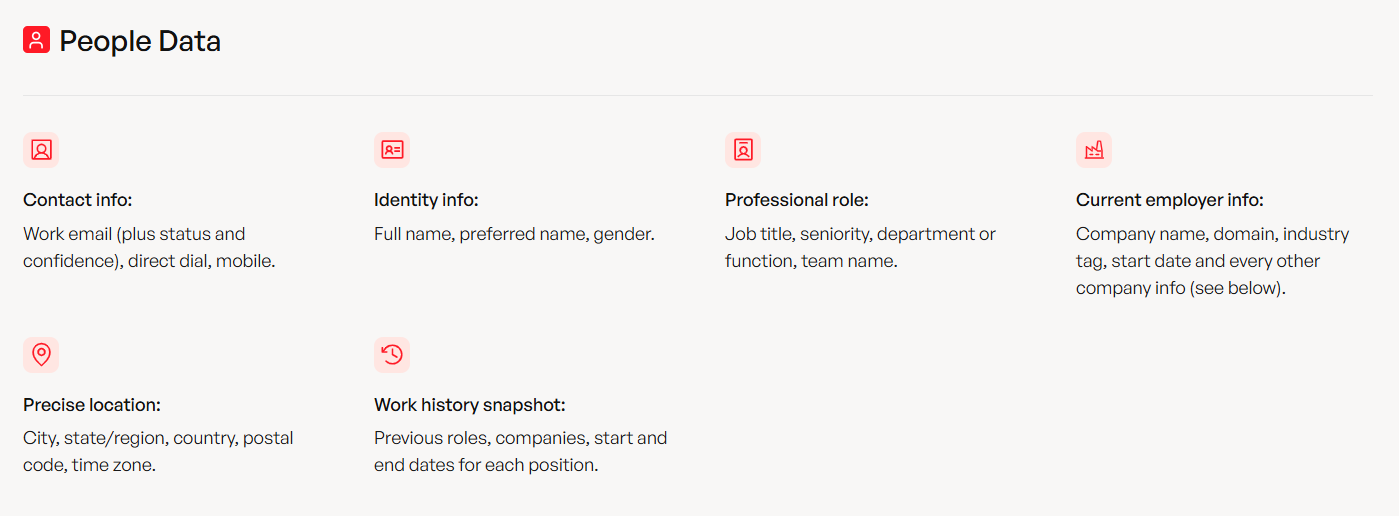
Prospeo plugs directly into Salesforce and HubSpot to handle this - upload a list or connect your CRM, and it returns 50+ data points per contact including verified emails, direct dials, company firmographics, technographics, and intent signals (more options in data enrichment services). The 83% enrichment match rate means most of your records come back complete, and the 7-day refresh cycle keeps them from going stale between manual audits.
Build validation gates before any data enters your CRM: deduplication checks, completeness requirements, ICP filtering, and suppression lists. Think of it as a bouncer at the door - only clean, qualified records get in.
The fields worth enriching fall into four buckets:
- Contact-level - email, phone, title, seniority
- Company-level - industry, revenue, headcount, HQ location
- Technographics and intent - tools they use, topics they're researching (see firmographic and technographic data)
- Relationship data - org charts, job changes, mutual connections

Bad CRM data costs you 16 deals per quarter. Prospeo's CRM enrichment returns 50+ data points per contact at an 83% match rate - verified emails, direct dials, firmographics, and intent signals. Every record refreshes every 7 days, not every 6 weeks.
Stop selling on stale data. Connect Prospeo to your CRM in minutes.
CRM Automations to Set Up This Week
CRM automation saves 2-3 hours per rep per day. That's not a rounding error - it's the difference between reps who sell and reps who do data entry. Here are five recipes you can configure this week in virtually any modern CRM.
1. Inbound Lead Routing
Trigger: New lead created. Action: Auto-assign by territory and deal size, tag as "High Priority" if they match your ICP, create a task to qualify within two business days.
2. New Prospect Task Template
Trigger: New prospect added to pipeline. Action: Apply a standardized to-do list - call within 15 minutes, send intro email, schedule discovery call, tag interest category.
3. Time-Based Follow-Up
Trigger: X days with no logged activity. Action: Create a follow-up task, send a recap email with a relevant case study, escalate to manager if the deal has stalled past your threshold. This alone prevents deals from dying silently in your pipeline, which is the number one way revenue disappears without anyone noticing until the quarterly review (keep a few sales follow-up templates ready to drop in).
4. Deal Stage Progression Alerts
Trigger: Deal moves to negotiation stage. Action: Notify the sales manager, create a pricing approval task, flag for legal review if deal size exceeds a threshold.
5. Win/Loss Notification
Trigger: Deal marked closed-lost. Action: Auto-create a post-mortem task, notify the team lead, tag the loss reason for quarterly analysis.
Most CRMs in 2026 also offer AI-powered automation - predictive lead scoring, deal risk alerts, and activity summarization. If your platform supports these, turn them on. They're not gimmicks anymore.
Hot take: If your average deal size is under $15K, you probably don't need a $150/seat CRM with enterprise automation. Pipedrive or HubSpot's free tier with five solid automations will outperform a bloated Salesforce instance that nobody maintains. Skip the enterprise pitch if that's your world.
Build a Lead Scoring Model
Not every lead deserves the same attention. A scoring model tells your reps where to focus and tells marketing when a lead is ready for handoff (full setup guide: lead scoring).
Scoring Bands
| Score | Label | Action |
|---|---|---|
| 0-24 | Cold | Nurture sequence |
| 25-49 | Warm | SDR outreach |
| 50-74 | MQL | Sales handoff |
| 75-100 | Hot | Priority follow-up |
Demographic fit gets 30% of the weight - target industry, company size, geography. Role fit gets 20% - decision-maker or intern? Behavioral engagement carries the most weight at 35%: pricing page visits (+15 points), demo requests (+25), email opens (+2), email clicks (+5), case study downloads (+12). Sales activity rounds it out at 15%.
Don't forget negative scoring. An unsubscribe costs -25 points. A competitor domain email costs -20. These prevent your reps from chasing leads who've already signaled disinterest.
Score Decay Schedule
Scores must decay over time, or your "hot" list fills up with ghosts:
| Inactivity Period | Action |
|---|---|
| 30 days | Reduce behavioral scores by 20% |
| 60 days | Cut by 50% |
| 90 days | Reset behavioral scores to zero, trigger re-engagement |
| 180 days | Archive the contact |
Lead scoring drives up to 77% higher lead-gen ROI, but only if you maintain this decay schedule. Without it, you're just hoarding stale scores.
Train Your Team (Or Watch Adoption Die)
The top reason CRM projects fail is lack of user adoption. Not bad software. Not missing features. People just don't use it (a structured 30-60-90 day plan helps lock habits in).
Assign CRM champions on each team. These aren't managers - they're the reps who actually like the tool and can show peers how it makes their life easier. We've seen teams where the top-performing rep becomes the CRM champion naturally, not because they're told to, but because they've figured out the shortcuts that save everyone time. Role-based training matters too: reps need contact management and deal logging, managers need dashboards and forecasting, ops needs integration and automation management.
Let's be honest about the question every rep asks when adoption gets rocky: what do I actually log?
Log this: Calls that advance a deal. Emails with commitments or next steps. Meeting notes with action items. Stage changes (more sales activities examples if you need a standard).
Skip this: No-answer calls. Generic voicemails. Internal FYIs. Anything that doesn't move a deal forward.
If your CRM becomes a second job, you've already lost. The goal is a system where reps log meaningful activity in under 5 minutes per deal per day. Everything else should be automated. And while you're setting up permissions, take 10 minutes to configure role-based access controls and data visibility rules - it's a compliance checkbox for GDPR and SOC 2 that's much harder to retrofit later.
Keep Your Data Clean
70% of CRM data goes bad within 12 months. Job changes, company acquisitions, email bounces, phone number rotations - entropy is constant.
Run a wash cycle every 3-6 months: verify all contact emails, refresh company firmographics, merge duplicate records, and archive contacts who haven't engaged in 180+ days. Lock down import permissions so random CSVs don't pollute your database. Audit your automations quarterly to make sure they're not silently creating bad data - we've caught automations that were duplicating records on every form submission, which is the kind of thing that compounds fast and wrecks your reporting.
Prospeo's 98% email verification catches the bad records that most tools miss, and the 7-day refresh means your data doesn't decay between wash cycles. Run your contact list through it before every major outbound campaign to protect your sender reputation (here’s how to improve sender reputation if you’re already seeing deliverability issues).
Measure What Matters
A CRM without reporting is just an expensive address book. Real-time dashboards reduce forecast error by 31% compared to spreadsheets, and many teams see forecasting accuracy improvements around 42% after adopting CRM. But most teams track too many metrics and act on none of them.
Focus on five core KPIs: conversion rate by stage, average sales cycle length, pipeline velocity, forecast accuracy, and rep activity volume. Build three dashboard tiers - one for reps showing their deals, tasks, and numbers; one for managers covering team performance, pipeline health, and coaching signals; and one for leadership with revenue forecast, quarterly trends, and capacity planning (if you need tooling, compare sales forecasting solutions).
The teams that review dashboards weekly and act on what they see outperform the teams that build beautiful reports nobody opens. Schedule a 15-minute pipeline review every Monday. Make it non-negotiable. That single habit is often the difference between teams that know how to use CRM software and teams that just have an expensive database.
Quick Glossary
| Term | What It Means |
|---|---|
| Lead | Any person or company that's shown interest |
| MQL | Marketing-qualified lead - fits your ICP criteria |
| SQL | Sales-qualified lead - confirmed via discovery |
| Pipeline | The visual stages a deal moves through |
| Deal Stage | A specific step in your sales process |
| Workflow | An automated sequence triggered by a CRM event |
Manual research eats 20 minutes per record. Prospeo plugs into Salesforce and HubSpot natively, filling gaps with 98% accurate emails, 125M+ verified mobiles, and real-time intent data across 15,000 topics - so your reps spend time selling, not scrubbing spreadsheets.
Give your reps clean data and watch pipeline accuracy catch up to reality.
FAQ
How does a CRM actually work?
A CRM centralizes every interaction your team has with prospects and customers - emails, calls, meetings, deal stages - into a single database. It layers on automation, reporting, and scoring so you can act on that data instead of just storing it. The system can only surface insights from what you put in, which is why clean data and consistent logging matter more than which platform you pick.
How long does CRM setup take?
SMB teams typically finish an initial rollout in 2-6 weeks. Mid-market organizations with complex integrations and multi-department training should plan for 2-4 months. Teams that spend an extra week on data cleanup before launch see dramatically better adoption rates in the first quarter.
Do I need to log every call and email?
No. Log only activities that advance deals: calls with commitments, emails with next steps, and meeting notes with action items. Skip no-answer calls, generic voicemails, and internal FYIs. If reps spend more than 5 minutes per deal per day on logging, automate the rest.
How do I keep CRM data from going stale?
Run a full wash cycle every 3-6 months: verify emails, refresh firmographics, merge duplicates, and archive contacts inactive for 180+ days. Automated verification on a 7-day refresh cycle keeps records current between manual audits. Lock down import permissions to prevent unvetted CSVs from polluting your database.