

Ideal Client Profile Examples You Can Actually Copy
Most ICPs are fairytale personas. Someone on the marketing team spends a week crafting a beautiful document with stock-photo headshots, fictional names, and zero connection to actual closed-won data. It collects dust in a Google Drive folder while reps prospect whoever they feel like.
We've watched teams build 25-field ICPs that never get used. The fix is simpler than you'd think: fewer fields, real data, and a scoring system that actually routes accounts to reps. Here are four fully filled-out ICP examples, a scoring rubric, and the operational step everyone skips.
What You Need (Quick Version)
- 5-7 validated fields that predict closed-won deals, not 25 theoretical ones.
- Score and tier accounts - 80-100 = Tier A, pursue aggressively.
- Operationalize it. Turn the ICP into prospecting filters, not a dusty Google Doc.
What Is an Ideal Client Profile?
An ideal client profile is a data-backed description of the company (B2B) or customer type (B2C) most likely to buy, stay, and expand. It's not a persona - it's the layer above it. You define the ICP first, then build personas for the individuals inside those accounts (see buyer personas for the next layer).
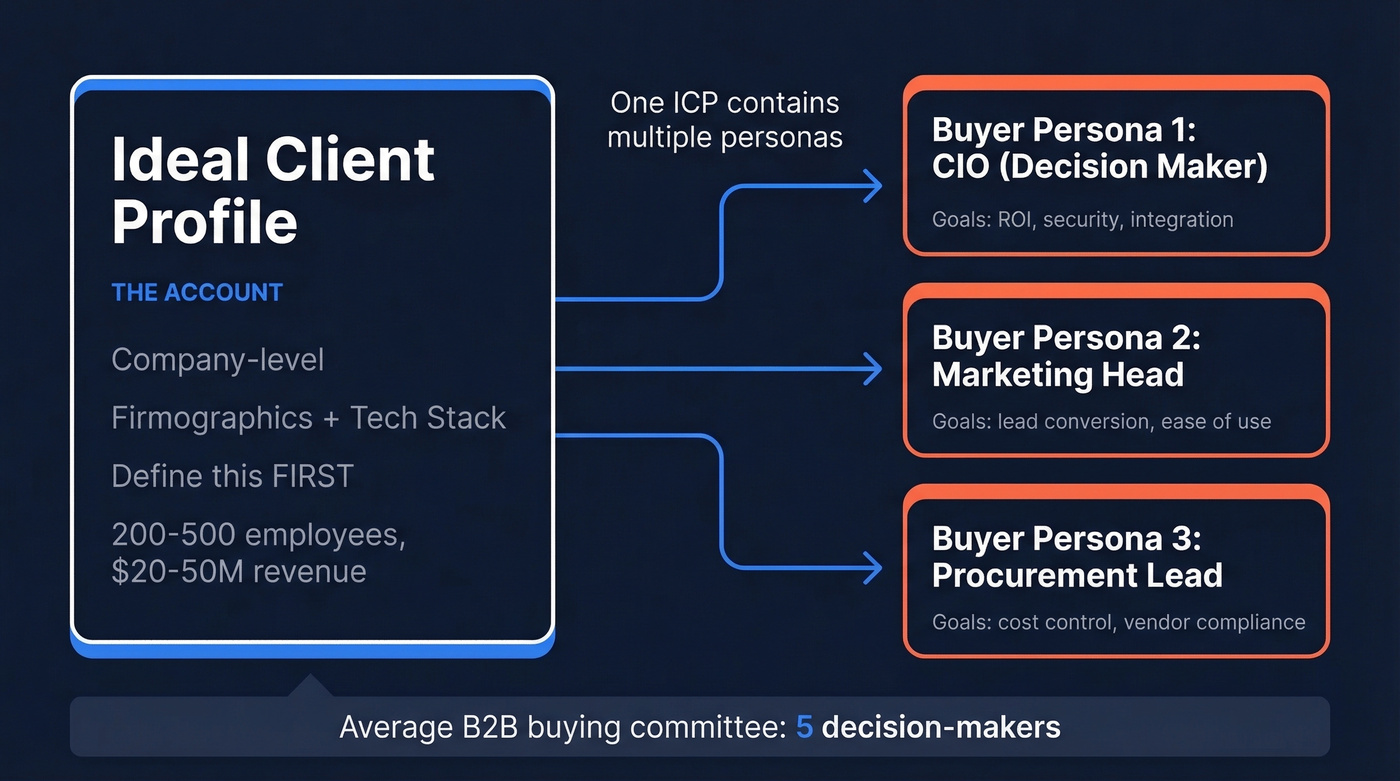
The average B2B software buying committee involves five decision-makers. Your ICP describes the company; your personas describe the people in that committee.
| Dimension | Ideal Client Profile | Buyer Persona |
|---|---|---|
| Scope | Company or account | Individual person |
| Focus | Firmographics, tech stack, budget | Role, goals, objections |
| Timing | Define first | Build after ICP |
4 Ideal Client Profile Examples
Before copying these, do the critical step first: source your own values from closed-won data. Pull your last 50 wins and look for the 3-5 traits that show up in 70-80% of them. Those traits become your ICP dimensions. The examples below show you the format and the level of specificity you need (if you want the full build process, use this ideal customer profile guide).
B2B SaaS Company
Every field has a concrete value - not "various industries" or "mid-size."
| Field | Value |
|---|---|
| Industry | SaaS / Cloud Software |
| Headcount | 200-500 employees |
| Annual Revenue | $20-50M |
| Geography | North America, Western Europe |
| Tech Stack | Salesforce, HubSpot, Slack |
| Buying Committee | CIO (DM), Marketing Head, Procurement, 2-3 End Users |
| Annual Budget | $50k-$100k for this category |
| Primary Goal | Increase lead conversion by 20% |
| Disqualifiers | No CRM, fewer than 100 employees, pre-revenue |
Why this works: The disqualifiers do as much work as the qualifiers. "No CRM in place" instantly kills deals that would stall in implementation. Most ICPs skip disqualifiers entirely - don't.
Digital Marketing Agency
Agency ICPs double as profitability and sanity filters. You're not just asking "can they buy?" - you're asking "will this client destroy my margins?" (If you need more pipeline plays beyond ICP, borrow from these demand generation examples.)
| Field | Value |
|---|---|
| Industry | B2B SaaS or Professional Services |
| Monthly Retainer Budget | $8k-$25k/mo |
| Decision-Making | Single owner or 2-person leadership |
| In-House Capabilities | No in-house paid media team |
| Collaboration Style | Async-first, comfortable with Loom + Slack |
| Growth Stage | Series A-B or bootstrapped at $3M+ ARR |
| Red Flags | 5+ approvers, undefined scope, "we'll know it when we see it" briefs |
Financial Consulting Firm
In our experience, consulting ICPs that skip the regulatory dimension produce the longest, most painful sales cycles. Compliance requirements shape everything from the buying committee to the contract length - ignore them and you'll wonder why every deal takes nine months to close.
| Field | Value |
|---|---|
| Industry | Financial Services, Insurance |
| Headcount | 500-2,000 employees |
| Revenue | $50M-$500M |
| Regulatory Environment | SOX, SEC reporting, state compliance |
| Decision-Making | CFO (DM), VP Finance, Legal/Compliance |
| ACV Range | $75k-$200k |
| Primary Goal | Audit readiness, cost reduction |
| Disqualifiers | No dedicated finance team, sub-$10M revenue |
B2C Ecommerce Brand
Notice how different these fields are from the B2B examples. If your B2B ICP includes "age range" and "psychographics" as primary fields, you're accidentally building a B2C profile. That's one of the most common mistakes in B2B ICP work (compare with these customer profile examples if you want more templates).
Rather than a table, here's what this looks like as a narrative profile: You're targeting fitness-focused, eco-conscious consumers aged 25-40 who are willing to pay a premium for sustainability. They discover you on Instagram and YouTube, buy around payday or after hitting a fitness milestone, and their core frustration is the lack of affordable healthy meal options. You disqualify bargain-only shoppers and anyone who doesn't purchase on mobile.

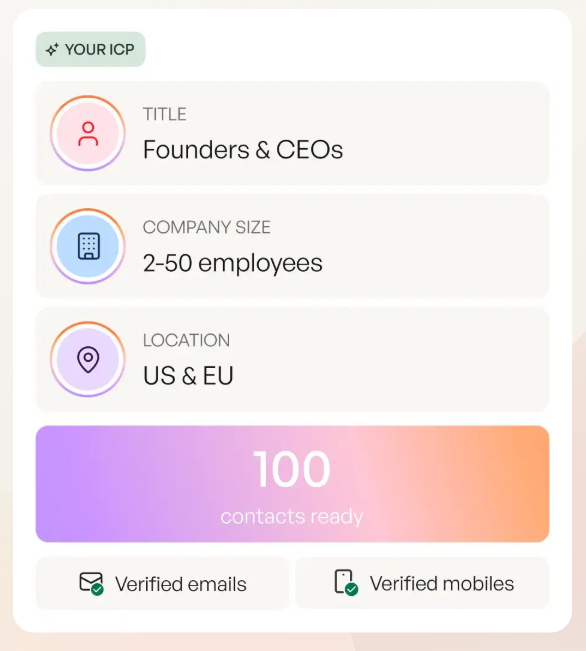
You just defined your ICP - now operationalize it. Prospeo's 30+ search filters map directly to the fields in your profile: industry, headcount, tech stack, funding stage, buyer intent, and more. 300M+ profiles, 98% email accuracy, refreshed every 7 days.
Stop letting your ICP collect dust in a Google Doc.
How to Score and Tier Accounts
An ICP without a scoring system is just a wish list (here’s a deeper ICP scoring walkthrough if you want to build a model).
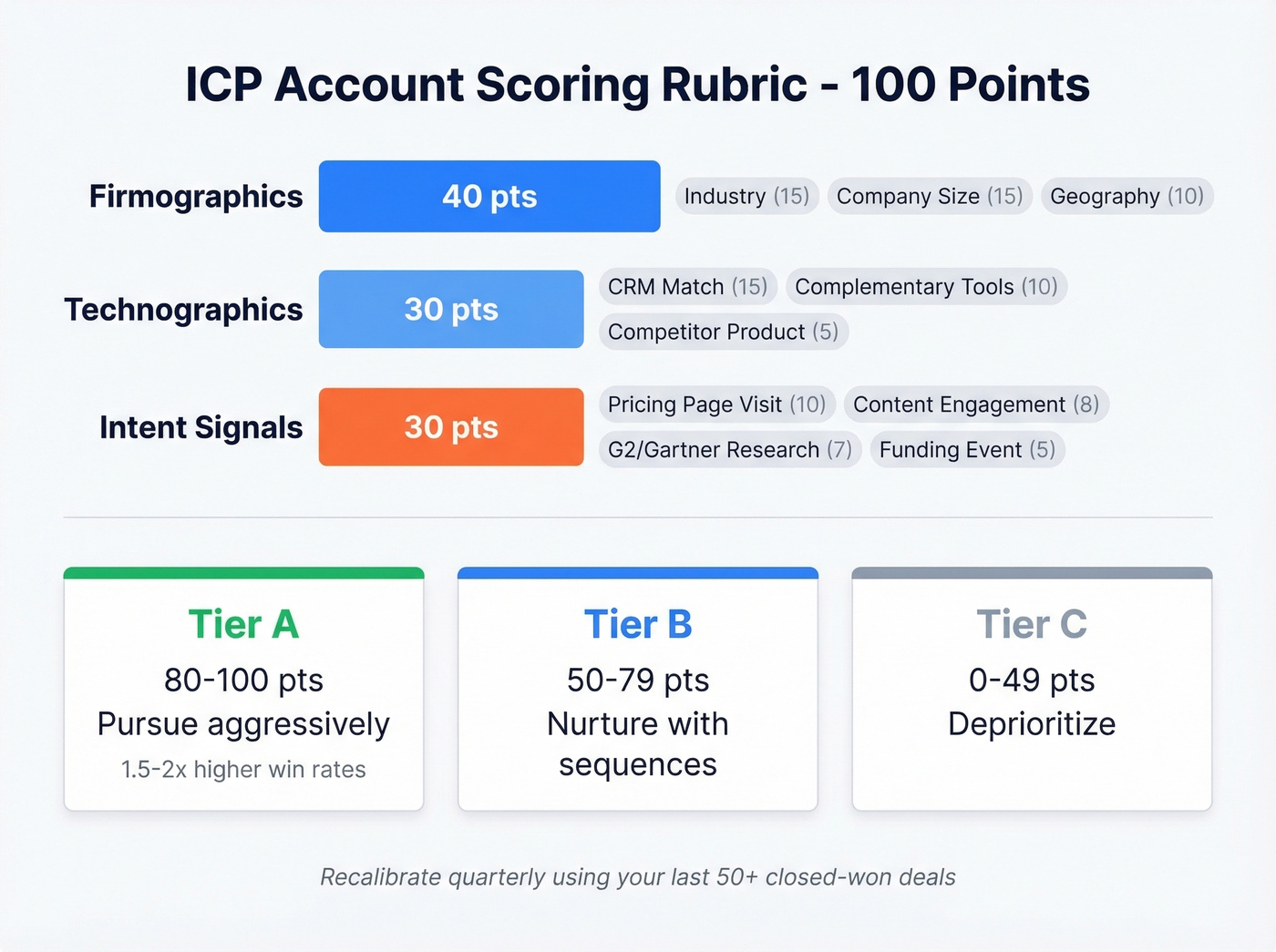
| Category | Points | What You're Scoring |
|---|---|---|
| Firmographics | 40 | Industry (15), size (15), geo (10) |
| Technographics | 30 | CRM match (15), complementary tools (10), competitor product (5) |
| Intent Signals | 30 | Pricing page visit (10), content engagement (8), G2/Gartner research (7), funding event (5) |
Tiers: A = 80-100 (pursue aggressively), B = 50-79 (nurture), C = 0-49 (deprioritize).
Let's walk through a quick example. A 300-person SaaS company using Salesforce scores 35/40 on firmographics - right size and industry, strong geography. They run HubSpot and Slack, so that's 25/30 on technographics. A single pricing page visit and one blog read gives them 15/30 on intent. Total: 75/100, Tier B+. Worth a sequence from your mid-market AE, not a cold call from your SDR.
When scoring works, Tier A accounts show 1.5-2x higher win rates and 15-20% shorter sales cycles. Companies using account scoring see a 77% boost in lead generation ROI. Recalibrate quarterly by analyzing your last 50+ closed-won deals.
ICP Mistakes That Kill Pipeline
Here's the thing: most ICP failures aren't about getting the fields wrong. They're about what happens after the document is finished.
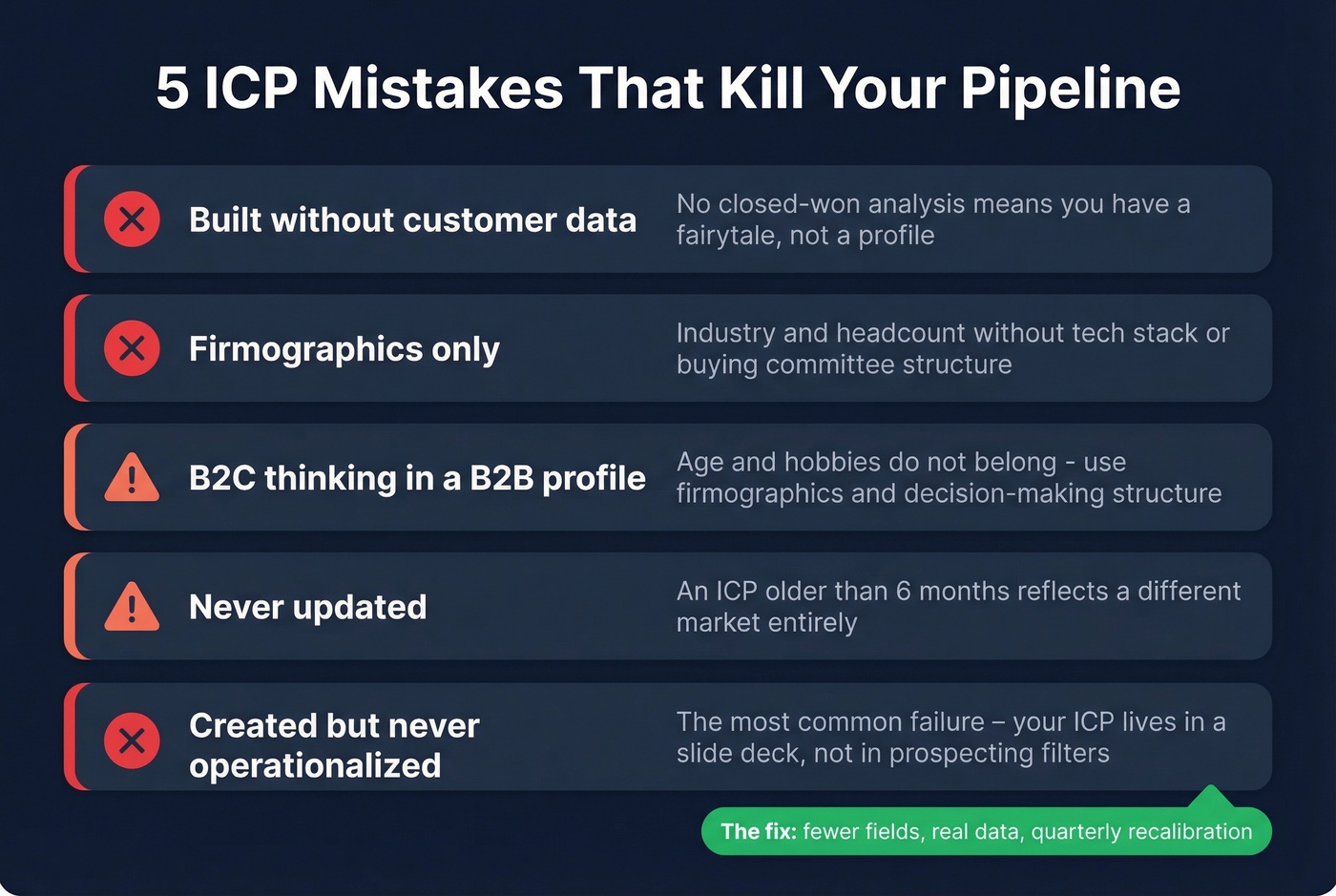
Built without customer data. If nobody analyzed closed-won deals, you've got a fairytale persona. One SaaS founder realized "indie hackers" was a terrible ICP - low budget, DIY mindset, wouldn't pay $20/month. The blunt takeaway on r/b2bmarketing: these profiles collect dust because they were never grounded in reality.
Firmographics only. Industry and headcount without technographics or buying committee structure means you're targeting the right company with the wrong approach. You'll get in the door and then wonder why nothing closes (this is where ABM segmentation helps).
B2C thinking in a B2B profile. Age, gender, and hobbies don't belong in your B2B ICP. Firmographics, tech stack, and decision-making structure do.
Never updated. Your ICP from 18 months ago reflects a different market. Skip this if you enjoy watching your win rates erode quarter over quarter.
Created but never operationalized. The most common failure - and the one we'll fix next.
Turn Your ICP Into a Prospect List
The ICP itself is worth maybe 10% of the value. The other 90% comes from operationalizing it. Most teams finish their ideal client profile and stop. The document lives in a slide deck. Reps never translate "200-500 employee SaaS companies using Salesforce" into search filters that produce a callable list (this is the same workflow used to build a target account list).
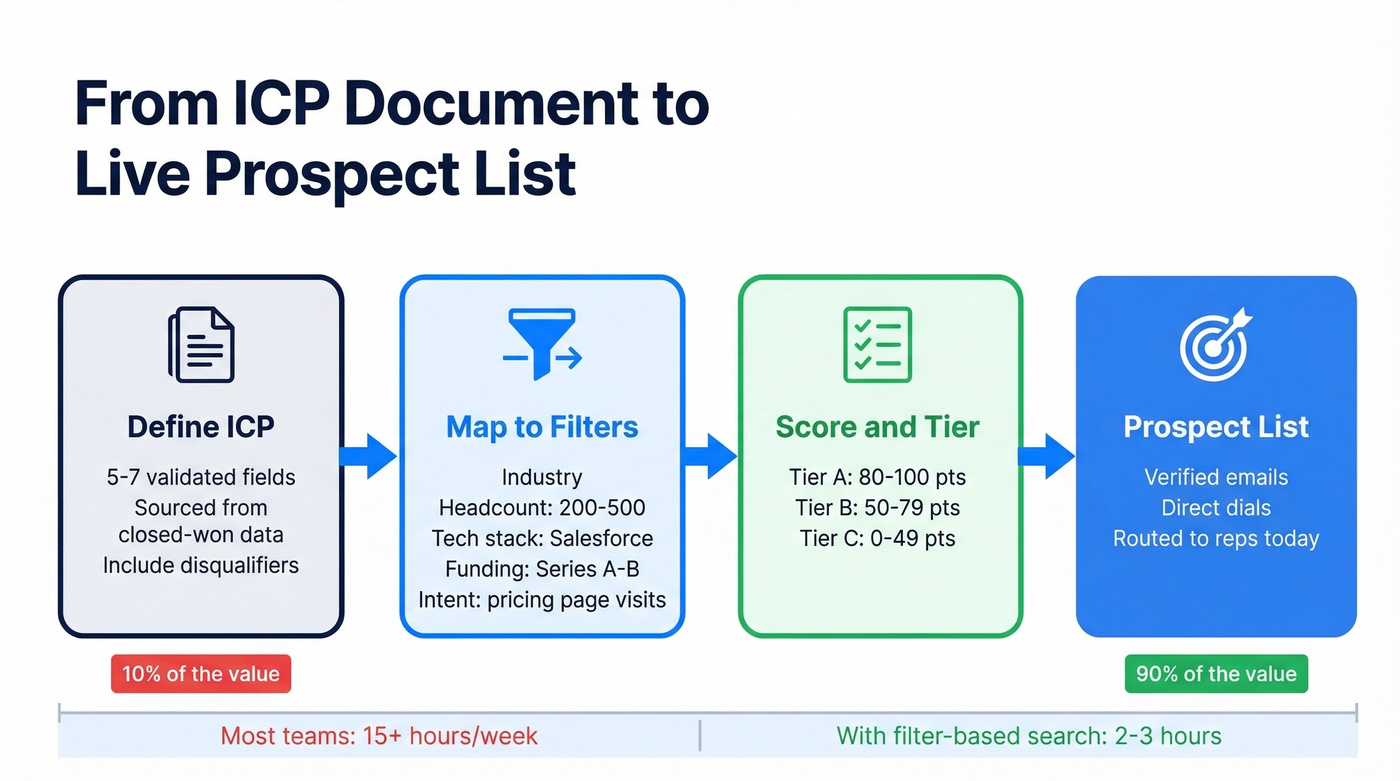
The fix is straightforward: map each ICP dimension to a filter in your prospecting tool. Industry, employee range, tech stack, funding stage, intent topics - these aren't abstract concepts, they're literal search parameters. Prospeo's 30+ search filters cover all of those dimensions plus buyer intent across 15,000 topics, so you can build a matched list with 98% verified emails in minutes instead of days. Your ICP says "200-500 employee SaaS companies using Salesforce with recent funding"? That's five filters and a quick search.
We've seen teams go from a static ICP document to a live, scored prospect list in under an hour using this approach. The gap between "we know who we want" and "we're reaching them today" shouldn't be weeks. It should be the same afternoon (pair it with a proven B2B prospecting cadence).
Scoring accounts by technographics and intent signals only works if your data is current. Prospeo refreshes every 7 days - not the 6-week industry average - so your Tier A accounts are actually reachable with verified emails and direct dials.
Your ICP tiers mean nothing if the contact data bounces.
FAQ
How many fields should an ideal client profile include?
Five to seven validated fields that predict closed-won deals. Start with firmographics (industry, headcount, revenue), add technographics and buying committee roles, then include disqualifiers. Add dimensions only when your closed-won data supports them - more fields doesn't mean a better profile.
How often should you update your ICP?
Quarterly. Analyze your last 50+ closed-won deals each cycle and adjust scoring weights based on which Tier A traits still predict wins. Markets shift fast - an ICP older than six months is likely costing you pipeline.
What's the fastest way to build a prospect list from your ICP?
Map your ICP dimensions to filters in a B2B database - industry, headcount, tech stack, intent signals - and export verified contacts directly. Most teams we've talked to cut their list-building time from 15+ hours a week to 2-3 hours once they stop manually assembling spreadsheets and start using filter-based search instead.