

The Outbound Marketing Strategy for B2B That Actually Works in 2026
You just pulled your Q1 pipeline report and it's ugly. Reps are sending thousands of emails, booking a handful of meetings, and blaming "the market." But the market isn't the problem - your outbound strategy is. 84% of reps missed quota last year, and with 80% of B2B interactions now digital, teams still running a 2022-era playbook are getting crushed by the ones who've adapted.
Let's break down what actually works.
The Short Version
Target like a sniper. Send 20-50 person campaigns, not 2,000+ blasts. Practitioners on r/b2bmarketing consistently report that tailored variations to 50 people outperform a single mass blast to 5,000.
Fix your data layer first. If your bounce rate is above 2%, nothing else matters - not your copy, not your offer, not your sequences. (If you need a deeper benchmark breakdown, start with email bounce rate.)
Run 2-3 channels well instead of seven channels poorly. Multi-channel prospecting has the lowest CPL at $188 - cheaper than any single channel alone.
The Four-Stage Framework
The framework that works in 2026 has four stages: ICP, Intent Signals, Multi-Channel Sequences, and Measurement. Skip any one and the whole thing falls apart.
Start with a ruthlessly narrow ICP (use an ideal customer profile scoring rubric if you don't have one). Then layer intent data to find which accounts are actually in-market - only 25% of B2B companies use intent data, which means it's still a genuine edge. Build multi-channel sequences that hit buying committees of 6-10 stakeholders across 5-12 touchpoints (tight sequence management matters here). Then measure pipeline contribution and CAC (here’s a clean primer on cost to acquire customer), not opens and clicks.
If your dashboard leads with open rates, you're optimizing the wrong thing.
Channel Playbook
Cold Email
Plain-text emails under 120 words, sent to hyper-specific segments of 20-50 prospects, with 4-6 email sequences. That's what works. HTML templates blasted to thousands with one follow-up? That's what gets you flagged.
The platform-wide average reply rate sits at 3.43%, with open rates around 27.7%. Sounds low until you realize 42% of replies come from follow-ups - and 48% of reps never send a second message. Sequences with 4-6 emails see up to 50% higher reply rates than single-touch sends (if you want plug-and-play copy, use these cold email follow-up templates). Email marketing returns $36-$40 per $1 spent on average, with top programs hitting $70+. No other outbound channel comes close per dollar.
Skip this channel if you can't maintain bounce rates under 2% and spam complaints under 0.3%. You'll burn your domain and spend months recovering (this email deliverability guide is the fastest way to diagnose why).
Cold Calling
Cold calling isn't dead - it's just harder than most reps think. The average dial-to-meeting conversion runs 2.3-2.5%, roughly 1 meeting per 40-45 dials. Top teams push 5-8%+. A typical SDR should make 40-50 dials per day, generating 4-6 quality conversations, and calling between 8-9am or 4-5pm lifts connect rates 40-70% compared to random times. It takes an average of 8+ attempts to reach a prospect (build a repeatable cold calling system so reps don’t freestyle it).
Pair calling with email sequences so reps aren't dialing into a void. The prospect who opened your email yesterday is far more likely to pick up the phone.
Social and Direct Mail
Connection requests on professional networks get accepted 20-40% of the time for well-targeted outreach, with DM reply rates in the 5-15% range. InMail pulls 18-25% response rates but costs significantly more per touch. It's a solid complement to email and phone, rarely a standalone channel.
Direct mail is the wildcard for enterprise deals worth $50k+. Targeted lumpy mail pulls 2-8% response rates - expensive per touch, cheap per meeting when you're going after whale accounts. Reserve it for your top 50 targets. (If you want a full breakdown, see direct mail for lead generation.)
CPL by Channel
These are 2026 averages from Sopro's benchmark data:
| Channel | Avg CPL |
|---|---|
| Referrals | $25 |
| Multi-channel | $188 |
| Cold email | $225 |
| Cold calling | $300 |
| Paid social ads | $408 |
| Trade shows | $840 |
Multi-channel at $188 CPL is the sweet spot - you're converting the same prospect across multiple touches rather than starting fresh each time. Your actual CPL varies by industry (legal averages $650, B2B SaaS $188) and company size ($146 for teams under 50 employees, $429 for enterprise).

This article makes it clear: bounce rates above 2% kill your outbound before it starts. Prospeo's 5-step verification delivers 98% email accuracy with a 7-day refresh cycle - so you're never emailing someone who left six weeks ago. Meritt tripled pipeline to $300K/week. Snyk's 50 AEs grew pipeline 180%. Same playbook, better data.
Stop blaming the market. Start with data that actually connects.
Fix Your Data First
Here's the thing: 17% of cold emails never reach the inbox. Bounces average 7-8% for cold campaigns. With major inbox providers enforcing spam-complaint thresholds, mandatory SPF/DKIM/DMARC authentication, and one-click unsubscribe requirements for bulk senders, the margin for error is almost zero. Clean data isn't a nice-to-have - it's the foundation everything else sits on. (If you’re troubleshooting, start with DMARC alignment and a working SPF record example.)
Warm up new domains at 5-10 emails per day, ramping over 4-6 weeks. Bounce rates must stay under 2% - not as a goal, as a hard requirement. Exceed it and you risk getting blocked or heavily filtered by major providers.
We've seen this play out firsthand. Meritt tripled pipeline from $100K to $300K/week and dropped bounce rates from 35% to under 4% after switching to Prospeo's 5-step verification with catch-all handling, spam-trap removal, and honeypot filtering. Snyk's 50-person AE team cut bounces from 35-40% to under 5% and grew AE-sourced pipeline 180%. The 7-day data refresh cycle means you're not emailing someone who left the company six weeks ago.
Intent Data: Your Targeting Advantage
Intent data tells you which companies are actively researching solutions like yours - before they fill out a form. First-party signals (site visits, email clicks, content downloads) are table stakes. Third-party signals from publisher networks and review sites are where the real advantage lives.
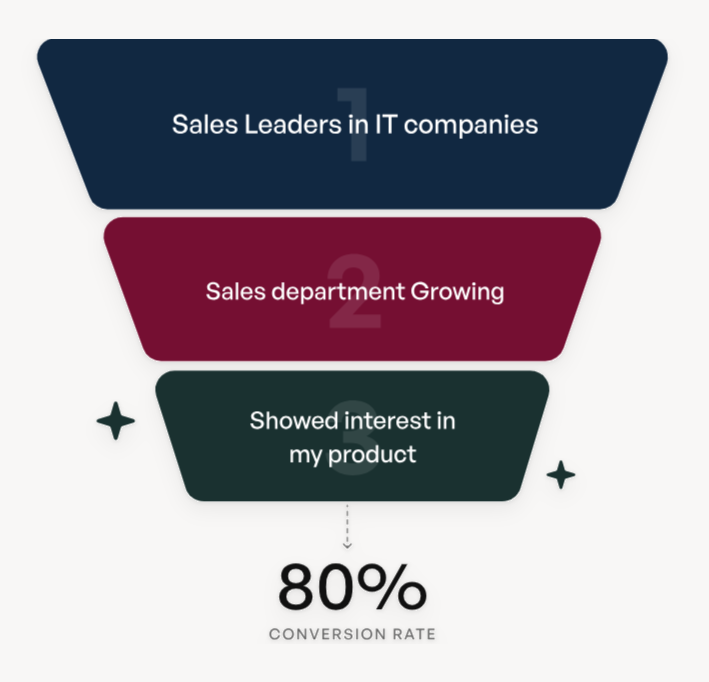
65% of marketers say intent signals improved pipeline forecasting, but only 25% of B2B companies actually use them. That gap is your moat. Layer intent scores into your CRM, build real-time alerts for target accounts showing buying behavior, and prioritize outreach to companies actively in-market (a practical way to operationalize this is intent based segmentation).
How AI Fits In
81% of sales teams are experimenting with AI, and 22% have fully replaced human SDRs with AI agents. Signal-personalized outreach - where AI uses intent data, job changes, and company events to craft relevant messages - achieves 15-25% reply rates versus the 3-5% cold average (this pairs well with an AI cold email outreach workflow).
Real talk: if your deal sizes sit below five figures, you probably don't need AI SDR agents. You need cleaner data and tighter targeting. AI makes good outbound better and bad outbound worse. In our experience, AI-personalized outreach only works when the underlying data is clean. The consensus on r/b2bmarketing is that roughly 90% of AI-generated emails are still garbage because teams use it for mass templating instead of genuine personalization. It's a force multiplier, not a strategy replacement.
Five Mistakes Killing Your Pipeline
Even a well-designed outbound marketing strategy for B2B falls apart when execution breaks down. These are the most common culprits we see:
- Stopping after one touch. 80% of sales require 5+ follow-ups, yet nearly half of reps quit after the first email.
- Slow lead response. Responding within 5 minutes lifts conversion 9x. If your team takes 48 hours, you've already lost.
- Blasting too-large ICPs. A 10,000-person list with 2% relevance produces worse results than a 50-person list with 80% relevance. Every time.
- Ignoring deliverability. SPF, DKIM, DMARC, warmup, bounce monitoring - this isn't optional anymore. It's infrastructure.
- Running outbound without inbound. Hybrid strategies drive 2x faster revenue growth. Your outbound warms up prospects who later convert through content, and your content gives reps something to reference in cold sequences. It's a feedback loop, not two separate motions.
Multi-channel outbound at $188 CPL only works when every channel fires on clean data. Prospeo gives you 300M+ profiles with 30+ filters - buyer intent, technographics, job changes, headcount growth - so your 20-50 person micro-campaigns hit the right people at the right time. Layer in intent data tracking 15,000 topics to find who's actually in-market.
Build sniper-targeted lists in minutes, not hours. Start free today.
FAQ
What's a good cold email reply rate in 2026?
The platform-wide average is 3.43%. Above 5% is solid, 10%+ is excellent. Consistently below 2%? Fix the list before rewriting the email - bad targeting tanks reply rates more than bad copy.
How much does B2B outbound cost per lead?
Cold email averages $225 CPL, cold calling $300, and multi-channel $188. Multi-channel wins because you're converting the same prospect across multiple touches rather than starting fresh each time.
How do I build a B2B outbound strategy from scratch?
Define a tight ICP (50 accounts max to start), layer in intent signals, build multi-channel sequences across 2-3 channels, and measure pipeline - not vanity metrics. Start with verified data at roughly $0.01 per email, and make sure you've got native integrations into your existing stack (Salesforce, HubSpot, Instantly, Smartlead, Lemlist, Clay) so nothing falls through the cracks.
What's the biggest mistake in B2B outbound?
Sending to unverified lists. With 17% of cold emails never reaching the inbox and bounce rates averaging 7-8%, bad data destroys domain reputation before your copy even gets a chance. Verify every address and keep bounces under 2%.