

How to Build an Outside Sales Training Program That Actually Works
You hand three new reps a printed pipeline diagram, a territory map, and a Salesforce login. Two months later, one's quit, one's driving 200 miles a day with nothing to show for it, and the third is closing - but can't explain why.
That's not a hiring problem. That's an outside sales training problem.
Only 33% of organizations rate their sales training as extremely or very effective. The rest are 13.6x more likely to not even measure training impact. No measurement, no improvement, no pipeline. (If you want a tighter measurement system, start with pipeline leading indicators.)
What You Need (Quick Version)
If you only do three things for your outside sales team, do these:
- Build a structured 30-60-90 day onboarding plan. Organizations that nail onboarding see turnover drop from 50% to 12%. That alone pays for everything else. (Use a proven 30-60-90 day onboarding plan template.)
- Train territory management and route optimization. Your reps' biggest enemy isn't the competition - it's windshield time. (A simple sales mapping tool can reinforce this.)
- Give reps clean contact data before they hit the road. Driving to a meeting with someone who left the company last quarter is a training failure disguised as a data problem. (This is where data enrichment pays off fast.)
What Makes Field Sales Training Different
Sales reps increasingly argue that "outside" and "inside" are the same thing - and there's some overlap. Many "outside" reps now spend most of their time on virtual calls. But the economics are different enough to justify a distinct training approach.
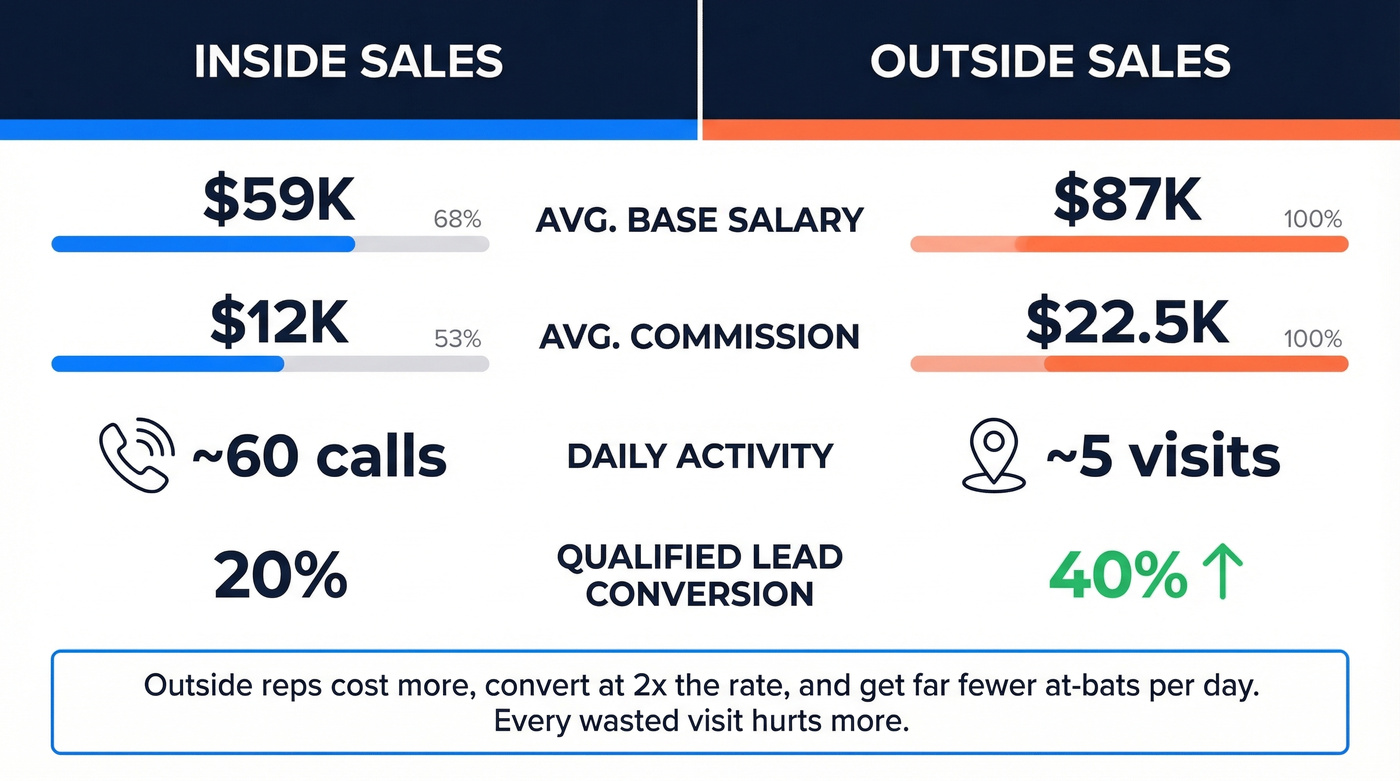
| Metric | Inside Sales | Outside Sales |
|---|---|---|
| [Avg. base salary](https://www.indeed.com/career/inside-sales-representative/salaries/Charlotte - NC) | ~$59K | ~$87K |
| Avg. commission | ~$12K | ~$22.5K |
| Daily activity | ~60 calls | ~5 visits |
| Qualified lead conversion | 20% | 40% |
The time-spent-selling gap between inside and outside reps is narrow - roughly 30% vs. 34%. But the conversion rate gap is where the real story lives. Outside reps cost more, convert at double the rate, and get far fewer at-bats per day. Every wasted visit hurts more. That's why training has to be sharper: there's less room for inefficiency when your reps are burning gas, time, and roughly ~$110K in base + commissions on five daily interactions.
Here's the thing: if your average deal size is under $15K, you probably don't need a dedicated outside sales motion at all. But if you're running one, under-training those reps is the most expensive mistake you can make. (If you're pressure-testing the motion, compare it to modern B2B sales benchmarks.)
Core Curriculum for Outside Sales Reps
Scenario-based training improves retention up to 70% compared to lecture-based formats. Every module below should include role-plays, ride-along simulations, or live field exercises - not slide decks. (For more drills that stick, borrow from these sales training tips.)
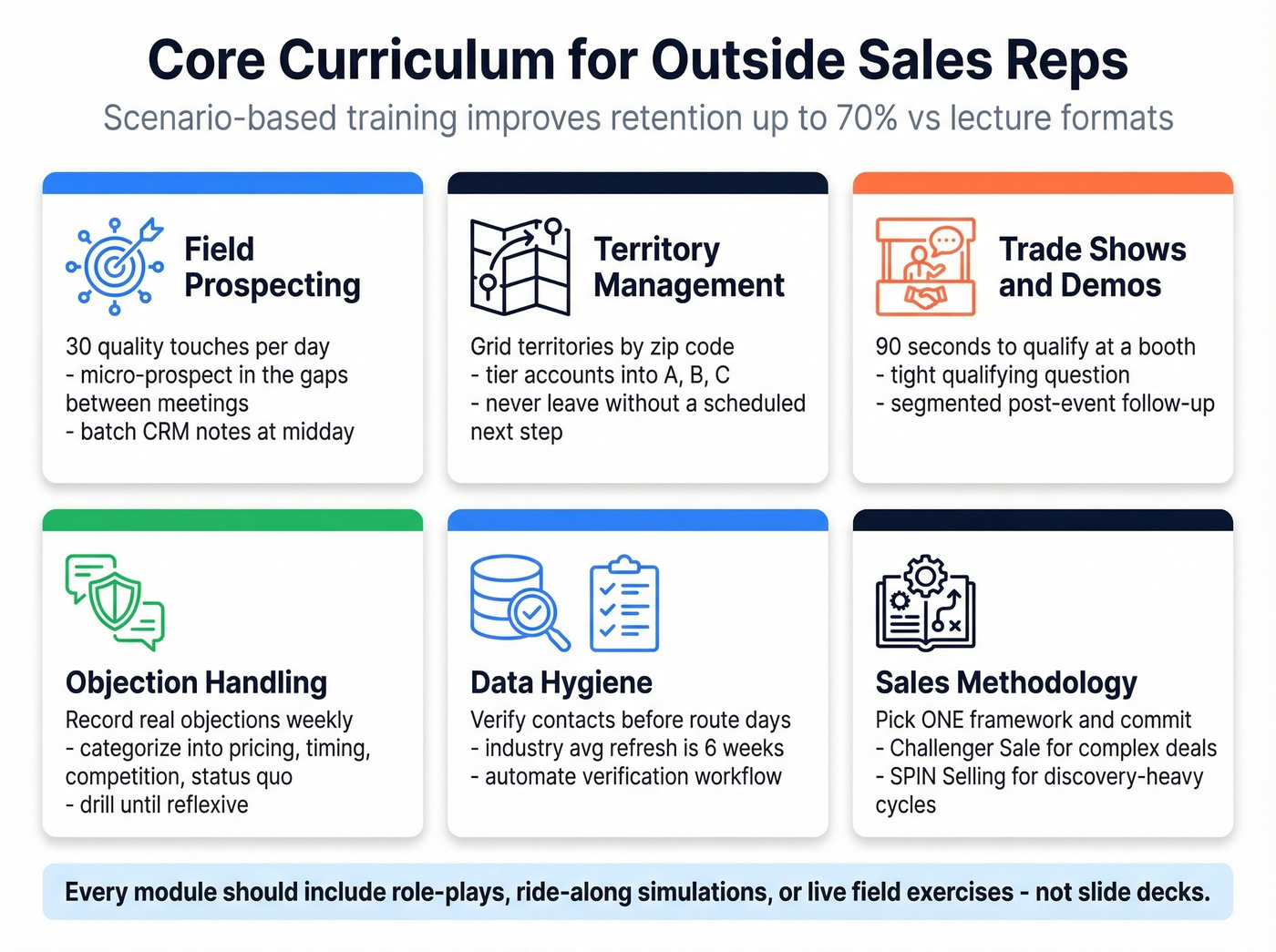
Field Prospecting
Jeb Blount's framework is the gold standard: focus on activity count, not time blocks. Set a target of 30 quality touches per day. That sounds aggressive for field reps, but the trick is micro-prospecting - five dials fit in five minutes between appointments.
Train reps to build their list the night before using a mobile prospecting kit with exported contacts, tap-to-dial notes, and hands-free dialing. Have them batch-enter CRM notes during the midday lull rather than after every call. The reps who prospect in the gaps between meetings consistently outperform the ones who "block time for prospecting" and then skip it when a meeting runs long. We've watched this pattern repeat across dozens of teams - the gap-prospectors always win. (If you need fresh plays, use these sales prospecting techniques.)
Territory Management & Route Planning
Train reps to grid their territories, cluster appointments by zip code, and tier accounts into A/B/C categories based on revenue potential. Top-quartile B2B sales performers generate roughly 2.5x higher gross margin per sales dollar invested - and territory management is where that uplift lives. Research links targeted skill-development programs to a 10% increase in deal size per rep.
One non-negotiable rule: never leave a meeting without a defined next step scheduled within days.
Trade Shows & In-Person Demos
This is uniquely outside-sales territory. Game Face Inc.'s research on field readiness nails the core problem: reps freeze when they aren't prepared for rapid-fire qualification. You've got 90 seconds at a booth before someone walks to the next table. Reps need a tight qualifying question, a confident demo flow, and the ability to handle technical Q&A without stalling. Post-event follow-up should be segmented by region and interest level, not blasted as a generic "great meeting you" email. (To tighten post-event sequences, keep a set of sales follow-up templates on hand.)
Objection Handling
We've seen teams transform their close rates by making objection handling a standing part of every ride-along debrief. Record real objections from the field each week, categorize them into pricing, timing, competition, and status quo buckets, then drill responses until they're reflexive. The reps who rehearse in low-stakes settings handle objections cleanly when the deal is on the line. (If you want a structured approach, use a sales process optimization checklist to standardize coaching.)
Data Hygiene
CRM accuracy is a training topic, not just a tool problem. Reddit threads on r/sales consistently flag "Salesforce database isn't accurate" as a core field-sales frustration - and it's justified. Train reps to verify contact lists before route days. The industry average for data refresh is six weeks, which means a chunk of your territory database is stale at any given moment. Reps need a verification workflow that catches bad data before they burn a field day on it. Tools like Prospeo, which refreshes records every 7 days, can slot into that workflow so reps aren't manually Googling every contact the night before a route day. (If you're building a broader workflow, see lead enrichment.)

Sales Methodology
Pick one methodology and commit. The Challenger Sale, based on research with 6,000+ reps, works well for complex consultative outside sales. SPIN Selling, built on 35,000+ sales calls analyzed over 12 years, is better for discovery-heavy cycles. Don't teach three frameworks and hope reps pick one. That's how you get reps who use none.
AI role-play tools are now worth integrating as a reinforcement layer. Platforms like Second Nature and Rehearsal let reps practice discovery calls and objection handling against AI-generated buyer personas between ride-alongs. In our experience, reps who drill with AI role-play two to three times per week internalize methodology faster than those who only practice during live coaching sessions. (If you're evaluating options, start with generative AI sales tools.)

You just read that data hygiene is a training problem, not just a tool problem. Prospeo refreshes 300M+ profiles every 7 days - 6x faster than the industry average. That means your reps start every route day with 98% accurate emails and verified direct dials, not outdated contacts that burn field time.
Stop training reps to prospect with stale data. Give them contacts that connect.
The 30-60-90 Day Onboarding Plan
The average ramp time for a new sales rep is 4.5 months. About 20% take over 7 months. Every failed hire costs roughly $115,000 when you factor in comp, training, lost pipeline, and recruiting. Only 35% of organizations rate their sales onboarding as extremely or very effective - and organizations with effective onboarding are 6.3x more likely to prepare new hires to succeed and 4x more likely to get them productive in under three months.
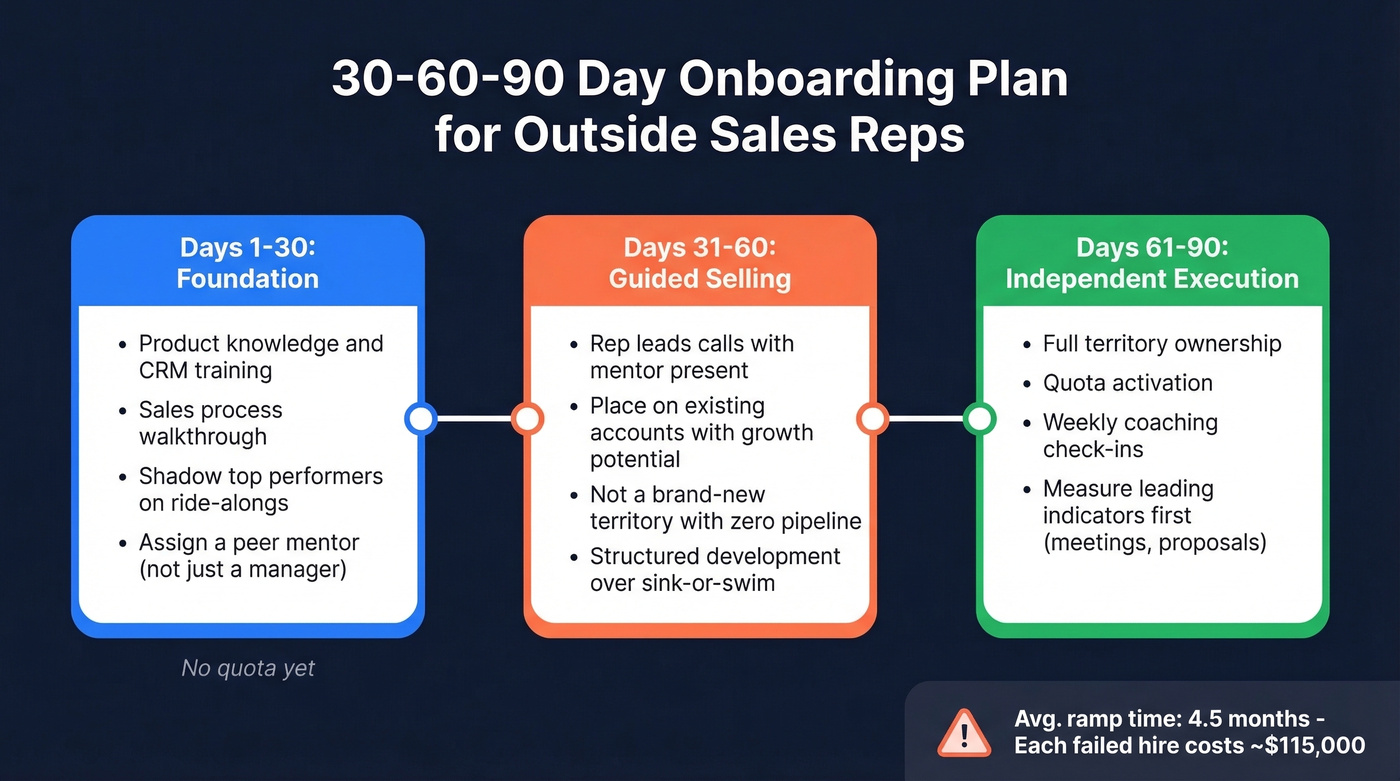
Days 1-30: Foundation. Product knowledge, CRM training, sales process walkthrough, shadowing top performers on ride-alongs. Assign a peer mentor - not just a manager. Don't put them on quota yet.
Days 31-60: Guided selling. Reps take the lead on calls and meetings with their mentor present. Place them on existing accounts with growth potential, not a brand-new territory with zero pipeline. Don't rush this phase. Months of structured development beats weeks of sink-or-swim every time.
Days 61-90: Independent execution. Full territory ownership, quota activation, weekly coaching check-ins. Measure leading indicators like meetings booked and proposals sent before lagging ones like revenue. If a rep isn't hitting leading-indicator benchmarks by day 75, that's a coaching conversation - not a termination conversation.
Common Mistakes to Train Against
Use this as a ride-along coaching checklist:
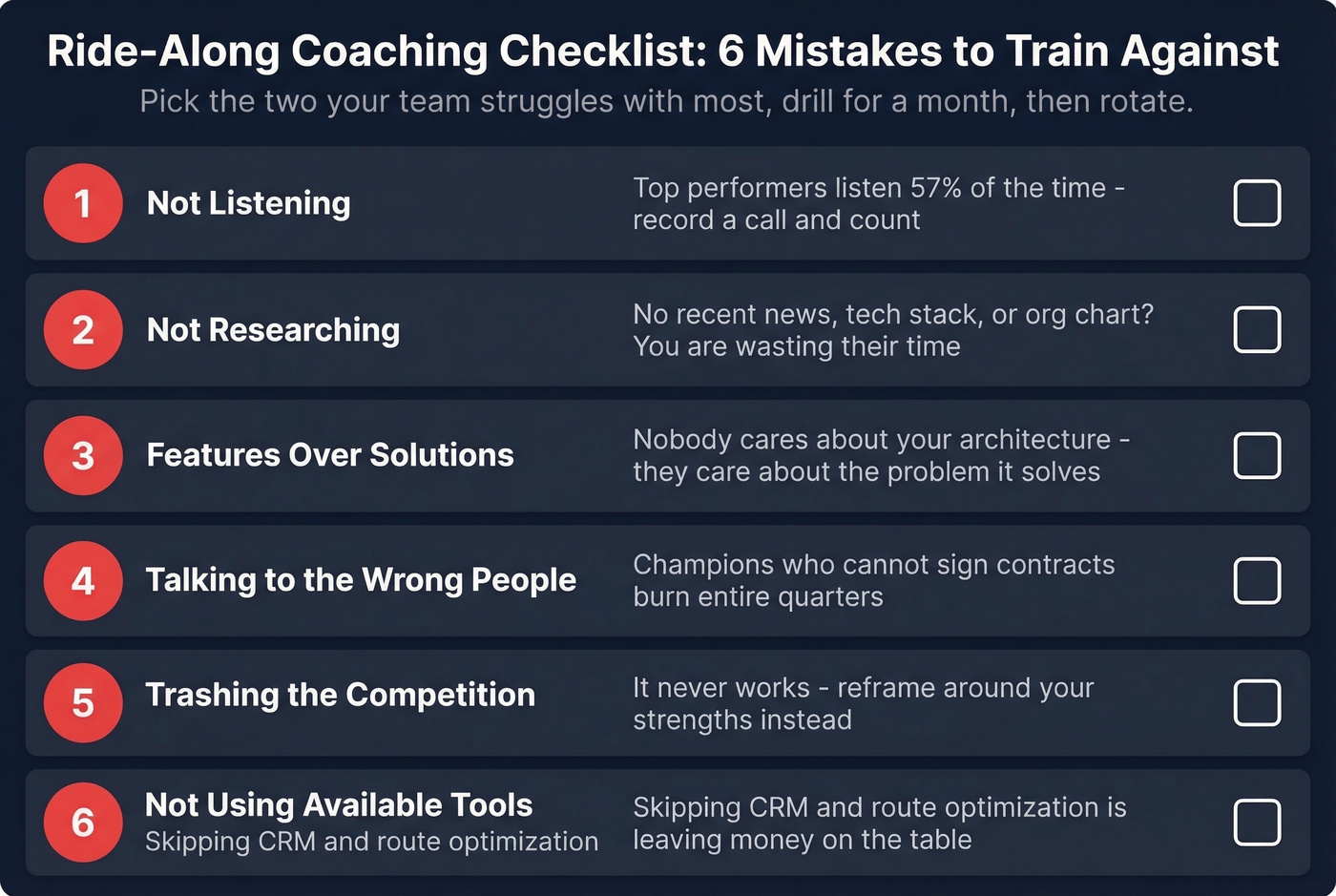
- Not listening. Top performers listen ~57% of the time and talk ~43%. Most struggling reps invert that ratio. Record a call, play it back, and count.
- Not researching. Walking into a meeting without knowing the prospect's recent news, tech stack, or org chart is disrespectful of everyone's time.
- Selling features over solutions. Nobody cares about your platform's architecture. They care about the problem it solves.
- Talking to the wrong people. Reps burn entire quarters building relationships with champions who can't sign contracts. (This is where MEDDIC sales qualification helps.)
- Trashing the competition. It never works. Reframe competitive conversations around your strengths.
- Not using available tools. Reps who skip the CRM, ignore route optimization, and prospect from memory are leaving money on the table.
Skip the temptation to train all six at once. Pick the two your team struggles with most, drill those for a month, then rotate.
How Much Training Costs
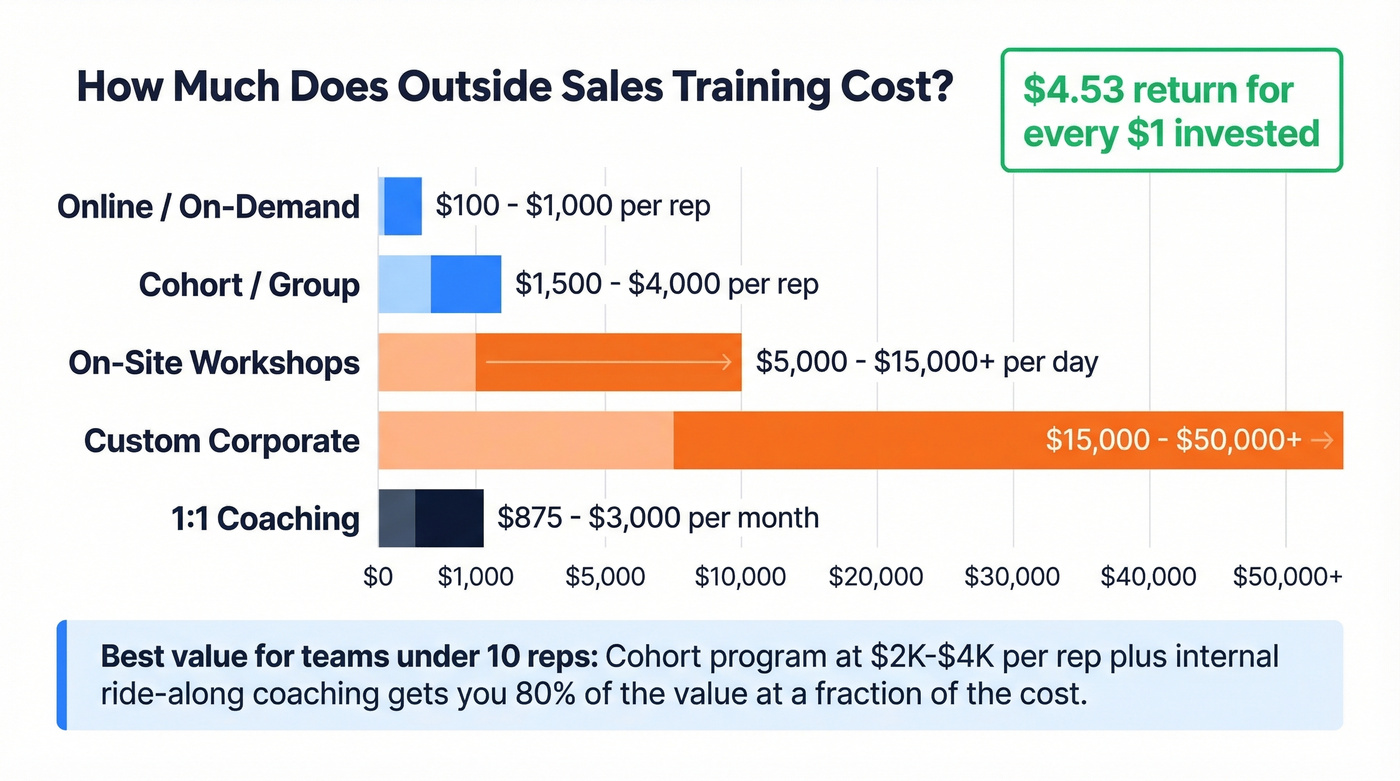
Research suggests sales training delivers $4.53 for every $1 invested. Here's what that investment looks like:
| Format | Cost Range |
|---|---|
| Online/on-demand | $100-$1,000/rep |
| Cohort/group | $1,500-$4,000/rep |
| On-site workshops | $5,000-$15,000+/day |
| Custom corporate | $15,000-$50,000+ |
| 1:1 coaching | $875-$3,000/month |
Vendor programs from Sandler, Richardson, or ASLAN make sense for enterprise teams with the budget and headcount to justify custom engagements. For teams under 10 reps, a cohort program at $2,000-$4,000 per rep paired with internal ride-along coaching gets you 80% of the value at a fraction of the cost.
The Tech Stack Your Reps Need
Outside reps don't need a bloated tech stack. They need four things that work on mobile.
Contact Data & Verification
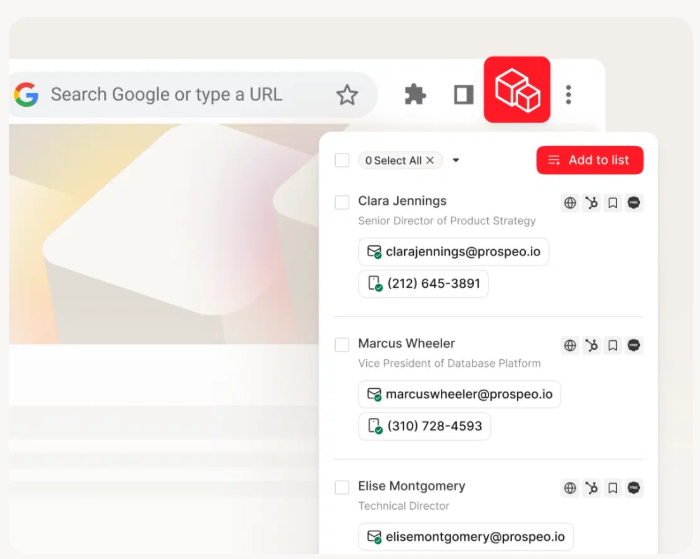
Prospeo covers 300M+ professional profiles with 143M+ verified emails and 125M+ verified mobile numbers. The Chrome extension pulls contact info from any website or CRM in one click, and the database includes 30+ filters including buyer intent and job changes. At roughly $0.01 per email, verifying your entire territory database costs less than a single tank of gas. Free tier starts at 75 verified emails per month plus 100 Chrome extension credits - no contract, no sales call required. (If you're comparing options, start with sales prospecting databases.)
CRM
Salesforce or HubSpot - whichever your org already uses. The key training point isn't which CRM, it's discipline: log every meeting, update every opportunity, note every next step. The CRM is the single source of truth for territory planning, and if reps treat it as optional, your pipeline forecasts are fiction. (If you need to standardize CRM expectations, use these examples of a CRM to align stakeholders.)
Route Optimization
Badger Maps, Map My Customers, or RepMove. Any tool that clusters appointments geographically and minimizes drive time pays for itself in the first week. Pricing runs $50-$100/user/month for most plans.
Sales Engagement
Outreach, Salesloft, or similar - for the 80% of "outside" selling that's now virtual. Sequence your follow-ups so nothing falls through the cracks between field days.
Cutting ramp time from 7 months to under 3 starts with giving new reps data they can trust on day one. Prospeo's 30+ search filters let reps build territory-ready lists by zip code, company size, and buyer intent - so ride-alongs hit real prospects, not dead leads.
Ramp reps faster with verified contacts in every territory.
FAQ
What's the difference between inside and outside sales training?
Inside sales training focuses on phone and video skills for managing 60+ daily calls. Outside sales training emphasizes territory management, route planning, in-person presentation skills, and trade show readiness. Outside reps convert qualified leads at 40% vs. 20% for inside reps, so every field interaction carries more weight and demands sharper preparation.
How long does it take to ramp a new outside rep?
Average ramp time is 4.5 months, and about 20% of reps take over 7 months. A structured 30-60-90 day plan with peer mentoring and growth-account assignments cuts this significantly - organizations with effective onboarding are 4x more likely to get new hires productive in under three months.
What tools do outside sales reps need for prospecting?
Three essentials: a CRM for pipeline management, a route optimizer for minimizing drive time, and a contact verification tool to ensure territory data is current. GreyScout cut rep ramp time from 8-10 weeks to 4 weeks after switching to verified data - that's the kind of impact clean contacts have on field productivity.
Is outside sales training worth the investment?
Sales training returns $4.53 for every $1 invested on average. For outside reps earning ~$110K in base plus commissions, even a 10% improvement in deal conversion or a one-month reduction in ramp time pays back a $3,000-$4,000 cohort program multiple times over.