

The Prospecting Skills That Separate Top Performers From Everyone Else
85% of sellers rate themselves as strong prospectors. Their managers disagree - 56% say reps miss critical risks that stall deals, and fewer than half trust reps to run opportunities independently. That gap between self-perception and reality is where pipelines go to die.
73% of B2B buyers actively avoid sellers who send irrelevant outreach. The bar for prospecting skills didn't rise gradually. It jumped. Most reps haven't caught up.
The Three Skills That Compound Everything Else
Research depth, follow-up discipline, and data quality. Most guides list 15-20 techniques and call it a framework - that's a to-do list, not a development plan. Master these three, then layer on AI fluency and empathy.
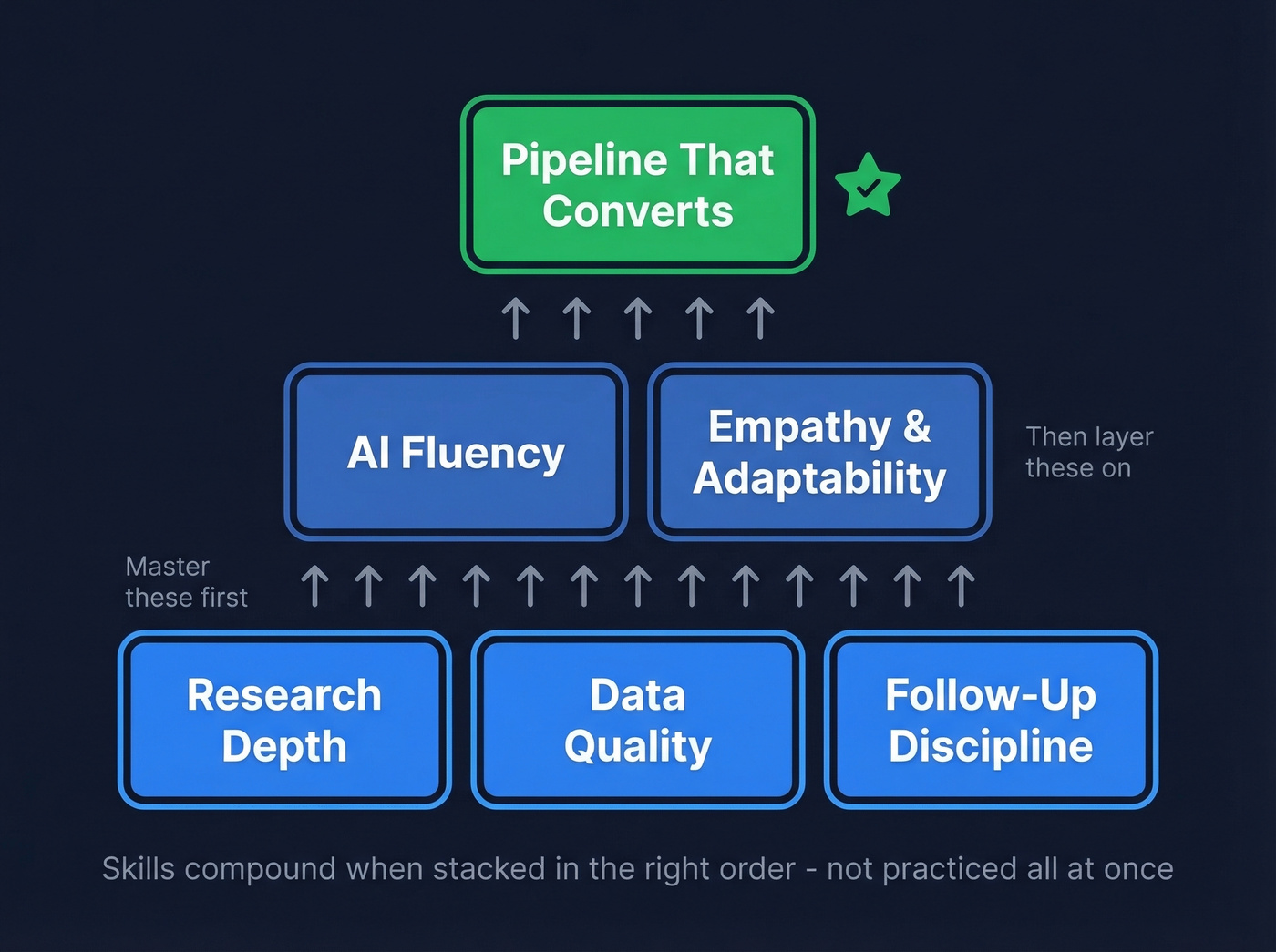
Reps spend 60% of their time on non-selling tasks, which means the 40% you do spend selling has to count. And 72% of sellers feel overwhelmed by the number of skills their job demands - a clear signal you're trying to improve everything at once instead of stacking skills in the right order. Research tells you who to target. Data quality ensures your outreach reaches them. Follow-up discipline converts attention into meetings.
Skills vs. Techniques
Here's a distinction most prospecting content ignores: skills are repeatable capabilities you develop over time, while techniques are specific tactics you deploy in the moment. Cold calling is a technique. Reading a prospect's tone and pivoting your approach mid-conversation - that's a skill.
Frameworks like RAIN Group's WAVE model and MTD's three-step process are useful scaffolding. But we're organizing by skill cluster instead, because that's how you actually develop - not by memorizing a sequence, but by building capabilities that transfer across channels and contexts. Techniques can be copied. Skills must be built through repetition.
Core Skills for 2026
Research & Strategic Targeting
The difference between a rep who books meetings and one who doesn't often comes down to the first 15 minutes of their workflow. Top performers don't start with a list - they start with a thesis. Who's likely to buy right now, and why?
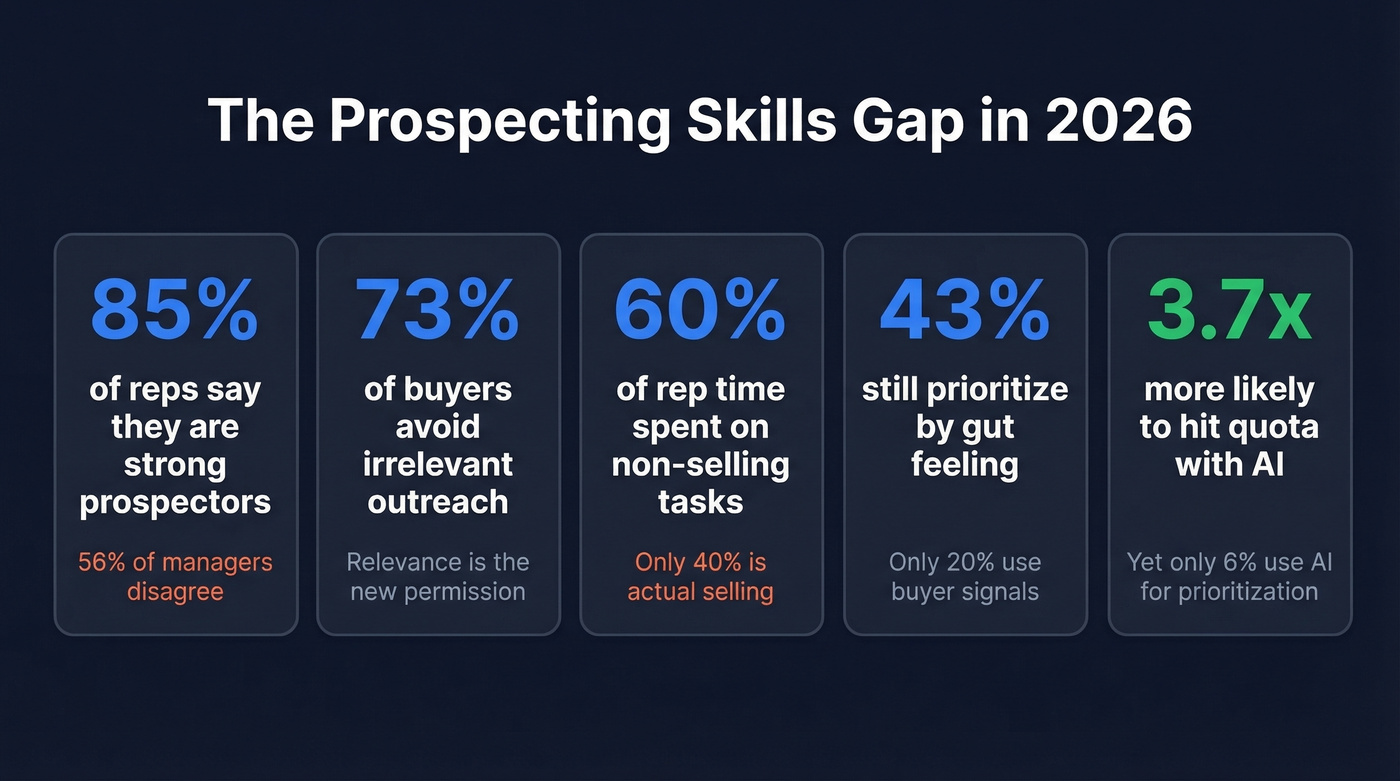
That means defining your ICP with enough specificity to be useful (use an Ideal Customer Profile template) and then reading signals: intent data surges, recent funding rounds, job changes in key roles, tech stack shifts. 43% of reps still [prioritize prospects based on gut feeling](https://www.prnewswire.com/news-releases/new-salesloft-research-uncovers-the-most-critical-sales-skill-gaps-in-2025-302417650.html), while only 20% use buyer signals. The reps using signals aren't just more efficient - they're having better conversations because they're reaching people at the right moment.
Here's a prospect research routine you can run in roughly 4-7 minutes: quick scan of your CRM context, the company website and recent news, and the individual's background - then write a one-sentence angle before you open your outreach tool. Fast enough to sustain across high volume without turning "research" into procrastination.
Data Quality & Compliance
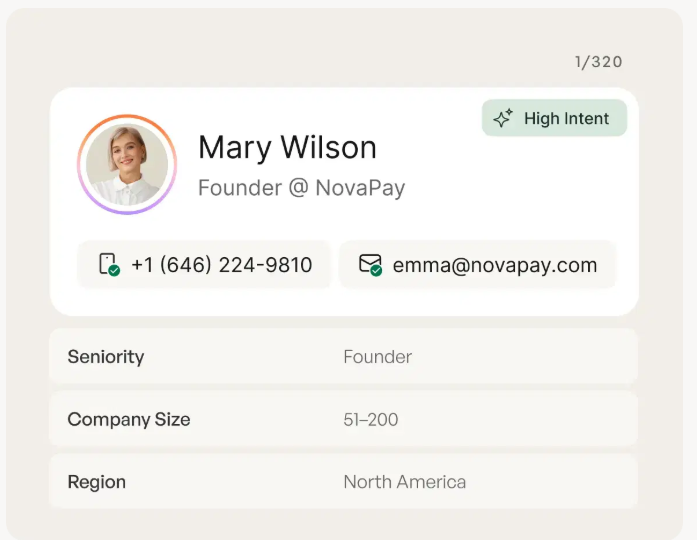
Data quality isn't a tool setting you configure once. It's a skill you practice every day - verifying before you send, cleaning lists before they rot, understanding email deliverability thresholds well enough to protect your domain.
The numbers that matter: keep your bounce rate under 2% and spam complaint rate under 0.01%. Exceed those, and your sender reputation degrades fast (here’s how to improve sender reputation). On the compliance side, GDPR fines run up to EUR 20M or 4% of global annual revenue - whichever is higher. That's not a theoretical risk for companies prospecting into EMEA.
Snyk's sales team learned this directly: after switching to Prospeo's verified data, bounce rates dropped from 35-40% to under 5%, and AE-sourced pipeline jumped 180% with 200+ new opportunities per month. Data quality as a skill means choosing infrastructure that doesn't let bad records into your workflow in the first place.
Cold Outreach That Converts
Personalization doesn't mean {first_name} merge tags. It means demonstrating that you understand the prospect's context well enough to earn 30 seconds of their attention.
InMail acceptance rates jump 46% when sellers reference at least one commonality - shared connections, same school, mutual industry experience. That stat applies beyond InMail. Every channel rewards relevance. Cold email and cold calling aren't competing strategies; they're complementary. Email first to establish context, call within 24 hours to create urgency, social touch to stay visible. Reps who run this integrated sequence consistently outperform single-channel prospectors, and developing strong outreach skills across all three channels is what turns a mediocre pipeline into a predictable one.
Look, if your deal size is under $10K ACV, you probably don't need a 12-touch sequence. Three well-researched touches beat twelve lazy ones. The obsession with "more touches" is a symptom of bad targeting, not insufficient persistence.
Follow-Up Discipline
Most reps give up too early. 43% of buyers who accept meetings say it's fine for sellers to contact them five or more times before getting through. Busy decision-makers don't respond to the first touch because they're busy, not because they're uninterested.
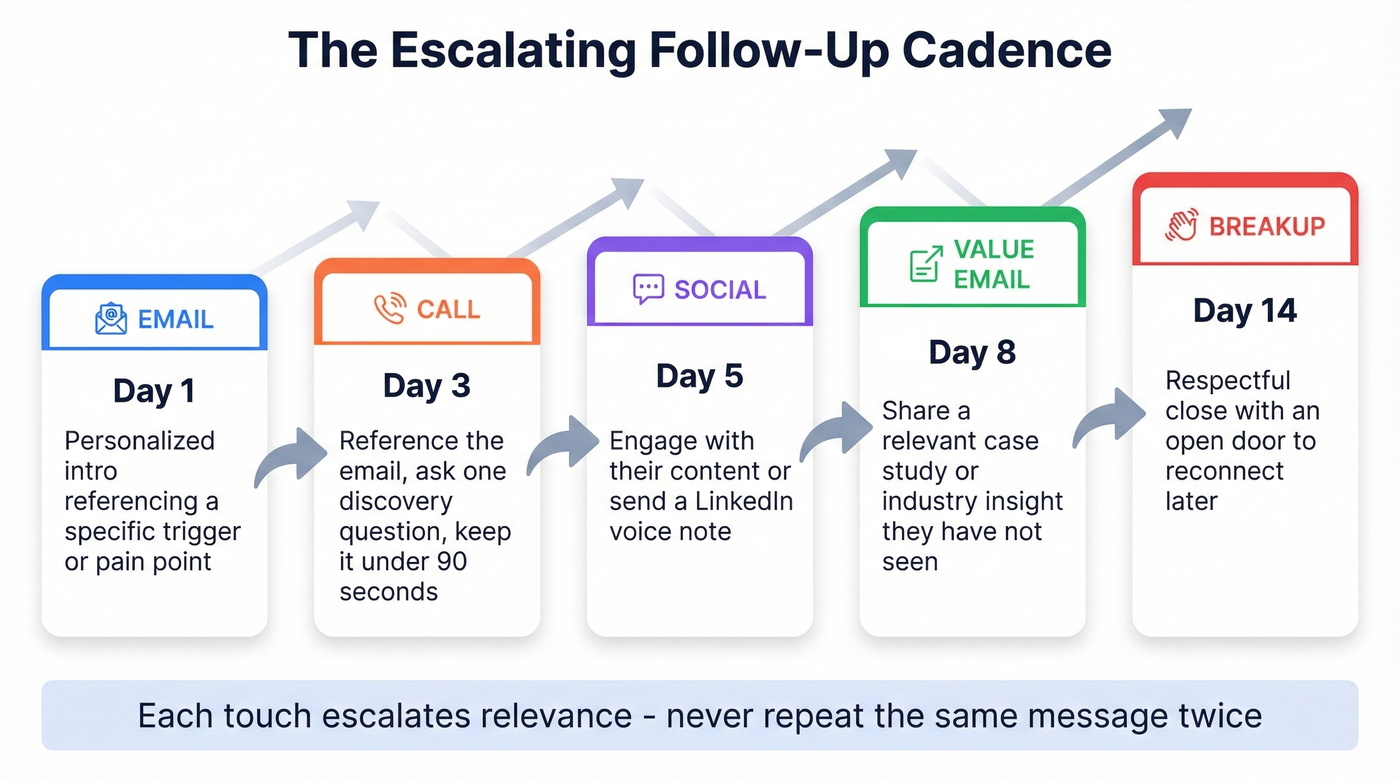
But 58% of sales meetings aren't valuable to buyers. Persistence without preparation is just noise. The skill isn't "follow up more." It's "follow up with increasing relevance" - each touch adding a new insight, a new angle, a new reason to engage. (If you need copy, start with these follow-up templates.)
A cadence that works: Day 1 email, Day 3 call, Day 5 social touch, Day 8 value-add email with a relevant case study or insight, Day 14 breakup. Each touch escalates. Never repeat the same message twice.
Qualification & Discovery
BANT is still a useful baseline, but it's a starting framework, not a finishing one. 57% of sales professionals say the sales cycle is getting longer, which means every hour spent nurturing a prospect who'll never close is more expensive than it used to be.
The real skill is knowing when to disqualify. Top performers disqualify faster and more decisively than average reps - they protect pipeline quality instead of inflating pipeline volume. Multi-threading is how you de-risk the deals you do keep: map at least three contacts per account before your first outreach. One champion, one economic buyer, one end user. (If you want a tighter framework, use MEDDIC.)
AI Fluency
Only 6% of sellers use AI for task prioritization. Most use it for engagement personalization (61%) and call recording analysis (51%). That's like hiring an SDR and only having them update Salesforce.
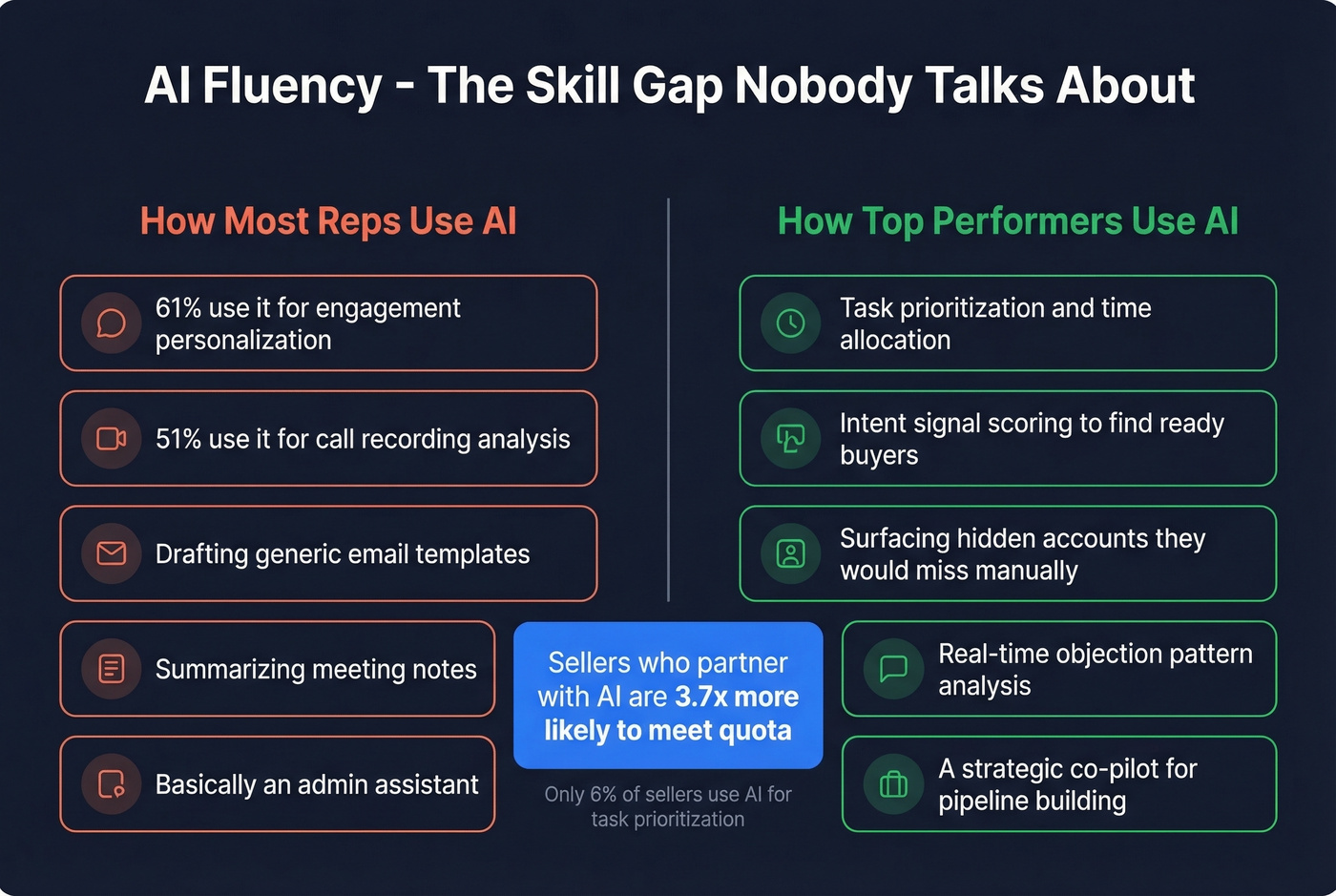
55% of reps say they lack the right AI toolset - which usually means they're using AI for the wrong tasks, not that they need more tools. Sellers who partner with AI are 3.7x more likely to meet quota. AI can draft outreach, score intent signals, and surface accounts you'd miss manually (see a practical AI cold email outreach workflow). It can't read a room, build trust, or decide whether a prospect's objection is real or a negotiation tactic. AI doesn't replace your ability to prospect. It exposes which capabilities you actually have.
Empathy & Adaptability
44% of sales managers say adaptability is the most crucial soft skill for sales success. The reps who thrive aren't the ones with the best scripts - they're the ones who can shift from a consultative conversation with a technical buyer to a value-focused pitch with a CFO without missing a beat.
Empathy in prospecting means understanding that your outreach is an interruption. The prospect didn't ask to hear from you. Earning their attention requires genuine curiosity about their problems, not just a polished pitch about your solution. One of the most underrated tips we've seen work: lead with their problem, not your product.
Measurement & Self-Coaching
If you're not tracking your own numbers, you're guessing. The benchmarks that matter: pipeline coverage of 3-5x quota per rep per quarter, speed-to-lead under 5 minutes for inbound, cold email reply rates of 1-5%, and connect rates of 5-15%. (To pressure-test your funnel, track pipeline health weekly.)
Here's the uncomfortable part: 94% of managers claim coaching is part of their process, but 53% of sellers receive coaching quarterly or less. Self-coaching isn't optional - it's the only reliable development path. Review your own calls weekly. Track reply rates by message type. Build a personal scorecard and update it every Friday.

Data quality is a prospecting skill - and Snyk proved it. Their 50 AEs cut bounce rates from 35% to under 5% and grew AE-sourced pipeline 180% with Prospeo's 98% accurate emails refreshed every 7 days. Bad data doesn't just waste credits - it kills your sender reputation and burns the pipeline your other skills built.
Stop practicing elite prospecting skills on dead email addresses.
Mistakes That Kill Your Pipeline
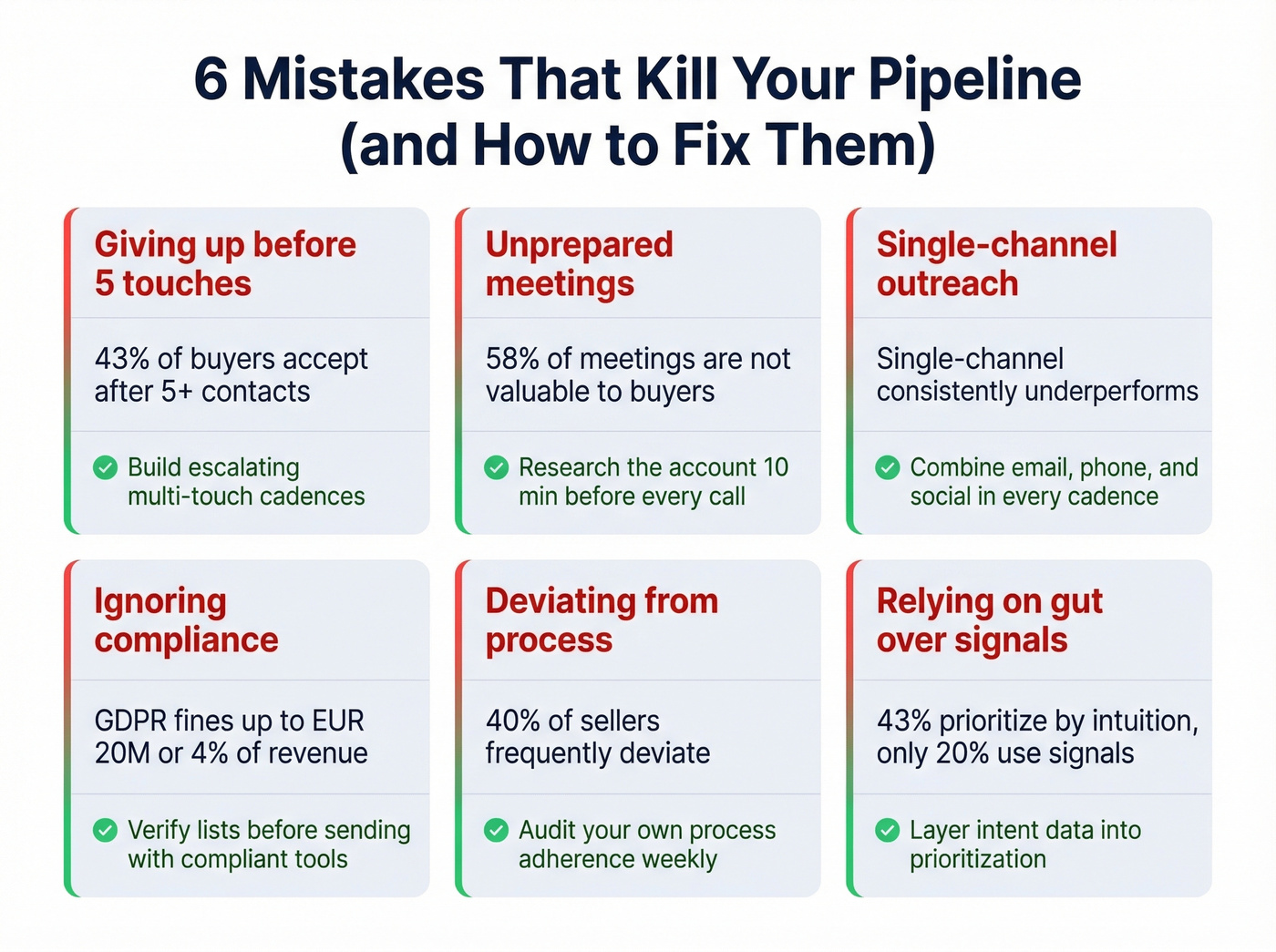
| Mistake | What the Data Says | The Fix |
|---|---|---|
| Giving up before 5 touches | 43% of buyers accept after 5+ contacts | Build escalating multi-touch cadences |
| Unprepared meetings | 58% of meetings aren't valuable to buyers | Research the account 10 min before every call |
| Single-channel outreach | Single-channel consistently underperforms integrated sequences | Combine email, phone, and social in every cadence |
| Ignoring compliance | GDPR fines up to EUR 20M or 4% of revenue | Verify lists before sending with GDPR-compliant tools |
| Deviating from process | 40% of sellers frequently deviate | Audit your own process adherence weekly |
| Relying on gut over signals | 43% prioritize by intuition, 20% use signals | Layer intent data and triggers into prioritization |
How to Actually Improve
Reading about prospecting doesn't build capability. Deliberate practice does.
We've found that weekly 30-minute roleplay sessions beat quarterly half-day workshops every time. Three scenarios worth running each week:
Discovery call drill. One rep plays a skeptical prospect already evaluating a competitor. The other practices uncovering the real pain behind the stated objection. Debrief for five minutes after. (Use a tighter set of discovery questions to keep it consistent.)
Objection handling round. Throw the three most common objections at a rep in rapid succession and coach on response quality, not speed. This is where you build the muscle memory that makes real calls feel slower and more manageable.
Elevator pitch under pressure. Sixty seconds to articulate value to a C-level buyer about to walk into another meeting. If you can't do it in practice, you won't do it when it counts. (Steal a few sample elevator pitches and rewrite them for your ICP.)
Skip the marathon training days. Microlearning sticks.
Assessing Prospecting Skills (For Managers)
Interviews and resumes are weak signals for prospecting ability. A sales scorecard approach - structured evaluation across defined competencies at each interview stage - works better.
The best work sample task we've seen: give candidates a target account, ask them to build a prospect list with rationale for each contact, write personalized outreach for three of them, and design a follow-up cadence. You're testing research quality, personalization instinct, and process thinking - not charisma.
The Minimum Viable Tool Stack
You don't need 12 tools. You need three categories covered well.
| Category | Tool | Why |
|---|---|---|
| Data & enrichment | Prospeo | 300M+ profiles, 98% email accuracy, 7-day refresh. Free tier; paid from ~$0.01/email. |
| Data & enrichment | Apollo | Broad free-tier coverage; easiest starting point for SMB teams. Free tier available; paid from ~$49/mo per user. |
| Data & enrichment | Clay | Best for highly specific list building; flexible enrichment chaining. Free tier available; paid plans from ~$100-200/mo. |
| Engagement & CRM | HubSpot or Salesforce | Pipeline discipline lives here - no tool replaces CRM hygiene. |
| AI assistant | ChatGPT or similar | Outreach drafts, call prep, account research acceleration. |
Let's be honest about tool-switching: data accuracy issues are the #1 pain point that triggers it. The consensus on r/sales is that Apollo's free tier is the easiest way to get moving, and Clay is the power tool for "weirdly specific" lists. But if your bounce rates are creeping above 5%, the tool isn't the strategy problem - it's the foundation problem. Get verification right first, and everything downstream improves. (If you’re comparing options, start with these data enrichment services.)
Research and targeting only compound when your outreach actually lands. Prospeo gives you 30+ filters - buyer intent, job changes, tech stack, funding - so your first 15 minutes of research translate into conversations, not bounces. At $0.01 per verified email, the cost of bad data is no longer an excuse.
Turn your sharpest prospecting skills into booked meetings, not bounced emails.
FAQ
What are the three most important prospecting skills?
Research depth, follow-up discipline, and data quality. These three compound everything else. Without accurate data and consistent follow-up against well-researched accounts, no technique or tool will save your pipeline. Layer AI fluency and empathy on top once the foundation is solid.
How long does it take to improve at prospecting?
Individual skills improve in 2-4 weeks with deliberate daily practice: drills, weekly self-reviews, and honest metric tracking. Systemic pipeline improvement typically takes one full quarter of consistent execution - roughly 12 weeks before compounding results show up in your numbers.
Can AI replace human prospecting ability?
No. AI accelerates research, drafts outreach, and prioritizes accounts - but qualification judgment, empathy, and real-time adaptability remain human. Only 6% of sellers use AI for prioritization today. Intent data can surface in-market buyers, but reading a room and building trust still require a person.
What tools help build better prospecting skills?
Start with a verified data platform so outreach actually reaches people - bounce rates above 5% undermine every other skill you're building. Add your CRM for pipeline discipline, and one AI writing assistant for drafting. Every other skill compounds on top of accurate contact data.