

Telemarketing Scripts for 2026: Every Call Type, Industry, and Compliance Scenario
You've made 60 calls today. Twenty-two went to disconnected numbers. Fifteen hit voicemail. Four actual conversations. Zero appointments.
The problem isn't your script - it's probably your list, your timing, or your delivery. But telemarketing scripts matter too, and most of them are terrible. Here's every script you'll actually need in 2026, organized by call type, industry, and compliance scenario, plus the data that tells you when and how to use each one.
Telemarketing Isn't Just Cold Calling
Here's a distinction most people get wrong: telemarketing isn't just cold calling. Cold calling is one tactic within telemarketing - calling prospects with zero prior interaction to spark initial interest. Telemarketing is the entire strategy: lead qualification, nurturing campaigns, follow-up calls, market research, appointment setting, database cleanup, retention calls, collections, and surveys.
The difference matters because each call type demands a different script, a different tone, and different compliance rules. A cold call opener is short, direct, and attention-grabbing. A retention call is conversational, empathetic, and value-focused. A debt collection call has mandatory legal disclosures that'll get you sued if you skip them.
The channel still works - when you treat it as a structured campaign rather than a numbers game of dialing strangers and reading from a sheet. Insurance telemarketing alone generates billions annually. The teams that win combine cold calling for first contact with telemarketing workflows to nurture and qualify leads into sales-ready opportunities.
If You Only Master Three Things
If you only nail three scripts, make them: a permission-based opener, a LARA objection handler, and a specific close. Delivery beats volume every time. Top performers speak at 171 words per minute - slower than average - and ask 39% more questions during discovery calls. You don't need 25 scripts. You need three good ones and the discipline to use them.

Before you dial anything, know the compliance basics. TCPA violations cost $500-$1,500 per violation, and class actions surged 95% last year. The largest verdict to date? $925 million. That's not a typo. Read the compliance section before you pick up the phone.
And your scripts are only as good as your data. B2B contact data decays at 22.5% annually. If a quarter of your list is disconnected numbers, no script template saves you. Verify before you dial.
Telemarketing by the Numbers
Before we get into scripts, here's the data that should shape how you use them.

| Metric | Benchmark |
|---|---|
| Overall conversion | 1-3% (2.5% avg) |
| Cold calling | 4.8% avg |
| Appointment setting | 2.3% avg |
| B2B inquiry to qualified | 5% |
| Qualified to sale | 27% |
| Cost per acquisition (B2C) | $30-$150 |
| Cost per acquisition (B2B) | $150-$500 |
Those numbers look small until you do the math. A 2.3% appointment setting rate across 100 dials per day means 2-3 meetings daily. Over a month, that's 40-60 meetings. The volume game works - if your data is clean.
Here's the part most reps underestimate: 82% of buyers accept meetings from proactive sellers, and 71% prefer hearing from sellers early in their buying process. The prospects you're calling want to hear from you - if you reach them at the right time with the right message. Telemarketing isn't an intrusion. Done well, it's a service.
Timing matters more than most reps think. The best calling windows are 11 AM-12 PM and 4-5 PM in the prospect's time zone. Wednesdays deliver up to 50% more conversations than other weekdays. Monday? People are buried in their week. Friday? They're mentally checked out.
Speed-to-lead is the single biggest lever most teams ignore. Calling within the first minute of a lead action improves conversion rates by nearly 400%. Within 3 minutes? Still a 98% improvement. Yet 44% of sales reps never make a second follow-up call. That's not a script problem - that's a process problem.
Making 6+ call attempts per prospect increases contact rates by 70%. Predictive dialers can triple connection rates versus manual dialing. The reps who give up after one or two tries - or who are still manually punching in numbers - are leaving money on the table.
Compliance Essentials - Read This Before You Dial
Skip this section at your own risk. I've seen teams rack up six-figure compliance liabilities because nobody bothered to read the rules. The scripts later in this guide include compliance elements baked in, but you need to understand why they're there.
What the Telemarketing Sales Rule Requires
The FTC's Telemarketing Sales Rule mandates specific oral disclosures on every outbound call:

- Seller identity - who you are and who you represent
- It's a sales call - you can't pretend it's a survey
- Nature of goods/services - what you're selling
- Total cost - including material restrictions, limitations, and no-refund policies
Calling hours: 8 AM-9 PM in the consumer's time zone. Not yours - theirs.
You must scrub your call lists against the National Do Not Call Registry. When a consumer asks to not be called, add them to your internal DNC list and honor it. Call abandonment has safe harbor provisions, but you need to know the rules. Caller ID must be transmitted - no spoofing. And keep records of advertising materials, sales records, and employee info for at least two years.
TCPA in 2026 - What Changed
The Telephone Consumer Protection Act has shifted dramatically. Here's what matters right now:

AI-generated voices now require full consent. The FCC clarified that AI-generated voices count as "artificial" under TCPA. If you're using any AI voice technology for outbound calls, you need prior express written consent. Period.
Consent revocation got easier - for consumers. Consumers can revoke consent through "any reasonable method" - replying "stop," saying "unsubscribe" verbally, texting a request. You must honor revocation within 10 business days (down from the previous 30).
The one-to-one consent rule takes effect in April 2026. This requires separate consent per seller - no more lead generators collecting a single consent and selling it to a dozen companies. If you're buying leads, verify that consent was given specifically for your company.
The penalty math is brutal: $500 per violation, trebled to $1,500 for willful violations, with no cap on total damages. Federal DNC violations carry fines up to $53,088 each. The largest verdict to date: $925 million for 1.8 million ATDS violations.
State Mini-TCPAs and Industry-Specific Rules
Federal compliance is the floor, not the ceiling. Florida's mini-TCPA, along with laws in Oklahoma, Maryland, Georgia, Washington, and New York, each layer additional requirements on top of federal rules. If you're dialing into multiple states, you need state-specific script variants - or dynamic scripting that serves the right disclosures automatically based on the area code.
For debt collection, the Mini-Miranda disclosure is mandatory under the FDCPA. For Medicare insurance, CMS prohibits cold calling entirely - you can only call beneficiaries who've given prior consent. The Reassigned Numbers Database, operational since November 2021, provides a safe harbor for calls to numbers that have been reassigned to new consumers. Use it.

You read it above: B2B contact data decays at 22.5% annually. That means one in four numbers you dial is already disconnected. Prospeo's 125M+ verified mobile numbers refresh every 7 days - not every 6 weeks - with a 30% pickup rate across all regions.
Stop perfecting your script and start fixing your list.
Outbound Call Scripts That Actually Work
Cold Calling Openers (Permission-Based, Pattern Interrupt, Value-First)
The first 10 seconds determine whether you get a conversation or a click. Three openers, each for a different situation.

Permission-Based Opener (best for B2B, warm-ish leads):
"Hi [first name], this is [your full name] from [company]. Appreciate I caught you out of the blue here - you got a minute?"
This works because it does two things: acknowledges the interruption and asks permission. It immediately builds rapport instead of triggering the telemarketer alarm.
Here's a quick decision tree for choosing your opener:
Is the prospect expecting your call?
├── YES → Skip the opener. Go straight to: "Hi [name], following up on [context]..."
└── NO → Have you researched a specific trigger (funding, hire, expansion)?
    ├── YES → Use the Value-First Opener
    └── NO → Is this a high-volume dial session?
        ├── YES → Use the Pattern Interrupt Opener
        └── NO → Use the Permission-Based Opener
Pattern Interrupt Opener (best for cold lists, high-volume dialing):
"You weren't expecting my call, so I'll be brief. Mind if I take 20 seconds to explain why I'm calling?"
By naming the awkwardness, you disarm it.
Value-First Opener (best for targeted accounts):
"Hi [first name], I noticed [company] just [specific trigger - funding round, new hire, expansion]. We've been helping similar companies with [specific outcome]. Worth a quick conversation?"
Delivery tips that actually matter: stand up when you dial. Smile - it changes your vocal tone even though nobody can see you. Top performers speak at 171 WPM versus 182 for lower performers. Slower sounds more confident. Record yourself and listen back. You'll hate it, but you'll improve fast.
B2B Appointment Setting Scripts
The average appointment setting rate is 2.3%. Companies using structured frameworks report booking rate improvements up to 28%. Here's the script that gets results:
You: "Hi [name], this is [name] from [company]. We help [type of company] solve [specific problem] - companies like [2-3 recognizable names in their space]."
[Pause - let them respond]
You: "I'm not calling to sell you anything today. I'd love 20 minutes to show you how [specific outcome]. I have Tuesday at 2 PM or Thursday at 10 AM - which works better?"
Two things make this work. First, the specific time slots. "When would be a good time?" is a question that gets punted. "Tuesday at 2 or Thursday at 10?" is a question that gets answered. Second, the qualifying question before you pitch: "What's driving your team to explore new solutions right now?" This separates tire-kickers from real buyers and gives you ammunition for the meeting itself.
When they push back, use Feel-Felt-Found: "I understand how you feel. Other [job titles] felt the same way initially. What they found was [specific result]." It's not magic - it's just structured empathy.
Gatekeeper Navigation Scripts
The Direct Approach:
"Hi, this is [first name] calling for [prospect's first name]. Is she available?"
Use the prospect's first name only. Never "Can I speak with Mr. or Mrs. Smith?" - that's the universal telemarketer signal.
The Referral Approach:
"[Prospect's first name] was recommended to me by [mutual connection or department]. I need about 2 minutes of her time regarding [specific topic]. Can you put me through?"
A tip from the trenches: Friday afternoons are gold for reaching C-suite executives. Gatekeepers leave early or check out mentally. Executives are often in a good mood, wrapping up the week.
Voicemail Scripts
Keep your voicemails under 20-30 seconds.
Cold Voicemail:
"Hi [name], [your name] from [company]. I'm calling about [one specific thing relevant to them]. I'll shoot you an email with details - look for the subject line '[specific subject].' My number is [number]."
Follow-Up Voicemail:
"Hi [name], following up on the email I sent [day]. Quick question about [specific topic]. I'll try you again [specific day] - or grab me at [number]."
The voicemail's job isn't to get a callback. It's to prime the cold email. Point them to the email, give them the subject line, and make the email feel expected rather than random.
44% of sales reps never make a second call. Making 6+ attempts increases contact rates by 70%. Leave the voicemail, send the email, and call again.
Follow-Up Call Scripts
Post-Email Follow-Up (for prospects who opened your email 2+ times):
"Hi [name], this is [name] from [company]. I sent you an email on [day] about [topic] - looks like it caught your eye. Wanted to see if you had any questions or if it makes sense to grab 15 minutes this week."
Prioritize calling people who opened your emails multiple times. They're interested - they just haven't acted yet.
Post-Meeting Follow-Up:
"Hi [name], great conversation on [day]. I wanted to follow up on [specific point they raised]. We put together [deliverable - case study, ROI analysis, proposal]. When's a good time to walk through it?"
Following up within 3 minutes of a lead action improves conversion by 98%. Within the first minute? 400% improvement. Speed isn't just a nice-to-have - it's the single highest-leverage variable in your entire sales process.
Inbound Telemarketing Scripts
Upselling and Cross-Selling Scripts
Here's a stat that should bother every sales leader: 76% of business leaders think they're delivering personalized experiences. Only 25% of consumers agree. That gap is where bad upselling scripts live.
Upselling Script:
"Based on your usage of [current plan/product], you'd benefit from [premium version]. It includes [specific feature] which would help with [specific problem they've mentioned]. Want me to walk you through the difference?"
Cross-Selling Script:
"Customers who use [Product A] typically also find [Product B] useful - it [specific benefit]. Would you like to hear how they work together?"
Customer Retention and Cancellation Scripts
Bad cancellation handling looks like this: questioning the customer's decision, getting defensive about the product, pressuring them to reconsider. It's the fastest way to guarantee they never come back and leave a negative review.
Good cancellation handling:
"I'm sorry to hear you're considering canceling, [name]. I completely understand. Before we process that, would you mind sharing what wasn't working for you? Your feedback genuinely helps us improve."
[Listen. Actually listen.]
"Thank you for sharing that. As a token of our appreciation for being a customer, I'd like to offer you a 30-day free access pass - no obligation, use it anytime in the next year. Would that be helpful while you evaluate your options?"
Complaint Resolution Scripts
81% of customers say a positive service experience increases their likelihood of future business. Complaints are opportunities disguised as problems.
"I sincerely apologize for the inconvenience, [name]. That's not the experience we want you to have. Let me look into this right now - can you walk me through exactly what happened?"
[Document everything. Repeat it back.]
"Here's what I'm going to do: [specific action with timeline]. If that doesn't resolve it, I'll escalate to [specific person/team] and personally follow up with you by [specific date]. Does that work?"
Industry-Specific Script Examples
Insurance (Medicare + Life Insurance)
Medicare Annual Review Script (AEP/OEP):
"Hi [name], this is [name] - I'm a licensed Medicare advisor. Did you know that plans can change every year, and sometimes those changes don't align with your current needs? I'd love to offer you a no-cost review of your current plan to make sure you're getting the best coverage and value. Think of me as your Medicare GPS - my job is to help you avoid any wrong turns."
Critical compliance note: CMS prohibits cold calling for Medicare. You can only call beneficiaries who've given prior consent. Every Medicare script must open with your name, license status, and the no-cost/no-obligation nature of the review.
Life Insurance Needs-Analysis Script:
"The reason for my call is that we're helping families secure financial protection at rates that might surprise you. Quick question - if something unexpected happened tomorrow, how would your family handle expenses like the mortgage, kids' education, or day-to-day bills?"
Follow-up questions: "What's most important to you - covering funeral costs, paying off a mortgage, or leaving a legacy?" Then the urgency close: "I can't guarantee this rate will stay the same, as prices are based on age and health. Let me lock in a quote while we're talking."
Many insurance sales happen on the second or third call. Don't push for a close on call one if the prospect needs time.
Solar and Energy
"Hi [name], I'm calling about the recent rate increases from [utility company]. We're currently helping several homeowners on [street name] lock in a lower, fixed rate with solar. I'm not asking you to make a decision today - I simply want to provide a custom savings report showing what your roof could produce. Can I grab 10 minutes of your time this week?"
Common objections and rebuttals:
- "I'm not interested" - "Totally understand. Most homeowners feel that way until they see the actual savings numbers. What if I could show you a lower monthly payment than your current electric bill?"
- "Just email me info" - "I'd love to, but the savings report is customized to your roof and usage - it takes a quick conversation to build it accurately."
- "I already looked at solar" - "Great - the industry's changed a lot in the last 24 months. Rates, equipment, and incentives are all different. Worth a fresh look?"
For commercial solar, skip the environmental angle entirely. Lead with IRR, payback periods, and depreciation benefits.
Real Estate
"Hi [name], I'm reaching out because I noticed your property on [street]. We've been working with several homeowners in your area, and I wanted to see - have you given any thought to what your home might be worth in today's market?"
When they say "Your offer will be too low": "I completely understand that concern. What I can do is prepare a valuation report that breaks down your property details alongside recent neighborhood sales. That way you'll have real numbers, not guesses. What would motivate a change for you: more cash, faster closing, or fewer repairs?"
Debt Collection
Mandatory Mini-Miranda Disclosure (required on every initial communication):
"This is [name], a debt collector from [company]. This call is an attempt to collect a debt, and any information obtained will be used for that purpose."
Skip this and you're violating the FDCPA. Debt collection is the most common consumer grievance filed with the FTC - don't become a statistic.
Friendly Reminder Script:
"[Mini-Miranda disclosure.] I'm reaching out about your invoice for [$amount], which was due on [due date]. I understand things can get busy - would it be convenient for you to settle this today, or would you prefer to discuss a payment arrangement?"
State-specific notes: California's Rosenthal Act adds additional debt-collection requirements. New York requires a list of consumer rights to be provided. If you're collecting across state lines, your scripts need state-specific variants.
Voicemail caution: Never disclose debt details in a voicemail. Third parties (roommates, family members, coworkers) might hear it, which violates FDCPA third-party disclosure rules. Keep voicemails vague: "This is [name] from [company] calling for [debtor name]. Please return my call at [number]."
Phone Surveys
Skip this section if you're purely in sales - but if your team runs NPS surveys, market research calls, or post-purchase feedback loops, these scripts prevent the two biggest survey killers: low completion rates and compliance violations.
Recruited Call (respondent expecting your call):
"Hi [name], I'm calling about the [topic] survey you agreed to participate in earlier. I'd like to go through the questions with you now - it'll take about [X] minutes. Is this a good time?"
Recruited surveys pull 40-60% completion rates. Random cold surveys? 10-15%.
Random/Cold Survey Call:
"Hi, I'm [name] calling on behalf of [organization]. We're conducting research on [topic] and would appreciate your input. The survey takes about [X] minutes, is completely voluntary, and your responses are confidential. Would you be willing to participate?"
Mandatory disclosures for surveys: the authorizing body, the survey's objective, privacy/confidentiality assurance, that participation is voluntary, and how to opt out. If a child answers, ask to speak with a parent or guardian - never proceed with a minor.
B2B SaaS
"Hi [name], this is [name] from [company]. We help [type of team] [specific outcome] - similar to what we've done for [2-3 recognizable customers]. Quick question: what's driving your team to explore new solutions right now?"
If your average deal size is under $10K annually, you probably don't need a dedicated telemarketing team. A founder or AE making 30 targeted calls a day with a great script will outperform a 5-person SDR team blasting through unqualified lists. We've seen this play out dozens of times.
How to Handle the 7 Most Common Objections
Nailing your sales pitch means nothing if you can't handle the pushback that follows. These seven objections account for the vast majority of resistance you'll encounter on outbound calls.
| Objection | Psychology | Rebuttal |
|---|---|---|
| "I'm not interested" | Reflex defense | "Totally fair - most people say that before they see [specific result]. Can I take 20 seconds to explain why [similar company] changed their mind?" |
| "Now's not a good time" | Convenience | "I get it. When's better - Tuesday morning or Thursday afternoon?" |
| "I already have a vendor" | Status quo bias | "Good - that means you understand the space. Quick question: what would need to change for you to consider an alternative?" |
| "Send me something by email" | Polite dismissal | "Happy to. So I send the right thing - what's your biggest priority right now: [option A] or [option B]?" |
| "I don't take cold calls" | Boundary setting | "Respect that. I'll be brief - 20 seconds. If it's not relevant, I'll never call again. Fair?" |
| "What's this going to cost?" | Fear / skepticism | "Depends on your setup. Most companies like yours invest [$range]. But the real question is ROI - can I show you the math?" |
| "I need to talk to my spouse/partner" | Genuine or stall | "Absolutely - this is a big decision. What questions do you think they'll have? I can help you prepare." |
Delivery Frameworks - Sound Human, Not Scripted
Even the best call scripts fall flat without strong delivery. These frameworks help you internalize the structure so you can speak naturally instead of reading word-for-word.
P.I.T.A. (Pace, Inflection, Tonality, Attitude)
Pace: slow down to 171 WPM. Inflection: vary your pitch - monotone kills conversations. Tonality: match the prospect's energy level. Attitude: confident but not pushy. If you sound like you're reading, you've already lost.
LARA (Listen, Acknowledge, Respond, Ask)
Listen without interrupting. Acknowledge their point. Respond with relevant information. Ask a follow-up question. This is the single most effective framework I've seen for turning a rigid script into a genuine conversation. It forces you to actually hear what the prospect is saying instead of waiting for your turn to talk.
A.A.R. (Acknowledge, Ask, Redirect)
Acknowledge. Ask a clarifying question. Redirect based on their answer. Best for handling objections mid-call when you need to pivot quickly.
Qualify, Present, Close
Qualify: do they have the problem and the authority? Present: features and benefits. Close: "How did you want to take care of this today?" Simple, but it works for transactional calls where the decision cycle is short.
Mistakes That Kill Your Calls
- Not researching the prospect. Spend 2-3 minutes before each call. It shows.
- Opening with a generic pitch. "How are you today?" is the sound of a call about to get hung up on.
- Sounding scripted. Don't be too stiff, but don't be too laid back either. Just sound like a real person who knows what they're talking about.
- Pitching too early. Ask questions first. Always.
- Mishandling objections. Getting defensive or argumentative is a guaranteed way to lose the deal.
- Calling with outdated data. B2B data decays at 2.1% per month. A list that's 6 months old has ~12.6% dead contacts - about 13 wasted calls per 100 dials.
- Ignoring timing and intent. Calling at 8:05 AM on a Monday is an act of aggression.
- Failing to book the next step. Every call should end with a concrete action item.
- Giving up too early. Six attempts. Minimum.
- Not learning from calls. Record your calls, review them weekly, and iterate on what's working. The reps who do this improve 2-3x faster than those who don't.
Build Your Prospect List Before You Pick Up the Phone
Remember the scenario from the top of this article? Sixty calls, 22 disconnected numbers, zero appointments. That's what happens when you run great telemarketing scripts against a bad list.
B2B contact data decays at 22.5% annually. That means roughly one in five contacts on a year-old list is wrong - wrong number, wrong company, wrong person. You're burning 15-20 calls per 100 dials on contacts that'll never pick up. Multiply that across a team of 10 reps making 80 calls a day, and you're wasting thousands of dials per week.

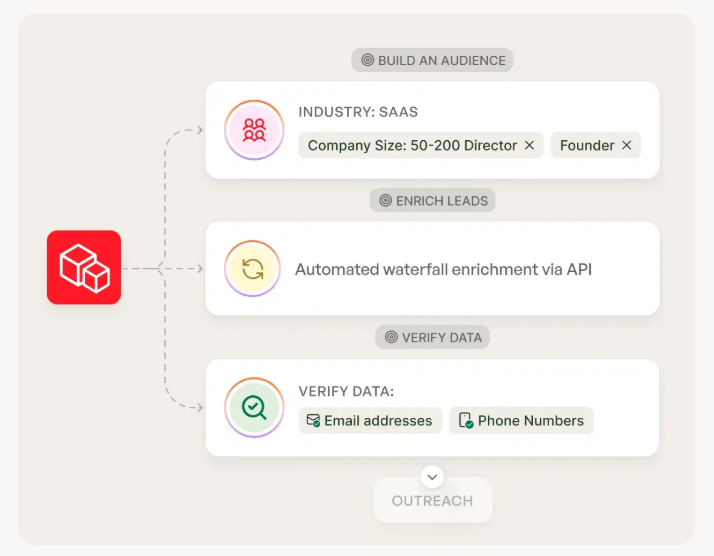
This is where Prospeo fits into your workflow. It's a B2B data platform with 300M+ professional profiles, 125M+ verified mobile numbers, and a 7-day data refresh cycle - compared to the 6-week industry average. The 30+ search filters include buyer intent signals tracking 15,000 topics, technographics, job changes, headcount growth, and funding data. You're not just getting phone numbers - you're getting context for that 2-3 minutes of pre-call research that separates good reps from great ones.
82% of buyers accept meetings from proactive sellers - but only if you actually reach them. Prospeo gives you direct dials and 98% accurate emails for decision-makers, at $0.01 per lead. No contracts, no gated pricing.
Turn those 60 daily dials into 60 real conversations.
AI-Powered Scripting Tools
If you're running a call center or managing a team of 10+ reps, manual script management becomes a bottleneck. These tools help you scale your call scripts across dozens or hundreds of agents without sacrificing quality.
Creovai
Creovai's Agent Workflow guides reps step-by-step through calls while leaving room for natural conversation. The results are compelling: 30% reduction in call handling times, training time reductions up to 70%, and a 25% increase in employee retention. Pricing runs around $100-$200/agent/month for most deployments. Best for: teams where onboarding speed and rep retention are the primary pain points.
Five9
Five9's cloud-based dynamic scripting uses branching logic for predictable conversation paths. One client handled 48,000-55,000 forbearance plans in a single month using Five9's scripting engine. Expect around $150-$300/agent/month depending on modules. Best for: high-volume call centers where consistency matters more than creativity.
Other Tools Worth Knowing
| Tool | What It Does | Best For | Price Range |
|---|---|---|---|
| Balto | Real-time call guidance - listens and surfaces script elements live | Coaching at scale | ~$100-$150/agent/mo |
| Knowmax | Next-best-action recommendations, multilingual | Global teams | ~$75-$150/agent/mo |
| Uniphore | Conversational AI that preserves context across interrupted calls | Complex support flows | ~$100-$200/agent/mo |
| Zingtree | Logic-driven agent scripting, easier to implement | Smaller teams, tight budgets | ~$50-$100/agent/mo |
AI call analysis technology can improve success rates by up to 50%. For high-volume teams, the ROI on these tools pays for itself fast.
FAQ
What's the difference between telemarketing and cold calling?
Telemarketing is the umbrella strategy covering outbound sales, inbound support, retention, surveys, collections, and appointment setting. Cold calling is one tactic within it - calling prospects with no prior interaction. Your scripts need to match the specific call type, not treat every dial as a cold call.
What's a good telemarketing conversion rate?
Overall rates run 1-3%, with cold calling averaging 4.8% and appointment setting at 2.3%. In B2B pipelines, 5% of inquiries become qualified leads and 27% of those convert to sales. Following up within 3 minutes of a lead action boosts conversion by 98%.
What are the TCPA penalties for non-compliant calls?
$500 per violation, trebled to $1,500 for willful violations, with no cap on total damages. Federal DNC violations reach $53,088 each. The largest verdict to date: $925 million for 1.8 million ATDS violations.
How do I avoid sounding scripted on calls?
Use delivery frameworks like LARA and P.I.T.A. instead of reading word-for-word. Slow your pace to ~171 WPM, stand up, and smile while dialing. Top performers ask 39% more questions and run discovery calls 76% longer than average reps. Record yourself and review weekly - it's uncomfortable but it works.
How important is data quality for telemarketing success?
It's the single biggest upstream variable. B2B data decays at 22.5% annually - about one in five contacts on a year-old list is wrong. Using a platform with weekly data refreshes and verified mobile numbers means fewer wasted dials and more live conversations per session.