

The Little Red Book of Selling Summary: Key Principles, Quotes & Honest Take
You've lost a deal to a worse product at a higher price. We all have. Gitomer's answer is simple and uncomfortable: the prospect didn't buy the other product - they bought the other salesperson. That's the thesis running through every page of this book, and this summary breaks down the 12.5 principles that explain why.
This isn't about how to sell. It's about who you need to become.
Book at a Glance
| Detail | Info |
|---|---|
| Author | Jeffrey Gitomer |
| Published | 2004 |
| Copies sold | 5M+ |
| Languages | 14 |
| WSJ bestseller list | 71+ appearances |
| Goodreads | 3.91 avg (10,236 ratings) |
| Awards | 2009 Audie, 2005 IPPY |
The core thesis in one sentence: people prefer buying over being "sold," and your job is to become someone worth buying from.
About Jeffrey Gitomer
Gitomer has written fifteen books, including The Sales Bible and The Little Gold Book of YES! Attitude. He publishes Sales Caffeine, a newsletter reaching 250,000 subscribers, and was inducted into the Speaker Hall of Fame in 2008. The National Speakers Association ranks him in the top 1% of non-celebrity speakers - which, love him or not, means the guy's earned the right to be opinionated about selling.
Gitomer's 12.5 Principles of Sales Greatness
1. Kick Your Own Ass
Nobody's coming to motivate you. Everything else falls apart without self-discipline. Stop blaming your territory, your leads, or your product.
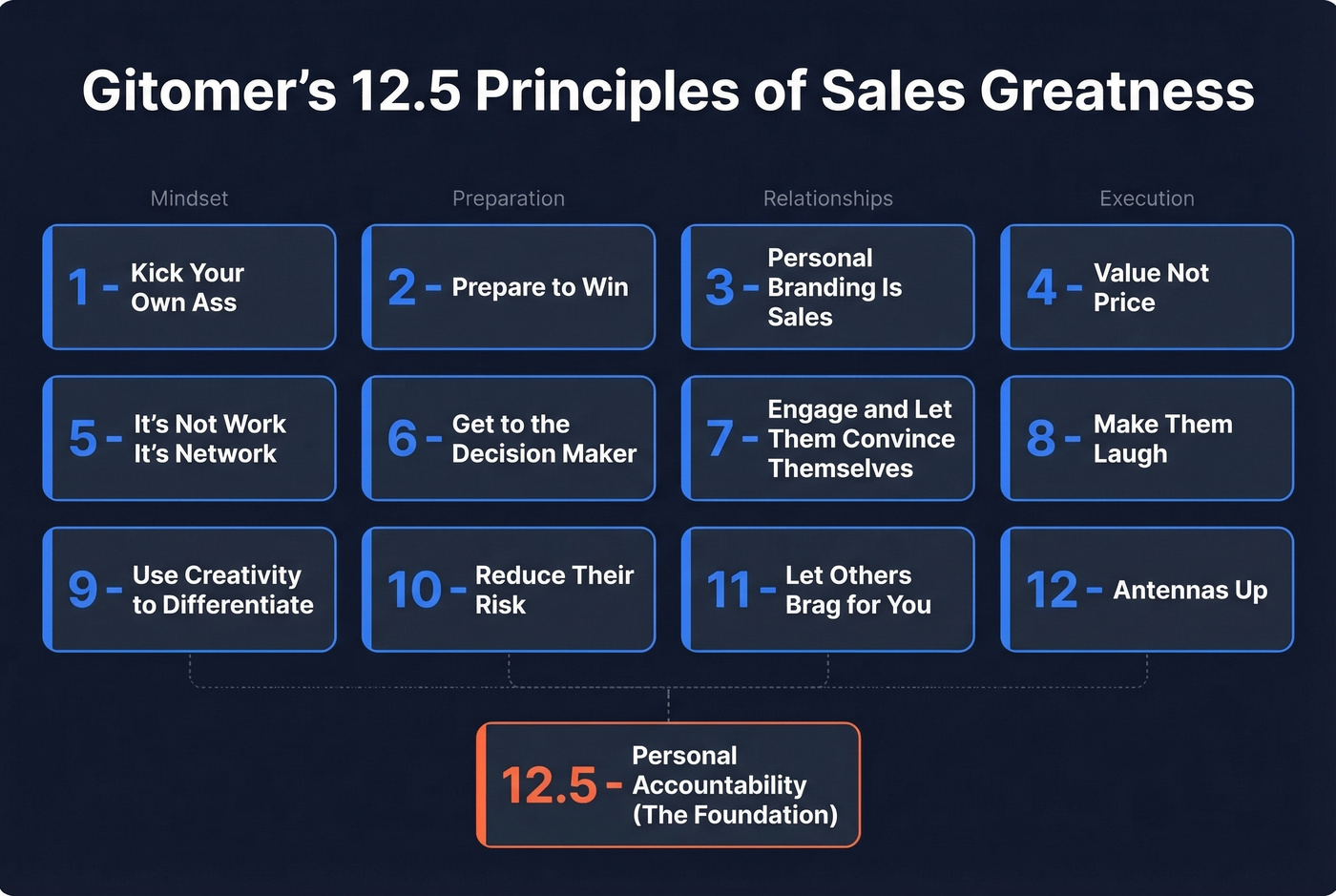
2. Prepare to Win, or Lose to Someone Who Is
Research the prospect, understand their business, show up with something valuable to say. The reps who lose aren't outworked - they're outprepared. This is the single most actionable principle in the book, and the one we'd hand to any new rep on day one.
Don't wing it. Prep your calls the night before.
3. Personal Branding Is Sales
It's not who you know. It's who knows you. Your reputation precedes every cold call. Build authority so prospects come to you already trusting your expertise. (If you want a modern playbook for this, start with personal branding in B2B.)
"Sell to help the other person," not to earn a commission.
4. It's All About Value, Not Price
If you're competing on price, you're in a weak position. Articulate value in the buyer's language, not yours. (More on this in our guide to add value in sales.)
5. It's Not Work, It's Network
Relationships compound. Treat networking as a core job function, not a happy-hour afterthought. Every connection is a future referral, introduction, or deal. This is also where account-based selling tends to outperform spray-and-pray outreach.
6. If You Can't Get In Front of the Real Decision Maker, You Suck
Gitomer's bluntest principle. Presenting to someone without budget authority is practice, not selling. Find the person who signs the check. (Related: how to think about the economic buyer in complex deals.)
7. Engage Me and You Can Make Me Convince Myself
One of the book's most powerful ideas, and the one that separates good reps from great ones. Ask questions that make the prospect think - really think, not just nod along. When they arrive at the conclusion themselves, there's no objection to overcome because the conclusion is already theirs. If you need a framework, use better discovery questions.
"What's the risk? What's the reward?" - Gitomer's framework for helping buyers talk themselves through hesitation by writing down risks, then eliminating them brick by brick.
8. If You Can Make Them Laugh, You Can Make Them Buy
Humor disarms. It builds rapport fast. You don't need to be a comedian - you need to be human enough that the prospect relaxes.
9. Use Creativity to Differentiate and Dominate
Every competitor sends the same follow-up email. Be memorable. Creativity in your outreach, proposals, and presentations separates you from the stack of identical pitches sitting in your prospect's inbox. If you're stuck, steal from proven sales follow-up templates.
10. Reduce Their Risk and You'll Convert Selling to Buying
Buyers don't say no because they don't want your product. They say no because they're afraid of making a wrong decision. Testimonials, case studies, guarantees, pilot programs - anything that lowers perceived risk moves the deal forward. (This pairs well with a system for reducing objections.)
A Gitomer rule-of-thumb: in a group of 10 prospects, two will buy, two won't, and the other six are persuadable. Social proof is what tips those six.
11. When You Say It About Yourself, It's Bragging. When Someone Else Says It, It's Proof.
This connects directly to Principle 10. Get your customers talking. Their words carry ten times the weight of your pitch deck.
12. Antennas Up!
Stay alert. Opportunities show up disguised as problems, offhand comments, and industry shifts. In practice, this is about identifying buying signals before your competitors do.
"Attitude allows you to see the possibilities when opportunity strikes - because it often shows up in the form of adversity."
12.5. Personal Accountability
The .5 is intentional - it's half a principle because it's really the foundation under all twelve. No one else owns your results. This is a Gitomer signature across his books, and it's the thread that ties everything together.

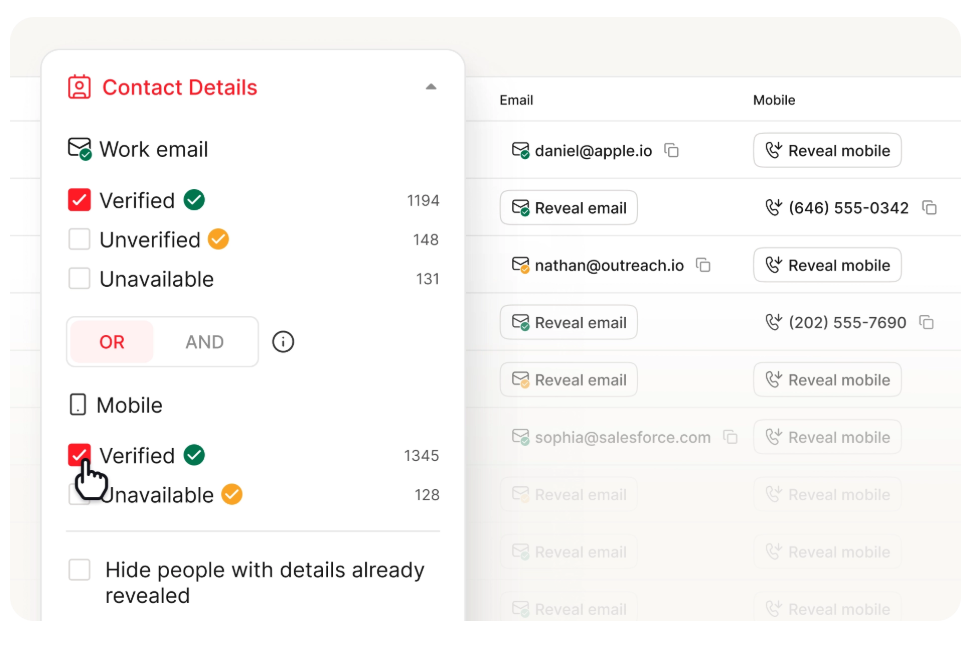
Gitomer's Principle #2 says preparation separates winners from losers. In 2026, that means showing up with verified emails, direct dials, and intent signals before you ever pick up the phone. Prospeo gives you 300M+ profiles, 98% email accuracy, and buyer intent across 15,000 topics - so you walk into every conversation already knowing what your prospect cares about.
Stop winging it. Outprepare every rep in your market.
Are These Principles Still Relevant in 2026?
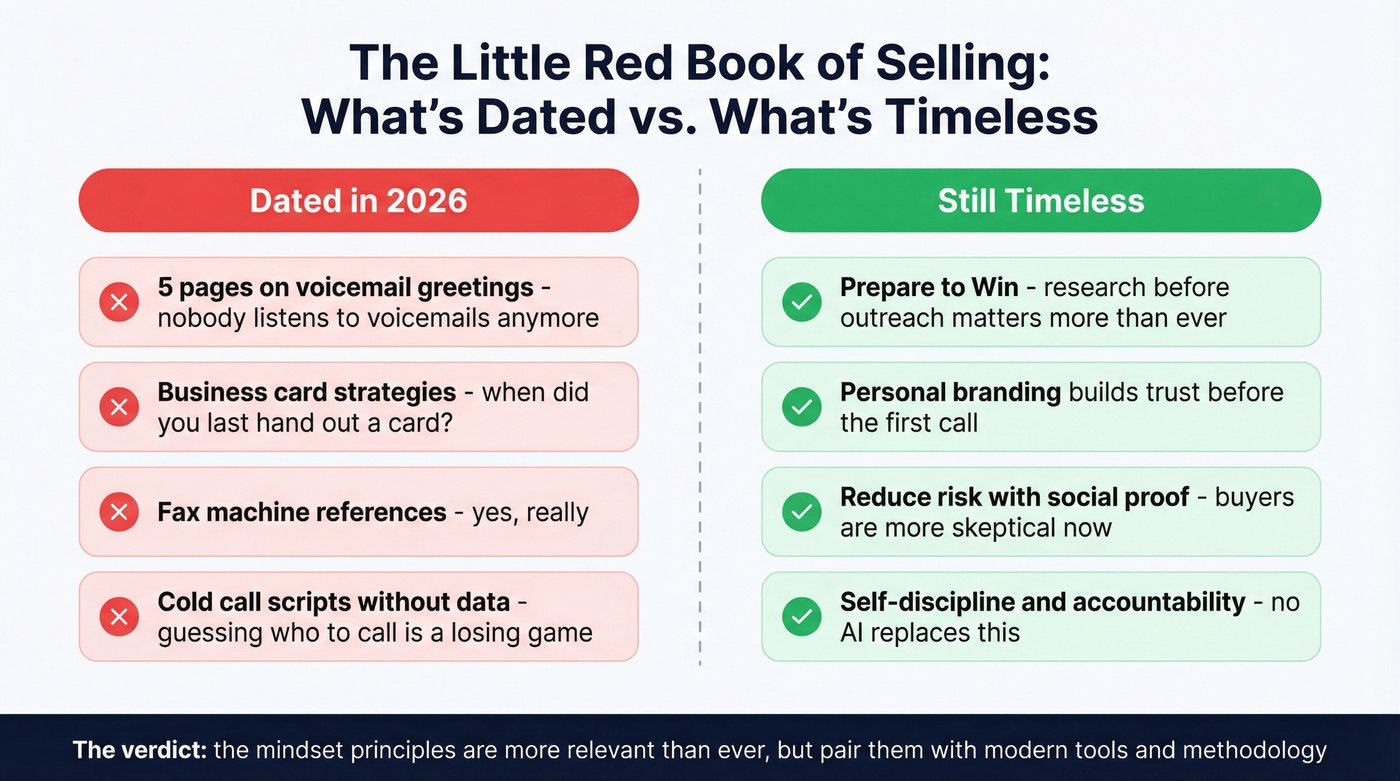
Let's be honest: some of the tactical advice is dated. Five pages on crafting a voicemail greeting doesn't hit the same in 2026. Business card strategies feel like artifacts from a different era.
But the underlying principles? More true now than when Gitomer wrote them.
He's argued this himself. In a piece for SBJ, he wrote: "Any seasoned executive or assistant would smell it... And they'll never take your call again." He also criticizes sending proposals without a firm follow-up appointment. Buyers have more information and less patience than ever. Manipulation doesn't scale.
Here's the thing: sales is a character problem, not a skills problem. You can teach someone MEDDIC in a week. You can't teach them to care about the buyer's outcome. That's why this book still matters - and why it's not enough on its own. The consensus on r/sales tends to agree: Gitomer gives you the right mindset, but you'll need a methodology book alongside it to actually run deals.
If you only take one principle: #2, Prepare to Win. In 2026, preparation means showing up with verified contact data and buyer intent signals before you ever reach out. Tools like Prospeo give you 300M+ professional profiles with 98% verified email accuracy and intent data across 15,000 topics - so you're not guessing who to call or what they care about. (For a broader system, see our guide to sales prospecting techniques.)
Who Should (and Shouldn't) Read This
Best for: early-career SDRs and founder-led sales. If you're in your first year and need a mindset foundation, or you're a founder doing your own selling and feeling like an imposter, start here. Pair it with a practical 30-60-90 day plan so the mindset turns into habits.
Skip this if you're looking for a repeatable enterprise process. If you're an enterprise AE running complex deal cycles, read The Challenger Sale instead. If you've been selling 10+ years, most of this you'll already know - the value is in the reminder, not the revelation.
What to Read Next
SPIN Selling by Neil Rackham - methodology-heavy, question-based selling. Where Gitomer gives you mindset, Rackham gives you structure. (Goodreads)
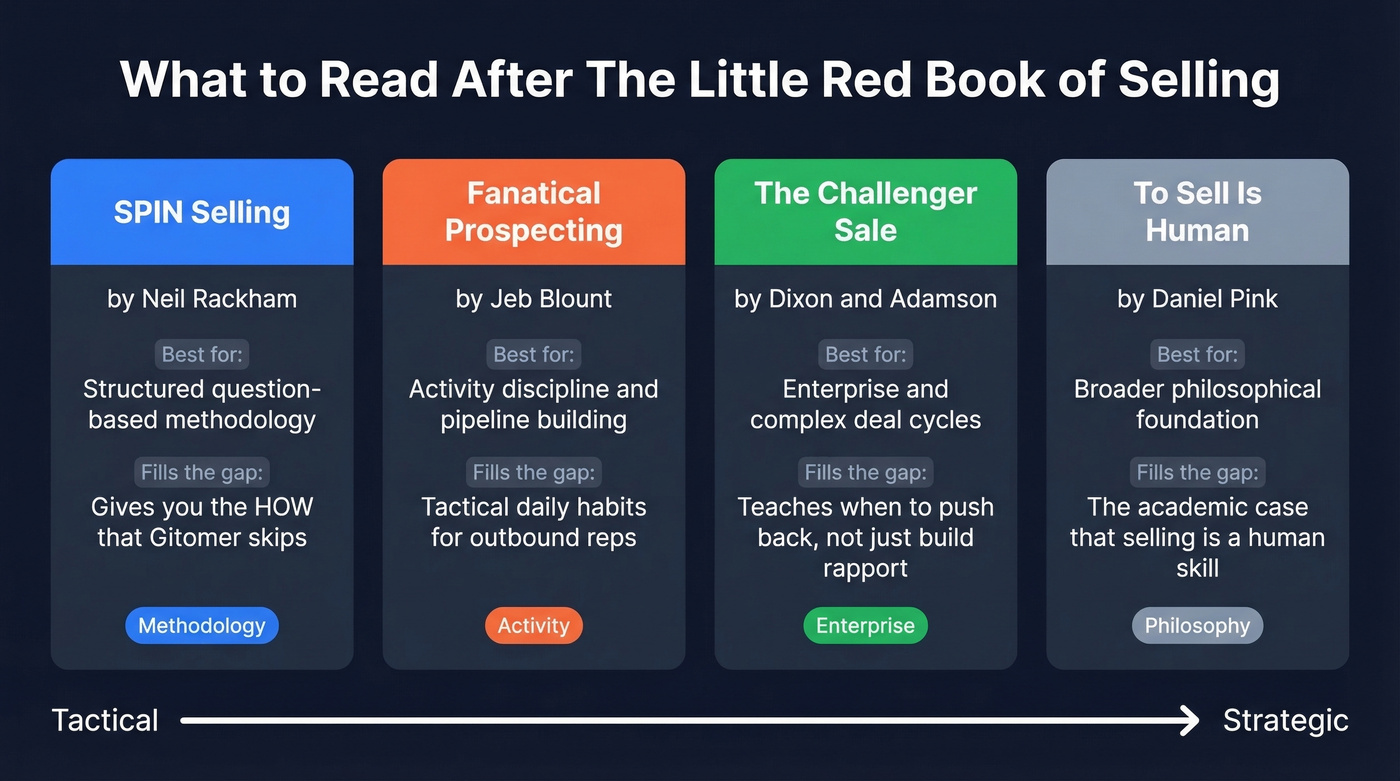
Fanatical Prospecting by Jeb Blount - activity discipline. Pairs perfectly with Gitomer's "kick your own ass" philosophy and fills the tactical gap the Little Red Book leaves open. If you want to operationalize it, build a simple cold calling system.
The Challenger Sale - built for enterprise and complex sales cycles. It's the opposite of Gitomer's relationship-first approach, and worth reading precisely because of that tension. We've found that the best reps hold both frameworks in their head and switch between them depending on the buyer.
To Sell Is Human by Daniel Pink - the philosophical argument that everyone sells. Broader and more academic, but a good complement. For more books in this vein, the Goodreads similar-books page is a solid starting point.
Principle #6: get in front of the real decision maker. That's hard when your data is stale and you're emailing the wrong people. Prospeo refreshes every record every 7 days - not the 6-week industry average - and gives you 125M+ verified mobile numbers with a 30% pickup rate. Reach the person who signs the check, not their gatekeeper.
Find the decision maker's real number for $0.01 per lead.
FAQ
How many principles are in The Little Red Book of Selling?
Twelve full principles covering mindset, preparation, branding, value, networking, and creativity - plus a half-principle on personal accountability that serves as the foundation beneath all of them.
Is this book good for beginners?
Yes. It's one of the best first sales books because it builds a mindset foundation rather than teaching a specific methodology. New SDRs and founders doing their own outreach will get the most from it.
What's the single most important principle?
Principle #2: Prepare to Win. Research the prospect, understand their business challenges, and show up with specific value before you ever pitch. In 2026, that means using verified data and intent signals - not guessing from a stale spreadsheet.