What Is a Seed List? The Complete Guide (2026)
You just sent a 50,000-person campaign. Your ESP dashboard says 98% delivered. You high-five the team. Then three days later, pipeline is dead silent - because 30% of those "delivered" emails are sitting in spam folders where nobody will ever see them.
Delivery rate (did the server accept it?) and deliverability (did it hit the inbox?) are two completely different numbers. The average inbox placement rate across major providers is just 83.1% - roughly 1 in 6 emails never reaches the inbox. Another 10.5% land in spam. And 6.4% vanish entirely, blocked or undelivered with zero notification.
A seed list is how you close that visibility gap before real money is on the line.
Quick version:
- Seed list: A set of test email addresses across multiple providers (Gmail, Outlook, Yahoo, etc.) used to check where your emails actually land - inbox, spam, or nowhere.
- The stat that matters: Average inbox placement is 83.1%. One in six emails misses the inbox entirely.
- The critical distinction: "Delivered" doesn't equal "in the inbox." Your ESP's 98% delivery rate tells you nothing about spam placement.
- Quick action list: (1) Build a DIY seed list with 15-25 personal accounts, (2) Run a free GlockApps test, (3) Set up Google Postmaster Tools, (4) Verify your email list before every campaign - bad data tanks deliverability before content matters.
What Is a Seed List in Email Marketing?
A seed list is a collection of test email addresses - spread across different email providers - that you control and monitor. You send your campaign to these addresses before (or alongside) your real subscriber list, then check where each email landed: inbox, spam folder, or missing entirely.
Think of it as a canary in the coal mine for your email program.

Understanding the distinction between a seed list and a regular email list is critical:
- Purpose: A subscriber list generates revenue. A seed list generates intelligence.
- Composition: Seed addresses span every major provider your audience uses - Gmail, Outlook, Yahoo, Apple Mail, Google Workspace, Office 365, and your own company domain.
- Monitoring: You (or a tool) check each seed address after every send and log one of three outcomes: inbox, spam, or missing.
The "missing" category is the one that scares people. It means the email was blocked outright - the receiving server rejected it or silently dropped it. Your ESP won't tell you this happened. It'll still show "delivered" because the initial handshake succeeded.
Seed lists also catch merge tag failures. Personalization tokens like {{first_name}} only populate with real subscriber data in actual sends, not in ESP preview mode. If your merge tags break, seed testing is where you'll find out.
Why Inbox Placement Testing Matters in 2026
If you're thinking "my emails are fine, I don't need this," the numbers say otherwise.

B2B inbox placement has deteriorated dramatically. Office 365 inbox placement dropped 26.7 percentage points year-over-year. Outlook and Hotmail fell 22.6 percentage points. These aren't marginal shifts - they're a collapse.
The authentication gap makes it worse. Only 7.6% of domains enforce DMARC with a quarantine or reject policy, which means 92.4% of sending domains are essentially telling mailbox providers "I haven't bothered to lock down my authentication." Fully authenticated senders are 2.7x more likely to reach inboxes - but most teams haven't done the work.
Here's the thing: Google retired its color-coded Postmaster Tools dashboard - the visual reputation badge that gave senders a quick read on their standing. Without it, you've lost one of the few free signals that showed how Gmail viewed your domain. Teams now rely on inbox placement testing to fill that gap. It's one of the only ways to get provider-by-provider data without waiting for campaign results to tell you something went wrong.
Small senders are getting hit hardest. In Q4 2025, senders pushing 1-10K emails per month saw Gmail inbox rates drop by 15 percentage points and Google Workspace drop by 19 percentage points. New domains face roughly a 30 percentage-point inbox placement penalty compared to mature domains. If you're a startup or SMB running lean outbound, you're the exact profile that needs seed testing most - and the least likely to be doing it.
Types of Seed Lists
Weighted vs. Unweighted Seed Lists
A weighted seed list mirrors your actual audience distribution across email providers. If 60% of your subscribers use Gmail, 60% of your seed addresses should be Gmail accounts. An unweighted seed list doesn't match any particular distribution - it's built for troubleshooting specific providers or isolating issues.

Here's where teams get burned: seed weighting bias. If 60% of your audience uses Gmail but only 30% of your seeds are Gmail, your aggregate placement numbers underweight Gmail's actual influence. You'll think you're at 85% inbox placement when your real-world number is closer to 70%.
Maintain both types. Use your weighted list for pre-campaign checks - it reflects reality. Use an unweighted list when something breaks and you need to isolate whether the problem is Gmail-specific, Outlook-specific, or universal.
DIY vs. Commercial Seed List Options
DIY seed lists use 15-25 personal accounts you create across Gmail, Outlook, Yahoo, and your company domain. They're free, and because they're real accounts with real activity, mailbox providers trust them more than commercial alternatives.
A commercial seed list from tools like GlockApps or InboxMonster runs 50-100+ managed addresses with broader provider coverage. The tradeoff: commercial seed addresses are inactive accounts that ISPs treat differently than real mailboxes. One Reddit user put it bluntly - sending to seed addresses is "an absolute dead giveaway" for mass emailers.
B2B vs. B2C Seed List Composition
This is the mistake I see most B2B teams make. They test against consumer Gmail and Outlook.com, then assume those results apply to their prospects' Google Workspace and Microsoft 365 inboxes. They don't. Consumer and business accounts filter differently.
For B2B, your seed list should be roughly 60% Google Workspace and 40% Microsoft 365 - mirroring the actual B2B email market split. Testing on consumer Gmail tells you almost nothing about whether your cold email will reach a VP's Workspace inbox. Teams using seed testing for prospecting should weight heavily toward business email providers, since that's where their actual recipients live.

Seed lists reveal deliverability problems - but bad contact data causes them. Prospeo's 5-step email verification and spam-trap removal means your campaigns start clean, with 98% email accuracy and bounce rates under 4%.
Stop diagnosing spam placement. Start sending to verified addresses.
How to Build a Seed List and Run Your First Test
Building Your Seed List
Start with a minimum of 5-10 addresses, but 15-25 is the sweet spot for meaningful coverage:

- Create accounts across providers: Gmail (personal), Google Workspace, Outlook.com, Microsoft 365, Yahoo, Apple Mail, and at least one account on your own company domain.
- Give each account a real identity. First name, last name, profile photo. Bare accounts look suspicious.
- Avoid sequential addresses. Don't create seedtest1@gmail.com, seedtest2@gmail.com, seedtest3@gmail.com. This triggers spam filters immediately.
- Build engagement history. Each seed account needs to receive regular, authentic emails - newsletters, order confirmations, personal correspondence. New or inactive accounts get flagged as suspicious by ISPs.
- Check results across webmail, desktop clients, and mobile apps - filtering can differ between them.
- Create a labeled contact group in your ESP called "Seed List." Import your addresses there.
The setup takes 30-60 minutes. It's a one-time investment that pays for itself on the first campaign you catch going to spam.
Running the Test
The golden rule: send your test exactly as you'd send the real campaign. Same content, same subject line, same sending address, same ESP, same tracking domain. Changing any variable invalidates the test.
Never paste seed addresses into the To, CC, or BCC fields. SpamAssassin adds 0.20 points to your spam score when more than 25 recipients appear in the To field. Import your seeds as a contact group and send to that group. If your ESP doesn't support contact groups, split into batches of 25.
Send at the same time of day you plan to send the real campaign. Timing affects filtering.
Then wait. Most emails arrive within 15 minutes. If an email hasn't appeared in any folder after 30 minutes, it was likely blocked entirely. If you need to re-test, wait at least 15-20 minutes between sends - testing within 5 minutes causes results to worsen progressively as providers flag the rapid-fire pattern.
How to Interpret Seed List Results
Every seed test produces three numbers: inbox percentage, spam percentage, and missing percentage. The benchmark for strong inbox placement is 80% or above. Anything below that means you've got a problem worth investigating.

Here's where your results stand against Q4 2025 industry benchmarks:
| Provider | Q4 2025 Avg. Inbox Rate |
|---|---|
| AOL | 57.51% |
| Office 365 | 67.95% |
| Gmail | 56.97% |
| Google Workspace | 49.98% |
| Hotmail | 46.79% |
| Outlook | 45.06% |
| Yahoo | 57.48% |
Look at those Outlook and Hotmail numbers - mid-40s. If you're selling into enterprises running Microsoft, nearly half your emails are missing the inbox on average.
When analyzing results, look for provider-specific patterns. If you're landing in spam on Gmail but hitting inbox on Outlook, that's a Gmail content trigger - likely a link, image ratio, or specific phrase tripping their filter. If you're missing across all providers, it's a domain or IP reputation issue. To sanity-check the underlying cause, start with your domain or IP reputation and work outward.
The "missing" percentage is the scariest metric. It typically means an ISP block or content so spammy the server rejected it outright. Your ESP dashboard won't show this. Only seed testing reveals it.
Seed List Best Practices and Top Testing Tools
GlockApps
Use this if: You want the best starting point without enterprise pricing. You're a marketing team sending newsletters, transactional emails, or warm outbound and need pre-send inbox placement checks.
Skip this if: You're running cold email at scale through Google Workspace and Microsoft 365 - GlockApps' professional inbox coverage feels limited for that use case.
GlockApps runs 100+ seed mailboxes across global mailbox providers, including country-specific variants like Outlook.fr and Outlook.de. It checks against five spam filters: Google, Microsoft EOP, Barracuda, SpamAssassin, and Proofpoint. Plus 50+ blacklist checks. If you're comparing options, see our breakdown of email deliverability tooling and what changed recently.
Pricing: Essential at $59/mo, Growth at $99/mo, Enterprise at $129/mo (all annual billing). The free tier gives you 2 tests per month - enough to gut-check before a major send. If you don't need a subscription, one-off test packs run $17 for 3 tests up to $76 for 20.
One caveat: "Working with a relatively small seed list (around 100 mailboxes), you need to be mindful not to draw too many conclusions from the results." Fair point. It's a signal, not a verdict.
InboxMonster
InboxMonster's B2B seed list is one of the strongest available, with Google Postmaster Tools, Microsoft SNDS, SendGrid, and Salesforce Marketing Cloud integration baked in. But at $15K/year just for deliverability (Creative Suite is another $5K, SMS another $6K), this is strictly for high-volume senders where inbox placement directly moves revenue.
If you're spending less than $5K/month on email, this isn't for you. There's no free trial, and the learning curve is significant.
Everest by Validity
Everest (formerly 250Ok) covers design testing, IP reputation monitoring, spam monitoring, and feedback loops in one platform. Pricing starts at $29/mo - the most accessible entry point for a full-featured tool. The real value kicks in at higher tiers with managed services and monitoring. The most common failure mode is skipping authentication; use this SPF, DKIM, and DMARC guide as your baseline before you trust any tool output.
Other Tools Worth Knowing
Litmus ($99-199/mo) is primarily a rendering and preview tool - 90+ email clients - with seed testing as a secondary feature. If you're already using Litmus for design QA, the seed testing is a nice bonus. Don't buy it just for deliverability.
EmailWarmup.com offers free seed list testing across 50+ providers. It's the best free option available. Use it to cross-reference results from paid tools.
Mailtrap (from $15/mo) is developer-focused - a sending platform with deliverability analytics built in. If your engineering team manages email infrastructure, Mailtrap fits their workflow better than marketer-oriented tools.
| Tool | Starting Price | Free Tier | Seed List Size | Best For |
|---|---|---|---|---|
| GlockApps | $59/mo | 2 tests/mo | 100+ | Marketing / warm outbound |
| InboxMonster | $15,000/yr | None | Enterprise | High-volume B2B |
| Everest | $29/mo | Limited | Large | Full-stack monitoring |
| Litmus | $99/mo | None | 90+ clients | Design + testing |
| EmailWarmup | Free | Unlimited | 50+ | Cross-referencing paid tools |
| Mailtrap | $15/mo | Yes | Varies | Developers |
Limitations of Seed List Testing
Real talk: most guides treat seed lists as a silver bullet. They're not.
The Certified Senders Alliance published a finding in January 2025 that should give every email marketer pause: seed data alone isn't a reliable foundation for deliverability decisions. Modern mailbox providers - Google, Yahoo, Microsoft - increasingly factor user engagement into filtering decisions. Opens, clicks, replies, forwards, spam complaints, deletes. Seed addresses generate none of these signals. They're ghost accounts that receive email and do nothing with it.
This means your seed test results are inherently pessimistic. Your real deliverability will be higher than what these tools indicate, because real subscribers who open and click your emails send positive signals that improve placement. Seeds don't.
But here's the more frustrating problem: different tools give contradictory results for the same email. One Reddit user captured it perfectly - "GlockApps is showing 100% of emails in Outlook landing in Spam, while EmailGuard shows all going to the inbox." Multiple threads across r/Emailmarketing and r/coldemail echo this frustration. Users describe deliverability tools as giving "vague or even false results" before pushing upgrades or warmup services.
Why the contradictions? Seed-based tools send to predefined addresses and analyze handling - a simulated view. Different tools use different seed addresses, different sending infrastructure, and different timing. Each one captures a slightly different snapshot of constantly shifting filters.
And there's a darker risk most people miss: incorrect use of seed testing can actively damage your sender reputation. Seed addresses are inactive accounts. Regularly emailing addresses that never engage - never open, never click, never reply - signals to ISPs that you're sending to a dead list. That hurts your IP and domain reputation over time. This is why list hygiene and data quality matter as much as testing.
None of this means seed testing is useless. It means you can't rely on it alone.
My hot take: Seed list testing is the most overrated and underrated deliverability practice at the same time. Overrated because too many teams treat it as the final word on inbox placement. Underrated because the teams who skip it entirely are flying completely blind. The right answer is treating it as one signal among four.
Building a Complete Deliverability Monitoring Stack
The teams that maintain strong deliverability don't rely on any single tool. They layer four signals together.
1. Verify your list first.
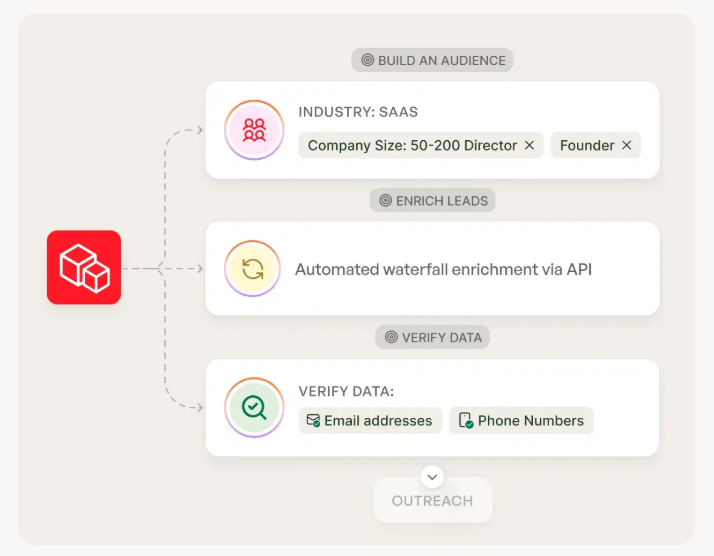
This is the step most teams skip - and it undermines everything else. Only 23.6% of B2B marketers verify email lists before campaigns, which means 76% are testing deliverability on top of corrupted data. If your list contains invalid addresses, spam traps, or honeypots, your sender reputation degrades before you even get to testing. Prospeo's 5-step verification catches invalid addresses, spam traps, and honeypots at 98% accuracy - so your seed test results reflect your content and reputation, not your data quality.
I'm biased here (you're reading our blog), but the principle matters more than the tool: verify first, test second. If you need a repeatable process, follow an email verification workflow and standardize it in your team.
2. Run seed list tests.
Use GlockApps or a DIY seed list to check inbox placement across providers before major sends. Cross-reference with EmailWarmup.com's free tool when results look suspicious.
3. Set up Google Postmaster Tools.
Seed tests show placement. Postmaster Tools shows engagement-based signals - complaint rates, authentication status, and Gmail-specific reputation data. These complement each other perfectly. Seed tests catch technical issues; Postmaster catches audience issues.
Keep your Gmail spam complaint rate below 0.10%. Anything above 0.30% is the danger zone where Gmail starts aggressively filtering. If you're troubleshooting complaints specifically, map your numbers to a known spam rate threshold.
4. Analyze raw email headers.
When seed tests and Postmaster Tools disagree (and they will), the Authentication-Results header in raw email headers is the definitive record. It shows exactly how the receiving mailbox provider evaluated your SPF, DKIM, and DMARC. For Gmail authentication specifically, always defer to Google Postmaster Tools as the authoritative source.
Common Mistakes That Ruin Seed List Results
Using sequential Gmail addresses. seedtest1@, seedtest2@, seedtest3@ - this pattern triggers spam filters immediately. Use varied, natural-looking addresses.
Not weighting your seed list to match audience distribution. If 60% of your audience is on Gmail and your seed list is 30% Gmail, your aggregate numbers are lying to you.
Pasting seeds into To/CC/BCC. Import as a contact group. SpamAssassin penalizes 25+ recipients in the To field, and bulk mail classifiers flag it instantly.
Testing too frequently. Running the same test within 5 minutes of the previous one causes results to worsen progressively. Wait 15-20 minutes minimum between tests.
Relying on new or low-reputation domains for seed accounts. Fresh accounts with no sending or receiving history get treated as suspicious. Build engagement history first.
Ignoring seed account activity. Seed addresses that never open, click, or reply train ISPs to treat them as dead weight. Periodically interact with emails in your seed accounts.
Trusting a single tool's results. We've seen GlockApps and EmailGuard give opposite verdicts on the same send. Always cross-reference with at least one other signal source.
Skipping authentication setup. Before you test anything, confirm SPF (start with softfail ~all), DKIM (2048-bit key, rsa-sha256), and DMARC (p=none to start, then tighten). Fully authenticated senders are 2.7x more likely to reach inboxes.
A/B testing before seed testing. Run seed tests before A/B testing subject lines or CTAs. If your emails are landing in spam, A/B test results are meaningless - you're optimizing content nobody sees. If you want a clean framework, use this A/B testing structure so you’re not testing noise.
FAQ
How many seed addresses do I need?
For DIY, 15-25 addresses across 5-8 providers gives meaningful coverage. Commercial tools use 50-100+, but a well-constructed DIY list often produces more trustworthy results because the accounts have real engagement history.
How often should I run seed list tests?
Before every major campaign at minimum. High-volume senders (50K+/month) should test weekly. Always re-test after changing ESPs, domains, authentication settings, or templates.
Can seed list testing hurt my sender reputation?
Yes, if done incorrectly. Seed addresses never open, click, or reply, so regularly emailing them degrades your IP and domain reputation. Keep seed sends infrequent, and periodically interact with emails in your seed accounts to simulate real engagement.
Should I verify my email list before running a seed test?
Always. Invalid addresses and spam traps degrade sender reputation, which worsens seed test results. Clean your list first so the seed test reflects content and reputation issues, not bad data.
What's the difference between a seed list and a regular email list?
A regular email list contains your actual subscribers or prospects - the people you're trying to reach and convert. A seed list exists purely for monitoring and diagnostics. You never market to seed addresses; you use them to test whether your campaigns would reach real inboxes.
You're testing inbox placement because bad data tanks sender reputation. Prospeo verifies every email through catch-all handling, honeypot filtering, and a 7-day refresh cycle - so your domain stays clean before you ever need a seed test.
Fix the root cause: replace unverified lists with 98% accurate data.