

What Is Customer Acquisition? Costs, Channels & Data (2026)
The median SaaS company now spends $2.00 to acquire $1.00 of new ARR. That's not a typo - it's the current state of customer acquisition economics, and CAC is up 60% over the past five years. The short answer to "what is customer acquisition" is simple: it's the process that turns strangers into paying customers. The longer answer is that it's never been more expensive to get wrong.
Here's what you need to know right now: CAC jumped 40-60% between 2023 and 2025, and 2026 hasn't shown a meaningful reversal. Referrals remain the cheapest channel at roughly $150 CAC. Outbound is the most expensive at around $1,980. Your industry benchmarks are in the tables below.
Customer Acquisition Defined
Customer acquisition is the end-to-end process of identifying, attracting, and converting someone who's never bought from you into a paying customer. It spans everything from the first ad impression or cold email to the moment they sign a contract and get onboarded.
Marketing drives recognition. Acquisition drives revenue. Marketing gets your brand in front of 10,000 people; acquisition is the system that turns 50 of them into customers and measures exactly what that cost you. The metric at the center of all this is CAC - customer acquisition cost. Every strategy, channel, and decision in this piece ties back to that number.
Why Acquiring Customers Is Getting Harder
Customer acquisition costs rose 40-60% between 2023 and 2025. The longer arc is even uglier - a 222% increase over eight years. Three forces are driving this.
Competition for attention has intensified across every digital channel. More companies running paid search, more SDRs sending cold emails, more content teams publishing SEO plays - and buyer attention hasn't grown to match. Sales cycles are stretching, too. The average B2B SaaS cycle expanded from 107 days in early 2022 to 134 days today, which means more touches, more rep time, and more cost per closed deal.
Privacy changes and cookie deprecation have made attribution harder. When you can't measure which channels drive conversions, you can't optimize spend - so you pay more for the same results. The bottom quartile of SaaS companies now spends $2.82 to acquire a single dollar of new ARR. That's not a business model. That's a slow bleed.
The Acquisition Funnel: 5 Stages
Most guides describe acquisition as a three-step process. That's incomplete.
- Awareness - The prospect learns you exist through an ad, blog post, referral, or cold email.
- Interest - They engage by visiting your site, reading a case study, or replying to outreach.
- Consideration - They evaluate you against alternatives. Demos, pricing pages, and comparison content live here.
- Conversion - They buy. Contract signed, payment processed, deal closed.
- Onboarding - They start using the product. Most guides skip this stage, but it's where churn begins. A customer who never activates is a customer you'll lose in 90 days, and all that acquisition spend goes to zero.
Every dollar you spend on acquisition flows through these stages. If any stage leaks badly, your CAC inflates regardless of how much volume you pour in at the top. If you want a more detailed stage-by-stage framework, map this to the AIDA funnel.
How to Calculate CAC
The formula is simple. The execution is where teams get it wrong.
"Total acquisition spend" should include everything that touches the acquisition process: marketing spend on ads, content, and tools; sales team salaries and commissions; software costs like your CRM, sequencing tools, and data providers; and allocated overhead. Most teams undercount by leaving out sales salaries or tool costs, which makes their CAC look artificially low.
Let's walk through a realistic B2B example. Your company spent $180,000 on marketing, $220,000 on sales compensation, and $40,000 on tools and data in Q1. You closed 72 new customers. Your CAC is $440,000 / 72 = $6,111 per customer. That's a real enterprise number - not the $20 example every introductory guide uses.
The companion metric you need is payback period: how many months until a customer's revenue covers their acquisition cost. If your CAC is $6,111 and average monthly revenue per customer is $1,500, your payback period is roughly four months. Anything under 12 months is healthy for B2B SaaS. Over 18 months and you've got a cash flow problem, even if the unit economics eventually work out. Closely related is your customer acquisition rate - the number of new customers gained over a specific period - which tells you whether your funnel is actually scaling or just getting more expensive.
CAC Benchmarks You Can Use
Benchmarks are only useful if they're specific enough to compare against your own numbers. Here are three cuts of the data, drawn from a FirstPageSage dataset covering client analytics from January 2022 through August 2025.
By Industry
The combined CAC below uses a 75/25 organic-to-inorganic weighting. The dataset skews toward SEO/PPC-investing companies and excludes email, events, and direct mail - but it's the most granular public benchmark available.
| Industry | Organic CAC | Inorganic CAC | Combined CAC |
|---|---|---|---|
| eCommerce | $68 | $140 | $86 |
| B2B SaaS | $205 | $341 | $239 |
| Construction | $212 | $486 | $281 |
| Cybersecurity | $345 | $512 | $387 |
| IT & Services | $503 | $840 | $587 |
| Software Dev | $590 | $1,108 | $720 |
| Legal Services | $628 | $1,112 | $749 |
| Financial Services | $644 | $1,202 | $784 |
| Real Estate | $660 | $1,185 | $791 |
| Insurance | $694 | $1,280 | $840 |
| Healthcare | $772 | $1,280 | $899 |
| Education | $862 | $1,985 | $1,143 |
By SaaS Segment
Enterprise CAC runs 5-10x higher than SMB. This is the table that actually matters if you're in SaaS, because a blended "SaaS CAC" number is meaningless when the range is this wide.
| SaaS Subindustry | SMB | Mid-Market | Enterprise |
|---|---|---|---|
| eCommerce SaaS | $299 | $1,407 | $2,206 |
| Legaltech | $321 | $2,652 | $6,477 |
| Security | $833 | $5,330 | $10,226 |
| Insurance | $1,310 | $4,477 | $11,251 |
| Fintech | $1,461 | $4,923 | $14,774 |
By Acquisition Channel
This is the ranking most teams actually need - cheapest to most expensive:
| Channel | Avg B2B CAC |
|---|---|
| Referrals | ~$150 |
| Paid Social (Facebook) | ~$230 |
| SEO / Organic | $480-$942 |
| Paid Search | ~$802 |
| LinkedIn Ads | ~$982 |
| Outbound Sales | ~$1,980 |
Referrals are the cheapest by a wide margin, but they don't scale without an existing customer base. SEO is the cheapest scalable channel - and its CAC declines over time as content compounds. Outbound is the most expensive but also the fastest path to revenue when you're targeting enterprise accounts. If outbound is a core motion, your sales prospecting techniques and list quality matter more than your sequence length.

Outbound CAC averages $1,980 per customer - and bad data makes it worse. Every bounced email is wasted rep time, burned domain reputation, and inflated acquisition cost. Prospeo delivers 98% email accuracy at ~$0.01 per lead, so your outbound spend converts instead of evaporates.
Stop paying $1,980 per customer when your data is the bottleneck.
LTV:CAC - What "Good" Looks Like
CAC alone doesn't tell you much. You need to pair it with customer lifetime value to know whether your acquisition economics actually work.
| LTV:CAC Ratio | What It Means |
|---|---|
| Below 1:1 | Losing money on every customer |
| 2:1 | Marginal - thin profit |
| 3:1 to 4:1 | Healthy zone for most businesses |
| 6:1+ | Very profitable, but possibly under-investing |
Here's the thing: 3:1 should be your floor, not your goal. If you're sitting at exactly 3:1, one bad quarter of churn or one channel cost increase tips you into unprofitable territory. Aim for 4:1 and treat 3:1 as the alarm threshold.
The practical rule is straightforward. Your CAC should be no more than one-third of LTV. If your average customer generates $15,000 in lifetime revenue, you can afford to spend up to $5,000 acquiring them. Spend more and you're subsidizing growth with cash you'll never recover. If churn is the variable you can't control, start with a proper churn analysis.
Benefits of a Strong Acquisition Engine
A well-built acquisition engine delivers compounding advantages that extend well beyond revenue from a single sale.
Predictable revenue growth. When you know your CAC and conversion rates by channel, you can forecast pipeline with confidence and allocate budget where it compounds. Lower blended CAC over time. Organic channels like SEO and referrals get cheaper as they mature, pulling your blended cost down even as paid channels inflate. Stronger market position. Every new customer you acquire before a competitor does is a customer they now have to win away - at a much higher cost. And better retention economics - companies that acquire the right customers through well-targeted channels see lower churn, which directly improves LTV:CAC.
These benefits compound most when you pair smart targeting with clean data and multi-channel attribution.
B2B vs B2C Acquisition
These are fundamentally different games. Treating them the same is how teams waste budget.
| Dimension | B2B | B2C |
|---|---|---|
| Sales cycle | 2+ months (134 days SaaS avg) | Minutes to days |
| Decision driver | ROI, business impact | Emotion, convenience |
| Stakeholders | Committee of 3-10 people | Individual |
| Contract size | $10K-$1M+ | Typically under $500 |
| Typical CAC | $200-$700+ (SaaS) | $50-$150 (ecommerce) |
B2B acquisition is slower, more expensive, and involves more stakeholders - but the payoff is proportionally larger. B2B contracts routinely hit six or seven figures, which means losing a single customer is materially damaging. That's why B2B strategies lean heavily on relationship-building, lead nurturing, and retention.
7 Strategies That Reduce CAC
Ranked roughly by long-term cost efficiency, with channel CAC data to back up the ordering.
SEO and Content Marketing
SEO delivers the lowest scalable CAC at $480-$942, and that number drops over time as your content library compounds. The tradeoff is time - expect 6-12 months before organic content drives meaningful pipeline. Best paired with outbound for near-term revenue while you build the content engine. Skip this entirely if you need results in the next 90 days and have zero existing content.
Referral Programs
The cheapest channel at roughly $150 CAC, but it requires something most early-stage companies don't have: a base of happy customers willing to refer. Build referral mechanics into your onboarding flow from day one. Even a simple "give $50, get $50" structure works - the key is making it frictionless, not clever.
Outbound With Verified Data
Outbound is the most expensive channel at around $1,980 CAC, but it's also the fastest path to enterprise revenue. The number one lever to reduce outbound CAC isn't better messaging or fancier sequencing - it's data quality. We've watched teams run outbound with 35-40% email bounce rates, which means more than a third of their rep effort and tool spend evaporates on contacts that don't exist.
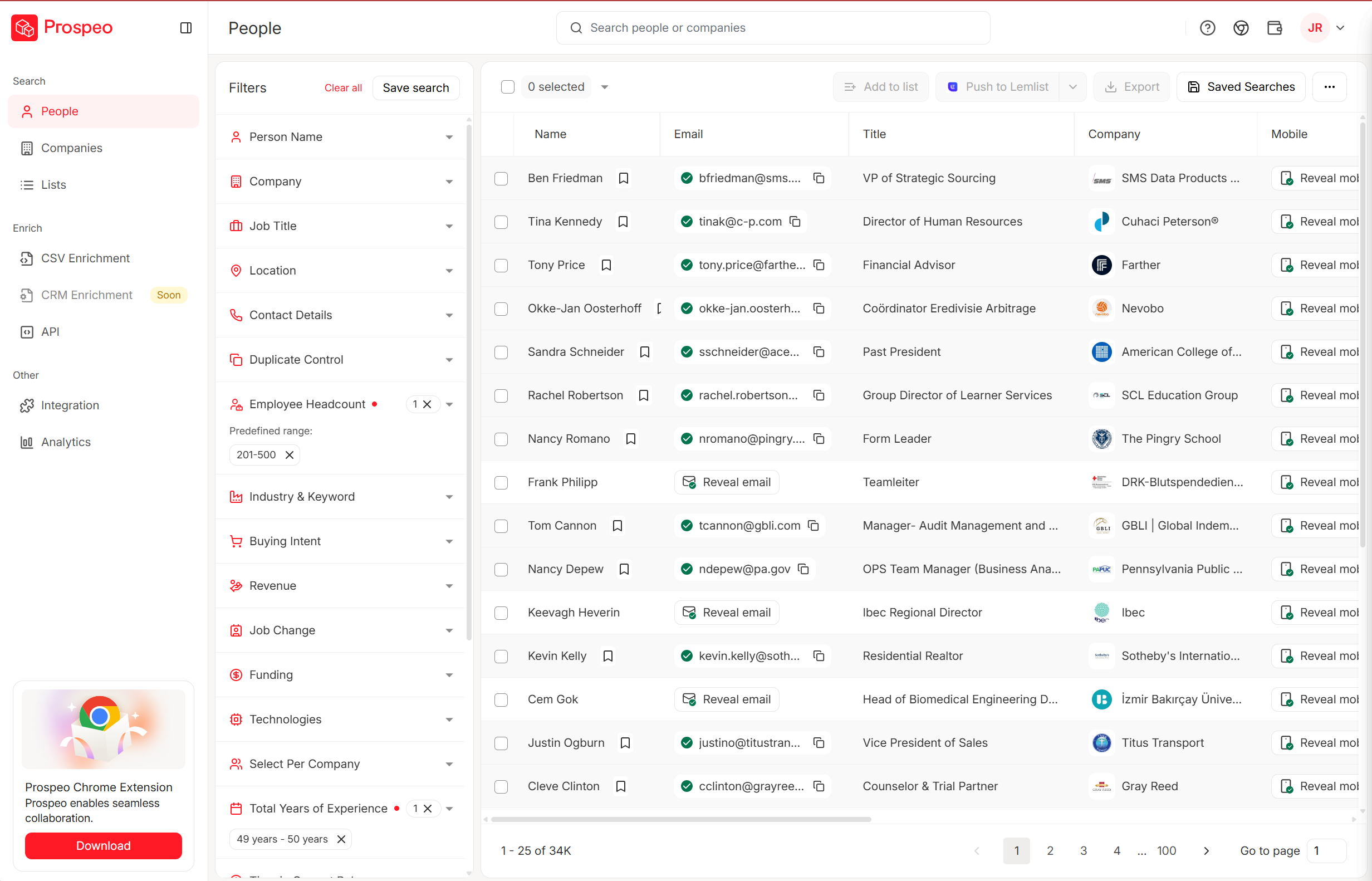
Prospeo's 98% email accuracy and 7-day data refresh cycle directly attack this problem. Snyk's sales team saw bounce rates drop from 35-40% to under 5%, and AE-sourced pipeline jumped 180% after the switch - a direct result of reps spending time on real prospects instead of dead addresses. If you're troubleshooting bounces, start with email bounce rate benchmarks and fixes.
Paid Search
$802 average B2B CAC. Best for capturing high-intent buyers actively searching for your category. The catch: diminishing returns hit fast. Your first $5,000/month in Google Ads will outperform your next $15,000. Use paid search for bottom-funnel keywords and let SEO handle the rest.
Paid Social - Skip LinkedIn Until You Can Afford It
Facebook averages $230 CAC; LinkedIn runs $982. Look, LinkedIn Ads are the most overrated B2B channel for companies spending under $10K/month. Below that threshold, minimum CPMs eat your budget before you get enough data to optimize. Facebook works surprisingly well for B2B retargeting - cheaper clicks, and you're reaching the same people who visited your site. We've seen Facebook retargeting outperform LinkedIn prospecting at one-fifth the cost for mid-market SaaS.
Product-Led Growth
PLG is the most overhyped acquisition strategy of the past five years. When it works - genuine product-market fit, a product that sells itself through free tiers and trials - it produces the lowest CAC of any strategy. When it doesn't work, you've built a free tier that attracts users who never convert and drains engineering resources. Don't force PLG as a cost-cutting measure. It's a product strategy, not a marketing tactic, and the graveyard of failed freemium launches is enormous.
Partnerships and Co-Marketing
Split acquisition costs with companies that share your audience but don't compete with you. A CRM company partnering with a data provider, for example, can co-host webinars, share email lists, and cross-promote at half the cost of going solo. Partnership-driven pipeline often comes in at a lower CAC than direct outbound, and the consensus on r/sales is that co-marketing webinars convert better than solo ones because both brands bring warm audiences.
Attribution Models That Matter
You can't optimize CAC by channel if you don't know which channel drove the conversion.
| Model | How It Works | Best For |
|---|---|---|
| First-touch | 100% credit to first interaction | Awareness channels |
| Last-touch | 100% credit to final touch | Conversion channels |
| U-shaped | 40% first / 40% last / 20% middle | Balanced B2B cycles |
| W-shaped | 30/30/30/10 across key moments | Complex enterprise deals |
| Time-decay | More credit to recent touches | Long nurture cycles |
Single-touch models are fine for short sales cycles like B2C ecommerce or self-serve signups. For B2B with 134-day sales cycles, they're dangerously misleading. Last-touch will make your demo request page look like a hero while ignoring the months of content and outbound that got the prospect there.
For most B2B teams, start with U-shaped attribution. It gives proper credit to the channel that created awareness and the channel that closed the deal, while acknowledging the middle touches. Perfect attribution doesn't exist - but directionally correct attribution is infinitely better than none. If you want to operationalize this, start by defining your funnel metrics and tracking them consistently.
5 Mistakes That Inflate CAC
No ICP definition. Spray-and-pray targeting wastes budget on prospects who'll never buy. Define your ideal customer profile by industry, company size, title, and tech stack before you spend a dollar on acquisition.
Over-reliance on paid channels. Paid search and social have diminishing returns at scale. If 80%+ of your pipeline comes from paid, your CAC will only go up. Diversify into organic, referral, and partnership channels.
Ignoring attribution. You can't optimize what you can't measure. Even a basic first-touch/last-touch split is better than no attribution at all.
Using unverified prospect data. This one's a silent killer. Meritt tripled their weekly pipeline from $100K to $300K after cleaning up their contact data - bounce rates fell from 35% to under 4% in the process. If your outbound list has a 30%+ bounce rate, you're effectively doubling your cost per valid contact reached. If you're building lists at scale, use a repeatable lead generation workflow.
Neglecting retention. Acquiring customers who churn in 90 days is negative ROI regardless of your CAC. Every dollar spent on onboarding and customer success reduces your effective acquisition cost by extending LTV. In our experience, the fastest way to improve your LTV:CAC ratio isn't acquiring cheaper - it's retaining longer.
Shorter sales cycles mean lower CAC. Prospeo's 300M+ verified profiles, 30+ filters (intent data, technographics, job changes), and 7-day data refresh put your reps in front of real buyers - not dead leads. Teams using Prospeo book 35% more meetings than Apollo users.
Reach decision-makers faster and cut your payback period in half.
FAQ
What's a good customer acquisition cost?
It depends on your industry and deal size. B2B SaaS averages $239, financial services $784, and ecommerce $86. As a rule, your CAC should be no more than one-third of customer lifetime value - aim for a 3:1 LTV:CAC ratio at minimum.
What's the difference between CAC and CPA?
CPA measures a single conversion action like a signup or form fill. CAC includes all costs to turn that signup into a paying customer - sales compensation, onboarding, and tools included. CAC is always higher than CPA and gives a more accurate picture of true acquisition economics.
Which channel has the lowest CAC?
Referrals at roughly $150 in B2B, but they require an existing happy customer base. SEO is the lowest-cost scalable channel at $480-$942, and that number declines over time as content compounds. For outbound, using verified data can cut bounce-related waste and bring channel CAC down significantly.
How do you reduce customer acquisition cost?
Focus on high-ROI channels like SEO and referrals, verify prospect data before outbound campaigns, improve conversion rates at each funnel stage, and invest in retention to maximize LTV:CAC. Teams that clean up contact data quality alone often see 20-40% CAC reductions on outbound.
How often should you recalculate CAC?
Monthly for fast-moving teams, quarterly at minimum. Track by channel, not just blended - a rising blended CAC might hide one expensive channel dragging up the average while others perform well.