

What Is Personal Selling? Data-Backed Guide (2026)
Personal selling is one of the most expensive sales channels you have. A fully loaded AE typically costs $100-$200/hour when you factor in base, commission, benefits, and tools. Reps spend only about a third of their time actively selling - the rest goes to admin, research, and data entry. That makes an hour of real selling time cost roughly $300-$600. One bad meeting with the wrong contact, a dead number, or an unprepared pitch burns $150-$300+ with nothing to show for it.
That cost is exactly why personal selling deserves more rigor than most teams give it.
Definition of Personal Selling
Personal selling is person-to-person, two-way communication with the objective of making a sale and building a relationship. That's the textbook definition, and it still holds. Within the promotional mix - alongside advertising, PR, and direct marketing - it's the only channel that lets you customize the message in real time, negotiate terms on the fly, and read tone as you go.
The practice is ancient. Herodotus noted the Lydians were early pioneers of retail trade and coinage in the 7th century BCE. What's changed isn't the core mechanic of one human persuading another, but the context surrounding it: today's buyers arrive pre-educated, stakeholder groups are larger, and the tools available to sellers have reshaped what "preparation" means.
In 2026 B2B, personal selling isn't about delivering information. It's about delivering insight.
The Short Version
Three things separate top closers from average reps:
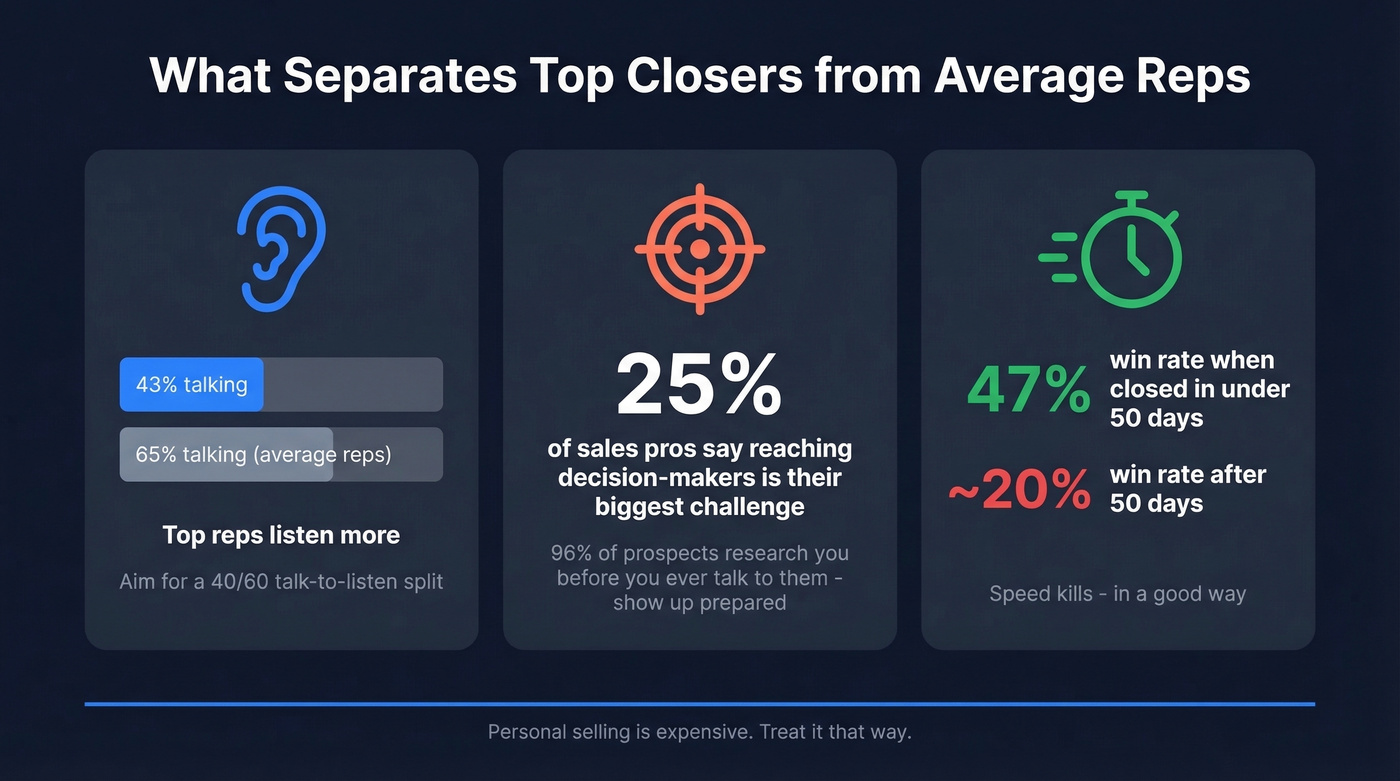
- They listen more than they talk. Top performers talk 43% of the time vs. 65% for average reps. Aim for a 40/60 split.
- They reach verified contacts. 96% of prospects research you before you ever talk to them, and 25% of sales pros say getting direct contact with decision-makers is their biggest challenge. If your contact data is stale, you're not even getting to the conversation.
- They close fast. Deals closed within 50 days show a 47% win rate. After 50 days, that drops to roughly 20% or lower.
Personal selling is expensive. Treat it that way.
Why It Still Matters in Marketing
Here's the paradox. 71% of buyers prefer to research independently rather than talk to a rep. And yet the most complex, highest-value deals still close through one-on-one selling. Self-service works for simple purchases, but it breaks down when the buying committee hits 13 stakeholders, the implementation takes 6 months, and the contract involves custom terms.
That 13-stakeholder number is the single best argument for why personal selling isn't going anywhere. No website, no chatbot, no automated sequence can navigate a room where procurement, legal, IT, and three VPs all have veto power. A skilled rep can.
Let's be honest about what this means in practice. Personal selling in 2026 isn't about giving buyers information they can't find themselves. It's about synthesizing information they already have into a decision framework. Your rep isn't a brochure - they're a consultant who helps the buying committee align on a path forward. The consensus on r/sales puts it more bluntly: "have conversations, not presentations." That's the whole game.
Personal Selling vs. Direct Selling vs. Social Selling
These three terms get conflated constantly. Here's the clean version.
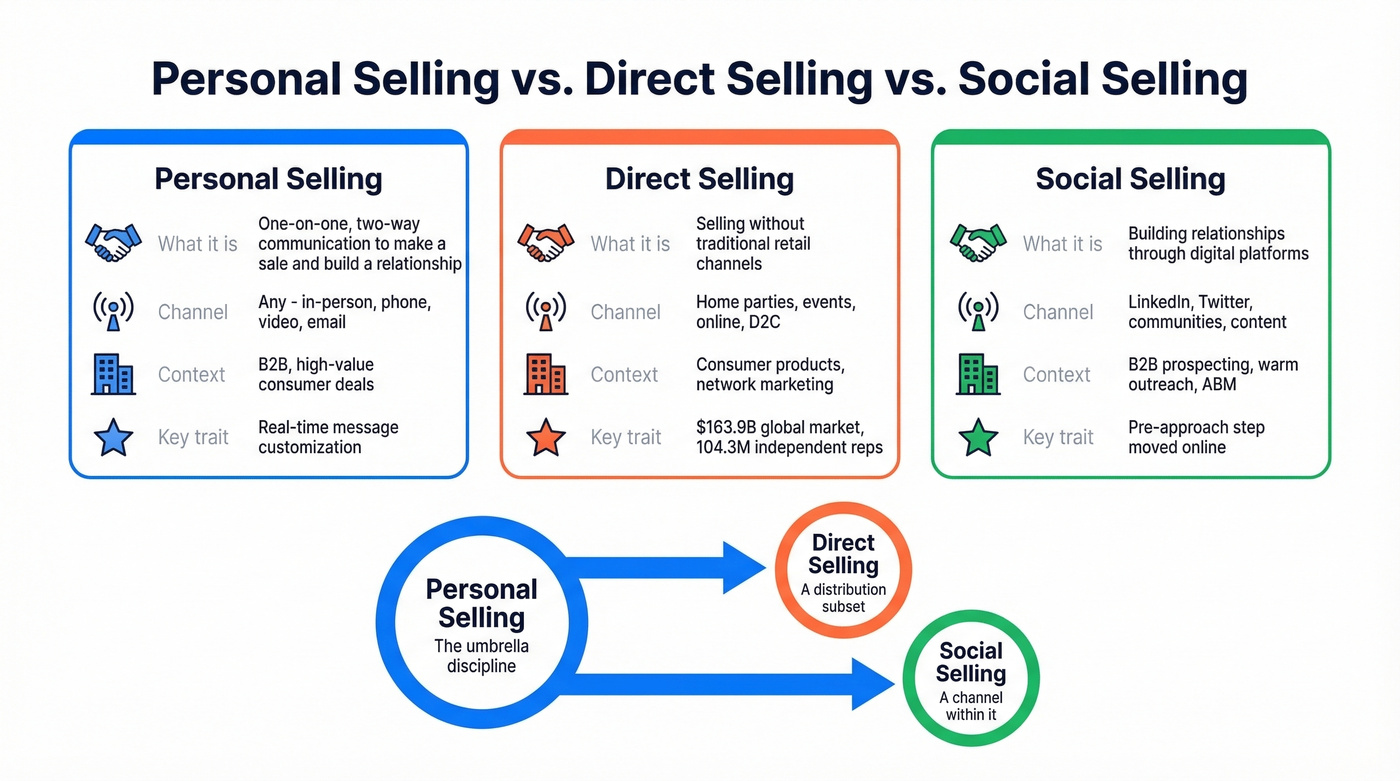
| Personal Selling | Direct Selling | Social Selling | |
|---|---|---|---|
| Definition | One-on-one interpersonal selling | Selling without retail channels | Building relationships via digital |
| Channel | Any: in-person, phone, video | Home, events, online, D2C | Social platforms, communities |
| Typical context | B2B, high-value consumer | Consumer products, network marketing, D2C | B2B prospecting, warm outreach |
Personal selling is the umbrella discipline: one-on-one, two-way communication that adapts to the buyer in real time. Direct selling is a subset that bypasses traditional retail, often through independent reps or distributors. The global direct selling market hit $163.9B in 2024, with 104.3M independent reps worldwide.
Social selling is a channel, not a discipline. It's how you build relationships and warm up prospects before the face-to-face conversation happens - the pre-approach step moved online.
Types of Personal Selling
Every guide lists five to nine types as if they're all equally relevant. They're not. In 2026 B2B, consultative selling and social selling are the two that matter most. The rest are either table stakes or academic distinctions.
| Type | Primary Focus | Key Characteristic | When to Use |
|---|---|---|---|
| Transactional | Speed, efficiency | Standardized pitch, minimal customization | Low-complexity, repeat buys |
| Consultative | Needs diagnosis, trust | Deep discovery, tailored recommendations | High-value B2B, long cycles |
| Solution | Problem-to-product mapping | Technical depth, proof of concept | Enterprise sales |
| Social | Relationship via digital | Content-driven, warm engagement | ABM, warm outreach |
| Collaborative | Joint value creation | Shared goals, co-development | Strategic partnerships |
If your AEs are still doing transactional selling on deals over five figures, you've got a training problem, not a strategy problem. Consultative selling isn't optional at that price point. The discipline involves reading the room, adapting your approach to each stakeholder, and building trust over multiple touchpoints - none of which a scripted pitch can accomplish. Skip the consultative approach only when the deal is genuinely simple and the buyer already knows what they want.

You just read that 25% of sales pros say reaching decision-makers is their biggest challenge. Prospeo's database covers 300M+ profiles with 98% email accuracy and 125M+ verified mobile numbers - refreshed every 7 days. Your reps stop burning $300/hr meetings on wrong contacts.
Give your closers verified contacts so every conversation counts.
The 7-Step Process
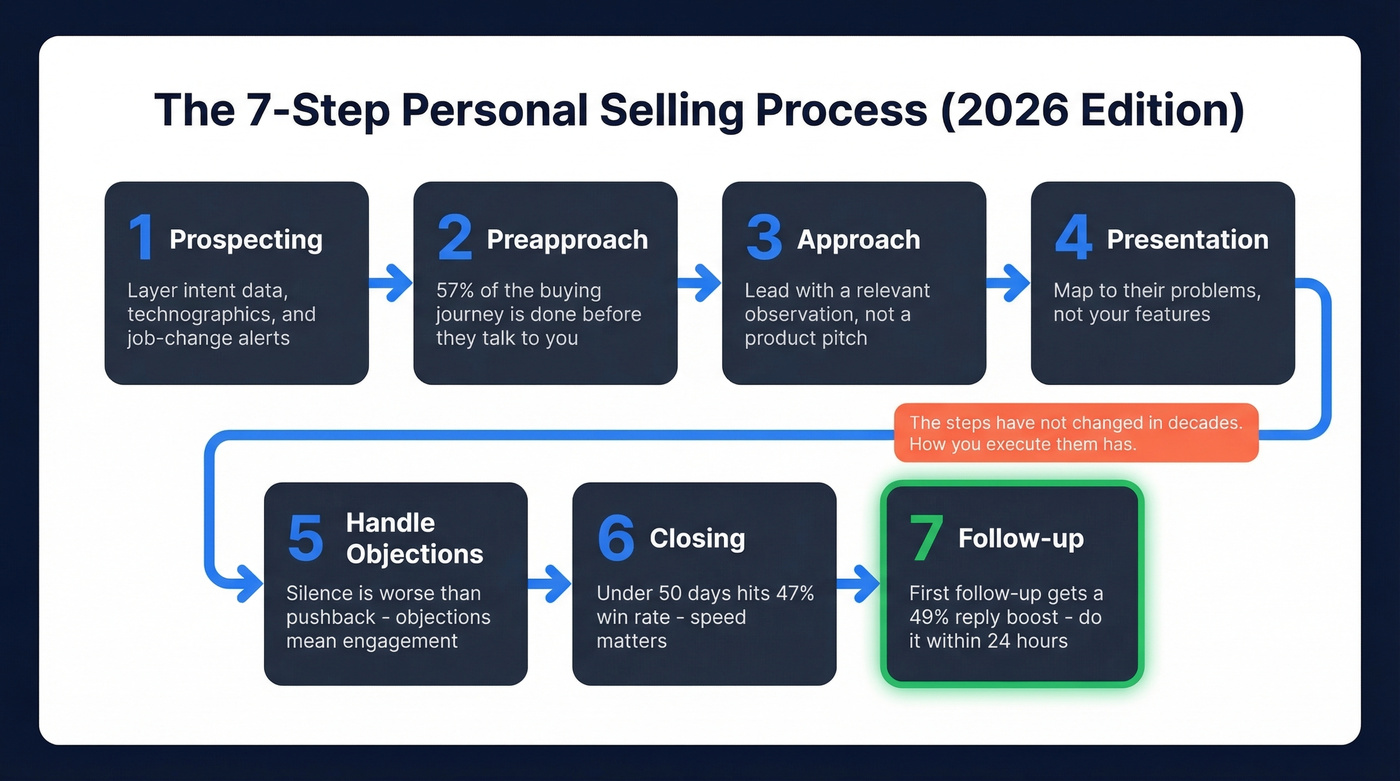
The standard seven-step process hasn't changed in decades. What's changed is how modern teams execute each step.
1. Prospecting
Identify potential buyers who fit your ICP. In 2026, this means layering intent data, technographic signals, and job-change alerts - not just pulling a list of titles from a database. Before your rep spends 45 minutes researching a prospect, verify the contact actually exists. Prospeo's database covers 300M+ professional profiles with 98% email accuracy and a 7-day refresh cycle, so reps aren't burning time on dead leads. If you want more ways to fill the top of funnel, start with proven sales prospecting techniques.
2. Preapproach
Research the account, the stakeholders, and the competitive landscape. 57% of the buying journey is complete before the prospect talks to sales. Your prep needs to match their knowledge level - or exceed it. Tighten this step with a clear Ideal Customer Profile and a repeatable competitive intelligence workflow.
3. Approach
First contact. Whether it's a cold call, a warm intro, or an inbound meeting, the goal is the same: earn the next 30 seconds. Lead with a relevant observation about their business, not a product pitch. If you're building a repeatable motion, a structured cold calling system helps.
One technique that consistently surfaces on r/sales: find something the prospect genuinely cares about and relate it to your own experience. The community caveat is blunt - don't fake it.
4. Presentation
Map your solution to their specific problems. Not features. Problems. The best presentations feel like collaborative problem-solving, not a demo script. Use a simple product demo checklist to keep the meeting outcome-driven.
5. Handling Objections
Frameworks like LAER (Listen, Acknowledge, Explore, Respond) give structure here. Treat objections as buying signals, not roadblocks. A prospect who pushes back is engaged. A prospect who goes silent is the one you should worry about. If this is a recurring bottleneck, build a plan to reduce sales objection rate.
6. Closing
Speed matters. Deals closed within 50 days hit a 47% win rate. After that, the number drops fast. If you're past day 50 and the deal isn't moving, something structural is wrong - a missing stakeholder, an unresolved objection, or a champion who's lost internal momentum. For a deeper breakdown of late-stage mechanics, see steps to close a sale.
7. Follow-up
The first follow-up email gets a +49% reply rate boost. By the third follow-up, you're looking at a -30% chance of reply. Leaving a voicemail alongside your email doubles reply rates from 2.73% to 5.87%. Timing and channel mix matter more than persistence. If you need copy you can deploy today, use these sales follow-up templates.
Mistakes That Kill Deals
Talk 43% of the time. Listen 57%. The data on this is unambiguous. Top closers listen more. Average reps dominate the conversation at 65% talk time and wonder why they lose.
Lead with the prospect's problem and the cost of inaction. Nobody cares about your platform's 47 integrations until they understand why they need it. Open with features and you've already lost.
Verify your contact data before reps invest time. Look, 37% of sales reps say phone calls produce the most leads - but that only works if the number is live. Letting an SDR spend 45 minutes crafting a personalized outreach sequence only to hit a disconnected line is the most avoidable waste in sales. We've watched teams cut bounce rates from 35% to under 4% just by switching to a data provider with a weekly refresh cycle. The most expensive sales channel you have deserves the freshest data you can get. If you're evaluating vendors, compare data enrichment services and sales prospecting databases.

Set realistic expectations during the sales process. We've seen teams win a contract and lose the customer within 90 days because the rep sold capabilities that didn't exist. That's negative ROI on the most expensive channel in your mix.
Follow up within 24 hours with a specific next step. A generic "just checking in" email three days later is a waste of everyone's time.
Metrics That Actually Matter
| Metric | Benchmark |
|---|---|
| Win rate (50 days or less) | 47% |
| Win rate (over 50 days) | ~20% or lower |
| Sales cycle (most common) | 1-2 quarters |
| Talk/listen ratio (top reps) | 43/57 |
| Talk/listen ratio (average) | 65/35 |
| 1st follow-up reply boost | +49% |
| 3rd follow-up reply change | -30% |
| Voicemail + email reply rate | 5.87% vs 2.73% |
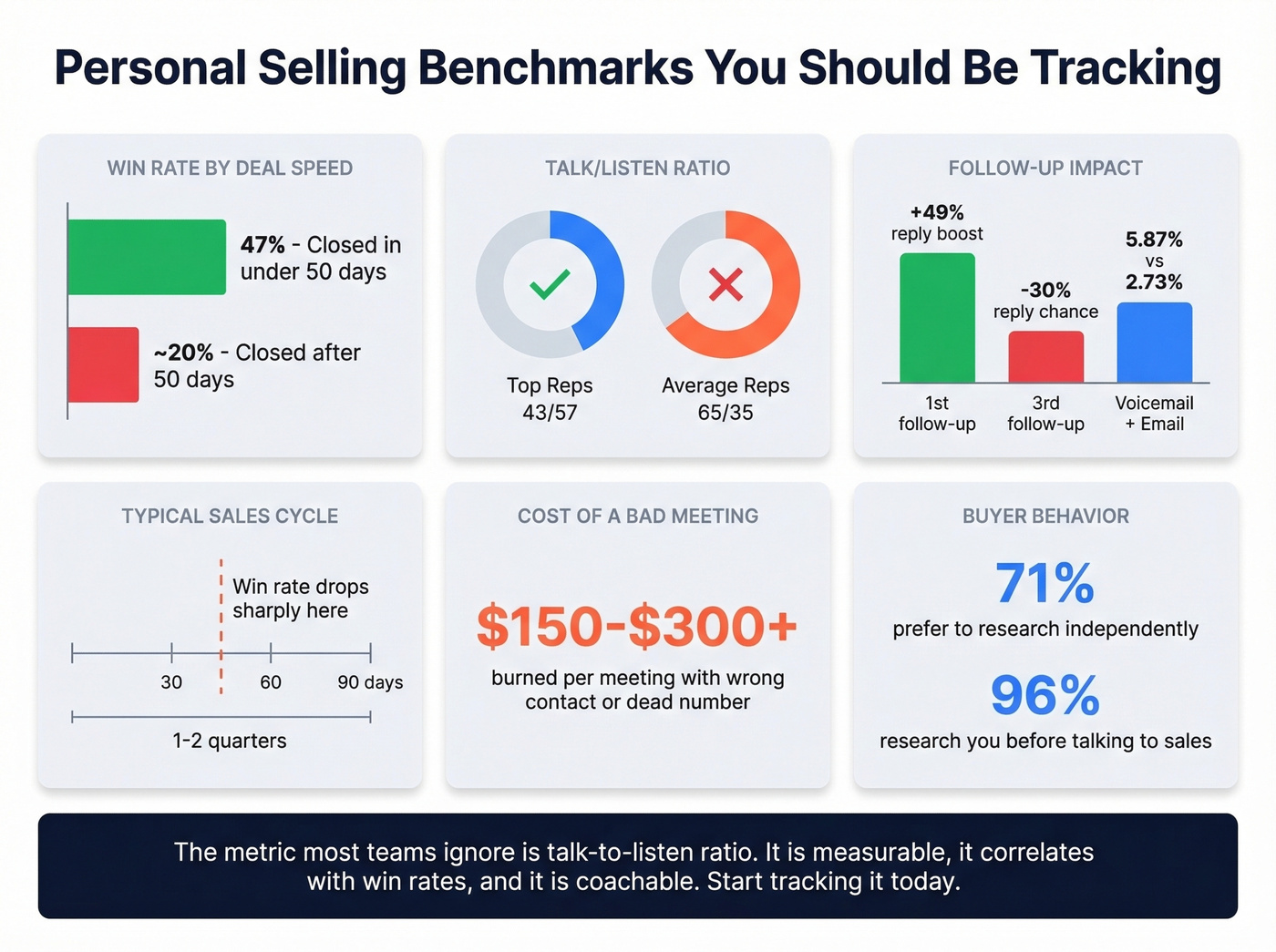
The metric most teams ignore is talk/listen ratio. It's measurable with any conversation intelligence tool, it correlates directly with win rates, and it's coachable. If you're not tracking it, start today. The gap between 43% and 65% talk time is the gap between your best closer and your worst.
Personal Selling in the AI Era
AI adoption in sales is essentially universal - 81% of sales teams are using it, with about half fully committed and half still experimenting. 45% of teams run hybrid AI-SDR models. The shift happened fast.
Here's our hot take: if your average deal size is under $10K, you probably don't need a human doing the full seven-step process. AI-assisted sequences can handle transactional deals at that price point. For anything above that threshold - especially multi-stakeholder deals - rep-led selling with AI support crushes pure automation every time. If you're building this stack, start with the right SDR tools and a practical data-driven selling approach.
The practical categories where AI adds real value are conversation intelligence for coaching, pipeline analytics for identifying stalled deals, and data platforms for surfacing verified contacts so reps spend time selling instead of searching. Automation alone can drive a 10-15% efficiency gain in sales workflows.
But there's a real downside. Gartner predicts that 30% of sales professionals will develop considerable deficiencies in social selling skills due to over-reliance on AI. In our experience, the teams that get AI right use it for research and data verification while keeping the actual conversations fully human. Reps who outsource their conversational skills to AI lose the muscle memory of genuine rapport-building - and that's the one thing this discipline can't survive without.
Examples by Industry
Real Estate
The classic example of interpersonal selling in action. An agent discovers a buyer's needs, curates showings, negotiates terms, and closes. The follow-up stage is where the best agents differentiate - a closed buyer becomes a referral source for years. The entire cycle is relationship-driven, high-touch, and impossible to automate.
B2B SaaS
In business-to-business SaaS, personal selling means multi-threaded deals with long cycles. Unity used deal intelligence tools and saw a +29.9% win rate improvement, a +209% increase in average selling price, and slipped deals dropped 30.2%. Grammarly layered predictive scoring onto their sales process and lifted conversion rates by 80%. A $2B manufacturer digitized their quoting process and saved 12,000 sales hours per quarter - roughly $1.2M annually. The pattern across all three: data-augmented selling outperforms gut-feel selling by a wide margin. For more context on deal complexity, see enterprise B2B sales.
Luxury Retail
A luxury watch consultant doesn't ask "what's your budget?" They ask about lifestyle, occasions, and personal style. The recommendation feels bespoke because it is - consultative selling at its purest, where the product is secondary to the relationship and the experience of buying.
How to Get Started
If you're building a personal selling motion from scratch - or rebuilding one that's underperforming - focus on three things first. Define your ICP with enough specificity that reps can disqualify bad-fit prospects in under two minutes. Invest in verified contact data so outreach actually reaches decision-makers. And train your team on the talk/listen ratio before anything else; it's the single highest-leverage coaching lever you have. Everything else - frameworks, tech stack, playbooks - layers on top of those fundamentals.
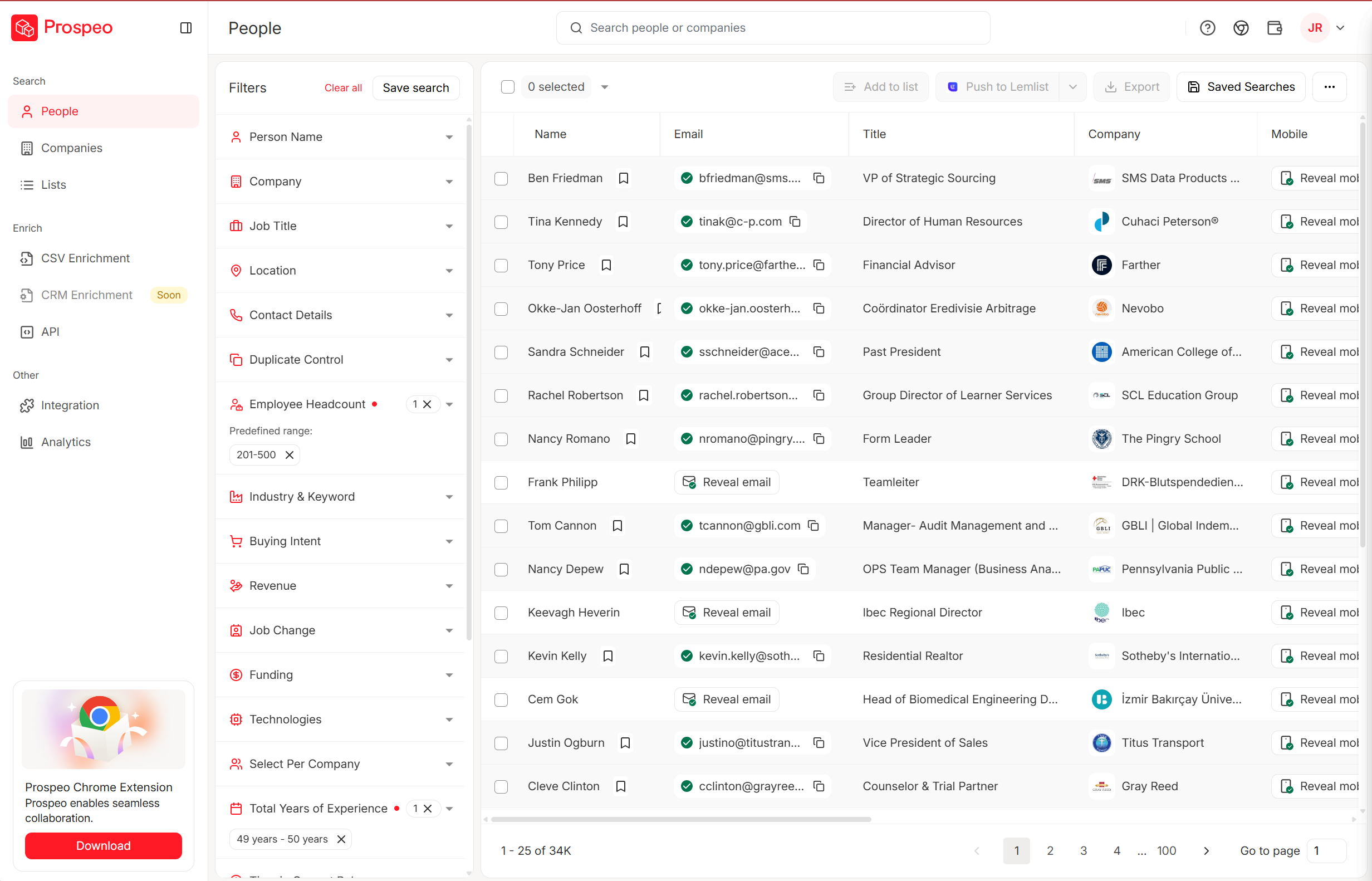
The 7-step process falls apart at Step 1 if your prospect data is stale. Prospeo refreshes 300M+ profiles every 7 days - not every 6 weeks like competitors. Layer 30+ filters including buyer intent, technographics, and job changes to find prospects who actually match your ICP.
Stop researching ghosts. Start with data that's less than a week old.
FAQ
What's the difference between personal selling and direct selling?
Personal selling is the umbrella discipline of one-on-one interpersonal selling across any channel - phone, video, in-person. Direct selling is a subset that bypasses retail channels entirely, often through independent reps or distributors selling directly to consumers.
What are the 7 steps of personal selling?
Prospecting, preapproach, approach, presentation, handling objections, closing, and follow-up. The framework dates back decades, but modern execution layers in intent data, conversation intelligence, and verified contact sourcing at every stage.
Is personal selling still effective in 2026?
Yes. Deals involving one-on-one rep engagement close at a 47% win rate within 50 days. The channel is expensive but consistently outperforms digital-only approaches for complex, high-value sales with multiple stakeholders.
What tools do modern sales reps use for personal selling?
CRMs like Salesforce and HubSpot handle pipeline management. Conversation intelligence tools coach talk/listen ratios. For verified emails and direct dials, platforms like Prospeo, ZoomInfo, and Apollo cover the contact data layer - though accuracy and freshness vary widely between providers.
What's the ideal talk-to-listen ratio?
Top closers talk about 43% of the time and listen 57%. Average reps talk 65% of the time. Aim for a 40/60 split and track it with conversation intelligence software - it's the most coachable metric in sales.