

The ABM Tech Stack Guide for Teams That Hate Overpaying
A VP of marketing came back from a conference last quarter convinced the team needed 6sense. The quote came in at $85,000 for year one. The entire marketing budget was $120,000. That conversation happens at companies every single week - ABM works, but the tooling industrial complex has convinced everyone they need a six-figure platform to run it. They don't.
Your ABM tech stack doesn't need to cost six figures. ABM delivers 21-50% higher ROI than non-ABM approaches, and ABM accounts generate 11-50% larger average deal sizes. The strategy is proven. A composable stack can cut ABM costs 60-70% while increasing win rates. One B2B marketer on Reddit put it bluntly: enterprise ABM tools feel "incredibly expensive" and "not useful" for teams that just want to prove they're reaching the right accounts. That frustration is valid - and fixable.
What Your ABM Tech Stack Actually Needs
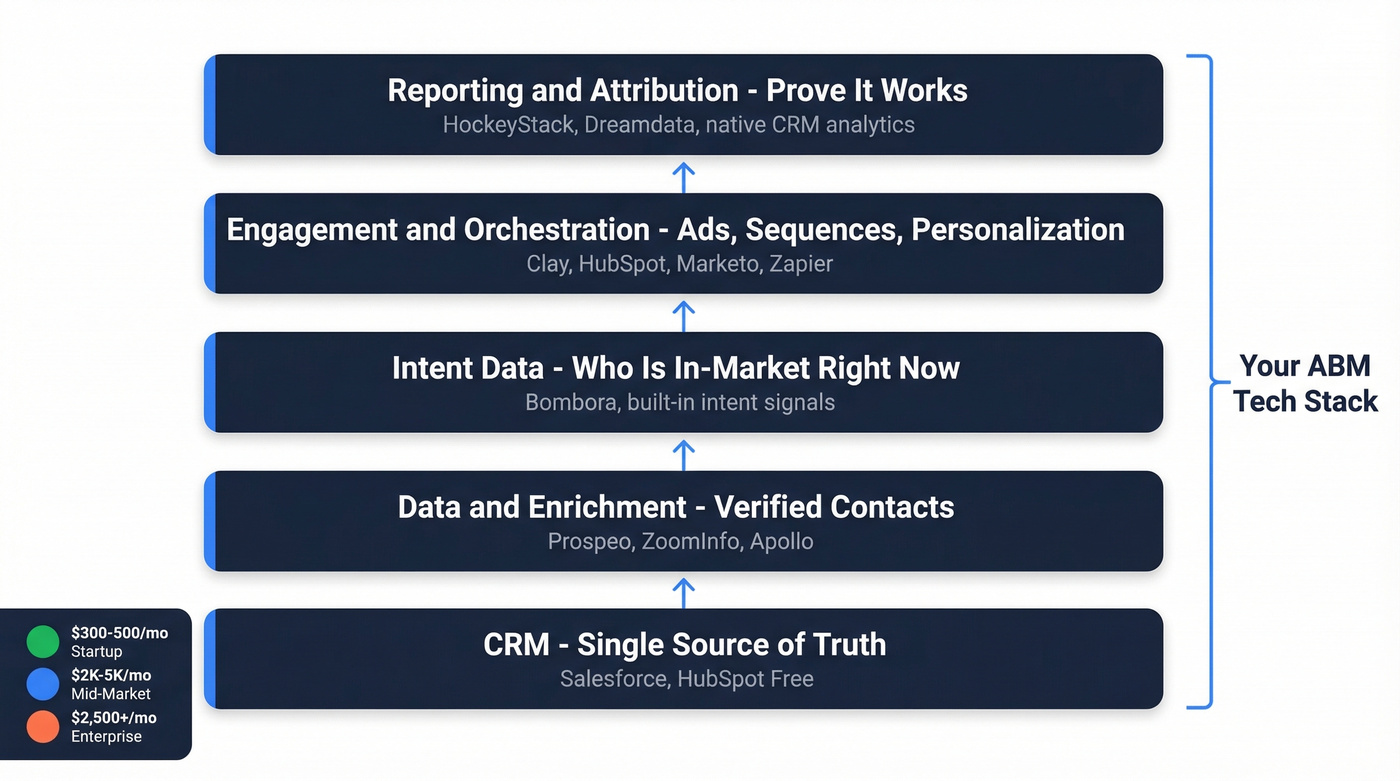
Every account-based marketing technology stack has five layers:
- CRM - your single source of truth
- Data & enrichment - verified contacts for target accounts
- Intent data - signals showing which accounts are in-market
- Engagement & orchestration - ads, sequences, personalization, workflow glue
- Reporting & attribution - proving it works
Budget range: ~$300-$500/mo for a startup stack, $2K-$5K/mo for mid-market, $2,500+/mo for enterprise.
The 5 Layers Explained
CRM
Everything flows through the CRM. Salesforce is the default for mid-market and enterprise (if you’re comparing options, start with these examples of a CRM). HubSpot's free CRM works well for early-stage teams running ABM lite. The key requirement is account-level views, not just contact records. Both handle this natively now.
Data & Enrichment
Your stack is only as good as your data. Stale contacts and unverified emails break everything downstream - ad matching, sequences, personalization, attribution (this is why lead enrichment and data enrichment services matter more than “fancy” dashboards). This is the layer where most ABM programs either prove their value or fall apart, and it's where we've seen teams waste the most money on tools that look impressive in demos but deliver 30% bounce rates in production.
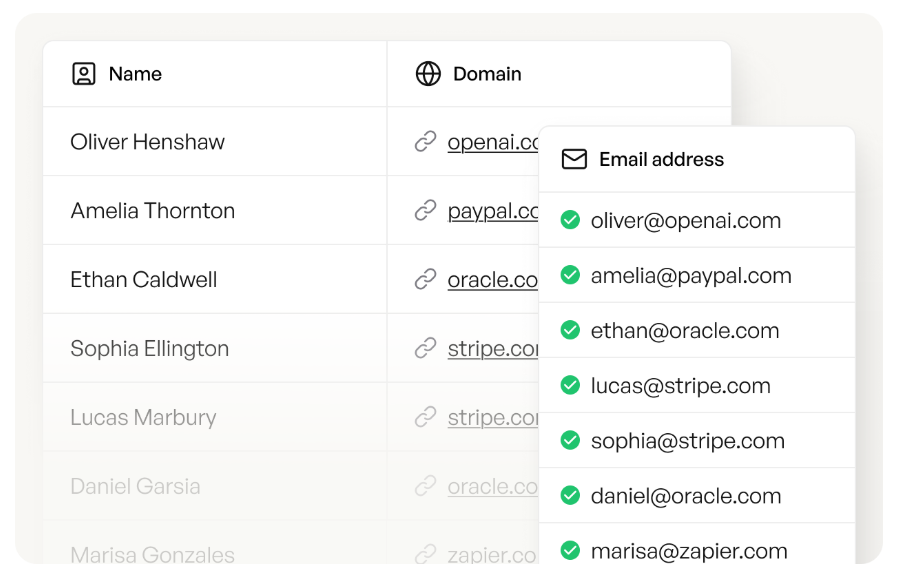
Prospeo handles enrichment and intent from one platform: 300M+ professional profiles, 143M+ verified emails, and 98% email accuracy on a 7-day refresh cycle, while most competitors refresh every 4-6 weeks. It tracks intent across 15,000 topics via Bombora, so you're identifying in-market accounts from the same place you pull contact data. At ~$0.01 per email with a free tier, the per-lead economics beat everything else in this category.
Other options include ZoomInfo ($15K-$40K/yr), Cognism (custom pricing, often five figures/year), and Apollo ($49-$99/user/mo) (if you’re shopping broadly, see our breakdown of B2B company data).
Intent Data & Account Monitoring
Intent signals tell you which accounts are actively researching your category. Bombora is a leading standalone provider at $15K-$40K/yr. 6sense and Demandbase bundle proprietary intent into their platforms.
Effective account monitoring means tracking not just topic-level research but also changes in buying committee composition and engagement frequency - the difference between knowing an account is "interested" and knowing three new stakeholders just started evaluating your category this week (more on operationalizing this in identifying buying signals). If you're already using a data tool with Bombora-powered intent built in, skip the standalone contract entirely.
Engagement & Orchestration
This is where your marketing automation platform - HubSpot, Marketo, or Pardot - lives alongside ad platforms using matched audiences across display and social. Personalization tools range from simple ChatGPT-powered copy generation to full dynamic website experiences. Pick the level that matches your deal size.
Clay is a common orchestration layer in composable stacks (if you’re building this out, use this Clay list building workflow). It pulls data from multiple sources, runs enrichment waterfalls, and pushes personalized outputs to your sequencer or CRM. Zapier, Make, and n8n round out the middleware options.
Let's be honest about the real debate here: the old all-in-one approach was buying a monolithic platform that does everything. The composable approach connects best-of-breed tools via orchestration middleware - and it's winning. If your average deal size is under $25K, you almost certainly don't need a six-figure platform. Spend that money on better data and better creative instead.
Reporting & Attribution
HockeyStack, Dreamdata, and HubSpot's native attribution handle this for most teams. Enterprise shops lean on Demandbase or 6sense's built-in analytics. A proper account engagement platform should give you account-level pipeline views, not just contact-level metrics (tie this back to funnel metrics so you’re not reporting noise).
Measure pipeline and revenue influenced by account. Impressions and MQLs are vanity metrics.

Your ABM stack lives or dies on data quality. Prospeo delivers 98% email accuracy on a 7-day refresh cycle - not the 4-6 week lag that tanks your ad matching and sequences. With 300M+ profiles, Bombora-powered intent across 15,000 topics, and enrichment at ~$0.01/email, you get the data and intent layers of your ABM stack from one platform - no $85K contract required.
Replace two layers of your ABM stack with one that actually works.
What It Actually Costs
The fact that most ABM platforms won't show you pricing until you sit through a demo tells you everything.
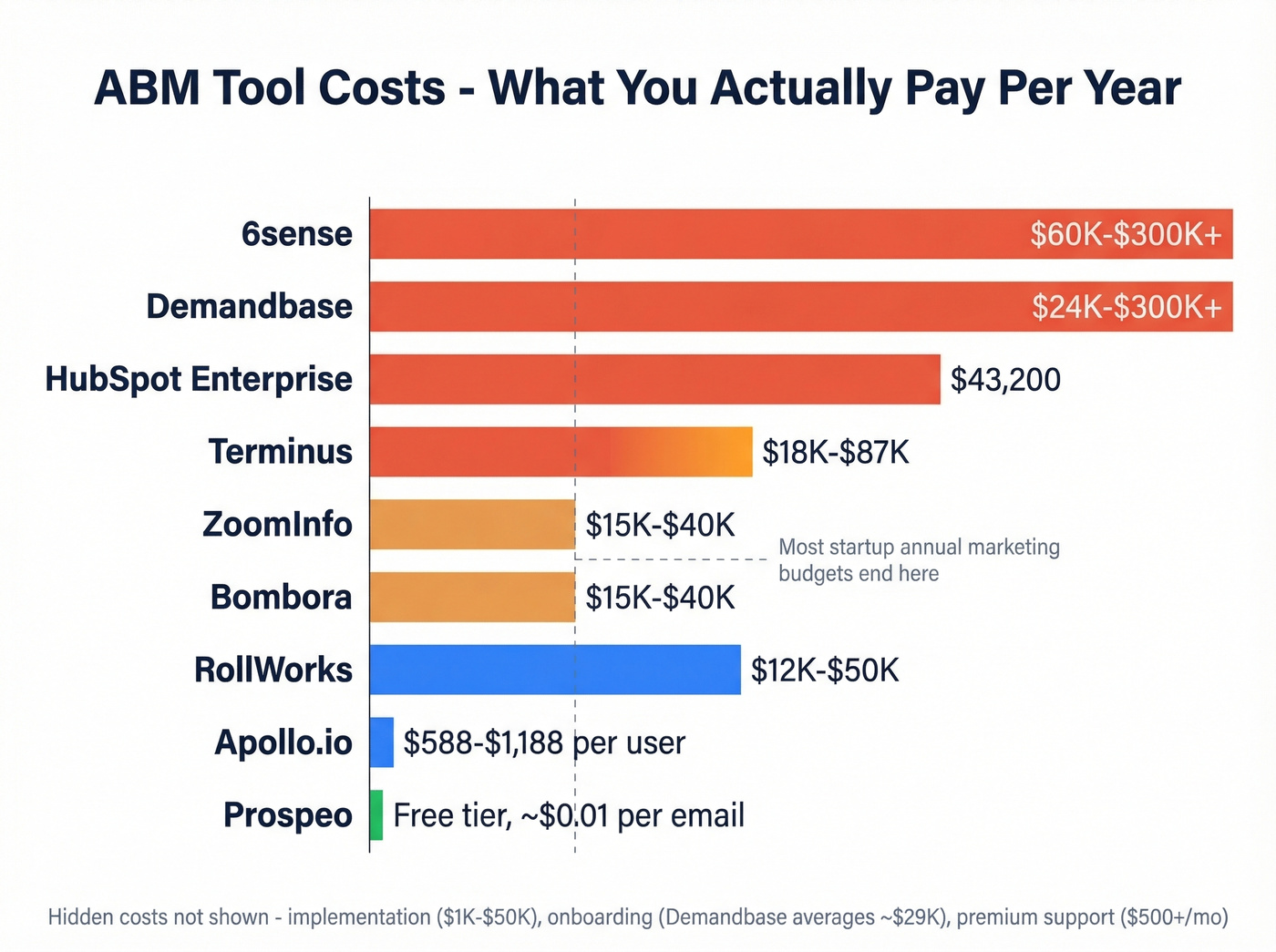
| Tool | Category | Annual Cost | Best For |
|---|---|---|---|
| 6sense | ABM Platform | $60K-$300K+ | Enterprise predictive |
| Demandbase | ABM Platform | $24K-$300K+ | Enterprise orchestration |
| RollWorks | ABM Platform | $12K-$50K | Mid-market ABM |
| Terminus | ABM Platform | $18K-$87K | Multi-channel display |
| HubSpot Enterprise | CRM + ABM | $43,200/yr | All-in-one mid-market |
| ZoomInfo | Data | $15K-$40K | Large sales teams |
| Cognism | Data | Not public (often five figures/yr) | EMEA-focused teams |
| Apollo.io | Data | ~$588-$1,188/user/yr | Solo reps, small teams |
| Prospeo | Data + Enrichment | Free tier; ~$0.01/email | Data accuracy on a budget |
| Bombora | Intent Data | $15K-$40K | Standalone intent |
| Clay | Orchestration | Free-~$1,800/yr | Composable stack glue |
If you're seeing monthly quotes, expect $400-$850/mo for basic tiers and $2,500+/mo for enterprise features. Don't forget hidden costs: basic implementation runs $1K-$5K, while enterprise deployments with custom integrations can hit $50K. Demandbase onboarding alone averages ~$29K. Premium support adds $500+/mo. And credits that don't roll over? That's a use-it-or-lose-it trap that inflates your effective cost per lead (watch your cost to acquire customer math here).
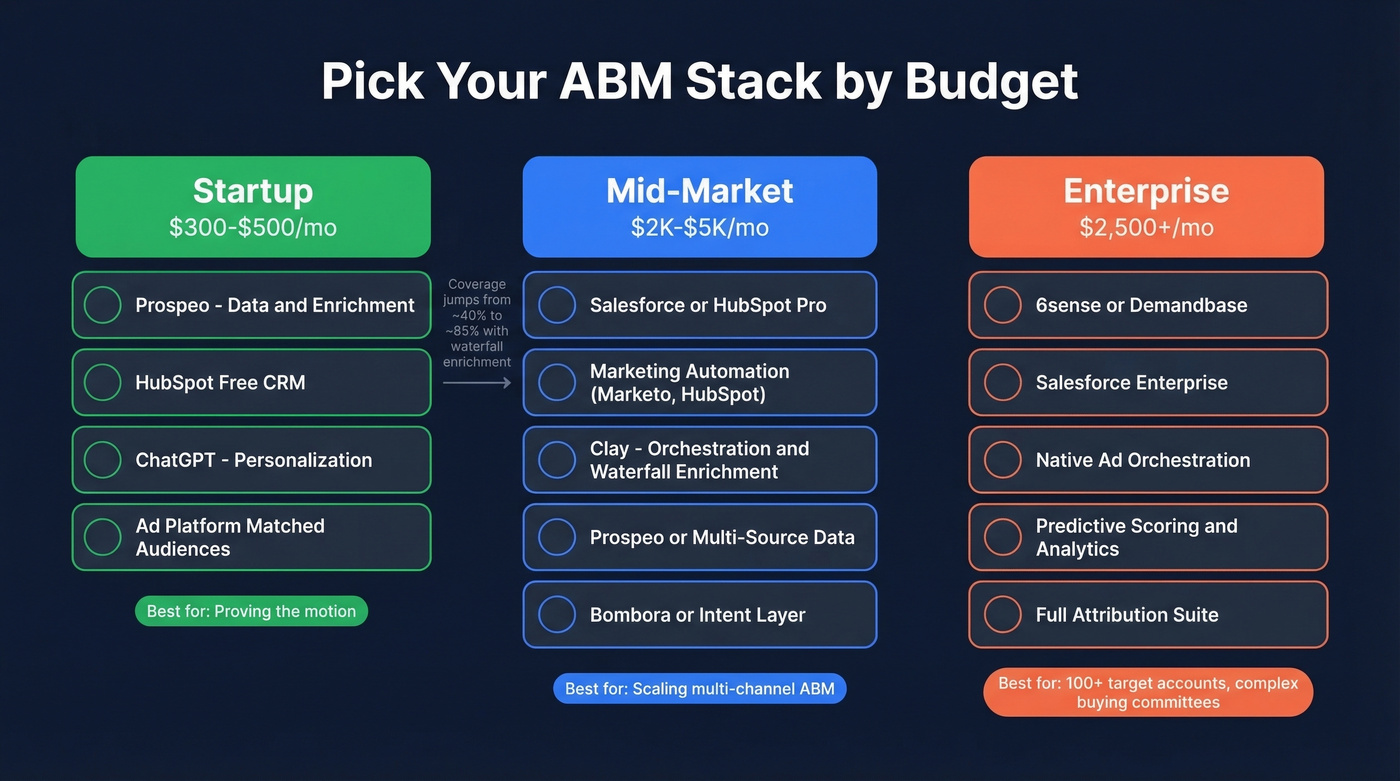
ABM Martech Stack by Budget
Startup (~$300-$500/mo)
Prospeo for data and enrichment, HubSpot Free CRM, ChatGPT for account-specific personalization, and your ad platform's matched-audience targeting. This is ABM Lite, and it works for small teams that need to prove the motion before scaling spend. Cognism's own team drove $700K+ in pipeline using a lean stack without a six-figure platform.
Mid-Market (~$2K-$5K/mo)
Salesforce or HubSpot Pro for CRM, a marketing automation platform, and Clay for orchestration. The real unlock at this tier is waterfall enrichment - Clay lets you chain multiple data sources so a contact that Apollo misses gets caught by a second or third provider, pushing coverage from roughly 40% to 85% at $0.06-$0.10 per lead. Add Bombora or another intent signal layer and you've got real multi-channel ABM without the enterprise platform tax.
We've found that teams in APAC markets need to be especially careful here. Most providers have weaker coverage outside North America and EMEA, so evaluate any tool for APAC data quality separately before committing budget.
Enterprise ($2,500+/mo)
6sense or Demandbase earn their keep here with predictive scoring, native ad orchestration, and deep analytics. These end-to-end platforms justify their cost when you're running coordinated campaigns across hundreds of accounts with complex buying committees. 6sense even offers a free plan with 50 data credits/month if you want to test before committing $60K.
Enterprise platforms take 3-6 months to implement plus a 2-3 month ramp, so budget for that timeline. Manufacturers and other complex-sale industries should look for platforms that support long sales cycles and multi-location account hierarchies. Skip this tier if your ACV is under $50K - the math just doesn't work.
Mistakes That Kill ABM Programs
Look, most ABM programs don't fail because of bad technology. They fail because of bad decisions made before anyone logs into a platform.
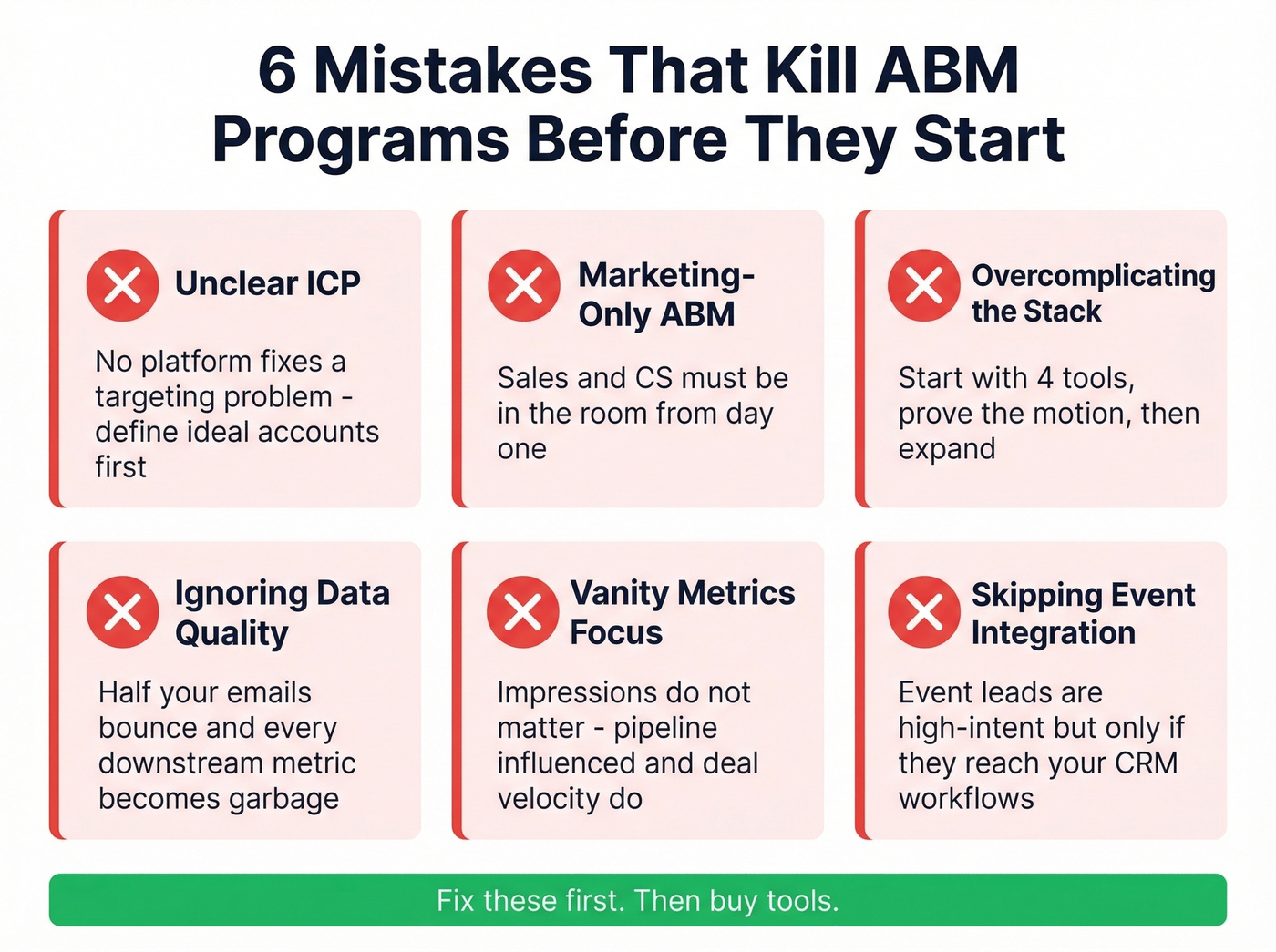
Unclear ICP. No platform fixes a targeting problem. Define your ideal accounts before buying anything (use an ideal customer profile template).
Treating ABM as marketing-only. Sales and CS need to be in the room from day one. ABM without sales alignment is just expensive advertising.
Overcomplicating the stack. We've seen teams buy seven tools before running a single campaign. Start with four, prove the motion, then expand.
Ignoring data quality. A team we worked with launched their first ABM campaign and half the emails bounced. Every downstream metric was useless - pipeline numbers, engagement rates, attribution, all garbage because the foundation was rotten (if you’re troubleshooting, start with email bounce rate).
Focusing on vanity metrics. Impressions and "accounts reached" don't matter. Pipeline influenced and deal velocity do.
Skipping event integration. If your team runs field marketing, make sure your tools for events - badge scans, meeting scheduling, post-event nurture - feed directly back into your CRM and orchestration layer. The consensus on r/sales is that event leads are some of the highest-intent signals you'll get, but only if they actually make it into your ABM workflows instead of sitting in a spreadsheet.
Teams running composable ABM stacks cut costs 60-70% - but only if the data layer holds. Prospeo's 92% API match rate and 83% enrichment coverage mean your Clay workflows, CRM syncs, and ad audiences stay full of real, verified contacts. Free tier included, no sales calls, no annual lock-in.
Stop overpaying for ABM data that bounces at 30%.
FAQ
Do I need a dedicated ABM platform?
No. Most teams under $5M ARR get better ROI from a composable stack of 4-5 focused tools connected via Clay or Zapier. A dedicated platform makes sense at enterprise scale when you need predictive scoring and native ad orchestration across hundreds of accounts.
What's the minimum viable stack?
A CRM, a verified data provider, a personalization tool like ChatGPT, and an ad platform for matched-audience targeting. Total cost: ~$300-$500/month. That covers targeting, outreach, and basic measurement.
How long does implementation take?
Enterprise platforms like 6sense or Demandbase take 3-6 months to implement plus a 2-3 month ramp to full capacity. Composable stacks built on tools you already own can be operational in weeks.
What's the biggest ABM tech stack mistake?
Buying tools before defining your ICP. No platform fixes a targeting problem. Lock in your ideal account profile, validate it with sales, then build the stack around it.