Autonomous AI Agents for Sales in 2026 (Without Burning Your Domain)
Pipeline doesn't vanish because "AI wrote a bad email." It vanishes because an autonomous agent takes the wrong action at scale: it hits a cold list too hard, spikes bounces and complaints, and your inbox placement collapses before anyone notices.
Autonomous AI agents for sales work in 2026 - but only as production systems with guardrails, audit logs, and hard stop thresholds. Treat them like a feature toggle in your sequencer and you'll burn domains, waste reps' time, and poison your CRM.
I've watched teams do this in a single afternoon: someone flips "auto-send," a bad segment slips through suppression, and by the next morning half the mailboxes are landing in spam. Nobody feels the pain until the week after, when replies dry up and the SDRs start blaming "the model."
Here's the thing: the model's rarely the root cause.
What you need (quick version)
If I had to implement three things first: (1) verified data + enrichment, (2) warmup + sending limits, (3) approval + audit gates.
- Verified data before queueing: verify emails, dedupe, enrich role/company context, and apply suppression lists before the agent touches a sequencer. (This is where Prospeo fits naturally: accuracy-first verification + enrichment.) If you're choosing vendors, start with an email verifier and a lead enrichment tool.
- Authentication + unsubscribe: SPF, DKIM, DMARC, and one-click unsubscribe that processes fast.
- Per-inbox caps + ramp: enforce daily caps per mailbox, ramp weekly, and scale with more inboxes/domains - not higher per-inbox volume. (More detail: email pacing and sending limits.)
- Stoplight mode: Green = limited auto-send, Yellow = draft-only, Red = pause sending.
- Approval gates: draft -> approve -> send until you hold Green metrics for multiple weeks.
- Least-privilege access: agents can draft, tag, and create tasks; they can't bulk-edit CRM fields or launch new sequences.
- One owner + weekly scorecard: RevOps owns deliverability, compliance, and the kill switch.
Autonomous sales agents vs assistants (and what "autonomous" really means)
Most teams buy "AI agents" and end up using them like fancy autocomplete. That's not a failure. That's the correct starting point.

"Autonomous" isn't binary. Retool's framing holds up: agentic is a spectrum - from deterministic workflows with an LLM step, to agentic workflows teams can test end-to-end, to open-ended agents that decide what to do next.
In sales, the spectrum matters because the downside risk isn't "a wrong answer." It's "a wrong action." Sending the wrong email at scale, updating the wrong CRM fields, or texting someone without proper consent is consequence risk, not content risk.
The action taxonomy (what you should automate first)
| Risk level | Examples | Default mode |
|---|---|---|
| Low-risk | Draft email, summarize call, create CRM task, suggest routing | Auto-run |
| Medium-risk | Send replies to explicit inbound intent, schedule meetings, update non-critical CRM fields | Auto-run after 2-4 weeks of clean metrics |
| High-risk | Cold outbound sends, SMS/voice outreach, editing opportunity stage/amount, creating new sequences | Human approval required |

A practical framework that holds up in the real world is the triad: workflows + agents + human tasks:
- Workflows handle the deterministic steps you can test (pull list -> dedupe -> verify -> suppress -> create task -> log outcome). This should be most of the system.
- Agents handle bounded reasoning (classify intent, pick a talk track, route edge cases, draft personalization) with strict tool access and stop conditions. If you're still deciding scope, use an AI sales agent rubric to separate "assist" from "act."
- Human tasks cover approvals and exceptions (first-touch copy, high-risk sends, legal/compliance edge cases). Humans don't do everything - just the parts that can burn you.
Autonomy means the agent executes a defined action without a human clicking "send" every time. The only question that matters: which actions, under which conditions, with which audit trail.
Where autonomous agents actually work in sales (use cases by funnel stage)
Autonomous agents shine when inputs are structured and the next step is repeatable. They fall apart when the job is persuasion, nuance, or negotiation.
G2 found 50% of teams already run agent-to-agent handoffs across vendors. That's powerful. It's also exactly why you need guardrails, because failures cascade.
| Use case | Inputs | Agent actions | Required guardrails |
|---|---|---|---|
| Prospecting | ICP, firmographics, intent | Build lists, dedupe | Verify + suppression + DNC rules |
| Qualification | Form fills, chat, emails | Score, route, tag | Clear scoring rubric + audit trail |
| Outbound outreach | Verified contacts, context | Draft + send sequences | Caps + approvals + kill switch |
| Scheduling | Availability, timezone | Propose times, book | Calendar permissions + confirmation |
| CRM updates | Calls/emails/notes | Log activity, update fields | Field-level controls + rollback |
| Renewal risk | Usage + tickets | Flag risk, create tasks | No auto-discounts |
| Expansion | Org charts, signals | Suggest targets, tasks | Human review |
| Lead routing | Territory rules | Assign owners | Audit + rollback |
| Follow-up | Meeting notes | Next steps, reminders | No hallucinated notes |
| Call coaching / training | Call recordings/transcripts | Score calls, highlight moments, create coaching tasks | Privacy/consent + no auto-discipline actions |
My strongest recommendation: start with inbound speed-to-lead. It's the cleanest win because intent's explicit and you're not gambling with cold outbound reputation on day one. If you need to operationalize it, align on speed to lead metrics.
Hot take: If your average deal size is relatively small and you don't have a dedicated deliverability owner, fully autonomous cold outbound is a bad idea. You'll spend more time recovering domains than you'll save on SDR headcount.

Autonomous agents hit Green status faster when every email is verified before it enters the queue. Prospeo's 5-step verification, catch-all handling, and 7-day data refresh keep bounce rates under 1% - the exact threshold your stoplight system demands.
Feed your AI agent 98% accurate data at $0.01 per email.
Autonomous AI agents for sales: readiness checklist (go/no-go gates)
Skip readiness gates and you're choosing to learn deliverability the expensive way.
Use stoplight gates. Green means limited autonomy. Yellow means draft-only. Red means pause sending and fix the system.
Green / Yellow / Red gates (the stoplight)
Green (safe for limited auto-send)
- Bounce rate: <1%
- Spam complaints/spam rate: <0.1% (ideal)
- Inbox placement: 80%+ (Instantly's AI Reply Agent activation threshold)
- Authentication: SPF + DKIM + DMARC configured
- Unsubscribe: one-click + processed fast
- Audit trail: every send tied to contact source + reason + prompt/log

Yellow (assist mode only: draft -> human approve)
- Bounce rate: 1-2%
- Spam complaints/spam rate: 0.1-0.3% and trending up
- Inbox placement: 70-80%
- ICP, copy, or infrastructure still changing weekly
- Suppression list process exists but isn't airtight yet
Red (pause auto-send and pause cold sending until fixed)
- Bounce rate: >=2%
- Spam complaints/spam rate: >=0.3%
- Inbox placement: <70%
- Recent domain/mailbox flag
- You can't trace data lineage (source-of-truth gap)
The readiness checklist (what to verify before you flip the switch)
Data quality gate (where most "AI SDR" rollouts die)
Autonomous agents amplify inputs. Dirty lists don't "reduce performance"--they trigger provider defenses.

Minimum bar:
- Verified emails before sending (no guesses) (SOP: email verification list.)
- Deduping across domains/inboxes/CRMs
- Role + company enrichment so the agent personalizes from facts
- Suppression lists applied before queueing (unsubscribes, bounces, DNC)
- Spam-trap and honeypot filtering (this is how you avoid silent reputation damage)
In our experience, the "smartest" agent gets blamed when the real culprit is list quality. Fix the data layer and the whole system calms down.
Deliverability gate (infrastructure + reputation)
- Secondary domains for cold outbound (keep your primary domain clean)
- 2-3 mailboxes per domain, warmed and stable (Playbook: how to warm up an email address.)
- Sending caps enforced at the sequencer level (not "rep discipline")
- Tracking settings decided (often: disable open/click tracking early)
Process gate (humans + escalation)
- Approved messaging patterns (what the agent's allowed to say)
- Review queue for first-touch and edge cases
- Escalation path: legal/compliance, deliverability owner, sales manager
One person owns the kill switch.
Systems gate (identity + access)
- Separate service accounts for agents (no shared rep passwords)
- Least privilege: agent can create drafts/tasks; it can't bulk-edit critical CRM fields
- Logs stored somewhere you can query during an incident (not buried in a vendor UI)
KPI gate (you know what "good" looks like)
- Baseline reply and meeting rates for current outbound
- Weekly scorecard plus a written "pause autonomy" rule tied to thresholds
Deliverability limits (2026 operating model)
Autonomy doesn't change deliverability physics. It just increases the speed at which you can break them. For the deeper "what changed" view, see email deliverability.
These thresholds are operational heuristics grounded in Yahoo's bulk sender policy plus practical playbooks from deliverability operators (notably Topo and Instantly). Treat them as your default operating envelope.
Non-negotiables (Yahoo + modern mailbox providers)
Yahoo's bulk sender requirements are explicit and enforced starting February 2024. Per Yahoo's sender best practices (https://senders.yahooinc.com/best-practices/):
- Spam rate <0.3%
- SPF + DKIM + DMARC (DMARC policy at least p=none, and DMARC must pass)
- One-click unsubscribe
- Honor unsubscribes within 2 days
If your agent can send, your agent can generate complaints. Design for that reality.
Safe sending caps (what actually works)
Topo's guidance is the most useful because it separates technical limits from safe limits. Safe limits are what matter for autonomous agents.

| Provider | Tech limit | Safe cap/day | Winner (for cold outbound) |
|---|---|---|---|
| Google Workspace | 2,000/day | 100-150 | Google Workspace (most predictable) |
| Microsoft 365 | 10,000 recips | 100-150 | Microsoft 365 (close second) |
| GoDaddy | 250 recips | 50-75 | Skip unless you're forced into it |
| Zoho | varies | 100-150 | Zoho (fine if stable) |
| Free Gmail | 500/day | Don't | Don't use |
Rules I enforce:
- Use Google Workspace or Microsoft 365 for serious outbound. Predictability beats theoretical limits.
- Skip free Gmail for cold email. It's not a growth hack; it's a deliverability incident waiting to happen.
- Scale by adding inboxes and domains, not by cranking one inbox.
- Treat bounces as a data defect, not a "copy problem."
Instantly's per-inbox cap rule (highly actionable)
Instantly's practical guidance is simple: cap at ~30 cold emails per inbox per day until you hold Green metrics for 2-4 consecutive weeks. Warm new inboxes at 5-30/day for 2-3 weeks before you let reply agents run.
That one rule prevents most "agent sent 400 emails too fast" disasters.
Ramp schedule (the boring part that saves your domain)
A ramp that holds up:
- Week 1: 10-20/day
- Week 2: 20-40/day
- Week 3: 40-60/day
- Week 4: 60-80/day
Domains at 90+ days tolerate more volume. Fully mature outbound posture takes up to 12 weeks. That's slower than everyone wants - and faster than recovering a burned domain.
Multi-domain strategy (how teams scale without lighting money on fire)
If you need 500 sends/day, don't do 1 domain x 500. Do:
- 5 domains x 2-3 inboxes/domain x 30-50 cold emails/inbox/day
Yes, it's more setup. It isolates reputation risk. One domain gets hit? You don't lose the entire quarter.
The "pause autonomy" thresholds (hard stops)
Match your stoplight. No contradictions.
- Green auto-send allowed: bounce <1%, spam rate <0.1%, inbox placement >=80%
- Yellow (draft-only): bounce 1-2% while you fix list quality and suppression
- Red (pause cold sending + pause auto-send): bounce >=2%, spam rate >=0.3%, inbox placement <70%
If you're tempted to "push through" Red, you're not being aggressive - you're being sloppy.
Agent-safe sequencing rules (so autonomy doesn't sound robotic - or get flagged)
Most "AI SDR" outbound fails for two reasons: it sounds like AI, and it behaves like a bot (volume + patterns). Warmforge's rules are a clean baseline because they're simple and enforceable.
Do / don't rules (copy + sequencing)
Do
- First email: plain text
- Subject lines: ~4 words
- Body: 20-70 words
- Space sends 2-5 minutes apart per mailbox
- Follow-ups: 2-3, spaced 2-3 days apart
- Keep warmup running continuously
Don't
- No links/attachments/images in the first email
- Don't enable open/click tracking early
- Don't blast a new domain with "normal volume"
- Don't let the agent invent facts about the prospect
Micro-examples (what "agent-safe" sounds like)
Bad (robotic + risky):
"I noticed your team is struggling with pipeline efficiency and thought our AI solution could help. Here's a link to learn more."
Better (specific, short, no fluff):
"Quick question - who owns outbound deliverability on your team? I'm seeing teams turn on agents and spike complaints. Want the thresholds we use?"
Bad (fake personalization):
"Congrats on your recent funding round!"
Better (verifiable + restrained):
"Saw you're hiring in RevOps. Are you changing outbound tooling this quarter?"
Rule: If the agent can't point to a concrete input, it doesn't get to "personalize." Generic personalization is worse than none. For common failure modes, see AI cold email personalization mistakes.
Practitioner reality check (what operators complain about)
Two lines I hear constantly from teams after week one:
- "Deliverability tanks fast, and the copy has that same glossy AI tone everywhere."
- "AI helps with prep and follow-up, but it doesn't run real conversations without a human."
Build your system like those complaints are guaranteed - because they are.
Guardrails-first architecture (HITL, permissions, audit trails, escalation)
If you want autonomy, you need governance. Not because you're "enterprise." Because outbound has consequences.
Retool calls out the production blockers that matter: authentication, monitoring, audit trails, approval workflows, compliance checks. Miss any of those and you're not running autonomy - you're running risk.
The architecture diagram (described)
- Data layer (list building, verification, enrichment, suppression)
- Orchestrator (workflow engine + agent runtime)
- Sequencer (sending caps, throttling, unsubscribe handling)
- Systems of record (CRM + ticketing)
- Human-in-the-loop (review queue + escalation)
Under the hood, this is the core of an AI sales agent architecture: the orchestrator enforces what the agent's allowed to do, the sequencer enforces how much it can send, and the CRM enforces what it can write. If you want a single sentence to put in your rollout doc, use that.
Permission matrix (copy/paste this into your rollout doc)
| System | Allowed (agent) | Not allowed (agent) | Why |
|---|---|---|---|
| Sequencer | Create drafts, enroll contacts in approved sequences, pause a sequence | Create new sequences, change global sending limits, import net-new lists | Prevent "freestyle" scaling |
| Send only in Green mode + within caps; send replies only to explicit intent | Mass send, send from primary domain, change signatures | Protect reputation + brand | |
| CRM | Create tasks, log activities, update non-critical fields (persona tag, lifecycle stage note) | Edit opp stage/amount, delete records, bulk updates | Prevent pipeline corruption |
| Calendar | Propose times, book meetings, send confirmations | Cancel meetings without approval | Avoid customer-facing mistakes |
| SMS/Voice | Draft scripts, create call tasks | Send SMS/place calls without verified consent | Compliance exposure |
Audit log schema (what you must store)
If you can't answer "what happened?" in 60 seconds, you don't have autonomy - you have chaos.
Store these fields for every agent action:
- Actor: agent ID + version, tool name, service account used
- Target: contact ID, account ID, channel (email/SMS/voice), mailbox/domain
- Action: draft/send/update/tag/enroll/pause + sequence ID
- Inputs: data sources used (list ID, enrichment snapshot ID), suppression check result
- Prompt + model output: prompt hash, final message body, tool calls
- Policy decision: which rule allowed it (e.g., "Green auto-send rule v3")
- Timing: timestamp, timezone, send spacing, daily cap counter at time of send
- Outcome: delivered/bounced/complaint/reply category + timestamps
- Rollback hooks: record of what can be reverted (sequence unenroll, CRM field revert)
Incident playbook (what to do when things go wrong)
Write this before you send the first autonomous email.
- Trigger: bounce >=2% OR spam rate >=0.3% OR inbox placement <70%
- Immediate actions (15 minutes)
- Kill switch: pause all cold sequences
- Freeze list imports
- Snapshot: export last 48 hours of sends + bounces + complaint sources
- Triage (same day)
- Identify the list segment that caused the spike
- Verify suppression list integrity (did unsubscribes get applied?)
- Check authentication + domain changes
- Recovery (next 7-14 days)
- Reduce volume to warmup levels
- Re-verify and re-enrich the segment
- Resume in Yellow (draft-only), then Green after metrics stabilize
This is the difference between a two-day hiccup and a six-week deliverability rebuild.
Sample rollout plan (Day 0 -> Day 30)
This is the deployment path that avoids the two classic failures: "we shipped too much autonomy" and "we never shipped anything."
Week 0 (Day 0-7): foundation
- Configure SPF/DKIM/DMARC, set up secondary domains, and create service accounts
- Build suppression plumbing (sequencer + CRM + data layer)
- Lock sending caps in the sequencer (not in a spreadsheet)
- Define your stoplight thresholds and kill switch automation
Week 1-2 (Day 8-21): warm + draft-only
- Warm inboxes at low volume (5-30/day per inbox)
- Run the agent in draft-only mode for outbound
- Human reviews: first-touch emails + any personalization that cites a signal
- Start logging everything (audit schema above)
Week 3 (Day 22-28): limited auto-send to safe segments
- Turn on auto-send only for:
- inbound replies with explicit intent
- scheduling flows
- outbound to your safest segment (tight ICP + verified data + low complaint history)
- Enforce ~30/day per inbox until Green holds for multiple weeks
Week 4 (Day 29-30): expand + drill
- Expand volume by adding inboxes/domains, not by raising per-inbox caps
- Run an incident drill: simulate a complaint spike and test the kill switch + logs
- Promote additional actions from Medium-risk to auto-run only after clean metrics
Compliance checklist for email + SMS/voice agents (2026 reality)
Email compliance is mostly about truthful identification, opt-outs, and suppression hygiene. SMS and voice are where teams get wrecked.
Two references worth aligning with for 2026 operational checklists: Apten's 2026 compliance guidance (for consent and regulatory changes) and ActiveProspect's consent/suppression best practices (for lead provenance and opt-out handling). Use them as your baseline and have counsel validate your specific jurisdictions.
Email (cold + warm outreach)
- Clear sender identity (no misleading names/domains)
- Working unsubscribe in every sequence; one-click where required
- Honor unsubscribes fast (Yahoo: within 2 days)
- Maintain a single source of truth suppression list and sync it everywhere (data layer -> sequencer -> CRM)
- Store provenance: where the email came from, when it was verified, and which suppression checks were applied
Suppression mechanics (do this, not "best effort")
- Maintain separate suppression buckets: unsubscribed, hard bounced, complaint, DNC, legal hold
- Apply suppression before enrollment and again at send-time (belt + suspenders)
- Hash and store suppressed identifiers (email/phone) so you can dedupe without reintroducing them
- Never let an agent override suppression because it thinks a lead's high-value
SMS (A2P reality)
- A2P 10DLC registration is table stakes; carriers filter aggressively
- Campaign vetting and throughput limits are real constraints
- Match live messages to registered samples (carriers punish "creative" agents)
- Opt-out language must be consistent and honored immediately
- Log consent at the phone-number level (source, timestamp, purpose, seller identity)
Voice / calling (TCPA + FCC + disclosure)
- FCC one-to-one consent effective Jan 27, 2026: you need explicit consent for each seller (no "shared consent" loopholes)
- TCPA penalties: $500-$1,500 per infraction
- Calling hours: 8am-9pm local time
- Process opt-outs within 10 business days
- AI disclosure: disclose AI at the start of calls as a default rule unless counsel approves an exception
- Two-party consent states: get consent if calls are recorded
Consent logging schema (what to store)
- Consent status (granted/denied/revoked)
- Channel (email/SMS/voice), purpose, and seller identity
- Source (form, inbound request, written agreement, etc.)
- Timestamp + timezone + IP/device metadata when available
- Proof artifact pointer (URL, form version, recording ID)
- Revocation timestamp + method (STOP reply, email unsubscribe, verbal request)
If you can't produce this on demand, don't run autonomous voice or SMS.
Benchmarks & KPIs (what to measure weekly so you don't fool yourself)
Opens are unreliable. Between privacy features and filtering, they're noise. Sopro's advice holds: measure replies, meetings, and deliverability health.
| Metric | Target range | What to do if off |
|---|---|---|
| Reply rate | 1-5% | Tighten ICP + offer; cut fluff |
| Sales conversion | 0.2-2% | Fix handoff + follow-up speed |
| Blocked/spam | 17-20% | Reduce volume; improve infra + list quality |
| Bounce rate | <1% | Verify data; fix suppression; stop risky segments |
| Spam complaints/spam rate | <0.1% | Pause auto-send; narrow targeting |
| Inbox placement | 80%+ | Ramp down; warm; remove tracking |
| Meetings booked | trend up weekly | Improve routing + CTA |
| Time-to-lead (inbound) | minutes | Add automation + SLAs |
Blocked/spam = messages that never reach the inbox (provider blocks + spam folder placement).
Leading indicators (catch problems before they become incidents)
Track these weekly:
- New-domain cohort vs mature-domain cohort (new domains should run stricter caps)
- New ICP cohort vs stable ICP cohort (new ICP changes complaint risk)
- First-touch vs follow-up performance (first-touch is where list quality shows up)
- Negative reply rate (anger, "stop spamming," legal threats) as a brand risk metric
- Suppression failures (any send to an unsubscribed contact is a process bug)
Reality check: agents usually improve speed-to-lead and coverage before they improve conversion. If conversion doesn't move, your ICP and offer are wrong - and autonomy just makes you wrong faster.
Tool categories + stack blueprint (data -> agent -> sequencing -> CRM)
Autonomous AI agents for sales aren't "a tool." They're a stack. Buy an agent without fixing data and deliverability and you're paying to accelerate mistakes.
The stack map (what you actually need)
- Data / verification / enrichment: build lists, verify emails, enrich context, maintain suppression
- Agent / orchestrator: decide next actions, draft messages, route tasks, manage HITL
- Sequencing: enforce sending caps, throttling, unsubscribe, mailbox rotation
- CRM: system of record for accounts/contacts/opps + activity logging
- Ops glue: Slack for approvals/escalations, Calendly for scheduling, automation (Zapier/Make) for routing
Pricing sidebar (cost reality, 2026)
- Salesforge Agent Frank: $499/mo + Infraforge $33/mo (10 mailboxes) / Megaforge $69/mo (20)
- Artisan (Ava): ~$24k-$80k+/yr depending on volume/services
- 11x.ai: ~$600/mo to $5k+/mo depending on package/contract
- Lindy: $49.99/mo (higher tiers for more usage)
- Relevance AI: ~$19/mo starting
- SalesCloser.ai (voice): custom pricing; many teams land around $1k-$10k+/mo depending on minutes, concurrency, and integrations
- UserGems: ~$10k-$50k/yr depending on seats/volume
- IBM watsonx Orchestrate: custom enterprise pricing, often $50k-$250k+/yr depending on scope
- SAP Sales Cloud (SAP CRM): custom enterprise pricing, often $50k-$250k+/yr depending on seats/modules/implementation
Two sample stacks (pick one and ship)
SMB stack (move fast, keep it tight)
- Data verification/enrichment: Prospeo
- Sequencer: Instantly or Smartlead
- Agent/orchestration: Salesforge (for outbound execution) or Lindy (for workflows)
- CRM: HubSpot
- Glue: Zapier/Make + Slack approvals
Mid-market stack (more governance, same principles)
- Data verification/enrichment: Prospeo + stricter suppression governance
- Sequencer: Outreach/Salesloft (or Smartlead if you're lean)
- Agent/orchestration: Lindy + internal workflow engine
- CRM: Salesforce
- Monitoring: deliverability dashboards + incident runbooks
Tier 1 callouts (start here)
Prospeo (data verification + enrichment that protects deliverability)
Prospeo is The B2B data platform built for accuracy, and it's the first layer I'd add before autonomy because deliverability lives or dies on list quality. You get 300M+ professional profiles, 143M+ verified emails, and 125M+ verified mobile numbers, used by 15,000+ companies and 40,000 Chrome extension users.
What makes it agent-safe is simple: 98% email accuracy, a 7-day data refresh cycle (industry average: 6 weeks), and 5-step verification with catch-all handling plus spam-trap/honeypot filtering. For enrichment workflows, Prospeo returns 50+ data points per contact, with a 92% API match rate and 83% enrichment match rate.
If you're building an agentic outbound system, this is the cleanest "don't burn your domain" move you can make up front: https://prospeo.io/b2b-data-enrichment
Salesforge (Agent Frank): best for outbound agent execution with clear modes
Best for: teams that want an AI SDR that ships with an explicit operating model: Co-pilot (review) and Auto-pilot (autonomy). That's how these tools should work.
Watch out: infrastructure is the hidden cost in outbound, and Salesforge is unusually honest about it. Budget for domains + warmup plus mailbox infra: Infraforge $33/mo (10 mailboxes) or Megaforge $69/mo (20), alongside Agent Frank at $499/mo.
Skip this if: you don't have a deliverability owner and you're not willing to run draft-only for the first 2-4 weeks.
Lindy: best "ops glue" for agentic workflows (not deliverability)
Lindy shines when you need orchestration across tools, especially when you're building agentic workflows that span enrichment, routing, and follow-up without giving the model unsafe permissions.
Three automations that pay off immediately:
- Route inbound leads -> enrich -> assign owner -> book meeting
- Summarize calls -> create follow-up tasks -> update CRM notes
- Monitor replies -> classify intent -> escalate edge cases to a Slack channel
Pricing starts at $49.99/mo depending on usage.
Tier 2 callouts (useful, but know what you're buying)
Artisan (Ava)
Best for: teams that want a more managed AI SDR motion with services wrapped around the product. Implementation reality: you're buying a program, not just software - expect onboarding and process changes. Pricing: typically ~$24k-$80k+/yr depending on volume and service level.
11x.ai
Best for: SDR productivity once your data, ICP, and sequencing rules are already stable. User sentiment snapshot: strong time savings after setup; frustration spikes when messaging and routing aren't tightly constrained. Pricing: expect ~$600/mo to $5k+/mo depending on package/contract.
Outbound link: 11x reviews on G2
Relevance AI
Best for: building blocks for internal automations - classification, enrichment routing, summarization, lightweight agents inside workflows. My take: it's the fastest way to prototype agent workflows without procurement drama. Pricing: starts around $19/mo.
Tier 3 quick mentions (good to know they exist)
SalesCloser.ai
Voice agent platform for discovery, demos, and follow-up. Treat compliance and consent logging as first-class requirements. Pricing is custom; many teams land around $1k-$10k+/mo once you factor minutes, concurrency, and integrations.
IBM watsonx Orchestrate / SAP Sales Cloud (SAP CRM)
Enterprise orchestration and CRM ecosystems where agents can live inside broader IT governance. Great for controlled internal workflows; not a cold outbound deliverability solution. Expect custom enterprise pricing, often $50k-$250k+/yr depending on scope and implementation.
UserGems
Trigger intelligence (job changes, champion moves) that improves timing and targeting for agents. Not an agent platform, but it upgrades inputs. Pricing typically ~$10k-$50k/yr depending on seats and volume.
If you want a deeper "how to build agents" perspective beyond sales tooling, OpenAI's guide is practical: https://cdn.openai.com/business-guides-and-resources/a-practical-guide-to-building-agents.pdf
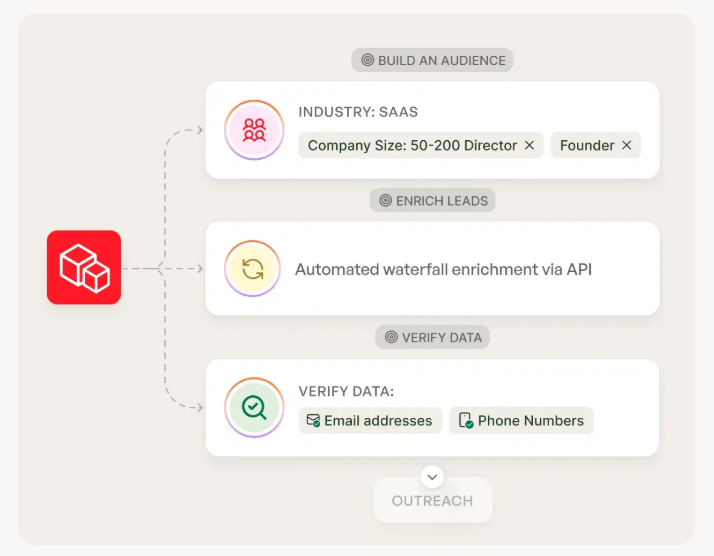
Mini workflow walkthrough (to match the UI screenshot)
Here's the cleanest "data -> agent-safe outbound" flow:
- Filter accounts/contacts with role + company criteria
- Verify emails and remove invalids/spam traps
- Enrich missing fields (role, company size, tech, intent topic)
- Export or sync to your sequencer/CRM
- Enroll only verified contacts into approved sequences with caps

The article's first guardrail is verified data + enrichment before queueing. Prospeo returns 50+ data points per contact at a 92% match rate - role, company context, and suppression-ready signals your agent needs to stay in Green mode.
Stop recovering burned domains. Start with data you can trust.
FAQ: Autonomous AI agents for sales
What's the difference between an autonomous sales agent and an AI assistant?
An autonomous sales agent takes actions (send, route, update, schedule) inside defined guardrails, while an assistant drafts or recommends and waits for a human to execute. In practice, run draft-first for 2-4 weeks, then allow limited auto-send only after you hold Green metrics (bounce <1% and inbox placement >=80%).
What deliverability numbers mean you should pause autonomy? (bounce, complaints, inbox placement)
Pause automation when you hit Red thresholds: bounce >=2%, spam rate >=0.3%, or inbox placement <70%. Keep limited auto-send only in Green (bounce <1%, spam rate <0.1%, inbox placement >=80%), and use Yellow (bounce 1-2%) as draft-only while you fix list quality and suppression.
Do autonomous agents work better for inbound speed-to-lead or outbound cold email?
Inbound speed-to-lead is the best first win because intent's explicit and routing is structured, so you can safely automate scheduling and follow-up within days. For cold outbound, start in draft-only and cap at ~30 emails per inbox per day until you've held clean deliverability for 2-4 consecutive weeks.
What's a good free way to improve list quality before turning on an agent?
Start with verification and enrichment on a small pilot segment (200-500 contacts) and refuse to send to unverified addresses. Prospeo's free tier includes 75 verified emails plus 100 Chrome extension credits per month, which is enough to validate your workflow before you scale into paid credits.
Summary (what to do next)
Autonomous AI agents for sales are worth it in 2026, but only when you treat them like a production system: verified data up front, strict sending caps, stoplight gates, least-privilege permissions, and audit logs you can use during an incident.
Start with inbound speed-to-lead. Run outbound in draft-only until metrics are stable. Scale volume with more inboxes/domains - not higher per-inbox sends.