Email Deliverability 2026 (What People Meant by "Email Deliverability 2024"): The Compliance-First Playbook
If you're googling "email deliverability 2024," you're probably dealing with the same ugly symptom: emails "send" fine, but replies, clicks, and pipeline fall off a cliff.
Here's the thing: most deliverability problems aren't copy problems. They're compliance problems plus bad data.
I've watched teams spend weeks rewriting sequences while their real issue was simple: misaligned authentication, a clunky unsubscribe flow, and a list full of risky addresses that never should've been mailed in the first place.
The non-negotiables (print this)
- Spam complaint rate: run the program at 0.10%. Treat 0.3% as the cliff.
- Unsubscribe processing: honor it in 2 days or less.
- Authentication (everyone): SPF or DKIM must pass.
- Authentication (bulk): SPF and DKIM must pass, DMARC must pass, and the From domain must align (relaxed alignment's fine).
One sentence that saves domains: make it easy to leave.
If you're in trouble right now (next 48 hours)
- Pause risky segments: old leads, broad imports, anything you can't defend.
- Cut volume 30%-50% and mail only your warmest segment.
- Verify and suppress invalid and risky addresses before you restart.
- Fix one-click unsubscribe (RFC 8058) and make sure DKIM signs the headers.

Do less. Do it cleaner. Recover faster.
Why deliverability felt worse after 2024 (and "quiet spam" is real)
Scenario: your ESP says delivery is great. Bounces look normal. But engagement dies.

That's "quiet spam." You're being accepted, then routed to spam or low-attention placements where nobody sees you. No dramatic block. Just silence.
In our experience, the teams that recover quickest stop chasing magic tricks and start treating deliverability like ops: tighten compliance, clean the list, stabilize volume, and watch complaints like a hawk. That boring routine beats 90% of the "deliverability hacks" that still circulate from 2024 threads.
A useful benchmark: average global inbox placement sits around 83.5% inbox / 6.7% spam / 9.8% missing (Validity, via Litmus). "Missing" is the scary bucket because you can't easily see it in your inbox or spam folder, yet it still kills results.

Every bounced email chips away at your sender reputation. Prospeo's 5-step verification - with catch-all handling, spam-trap removal, and honeypot filtering - delivers 98% email accuracy. Teams like Snyk cut bounce rates from 35% to under 5% overnight.
Stop rewriting sequences. Start fixing the list that's burning your domain.
The 2024 shift that stuck: provider rules became the baseline
Yahoo rolled out bulk sender requirements starting February 2024, and Gmail's expectations were already heading the same way. The practical outcome: "best practices" turned into table stakes, and enforcement got sharper each year after.

Most teams should act like "bulk sender" rules apply if they're anywhere near 5,000+ emails/day to major providers. Even below that, the same signals decide whether you land in inbox, promotions, or spam.
One nuance people miss: Yahoo's spam-rate calculation is based on mail delivered to the inbox, not just "sent." You can't dilute a complaint spike by blasting more volume. If inbox-delivered messages get marked as spam, you're burning reputation in the exact place that matters.
Microsoft's Outlook.com high-volume sender requirements (announced in 2025) follow the same direction: SPF/DKIM/DMARC, alignment, and easy opt-out. By 2026, "close enough" implementations don't hold up.
Mailbox-provider requirements checklist (tightened)
| Requirement | Applies to | Pass condition | Target/SLA |
|---|---|---|---|
| Auth | All | SPF or DKIM passes | Always |
| Bulk auth | Bulk | SPF and DKIM pass | Always |
| DMARC publish | Bulk | DMARC record exists | p=none minimum |
| DMARC pass | Bulk | DMARC evaluates to pass | Required |
| From alignment | Bulk | From aligns SPF/DKIM | Relaxed ok |
| Complaints | All/Bulk | Spam reports rate | <0.3% max |
| Operating bar | All/Bulk | Safer complaint rate | <0.10% |
| Unsubscribe | Marketing/subscribed | List-Unsubscribe present | Required |
| One-click | Marketing/subscribed | RFC 8058 headers | Required |
| Unsub SLA | Marketing/subscribed | Removal honored | <= 2 days |
| DNS (PTR) | All | Valid forward + reverse DNS | Required |
| Header hygiene | All | RFC 5321/5322 sane | Expected |
Yahoo keeps the policy language updated here: Yahoo bulk sender requirements. Braze also has a clear recap that matches how most ESPs implemented it: guide to 2024 email deliverability updates.
Compliance checklist you can paste into a ticket
Don't ship "we think it's fine." Ship "we checked the raw message and it passes."
A) All senders (even low volume)
- SPF passes for your envelope domain (Return-Path / MAIL FROM).
- Watch SPF DNS lookup limits. Too many
include:chains can cause intermittent fails that look random until you inspect headers.
- Watch SPF DNS lookup limits. Too many
- DKIM passes for the domain you're signing with.
- Common failure: selector mismatch after an ESP change (the DNS record exists, but the signature points to a different selector).
- Header sanity (RFC 5321/5322):
From:is a real mailbox and formatted normally.Message-IDexists and isn't duplicated across sends.- MIME isn't broken (bad boundaries and malformed multipart still happen more than you'd think).
- Unsubscribe works in practice:
- It's visible.
- It actually removes the user quickly.
B) Bulk senders (typically 5,000+/day to major providers)
- SPF passes AND DKIM passes (not one or the other).
- DMARC is published and DMARC evaluates to PASS.
- Minimum policy can be
p=none, but DMARC still has to pass.
- Minimum policy can be
- From alignment is correct (this is where teams quietly fail):
- Your visible
From:domain must align with either the SPF-authenticated domain or the DKIM-signing domain. - "Random tracking domain + different From domain" is a classic way to fail alignment while thinking auth is fine.
- Your visible
- List-Unsubscribe + RFC 8058 one-click are implemented and DKIM-signed.
- Complaint rate stays under control:
- Operate under 0.10%. Treat 0.3% as red-alert territory.
C) DNS hygiene (what "valid forward + reverse" means)
Mailbox providers use DNS consistency as a trust signal, and it's not optional once you're sending at scale.
- PTR exists for the sending IP (reverse DNS record).
- PTR hostname resolves back to the same sending IP (forward-confirmed reverse DNS).
- Your HELO/EHLO hostname is a real domain with an
Arecord.
If you're on a shared IP, your ESP usually controls PTR/HELO. If you're on a dedicated IP, this one's on you, and it's a maddening "everything looks fine" failure until you check it properly.
D) The failure patterns that waste weeks
Look, these are the ones that make me groan because they're so fixable:

- SPF passes sometimes (DNS lookup limit issues).
- DKIM passes in one stream but not another (multiple sending systems, only one configured).
- DMARC passes but alignment fails (SPF/DKIM authenticate, but neither aligns with
From:). - Unsubscribe exists but isn't honored fast (users hit spam because it's quicker).
- Headers exist but aren't DKIM-signed (providers treat them as untrusted).
One-click unsubscribe (RFC 8058): do it right
Most "we added List-Unsubscribe" setups are half-done. In 2026, half-done is how you end up in quiet spam even though your dashboards look "okay."
RFC 8058 is the one-click unsubscribe standard providers want because it avoids link-scanner accidents and supports a clean HTTPS POST flow.
Step-by-step (the version that holds up)
Step 1: Add List-Unsubscribe with at least one HTTPS URL
You can include a mailto: too, but the HTTPS URI is the key.
Step 2: Add List-Unsubscribe-Post exactly like this
The header field value has to be exactly List-Unsubscribe=One-Click:
List-Unsubscribe-Post: List-Unsubscribe=One-Click
Step 3: Make sure DKIM signs both headers Your DKIM signature should cover:
List-UnsubscribeList-Unsubscribe-Post
If you're using OpenDKIM, you often need to explicitly include these in the signed header list. This is the difference between "the header exists" and "the header is trusted."
Step 4: Make the endpoint behave like a real unsubscribe When the provider POSTs to your endpoint:
- suppress the recipient immediately from future marketing sends
- return 200 OK
- don't require login
- don't bounce through tracking redirects
Example headers
List-Unsubscribe: <https://example.com/unsub?token=abc123>, <mailto:unsubscribe@example.com?subject=unsubscribe>

List-Unsubscribe-Post: List-Unsubscribe=One-Click
Standards text: RFC 8058. Practical debugging write-up: List-Unsub-Post in your DKIM.
Measurement after MPP: stop using opens as your steering wheel
If you're still steering deliverability with open rate, you're driving with a broken gauge.
Apple Mail Privacy Protection changed what "open" even means. In a Jan-Aug 2024 dataset, 73.11% of tracking-pixel fires came from Apple's privacy proxy (Validity). Apple also adjusted pre-fetch behavior in early April 2024, which made open rates look like they fell even when clicks and revenue didn't.
That mismatch caused a ton of bad decisions: teams saw opens drop, assumed inboxing collapsed, and started changing everything at once. That's how you turn a manageable issue into a month-long mess.
KPI reset: use this, skip that
Use this (signals that track inboxing and revenue)
- Spam complaint rate (keep it under 0.10%)
- Inbox placement trend (seed tests are directional, not gospel)
- Click-to-delivered and reply-to-delivered (especially for outbound)
- Conversion per delivered (finance actually cares about this)
- Hard bounce rate (spikes usually mean list or auth problems)

Skip this (unless you're doing analytics work)
- Open rate as a primary KPI
- "Unique opens" as a deliverability proxy
- Send-time micro-optimizations before you've fixed complaints and list quality
Sanity ranges (tripwires, not laws)
- Hard bounce rate: aim <2%, investigate hard at >3%, stop and clean at >5%
- Unsubscribe rate: 0.2%-0.8% is common; >1% usually means targeting or frequency is off
- Outbound reply rate: if it drops 30%-50% at stable volume, assume quiet spam before you assume "bad copy"

List hygiene: the fastest win (and the easiest to mess up)
Deliverability is a math problem: bad addresses create bounces, bounces correlate with filtering, and annoyed recipients create complaints. Complaints are the fastest path to spam placement.
The hidden failure mode is traps. They often don't bounce like normal invalids. They just sit there and punish you.
One specific scenario I've seen too many times: a team exports "all leads touched in the last 2 years," enriches them cheaply, then blasts a new offer. The first send looks fine. The second send gets quieter. By week two, Gmail Postmaster shows spam rate creeping up, Outlook starts throttling, and suddenly everyone's arguing about subject lines while the list is the actual fire.
Pros / cons of aggressive list cleaning
Pros
- Fewer hard bounces (immediate reputation relief)
- Lower complaint rate (fewer "who are you?" reactions)
- Better engagement per delivered message
Cons
- Smaller list (yes, it stings)
- You'll learn your CRM isn't as clean as you thought
- You need a suppression workflow or you'll re-import junk next week
Mini-workflow: verify -> suppress -> send
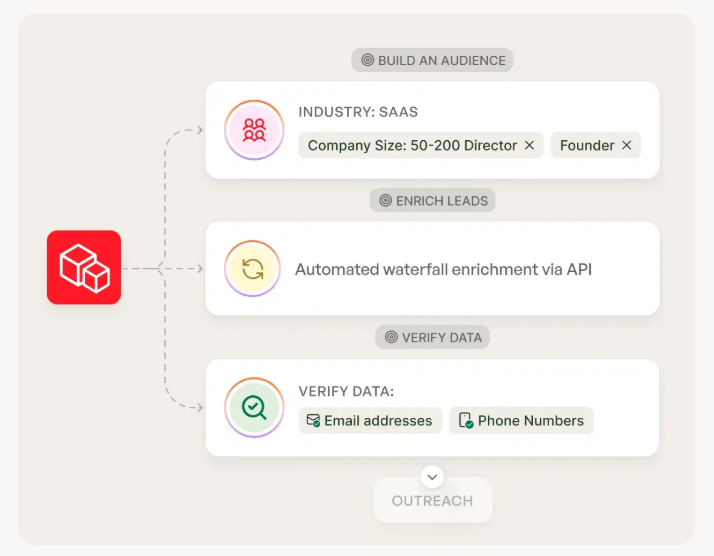
If your goal is simple - stop bouncing and stop hitting traps - tools like Prospeo are built for this exact job. Prospeo is the B2B data platform built for accuracy, with 98% email accuracy, 5-step verification, catch-all handling, and spam-trap + honeypot removal, refreshed on a 7-day cycle.
Skip this if you're only sending to a tiny, fully opt-in list you've emailed consistently for years and you already have near-zero bounces. Everyone else should verify before they scale volume.
If you want a simple SOP for this, use an email verification list workflow so risky records stay suppressed.
Your weekly monitoring stack (three loops, not twelve dashboards)
You don't need a wall of charts. You need a short routine and the discipline to act when it moves.
Also, complaint-rate denominators vary by dashboard. Don't get cute with math. Keep it under 0.10% either way.
Tools that matter
| Tool | Best for | What you watch | What good looks like | Do this next |
|---|---|---|---|---|
| Google Postmaster Tools | Gmail signals | Spam rate, domain/IP rep | Low spam rate; rep stable | If it worsens: cut volume + tighten segment |
| Microsoft SNDS | Outlook IP signals | IP health, volume | Stable traffic; no spikes | If it shifts: check sending source + IP changes |
| Microsoft JMRP | Complaints | Junk reports | Flat/low complaint trend | If it spikes: suppress complainers immediately |
Microsoft's official entry point: SNDS.
Troubleshooting: a decision tree that actually moves inboxing
When deliverability slips, teams flail. Treat it like incident response: identify the symptom, map it to the likely cause, apply the smallest change that moves the metric, then hold steady long enough to see the result.
1) Inboxing drops but bounces don't spike (quiet spam)
Check complaint rate first
- If it's rising toward 0.10%
- suppress complainers immediately
- reduce daily volume 30%-50% for a week
- tighten targeting (warmest segment first)
- make leaving easy: one-click unsubscribe + <=2-day SLA
If complaints are stable but clicks/replies fall
- check for sending pattern changes (new IP, new subdomain, new From name)
- verify auth alignment (DMARC pass + From alignment)
- audit content for obvious triggers (URL shorteners, mismatched domains, heavy HTML, too many links)
2) Hard bounces spike
- stop sending to the newest imported segment
- verify and suppress invalid and risky catch-alls before the next send
- audit the upstream source
Bounce spikes are usually upstream data drift: old exports, scraped lists, or "we enriched the whole CRM" without suppressing dead records.
3) You "fixed" one-click unsubscribe but Gmail/Yahoo still flags you
Open a raw message and inspect the DKIM-Signature header.
If DKIM h= doesn't include list-unsubscribe and list-unsubscribe-post, fix signing so it covers both headers. This one mistake causes an absurd amount of pain because everything looks correct until you check the signature.
4) Domain reputation vs IP reputation (shared IP reality)
If you're on a shared IP
- if everyone on the IP is affected, you're riding the ESP's remediation timeline
- if only you are affected, it's usually domain reputation, complaints, or list quality; switching IPs won't save a domain that keeps generating spam reports
If you're on a dedicated IP
- sudden drops often track back to volume volatility, list imports, or a new sending stream that isn't authenticated or aligned
- stabilize volume, send to engaged segments, and remove risky addresses before scaling back up
My recommendation: keep marketing mail on a sending subdomain (like mail.yourdomain.com) and protect your primary domain's reputation. It doesn't fix deliverability by itself, but it limits blast radius when something goes wrong - especially if you manage domain reputation separately from your main brand domain.
5) Spam rate spikes above 0.3% (red alert)
- pause the campaign that caused it
- send only to your most engaged segment for 7-14 days
- remove any segment with high "who are you?" risk (old leads, purchased lists, broad scraped personas)
- confirm unsub processing is actually happening within 2 days
- relaunch gradually: 20% volume, then 40%, then 60% - only if you're back under 0.10%
Mailbox providers forgive slow, consistent senders. They punish volatility plus complaints.
Bad advice to ignore (because it gets you filtered)
- "Hide unsubscribe so people don't leave." That's self-sabotage. You're trading unsubscribes for spam complaints, and complaints are what providers punish.
- "DMARC must be p=reject or you're not compliant." Bulk requirements accept DMARC
p=noneminimum as long as DMARC passes.p=rejectis a security policy choice. - "Just warm up more." Warmup doesn't fix broken alignment, missing RFC 8058 headers, or a trap-riddled list. It just delays the crash.
- "Seed tests are the truth." They're directional. Use them like a smoke alarm, not your KPI.
If you're still stuck, run a tighter infrastructure audit (DNS, PTR, limits, and sending streams) with a cold email server setup checklist.
FAQ
What spam complaint rate should I target to stay safe with Yahoo/Gmail-style rules?
Run your program under 0.10% as an operating target, and treat 0.3% as the hard ceiling where filtering risk jumps fast. If you're creeping up, slow volume, tighten targeting, and make unsubscribe frictionless.
What exactly is "one-click unsubscribe" and which headers are required (RFC 8058)?
You need List-Unsubscribe with at least one HTTPS URL and List-Unsubscribe-Post: List-Unsubscribe=One-Click. DKIM should sign both headers so providers trust them.
Why did open rates drop even when clicks or revenue didn't?
Apple Mail Privacy Protection made opens noisy because most tracking pixels get fired by Apple's proxy, not humans. Apple also changed pre-fetch behavior in 2024, which shifted open numbers without necessarily changing real engagement.
How do I monitor reputation for Gmail and Outlook.com?
Use Google Postmaster Tools for Gmail (spam rate and reputation trends), and Microsoft SNDS plus JMRP for Outlook.com (IP health and junk-report feedback). Check weekly and react immediately to complaint spikes.
What's the fastest way to reduce bounces before my next campaign?
Verify and suppress invalids, risky catch-alls, and known traps before you send. That's one of the few changes that can improve results immediately.
Quiet spam starts with stale data. Prospeo refreshes every record on a 7-day cycle - 6x faster than the industry average. At $0.01 per email, cleaning your list costs less than one spam complaint costs your pipeline.
Replace risky addresses with 143M+ verified emails before your next send.
Summary: how to stop fighting "email deliverability 2024" problems in 2026
Email deliverability didn't get harder because providers got mean. It got stricter because too many senders made it miserable to receive email.
The 2026 playbook is simple: keep complaints under 0.10%, implement RFC 8058 one-click unsubscribe correctly (and DKIM-sign it), and clean your list before you scale volume. Do those three, and most "deliverability mysteries" stop being mysteries.