

B2B Lead Gen in 2026: Strategies, Benchmarks, and Tools That Actually Work
Most b2b lead gen advice reads like a brainstorm - 15 strategies, zero benchmarks, and a vague suggestion to "try ABM." Practitioners on r/sales report 2% cold email reply rates and wonder if outbound is dead. It's not. But the gap between teams generating pipeline and teams burning budget has never been wider.
The lead generation software market hit $7.4 billion in 2025 and is projected to reach $16.2 billion by 2034, which means more tools, more noise, and a bigger premium on knowing what actually works. This playbook is built on real numbers, not theory.
The Three Things That Actually Matter
Teams that build pipeline consistently share three traits. First, verified data - contacts that land in inboxes and connect on phones, not a bloated database full of stale records. Second, omnichannel sequences where email, phone, and social work together instead of operating in silos. Third, realistic benchmarks so you're not chasing fantasy metrics your board saw in a vendor deck.
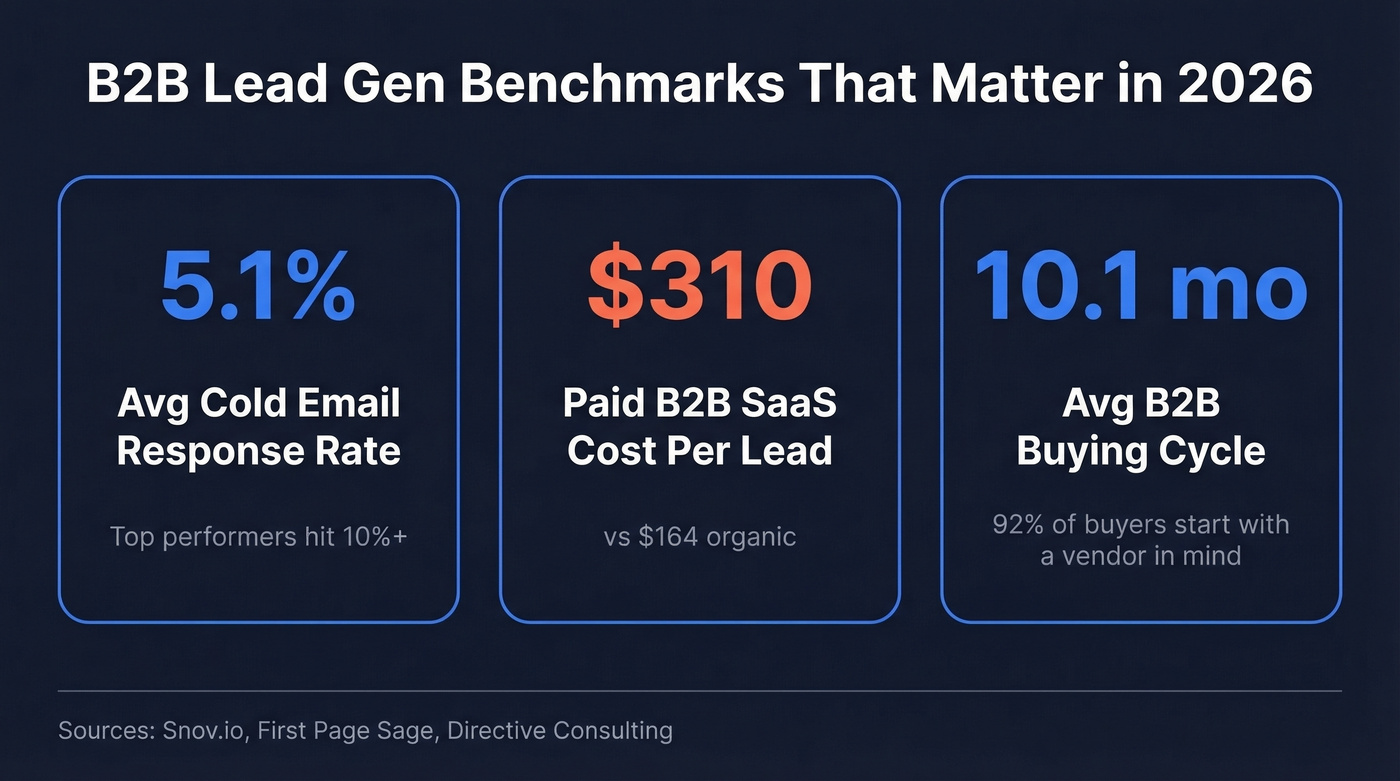
Cold email averages a 5.1% response rate. Paid B2B SaaS leads cost $310 each vs $164 for organic. The average B2B buying cycle runs 10.1 months. If you're not planning around those numbers, you're guessing.
What Is B2B Lead Generation?
B2B lead generation is the process of identifying and attracting potential buyers for your product or service. The practical version: it's a system for moving strangers through a funnel until they're ready to talk to sales - and making sure sales actually follows up.
The funnel has three stages that matter. An MQL (Marketing Qualified Lead) has engaged with your content - downloaded a whitepaper, visited your pricing page twice. An SAL (Sales Accepted Lead) is the accountability layer most teams skip: an MQL that sales has reviewed, accepted, and committed to pursuing. An SQL (Sales Qualified Lead) has shown buying signals like asking about pricing, implementation timelines, or contract terms. The SAL stage is where most pipeline leaks happen. Without it, marketing throws leads over the wall and sales ignores half of them.
Benchmarks That Actually Matter
Before you pick a strategy or tool, anchor yourself in benchmarks. These are the numbers that tell you whether a campaign is working or broken.
Cost Per Lead by Industry
| Industry | Paid CPL | Organic CPL | Blended |
|---|---|---|---|
| B2B SaaS | $310 | $164 | $237 |
| Cybersecurity | $411 | $404 | $406 |
| IT & Managed Services | $617 | $385 | $503 |
| Financial Services | $761 | $555 | $653 |
| eCommerce | $98 | $83 | $91 |
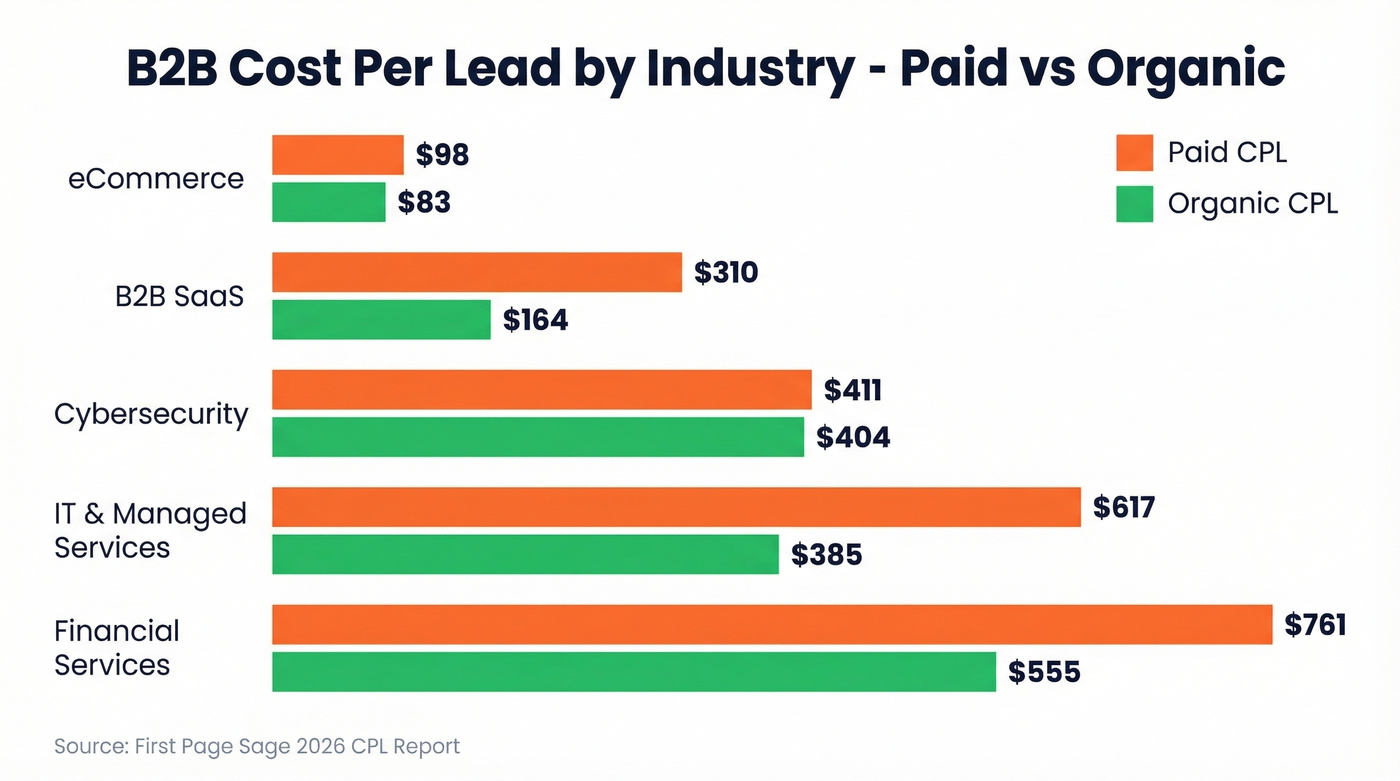
Source: First Page Sage 2026 CPL report
Buyer Journey Benchmarks
The buying cycle is longer and more front-loaded than most teams plan for. 92% of buyers start with at least one vendor in mind, and the winning vendor is on the Day One shortlist 95% of the time. First contact with sales happens at 61% of the journey - buyers are more than halfway done before they talk to you.
They consume roughly 13 pieces of content along the way. The average cycle? 10.1 months. If your pipeline strategy doesn't account for that timeline, you're optimizing for vanity metrics.
Cold Email Benchmarks
Average open rate sits at 27.7%. Average response rate is 5.1%, with top performers hitting 10%+. A 2-email sequence pulls a 6.9% response rate - the sweet spot before diminishing returns.
Here's a stat that should change your behavior today: a 44-million-email analysis found that reply rates jumped from 1.08% with tracking on to 2.36% with tracking off. Turn off your open tracking. The average cold email bounce rate is 7.5%, and anything above 5% is actively damaging your domain.
Inbound vs Outbound Budget Allocation
The economics are wildly different. Organic search leads close at 14.6% vs 1.7% for outbound. Inbound costs roughly 62% less per lead and generates 54% more leads over time. The catch? Inbound takes 3-6 months to compound. Outbound produces conversations in days.
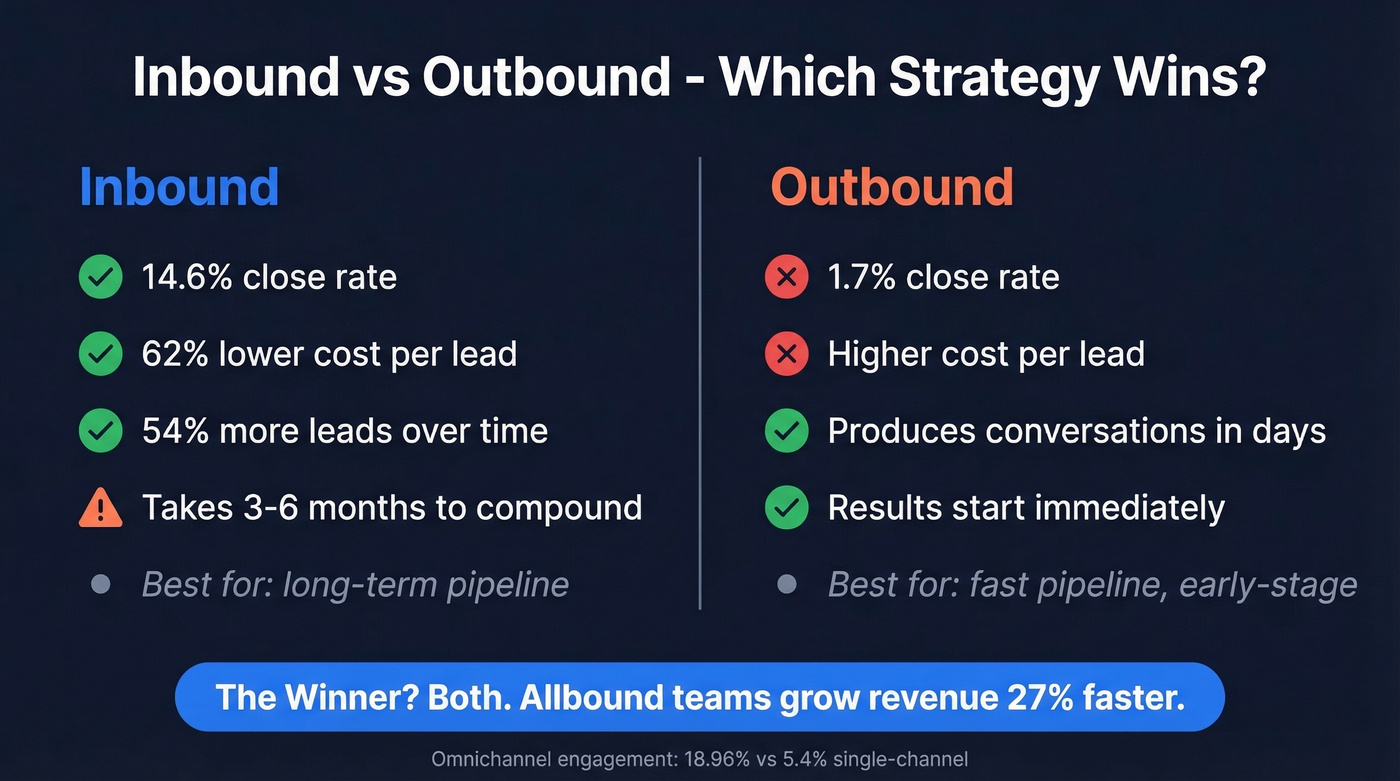
The answer for most teams is "allbound" - companies running both channels grow revenue 27% faster and cut acquisition costs up to 40%. Omnichannel engagement strategies show 18.96% engagement vs 5.4% single-channel. B2B buyers now engage across roughly 10 channels before purchasing, up from 5 in 2016.
Here's the thing: if your average deal size is under $10K, you probably don't need ZoomInfo-level data or a 12-touch ABM sequence. A verified email list, a tight 2-email sequence, and a good offer will outperform a bloated tech stack every time.
For a Series A company with 6 months of runway, you can't wait for inbound to compound. Start outbound immediately, invest in content simultaneously, and plan for the crossover point where inbound starts carrying its weight.

The article's benchmarks are clear: bounce rates above 5% destroy your domain, and cold email lives or dies on data quality. Prospeo's 5-step verification delivers 98% email accuracy at $0.01 per lead - 90% cheaper than ZoomInfo. Teams using Prospeo book 26% more meetings and keep bounce rates under 4%.
Stop burning your domain on unverified lists. Start with data that actually connects.
8 Strategies That Drive B2B Leads in 2026
Content Marketing & SEO
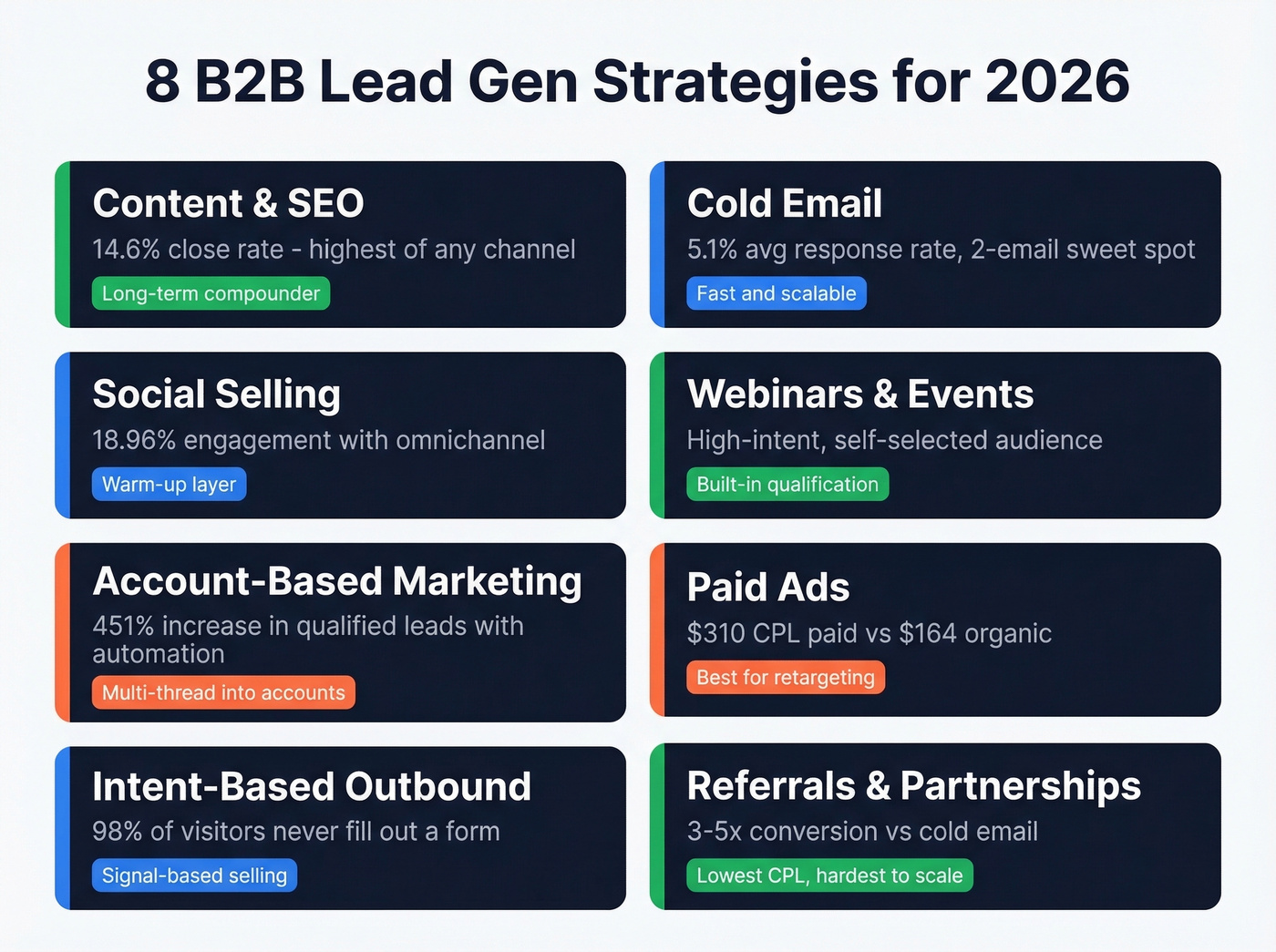
Content is the compounding asset. Organic leads close at 14.6% - the highest of any channel - because buyers who find you through search already have intent. B2B buyers consume roughly 13 pieces of content before making a decision, so the volume of quality material matters.
The challenge in 2026 is zero-click content: after AI Overviews, only 8% of searchers click through to a website. Your content strategy needs GEO (Generative Engine Optimization) - structuring content so AI models cite you, not just Google's algorithm. Build for both the click and the citation.
Cold Email
Cold email isn't dead - lazy cold email is dead. The 5.1% response rate benchmark is achievable, but only with clean data and proper deliverability hygiene. Turn off open and click tracking. Run 2-email sequences, not 8-touch marathons. Verify every email before it hits your sequencer.
We've seen this play out repeatedly: teams export lists from a big database, skip verification, and wonder why their domain reputation tanks within two weeks. The consensus on r/sales is clear - Apollo's data is user-populated and unverified, platform deliverability metrics are unreliable, and warm-up engines create fake engagement. Control your infrastructure, verify your data independently, and keep daily send volumes conservative.

Social Selling
Omnichannel sequences that include social touches hit 18.96% engagement vs 5.4% for email-only. Tools like HeyReach handle automation at scale, but automated messaging is risky - platforms detect it, and prospects can tell. Manual, personalized messages outperform automation every time. Use social as the warm-up layer: engage with a prospect's content before the cold email lands. It makes the email feel less cold.
Webinars & Events
Webinars capture high-intent leads because attendees self-select by topic. A VP of Engineering who attends your "Migrating to Kubernetes" webinar is signaling something specific. The qualification opportunity is built in - you can see who stayed for the full session, who asked questions, and who bounced after 5 minutes. Route leads based on that behavioral data, not just the registration form.
Account-Based Marketing
ABM works when you multi-thread into accounts - reaching 3-5 stakeholders, not just one champion. Companies using marketing automation for ABM have seen up to a 451% increase in qualified leads. The mistake most teams make is treating ABM as "outbound to a named list." Real ABM coordinates marketing air cover with sales outreach to the same accounts simultaneously, and layering intent data on top tells you which accounts are actually in-market right now.
Paid Ads
Paid is fast but expensive. B2B SaaS CPLs run $310 on the paid side vs $164 organic. The best use of paid isn't top-of-funnel acquisition - it's retargeting. Someone visits your pricing page, doesn't convert, and sees your ad the next day. That's a $5 touchpoint on a warm lead, not a $310 cold one.
Intent-Based Outbound
98% of B2B website visitors don't fill out a form. Website visitor identification tools like Leadfeeder, Lead Forensics, and RB2B reveal which companies are browsing your site. Intent data providers like Bombora track which topics prospects are researching across the web. The shift from "blast everyone in your ICP" to "reach out to companies showing buying signals" is the single biggest improvement most outbound teams can make.
Referrals & Partnerships
Referrals have the lowest CPL of any channel. A warm introduction converts at 3-5x the rate of a cold email because it bypasses the entire "should I even respond?" filter. The problem is scale - you can't build a referral engine the way you build an outbound engine. Skip this as your primary channel, but invest in partner programs and customer advocacy alongside outbound. It won't replace volume, but it'll produce your best deals.
B2B Lead Gen Tools (With Pricing)
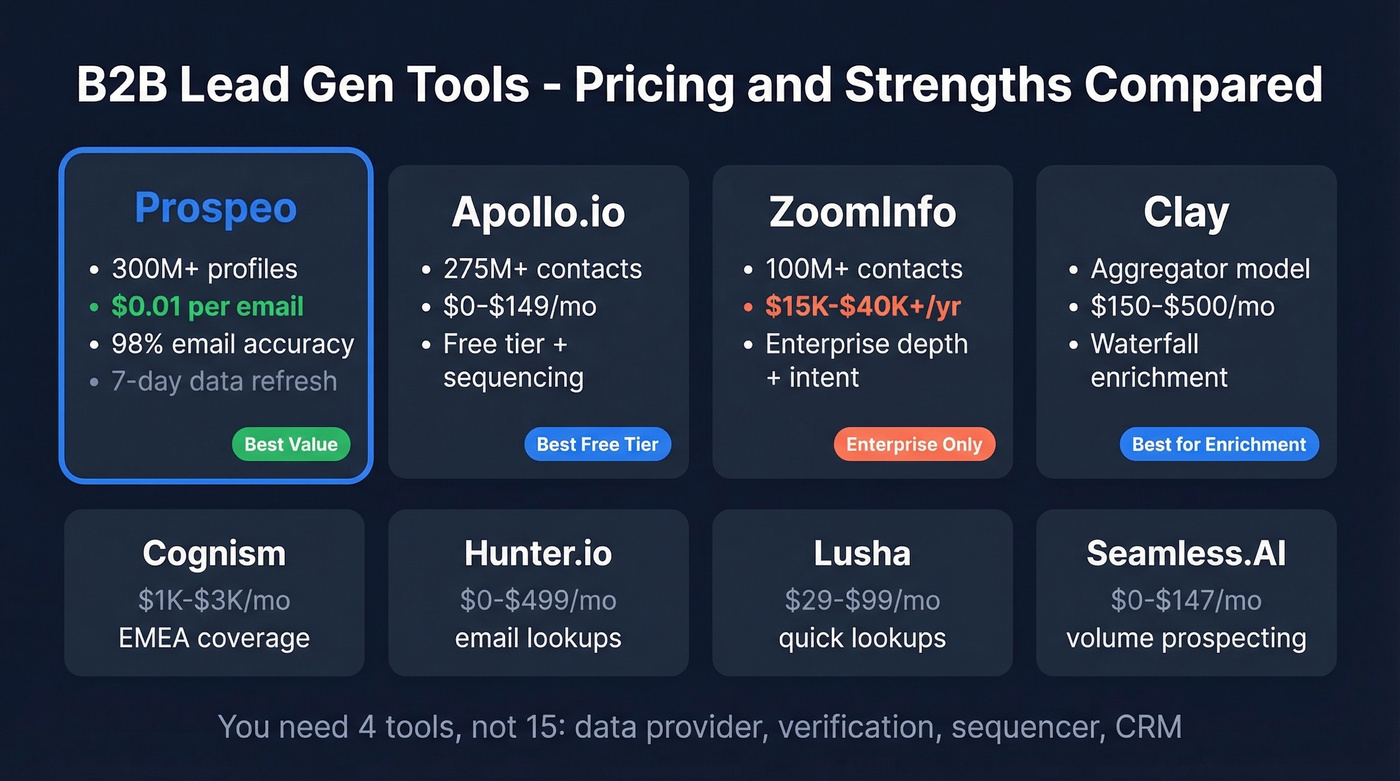
You need four tools, not fifteen: a data provider, a verification layer, a sequencer, and a CRM. Everything else is a distraction until those four work together.
If you're building your stack from scratch, start with a clear lead generation workflow so tools map to stages, not vibes.
| Tool | Best For | Database Size | Pricing | Key Strength |
|---|---|---|---|---|
| Prospeo | Accuracy & value | 300M+ profiles | Free; ~$0.01/email | 98% email accuracy |
| Apollo.io | Budget all-in-one | 275M+ contacts | $0-$149/mo | Free tier + sequencing |
| ZoomInfo | Enterprise orgs | 100M+ contacts | $15K-$40K+/yr | Depth + intent + workflow |
| Clay | Enrichment workflows | Aggregator | ~$150-$500/mo | Waterfall enrichment |
| Cognism | EMEA coverage | 400M+ profiles | ~$1K-$3K/mo | GDPR-first mobile data |
| Hunter.io | Email-only lookups | 200M+ emails | $0-$499/mo | Simple, fast, cheap |
| Lusha | Quick lookups | 45M+ contacts | $29-$99/mo | Browser extension UX |
| Seamless.AI | Volume prospecting | 1B+ (claimed) | $0-$147/mo | Large database claims |
Top Picks in Detail
Prospeo covers 300M+ professional profiles with 98% verified email accuracy, 143M+ verified emails, and 125M+ verified mobile numbers. The 7-day data refresh cycle means you're not emailing someone who changed jobs six weeks ago - the industry average refresh is six weeks. Search filters include buyer intent powered by Bombora across 15,000 topics, technographics, job changes, headcount growth, and funding signals. At roughly $0.01 per email, it's 90% cheaper than ZoomInfo with higher accuracy. Teams switching over consistently see bounce rates drop from 35%+ to under 4%. The free tier gives you 75 verified emails per month plus 100 Chrome extension credits, no credit card required.
If you're comparing vendors, start with a shortlist of best sales prospecting databases and then validate accuracy with a dedicated verifier.
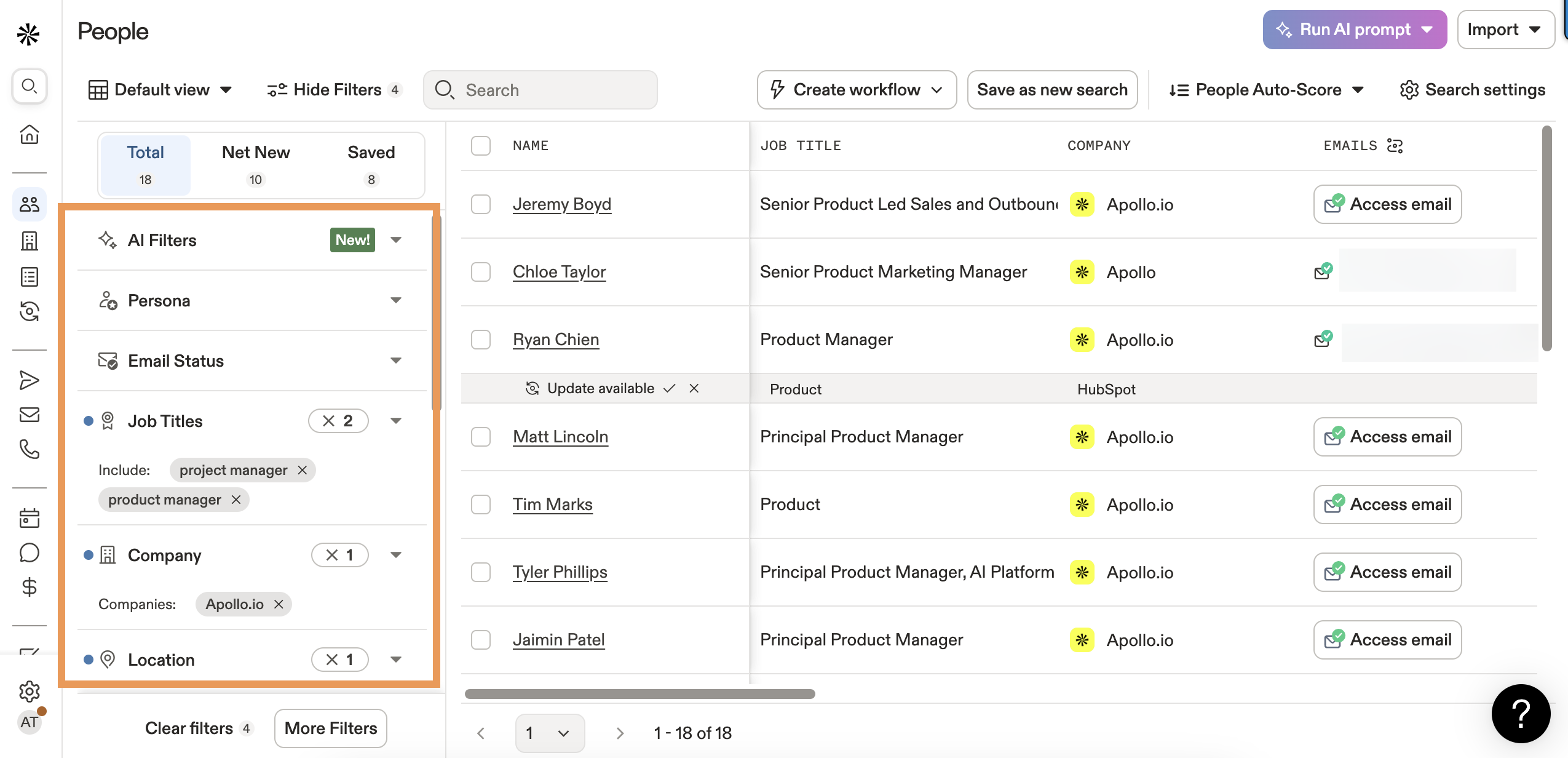
Apollo.io is the obvious starting point for budget-conscious teams. 275M+ contacts, a usable free tier, and built-in sequencing make it a genuine all-in-one. The caveat: Apollo's data is user-populated. We've seen teams export Apollo lists and hit 15-20% bounce rates without external verification. Use it for building lists, then verify elsewhere before sending.
If you're running outbound at scale, treat email deliverability as a first-class system, not a checkbox.
ZoomInfo is the enterprise default - and the most expensive option by a wide margin. Professional tier runs ~$15K-$20K per user per year, Advanced hits $25K-$35K, and Elite goes north of $40K. Annual contracts, minimum 2-3 seats. For a 500-person sales org running outbound, ABM, and intent from one platform, ZoomInfo earns its price. For teams under 50 reps, it's overkill.
Clay aggregates data from dozens of providers through waterfall enrichment - if Provider A doesn't have the email, it tries Provider B, then C. Expect $150-$500/mo depending on volume. Powerful for teams with technical RevOps talent, confusing for everyone else. (If you're doing this seriously, data enrichment services can be a better fit than DIY.)
Cognism wins in EMEA with GDPR-first mobile data, typically $1,000-$3,000/mo for small teams. Hunter.io and Lusha handle simple use cases - quick email lookups and browser extension prospecting - cheaply and fast. Seamless.AI claims 1B+ contacts; the data quality is inconsistent in our experience, but the price works for teams that verify externally.

What's Changed in 2026
Agentic AI is real, but early. Daily AI usage is up 233% in six months per the Slack Workforce Index, and daily AI users report being 64% more productive. But only about a third of B2B organizations have implemented agentic AI at scale. Juniper Research projects automated AI agent interactions will jump from 3.3 billion in 2025 to 34 billion+ by 2027. The teams figuring this out now will have a structural advantage in 12 months.
If you're experimenting here, start with generative AI lead generation use cases that don't compromise deliverability.
Zero-click content is reshaping inbound. After AI Overviews, only 8% of searchers click through. GEO means structuring content so AI models reference your brand, even when users don't click. If your entire inbound strategy depends on organic clicks, you're building on a shrinking foundation.
To keep inbound measurable, align content to lead generation metrics instead of traffic alone.
7 Mistakes That Kill Your Pipeline
Sending unverified data. The average cold email bounce rate is 7.5%. Anything above 5% is actively damaging your domain reputation, and once it's damaged, even good emails land in spam. We watched one agency burn through three domains in a quarter because they skipped verification on a 40,000-contact list. (If you need a deeper fix, start with email bounce rate diagnostics.)
Over-relying on one channel. Single-channel outbound hits 5.4% engagement. Omnichannel hits 18.96%. One deliverability hiccup on your only channel wipes out your quarter.
Ignoring lead nurturing in a 10.1-month cycle. If you're only measuring leads generated this month, you're missing the 80% of pipeline that's still maturing.
Leaving open and click tracking on. Reply rates doubled when tracking was turned off in a 44-million-email analysis. Your email platform's open rate dashboard isn't worth the deliverability hit. (If you want the technical why, see email tracking pixels.)
No real ICP definition. "Companies with 50-500 employees" isn't an ICP. A real ICP includes industry, tech stack, growth signals, org structure, and buying triggers. Use an ideal customer profile template so sales and marketing stop arguing in circles.
Trusting warm-up engines blindly. Keep daily send volumes conservative - 25 outreach plus 5 warm-up is a reasonable cap per inbox - and monitor actual deliverability, not platform dashboards. (This is also an email velocity problem, not just a warm-up problem.)
Poor sales-marketing handoff. Without an SAL stage where sales explicitly accepts a lead, MQLs pile up untouched. Add the SAL checkpoint and watch pipeline velocity change.
FAQ
What's a good cost per lead in B2B?
B2B SaaS averages $237 blended ($310 paid, $164 organic). Financial services runs $653+, cybersecurity sits around $406. The key comparison isn't your CPL vs an industry average - it's your paid CPL vs your organic CPL. If the gap is wide, you're underinvesting in content.
How long does B2B lead generation take?
Outbound produces conversations in days to weeks. Inbound takes 3-6 months to compound meaningfully. The average buying cycle is 10.1 months from first touch to closed deal. Plan pipeline expectations around that timeline, not monthly lead counts.
Is cold email still effective in 2026?
Yes, with verified data and proper deliverability hygiene. Average response rate is 5.1%; top performers hit 10%+ with short sequences and tracking turned off. Teams getting 2% reply rates are usually sending unverified lists with open tracking enabled - fix those two things and results improve immediately.
What's the best free tool for generating B2B leads?
Apollo.io offers a free tier with large volume but unverified data, so expect higher bounce rates without separate verification. Prospeo provides 75 free verified emails per month plus 100 Chrome extension credits - every email run through 5-step verification - with no credit card required.
How many tools do I actually need?
Four: a data provider, a verification layer, a sequencer, and a CRM. Get those four working together before adding intent platforms, visitor ID tools, or enrichment layers. Most teams over-tool and under-execute.
Omnichannel outreach hits 18.96% engagement - but only when you have verified emails and direct dials for the same contacts. Prospeo gives you both: 143M+ verified emails and 125M+ verified mobile numbers with a 30% pickup rate, all refreshed every 7 days. Layer in buyer intent across 15,000 topics to reach prospects already in-market.
Build the pipeline your benchmarks promised - with data refreshed weekly, not monthly.