

How to Close the Deal When Buyers Have 11 Stakeholders and Zero Patience
You just had the best demo of your career. The prospect was nodding, asking great questions, even joking about implementation timelines. Then... silence. Three follow-ups. No response.
That pattern isn't a fluke. If close rates hover around 29%, about 71% of deals never make it. Here's how to close the deal when the odds are stacked against you.
What You Need (Quick Version)
If you only read three sections, make it these: the 7-step framework, the objection scripts, and the stall talk tracks. They'll cover 80% of what separates reps who win from reps who "almost" win.
A few numbers to ground us:
- The average B2B close rate is about 29%. That's not a technique problem - it's a qualification problem. Most deals die long before the finish line.
- It takes about 62 touches across three or more channels to seal a deal. If you're giving up after five emails, you're not even in the game. (If you need a cadence, start with these follow-up templates.)
- If your pipeline looks full but nothing converts, skip to the data quality section near the end. The problem might start before you ever reach the negotiation table.
What "Closing" Actually Means
Closing is the moment a prospect commits - signs the contract, says yes, agrees to move forward. That's the textbook definition. But in practice, it's never just one moment. It's the accumulation of every conversation, every email, every micro-decision that came before it. The commitment doesn't happen at the end. It happens throughout.
Why Winning Deals Is Harder Than Ever
Let's be honest about the environment you're selling into. It's not 2016 anymore.
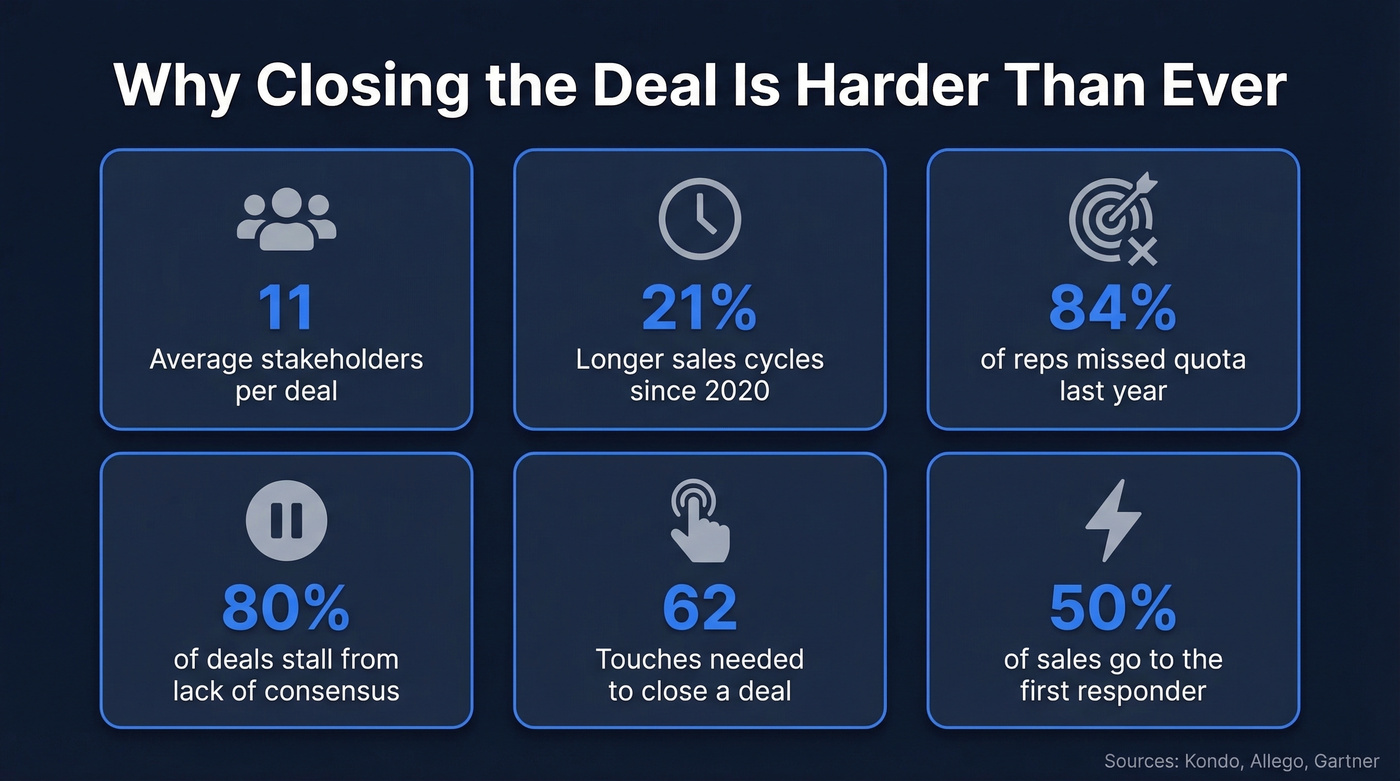
Sixty-seven percent of the B2B buying process is now digital. Buyers spend only 17% of their time meeting with suppliers - and that's split across every vendor they're evaluating, not just you. The average buying committee has swelled to 11 stakeholders, each with their own priorities, fears, and internal politics. Those stakeholders are using about 10 interaction channels to research solutions, up from 5 a decade ago.
Here's the tension that defines modern selling: 83% of B2B buyers prefer digital self-serve during research, but 71% still want human interaction for final decisions. They want to learn alone and buy with people. That gap is exactly why the ability to close the deal matters more than ever - it's the one moment where a human seller still has irreplaceable influence.
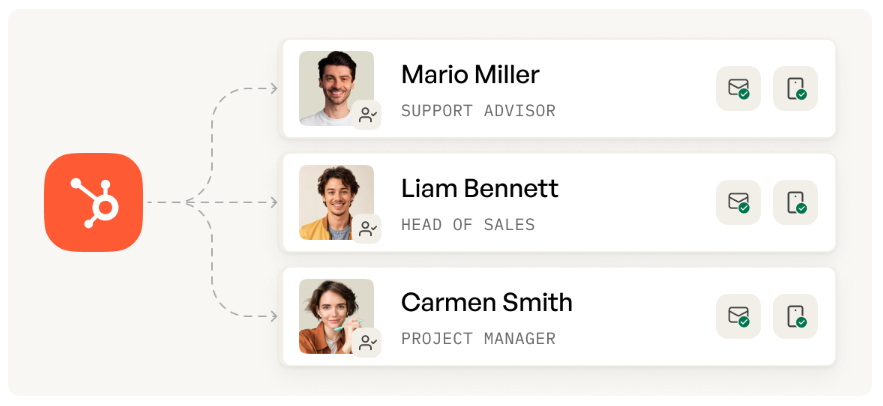
Now here's the stat that should keep every sales leader up at night: nearly 80% of B2B deals stall because the buying committee can't reach internal consensus - not because they rejected your solution. Your champion loved the demo. Their CFO never saw it. Their IT lead has concerns nobody surfaced. The deal dies in a conference room you were never invited to.
The macro numbers confirm the pressure. 84% of reps missed quota last year. Sales cycles are 21% longer than they were in 2020, and win rates have dropped about 2 percentage points. Meanwhile, 89% of B2B buyers had at least one deal stall in the past year - from the buying side. And up to 50% of sales go to the first vendor to respond, which means speed isn't just nice. It's half the battle.
This isn't about reps getting worse. It's about the buying process getting exponentially more complex. The techniques that worked when you had one decision-maker and a two-week cycle don't translate to a world where 11 people need to agree and half of them prefer to research without ever talking to you. Modern closing isn't about a magic phrase at the end of a call. It's about engineering consensus across a committee you may never fully see.
How to Close the Deal - 7-Step Framework
Forget the idea that closing is a single moment. It's a sequence, each step building on the last. Skip one and the whole thing collapses.
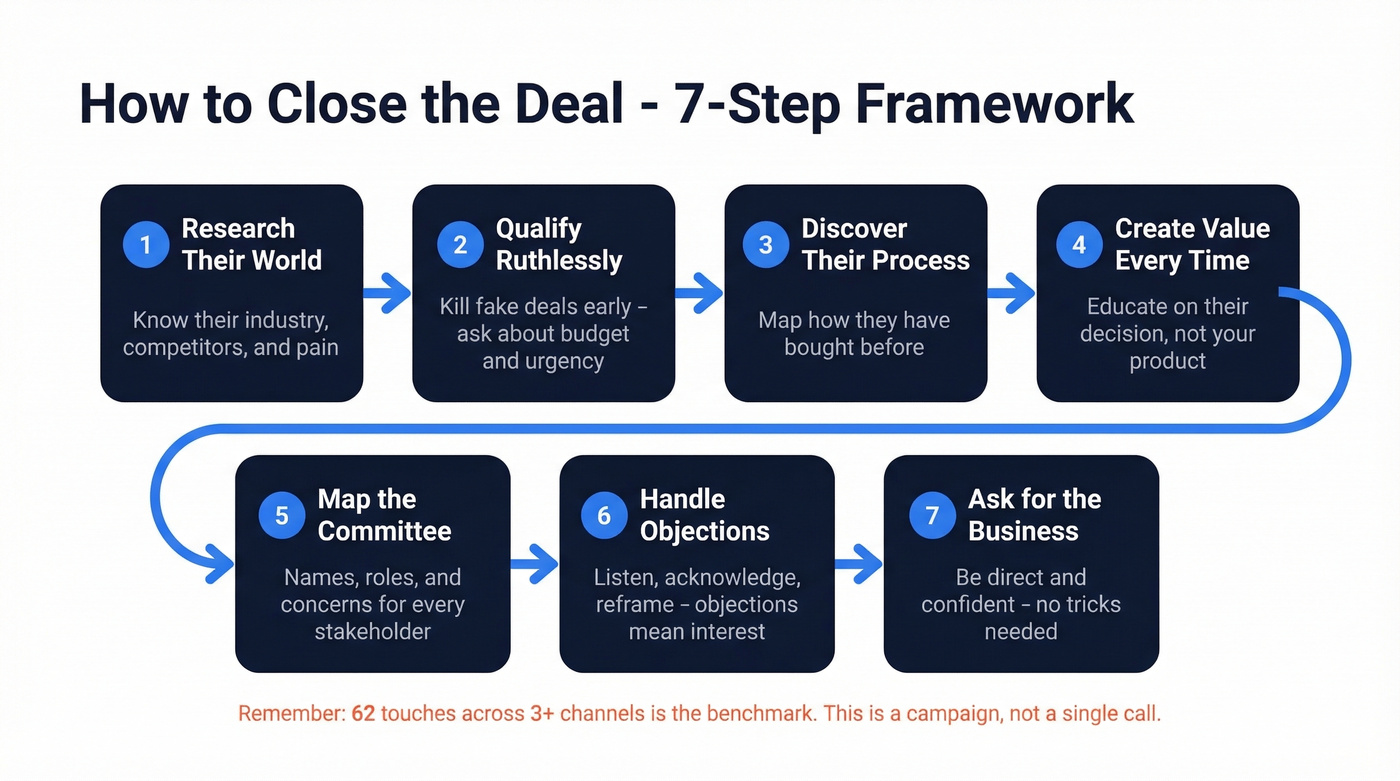
Step 1: Research the Buyer's World
Before you ever get on a call, know their industry, their competitors, their recent news, and - critically - the specific problem your solution solves for them. Generic pitches die in committee. Specific ones get forwarded.
Your intro should be under 10 seconds. You earn the next 30 minutes by proving you've done the work. That means going beyond the "About Us" page - read their latest earnings call, check their job postings for clues about internal priorities, and look at what technology they're already running. The more specific your opening, the faster you earn trust.
Step 2: Qualify Ruthlessly
The biggest waste in sales isn't losing deals. It's spending weeks on deals that were never real. Ask early: "Is there budget allocated for this?" and "What happens if you don't solve this problem?" If the answers are vague, the deal is vague. (If you want a tighter system, use an ICP template and score deals consistently.)
Step 3: Discover Their Decision Process
This is the step most reps skip, and it's the one that kills the most deals. Ask directly: "How have you made purchases like this before?" and "Who signs off once you've chosen a tool?"
You're not being nosy. You're mapping the terrain.
Step 4: Create Value in Every Conversation
Anthony Iannarino's approach works: don't talk about your product. Educate the buyer on their decision. Help them understand what good looks like, what questions to ask every vendor, what implementation pitfalls to avoid. When you become the most useful person in their evaluation process, closing becomes a formality. (More on this in our guide on how to add value in sales.)
Step 5: Map the Buying Committee
You need names, roles, and concerns for every person who'll influence the decision. Ask your champion: "Who else will weigh in on this?" and "What objections might they raise so we can address them together?"
If you can't get access to the full committee, equip your champion with the materials they need to sell internally - decks, ROI calculators, one-pagers, whatever makes their job easier. One r/salestechniques thread opens with a familiar pattern: a rep who's strong at top-of-funnel and rapport, but watches deals go cold once the process moves into negotiation and closing. The fix is almost always the same. You didn't map the committee early enough, and your champion couldn't carry the message alone. (This is also where account-based selling pays off.)
Step 6: Handle Objections as Buying Signals
An objection isn't rejection. It's engagement. The prospect who says "it's too expensive" is telling you they're interested enough to think about cost. The one who says nothing? That's the one you should worry about.
We'll cover objection handling in depth below, but the principle is simple: listen, acknowledge, reframe. (If you're seeing too many objections, use this playbook to reduce sales objection rate.)
Step 7: Ask for the Business
Don't overthink this. After you've created value, mapped the committee, and handled concerns, use simple language: "Unless you need something else from me, can I have you sign the agreement so we can get started?"
That's it. No tricks. No pressure. Confidence isn't pushiness - vague, indirect closes actually create more discomfort for everyone involved.
Remember: 62 touches across 3+ channels is the benchmark. This framework isn't a single call. It's a campaign. (If you're building that campaign, start with proven sales prospecting techniques.)
Psychology Behind Every Close
Understanding why buyers hesitate matters more than memorizing scripts. Four psychological forces drive almost every close - or kill it.
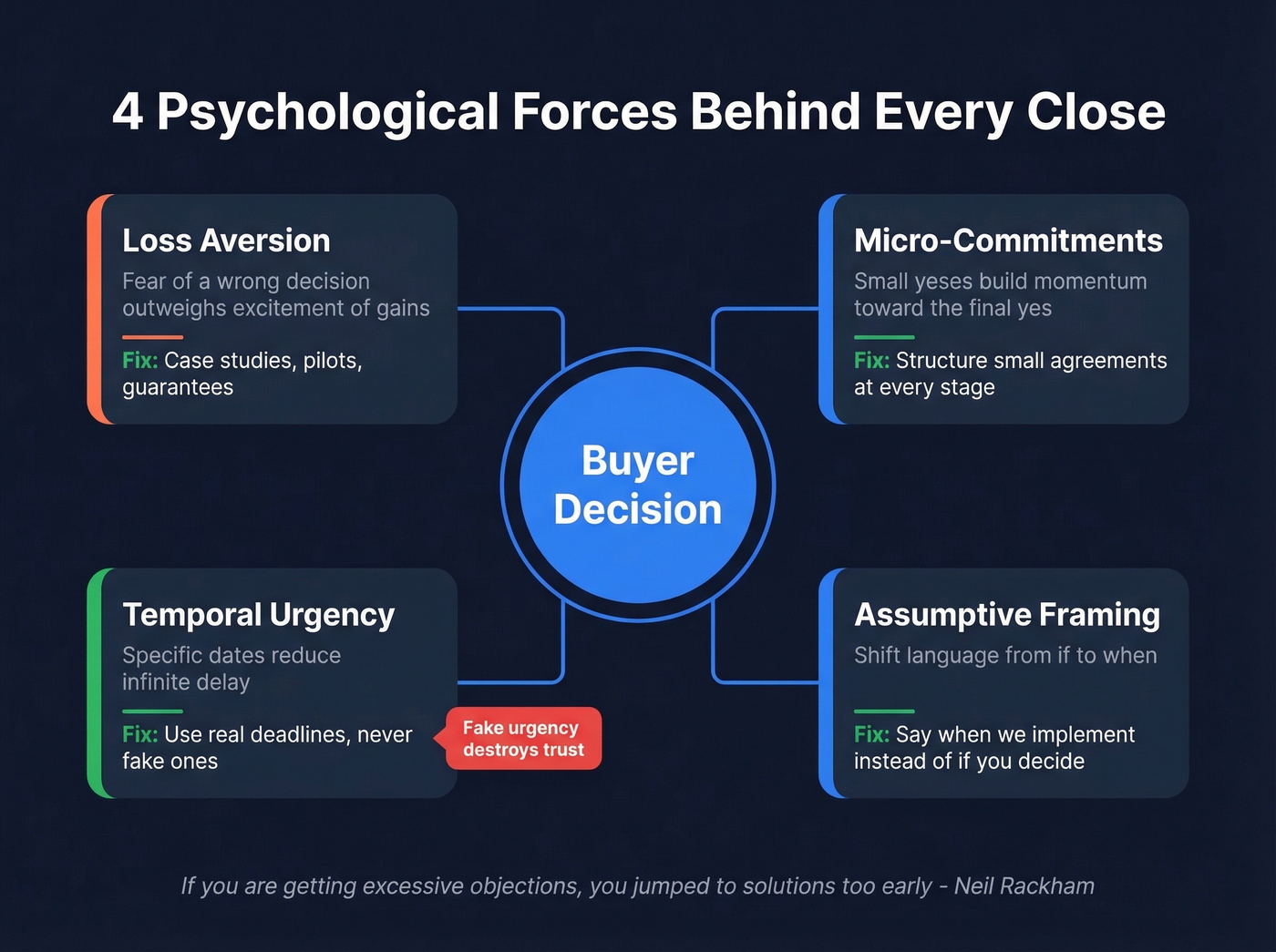
Loss aversion is the big one. The fear of making the wrong decision outweighs the excitement of potential gains. Your buyer isn't thinking "this could transform our pipeline." They're thinking "what if this doesn't work and I'm the one who signed off?" Address that fear directly. Case studies, pilot programs, and money-back guarantees all reduce perceived risk.
Micro-commitments build momentum. Every small "yes" throughout the process - agreeing to a second call, sharing their org chart, introducing you to their CFO - makes the final yes feel like a natural next step rather than a leap. Structure your sales process to generate these small agreements at every stage.
Temporal urgency works, but only when it's genuine. Using "today" and specific dates ("I'll send the proposal by Thursday; can we review it together next Tuesday?") reduces the infinite delay that kills deals. Fake urgency - "this price expires Friday" when it doesn't - destroys trust.
Assumptive framing creates an expectation of ownership early. Language like "when we implement" instead of "if you decide" subtly shifts the conversation. But here's the Neil Rackham insight that matters: if you're getting excessive objections, you probably jumped to solutions too early. The psychology only works when the foundation of value is solid.
Avoid vague questions like "So, how do we proceed?" at the end of a call. That hands control back to the buyer and increases doubt. Be specific. Be direct.
10 Closing Techniques That Work
If we had to pick three that work in every B2B deal: the value summary close, the next-step close, and the direct ask. But here are ten worth knowing - and choosing the right technique for the right moment is what separates good reps from great ones.
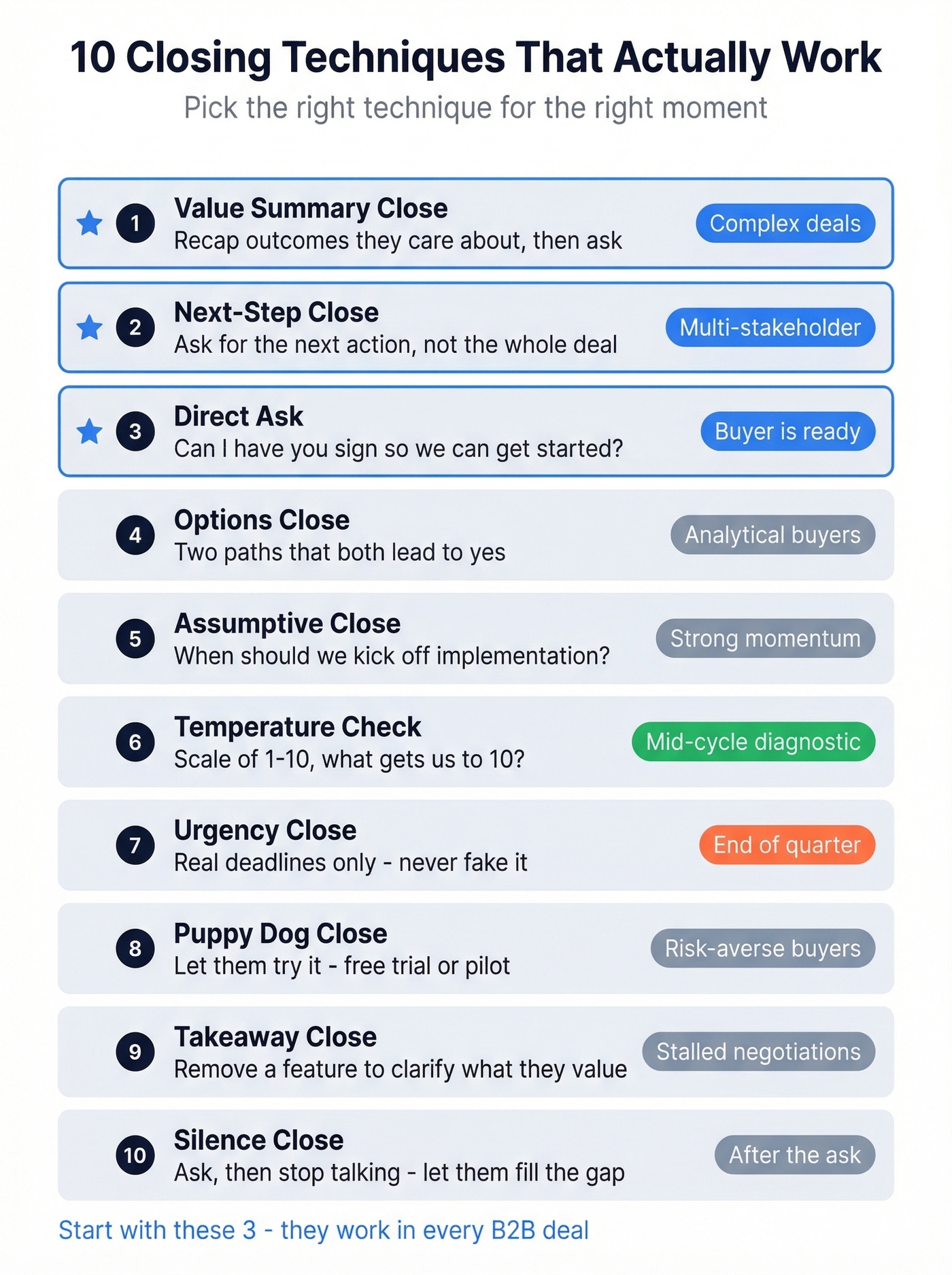
Value Summary Close
Recap every outcome they've told you matters, then ask for the commitment. "You mentioned reducing ramp time by 40% and cutting bounce rates in half. We've shown how we do both. Ready to move forward?" This is your workhorse for complex deals where the buyer needs a reminder of cumulative value.
Next-Step Close
Don't ask for the deal - ask for the next concrete action. "Here's what happens next: I'll send the proposal today, and we can review it together on Tuesday." In deals with multiple stakeholders, a single close often feels premature. The next-step close keeps momentum without forcing a premature decision.
Direct Ask
"Can I have you sign the agreement so we can get started?" No fluff. Use this when the buyer has already signaled readiness but nobody's asked the question. You'd be surprised how often deals stall simply because the rep never made the ask.
Options Close vs. Assumptive Close
These two techniques share DNA - both assume the deal is moving forward - but they work in different situations. The options close gives two paths that both lead to yes: "Would you prefer the annual plan with onboarding included, or the quarterly plan to start?" It's ideal for buyers who need to feel in control. The assumptive close skips the choice entirely: "When should we kick off implementation?" Use the options close when the buyer is analytical and wants to compare. Use the assumptive close when momentum is strong and adding choices would create friction.
Temperature Check
"On a scale of 1-10, how close are we to moving forward? What would get us to a 10?" This isn't really a closing technique - it's a diagnostic tool disguised as one. Use it mid-cycle to surface hidden objections before they calcify into deal-killers.
Urgency Close
Only use this with genuine deadlines - end-of-quarter pricing, implementation windows, or a competitor's timeline. "If we sign by the 15th, we can have you live before Q3 pipeline reviews." Fake urgency destroys trust faster than any other mistake in sales.
Collaborative Close
"What do we need to do together to get this across the finish line?" Enterprise deals with 3+ stakeholders demand this approach. The buyer needs to feel like a partner, not a target.
Silence Close
Ask the question. Then stop talking. Let the silence work. Most reps fill the gap with discounts or backpedaling. Don't. Count to ten in your head. It'll feel like an eternity. It's working.
"What Would It Take?" Close
"What would need to be true for you to move forward this month?" This is your last resort for stalled deals where you need to surface the real blocker. The answer tells you whether the deal is saveable or whether it's time to walk away.

Deals stall when you can't reach the full buying committee. Prospeo gives you 300M+ profiles with 30+ filters - including job title, department, and seniority - so you map all 11 stakeholders before the first call.
Stop losing deals to people you never knew were in the room.
Techniques to Retire
Look, these were designed for a world where the seller controlled information. That world ended a decade ago.
Ben Franklin Close - listing pros and cons on paper with the buyer. It feels patronizing in 2026. Your buyer already has a spreadsheet with 14 columns comparing you to three competitors. (If you're curious why it fails, see the breakdown of the Ben Franklin close.)
Puppy Dog Close - "just try it, you'll love it." Works for puppies. Doesn't work when procurement needs a signed SOW.
"Price Only Good Today" Deadline Close - unless the deadline is real, this destroys trust faster than anything. Buyers talk to each other. They'll find out.
Sharp-Angle Close - "If I can get you X, will you sign today?" This frames the deal as a negotiation tactic rather than a partnership. Modern buyers see through it immediately.
"How Many Do You Need?" Close - assumes the decision is made when it isn't. It's presumptuous, not assumptive.
Here's our hot take: stop studying closing techniques entirely. Start studying your buyer's decision process. The best closers we've worked with don't have a favorite technique. They have a deep understanding of how their buyers buy. If your average deal size is under $10K, you probably don't need a 12-step closing methodology - you need faster qualification and cleaner data so you're spending your limited time on real opportunities.
Handling the 4 Types of Objections
60% of prospects say no four times before saying yes. Most reps give up after one or two. The difference between a 20% close rate and a 35% close rate often comes down to how you handle the nos.
Every objection falls into one of four buckets.
Price Objections
Never lead with a discount. Reframe around outcomes instead.
"Let's talk about the outcomes that would make this feel worthwhile."
"Many teams shift funds when they see the ROI. Can we map the potential impact together?"
If a competitor offered a lower price, ask what's included. Onboarding, support, analytics, and data quality vary wildly. Shift the conversation from price to total value.
Timing Objections
"Not right now" usually means "I don't see enough urgency." Your job is to connect the cost of waiting to a problem they already acknowledged.
"Totally understand if things got pushed back. Want to align on a new timeline?"
"You mentioned your team is spending 15 hours a week on manual prospecting. Every month we wait, that's another 60 hours lost."
Reframe the delay: the problem they're trying to solve is contributing to the busyness they're citing as a reason to wait.
Need Objections
This is the one where most reps push harder. Don't. If someone says "we don't really need this," the issue is almost always that you jumped to solutions before building enough value. Go back to discovery. Ask what's changed. Rackham's insight holds: excess objections are a symptom of skipping the need-development stage.
"Help me understand - what's working well enough today that this doesn't feel urgent?"
"What would need to change for this to become a priority?"
Authority Objections
"I need to check with my boss" isn't a rejection. It's an invitation to expand your footprint in the account.
"Would it make sense to loop in your manager or finance team so we're all aligned?"
"What do you think they'll focus on most when evaluating this?"
Equip your champion. Give them the ammunition - a one-page ROI summary, a competitive comparison, a 60-second elevator pitch they can use in their next internal meeting. (If you need a tighter one-liner, steal from these sample elevator pitches.)
What to Say When Deals Stall
Remember that demo from the intro - the one where everything went perfectly and then silence? Here's what to say when that silence hits.
Competitor Comparison
Don't trash the competitor. Redirect to outcomes.
"What are you hoping the winning solution will make easier in the next six months?"
This shifts the conversation from feature-by-feature comparison to strategic fit - where you can differentiate on value, not specs.
Missing Decision-Maker
Your champion is bought in but can't get the final sign-off alone.
"What objections might they raise so we can address them together?"
"What do you think they'll focus on most when evaluating this?"
Prepare your champion for the internal conversation they're about to have without you in the room.
Positive but Non-Committal
They love it. They're just not moving. Propose a low-friction commitment.
"Can I send over a quick setup questionnaire? Five minutes, and it'll save us a week on implementation if you decide to go ahead."
"Just Send Me Something"
This is usually a polite exit. Turn it into a conversation.
"Happy to - what were you hoping to learn from the material?"
Then book a specific follow-up: "I'll send it over today. Can we do 15 minutes Thursday to walk through it together?"
"We're Too Busy"
Reframe: the problem your solution solves is likely contributing to their busyness.
"Totally get it. Quick question - is the manual process you mentioned part of what's making things so hectic right now?"
One more thing on closing calls: keep your intro under 10 seconds and aim to talk only 30-40% of the time. The best closers listen more than they pitch.
10 Mistakes That Kill Deals
The average B2B close rate is 29%. That means 71% of deals die. Here's where they go wrong.
- Weak discovery. You can't win a deal you don't understand. Ask better questions upfront. (Use these discovery questions to go deeper.)
- No personalization. Generic decks and templated emails signal that you didn't care enough to do the work.
- Chasing wrong deals. Not every prospect is a fit. Qualify harder, close easier. Verify emails and find direct dials before you waste a single follow-up on a dead lead.
- Misalignment with buyer journey. Pushing for a commitment when the buyer is still in research mode creates friction, not momentum.
- Unclear value. If you can't articulate the ROI in one sentence, neither can your champion when they pitch it internally.
- Mishandling objections. Arguing with an objection is the fastest way to lose a deal. Acknowledge, then reframe.
- Inconsistent follow-up. One email and a voicemail isn't a sequence. It takes 62 touches. Build a real cadence - and remember, up to 50% of sales go to the first vendor to respond.
- No internal champion. If nobody inside the account is selling for you when you're not in the room, the deal is dead.
- Not asking "how do you decide?" This single question prevents more lost deals than any closing technique.
- Pitching to the wrong person. An enthusiastic individual contributor can't sign a $50K contract. Find the economic buyer early. (This distinction matters: technical buyer vs economic buyer.)
Close Rates by Industry
Your close rate depends on your industry. Here's what "good" looks like - and if you're below these numbers, the problem is likely upstream in qualification, not at the finish line.
| Industry | SQL-to-Closed Rate |
|---|---|
| B2B SaaS | 37% |
| Cybersecurity | 46% |
| Financial Services | 53% |
| Real Estate | 53% |
| eCommerce | 60% |
| Higher Education | 66% |
Data from FirstPageSage's conversion benchmarks, drawn from anonymized client data across 2017-2025. The spread tells a story about deal complexity: cybersecurity converts higher than general SaaS because the pain is acute and the buying trigger is often a specific incident or compliance deadline. Higher education converts highest because procurement processes, while slow, tend to be well-defined with clear budget cycles. B2B SaaS sits lowest because the market is saturated, switching costs feel low, and buyers have more alternatives than ever.
Benchmark against your own vertical, not a generic average.
Your Data Is Part of Your Close
Your pipeline shows $400K in "verbal commits." But half of those deals are going nowhere because you're emailing dead addresses or calling numbers that ring out. Every technique in this article assumes you're reaching the right person. Bad data makes that impossible.
We built Prospeo because we kept seeing the same pattern - reps with great technique losing deals to bad data. The numbers back it up: 143M+ verified emails at 98% accuracy, 125M+ verified mobile numbers with a 30% pickup rate, and a 7-day data refresh cycle while the industry average sits at six weeks. Prospeo starts free with 75 verified emails a month, and paid plans run about $0.01 per email. No contracts, no sales calls required. (If you're comparing vendors, start with these data enrichment services.)
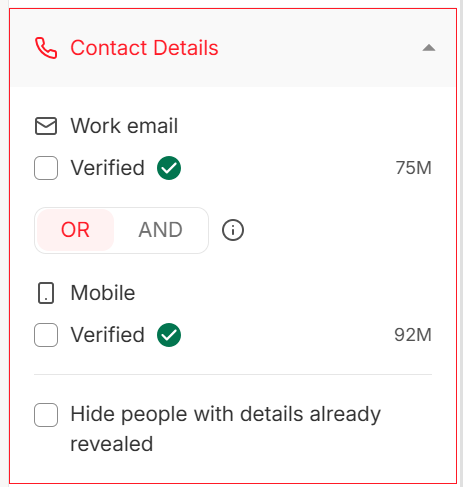
62 touches across 3+ channels means nothing if half your emails bounce. Prospeo's 98% email accuracy and 125M+ verified mobile numbers ensure every touch actually lands with a real decision-maker.
Close more deals by reaching buyers who actually exist.
FAQ
What's the average close rate in B2B sales?
About 29%, ranging from 37% in SaaS to 66% in higher education. If you're below your industry benchmark, the issue is usually qualification and discovery, not closing technique.
How many follow-ups does it take to close the deal?
Expect roughly 62 touches across at least three channels - email, phone, and social - to convert a B2B opportunity. 60% of prospects say no four times before saying yes, so persistence matters as long as each touchpoint adds genuine value.
What's the biggest reason deals stall?
Nearly 80% of B2B deals stall because the buying committee can't reach internal consensus - not because they rejected your solution. Map every stakeholder early, ask "how do you decide?", and equip your champion with ROI one-pagers and competitive comparisons for internal meetings.
How do you close without being pushy?
Create value throughout the sales process so the final commitment feels like a natural next step. Ask directly: "Can I have you sign the agreement so we can get started?" Confidence isn't pushiness - vague, indirect asks actually create more discomfort for the buyer.
Does contact data quality affect close rates?
Bad data kills deals before any technique can save them. If you're emailing invalid addresses or calling disconnected numbers, conversion is impossible. Tools like Prospeo verify emails at 98% accuracy and provide direct dials with a 30% pickup rate, ensuring your pipeline is filled with reachable decision-makers rather than dead leads.