

How to Write a Cold Email Company Introduction That Gets Replies
You wrote what you thought was a great cold email introduction, sent it to 200 prospects, and got 2 replies - both asking to unsubscribe. Here's the thing: the problem usually isn't your copy. It's everything around it - your deliverability, your data, and the fact that your email was 120 words when the data says it should be closer to 20-39.
The short version:
- Keep it in the 20-39 word range, ask one question, and make it scannable - this bracket gets the highest average reply rate.
- Fix your deliverability first. SPF, DKIM, DMARC, verified contacts, warmup. Templates don't matter if you land in spam.
- Personalize the first line to the prospect, not your company.
Your Intro Email Isn't the Problem
The average person receives 15 cold emails per week. Over half don't engage at all, and 10.3% mark them as junk. The average reply rate in 2026 sits at 3.43%, meaning even decent emails mostly get ignored.
So before you rewrite your intro for the tenth time, let's figure out what's actually broken.
Why Most Introduction Emails Fail
Three mistakes ruin cold introductions before anyone reads past the subject line.
The subject line screams "sales email." One operator tested "Partnership opportunity" and saw under 19% opens. "Quick question" hit 39%. Your prospect's spam filter - both the software and the mental one - activates the moment your subject line sounds like a pitch.
The email is too long. The old advice said 50-125 words, often attributed to Boomerang's 2016 study, but that wasn't cold-email-specific. A Hunter analysis of 34 million cold emails found that 20-39 words gets the highest average reply rate at 4.5%. One sender cut from 141 words to under 56, and reply rates jumped from 3% to 6%. Most company introductions still run three to four times the optimal length.
The first line is about you, not them. "Hi, I'm John from Acme Corp and we help companies..." - deleted. The first line needs to reference something specific about the prospect's world.
Anatomy of an Intro Email That Works
| Element | What Most Guides Say | What the Data Says |
|---|---|---|
| Email length | 50-125 words | 20-39 words = 4.5% avg reply rate |
| Subject line | "Keep it short" | 2-4 words = 46% open rate |
| Personalization | "Use their name" | Subject line personalization: +31% opens, +133% replies |
| Reply rate target | "Aim for 10%+" | Avg: 3.43%; top 10%: 10.7%+ |
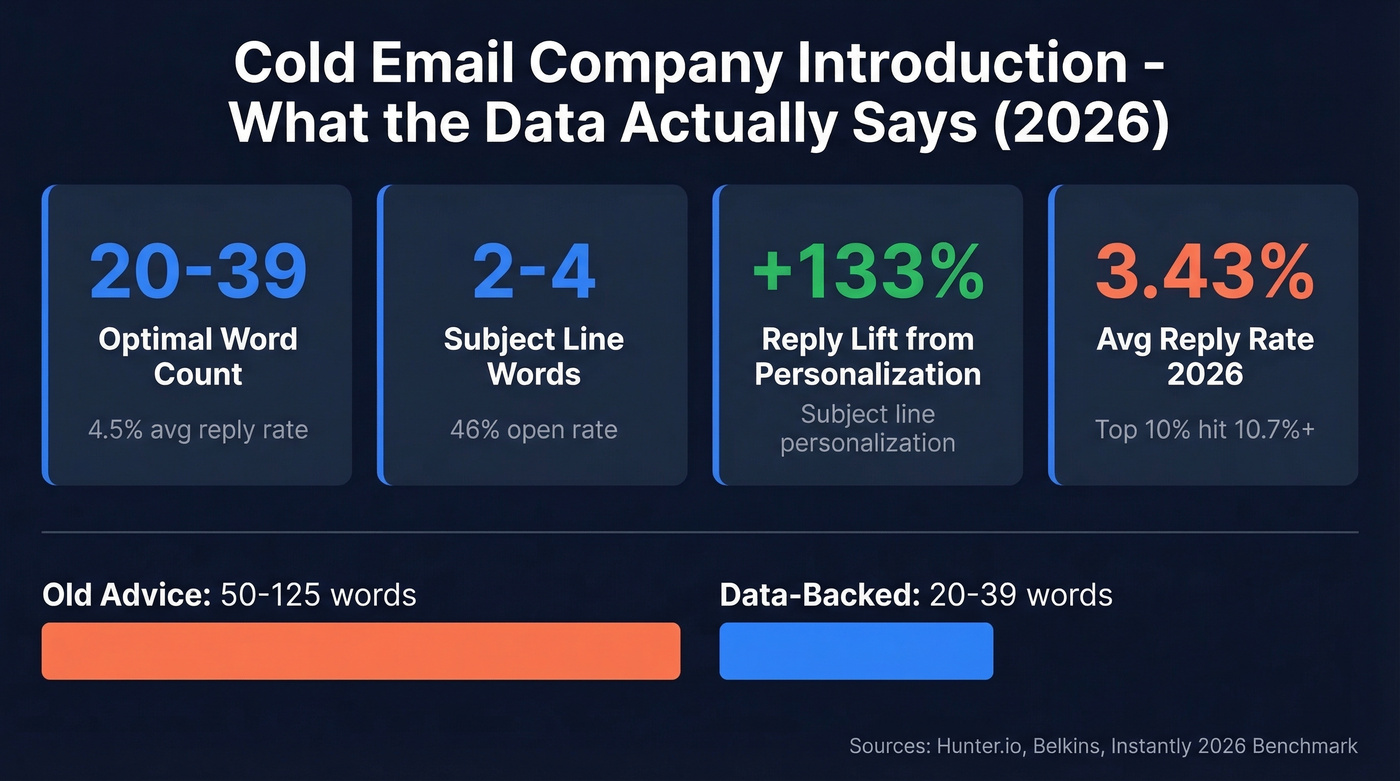
Subject line: Two to four words. Personalized subject lines hit 46% opens versus 35% without, across 5.5 million emails in the Belkins study. Question subject lines performed best. Skip urgency words like "ASAP" - they drag opens below 36%. If you need more options, pull from a swipe file of subject line patterns and test weekly.
Opening line: Reference something specific about the prospect. A recent hire, a tech they use, a funding round. Not "Hi, I'm from X." This is the core of personalized outreach.
Value statement: One sentence. Their problem, your solution. If you want a tighter framework, borrow from proven email copywriting structures.
CTA: One low-commitment question. Not "Let me know if you'd like to schedule a 30-minute demo." More like "Worth a quick chat?" (More rules + examples in email call to action.)

Those templates only work when they reach real inboxes. Prospeo's 5-step email verification catches spam traps and honeypots before they torch your domain - 98% accuracy, refreshed every 7 days. Start with 75 free verified contacts.
Fix your data before you rewrite your intro one more time.
Company Introduction Templates
Most guides hand you 13 templates. You need three good ones and verified data. If you want more variations, see these company introduction email examples.
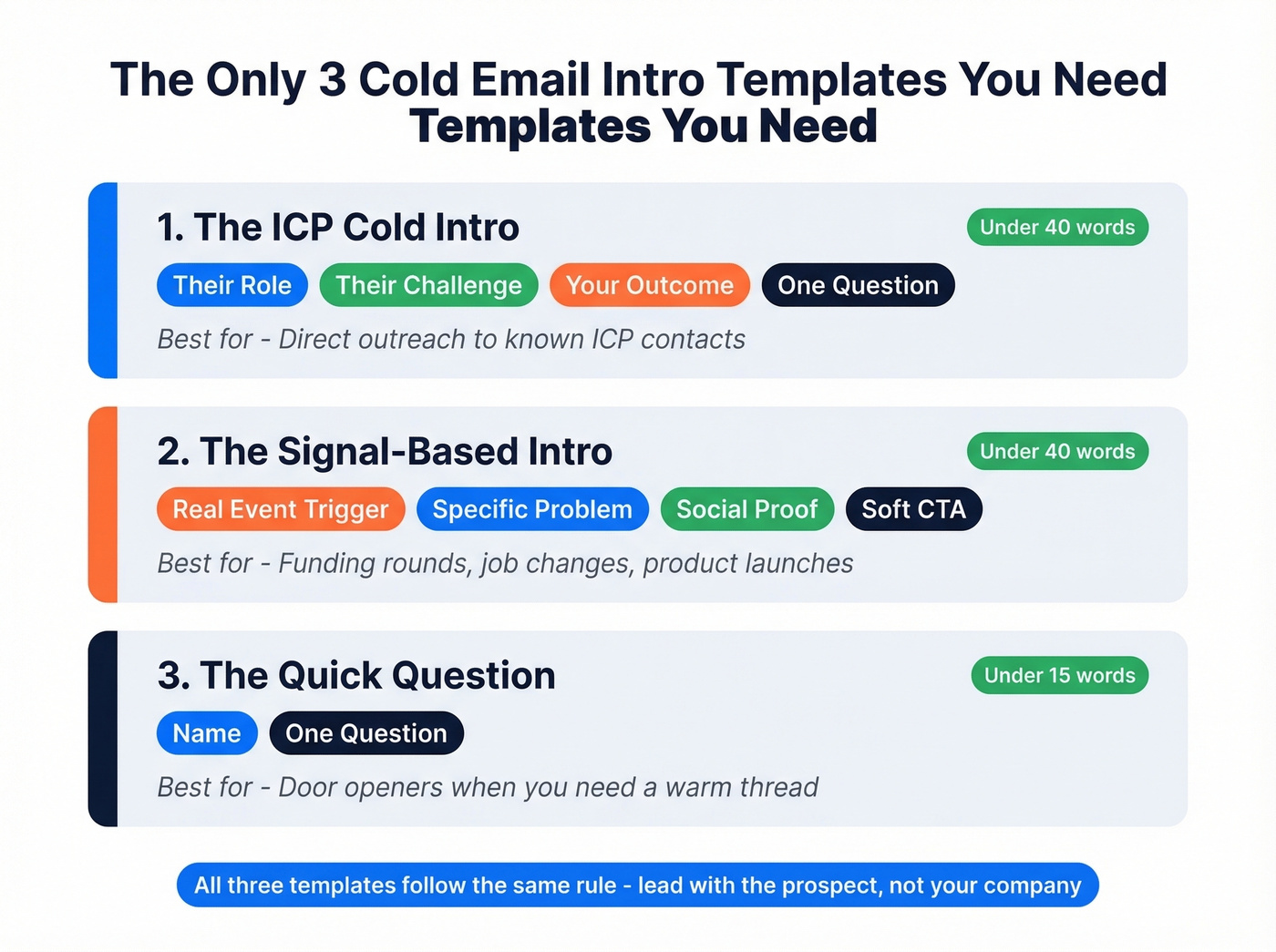
The ICP Cold Intro
Subject: [Their company] + [your category]
Hey [Name] - you handle [their responsibility] at [Company], so I'd bet [specific challenge] is on your radar. We help [similar companies] [specific outcome]. Worth a quick chat this week?
This follows the structure one operator used to book 6-7 meetings per week from 100-500 prospects. Under 40 words, one question. We've tested variations of this format across multiple campaigns, and it consistently outperforms longer pitches because it respects the reader's time. (If you haven't nailed your ideal customer profile, fix that first.)
The Signal-Based Intro
Subject: Congrats on the raise
[Name] - saw [Company] just closed your Series B. Teams at that stage usually hit a wall with [specific problem]. We solved that for [similar company] in [timeframe]. Open to hearing how?
Triggered by a real event. The shift from generic intros to referencing specific company signals was the single biggest change in one sender's journey from 3% to 6% reply rates. For a system to find and operationalize those triggers, use a sales prospecting techniques workflow.
The Quick Question
Skip this template if your goal is to pitch on the first touch. This one is a pure door-opener.
Subject: Quick question
[Name] - who handles [function] at [Company]?
That's the whole email. "Quick question" as a subject line hit 39% opens in testing. It works because it's genuinely short, asks one thing, and doesn't try to sell. The reply gives you a warm thread to continue the conversation.
Those three templates are all you need. The real question is whether your emails reach anyone's inbox.
Deliverability: Fix This Before You Touch Your Copy
None of those templates matter if your emails land in spam. One practitioner rebuilt their entire sending infrastructure - bounces dropped from 11% to under 2%, and reply rates jumped from 3% to 6%. The copy barely changed. If you want the full checklist, start with an email deliverability guide.
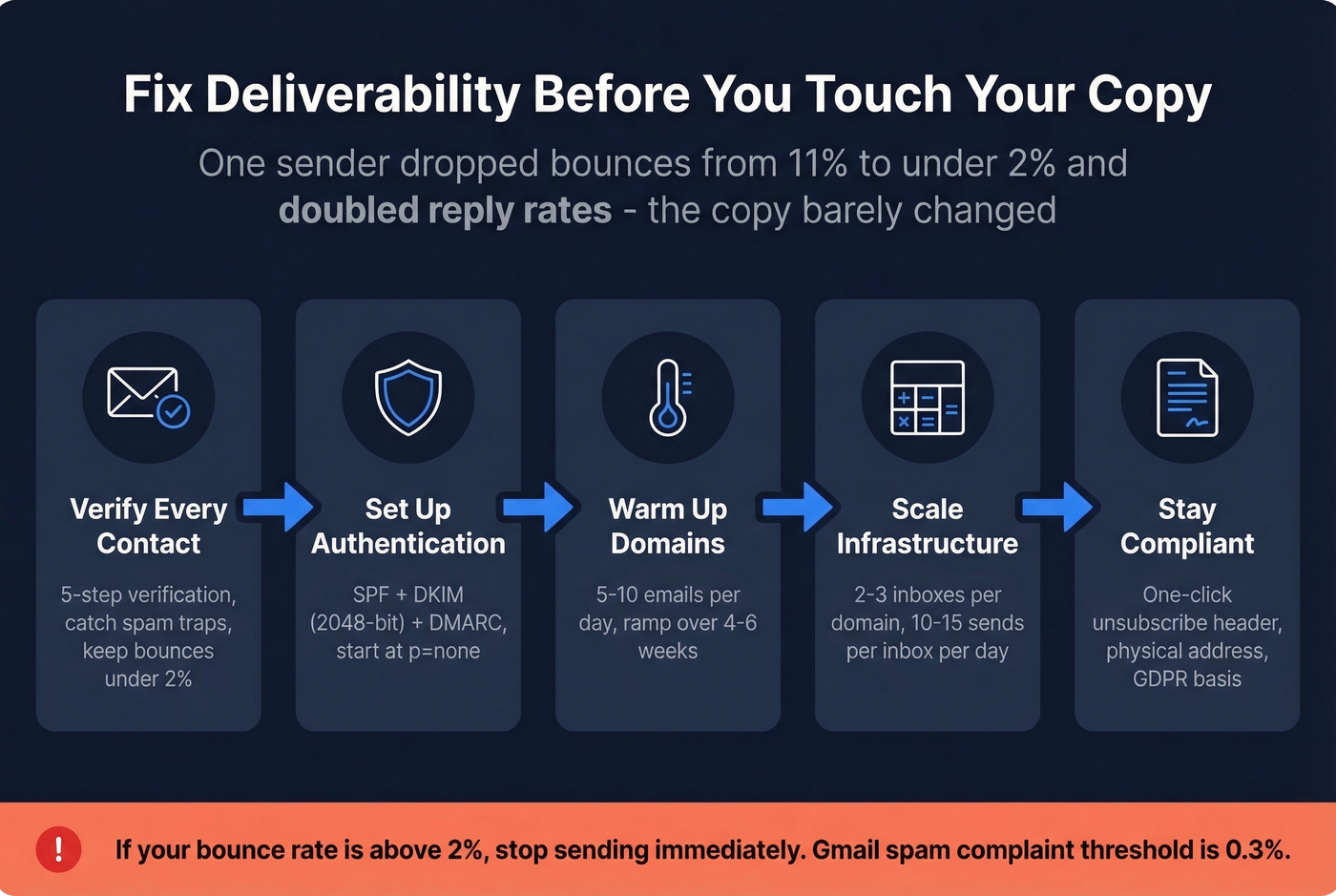
If your bounce rate is above 2%, stop sending and fix your list. That's not a suggestion. Gmail's Postmaster threshold for spam complaints is 0.3%. Exceed it and your domain reputation drops fast.
- SPF/DKIM/DMARC: Non-negotiable. Start DMARC at p=none for 2-4 weeks, move to p=quarantine, then p=reject. Use 2048-bit DKIM keys. Without these, expect 10-20% lower inbox placement. (More detail on DMARC alignment.)
- Warmup: Start new domains at 5-10 emails per day. Warm up for 2-4 weeks before production sends, and ramp volumes over 4-6 weeks.
- Infrastructure math: Two to three inboxes per domain, 10-15 emails per day per inbox. To send 400 emails a day, you need roughly 10-12 domains. Keep an eye on email velocity as you scale.
- One-click unsubscribe header: Google and Yahoo now require RFC 8058 compliance for bulk senders.
- CAN-SPAM and GDPR: Include a physical address and unsubscribe mechanism in every email. For EU prospects, use legitimately sourced contacts and document your legal basis. (If you're unsure about list sourcing, read Is It Illegal to Buy Email Lists?.)
- Verify every address before sending. This is where most campaigns silently fail. Prospeo's Email Finder runs a 5-step verification process that catches invalid addresses, spam traps, and honeypots - 98% email accuracy keeps your bounce rate well under that 2% threshold. The free tier covers 75 verifications per month, enough to validate a starter campaign. If you're troubleshooting, use this email bounce rate guide.
Signal-based intros need real signals. Prospeo tracks job changes, funding rounds, and buyer intent across 15,000 topics - so your cold email company introduction references something that actually happened this week, not last quarter.
Send intros triggered by live signals, not guesswork.
Follow-Up Strategy
58% of replies come from the first email. The other 42% come from follow-ups, and the sweet spot is 4-7 touchpoints total. Don't send seven emails saying "just checking in." Each follow-up should add a new angle - a case study, a relevant stat, a different question. If you need copy, start with these cold email follow-up templates.
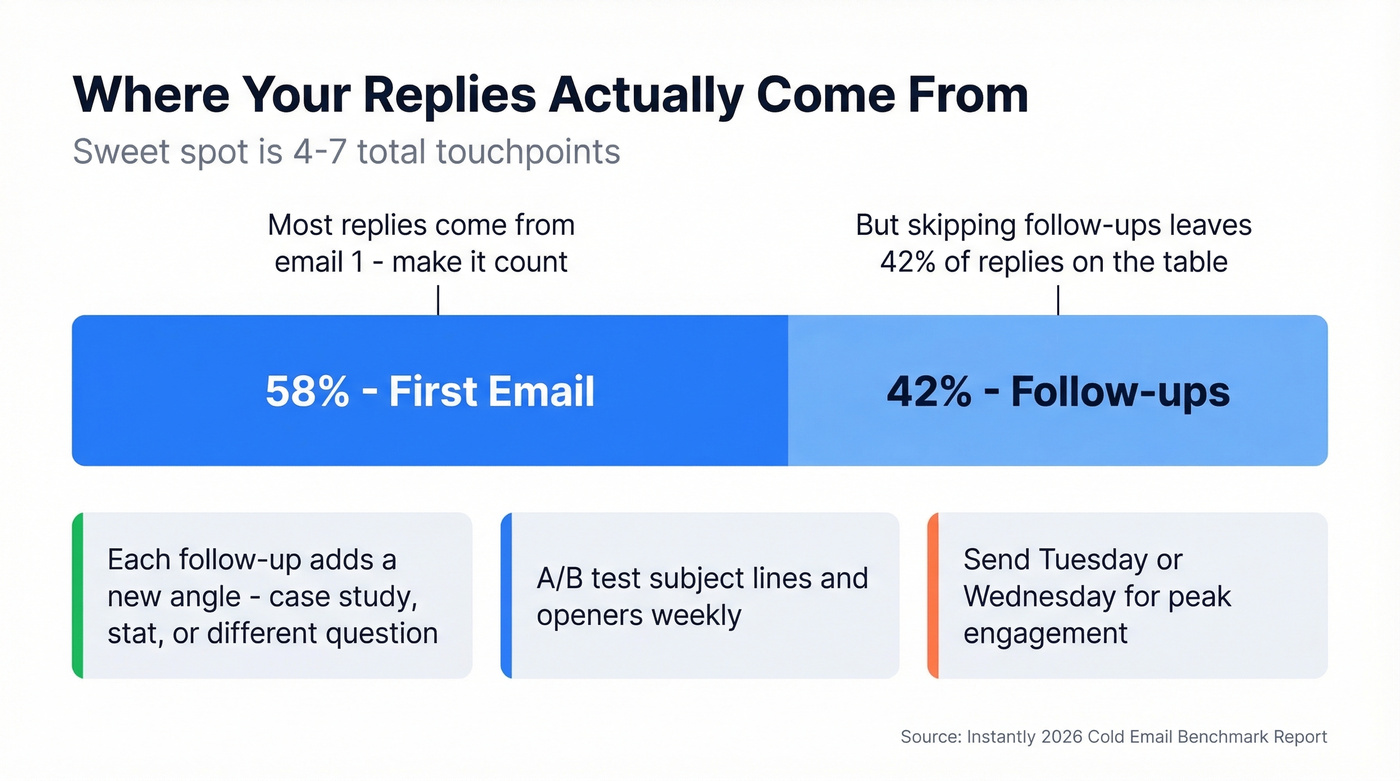
A/B test subject lines and openers weekly. The top-performing campaigns in Instantly's 2026 benchmarks do this consistently. Send Tuesday or Wednesday for peak engagement. (More data in best time to send cold emails.)
Look, if your average deal size is under $5k, you don't need a seven-touch sequence or a $500/month sending tool. You need 50 verified emails, one tight template, and the discipline to follow up three times. We've seen founders overthink this into paralysis when the real bottleneck was just sending consistently with clean data. Complexity is the enemy of cold email at that scale.
FAQ
How long should a cold email company introduction be?
Twenty to thirty-nine words gets the highest average reply rate at 4.5%, based on Hunter's analysis of 34 million cold emails. The old "50-125 words" advice came from a 2016 study measuring general email behavior, not cold outreach. Shorter wins.
What's a good reply rate for introduction emails in 2026?
The average is 3.43%. Top 25% of campaigns hit 5.5%+, and the top 10% exceed 10.7%. If you're below 2%, the problem is deliverability or list quality, not your copy.
How do I introduce my company without sounding salesy?
Lead with the prospect's problem, not your feature list. State the challenge they face in one sentence, then connect it to a specific outcome you've delivered for a similar company. Keep the email under 40 words and close with a single low-commitment question.
What's the best way to verify contacts before a cold email campaign?
Use a verification tool that checks for invalid addresses, spam traps, and honeypots before you send. At roughly $0.01 per lead, Prospeo's 5-step verification delivers 98% accuracy - and the free tier gives you 75 credits per month, enough to validate a starter list and keep bounce rates under 2%.