

How to Disqualify Leads (Without Killing Real Opportunities)
It's Thursday afternoon. You're staring at a pipeline review that shows 200 "active" opportunities, and you know - you know - that half of them are going nowhere. Reps spend 70% of their time on non-selling tasks, and every bad lead that lingers costs $308-$1,200 in hidden operational waste before anyone admits it's dead. The fix isn't better nurturing. It's learning to disqualify leads faster.
What You Need (Quick Version)
- Be more selective. Top-performing teams disqualify 37.7% of inbound leads - 2x the rate of bottom performers.
- Pick the right framework. BANT for high-volume inbound triage. MEDDIC for enterprise and complex deals (use MEDDIC criteria when the deal is worth it).
- Verify before you write leads off. Bad emails and dead phones create false disqualifications. Run your list through Prospeo's 98%-accuracy email verification before marking anyone as unreachable (see AI email checker options and workflows).
What "Good" Disqualification Looks Like
A 20% DQ rate is too low. The data says top performers disqualify 37.7%. If you're below 20%, you're not qualifying - you're collecting.
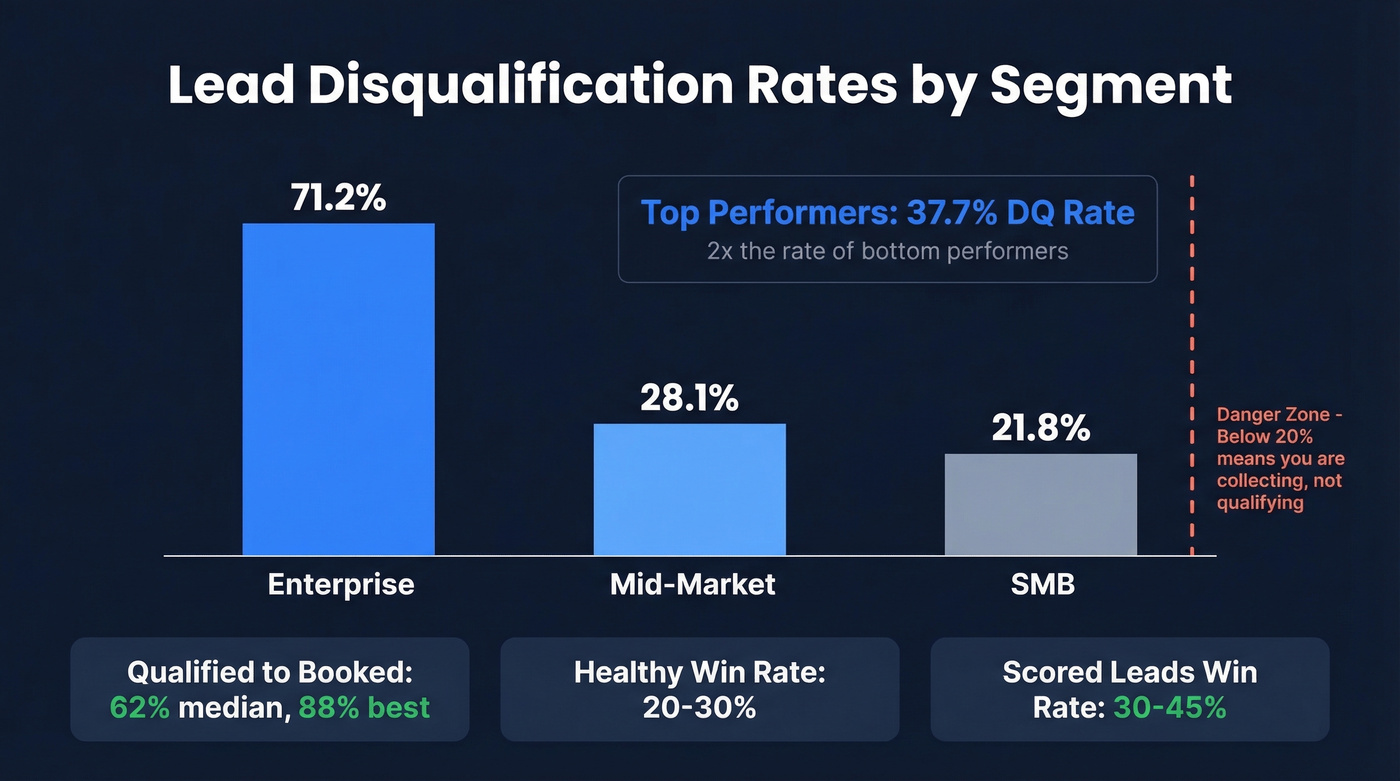
The numbers vary by segment. Enterprise teams disqualify 71.2% of inbound leads, mid-market sits at 28.1%, and SMB runs 21.8%. That enterprise number shocks people, but it makes sense - longer sales cycles mean the cost of pursuing a bad-fit deal is enormous. Removing unqualified opportunities early in the enterprise funnel prevents months of wasted effort (especially in enterprise B2B sales).
The payoff for selectivity is real. Median qualified-to-booked conversion runs 62%, but the best performers hit 88%. Healthy win rates land between 20-30%, and teams that score leads properly see 30-45% on their top-tier prospects. A skinny funnel with high intent density beats a fat pipeline full of maybes every single time (track it with the right funnel metrics).
7 Signals It's Time to Walk Away
Run every lead through these seven filters. Each one has a diagnostic question you can answer fast.
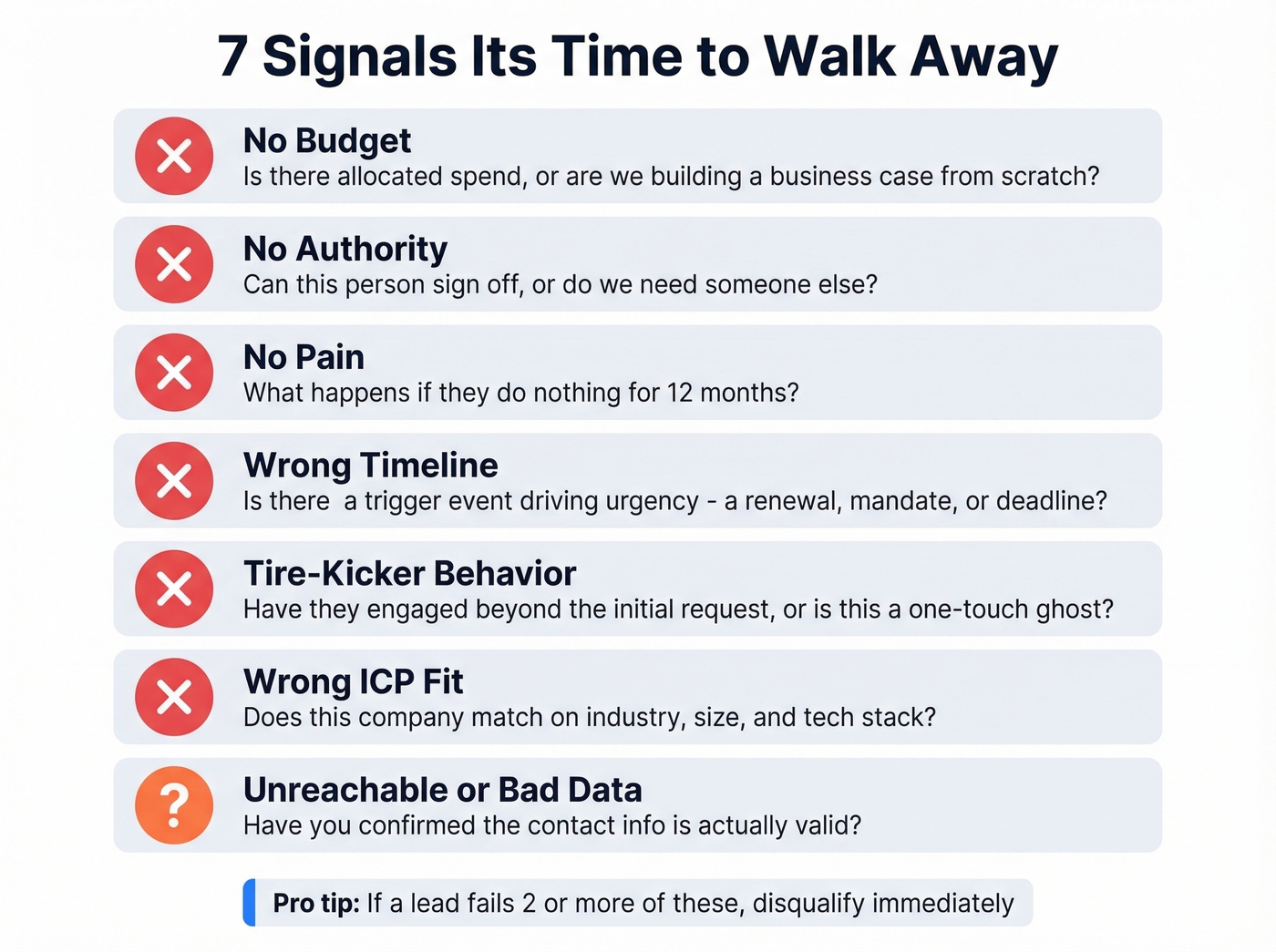
- No budget. "Is there allocated spend, or are we building a business case from scratch?"
- No authority. "Can this person sign off, or do we need someone else?" (If not, identify the economic buyer.)
- No pain. "What happens if they do nothing for 12 months?"
- Wrong timeline. "Is there a trigger event - a renewal, a mandate, a deadline - driving urgency?"
- Tire-kicker behavior. "Have they engaged beyond the initial request, or is this a one-touch ghost?"
- Wrong ICP fit. "Does this company match on industry, size, and tech stack?" (Use an ideal customer profile template to standardize this.)
- Unreachable / bad data. "Have you confirmed the contact info is valid?" Before marking a lead as unreachable, verify the email and phone are real.
Which Framework to Use
BANT is a bouncer at a nightclub, not a qualification framework for complex deals. Modern B2B buying involves an average of seven stakeholders. Asking basic situation questions wastes their time and yours. Use BANT for triage. Use MEDDIC when the deal is worth the discovery time (build your call around MEDDIC discovery questions).
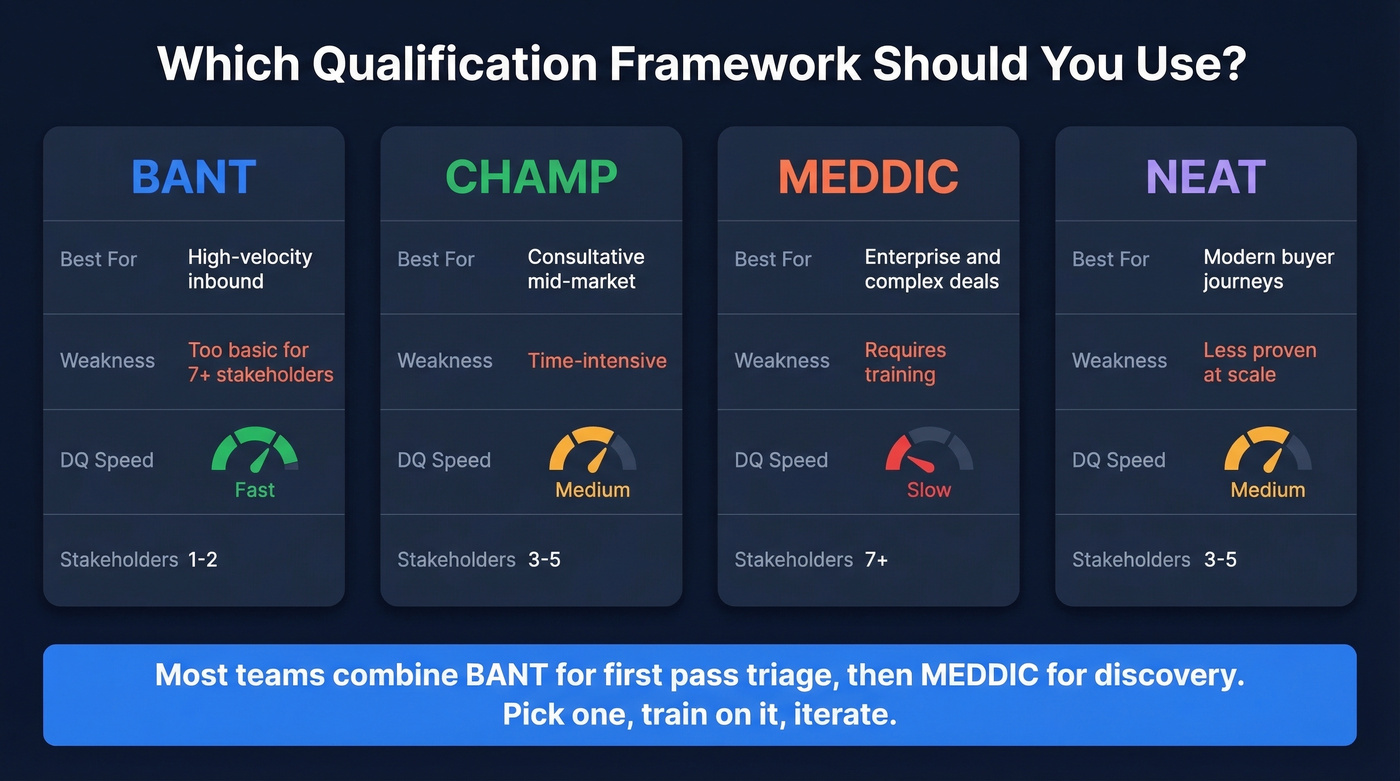
| Framework | Best For | Weakness | DQ Speed |
|---|---|---|---|
| BANT | High-velocity inbound | Too basic for 7+ stakeholders | Fast |
| CHAMP | Consultative mid-market | Time-intensive | Medium |
| MEDDIC | Enterprise / complex | Requires training | Slow |
| NEAT | Modern buyer journeys | Less proven at scale | Medium |
Most teams we've worked with end up combining frameworks - BANT for the first pass, then MEDDIC criteria once a deal hits discovery. Don't overthink it. Pick one, train on it, and iterate.

Half your "disqualified" leads might just have bad contact data. Prospeo's 5-step email verification catches what other tools miss - 98% accuracy, 7-day refresh cycle, and catch-all domain handling built in. Upload your DQ'd "unreachable" list and find out how many were real prospects hiding behind stale data.
Clean your pipeline before you shrink it. Start verifying for free.
How to Disqualify Leads Before You Hit Send
Nobody talks about filtering prospects before you ever hit send, but it's the highest-leverage move in the playbook.
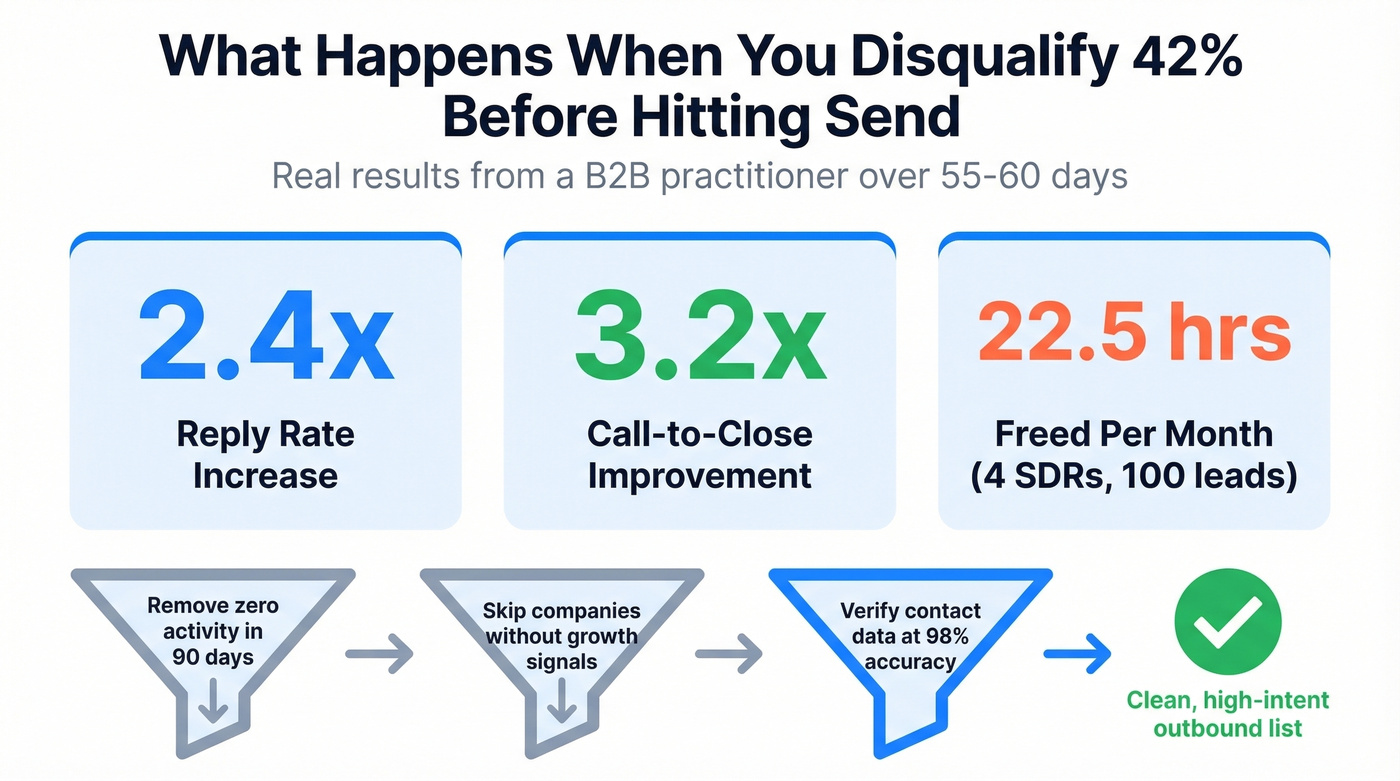
A practitioner on r/b2bmarketing shared that they disqualified 42% of their outbound list before sending cold email. Reply rate jumped 2.4x. Call-to-close improved 3.2x over 55-60 days. Their filters were specific: exclude contacts with zero activity in 90 days, skip companies without clear growth signals (hiring, funding, new execs), and target scrappy climbers in the $1M-$10M ARR range instead of dream logos.
Here's the hot take: the single highest-ROI disqualification move is verifying your contact data before outreach. You can't disqualify a lead you never actually reached.
If 4 SDRs handle 100 inbound leads per month and each lead takes 45 minutes to work, disqualifying 40% upfront frees 22.5 hours. Start by cleaning the list. Prospeo verifies emails at 98% accuracy on a 7-day refresh cycle, so you're not burning call blocks on unreachable contacts or bouncing emails that tank your sender reputation (more on email deliverability and email bounce rate). Upload a CSV, get results in minutes, and cut the dead weight before your reps touch a single record.
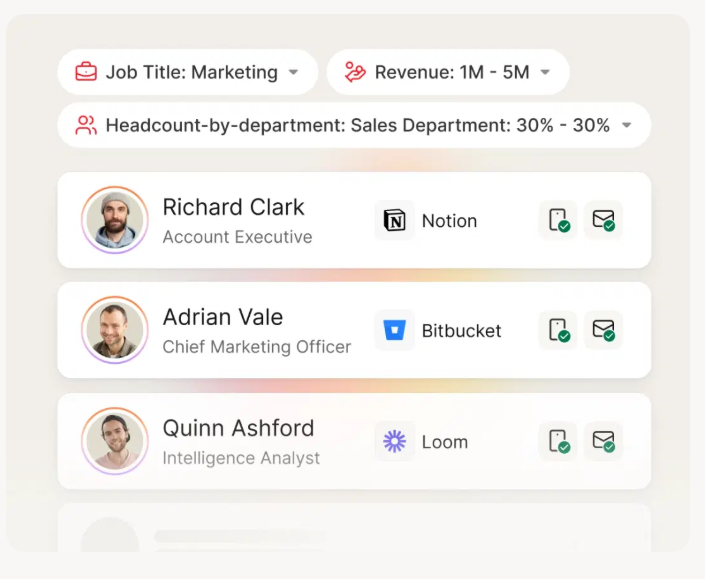
The Reddit post nailed it: disqualifying 42% of outbound before sending drove a 2.4x reply rate lift. But that only works if your remaining 58% actually have verified contact data. Prospeo gives you 30+ filters - buyer intent, funding signals, headcount growth, tech stack - so you disqualify on fit, not bad data. At ~$0.01/email, cleaning 1,000 leads costs less than one wasted discovery call.
Filter the dead weight before your reps ever touch a record.
Scripts for Polite Disqualification
No budget: "Totally understand - timing matters. Let me send over an ROI one-pager so you've got numbers ready for next budget cycle. I'll circle back in Q[X]."
No authority: "Would it make sense to loop in [decision-maker title] for a 15-minute intro? If that's not possible, I'll send a summary deck you can forward - no pressure either way."
Tire-kicker: "I want to be respectful of your time and mine. On a scale of 1-10, how serious is solving this in the next 90 days? If it's below a 5, I'd rather reconnect when the timing's right than waste your calendar."
Wrong timeline: "Sounds like this is a Q3 priority. I'll send a case study and pricing overview now so you've got everything when you're ready. I'll reach back out in [month]."
The key with all of these: leave the door open, but close the file. A disqualified lead isn't dead - it's deferred. These scripts also double as a cold call disqualification strategy - when a prospect answers and you realize within 60 seconds they're not a fit, a graceful exit preserves the relationship for later.
Operationalizing DQ in Your CRM
Every disqualified lead needs a tagged reason - no budget, wrong ICP, unreachable, whatever applies. This data fuels your scoring model and marketing feedback loops. Separate fit from intent: lead score measures behavior, lead grade measures ICP match (see lead scoring and lead status). A high-intent, low-fit lead still gets disqualified - they're just enthusiastic about the wrong product.
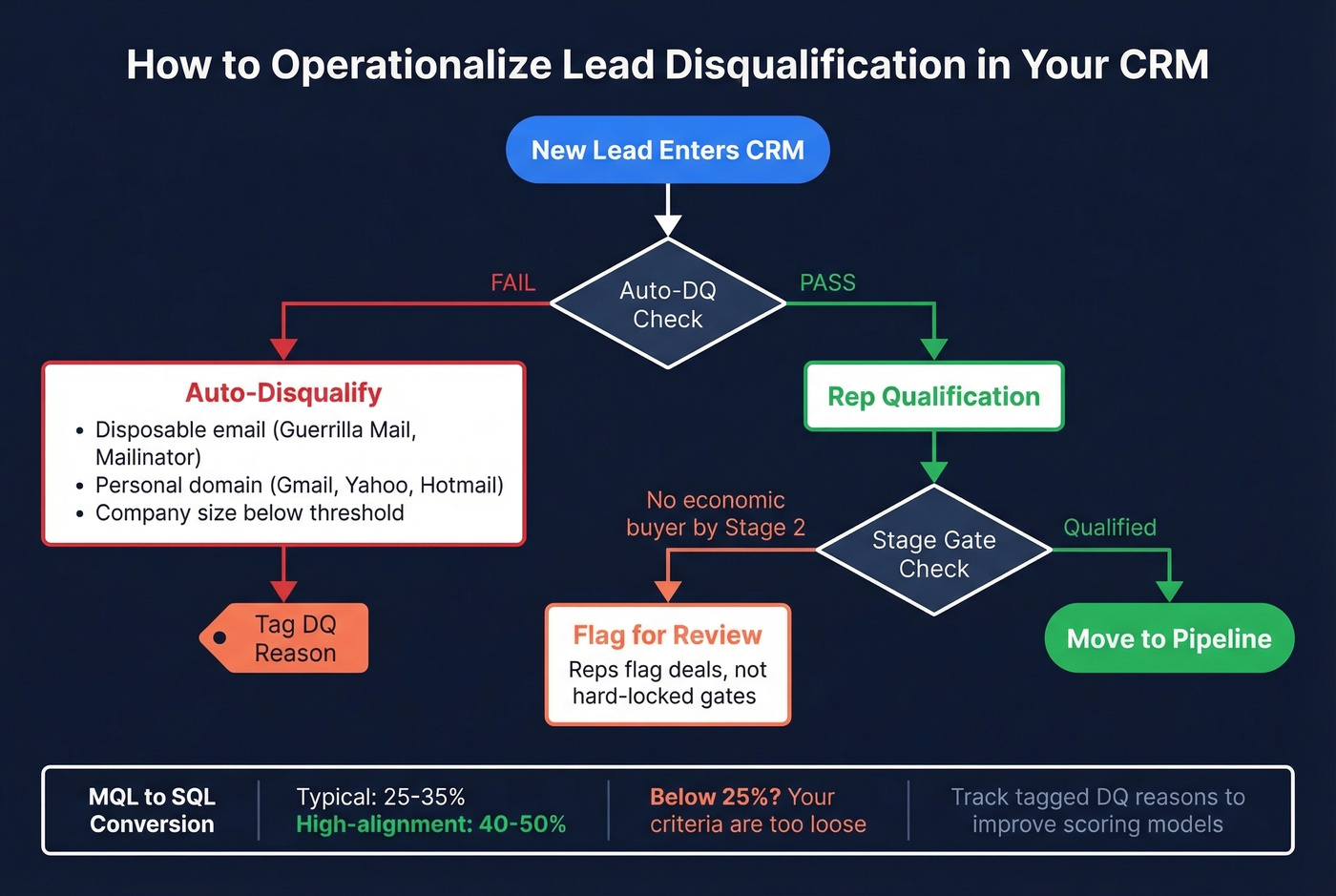
GTMnow's research across 50+ sales leaders found that hard-locking pipeline stages creates bogus data entry. Let reps flag deals for review instead of forcing them through rigid gates. Set exit criteria per stage - if you don't know the economic buyer by Stage 2, historically that deal isn't going anywhere. The ability to remove unqualified prospects at each stage keeps your pipeline honest.
Two quick automation wins: auto-DQ disposable emails (Guerrilla Mail, Mailinator) and personal domains (Gmail, Yahoo, Hotmail) on your inbound scheduler. Block by company size via enrichment before a lead ever hits a rep's queue (compare data enrichment services). Track MQL→SQL conversion - typical teams run 25-35%, high-alignment RevOps orgs hit 40-50%. If you're below 25%, your qualification criteria are too loose.
Building a DQ Culture
Look, most teams don't have a disqualification problem - they have a permission problem. Reps aren't allowed to kill deals because managers reward fat pipelines. When only 43.5% of sales professionals hit quota, something's broken, and it's usually this.
"Happy ears" is the #1 blocker - reps hear interest where there isn't intent, and sunk cost fallacy keeps them chasing deals they've already invested hours in, even when every signal says walk away. The best managers we've seen share DQ criteria openly and celebrate a rep who kills 30 bad deals in a week, because that rep just freed up 30 slots for real opportunities. Consistently cutting bad-fit prospects from your pipeline is the skill that separates quota-crushers from pipeline hoarders.
FAQ
What percentage of leads should I disqualify?
Enterprise teams disqualify 71.2% of inbound leads, mid-market 28.1%, and SMB around 21.8%. Across all segments, top performers hit 37.7%. If you're below 20%, you're carrying dead weight that drags down conversion rates and wastes rep hours.
When is the right time to disqualify a lead?
For inbound, within the first five minutes of contact - run through budget, authority, and pain signals immediately. For outbound, filter your list on ICP fit, activity signals, and verified contact data before you ever send. Prospeo's CSV enrichment (83% match rate, 50+ data points) catches bad-fit records before they reach a rep.
How do I avoid false disqualifications?
Most false DQs happen because of bad contact data, not bad judgment. Verify emails and phones before marking anyone as unreachable - a "no-reply" isn't always a "no." Sometimes it's a bounced email to an address that changed six months ago. Tools with a 7-day data refresh cycle catch these changes before they cost you a real opportunity.
Every lead you disqualify today is time you're giving back to a deal that can actually close.