

Email Intro Samples That Get Replies (2026)
88% of professionals have regretted an email they sent. Not a Slack message, not a presentation - an email. Meanwhile, 60% say email volume alone stresses them out, and Klaviyo's analysis of 183K+ brands puts the average campaign open rate at just 31%. That means a huge chunk of emails never get read, and every intro email you write needs to earn attention in seconds.
Stop collecting templates. What you actually need is a framework and a handful of scenario-specific starting points you can adapt in two minutes.
What You Need (Quick Version)
Three things separate intro emails that get replies from ones that get archived:
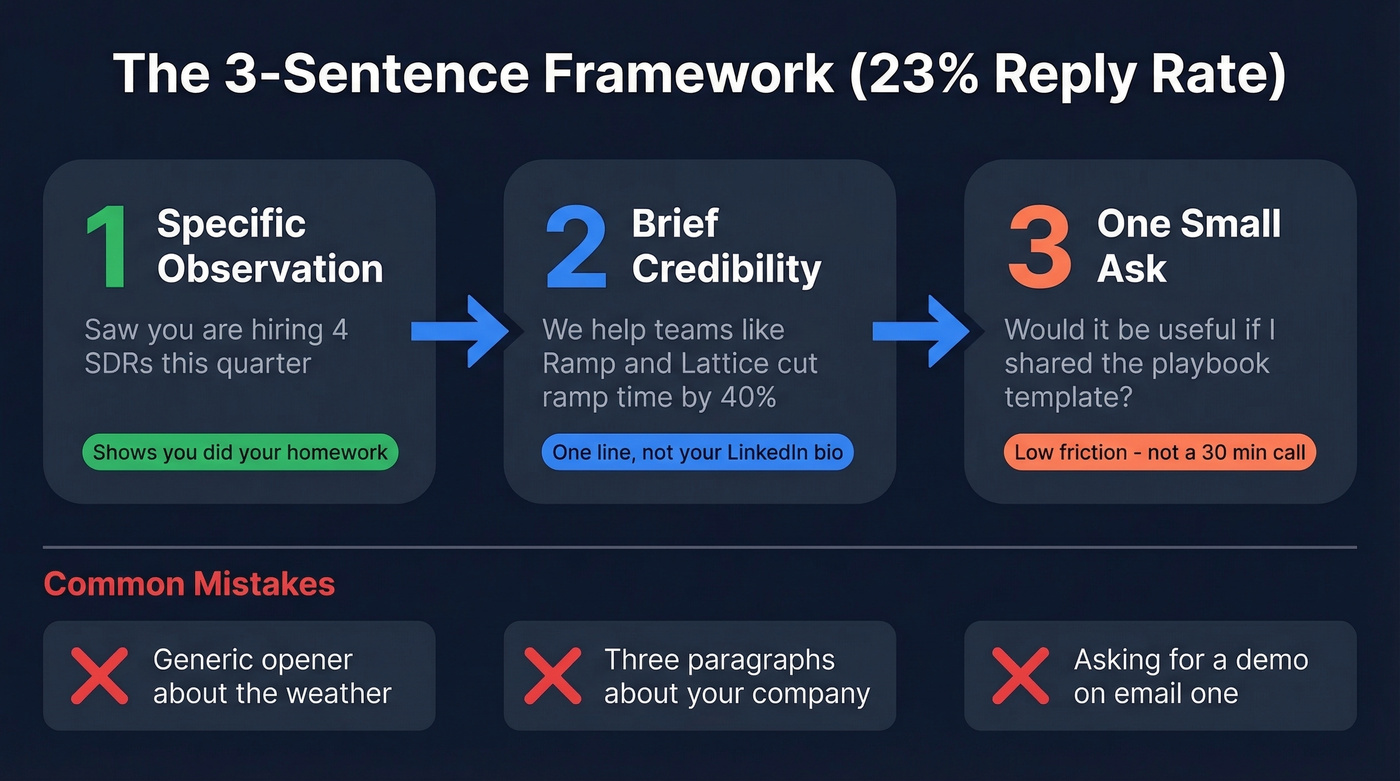
- The 3-sentence framework: specific observation about the recipient + brief credibility line + one small ask. One practitioner used this style of opener inside a 5-step cold email system and hit a 23% reply rate - and the logic applies to every intro scenario.
- Subject lines: 2-4 words. Front-load the key info. Twilio SendGrid's data shows best-performing subject lines at 2-4 words, beating longer ones consistently.
- Verify the address before you send. High bounce rates can tank your domain reputation fast. Run addresses through a verification tool before hitting send - it takes seconds and protects your sender reputation.
That's the system. Everything below is the detail.
Anatomy of an Effective Intro Email
Every strong intro email has six parts. Skip one and the whole thing falls apart.
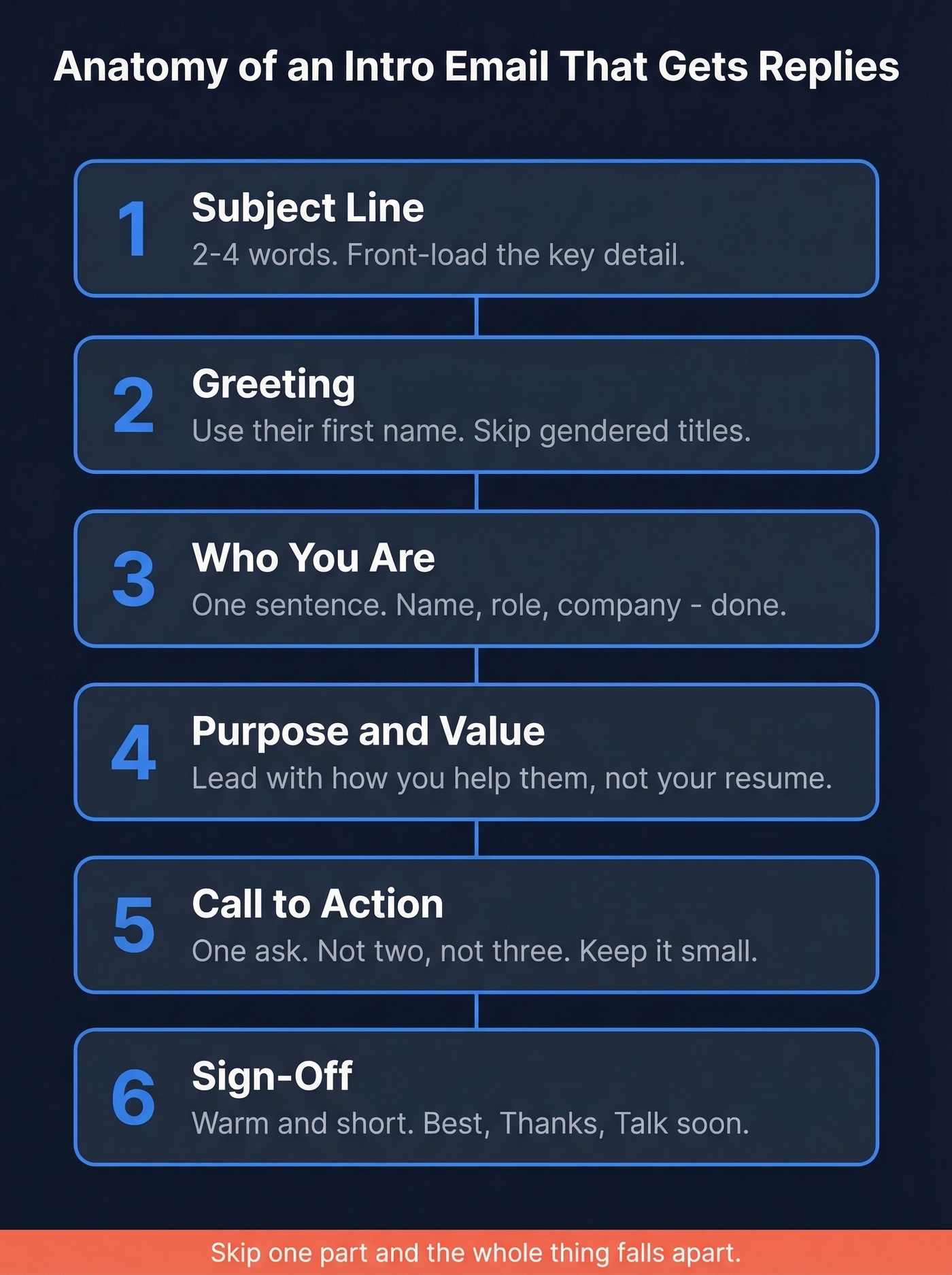
1. Subject line. Two to four words. Front-load the most important detail.
2. Greeting. Use their name. "Hi Sarah" beats "Dear Sir/Madam" in every context except maybe a Supreme Court brief. Skip gendered titles unless you're certain - "Hi [First Name]" is always safe.
3. Who you are. One sentence. Name, role, company - done. This isn't the place for your LinkedIn summary.
4. Purpose and value. Lead with how you help them, not your resume. Sales and CS pros call the alternative "peacocking" - listing credentials nobody asked for. State your role, state what you can do for them, move on.
5. CTA. One ask. Not two, not three. "Would a 15-minute call next week make sense?" works. "Block 30 minutes on my Calendly" in email #1 doesn't. (If you want more options, see Email Call to Action.)
6. Sign-off. Keep it warm and short. "Best," "Thanks," "Talk soon" - all fine.
Subject Line Science
Twilio SendGrid analyzed Cyber Week sends and found the average subject line runs 6 words - but the best-performing ones clock in at 2-4 words. Shorter wins because most people read email on phones, and phones cut you off fast. For more swipeable ideas, use these email subject line examples.
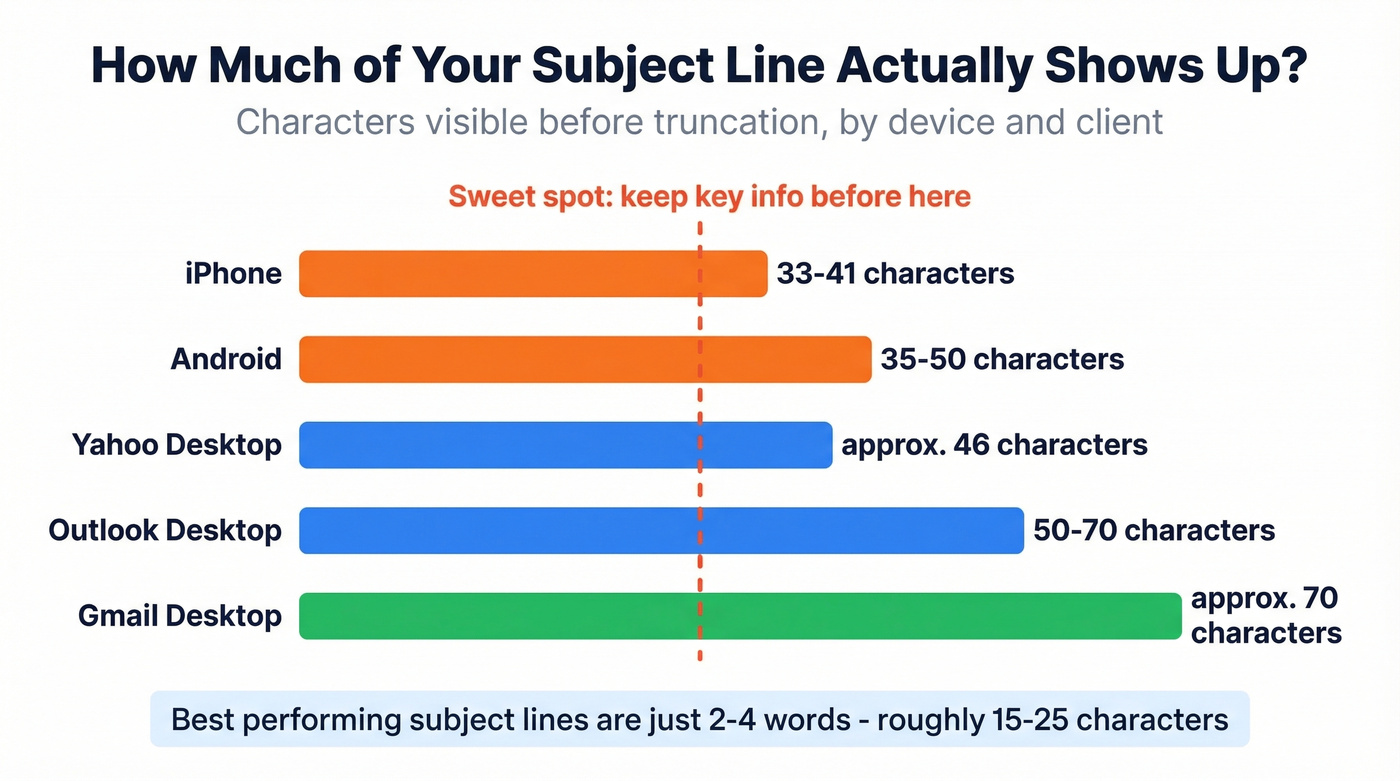
| Device / Client | Characters Shown |
|---|---|
| iPhone | 33-41 |
| Android | 35-50 |
| Gmail (desktop) | ~70 |
| Outlook (desktop) | 50-70 |
| Yahoo (desktop) | ~46 |
On an iPhone, you get about 35 characters - roughly five words. If your key info isn't in those five words, it's invisible.
Subject lines that work across scenarios: "Noticed your Q3 launch," "Quick intro - Sarah to James," "New CSM introduction," "Loved your SXSW talk." What doesn't work: "Quick question" (signals mass outreach), "Hi" or "Hello" (often treated as junk), or anything over 10 words.
Here's the thing: if your deal size is under $10K, your subject line is doing most of the work. Most recipients decide to open or archive based on those 3-5 words alone. We've seen teams spend hours on email body copy and 30 seconds on the subject line, which is exactly backwards. Spend half your writing time there.

You just crafted the perfect intro email. Now make sure it actually reaches someone. Bad addresses kill domain reputation and tank reply rates. Prospeo verifies emails at 98% accuracy with a 5-step process that catches spam traps, honeypots, and catch-all domains - so your carefully written intro doesn't bounce into the void.
One bounced intro email can cost you a deal. Verify first.
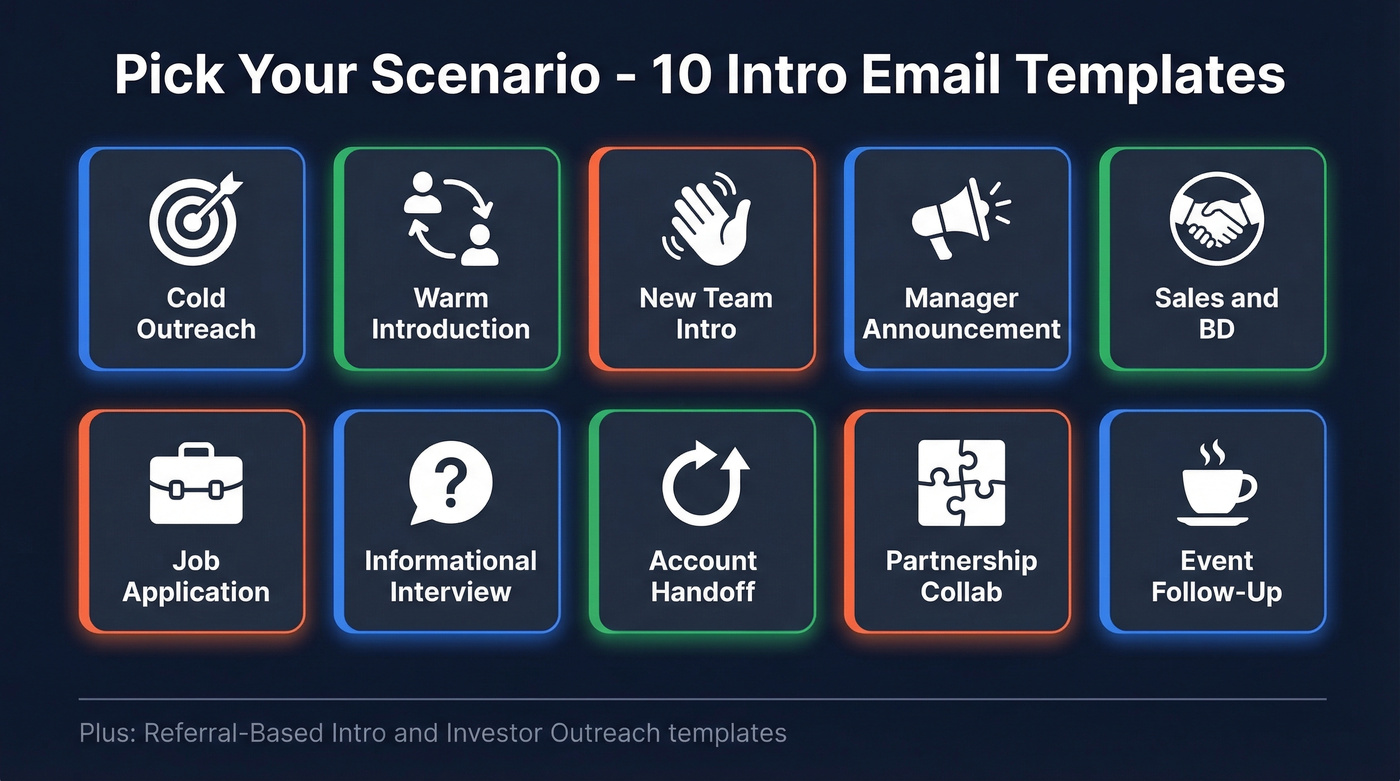
15+ Intro Email Samples by Scenario
Every template below follows the framework. They're all under 150 words - a practical ceiling for introduction emails that get read. Bookmark the ones that match your use case and adapt them in two minutes. (If you're building a full sequence, pair these with sales follow-up templates.)
Cold Outreach to a Prospect
Subject: Noticed your hiring push
Hi Marcus,
Saw you're hiring 4 SDRs this quarter - congrats on the growth. We help sales teams at companies like Ramp and Lattice cut rep ramp time by 40% with structured onboarding playbooks.
Would it be useful if I shared the playbook template? No strings.
Best, Dana Reeves Enablement Lead, Acme Co.
Why this works: Specific observation (hiring push), brief credibility (named customers), low-friction ask (a resource, not a meeting).
Warm Introduction (Two People)
First, the permission email:
Subject: OK to intro you to James?
Hi Sarah, a colleague named James Chen runs partnerships at Bolt. He's looking for co-marketing partners in fintech - thought you two should connect. OK if I make the intro?
Then, the actual introduction:
Subject: Intro - Sarah / James
Sarah, meet James Chen (Partnerships, Bolt). James, meet Sarah Lim (Head of Marketing, NovaPay). You're both exploring co-marketing in fintech and I think there's a natural overlap. I'll let you two take it from here.
Double opt-in prevents awkward cold intros. The connector does the framing so neither party has to.
Self-Introduction to a New Team
Subject: New on the product team
Hi everyone,
I'm Priya Desai, joining as a Senior PM starting Monday. I'll be leading the checkout experience workstream. Before this, I spent three years at Stripe working on payment flows - so I'm excited to dig into similar problems here.
Outside work, I'm a terrible but enthusiastic rock climber. Looking forward to meeting everyone - feel free to grab time on my calendar or just say hi in Slack.
Priya
Role and scope are clear in two sentences. The personal detail is light and genuine, not a forced icebreaker.
Manager Introducing a New Employee
This one works best as a side-by-side - formal for large orgs, casual for startups:
| Formal version | Casual version |
|---|---|
| Subject: Welcome Priya Desai, Senior PM | Subject: Say hi to Priya |
| Team, I'm pleased to announce Priya Desai is joining us Monday as Senior PM on the checkout experience workstream. She joins from Stripe, where she led their payment flows redesign. Please welcome her and help with onboarding. - Alex | Hey team - Priya Desai starts Monday as our new Sr. PM on checkout. She's coming from Stripe, she's a rock climber and a coffee snob, and she'll fit right in. Say hello and help her get oriented! - Alex |
Match the tone to your company culture. Both versions hit the essentials: name, role, start date, background, and a human detail.
Sales / Business Development
Subject: Your churn data
Hi Tomas,
Your team published a case study last month about reducing churn by 18% - impressive result. We work with SaaS companies in the $5-20M ARR range on the same problem, and I put together a short teardown of three retention strategies that drove similar numbers for our clients.
Worth a look? Takes about 4 minutes to read.
Cheers, Lena Park BD, RetentionIQ
Value-first, not pitch-first. The CTA is reading a resource, not booking a call - a much smaller ask for email #1.
Job Application Intro
Subject: Product design - open role
Hi Jordan,
I'm a product designer with 5 years in B2B SaaS, most recently at Figma where I led the redesign of their collaboration toolbar. I saw your Senior Designer posting and wanted to reach out directly.
I've attached my resume - the Figma toolbar project is the most relevant work sample. Happy to share more context if it's helpful.
Thanks, Mika Sato
One-line elevator pitch, a specific project reference, and the resume is attached - not linked to a portfolio the recipient has to navigate. (If you need a tighter opener, borrow from these sample elevator pitches.)
Informational Interview Request
Let's look at what most people send versus what actually gets a reply:
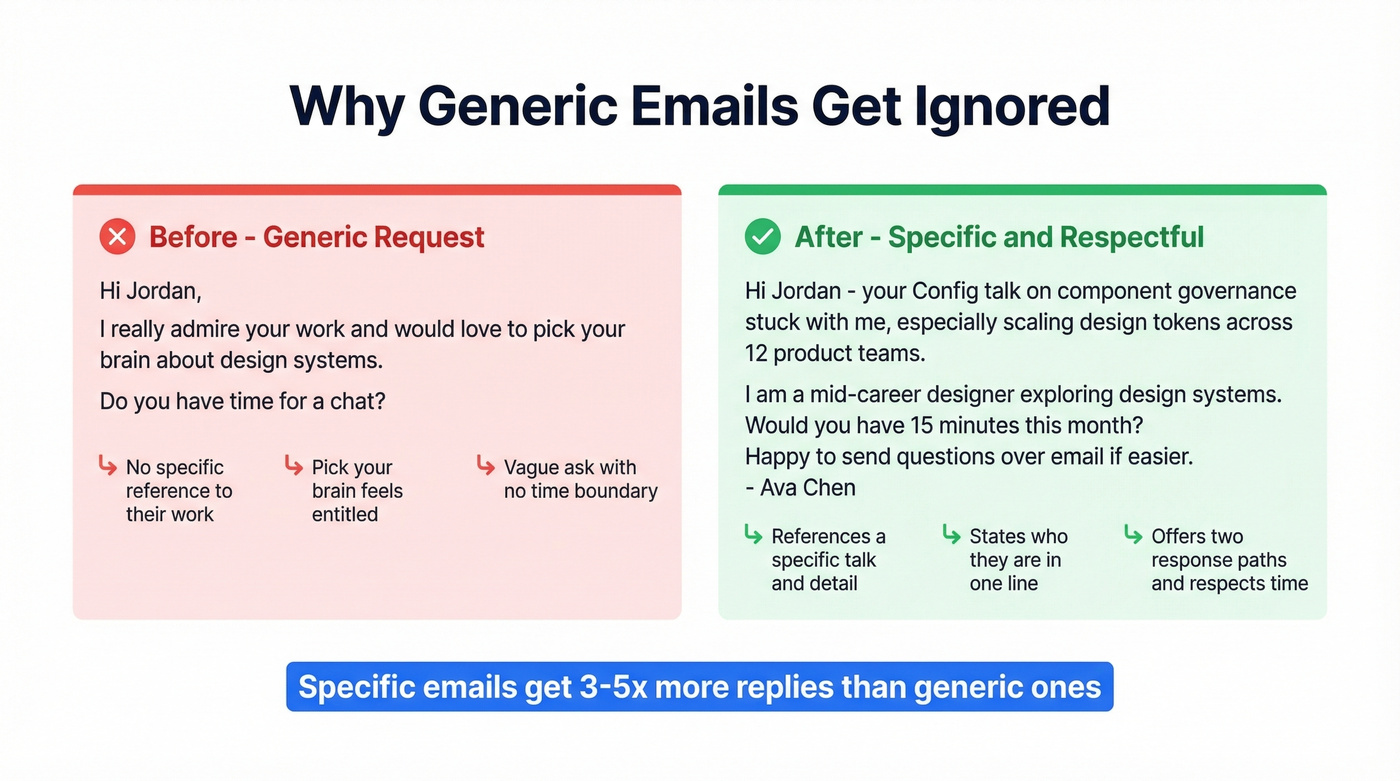
Before: "Hi Jordan, I really admire your work and would love to pick your brain about design systems. Do you have time for a chat?"
After: "Hi Jordan - your Config talk on component governance stuck with me, especially the part about scaling design tokens across 12 product teams. I'm a mid-career designer exploring the design systems space. Would you have 15 minutes this month? I'm also happy to send questions over email if that's easier. - Ava Chen"
The difference: the "after" version references a specific talk, offers two response paths, and respects their time. The "before" version could've been sent to anyone.
Customer Success / Account Handoff
Subject: Your new CSM - quick intro
Hi Rachel,
I'm Deon Harris, your new Customer Success Manager at Acme. I'll be your primary point of contact for everything from renewals to escalations.
I'd love to set up a 15-minute intro call to cover three things: how things are going so far, any open issues, and your priorities for Q4. Does Thursday or Friday work?
Best, Deon
An agenda-based CTA works well for handoff emails - it gives the recipient a concrete reason to say yes instead of a vague "let's connect." (More handoff options: handoff email template.)
Partnership or Collaboration
Subject: Content collab - NovaPay + Bolt
Hi James,
I run content at NovaPay. We're producing a report on cross-border payment trends and your team's work on instant settlements is directly relevant. Would you be open to contributing a section or co-publishing?
We'd handle production and promotion - your team gets exposure to our 40K subscriber list.
Sarah Lim
Mutual value is explicit. The ask is specific (contribute a section), not vague.
Networking Follow-Up After an Event
Subject: Good meeting you at SaaStr
Hi Tomas,
Great chatting at the SaaStr happy hour about your churn reduction work. You mentioned you're testing cohort-based onboarding - we ran a similar experiment last quarter and I'd love to compare notes.
Coffee next week, or a quick Zoom?
Lena
References the specific conversation, not just "we met at the event." Proposes a concrete next step.
Referral-Based Introduction
Subject: Alex Kim suggested I reach out
Hi Rachel,
Alex Kim mentioned you're looking for a RevOps consultant for your HubSpot migration. I've done three similar migrations in the last year, including one for a company about your size (~150 reps).
Would a 20-minute call make sense to see if there's a fit?
Best, Deon Harris
The referrer's name is in the subject line and the first sentence. That's your credibility - use it immediately.
Investor or Advisor Outreach
Skip this template if your MRR is under $30K - investors at the seed stage want traction, not ideas. If you've got the numbers, lead with them:
- Subject: $80K MRR, seeking seed
- Line 1: Traction data - MRR, growth rate, customer count
- Line 2: Why this investor - portfolio fit, thesis alignment
- Line 3: The ask - 20 minutes + offer to send a one-pager
I've watched founders bury their numbers three paragraphs deep. Don't. Investors scan for metrics first and story second.
Freelancer Pitching Services
Subject: Your blog redesign
Hi Sarah,
I noticed NovaPay's blog hasn't been updated since March - and your product pages are strong, so the content gap stood out. I'm a B2B content strategist who helped Ramp increase organic traffic 3x in 6 months.
Here's my portfolio: [link]. Worth a quick conversation about your content plans?
Mika Sato
Specific observation (blog gap), one relevant result (Ramp), portfolio link for proof, small ask.
Re-Engaging a Cold Contact
Subject: New data since we last spoke
Hi Tomas,
We connected back in Q2 about retention analytics - I know the timing wasn't right then. Since we last spoke, we've shipped a cohort analysis feature that's directly relevant to the churn problem you described.
Worth a fresh look? Happy to send a 2-minute demo video.
Lena
Acknowledges the gap honestly, offers new value (not just "checking in"), and the CTA is watching a video - not a meeting.
Internal Cross-Department
Subject: Collab on Q4 launch
Hi engineering team - I'm Dana Reeves from enablement. We're building training materials for the Q4 product launch and I'd love to partner on the technical documentation piece. Can I join your next standup to align on scope? Happy to work async too. - Dana
For high-stakes internal intros, a 60-second Loom video embedded in the email can outperform text. It puts a face to the name faster than any written intro. (If you're using video, see Loom Video Cold Email.)
The 23% Reply Rate Framework
Templates are starting points. The framework is the system.
A practitioner breakdown on Reddit detailed a 5-step cold email system that pulled a 23% reply rate, with 31% of replies converting to calls and $4,200 in revenue from just 50 emails. The consensus on r/sales backs this up - personalized openers consistently outperform generic ones, and the first sentence is where most emails win or lose. If you're building a full outbound motion, start with these sales prospecting techniques.
The 3-sentence opener does the heavy lifting. Sentence one: a specific observation about their business. Sentence two: brief credibility - one line about who you are and why you're relevant. Sentence three: a clear, small ask. Sign off. This structure works whether you're pitching services, requesting intros, or following up after events, and every email intro sample above follows it.
Send timing matters more than most people think. Tuesday through Thursday, either 10am or 2pm in the recipient's timezone. Mondays and Fridays are dead zones. (More data here: best time to send cold emails.)
For follow-ups, wait 3-5 business days. Send one follow-up that adds new value. If nothing, send a breakup email: "Seems like the timing isn't right. No hard feelings." Three total touches, then stop. More than that and you're hurting your brand. As one r/sales commenter put it, "Email four is where you go from persistent to annoying." For more follow-up patterns, use these cold email follow-up templates.
Mistakes That Kill Intro Emails
These patterns show up constantly, and they all signal the same thing: you didn't do your homework.
"I'm not sure if you're the right person..." tells the recipient you couldn't be bothered to check. Fastest way to get deleted.
"Hi" or "Hello" as a subject line is a spam flag. Email clients and recipients both treat it as junk.
Leading with credentials instead of value. Nobody cares about your 12 years of experience until they know what you can do for them. Purpose first, resume never. (If you want a deeper playbook, see email copywriting.)
Asking for a 30-minute call in email #1. That's a big ask from a stranger. Start smaller - a resource, a question, a 2-minute video.
Sending to unverified addresses. We've seen teams tank their domain reputation with a single campaign. One Prospeo customer, Meritt, watched their bounce rate drop from 35% to under 4% after switching to verified data. Verify before you send. (Related: email bounce rate.)
Typos. 48% of professionals judge typos in emails more harshly than in Slack or Teams messages. Proofread.
Going over 150 words. If your intro email scrolls on mobile, it's too long. One ask, one CTA, done.
Verify Before You Send
Your introduction email is useless if it bounces - and most guides skip this step entirely. If you want the full deliverability checklist, use this email deliverability guide.
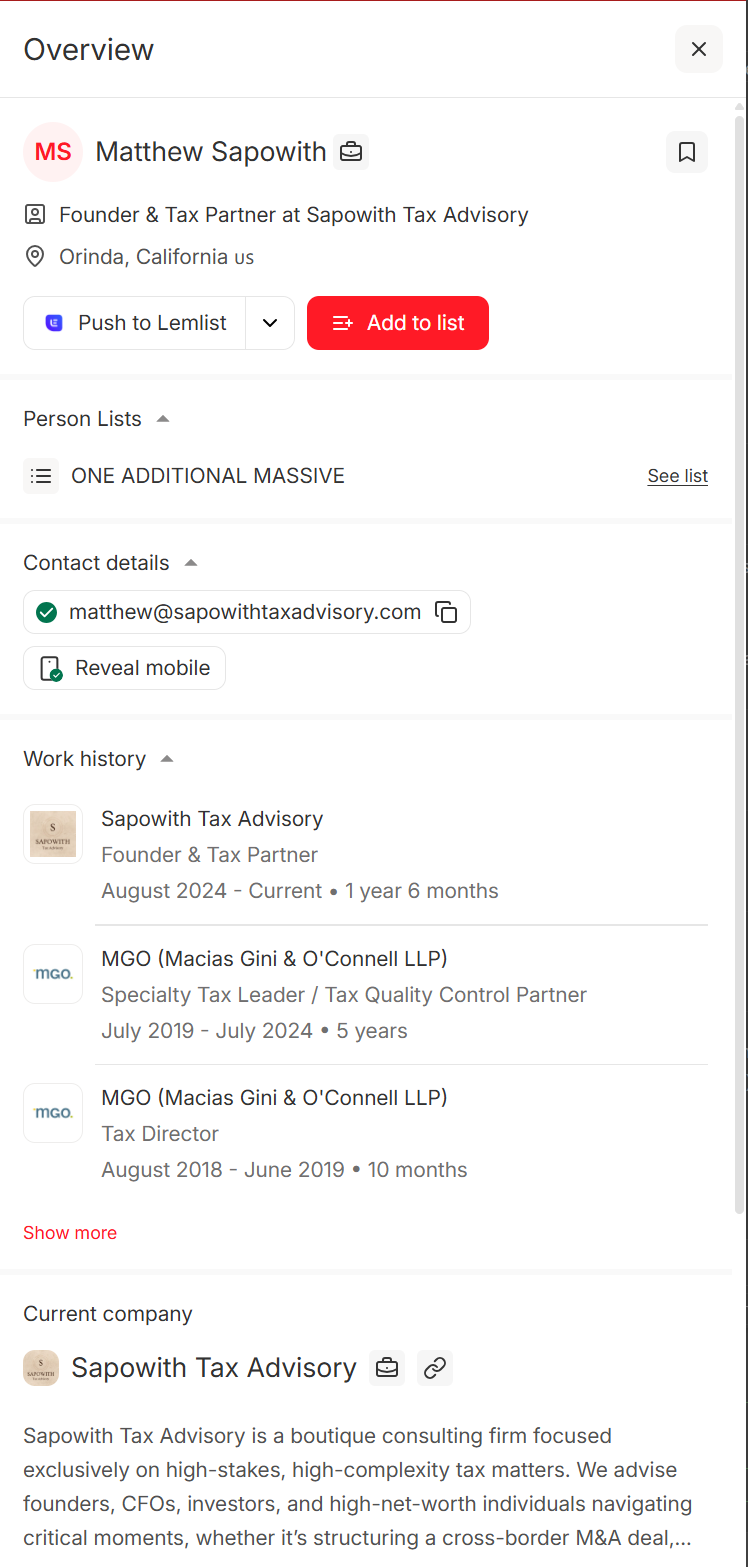
Prospeo runs a 5-step verification process - catch-all handling, spam-trap removal, honeypot filtering - and delivers 98% email accuracy. Data refreshes every 7 days, so you're not sending to addresses that went stale three months ago. The free tier gives you 75 email verifications per month, enough to test the workflow before you commit.
Think of verification as the step between "email written" and "email sent." It takes seconds and protects the domain you're building your reputation on.
Writing great intro emails is step one. Finding the right email address is step zero. Prospeo's Email Finder pulls verified addresses from 300M+ professional profiles at $0.01 per email - so you can stop guessing at formats and start sending intros that actually land in real inboxes.
Stop sending perfect intro emails to wrong addresses. Find the right ones instantly.
FAQ
How long should an intro email be?
Fifty to 150 words - three to five sentences max. If it scrolls on a mobile screen, cut it. That's enough to establish who you are, why you're writing, and what you're asking without losing the reader.
What's the best subject line for an introduction email?
Two to four words, front-loaded with the key point. "Noticed your Series C" beats "Introduction and Potential Collaboration Opportunity." Personalization can lift opens by around 26%, and Klaviyo's data shows the top 10% of campaigns hit a 45.1% open rate - small improvements compound fast.
When should you follow up on an intro email?
Three to five business days after the first send. Add new value in the follow-up - don't just "bump" the thread. If there's still no response, send a short breakup email. Three total touches max; after that, you're doing more harm than good.
Should an intro email be formal or casual?
Match the recipient's environment. Corporate finance? Lean formal. Startup founder? Go conversational. When you're unsure, aim for professional but warm - contractions are fine, jargon isn't. Review the sample that best matches your recipient's industry above and adjust tone from there.
How do I make sure my intro email doesn't bounce?
Verify the address before sending with a real-time email verification tool. A single high-bounce campaign can damage your domain reputation for months. Prospeo's free tier includes 75 verifications per month - paste the address, confirm it's valid, then hit send.