

Best Emailing Tools in 2026: 15 Picks That Actually Work
About one in six emails never gets delivered at all. That's the reality behind EmailToolTester's benchmark of 83.1% average deliverability across 15 major platforms - meaning 16.9% of messages vanish. Even when an email is "delivered," it can still land in spam. Yet email still returns 36:1 ROI, making it the highest-returning channel in B2B and ecommerce by a wide margin.
The gap between those two numbers is where your emailing tool choice matters. Pick the wrong one and you're burning budget on messages nobody reads. Pick the right one, pair it with clean data, and you've got the most efficient growth lever available.
We evaluated each tool below on deliverability benchmarks, real pricing at scale, practitioner feedback, and integration depth. Here's the thing: "emailing tool" means wildly different things depending on whether you're nurturing subscribers or cold-prospecting VPs. Most guides lump everything together. We won't.
Our Picks (TL;DR)
| Category | Top Pick | Runner-Up | Budget Pick |
|---|---|---|---|
| Email Marketing | ActiveCampaign | Klaviyo (ecommerce) | MailerLite |
| Cold Outreach | Instantly | Lemlist | Saleshandy |
| Data & Verification | Prospeo | Apollo (built-in DB) | - |
ActiveCampaign wins on automation depth and integrations - it's the platform teams actually stick with. Instantly is a strong starting point for cold email scale at $37.60/mo on annual billing with warmup included. And none of it matters if your contact data is bad, which is why we've included a full data quality section below that most "best emailing tool" roundups skip entirely.
Hot take: Most teams don't need the most expensive platform. They need the cheapest one that won't wreck their sender reputation - paired with data clean enough to keep bounce rates under 3%. Overspending on features while underspending on data quality is the most common mistake in email.
Cold Email vs. Email Marketing - Pick Your Lane
These aren't two flavors of the same thing. They're fundamentally different operations requiring different tools, different infrastructure, and different legal frameworks.
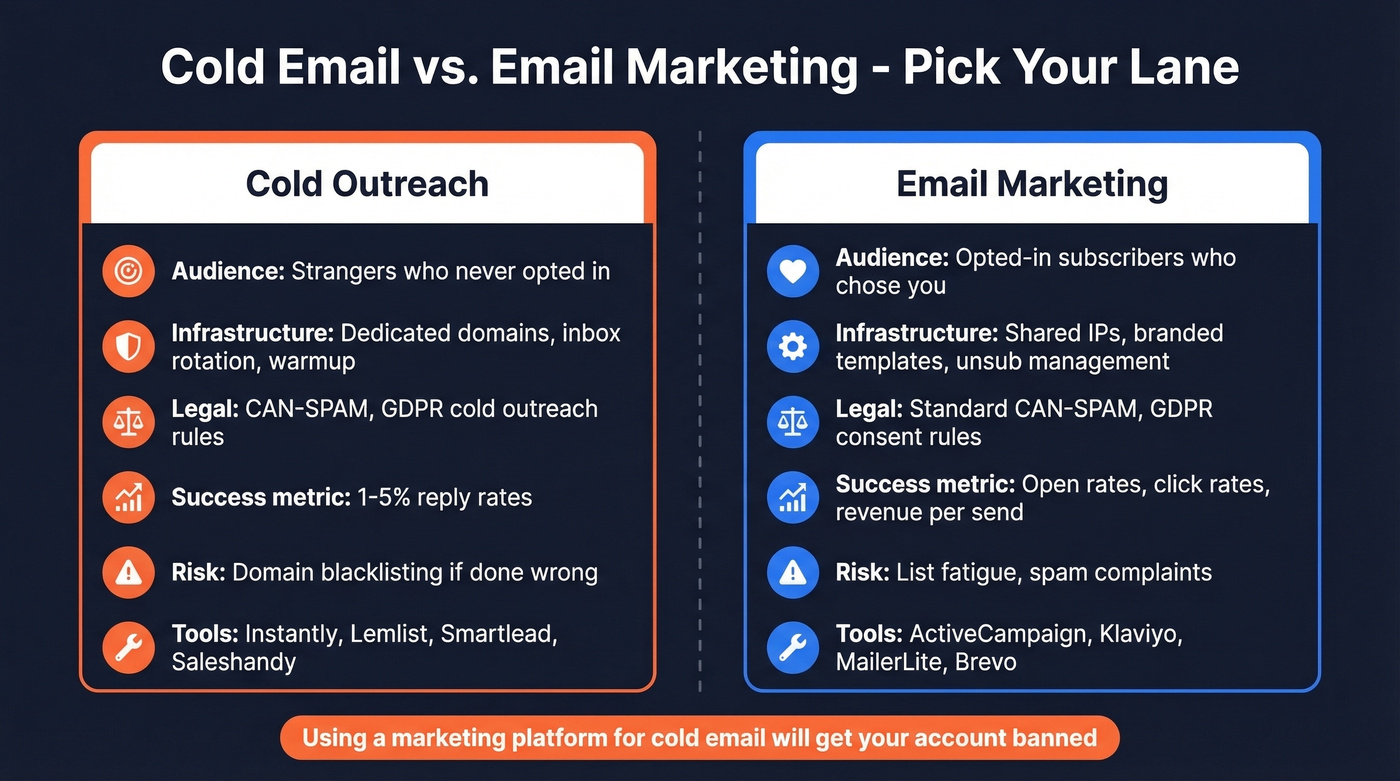
Cold email is direct outreach to people who haven't opted in. You're reaching strangers who've never heard of you, which means dedicated sending domains, warmup protocols, inbox rotation, and careful volume management. Good campaigns see reply rates of 1-5%.
Email marketing is messaging opted-in subscribers who chose to hear from you. It's about nurturing, segmentation, automation flows, and retention. The infrastructure is completely different - shared IPs, branded templates, unsubscribe management.
Using a marketing platform for cold email will get your account terminated. Mailchimp, ActiveCampaign, Klaviyo - they all prohibit unsolicited outreach. Send cold emails through them and you'll get banned, often without warning. Conversely, sending newsletters through a cold email tool misses the automation, template, and analytics features that make marketing email effective. Pick your lane first. Then pick your tool.
Best Email Marketing Tools
ActiveCampaign - Best for Automation
ActiveCampaign's visual automation builder is best-in-class for mid-market teams, and it's not particularly close. The conditional branching, CRM integration, and Zapier connectivity go well beyond what cheaper platforms offer. One Reddit user replacing Salesforce Predictive Response tested multiple platforms and landed on ActiveCampaign specifically for its pricing model, integrations, and automation depth - a pattern we've seen repeated across dozens of threads.
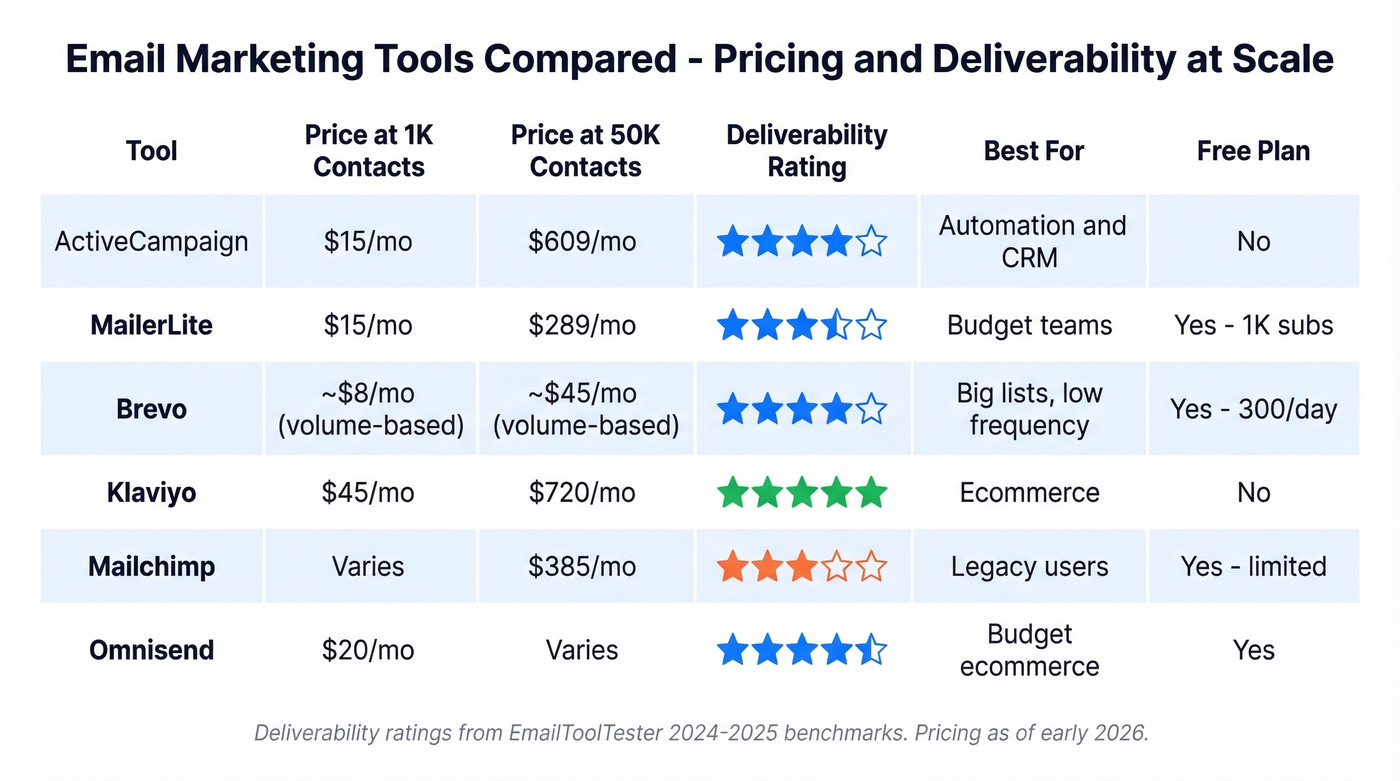
The trade-off is price. ActiveCampaign runs $15/mo at 1,000 contacts, $149/mo at 10,000, and $609/mo at 50,000. A 2024 price hike frustrated long-time users, and CRM features like lead scoring require the Plus tier. In EmailToolTester's benchmarks, ActiveCampaign's deliverability earns a solid 4-star rating - not the top spot, but consistently above average.
If you're comparing platforms that include a CRM layer, it helps to understand the broader landscape of CRM integration and what actually breaks when you sync contacts at scale.

MailerLite - Best Value Platform
MailerLite starts at $15/mo for 1,000 contacts and hits $289/mo at 50,000 - roughly half of ActiveCampaign at scale. The free plan covers up to 1,000 subscribers with surprisingly decent automation.
The catch: deliverability scores 3.5 stars in independent testing. Functional, not elite. For newsletters and basic automation, MailerLite is excellent. For high-stakes transactional or sales-driven email, that deliverability gap matters. Skip this one if inbox placement is your top priority.
If you're trying to diagnose why "delivered" doesn't mean "inbox," use a dedicated email deliverability guide before you blame the ESP.
Brevo - The Pricing Model Outlier
Most marketing platforms charge per contact. Brevo charges per email volume. That single difference can save you hundreds per month if you're sitting on a massive list and only emailing segments of it.
The free tier gives you 300 emails/day and supports up to 100,000 contacts. Paid plans start at ~$8/mo for 5,000 emails, and the "50K contacts" tier lands around $45/mo - though that number is really driven by the send-volume plan you choose, not the list size itself. Deliverability scores 4 stars. For teams with big lists and low send frequency, Brevo is the obvious math play.
Klaviyo - Best for Ecommerce
Klaviyo's benchmark data across 183,000+ customers tells the story: automated flows generate roughly 41% of total email revenue from just 5.3% of sends, with revenue per recipient running 18x higher than campaigns. That's the power of well-built abandoned cart, browse abandonment, and post-purchase flows. Klaviyo also earns the highest deliverability rating in EmailToolTester's benchmarks at 5 stars - justifying the premium for stores where inbox placement directly equals revenue.
The premium is real, though: $45/mo at 1,000 contacts, $150/mo at 10,000, $720/mo at 50,000. It also bills on total active profiles, so stored profiles still cost you. If you're not in ecommerce, you're paying for features you won't use.
Mailchimp - The Name Everyone's Leaving
Worst deliverability in EmailToolTester's benchmarks at 3 stars. Charges for unsubscribed and inactive contacts unless you manually archive them, inflating bills by 10-20%. $385/mo at 50,000 contacts. There are better options at every price point now.
If you're stuck on Mailchimp and seeing performance drop, start with a focused breakdown of Mailchimp deliverability issues before migrating.
Omnisend, Kit, Moosend
Omnisend is Klaviyo's more affordable ecommerce rival at $20/mo for 1,000 contacts with a strong 4.5-star deliverability rating. Worth testing if Klaviyo's pricing makes you flinch.
Kit (formerly ConvertKit) is the creator and newsletter play. The free plan covers up to 10,000 subscribers - the most generous free tier on this list. Paid plans start at $33/mo with 4-star deliverability.
Moosend is the pure budget pick at $7/mo for 500 contacts. Solid 4-star deliverability and clean automation for teams that need the basics without the overhead.
Best Cold Emailing Tools for Outreach
Instantly - Best Sender for Scale
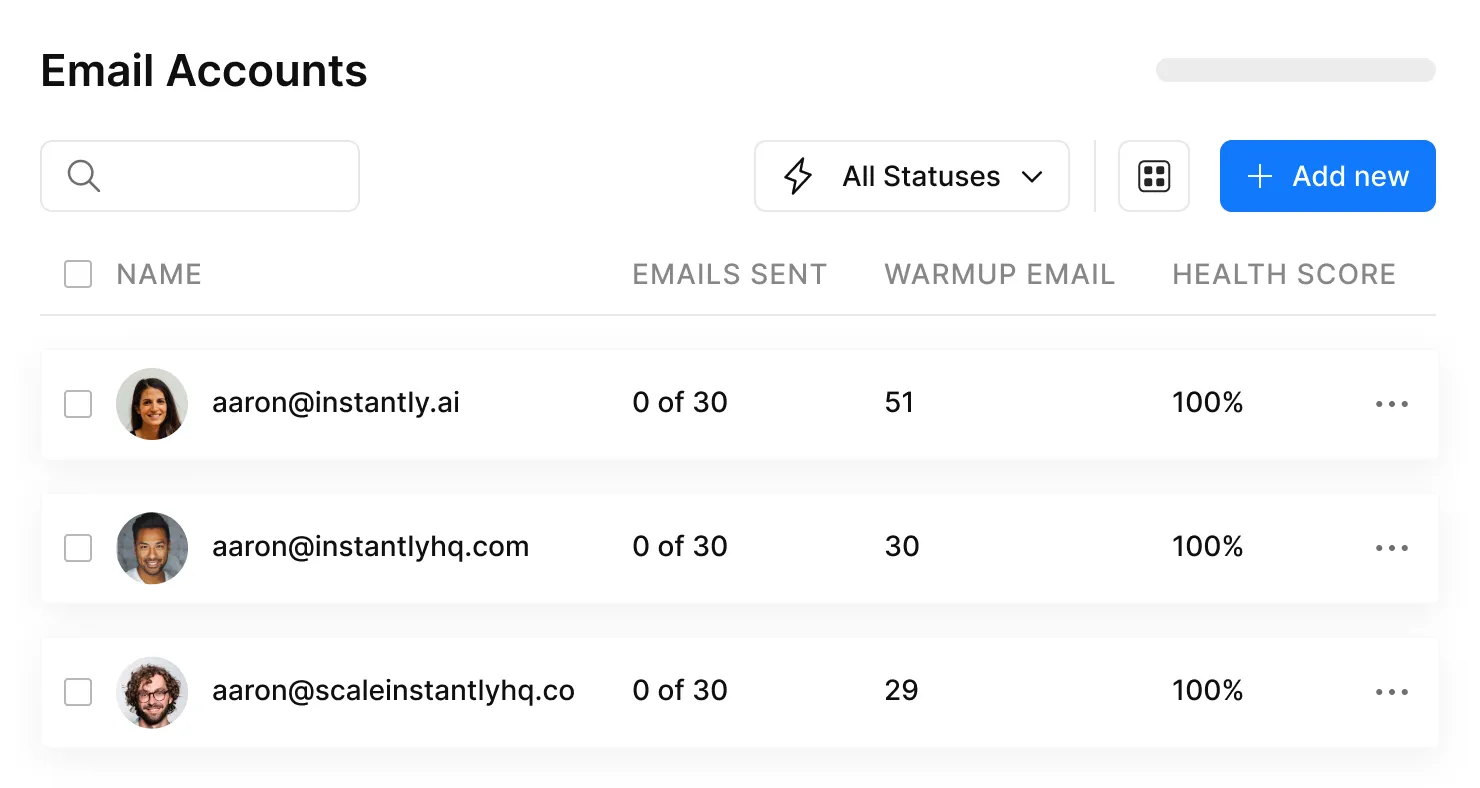
Instantly's Growth plan runs $37.60/mo on annual billing with warmup included. For teams sending high volumes of cold email across multiple domains, it's a strong starting point.
If you're building sequences from scratch, pair your tool choice with a proven B2B cold email sequence structure so you can test tools on a fair baseline.
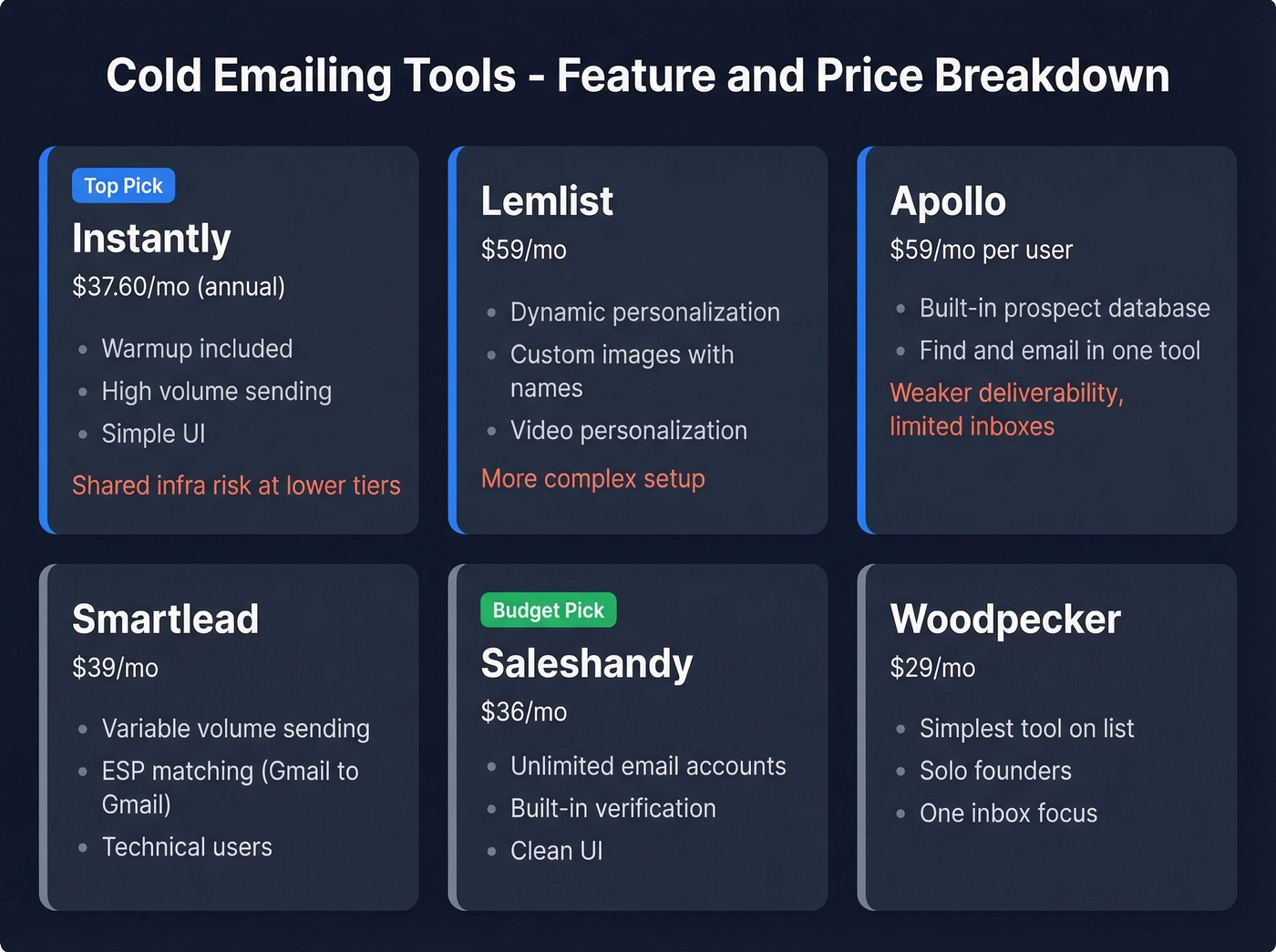
The limitation is scope - Instantly is a sending engine, not a full GTM platform. It doesn't do multichannel sequences across email and calls. Practitioners on r/coldemail also flag shared infrastructure risk at lower tiers, where your deliverability can suffer if the neighborhood gets noisy. One technical detail worth noting: Instantly sends very consistent daily volumes if you configure it that way, while Smartlead's variable volume approach is designed to avoid robotic patterns. Something to watch as ISPs get smarter about detecting automated sending.
If you're trying to stay under provider limits while scaling, you’ll want a clear handle on email velocity and how it interacts with warmup and inbox rotation.
Lemlist - Best for Personalization
If your outbound strategy relies on standing out rather than blasting volume, Lemlist is the tool. Dynamic landing pages, custom images with prospect names, and video personalization features that no other platform on this list matches. Starts at $59/mo.
The platform is more complex than Instantly's straightforward approach. For teams that invest in crafting personalized sequences, Lemlist pays for itself in reply rates. For teams that just want to send volume, it's overkill.
Apollo - Prospecting and Sending Combined
Apollo's free plan gives 100 credits/month with basic sending capability. Paid plans start at $59/mo per user. The built-in database means you can find prospects and email them without switching tools - a real workflow advantage for lean teams.
The trade-off: practitioners consistently note that Apollo's deliverability isn't as strong as dedicated sending tools, and the free/basic plans limit you to one inbox. For cold outreach where inbox rotation matters, that's a real constraint. The Organization plan at $149/mo with a minimum of 3 seats unlocks up to 15 inboxes.
If you're evaluating databases alongside senders, compare options in our roundup of sales prospecting databases to avoid locking into a single vendor too early.
Smartlead, Saleshandy, Woodpecker, Gmass
Smartlead ($39/mo) is the technical cold emailer's choice. Variable volume sending avoids robotic patterns, and ESP matching routes Gmail-to-Gmail and Outlook-to-Outlook - improving inbox placement 10-16%.
Saleshandy ($36/mo) is the budget cold email workhorse. Unlimited email accounts on paid plans, built-in verification, and a clean UI. If Instantly's pricing still feels steep, start here.
Woodpecker (starts at $29/mo) is the simplest cold email tool on this list. One inbox, clean sequences, solid deliverability. Perfect for solo founders who don't need multi-inbox rotation.
Gmass ($25/mo) turns Gmail into a sending tool. Solid for low-volume senders who want to stay inside their existing inbox. Limited compared to dedicated platforms, but the learning curve is nearly zero.
For teams evaluating additional options, Reply.io ($60/mo) and Snov.io ($39/mo) both offer competitive multichannel features worth a look.

Every emailing tool on this list will underperform with bad contact data. Prospeo's 5-step verification delivers 98% email accuracy on 143M+ verified addresses - refreshed every 7 days, not every 6 weeks. That's how teams keep bounce rates under 3% and protect sender reputation.
Fix the data layer before you blame the sending tool.
The Data Quality Layer
Here's where we get frustrated with most "best emailing tool" guides. They'll spend 3,000 words comparing sending platforms and never mention the thing that actually determines whether those platforms work: your data.
If you're building lists from multiple sources, it's worth understanding how data enrichment services and verification fit together (and where each one fails).
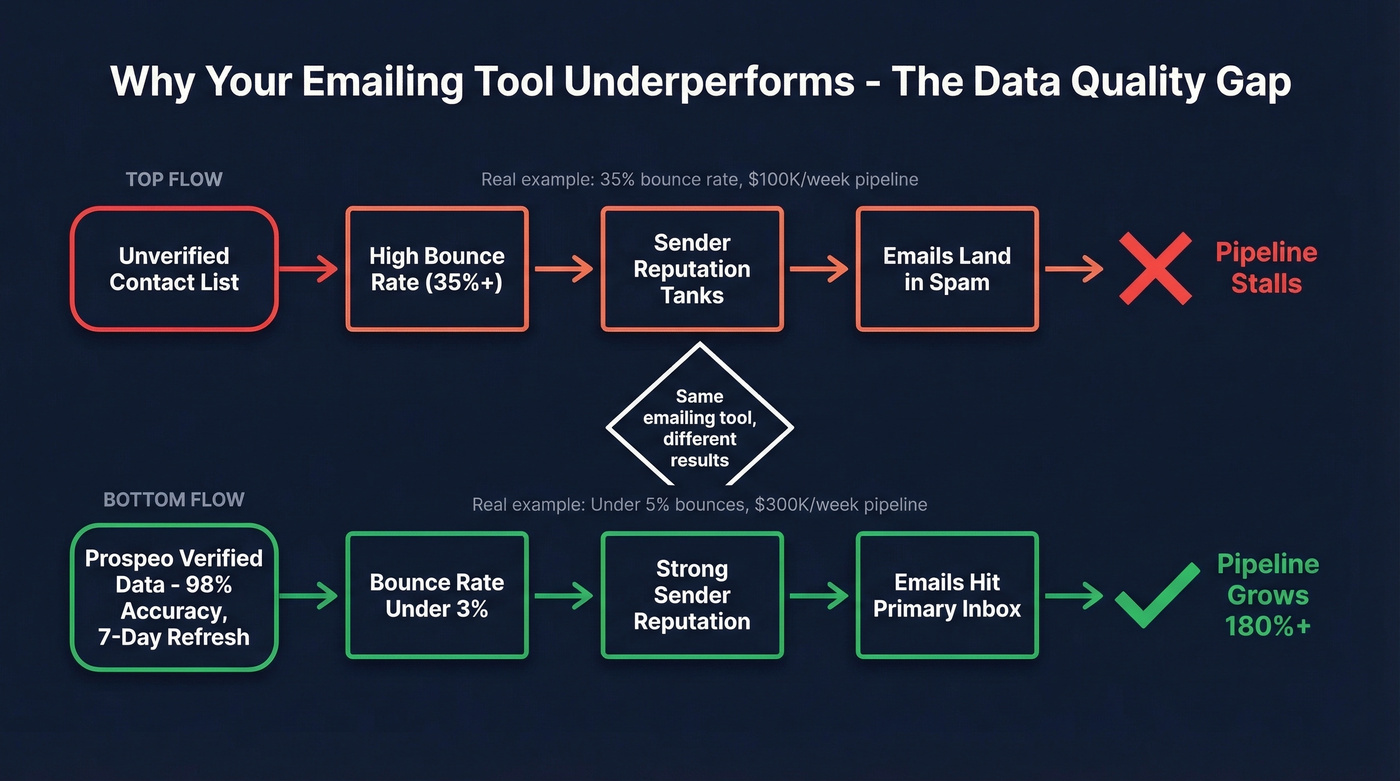
We've watched teams spend weeks A/B testing subject lines only to discover 35% of their list was bouncing. No amount of warmup or inbox rotation fixes bad data.
The numbers back this up. Meritt was running a 35% bounce rate before switching to verified data - it dropped to under 4%, and their pipeline tripled from $100K to $300K per week. Snyk had 50 AEs prospecting with bounce rates of 35-40%; after cleaning up their data source, bounces fell under 5% and AE-sourced pipeline jumped 180%.
Prospeo covers 300M+ professional profiles with 143M+ verified emails at 98% accuracy. Every record refreshes on a 7-day cycle, where the industry average is six weeks. That freshness gap is the difference between reaching someone at their current company and bouncing off a role they left two months ago. Native integrations push verified contacts directly into Instantly, Lemlist, Smartlead, Salesforce, and HubSpot - build your list, verify in bulk, and push to your sequencer without exporting CSVs. The free tier gives you 75 emails and 100 Chrome extension credits per month, and paid plans run roughly $0.01 per email.
If you're trying to keep bounces under control, start by tracking your email bounce rate properly (and fixing the root causes, not just suppressing addresses).
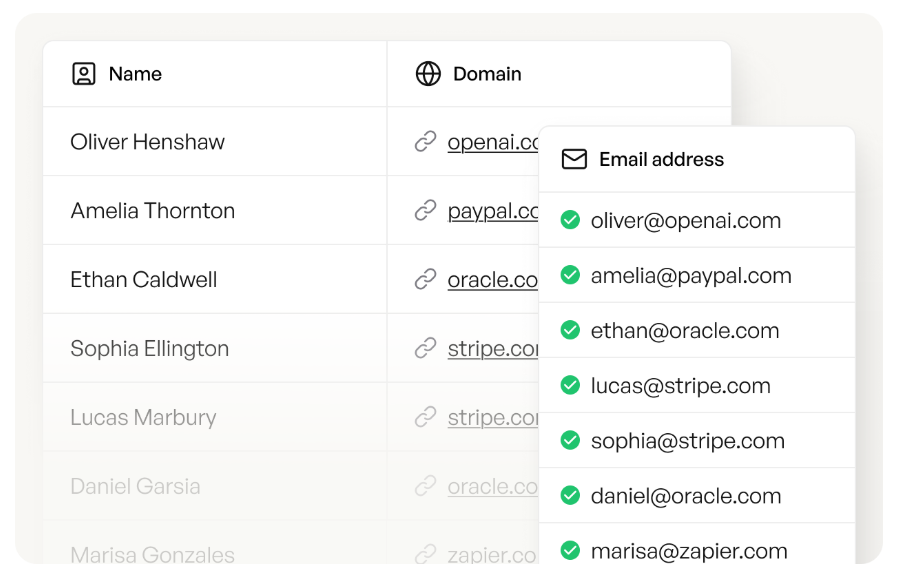
Instantly, Lemlist, Saleshandy - none of them source contacts for you. Prospeo fills the gap at $0.01 per verified email with 300M+ profiles, 30+ filters, and native integrations with every cold email platform on this list. Stack Optimize built a $1M agency on it with sub-3% bounce rates.
Pair your emailing tool with data that actually connects.
Deliverability - The Number That Matters
Across millions of email tests in 2026, only 60% reached a visible inbox location. 36% landed in spam. 4% were blocked entirely. Your "delivered" metric in your ESP dashboard is lying to you - SMTP acceptance doesn't mean inbox placement.
If you need a quick way to catch content and technical issues before you send, an email spam checker can surface problems like broken links, risky phrasing, and missing headers.
ISP Inbox Rates
| ISP | Inbox | Spam | Missing |
|---|---|---|---|
| 89.8% | 6.4% | 3.8% | |
| Yahoo | 87.3% | 6.4% | 6.3% |
| Apple | 82.0% | 10.8% | 7.2% |
| Microsoft | 77.4% | 15.1% | 7.5% |
Microsoft is the hardest inbox to crack - nearly 1 in 4 emails gets flagged or lost. If your prospect list skews toward corporate Outlook domains, deliverability optimization isn't optional.
Authentication adoption is improving but still incomplete: SPF sits at 92%, DKIM at 88%, but DMARC lags at 69%. Even with all three configured, spam placement can exceed 30% if your content and sending patterns trigger filters. 74% of emails fail HTML best-practice checks, making them 18-25% more likely to land in spam. Only 14% of senders implement a compliant List-Unsubscribe header - a quick fix that signals legitimacy to ISPs. And 13% of emails contain broken or redirected links, another deliverability red flag that's easy to fix but often ignored.
If you're troubleshooting authentication specifically, this walkthrough on how to verify DKIM is working is the fastest place to start.

Pricing at Scale
Email Marketing Tools
| Tool | 1K contacts | 10K contacts | 50K contacts | Model |
|---|---|---|---|---|
| Moosend | $7/mo | ~$64/mo | ~$315/mo | Per contact |
| Brevo | $8/mo* | $14/mo | $45/mo | Per send volume |
| MailerLite | $15/mo | $73/mo | $289/mo | Per contact |
| ActiveCampaign | $15/mo | $149/mo | $609/mo | Per contact |
| Omnisend | $20/mo | $132/mo | $413/mo | Per contact |
| Mailchimp | $26.50/mo | $110/mo | $385/mo | Per contact |
| Kit | Free | Free | $439/mo | Per contact |
| Klaviyo | $45/mo | $150/mo | $720/mo | Per profile |
*Brevo's entry plan is for 5,000 emails/month with high contact limits. Pricing scales by send volume, not list size.
Brevo is the clear outlier for teams with large lists and low send frequency. For high-frequency senders, per-contact models like ActiveCampaign or Klaviyo make more sense because you're not paying per send.
Cold Email Tools
| Tool | Starting Price | Key Feature | Best For |
|---|---|---|---|
| Gmass | $25/mo | Gmail-native | Low-volume senders |
| Woodpecker | $29/mo | Simple sequences | Solo senders |
| Saleshandy | $36/mo | Unlimited accounts | Budget scale |
| Instantly | $37.60/mo | Warmup included | Volume outreach |
| Smartlead | $39/mo | ESP matching | Deliverability |
| Lemlist | $59/mo | Personalization | Creative outreach |
| Apollo | $59/mo | Built-in database | All-in-one |
Hidden Costs to Watch
Don't just compare sticker prices. Hidden costs add 20-30% to platform fees across the board. List cleaning runs $0.003-$0.01 per email - cleaning 10,000 contacts costs $30-$100 and should happen quarterly. Premium templates run $5-$20 each. HubSpot's Professional tier requires a $3,000-$7,000 onboarding fee plus annual commitment. And Mailchimp's inactive-contact billing can silently inflate your bill by 10-20% if you're not actively archiving unsubscribes.
Mistakes That Kill Results
Most email performance problems aren't tool problems. They're operator problems. The consensus on r/coldemail is pretty clear on the biggest offenders.
Don't:
- Over-automate without real personalization - recommendations that don't match behavior erode trust fast
- Ignore mobile optimization - tiny text, broken layouts, and hard-to-tap CTAs kill engagement
- Blast your entire list with the same message - no segmentation means high unsubscribes and spam marks
- Buy email lists. Ever. The reputation damage outlasts any short-term pipeline gain
If you're unsure where the line is legally and operationally, read up on Is It Illegal to Buy Email Lists? before you torch a domain.
Do:
- Only send to people who gave permission (marketing) or who match your ICP tightly (cold outreach)
- Segment by behavior, industry, and engagement level
- Clean your list quarterly - catch-all domains, role-based addresses, and inactive contacts accumulate fast
- Use one clear CTA per email - multiple asks dilute conversion
- Monitor deliverability actively, not just open rates
Well-configured cold email programs see 60-90% inbox placement on warmed domains. Poorly configured setups drop below 50%. In our experience, the difference almost always comes down to data quality and authentication, not which sending tool you picked.
FAQ
What's the difference between cold email and marketing tools?
Cold email tools handle outreach to non-subscribers with warmup, inbox rotation, and deliverability controls for reaching strangers. Email marketing tools manage opted-in lists with automation, templates, and segmentation. Using a marketing platform for cold email risks immediate account termination - they're separate categories requiring separate infrastructure.
Which free emailing tool is best for beginners?
MailerLite's free plan covers up to 1,000 subscribers with solid automation and a drag-and-drop editor. Kit offers the most generous free tier at 10,000 subscribers for newsletters. For cold outreach, Prospeo's free tier (75 emails + 100 Chrome extension credits/month) paired with Apollo's free 100 credits gives you enough to test outbound before committing to paid plans.
How much should I budget for email software?
Email marketing runs $15-$150/month for 1,000-10,000 contacts depending on the platform. Cold email tools cost $25-$80/month per user. Budget an additional 20-30% for hidden costs: list cleaning, premium templates, integration fees, and potential overages on contact-based billing models.
Why are my emails going to spam?
Missing SPF/DKIM/DMARC authentication, poor HTML structure (74% of emails fail best practices), and high bounce rates from unverified data are the top causes. Microsoft inboxes are the hardest to reach - 15.1% of emails hit spam there. Fix authentication first, verify your list, then optimize content.
Do I need email verification?
Yes, if your bounce rate exceeds 2-3%. Verification catches invalid addresses, spam traps, and catch-all domains before they damage sender reputation. Teams typically see bounce rates drop from 35%+ to under 5% after implementing verification - that's the difference between a healthy domain and one headed for a blacklist.
Your emailing tool matters less than you think. Your data quality matters more than you realize. Get the data right, pick a platform that fits your lane, and stop overthinking the rest.