

How CRM Helps Sales: What Actually Works in 2026
Reps spend just 33% of their time actually selling. The rest disappears into data entry, pipeline updates, and chasing context they should already have. Meanwhile, [70% of companies](https://www.bain.com/about/media-center/press-releases/20252/70-of-companies-struggle-to-integrate-their-sales-plays-into-crm-and-revenue-technologies-finds-bain - company-survey/) still struggle to integrate sales plays into their CRM.
Understanding how CRM helps sales starts with a simple truth: the gap isn't the software. It's the execution. CRM value comes down to three things working together:
- Process - defined stages, clear ownership, enforced next steps (sales process)
- Adoption - reps actually using it, not just managers checking dashboards (sales execution)
- Data quality - clean, current contacts that don't bounce or go to voicemail (data enrichment)
Miss any one and you're paying for an expensive address book. Most teams nail process, fight over adoption, and completely ignore data quality. That last piece is where the real gains hide.

Why Sales Teams Need CRM in 2026
The CRM market hits an estimated $126.17B in 2026, and 91% of companies with 10+ employees already use one. This isn't emerging tech - it's infrastructure.
What's changed is the AI layer. 83% of businesses now use AI in CRM, and teams using generative AI inside their CRM are 83% more likely to exceed sales goals. The CRM itself isn't the competitive advantage anymore - how you configure it, what data you feed it, and whether reps trust it enough to actually log their activity, that's what separates real outcomes from shelfware. The average sales revenue increase tied to CRM usage sits around 29%, but only for teams that get the fundamentals right.
9 CRM Benefits for Sales Teams
1. Single Source of Truth
Every contact, deal, and interaction in one place. No more "who talked to them last?" - the question that quietly kills deals in team selling environments (team selling). Context is always available, not locked in someone else's inbox or a Slack thread from three weeks ago.
2. Pipeline Visibility
Stages, deal values, close dates - visible in real time. Managers spot stalled deals before they die. Pipeline hygiene becomes a daily habit, not a quarterly fire drill (pipeline health).
3. Enforced Lead Follow-Up
Only 27% of leads are ever contacted without a system enforcing follow-up. A CRM makes "I forgot" structurally impossible. That alone justifies the cost for most teams (importance of follow-up).
4. Automation That Gives Time Back
Lead routing, sequence enrollment, task creation - all triggered automatically. That's hours per week back into actual selling. We've watched teams reclaim an entire selling day per rep just by automating lead assignment and follow-up sequences. If you're exploring how to grow sales without hiring, this is the mechanism: you scale output per rep instead of headcount (sequence management).
5. Forecasting You Can Defend
Stage-weighted probabilities and historical conversion rates turn forecasting from gut feel into math. Teams with mature CRM usage see forecast accuracy improve 32-42% (sales forecasting tools).
6. Personalization at Scale
Every outreach carries context: what the prospect downloaded, their last objection, the fact that their engineering team just grew 40%. This isn't "Hi {First_Name}" personalization. It's relevance (personalized outreach).
7. Collaboration and Accountability
Shared notes, deal ownership, handoff protocols. When an AE goes on vacation, the backup doesn't start from zero. This kind of sales effectiveness compounds - every handoff that doesn't drop context is a deal that stays alive.
8. Upsell and Cross-Sell Signals
Renewal dates, usage patterns, expansion triggers - surfaced automatically. A 5-point lift in a mid-funnel stage can increase closed revenue 12-18%. Most teams leave this money on the table because nobody's watching for the signals (cross selling vs upselling).
9. Reporting That Improves Coaching
Which reps convert demos at 40% and which at 15%? CRM makes these questions answerable, and sales cycles get 8-14% shorter as a result. Good coaching needs good data. Period.
What a CRM Workflow Actually Looks Like
Here's a standard automated workflow you can build in most modern CRMs:
- Trigger: New lead enters CRM via form fill, import, or API push
- Action: Send personalized welcome email automatically
- Wait: 3 days - system monitors for reply
- Branch A (no reply): Follow-up email with a different angle, plus a call task for the rep
- Branch B (reply received): Move deal to "Negotiation," notify the rep, schedule follow-up
In our experience, this takes 15-30 minutes to set up and runs forever. Different prospect behavior triggers different next steps - no rep lifts a finger until human judgment is actually needed.
Why CRM "Doesn't Help" Some Teams
Let's be honest: 55% of CRM implementations fail to meet objectives. The classic ROI stat - $8.71 returned per $1 spent - is real, but returns are normalizing closer to $3.10 as easy wins get harder to find.
Use CRM if you've defined your sales stages, your team commits to daily use, and you have a plan for keeping data clean.
Skip the investment if you don't have a repeatable sales process yet. A CRM can't create process - it can only enforce and scale what already exists. Build the playbook first.
The sentiment on r/sales splits cleanly: reps who say CRM is essential are the ones whose CRM saves them time. Reps who call it pointless admin work are the ones manually entering data that should be automated. The tool isn't the variable - the implementation is.

CRM automation means nothing when 70% of your contact data goes stale every year. Prospeo's CRM enrichment pushes 50+ verified data points per contact directly into Salesforce and HubSpot - 98% email accuracy, 83% match rate, refreshed every 7 days instead of the 6-week industry average.
Stop letting bad data sabotage your CRM investment at $0.01 per email.
Data Quality Is Where Most Teams Fail
70.3% of CRM data becomes outdated every year. Bad data costs an estimated 550 hours and $32,000 per sales rep annually in wasted effort - calls to wrong numbers, emails that bounce, outreach to people who left the company six months ago. We've seen teams nail process and adoption, then watch everything fall apart because half their contact records were stale.
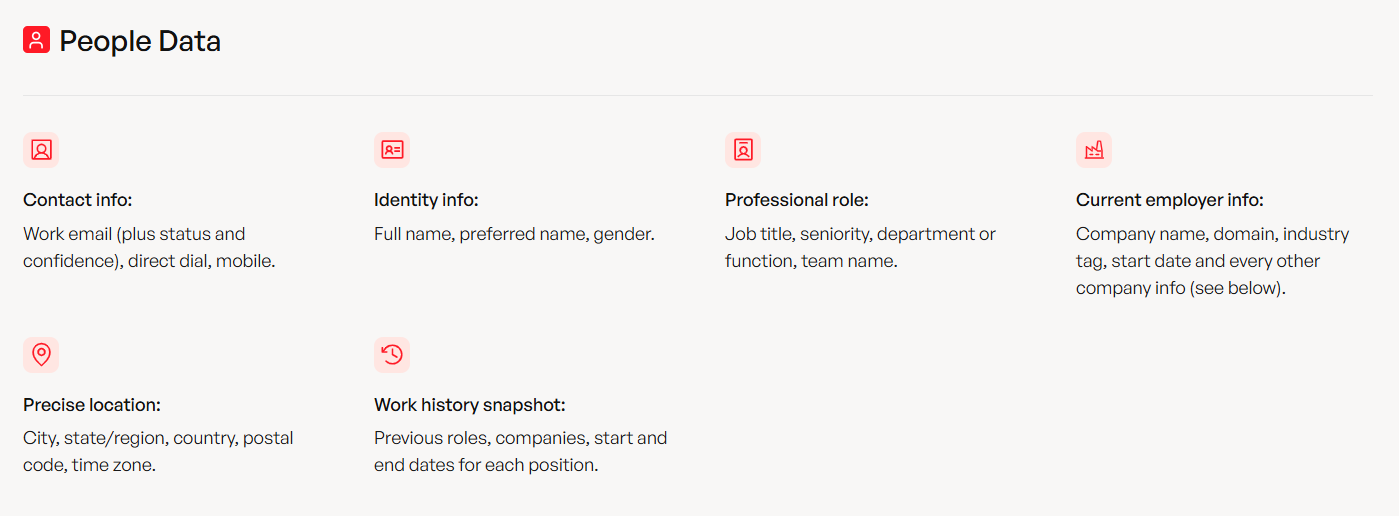
This is where Prospeo fits. Its CRM enrichment connects to Salesforce and HubSpot, returning 50+ verified data points per contact with an 83% enrichment match rate - emails, direct dials, titles, technographics. Records refresh on a 7-day cycle versus the 6-week industry average, and email accuracy sits at 98%.
Here's the thing: if your average deal size is under $10k, you probably don't need a $30k/year data platform. But you absolutely need accurate data. That's where self-serve tools at $0.01/email beat enterprise contracts every time.
Boosting Team Productivity with AI
AI is now built into day-to-day selling: 81% say it reduces manual tasks. Three capabilities worth paying attention to right now:
AI lead scoring prioritizes who to call first using behavior, firmographics, and intent signals. One case study showed a 32% reduction in screening time, which freed reps to spend more of their day in actual conversations (lead scoring).
Conversation intelligence transcribes calls and flags objections, turning every rep's calls into coaching material. This is especially powerful for onboarding new hires - they can study what top performers actually say instead of guessing.
Predictive forecasting replaces spreadsheet guesswork with models trained on your actual pipeline data. It's not perfect, but it's better than the VP of Sales eyeballing a number on Thursday afternoon.
What It Costs
| Tool | Starting Price | Best For |
|---|---|---|
| HubSpot | Free, then $20-90/user/mo | Ease of use, SMBs |
| Salesforce Starter | ~$25/user/mo (+$75 for Einstein) | Scale, enterprise path |
| Zoho CRM Plus | ~$40/user/mo | Value + customization |
| Pipedrive | ~$14.90/user/mo | Pipeline-first teams |
| monday CRM | ~$12/user/mo | Visual workflows |
| Freshsales | Free, then $15/user/mo | Budget-friendly AI |
| Salesflare | ~$29/user/mo | Auto data capture |
| Prospeo | Free (75 emails/mo), ~$0.01/email | CRM enrichment layer |
The CRM itself is rarely the expensive part. It's the bad data flowing through it that costs you - in bounced emails, wasted rep hours, and deals that never had a chance. Budget for a data layer alongside your CRM, not as an afterthought (data enrichment services).
You just read that bad data costs reps 550 hours and $32K per year. Prospeo connects natively to your CRM and keeps every record current - verified emails, direct dials, titles, technographics - so your reps spend that 33% selling time on contacts who actually pick up.
Give your CRM the data quality it was always missing.
Make CRM Actually Work: Implementation Checklist
A quick checklist drawn from what actually breaks CRM rollouts:
- Involve reps in selection. Include your most skeptical seller in the trial. If they buy in, everyone will.
- Reduce required fields. Every mandatory field increases abandonment. Keep it to what's genuinely actionable - five fields, not fifteen.
- Run structured training. Not a one-hour webinar. Ongoing workshops tied to your actual sales process, with reps practicing in the live system.
- Define stages and rules. Document what "Qualified" means, what triggers "Closed Lost," who owns what. If two people can disagree about a deal's stage, your definitions aren't clear enough.
- Leadership uses the CRM. If the VP of Sales runs forecast calls from a spreadsheet, reps will too.
- Clean before you migrate. Audit and deduplicate data before importing. Broken data on day one erodes trust permanently.
- Keep data fresh with enrichment. Automated weekly refreshes mean your CRM doesn't decay between quarterly cleanups.
FAQ
What's the #1 way CRM increases sales revenue?
Pipeline visibility and enforced follow-up. Most revenue leaks happen when leads go uncontacted or deals stall unnoticed. Teams with mature CRM usage see revenue increase ~29% on average, primarily from deals that would've otherwise slipped through the cracks.
How do you get reps to actually use the CRM?
Cut required fields to the minimum, automate data capture, and make CRM the source of truth for comp and forecasting. When pipeline reviews run exclusively from CRM data, adoption stops being optional - it becomes how reps get paid.
What should you track for better forecasting?
Deal stage, close date, deal value, next step, and last activity date - at minimum. Layer in stage-specific conversion rates to build weighted forecasts. Teams doing this see accuracy improve 32-42%.
How do you keep CRM contact data accurate?
Automate enrichment - manual hygiene doesn't scale when 70% of records go stale annually. Tools like Prospeo connect to Salesforce and HubSpot, enriching contacts with 50+ verified data points on a 7-day refresh cycle at 98% email accuracy. At ~$0.01 per email, it's viable even for small teams.
Can a CRM help grow sales without adding headcount?
Yes. Automation handles lead routing, follow-up sequences, and data entry so each rep covers more pipeline. Teams that fully use CRM automation often scale revenue 20-30% before needing to hire, making it one of the highest-ROI investments in a sales org.