

How to Start a Sales Conversation: Scripts, Data, and Frameworks That Actually Work
You've already lost the sale. Not because your product's wrong or your pricing's off - but because you opened with "Hey, how's your day going?" and the prospect mentally filed you under "salesperson trying to sell me something." Knowing how to start a sales conversation is the difference between a pipeline and a prayer.
The first 7 seconds are the most expensive real estate in your pipeline. 82% of buyers accept meetings from proactive outreach. The problem isn't that prospects don't want to talk - it's that most reps blow the opener.
Here's what actually works across every channel, plus the mistakes that are silently killing your connect rates.
What You Need (Quick Version)
Your opener's only job is to earn the next 30 seconds. Not to pitch. Not to qualify. Not to demo. Just to buy yourself enough time to say something worth hearing.
Pick one opener per channel - phone, email, social - and practice it until it sounds natural, not rehearsed. The data is clear on what works and what doesn't:
- Explain why you're calling - 2.1x higher success rate
- Never ask "Is this a bad time?" - kills meeting rates by 40%
- Listen 57% of the time - the ratio top performers maintain whether they win or lose
- Verify your contact data first - sales reps lose 27.3% of their selling time to wrong numbers and bounced emails
That last point gets ignored constantly. Your opener doesn't matter if you're dialing a disconnected number or emailing a bounce. Fix the data first, then fix the script.
The Psychology Behind Effective Sales Openers
Every prospect has what I call the "Salesperson Reflex." The moment they hear a generic opener - "Hi, how are you today?" or "I'd like to tell you about..." - their brain categorizes you as noise. It's not personal. They've heard these lines hundreds of times, and they know the pitch is coming next.
Gong's analysis of millions of sales calls makes this painfully concrete. Reps who explain why they're calling see a 2.1x higher success rate than those who don't. Opening with "How have you been?" - weirdly - correlates with higher meeting rates, probably because it implies a prior relationship. But asking "Is this a bad time?" craters your meeting rate by 40%. The prospect was fine until you reminded them they could say no.
Here's the thing: successful cold calls average 5 minutes and 50 seconds. Failed ones? 3 minutes and 14 seconds. That gap isn't about talking more - it's about earning enough interest in those first seconds to keep the conversation alive. The opener is the gate. Everything else - your discovery, your pitch, your close - lives behind it.
The goal isn't to sound smooth. It's to sound human, relevant, and worth 30 more seconds.
Phone Conversation Openers - Scripts You Can Steal Today
Permission Openers
Permission openers work because they flip the power dynamic. Instead of bulldozing into a pitch, you acknowledge the interruption and let the prospect choose to engage. That choice creates buy-in.
Script 1: "I'll be honest, this is a cold call. You can hang up now, or give me 30 seconds to explain why I called specifically you."
Radical transparency. Nobody expects a salesperson to admit it's a cold call. The honesty disarms the Salesperson Reflex.
Script 2: "Hi [first name], this is [your full name] calling from [company]. Appreciate I caught you out of the blue here - you got a minute?"
The "caught you out of the blue" phrase acknowledges the interruption without apologizing for it. It's a small distinction that makes a big difference.
Script 3: "Do you have 27 seconds to tell me to get lost?"
The specific number (27, not 30) signals you're a real person, not reading from a script. It's funny enough to earn a chuckle, which buys you time.
Script 4: "I'm going to ask for your help with something - do you have a quick minute?"
Asking for help sparks curiosity and makes it harder to hang up. People are wired to assist when asked directly.
Insight and Trigger Openers
These prove you've done your homework. They tell the prospect "I'm not a robo-dialer - I called you for a reason."
Script 1: "I saw you're hiring for 5 new SDRs. Usually, when teams scale that fast, onboarding becomes a nightmare. Is that on your radar?"
Script 2: "I'm calling since we've helped [Competitor] with [Pain Point] recently. Figured it might be relevant to you too." Competitor triggers create urgency - nobody wants to fall behind a rival.
Script 3: "[Name] from [Company] recommended I reach out - we helped them [specific result], and they thought you might be dealing with something similar." 84% of B2B decision-makers start their purchase with a referral, and mentioning a mutual connection increases meeting chances by 70%.
Script 4: "I noticed you just closed your Series B - congrats. Most teams at that stage start hitting [specific scaling problem]. Is that showing up yet?"
Industry-specific twist: In insurance, leading with savings crushes generic openers: "We've already saved customers over $100/year on premiums. Can I run a free quote for you in 30 seconds?" Adapt the formula to whatever your prospect's industry cares about most.
Problem-First Openers
Lead with the prospect's pain, not your product. Centering the conversation on what matters to them is the fastest way to earn attention.
| Opener | When to Use It |
|---|---|
| "I talk to VPs of Sales every day, and they all tell me their biggest headache is [Problem]. Is that hitting your desk too?" | You know the industry's common pain points cold |
| "We've never spoken before. I'm just calling to see if [specific problem] is costing you as much as it's costing other [industry] companies." | First-touch cold call, no trigger event |
| "I'm not sure if what we offer is right for you - but I'd love 30 seconds to find out." | Prospect is likely skeptical or gatekeeper-heavy |
| "Quick question - if you could eliminate one bottleneck in your [department] this quarter, what would it be?" | You want the prospect to self-diagnose |
The "I'm not sure" framing is reverse psychology that works because it's so rare in sales. Prospects lean in when you're not pushing. And the open-ended bottleneck question can't be answered with "yes" or "no" - it forces engagement.
Three Openers to Avoid (and Why)
"Hi, how are you today?" - Fake sincerity. The prospect knows you don't care how they are. Analysis of millions of calls shows this underperforms explaining why you're calling. It triggers the Salesperson Reflex instantly.
"Is this the person in charge of purchasing?" - Lazy research. You should know who you're calling before you dial. This opener screams "I'm cold-calling a list and hoping someone bites."
"I'd like to tell you about our new product..." - Self-centered. The prospect doesn't care about your product. They care about their problems. Leading with your product is the fastest way to hear a click.
When They Say "Not Interested" or "I Don't Have Time"
These aren't rejections - they're reflexes. The prospect hasn't heard enough to be genuinely uninterested.
"Not interested" recovery: "That makes sense - you don't even know what I do yet. Can I take 10 seconds to tell you the problem we solve, and then you can hang up?"
This works because it's logical. They can't be uninterested in something they haven't heard. The 10-second ask is low-commitment.
"I don't have time" recovery: "Totally fair. I'll plan on calling back [specific day/time] unless there's a better slot for you?"
This assumes the conversation will happen - just not now. You're scheduling, not begging.
Gatekeeper script: "I'm looking to speak with [Prospect's Name] or the decision maker for [Department]. Would you mind transferring me?" Keep it simple and confident. Don't over-explain to gatekeepers. They respect directness.
Friday afternoon C-suite tip: Gatekeepers leave early on Fridays. Executives are still at their desks, often in a better mood. Friday afternoons between 3-5 PM are prime time for reaching C-suite directly. And persistence pays: C-level connection rates jump from 39% on the first attempt to 72% on the second and 93% on the third. Speak almost uncomfortably slow, smile (they can hear it), and stand up while you dial.
How to Start a Sales Conversation Over Email
Cold email is a different animal. You don't have the real-time feedback loop of a phone call, so every word in your subject line and opening sentence has to earn the next one.
The average cold email response rate sits at 5.1%, with most campaigns falling between 1-5%. That sounds brutal, but it means the gap between a mediocre email and a great one is enormous. Advanced personalization alone doubles response rates.
Subject lines that work: Gong's analysis of top-performing cold emails shows the highest-performing subject lines resemble internal messages - short, lowercase, priority-based language. For cold outreach specifically, 4 words or fewer wins (think "quick question about [topic]"). "re: your hiring push" beats "Exclusive Offer Inside!!!" every time.
81% of emails are now opened on mobile. Your subject line gets maybe 40 characters before it's cut off. Front-load the hook. (If you want more options, see these email subject lines.)
Template 1 - The Trigger Email:
Subject: your sdrs ramping up?
Hi [First Name],
Saw you're hiring 5 SDRs this quarter. Most teams at that stage hit a wall with [specific problem] around month 3.
We helped [Similar Company] cut that ramp time by 40%. Worth a 15-minute call to see if it's relevant?
[Your name]
Template 2 - The Problem-First Email:
Subject: [problem] costing you deals?
Hi [First Name],
Talked to three [job title]s this week who all said the same thing: [specific pain point] is eating their Q2 pipeline.
If that's hitting your team too, I've got a 2-minute breakdown of what [Company X] did about it. Want me to send it over?
Template 3 - The Mutual Connection Email:
Subject: [mutual contact] said to reach out
Hi [First Name],
[Mutual contact] mentioned you're dealing with [problem]. We helped them [specific result] last quarter.
Would it make sense to compare notes? Happy to keep it to 15 minutes.
The pattern across all three: specific, short, about them, and ending with a low-commitment ask. No paragraphs about your company's founding story. No feature lists. No "I hope this email finds you well."
How to Open Conversations with Prospects on Social
Social messaging - particularly on professional networks - outperforms cold email by a wide margin when done right. InMail reply rates run 18-25% compared to cold email's ~3%. The catch is that most reps treat social messages like shorter emails, which defeats the purpose.
The shared-interest approach: Referencing a shared post or interest drives a 35% response rate. That's not a typo - 35%.
"Loved your post on [topic] - especially the point about [specific detail]. I've been thinking about how that connects to [their pain point]. Would you be open to a quick conversation about it?"
The shared-connection approach: Mentioning a shared connection doubles acceptance rates in multi-channel campaign data.
"[Mutual connection] and I were just talking about [topic]. Your name came up - they mentioned you're doing interesting work on [specific initiative]. Mind if I pick your brain for 10 minutes?"
The ego-stroke approach: Reference something they've published or said publicly, connect it to their role, then make a soft ask.
"Your talk at [event] on [topic] was the most practical session I attended. We're working on something adjacent - helping [type of company] solve [problem]. Would love to get your take on whether we're thinking about it right."
The key to social messaging is that it shouldn't feel like outreach. It should feel like a professional reaching out to another professional about something genuinely interesting. The moment it reads like a template, you've lost.
Best practice is to use social AND email together - not one or the other. Multi-channel outreach consistently outperforms single-channel in every dataset we've seen. (If you're building a system, start with these sales prospecting techniques.)
In-Person and Trade Show Openers
In-person sales conversations are becoming rarer, which makes them more valuable. The rules are different from phone and email - you've got body language, eye contact, and the physical environment working for (or against) you.
At your booth: "Have you heard of us before?" is a surprisingly effective opener. It's binary - they either say yes (and you build on that) or no (and you get to introduce yourself fresh). Follow-ups: "What caught your eye?" or "We're solving [problem] - is that something you're dealing with?"
At a networking event: Use the observation + question formula. "This place is huge - have you made it past aisle three yet?" or "Everyone's sprinting for the coffee booth. Any good?" These feel natural because they are. You're commenting on a shared experience.
Open-ended questions that work anywhere:
- "What brings you to the show?"
- "What's been the most interesting thing you've seen so far?"
- "What's your biggest challenge right now in [their area]?"
The principle: connect with an audience of one. Trade shows feel like performances, but the best conversations happen one-on-one.
When you're blank: Share a quick proof point. "One of our customers saved [impressive number] using this" gives you something concrete to anchor the conversation. Or share a funny origin story about your product - humor is the fastest rapport builder in person.
What to Do After the Opener Lands
The Transition from Opener to Discovery
Here's where most reps fumble. The opener lands. The prospect says "sure, go ahead" or "okay, what is it?" And then the rep launches into a 90-second monologue about their product.
Don't do that.
The transition from opener to discovery is the most undercoached moment in sales. 57% of C-level executives prefer phone as first contact - but the transition is where those calls die. You earned 30 seconds. Now you need to earn 5 minutes. The bridge is a question, not a pitch.
Try: "Before I take any more of your time - can I ask what's currently on your plate when it comes to [problem area]?" This shifts the conversation from you talking to them talking. And that's exactly where you want to be. (For a deeper breakdown, use these discovery questions.)
One counterintuitive finding: on cold calls specifically, slightly longer rep monologues correlate with success. The key is earning the right to that monologue through a strong opener. If you've hooked them, a 30-45 second value statement before your first question actually outperforms jumping straight to questions. Earn it first, then use it.
Multi-Thread Early
Here's my hot take: the opener isn't even the hardest part of a sales conversation. It's what you do with the next 48 hours. Gong's analysis of deals over $50K shows that multi-threading - looping in additional stakeholders - boosts win rates by 130%. On average, 77% of closed-won deals involve multiple contacts. Yet most reps treat the first conversation as a one-and-done event.
After a strong opener and discovery call, your immediate next step should be: "Who else on your team would need to weigh in on this?" Get a second meeting with a second stakeholder before the momentum dies. The opener got you in the door. Multi-threading keeps you from getting pushed back out. (This is a core move in account-based selling.)
The Right Number of Questions (and How to Ask Them)
Gong's data is clear: 20 questions per call is too many. It feels like an interrogation, and prospects shut down. The sweet spot is 11-14 layered questions that build on what the prospect says - not pulled from a pre-written checklist.
The talk-to-listen ratio matters enormously. Top performers maintain a 43/57 split - they talk 43% of the time and listen 57%. What's fascinating is that high performers maintain this ratio whether they win or lose. Low performers' talk time swings by 10 percentage points depending on the outcome - they talk more when they're losing, which is exactly backwards.
And here's a stat that surprises most reps: discussing pricing on the first call increases win rates by 10%. Most sellers avoid it, thinking it's "too early." It's not. Bringing up budget signals confidence and saves both parties time.
Use the TED framework to keep questions open-ended:
- "Tell me more about..." - invites elaboration
- "Explain for me..." - signals genuine curiosity
- "Describe for me..." - asks for specifics without feeling interrogative
One-word answers don't close deals. If you're getting them, your questions are too narrow. Instead of "Are you happy with your current vendor?" try "Tell me about your experience with your current vendor." The second version can't be answered with "yes."
Pick a Framework (Then Make It Your Own)
Frameworks give you structure without making you robotic. The best reps internalize a framework and then forget they're using it. Here are the four that matter.
| Framework | Best For | Core Move | When to Use |
|---|---|---|---|
| SPIN Selling | High-value, long cycles | Implication questions | Complex B2B deals |
| Challenger Sale | Status quo competitors | Reframe the problem | Prospect doesn't see the problem |
| Sandler | Mutual qualification | Honest disqualification | When you need to qualify fast |
| Solution Selling | Custom services | Diagnose, Vision, Map | Flexible, consultative sales |
SPIN Selling
Neil Rackham built SPIN from 35,000+ analyzed sales calls. Four question stages: Situation, Problem, Implication, Need-Payoff. The magic is in the last two. Implication questions make the prospect feel the cost of inaction. Need-Payoff questions let the prospect sell the solution to themselves. Most reps get stuck in Situation questions because they're easy. Push past them.
Challenger Sale
Best when the prospect doesn't know they have a problem - or thinks their current approach is fine. The core technique is the "reframe": you teach the prospect something surprising about their business that changes how they see the problem. Then you tailor the insight to their specific situation. Take control of the next step. It's aggressive, and it works when the status quo is your biggest competitor.
Sandler Selling System
Sandler flips traditional sales on its head. Instead of chasing prospects, you mutually qualify. The seller is a trusted advisor, not a chaser. If the deal doesn't make sense for both sides, you walk away.
Skip this one if you're in a high-volume transactional environment where speed matters more than fit. But for mid-market and enterprise? It builds enormous trust and saves you from wasting months on deals that were never going to close.
Solution Selling
Diagnose pain, create a vision, map capabilities. Solution Selling works best for customizable services where the prospect's situation is unique. You're not selling a product; you're co-creating a solution. The diagnostic phase is everything - skip it, and you're just pitching features.
One insight from RAIN Group that cuts across all frameworks: don't just uncover pain. Uncover aspirations. Most sales advice focuses on "what's broken?" but their research shows that connecting to what the prospect wants to achieve - their goals, hopes, and ambitions - is equally powerful. The best conversations address both.
Conversation Killers (and What to Say Instead)
1. Generic small talk ("How's your day?") Lead with why you called. "The reason I'm reaching out is..." gets you to the point and respects their time.
2. Criticizing competitors Praise them occasionally. "They're a solid company - where we differ is [specific area]." This shows confidence. Trashing competitors makes you look insecure, and prospects notice.
3. Talking too much The 43/57 ratio. Set a mental alarm. If you've been talking for more than 30 seconds without a question or pause, you've gone too long. (More on sales communication patterns that win.)
4. Vague language ("we'll try," "maybe," "hopefully") Confident, specific statements. "We'll have the proposal to you by Thursday at 2 PM" beats "We'll try to get that over to you soon." Vagueness erodes trust.
5. Using "but" (the mental eraser) "Your product looks great, but it's expensive" - the prospect only hears "it's expensive." The word "but" negates everything before it. Use "and" or reframe entirely: "Your product looks great, and I want to make sure the investment makes sense for your budget."
6. Filler words ("um," "ah," "like") Pause instead. A silent beat sounds confident. An "um" sounds uncertain. People who use filler words are perceived as less knowledgeable - it's not fair, but it's real.
7. Ending without a next step Schedule the follow-up before you hang up. "Let's lock in 20 minutes next Tuesday at 10 AM - I'll send the invite now." If the prospect says they need time to think, that's fine - but get the date on the calendar. An open-ended "I'll follow up soon" is where deals go to die. (If you need copy/paste options, use these sales follow-up templates.)
Language Cheat Sheet: Words that work: "because" (increases compliance by 60-90% - a Harvard study showed this even when the reasoning doesn't make sense), TED phrases ("Tell me...", "Explain...", "Describe..."), specific proof points and numbers. Words to avoid: "but" (mental eraser), "can't" (replace with "can if"), buzzwords (prospect assumes you're on autopilot), "um" and "ah" (pause instead).
How to Engage Prospects Based on Buyer Style
Not every prospect communicates the same way. Selling to a fast-talking CEO the same way you'd sell to a methodical CFO is a recipe for lost deals.
The Behavior Styles model breaks buyers into four types:
| Style | Identification Cues | How to Adapt |
|---|---|---|
| Talker | Enthusiastic, social, fast-paced | Let them talk, match energy |
| Controller | Direct, results-focused, impatient | Get to the point, lead with outcomes |
| Doer | Analytical, detail-oriented, cautious | Bring data, be precise, don't rush |
| Supporter | Warm, relationship-driven, risk-averse | Build trust slowly, offer reassurance |
Most people are combinations. The key is recognizing the dominant style in the first minute and adjusting. Without this awareness, you default to selling the way you want to be sold to - which works about 25% of the time.
B2B vs B2C - the opener changes too:
| Factor | B2B | B2C |
|---|---|---|
| Decision-makers | 5-10 people | 1-2 people |
| Cycle length | Weeks to months | Minutes to days |
| Motivation | ROI, efficiency | Emotion, identity |
| Opener strategy | Lead with business impact | Lead with personal benefit |
B2B buyers are doing more homework than ever - 77% expect ROI evidence before purchasing. Your opener needs to signal that you understand their business context, not just their personal preferences. I've seen one team switch from a feature-pitch to a consultative B2B approach and watch average deal size grow 34%, sales cycles drop 18%, and retention increase 22%. The opener sets the tone for the entire relationship. (If you're selling complex deals, this B2B sales breakdown helps.)
Starting Conversations with Existing Customers
Expansion conversations are the most underutilized revenue lever in most organizations.
The mistake is treating upsells like new sales. They're not. You have context, trust, and a track record. Use them. Reframe expansion as "continuing the value conversation." Instead of "I want to sell you more stuff," it's "You've achieved X result - here's how to get even more value."
Use QBRs and success planning sessions as natural platforms. These meetings already exist - you don't need to manufacture a reason to talk. Track expansion readiness signals: new user initiatives, department growth, increased usage, new leadership. These are buying signals hiding in plain sight. (If you're formalizing the motion, start with QBR questions.)
When a customer says "not right now" to an expansion, don't just accept it - dig deeper. Is it budget? Timing? Perceived value? A "no" is strategic intelligence. It tells you what needs to change before the next conversation.
We've seen teams triple their expansion revenue just by creating explicit account plans with growth objectives tied to operational value. It's discipline, not genius.
Use AI and Data Tools to Prepare (Your Competitors Already Are)
AI for Research, Role-Play, and Call Summarization
Sellers who frequently use AI generate 77% more revenue than those who don't - Gong found this across 7.1 million opportunities. That's not a marginal edge. That's a different league.
The practical applications: AI role-play tools let you practice objection handling against lifelike personas before the real call. AI research assistants auto-generate account briefs and competitive intel so you walk into every conversation prepared. Call summarization tools extract next steps, key objections, and what the prospect actually cares about - minutes after the call ends.
The reps who are winning right now aren't necessarily more talented. They're better prepared because they're using AI to eliminate the admin work that used to eat their selling time. (If you're building your stack, start with these SDR tools.)
Data Verification - The Step Most Reps Skip
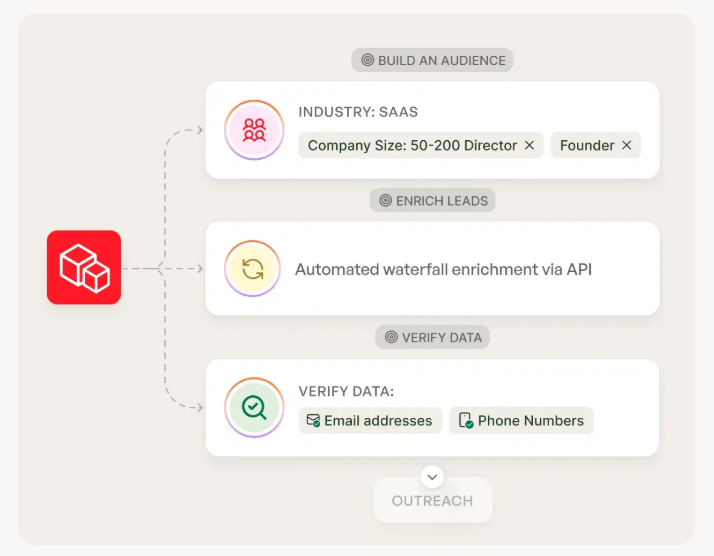
Here's the step that makes everything else in this article work: verifying your contact data before you pick up the phone or hit send.
Sales reps lose 27.3% of their time to bad contact data. That's more than a quarter of your selling hours wasted on wrong numbers, bounced emails, and outdated records. Your perfectly crafted opener is worthless if you're dialing a disconnected line. (See the best data enrichment services if you're fixing this at scale.)

Tools like Prospeo solve this at the source - 98% email accuracy, 125M+ verified mobile numbers, and a 7-day data refresh cycle compared to the 6-week industry average. One team saw their bounce rate drop from 35% to under 4% after cleaning up their data, and their pipeline tripled from $100K to $300K per week. (If deliverability is the bottleneck, start with email bounce rate.)
Your opener is only as good as your data. Fix the data first.

Your opener is only as good as your data. Try Prospeo free - 75 verified emails/month, no credit card required. Verify Your Prospect List Free
FAQ
What's the best opening line for a cold call?
Permission-based openers consistently outperform everything else. "I'll be honest, this is a cold call - give me 30 seconds to explain why I called you specifically" works because it's transparent and earns attention. Explaining why you're calling doubles your success rate compared to generic greetings.
How long should a sales conversation last?
Successful cold calls average 5 minutes 50 seconds; failed ones average 3 minutes 14 seconds. Aim for 5-7 minutes on a first call - long enough to qualify the prospect and establish next steps, short enough to respect their time and leave them wanting more.
Is cold calling still effective in 2026?
Yes - 69% of buyers accepted at least one cold call last year, and 49% prefer a phone call as first contact. What's dead is lazy, unresearched dialing. Personalized, trigger-based calls still convert.
How many discovery questions should I ask per call?
The sweet spot is 11-14 layered questions that build on what the prospect says in real time. 20+ questions feels like an interrogation and tanks engagement. Use the TED framework - "Tell me," "Explain," "Describe" - to keep answers open-ended.
How do I make sure I'm reaching the right person before calling?
Verify contact data before you dial. Bad data is the most fixable problem in outbound sales - tools with weekly refresh cycles and high accuracy rates exist specifically for this. A free tier from Prospeo gives you 75 verified emails per month to start cleaning up your list.