Lead Generation Offers in 2026: What to Create, What to Expect, What to Avoid
Getting someone to notice your form isn't the hard part anymore.
The hard part is making an offer that's actually worth the interruption in 2026.
Most teams are still shipping the same 14-page "Ultimate Guide" with a stock cover and zero templates inside, then acting surprised when conversion looks like a rounding error and sales says "these leads are trash."
If you mean affiliate pay-per-lead offers, jump to Economics. If you mean lead magnets for your own pipeline, start here.
Our picks (quick version)
If you want three offers you can launch fast (without a 12-week content project), do these in order:
Interactive quiz/assessment (MOFU, sometimes TOFU) Best when you need segmentation and personalization. Interactive offers routinely land in the 30-45% opt-in range because the "reward" is immediate: a result, not a PDF.
Webinar/masterclass (MOFU) Webinars still print leads when the topic is narrow and the speaker has real credibility. Expect 8-15% landing-page conversion for registrations, then 20-40% live attendance.
Template/swipe file (TOFU -> MOFU bridge) Templates have the highest perceived value per minute. When the template matches the page promise, 5-12% conversion is a solid band.
Hierarchy I'd bet on: interactive > webinars > templates > generic ebooks.
One ops note: whatever you capture, verify/enrich opt-ins before outreach so you don't torch deliverability on bad emails.
What "lead generation offers" means (and why the SERP is confusing)
"Lead generation offers" has two totally different meanings online, and Google mixes them together.
Meaning #1: Lead magnets / content offers.
This is the marketing meaning: a thing you give away (or partially give away) in exchange for contact info. Examples: a calculator, a webinar, a template, a trial, an assessment, a case study library.
In B2B, this is about earning permission to follow up and moving someone from anonymous traffic to a known lead.
Meaning #2: Affiliate / pay-per-lead offers. This is the performance marketing meaning: you drive traffic to someone else's funnel and get paid per lead. For example, Impact has shared payouts like Acorns at $10/lead, Allstate at $6-$20/lead, and Morning Brew at $3.50/lead.
That second meaning's real, but it's a different business model. If you're a SaaS company, an agency, or a services firm trying to build pipeline, you're almost always talking about meaning #1.
Clarifier: If you're building your own email list and routing leads to sales, you're creating lead magnets. If you're getting paid per signup for someone else's product, you're running affiliate lead gen offers.
Choose the right offer with a simple decision tree
Most offer strategy fails for one reason: it ignores intent. A TOFU visitor and a BOFU evaluator aren't opting in for the same reason, so don't force them into the same form.

Here's the decision tree I use.
Step 1: Identify stage (TOFU / MOFU / BOFU)
- TOFU (top of funnel): they're learning, browsing, comparing categories
- MOFU (middle): they're problem-aware and evaluating approaches/vendors
- BOFU (bottom): they're vendor-aware and trying to justify a decision
Step 2: Pick the offer type that matches intent
- TOFU offers: checklist, template, short video lesson, "starter kit," lightweight assessment
- MOFU offers: webinar/masterclass, in-depth guide, case study pack, benchmark report, interactive assessment with results
- BOFU offers: ROI calculator, trial, demo, audit, pricing explainer, implementation plan
Step 3: Decide gate vs ungate
- TOFU: default to ungated. Your job's reach + trust.
- MOFU/BOFU: default to gated if the asset's genuinely unique (proprietary, time-saving, or decision-enabling).
Step 4: Decide how much to ask for (fields)
- TOFU: 0-2 fields (or no form)
- MOFU: 2-4 fields
- BOFU: 5-7 fields (because you're routing to humans and you need context)
Step 5: Set the next CTA (don't end at "thanks")
- TOFU -> "Get the template" then "Read the next article" or "Take the assessment"
- MOFU -> "Watch the webinar" then "See examples" or "Try the calculator"
- BOFU -> "Get results" then "Book a call" or "Start trial"
Gating guidance that saves a lot of pain: webinar registration should be name + email unless it's truly proprietary (like a customer panel with sensitive numbers). Every extra field you add is a tax on attendance.
Lead generation offers benchmarks in 2026: what "good" converts at
Benchmarks are diagnostics, not promises.
Two benchmark sets matter because they show the same truth from different angles: channel mix changes the number, but the pecking order stays consistent.
Landing page visit -> opt-in conversion benchmarks (Digital SaaS B2B)
From Focus Digital's SaaS B2B table:

| Channel | Opt-in rate |
|---|---|
| 8.05% | |
| Google Ads | 5.02% |
| SEO | 3.36% |
| Meta ads | 3.52% |
| LinkedIn ads | 4.52% |
Paid channels convert lower than owned because the click's colder and the intent's noisier. That's normal. Budget for it instead of fighting it.
Channel benchmarks (broader lead gen view)
LeadCrafters' channel benchmarks:
| Channel | Opt-in rate |
|---|---|
| 6.5% | |
| Google search ads | 4.5% |
| SEO/content | 1.8% |
| Webinars/virtual events | 11.2% |
"Target bands" I use in audits (so you can diagnose fast)
- Email: Under 2% means offer/message match is broken or your list's stale. 6-10% is healthy.
- SEO: Under 1% means wrong intent or invisible CTA. 2-4% is solid.
- Paid search/social: Under 2% means ad promise and landing page aren't aligned. 3-6% is competitive.
- Webinars: Under 7% registration conversion means the topic's too broad or the page is too corporate. 10-15% means you've got a real hook.
When conversion's low, don't start by redesigning the page. Fix the offer and the promise first. A weak "why should I care?" can't be A/B tested into greatness.

You just built a high-converting quiz or webinar funnel. Now 15% of those opt-ins bounce because the emails are fake, mistyped, or dead. Prospeo's 5-step verification catches bad data before it hits your CRM - 98% email accuracy, refreshed every 7 days, at $0.01 per lead.
Stop torching sender reputation on the leads your offers worked hard to capture.
Best-performing offers (and what to ship first)
Real talk: the generic ebook era's over. People don't opt in for "10 tips to improve X" anymore. They get that from a search result, a chatbot, or a competitor's blog in 30 seconds.

What still works is participation (interactive) and immediacy (templates, calculators, audits).
That's why this hierarchy holds up:
- Interactive: 30-45%
- Webinars: 8-15%
- Templates: 5-12%
- Ebooks: 2-6%
Interact's 2026 report anchors the interactive category: quizzes average 40.1% start->lead, and once someone starts, 65% complete (based on 80M+ leads generated through their quizzes).
1) Interactive quiz/assessment (zero-party data + segmentation)
If you only build one offer this quarter, build this.
A good assessment does two jobs at once:
- it earns the opt-in, and
- it tells you what to say next.
The win is zero-party data: the prospect intentionally tells you their situation ("we're hiring SDRs," "we're missing pipeline," "we're expanding to EMEA"). That lets you segment follow-up without guessing, and it gives sales a reason to reach out that doesn't sound like a script.
We've tested this pattern across a few funnels, and the biggest lift doesn't come from the opt-in rate. It comes from the second-order effect: better routing, better follow-up, and fewer "what do you do again?" replies.
Build it like a product, not a personality test:
- 6-10 questions max
- 3-5 outcomes (not 20)
- results page that actually helps (no "you're a visionary leader" fluff)
- one clear next step per outcome (template, demo, calculator, or webinar)
The tradeoff: it's psychologically harder to write than a PDF because you have to commit to opinions. That's also why it wins.
2) Calculator/estimator (ROI framing; strongest for BOFU/MOFU)
Calculators convert because they feel like a shortcut to a decision.
Use calculators when:
- the buyer needs internal justification (budget owner, finance, leadership)
- your product has a clear "before/after" metric (time saved, cost reduced, revenue gained)
- you can anchor inputs to reality (not fantasy numbers)
Make the output shareable (this is where most calculators fail): email the results, include a "download as PDF" option, and add a "compare scenarios" toggle (current vs target) so a champion can paste it into an internal thread without rewriting your math.
If you're BOFU, gate the full report. Don't gate the first result screen. Instant gratification's the whole point.
3) Template/swipe file (highest perceived value per minute)
Templates are the fastest way to earn trust because they're immediately usable.
Good templates are specific:
- "Outbound sequence for CFOs at 200-1,000 employee SaaS"
- "Discovery call agenda for security reviews"
- "Job description template for first RevOps hire"
Bad templates are generic:
- "Cold email template" (for who? for what?)
If you want inspiration for how direct-response lead gen creatives frame templates and trainings, Swiped's archive is a fun rabbit hole: lead generation swipe file examples.
4) Webinar/masterclass (trust + narrative; plan for 20-40% attendance)
Webinars still work because they let you teach a point of view, show credibility live, and handle objections in real time.
Plan with reality:
- 20-40% attendance is normal
- the recording + follow-up sequence drives more pipeline than the live event
Two tactics that lift results:
- "Bring your numbers" framing (people show up when it's personalized)
- a tight promise: "In 45 minutes you'll leave with X"
5) Trial/demo/audit (qualification-heavy; requires routing + SLA)
Trials and audits are BOFU offers. Treat them like operational commitments, not "content."
If you can't route leads fast, respond within an SLA, and follow up like a human, don't run a trial/audit offer at scale yet.
I've watched teams generate a pile of "demo requests" and then take 48 hours to respond. That's not lead gen. That's pipeline sabotage.
Examples library: 18 offers you can copy (by intent)
If you want a menu you can steal from, start here. Each example includes the channel it fits best, whether to gate it, how many fields to ask for, and the next CTA that keeps momentum.

One sentence that'll save you weeks: if your average deal is below five figures, stop building "big" assets.
Ship a template, an assessment, or a calculator and move on.
TOFU (reach + trust) - keep friction low
| Offer example | Best channel | Gate? | Fields | Follow-up CTA |
|---|---|---|---|---|
| "1-page teardown checklist" (self-audit) | SEO | No | 0-1 | "Email me the editable version" |
| Industry glossary / "terms buyers confuse" | SEO | No | 0 | "Get the cheat sheet PDF" |
| RFP template starter pack | SEO + social | Hybrid | 1-2 | "Download the doc + see a filled example" |
| Security questionnaire starter pack | SEO | Hybrid | 1-2 | "Get the spreadsheet + mapping guide" |
| "First 30 days" onboarding plan template | Email + SEO | Hybrid | 1-2 | "Watch the 7-min walkthrough" |
| Cold outreach QA checklist (deliverability + copy) | Social | Yes (artifact) | 1-2 | "Run the checklist on your last campaign" |
MOFU (education + evaluation) - earn the gate
| Offer example | Best channel | Gate? | Fields | Follow-up CTA |
|---|---|---|---|---|
| Benchmark webinar ("2026 conversion rates by channel") | Email + paid social | Yes | 2-3 | "Get the slides + book Q&A" |
| Case study pack by role (CFO / RevOps / IT) | Yes | 2-4 | "See the implementation timeline" | |
| Interactive assessment with 3 outcomes | Email + paid | Yes | 2-3 | "Get your playbook for outcome #2" |
| "Migration plan" guide (tool/process change) | Search ads | Yes | 3-4 | "Get the checklist + timeline" |
| "Build vs buy" calculator | Search ads | Hybrid | 2-3 | "Email me the report PDF" |
| Live teardown ("bring your landing page") | Social | Yes | 2-3 | "Submit your page for the next session" |
BOFU (decision + justification) - qualify hard, respond fast
| Offer example | Best channel | Gate? | Fields | Follow-up CTA |
|---|---|---|---|---|
| ROI calculator + PDF export | Search ads | Yes (report) | 3-5 | "Book a 15-min ROI review" |
| Implementation plan generator (by stack) | Search + email | Yes | 4-6 | "Confirm requirements + timeline" |
| "Pricing explainer" (real scenarios + ranges) | Search | Hybrid | 2-4 | "Compare packages for your team size" |
| 30-minute audit (ads, funnel, outbound, SEO) | Search + retargeting | Yes | 5-7 | "Pick a time + share access" |
| Trial with guided setup | Search | Yes | 4-6 | "Start setup + invite teammate" |
| Security review fast-track | Search | Yes | 4-6 | "Get the security packet + call" |
What to avoid with lead generation offers (2026 anti-patterns)
This is where teams light money on fire.
1) Scammy UX that screams "I don't trust my own product." Countdown timers, fake scarcity, flashing popups, and "only 3 spots left" banners don't increase quality. They increase regret. You'll get more form fills, then you'll spend the next month wondering why nobody replies.
2) Deposit-first lead gen agencies with vague retainers. I'm blunt about this because I've seen it burn good teams: wiring deposits to strangers for "guaranteed leads" is a great way to end up with rented lists, burned domains, and a Slack channel full of excuses. If you hire help, pay for clear deliverables (assets, landing pages, creative, ops) or performance with transparent tracking.
3) Always-on discounts as the "offer." A permanent discount trains buyers to wait and tells the market you're overpriced. Discounts belong at BOFU with a real reason (annual prepay, migration window, end-of-quarter procurement), not as your lead magnet.
4) Gating thin content. If the asset is basically a blog post with a cover page, don't gate it. Thin gates kill trust, hurt sharing, and starve SEO. Gate the artifact (spreadsheet, template, calculator export), not the explanation.
5) Asking for phone... then not calling. Nothing tanks goodwill faster. If you ask for a phone number, follow up fast and like a human. If you can't, remove the field.
6) Dumping unverified opt-ins into bulk sequences. This is the quiet deliverability killer. Bad emails create bounces; bounces wreck sender reputation; sender reputation makes every future offer convert worse. Verify first, then scale.
Form strategy: qualify without killing conversion
Forms are where good offers go to die.
Two rules-of-thumb that hold up in practice:
- More than 3 fields reduces conversion 40-60% in most industries.
- 3-field forms convert 27% better than 5-field forms.
So the goal isn't "collect everything." The goal is "collect enough to take the next step."
A field-count framework that works
RemWebSolutions' framework maps cleanly to offer value:
TOFU: 1-2 fields Email, maybe first name.
Webinar / mid-tier MOFU: 3-4 fields Name, email, company, job title.
Trial / consult / audit: 5-7 fields Add phone, company size, use case, timeline, maybe one qualifying question.
Practical rules that keep you honest
- Every field needs a downstream use. If sales won't use it, don't ask for it.
- Don't ask for phone unless you'll call fast. Otherwise it feels like a trap.
- Use one qualifier question max on first touch (dropdown beats free text).
- Make "work email" explicit if you sell B2B. It reduces junk.
And if you're tempted to add "budget" to a MOFU webinar form: don't. You're not qualifying; you're filtering out the exact people you want to educate.
Gated vs ungated (and the hybrid model that usually wins)
Gating is a trade: you get more captured leads, but you lose reach and trust.
AvidDemand's default is right:
- TOFU ungated
- MOFU/BOFU gated (when the asset's truly valuable)
Here's the part most teams miss: ungated pages earn links and shares; gated pages earn form fills. You want both.
The hybrid gating recipe (what usually wins)
- Ungate the core content (the page should stand alone)
- Add a contextual inline CTA: "Want the spreadsheet/template/calculator output? Send it to your inbox."
- Gate the bonus artifact (template, worksheet, full report, recording, benchmark spreadsheet)
- Retarget visitors who engaged but didn't opt in
If you're still gating TOFU by default, you're choosing short-term lead volume over long-term demand. That's a bad trade in 2026.
Channel playbooks: match the offer to distribution
Channel mismatch is the silent killer. The same offer can convert 3x differently depending on where the click came from.
Quick channel-to-offer fit table
| Channel | Best offer types | Typical friction |
|---|---|---|
| Email list | Webinar, quiz, calculator | Medium |
| SEO/content | Template, ungated guides | Low |
| Paid search/social | Calculator, webinar | Medium |
| On-platform forms | Webinar, template | Lowest |
Also: Focus Digital's point holds: paid channels convert 30-40% lower than email on average.
Email list (highest opt-in rates; segmentation wins)
Email is your highest-intent distribution channel because you already earned attention once.
What works:
- segment by role/use case and change the CTA ("Ops playbook" vs "Exec summary")
- send to a warm segment first to validate the offer
- use a plain-language subject line that matches the landing page promise
If your email opt-in rate is low, the offer's too generic for that segment. Fix the offer, not the button color.
SEO/content (ungated-first + contextual CTAs)
SEO traffic is intent-driven and impatient.
What works:
- ungated-first content that answers the query
- CTAs placed where the reader naturally needs the asset (mid-article, not just the footer)
- "bonus artifact" hybrid gating (worksheet, template, spreadsheet)
Paid search & paid social (message-match + CPL reality)
Paid clicks are expensive and unforgiving.
What works:
- tight message match (ad promise = headline = first screen)
- BOFU-ish offers for search ("ROI calculator," "pricing guide," "implementation checklist")
- MOFU offers for social ("live teardown," "benchmark webinar")
Broad targeting brings more junk leads. That's the cost of scale.
On-platform lead forms vs landing pages (when to use each)
On-platform lead forms reduce friction because they're pre-filled. Completion rates of 10-15% are common when you keep it under five fields.
Use on-platform forms when:
- you need volume fast
- the offer is simple (webinar, template)
- you have a strong nurture sequence
Use landing pages when:
- you need deeper qualification
- you're selling something complex
- you want full control over the narrative and next-step CTAs
Economics: what leads cost now (and when affiliate offers make sense)
Conversion rate's only half the story. The other half is cost per lead (CPL), and CPL has moved up across a lot of categories.
CPL benchmarks by industry (paid vs organic)
First Page Sage's dataset (Jan 2022-Jun 2025) is one of the cleaner CPL references:
| Industry | Paid CPL | Organic CPL | Blended |
|---|---|---|---|
| B2B SaaS | $310 | $164 | $237 |
| Legal | $784 | $516 | $649 |
| Financial services | $761 | $555 | $653 |
| HVAC | $115 | $69 | $92 |
| Solar | $217 | $196 | $206 |
Interpretation:
- If you're in B2B SaaS, a $200-$300 blended CPL is normal. Don't panic. Make sure your lead-to-sale motion can support it.
- In legal/finance, CPLs are brutal, which is why qualification and speed-to-lead matter so much.
When affiliate-style lead gen offers make sense
Affiliate/pay-per-lead offers make sense when:
- you can't monetize the lead yourself (no sales motion)
- you have traffic but no product-market fit yet
- you're a publisher and want predictable revenue per signup
Payout reality from vCommission ranges:
- Personal injury: $100-$300/lead
- Solar: $40-$100/lead
- Mortgage refi: $60-$120/lead
Compliance + measurement in 2026 (don't turn offers into legal debt)
Offers create data. Data creates obligations. Ignore that, and you're building legal debt.
The enforcement backdrop's real:
- EUR2.8B+ in GDPR fines since 2018
- GDPR max penalty: EUR20M or 4% of annual revenue
- CCPA/CPRA intentional violation: $7,988
- 20 US states now have comprehensive privacy laws covering ~150M Americans (43%)
Compliance checklist (the non-negotiables)
- No pre-checked consent boxes. Consent must be freely given and unambiguous.
- Store consent records. Timestamp, source, what they agreed to.
- Use double opt-in when you need strong proof of consent (and to reduce fake emails).
- Make unsubscribe easy and honor it fast.
- Minimize data collection. Don't collect what you can't justify.
Measurement changes that hit lead gen offers
Attribution's messier now.
What changes in practice:
- block non-essential cookies/pixels until opt-in (GDPR standard)
- use a CMP and implement Google Consent Mode v2
- honor Global Privacy Control (GPC) opt-out signals
- expect retargeting pools to be smaller and slower to build
If you judge offers purely by last-click ROAS, you'll kill the offers that create pipeline and keep the ones that only harvest existing demand.
Post-opt-in workflow: turn signups into usable pipeline
A lead magnet opt-in isn't revenue. Focus Digital's SaaS lead magnet benchmark puts lead-to-sale at 0.67%. That's clarifying: most of your performance comes from what happens after the form.
This is the ops SOP I'd run.
Micro case #1: the "webinar that looked fine" (and still underperformed)
A B2B SaaS team ran a solid webinar topic and hit ~11% registration conversion. Pipeline was still weak. The problem wasn't the landing page.
- Form: 6 fields + phone (for a webinar)
- Follow-up: one generic "thanks" email, then an SDR call two days later
- Outcome: low attendance, low reply rates, and a pile of stale leads
Fix: cut the form to 3 fields, send a 3-email reminder sequence, and route "attended + asked a question" to sales the same day. Same topic, same speaker. Dramatically better meetings.
Micro case #2: the "template that quietly became a pipeline engine"
A services firm published an ungated SEO article and offered a gated spreadsheet template as the artifact.
- Page: ungated, ranked for high-intent queries
- CTA: "Send me the spreadsheet" mid-article
- Follow-up: instant delivery + a 7-minute walkthrough + a "reply with your numbers" prompt
- Outcome: fewer total leads than a hard gate, but far higher reply rates and cleaner qualification
That hybrid model's boring.
It also works.
Confirm + tag the lead (source, offer, stage)
- Create/merge the contact in your CRM
- Tag source (channel), offer (asset), and stage (TOFU/MOFU/BOFU)
- Set the first nurture step based on the offer outcome (especially for quizzes/calculators)
If you don't tag cleanly, you can't learn which offers create pipeline vs vanity leads.
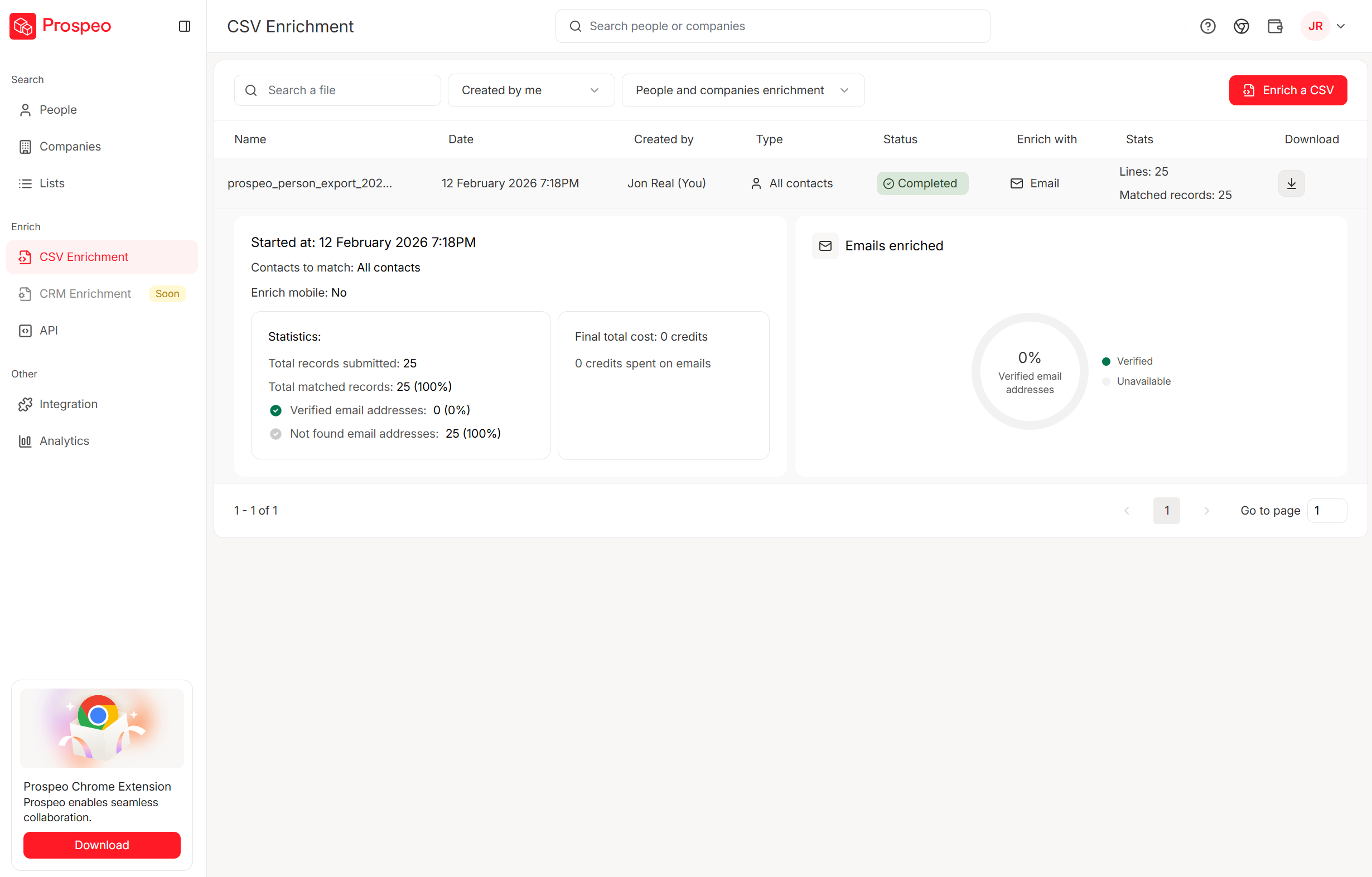
Verify email + enrich record (before any bulk send)
Before you drop new opt-ins into a sequence, make sure they're reachable. We've seen too many teams "scale nurture" on top of bad data, then act confused when inbox placement falls off a cliff.
Prospeo (the B2B data platform built for accuracy) is a clean way to do this step without turning it into a RevOps science project: push new form fills in, verify emails at 98% accuracy, enrich missing firmographics, then route the lead to the right owner with the right follow-up. Prospeo includes 300M+ professional profiles, 143M+ verified emails, a 7-day refresh cycle, and an enrichment match rate where 83% of leads come back with contact data.
If you're doing this manually in spreadsheets, stop. You're wasting time and quietly hurting deliverability.
Route fast (rules + SLA)
Speed-to-lead is a compounding advantage.
Set routing rules by:
- territory (geo)
- segment (company size, industry)
- intent (quiz result, calculator output)
- lifecycle stage (trial vs webinar)
Then set an SLA:
- BOFU (trial/demo/audit): 5-15 minutes
- MOFU (webinar): same day
- TOFU (template): automated nurture + optional SDR review
If you can't hit the SLA, don't run BOFU offers at scale yet - use speed-to-lead metrics to set realistic targets.
Progressive profiling (what to ask next + triggers)
Start with name + email. Then earn the right to ask more.
A progressive profiling sequence that works:
- Opt-in: name + email
- Email #1 or results page: company + role (optional)
- Email #2 or "bonus download": industry + team size
- BOFU trigger (clicked pricing/demo): phone + timeline + use case
Next-step CTA (book a call, watch demo, calculator result email)
Every offer needs a next rung on the ladder.
A simple mapping:
- Template -> "Watch the 7-minute walkthrough"
- Webinar -> "Get the checklist + book a Q&A slot"
- Quiz -> "See your result + recommended playbook"
- Calculator -> "Email me the report + compare scenarios"
- Trial/audit -> "Pick a time + confirm requirements"
If you want a clean funnel structure reference for mapping TOFU/MOFU assets to next steps, FluentCRM's overview is a solid template: lead magnet funnel structure.
Great lead gen offers solve the conversion problem. Bad data solves nothing. Prospeo enriches every opt-in with 50+ data points - job title, intent signals, direct dials - so sales knows exactly what to say next. 92% match rate, no contracts, no sales calls.
Turn anonymous form fills into fully enriched, sales-ready contacts in seconds.
FAQ
What is a lead generation offer?
A lead generation offer is a valuable asset or experience exchanged for contact info, like a template, webinar, calculator, quiz, trial, or audit, so you can follow up with permission. In performance marketing, "offers" can also mean pay-per-lead deals where you're paid per signup for someone else's funnel.
What's a good conversion rate for a lead magnet in 2026?
For most B2B funnels in 2026, aim for 6-10% from email, 2-4% from SEO, 3-6% from paid search/social, and 8-15% webinar registration conversion. Interactive quizzes are the outlier: 30-45% opt-in is common, with a 40.1% start->lead benchmark.
Should I gate my content or keep it ungated?
Keep TOFU pages ungated to earn reach, links, and trust, and gate only the "artifact" (spreadsheet, template, calculator export) when it's genuinely time-saving. For MOFU/BOFU, gating can work, but the hybrid model usually wins: ungate the core content, then gate the bonus download to capture leads.
What's a good free tool to verify leads from opt-ins before outreach?
Prospeo's free tier includes 75 emails + 100 Chrome extension credits/month. A practical workflow is: capture -> tag source/asset -> verify emails -> enrich firmographics -> route by SLA, so you cut bounces and avoid burning domains.
Summary: build offers that match intent, then win with ops
Stop treating "offer created" as the finish line. The teams that win in 2026 build lead generation offers that match intent, keep forms light, and run a tight post-opt-in loop that turns signups into conversations - backed by clean data hygiene and email deliverability basics.
If you want to go deeper on the offer + distribution mechanics, start with website lead generation, then tighten your routing with a lead qualification process.
Finally, if you're scaling outreach after opt-ins, use a deliverability-first stack (see cold email outreach tools) and keep your CRM clean (see how to keep CRM data clean).