

The Lead Qualification Checklist Your Sales Team Can Actually Use
Your best rep just spent 40 hours this month pitching a prospect who never had budget approval. The discovery calls were great, the demo went well, and then - silence. That's not a pipeline problem. That's a qualification problem, specifically the absence of a repeatable checklist your team can follow before investing real time.
B2B SaaS converts just 1.1% of website visitors into leads. When top-of-funnel is that narrow, every lead your team touches needs to count. Below you'll find three things: a disqualification-first checklist you can copy today, a scoring model with actual point values, and the data quality layer that makes both work.
Why Qualification Matters
MQL-to-SQL conversion rates vary wildly by industry, and most teams sit at the low end because they qualify too loosely.
| Industry | MQL-to-SQL Rate |
|---|---|
| Consumer Electronics | 21% |
| FinTech | 19% |
| Automotive | 18% |
| Healthcare | 13% |
| Oil & Gas | 12% |
Top performers with behavioral scoring and fast follow-up reach around 40% MQL-to-SQL conversion. The difference? They disqualify aggressively and respond quickly. Following up within the first hour yields roughly 3x the conversion rate compared to waiting 24 hours. That's not a marginal improvement - it's a multiplier you get for free just by being fast.
Most teams treat qualification as a gate. The best teams treat it as a filter. A skinny funnel with high intent density will always outperform a bloated pipeline full of "maybes." Experienced reps on r/sales push the same idea: qualify on requirements and urgency first, not vibes.
The Checklist: Copy It Today
Copy this into your CRM and train your team on it this week. Every question maps to one of four buckets: Problem, Impact, Decision, and Timeline. Skip any of them and you're flying blind.
Problem
- "What's the biggest challenge your team is facing right now?"
- "How long has this been a problem?"
- "What have you tried so far to solve it?"
- Can the prospect articulate a specific, named problem - not just "exploring options"?
Impact
- "How is this issue affecting your bottom line?"
- "How much revenue gets lost every month because of this?"
- Can the prospect quantify the cost of inaction - in dollars, hours, or headcount?
Decision
- "Who else has to weigh in on this?"
- "What do you typically do before selecting a new solution?"
- Is there an identified economic buyer, or is this person "just researching"? (If you're struggling to map buying roles, see economic buyer vs technical buyer.)
Timeline
- "When are you anticipating having a solution in place?"
- "Any deadlines we should be aware of?" - regulatory, fiscal year, board mandate
- Is there an external urgency driver, or is the timeline "whenever"?
The 60-Second Disqualification Check
Before you invest a full discovery call, run this three-strike rule:
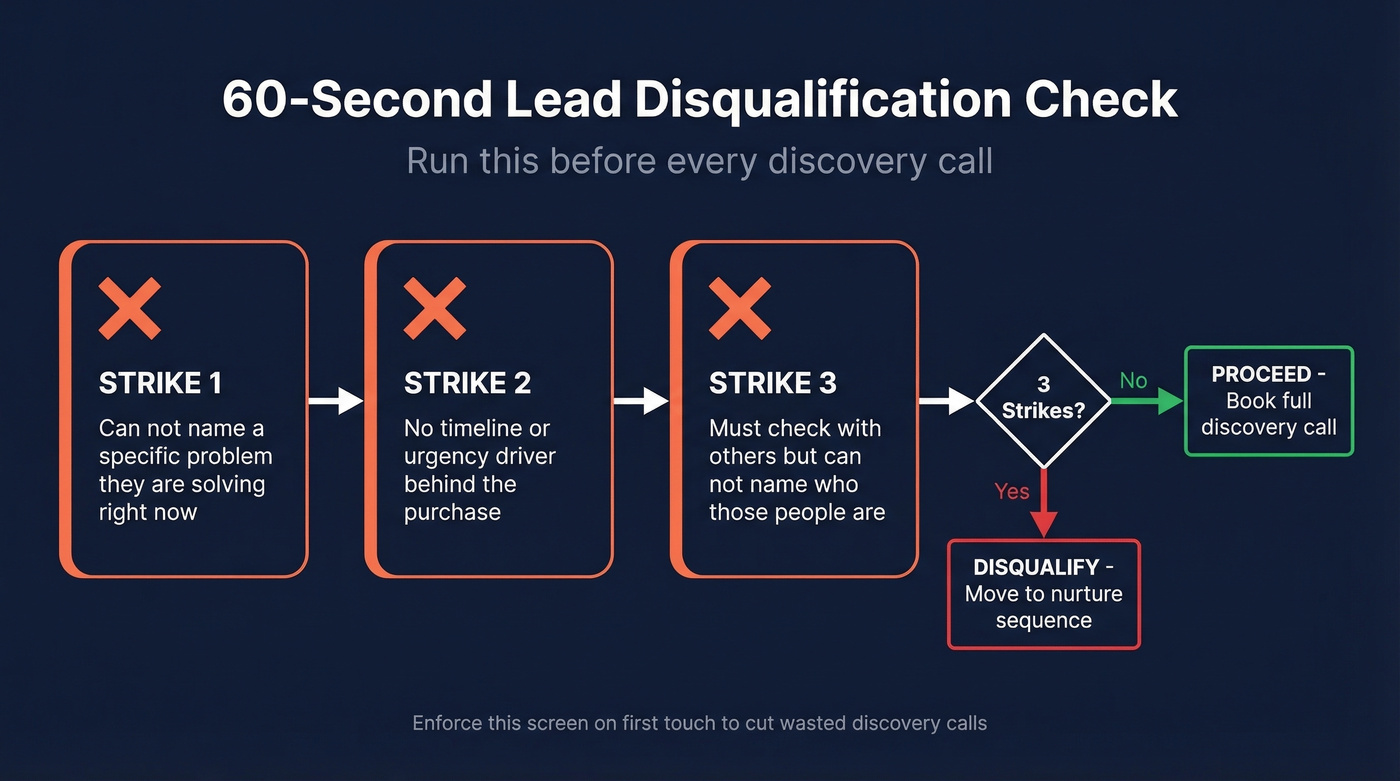
- Strike 1: Can't name a specific problem they're solving right now.
- Strike 2: No timeline or urgency driver.
- Strike 3: Must "check with others" before any next step - and can't name who.
Three strikes = disqualify. Move them to nurture and spend your time on leads who can answer these questions. We've seen teams cut wasted discovery calls dramatically just by enforcing this screen on the first touch.
Want this as a printable one-pager? Copy the checklist above into a Google Doc and keep it as a single-page internal SOP.
Pick the Right Framework
A $5k SMB deal and a $200k enterprise contract require fundamentally different qualification rigor. BANT is fine for inbound triage. It's dangerously shallow for anything else.
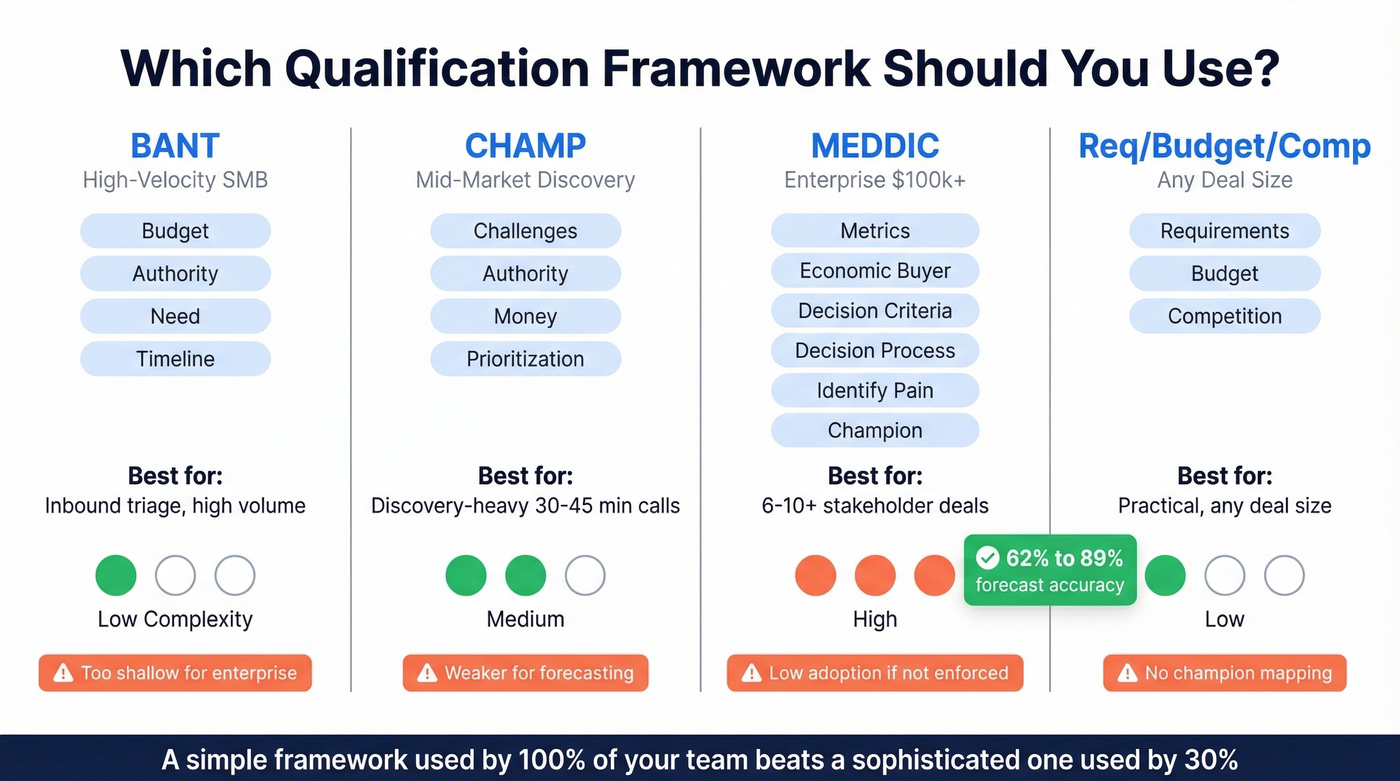
BANT - High-Velocity SMB Triage
Budget, Authority, Need, Timeline. Fast, simple, learnable in an afternoon. Use it when you're processing high volumes of inbound leads and need to sort quickly. The limitation: BANT treats qualification as an interrogation rather than a conversation, and for deals with multiple stakeholders, it falls apart fast.
CHAMP - Mid-Market Discovery
CHAMP starts with Challenges instead of Budget, making it buyer-centric. That's a better fit for discovery-heavy sales motions where the prospect doesn't know their budget yet - they know their pain. If your reps run 30-45 minute discovery calls before proposing anything, CHAMP gives them a natural conversation structure. The tradeoff is weaker forecasting rigor compared to MEDDIC.
MEDDIC - Enterprise Deals
One team switching from BANT to MEDDIC improved forecast accuracy from 62% to 89%. That's why enterprise teams swear by it. When buying committees include 6-10+ stakeholders, you need a framework that maps the entire decision structure: Metrics, Economic Buyer, Decision Criteria, Decision Process, Identify Pain, Champion. The tradeoff is complexity - if your reps won't use it consistently, it's worthless. (If you're implementing it, steal these MEDDIC discovery questions.)
The Practitioner's Alternative
A 20-year sales veteran on r/sales shared a simpler framework worth stealing: Requirements, Budget, Competition. Under Requirements, dig into urgency drivers - regulatory deadlines, audits, breaches, top-down mandates. Under Competition, compare yourself against alternatives on the prospect's actual requirements. If you lose on core requirements, disqualify yourself.
The key insight from that thread: relationship isn't a qualification criterion. It's a nice-to-have. Junior reps especially need to hear this.
| Framework | Best For | Complexity | Limitation |
|---|---|---|---|
| BANT | SMB inbound triage | Low | Too shallow for enterprise |
| CHAMP | Mid-market discovery | Medium | Weaker for forecasting |
| MEDDIC | Enterprise ($100k+) | High | Low adoption if not enforced |
| Req/Budget/Comp | Any deal size | Low | No champion mapping |
Here's the thing: a simple framework used by 100% of your team beats a sophisticated one used by 30%. Start with BANT or the practitioner model, then graduate to MEDDIC when deal complexity demands it.
Build a Lead Scoring Model
Frameworks tell reps what to ask. Scoring models tell your CRM what to do with the answers. Here's a template with actual point values you can implement this week. (If you want a deeper walkthrough, use this lead scoring guide.)
| Signal | Points | Category | Notes |
|---|---|---|---|
| Demo/trial request | +100 | Intent | Route to sales immediately |
| Product trial activation | +80 | Intent | Strong PQL signal |
| Security review initiated | +60 | Intent | Deep buying signal |
| Pricing page visit (2x+) | +50 | Intent | High purchase signal |
| Webinar attendance | +30 | Intent | Engaged but early-stage |
| Whitepaper download | +10 | Intent | Awareness-stage only |
| ICP title match | +40 | Fit | VP+ at target company |
| Revenue in target range | +30 | Fit | Based on your ICP definition |
| Out-of-ICP title | -20 | Fit | Intern, student, consultant |
| 30-day inactivity | -30 | Decay | Re-engage or move to nurture |
| Unsubscribed from emails | -50 | Decay | Don't force it |
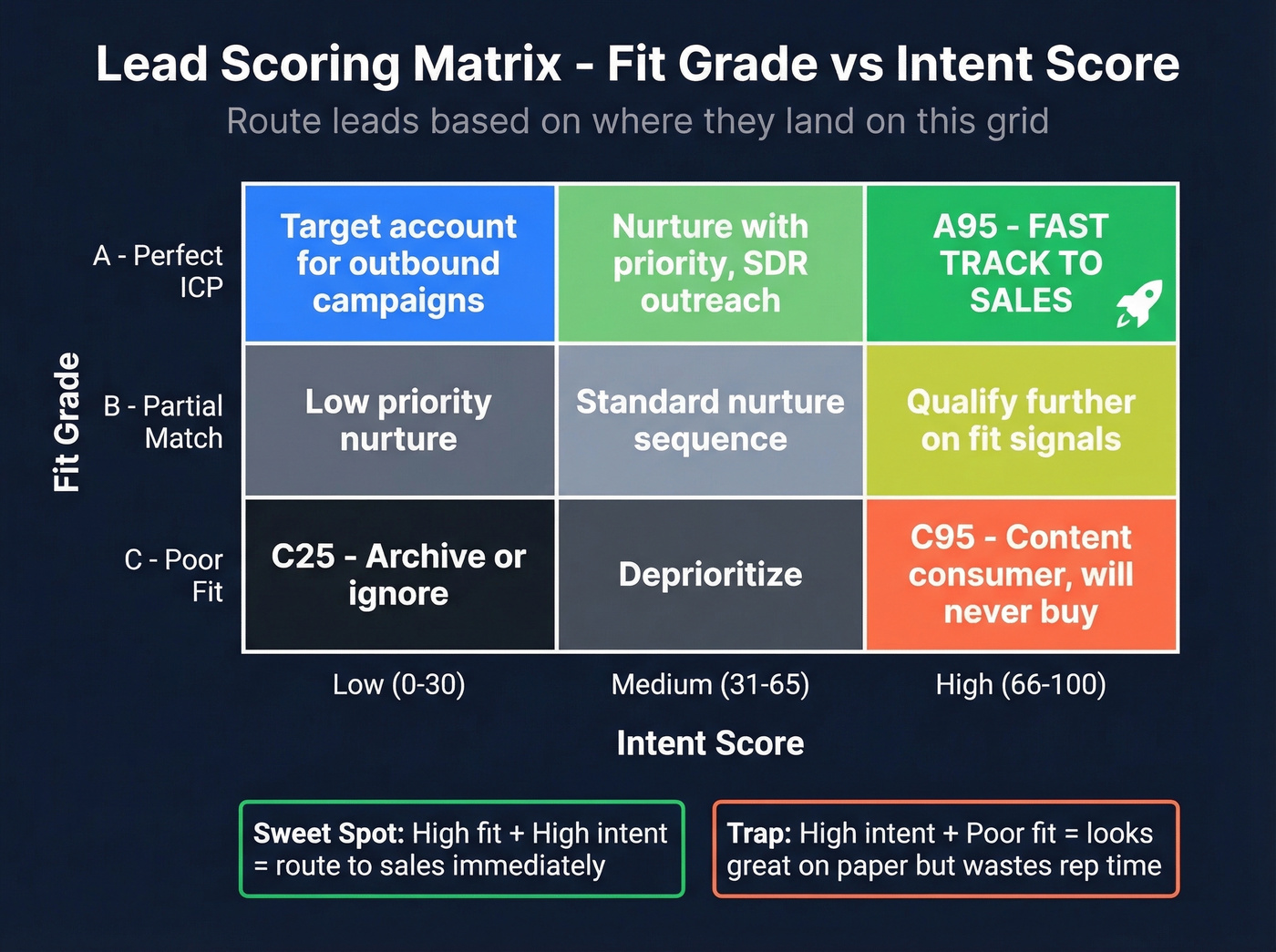
The key distinction is fit grade versus intent score. A lead can be a perfect ICP match (A-grade fit) with zero engagement (score of 5) - that's a target account for outbound, not an MQL. Conversely, a C-grade fit with a score of 95 is someone consuming your content who'll never buy. The sweet spot is A95: high fit, high intent. C25 goes to nurture.
Your MQL threshold should be driven by sales capacity, not an arbitrary number. If your team can handle 50 qualified meetings a month, set the threshold so roughly 50 leads cross it. One team we spoke with found that tightening title filters while lowering the activity threshold increased their MQL-to-meeting rate by 13%.
In HubSpot, create a custom property for each fit signal and use workflows to sum scores automatically. In Salesforce, build lead scoring rules in Pardot or Marketing Cloud. The CRM doesn't matter - what matters is that every signal from the table above maps to a field your system can act on. (If your pipeline is messy, fix the underlying lead status setup first.)
For teams ready to go further, a systematic review of 44 studies found that predictive scoring models - using decision trees and logistic regression - consistently outperform rules-based approaches. Dedicated AI scoring tools range from free tiers to $10,000+/year, but most teams get 80% of the value from their existing CRM's native scoring plus clean input data. (More on this in B2B predictive analytics.)

A scoring model is useless if half your qualified leads bounce. Prospeo delivers 98% email accuracy with a 7-day refresh cycle, so every lead that passes your checklist gets a real inbox - not a dead end.
Stop qualifying leads you can't actually reach.
Disqualification Rules and Red Flags
The best reps don't just qualify well - they disqualify fast.
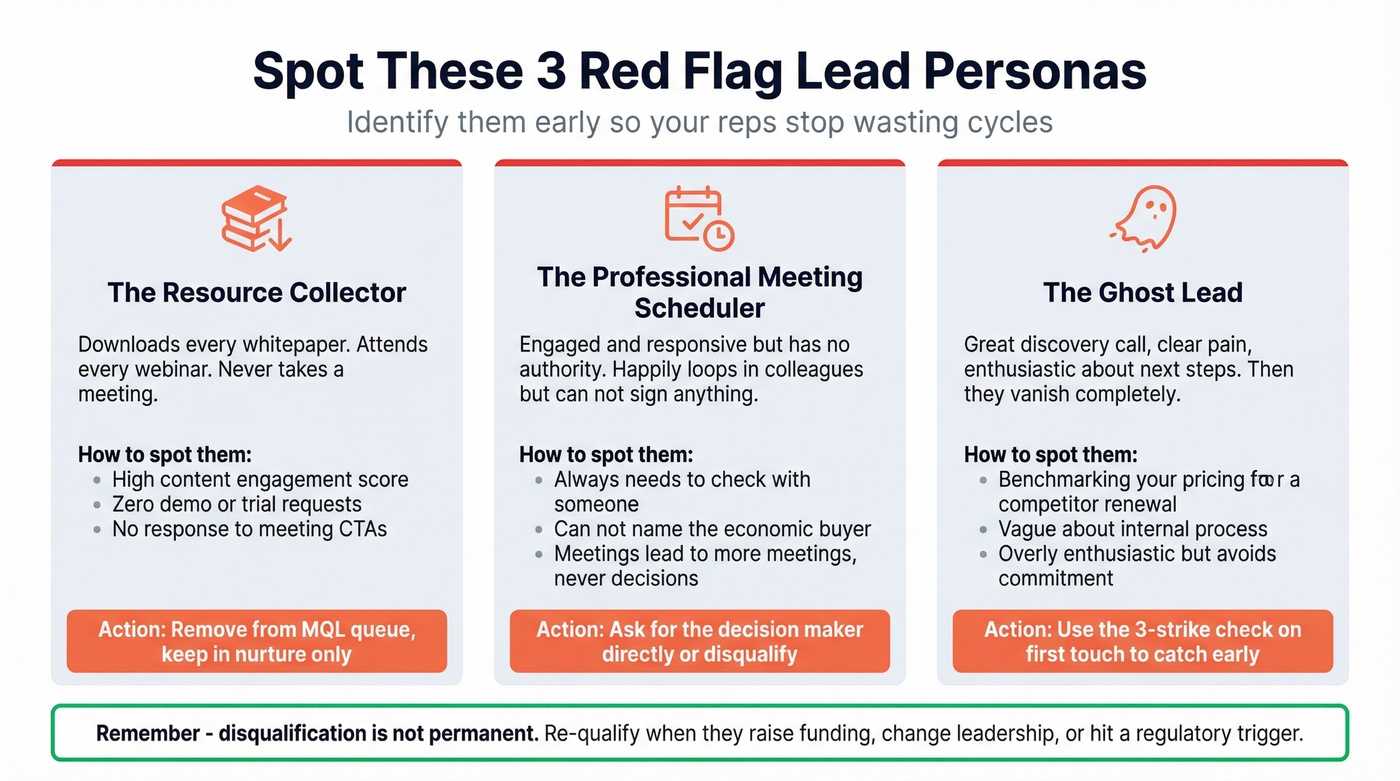
Resource collectors show high engagement but zero buying intent. They'll download every whitepaper, attend every webinar, and never take a meeting. Their score looks great on paper. Their intent is zero.
Professional meeting schedulers are engaged and responsive but have no authority. They'll happily take your call, loop in a colleague, and schedule a follow-up - but they can't sign anything and aren't influencing anyone who can.
We've all had the "ghost lead." Great discovery call, engaged prospect, clear pain, enthusiastic about next steps. Then they vanish. Turns out they were benchmarking your pricing for their current vendor's renewal negotiation. The three-strike rule from the checklist catches most of these before you invest a full sales cycle.
When to recycle a disqualified lead: If their company raises a funding round, changes leadership, or hits a regulatory trigger, re-qualify. Disqualification isn't permanent - it's a timestamp on their readiness. (To operationalize this, build a simple lead generation workflow for recycle triggers.)
Clean Data Makes the Checklist Work
Most qualification guides hand you a framework and call it a day. That's like giving someone a recipe without checking if the ingredients are fresh.
If 35% of your emails bounce, reps can't reach leads to qualify them. If firmographic data is stale, your scoring model assigns fit grades based on last year's headcount. Biotech pipelines see 22% monthly data decay - meaning a quarter of your pipeline data goes bad every 30 days. Your checklist is only as good as the data underneath it. (If you're building your ICP rules, start with an ideal customer profile template.)
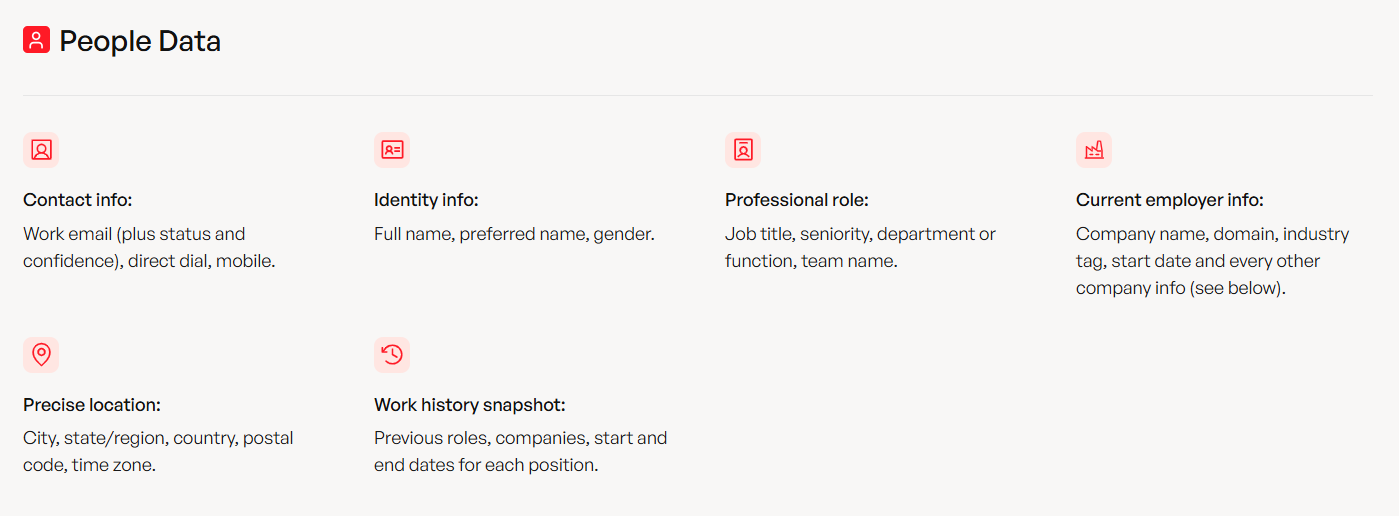
Meritt went from a 35% bounce rate to under 4% after switching to Prospeo, and their pipeline tripled from $100K to $300K per week. That's the difference between a qualification process that works and one running on bad inputs. With 98% email accuracy and native integrations into HubSpot and Salesforce, enriched data feeds directly into the scoring models you've already built. (If you're evaluating vendors, compare options in data enrichment services.)
You just built a disqualification-first process. Now feed it leads worth qualifying. Prospeo's 30+ filters - buyer intent, job changes, headcount growth, technographics - let you pre-qualify before your reps ever pick up the phone.
Pre-qualify with intent data across 15,000 topics.
Common Mistakes That Break Qualification
Forwarding inbound leads straight to sales without sorting. A whitepaper download from a student and a demo request from a VP of Operations require completely different responses. Without even basic A/B/C bucketing, your reps waste cycles on leads that should've been filtered at the top.
Routing all leads through an untrained gatekeeper. When a receptionist or junior admin is the first human touch, they can't qualify - they can only forward. That's a bottleneck with no filter attached.
Over-qualifying versus under-qualifying. Over-qualification slows deals and frustrates prospects ready to buy. Under-qualification inflates your pipeline and destroys forecast accuracy. The fix: align marketing and sales on a shared definition of "qualified" - and review it quarterly. If marketing thinks an MQL is anyone who fills out a form, and sales thinks it's someone with budget approval, you don't have a lead problem. You have an alignment problem. (If you're seeing systemic issues, audit your sales pipeline challenges.)
How to Prioritize Qualifying Questions
Not every question on your checklist carries the same weight. When call time is limited - especially on a cold outbound touch - you need to prioritize ruthlessly.
Lead with Problem and Timeline. Those two buckets expose urgency faster than anything else. If a prospect can describe a specific pain and attach a deadline to solving it, Impact and Decision questions can wait for the next call. If they can't? You've saved yourself 25 minutes of discovery on a dead lead. (For more prompts, pull from these discovery questions.)
Let's be honest - most reps ask too many questions and listen to too few answers. The checklist isn't a script to read top to bottom. It's a map. Use it to navigate the conversation, not to run an interrogation.
FAQ
What should a lead qualification checklist include?
At minimum: questions covering Problem, Impact, Decision, and Timeline - plus a disqualification screen. The checklist above covers all four buckets with specific questions you can paste directly into your CRM. The best checklists also include scoring criteria so reps aren't making subjective judgment calls.
What's the difference between MQL and SQL?
An MQL shows marketing engagement - downloads, webinar attendance, repeat site visits. An SQL has been vetted by sales against criteria like budget, authority, need, and timeline. The handoff happens when a lead crosses your scoring threshold, and both teams need to agree on what that threshold is.
Which qualification framework should I start with?
BANT for SMB inbound triage, CHAMP for mid-market consultative sales, MEDDIC for enterprise deals with 6+ stakeholders. Start simple and graduate to complex when deal size demands it. A framework your whole team uses beats a perfect one that only two reps follow.
How do I keep scoring data accurate over time?
Use an enrichment tool with a short refresh cycle. Industry average is 6 weeks; look for providers that refresh weekly and return enough data points per contact to keep fit scores current instead of decaying silently in your CRM.
How many leads should I disqualify?
If you're not disqualifying at least 30-40% of inbound leads, your criteria are probably too loose. A skinny funnel with high intent density outperforms a bloated pipeline every time. Disqualifying more leads means your reps spend time on prospects who actually close.