

Best Mass Email Platforms in 2026, Ranked by What Actually Matters
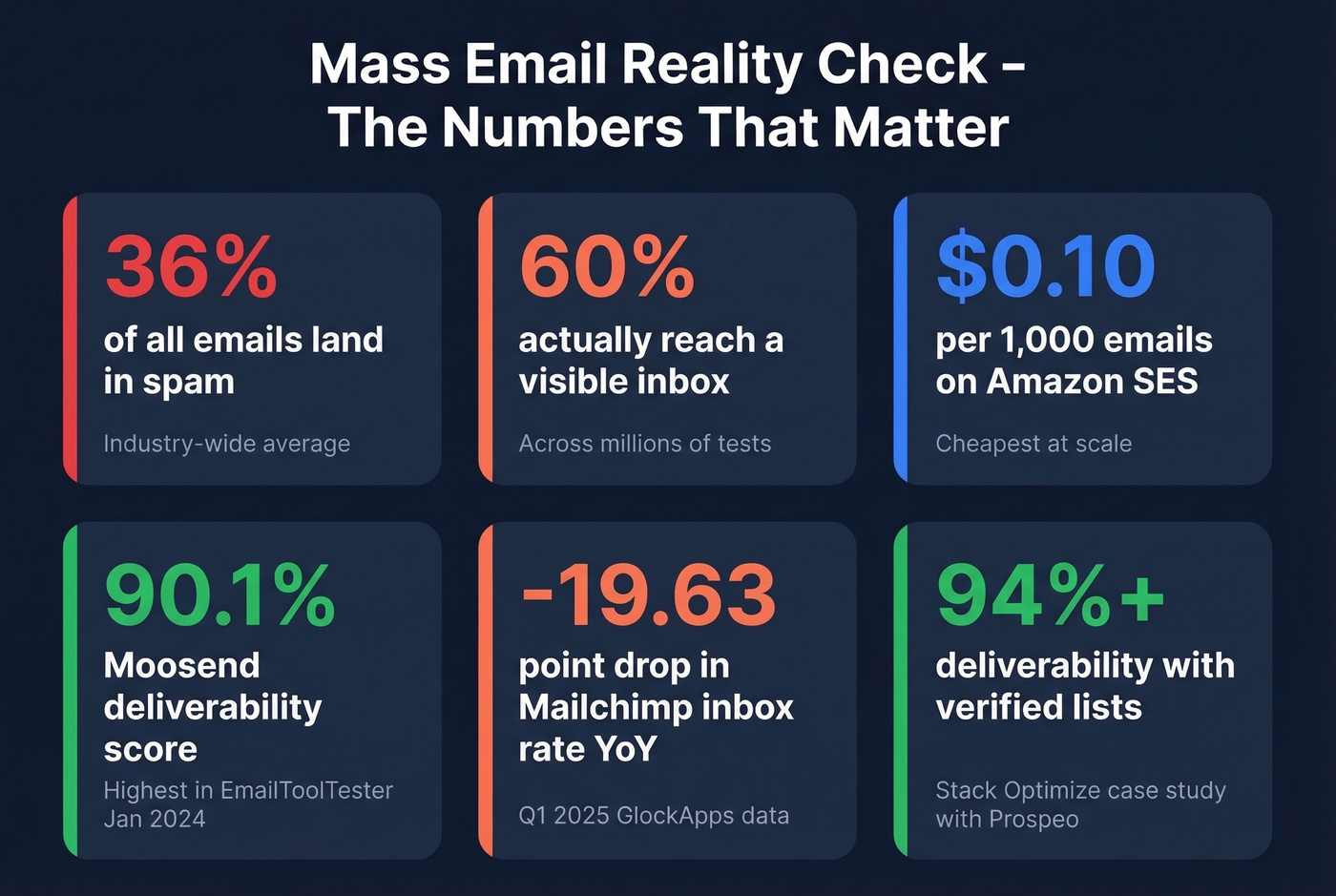
Across millions of email tests, only 60% of messages reached a visible mailbox location. 36% landed in spam. The rest vanished entirely. Choosing the right mass email platform isn't a features decision - it's a deliverability decision, and most teams get it wrong by optimizing for the wrong things.
The gap between SMTP "delivered" and "actually visible in an inbox" is enormous. Most dashboards will happily show a send as successful even when the message ends up in spam or a non-primary tab. The tools below are ranked by what actually moves the needle: inbox placement rates, cost at real-world volumes, and whether they'll help or hurt your sender reputation as you scale.
Here's the thing: the biggest deliverability lever isn't your sending platform. It's your list. A pristine ESP can't save you from bouncing off a big chunk of your contacts because the data's stale. We've seen teams spend months optimizing subject lines and send times while ignoring the fact that 20-30% of their list was dead addresses and spam traps. That's why list verification comes first - before any sending tool matters. (If you want the full system, start with our Email Deliverability Guide.)
Our Picks
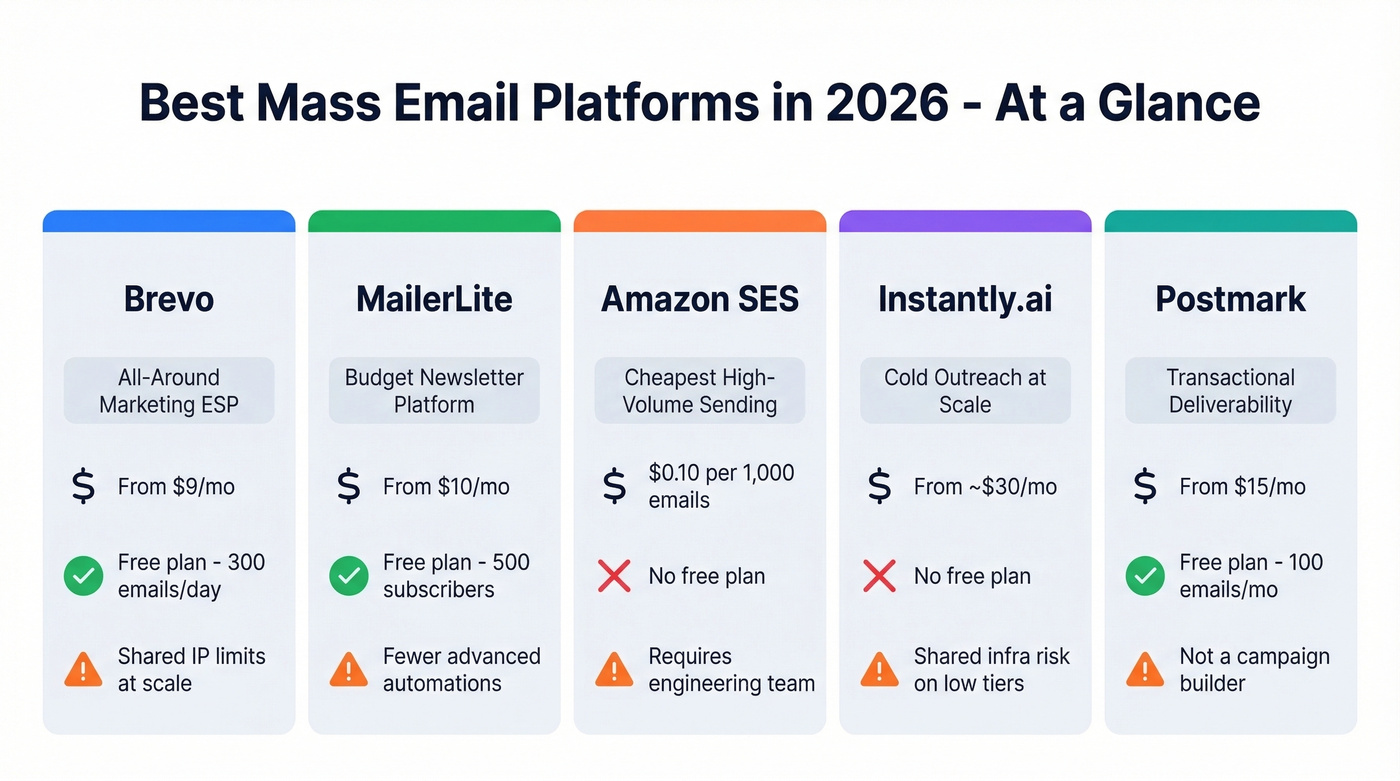
| Platform | Best For | Starting Price | Free Plan? | Key Limitation |
|---|---|---|---|---|
| Brevo | All-around marketing ESP | $9/mo | Yes (300/day) | Shared-IP limits at scale |
| MailerLite | Budget newsletter platform | $10/mo | Yes (500 subs) | Fewer advanced automations |
| Amazon SES | Cheapest high-volume sending | $0.10/1k emails | No | Needs engineering team |
| Instantly.ai | Cold outreach at scale | ~$30/mo | No | Shared infra risk on low tiers |
| Postmark | Transactional deliverability | $15/mo | Yes (100/mo) | Not a campaign builder |
Three Categories of Bulk Email Tools
"Mass email" means different things to different teams, and the tools break into three distinct categories. Picking from the wrong category is the most expensive mistake you can make.
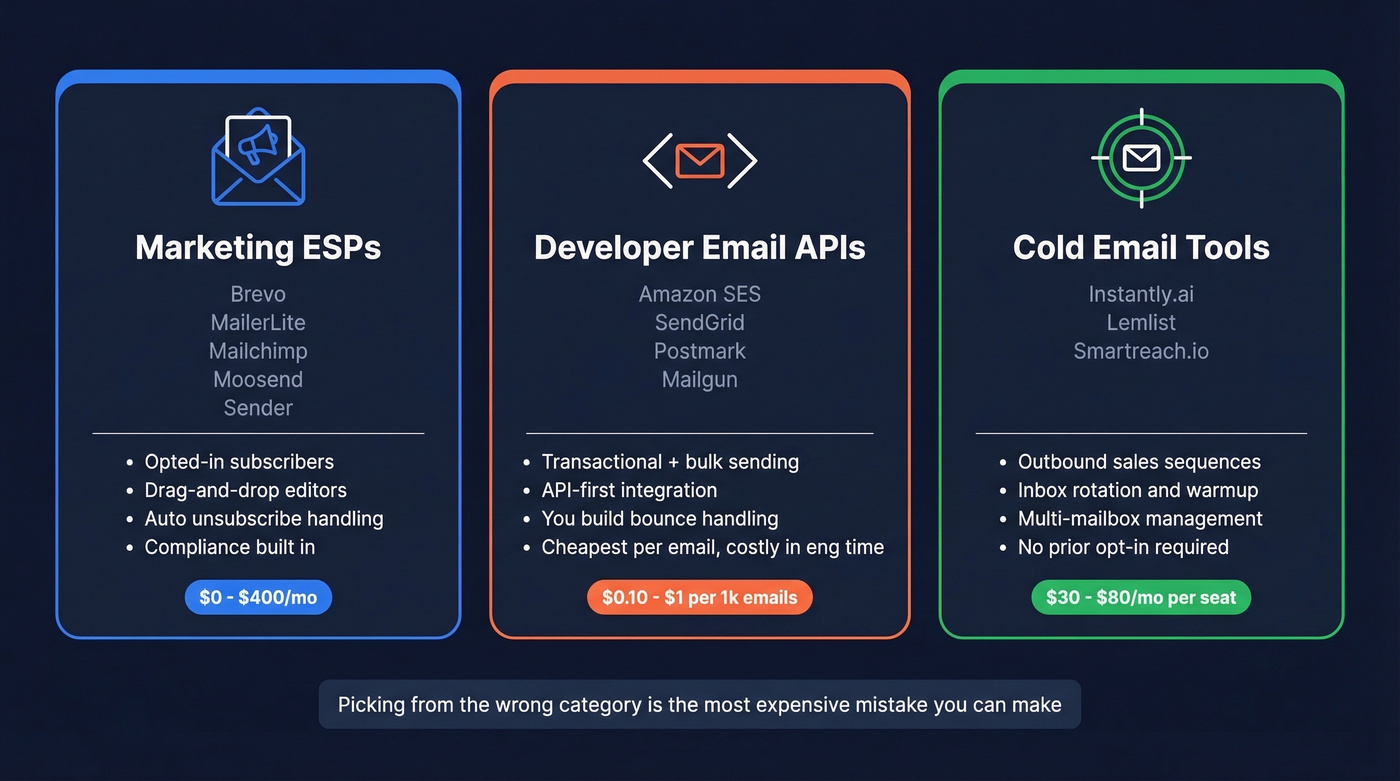
Marketing ESPs like Brevo, MailerLite, Mailchimp, Moosend, and Sender handle newsletters, promotional campaigns, and automated sequences for opted-in subscribers. They manage compliance, provide drag-and-drop editors, and handle unsubscribes automatically. If you're emailing people who signed up, this is your category.
Developer email APIs like Amazon SES, SendGrid, Postmark, and Mailgun are infrastructure. They send transactional emails and bulk campaigns via API. They're cheaper per email but require engineering resources - bounce handling, suppression lists, monitoring, and template management are all on you. Cheap per message, expensive per hour of engineering time. (If you're comparing options, see our breakdown of email reputation tools to monitor what matters.)
Cold email tools like Instantly.ai, Lemlist, and Smartreach.io are built for outbound sales. They manage inbox rotation, domain warming, and sending limits across multiple mailboxes to keep deliverability high while reaching people who haven't opted in. Different compliance rules, different infrastructure, different game entirely. If you're building outbound, pair this with a solid B2B cold email sequence.
| Category | You Need This If... | Typical Cost Range |
|---|---|---|
| Marketing ESP | Opted-in list, newsletters, promos | $0-$400/mo |
| Developer API | Transactional + bulk, eng team available | $0.10-$1/1k emails |
| Cold Email | Outbound sales, no prior relationship | $30-$80/mo per seat |
Regardless of which category fits, list quality determines success. Sending to unverified addresses introduces bounces and spam traps that tank your sender reputation across all three categories. (For bounce benchmarks and fixes, see email bounce rate.)
Best Bulk Email Services Reviewed
Prospeo - Best Foundation for Deliverability (Before You Send Anything)
Most roundups skip the part that actually decides your results: whether your list is clean. We've watched teams switch ESPs three or four times chasing better deliverability when the real culprit was a list full of dead addresses and spam traps.
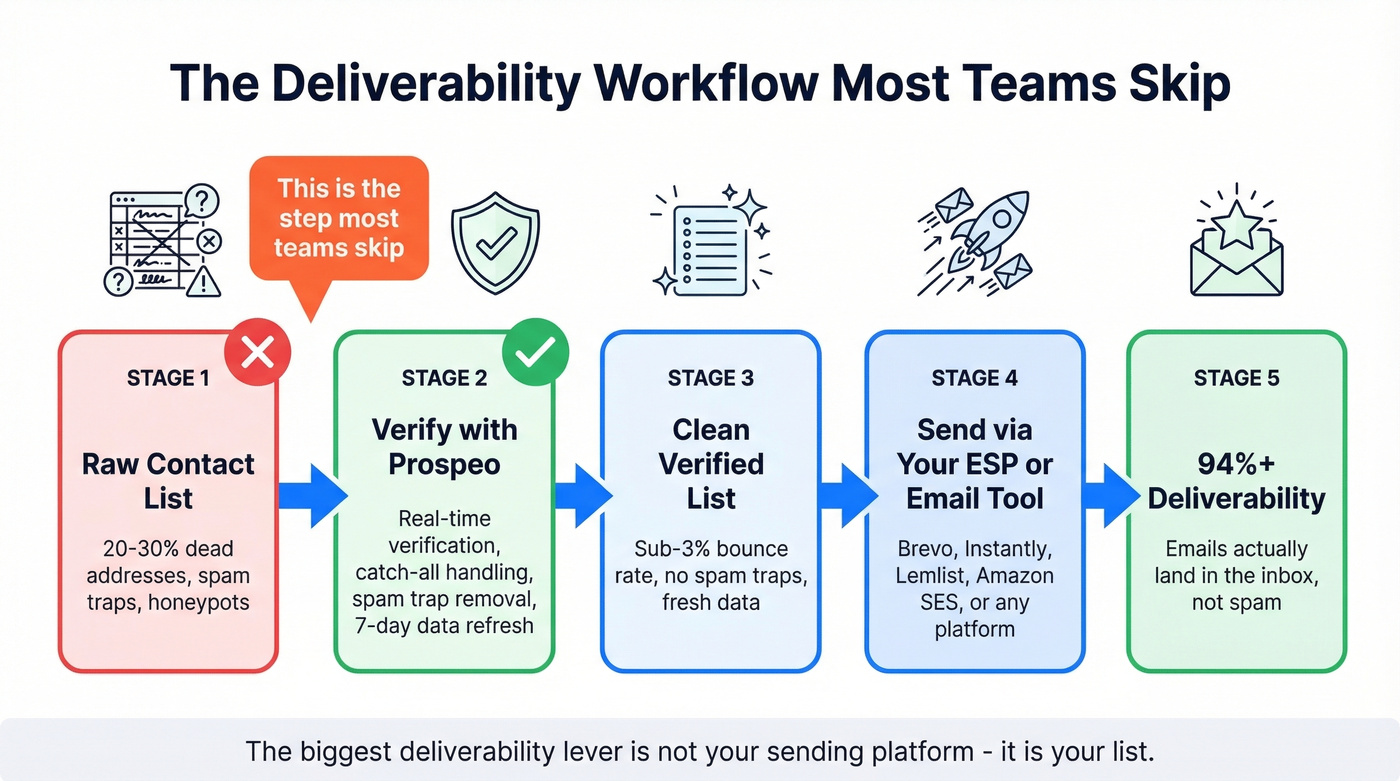
Prospeo combines a self-serve B2B database with 300M+ professional profiles, 143M+ verified emails, real-time verification, catch-all handling, spam-trap removal, and honeypot filtering - all refreshed every 7 days. That 7-day refresh cycle matters because the industry average sits around 6 weeks, and a lot of contacts go stale in that window. One customer, Stack Optimize, built from $0 to $1M ARR while maintaining 94%+ deliverability and sub-3% bounce rates across all their clients using Prospeo-verified data. (If you're evaluating alternatives, compare against other data enrichment services.)
For outbound teams, Prospeo plugs directly into Instantly, Lemlist, Smartlead, and other tools so verified contacts flow straight into sequences without messy CSV loops. If you're building lists from scratch, use this alongside a lead generation workflow.
Brevo - Best All-Around Marketing ESP
Brevo's free plan gives you 300 emails per day and supports up to 100,000 contacts. Paid plans start at $9/mo, and pricing is based on emails sent rather than contact storage - the opposite of Mailchimp's approach, which penalizes list growth.
Use this if: You need a full marketing ESP with reasonable pricing that doesn't charge you more just because your list is big. Brevo also supports email, SMS, and WhatsApp from one dashboard, making it a strong contender for multichannel from day one.
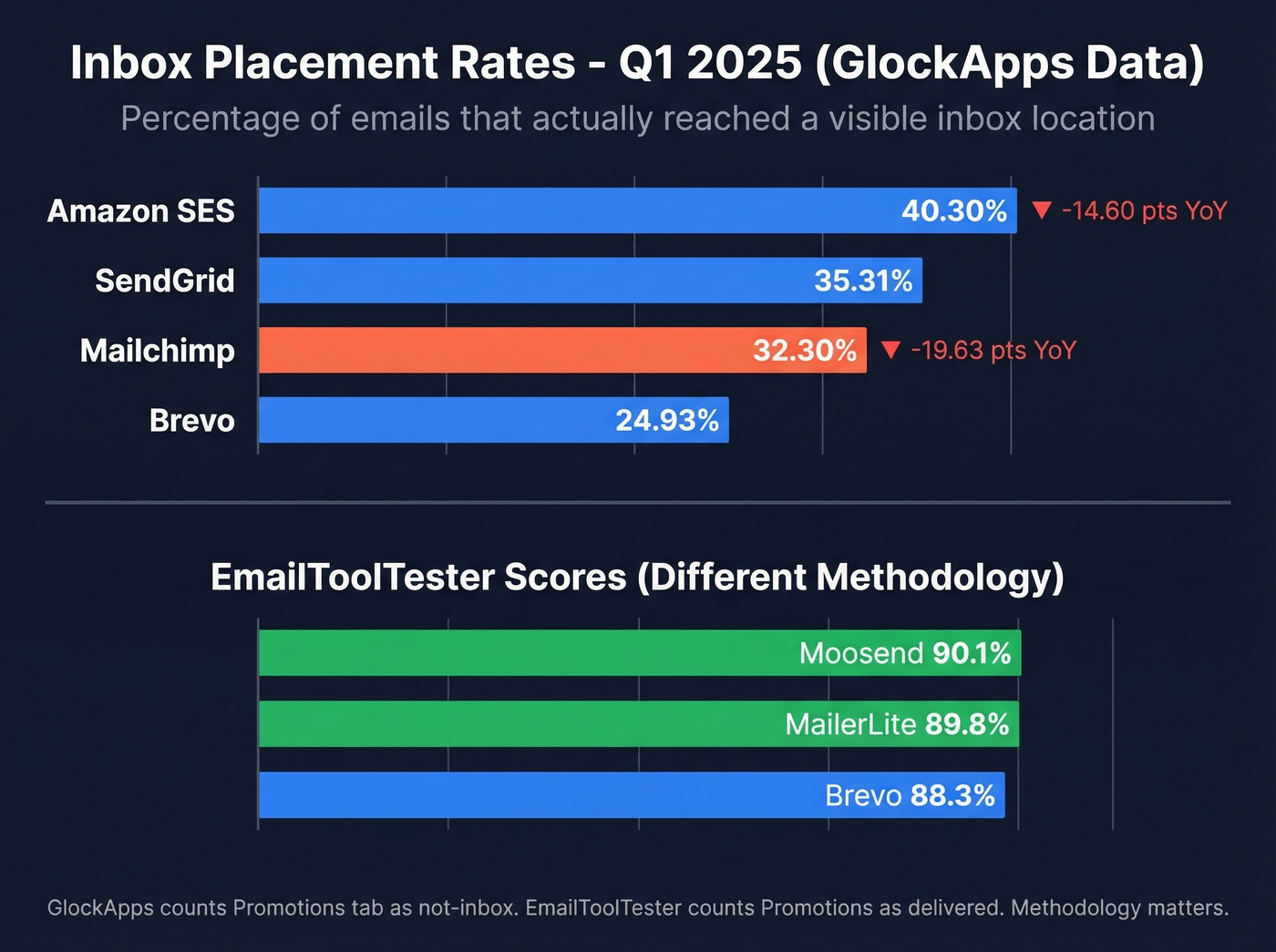
Skip this if: You're sending 500k+ emails monthly and need strong inbox placement. GlockApps shows Brevo at 24.93% inbox placement in Q1 2025 (with Promotions counted as not-inbox), which is a shared-IP reality that hits harder at scale. EmailToolTester scores Brevo at 88.3% using a different definition that counts Promotions as delivered.
MailerLite - Best Budget Newsletter Platform
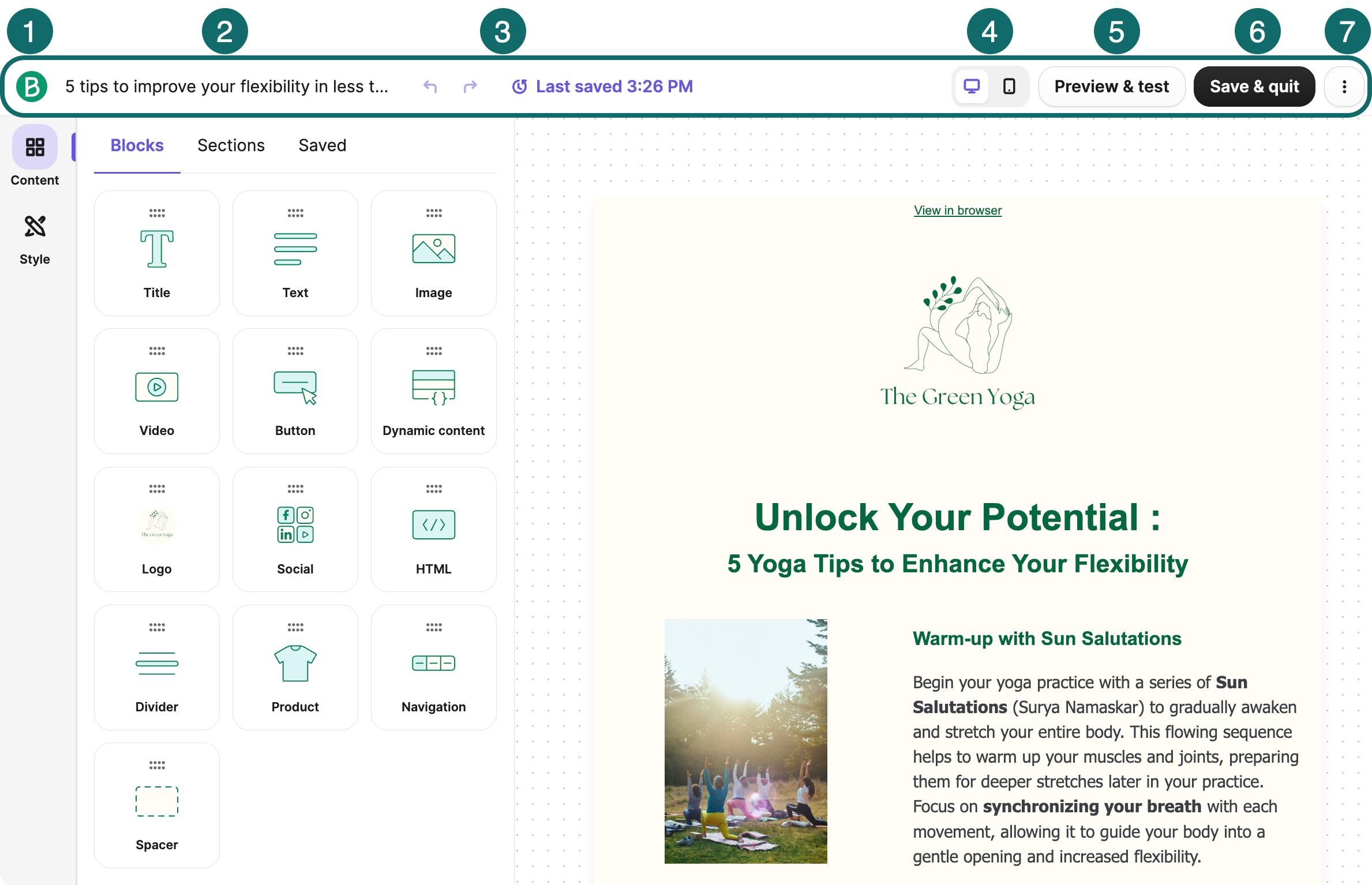
MailerLite is the bulk email sender we'd recommend to any bootstrapped team running a newsletter or content-driven email strategy. Free plan covers 500 subscribers and 12,000 emails per month. Growing Business starts at $10/mo, scaling to $73/mo at 10,000 subscribers.
Use this if: You want clean, affordable email marketing without paying for contacts who've already unsubscribed. MailerLite only charges for active unique subscribers - a policy that saves real money as your list ages. EmailToolTester scores deliverability at 89.8%, which lands in their "excellent" band. (To improve opens, borrow from these email subject line examples.)
Skip this if: You need deep automation workflows or enterprise-grade segmentation. MailerLite keeps things simple, which is a feature until it isn't.
Mailchimp - The Incumbent You Should Probably Leave
Mailchimp is the default recommendation in every "best email platform" article, and it's getting harder to justify. The free plan caps at 250 contacts and 500 emails per month. Essentials at 2,500 contacts runs $45/mo. At 10,000 contacts, you're paying $110/mo on Essentials or $135/mo on Standard. At 50,000 contacts, Essentials hits $385/mo.
The pricing gotcha nobody mentions upfront: Mailchimp charges for unsubscribed and unconfirmed contacts in many account setups. Your list of 10,000 might include 2,000 people who opted out months ago, and you're still paying for them. MailerLite and Brevo don't do this. (If you're stuck on it, read Mailchimp deliverability issues.)
The integration ecosystem is deep, and the template library is excellent. But GlockApps shows Mailchimp at 32.30% inbox placement in Q1 2025, down 19.63 points year-over-year. Pay-as-you-go pricing is even worse: $200 for 5,000 emails, $1,300 for 50,000, and credits expire after 12 months.
Amazon SES - Cheapest at Scale (If You Can Build Around It)
At $0.10/1k emails, Amazon SES is an order of magnitude cheaper than most managed ESPs. Sending 100,000 emails costs $10. A dedicated IP runs $24.95/mo. For pure cost efficiency at volume, nothing touches it.
The catch is real: SES is a sending API, not a platform. You'll need to build your own bounce handling, monitoring, suppression list management, and a template system. Teams that can handle this save thousands per month. Teams that can't will spend more in engineering time than they save on sending costs.
GlockApps shows Amazon SES at 40.30% inbox placement in Q1 2025, down 14.60 points year-over-year. That's partly a reflection of who uses SES - high-volume senders pushing the limits - but it means your reputation management has to be airtight. (If you're scaling volume, track email velocity to avoid sudden spikes.)
SendGrid - Developer API (Getting Expensive)
SendGrid discontinued its standalone free plan as of May 2025. Now you're looking at separate plans for transactional ($19.95/mo) and marketing ($60/mo), with Pro at $89.95/mo for 100,000 emails.
The managed API handles bounce processing, suppression, and basic analytics out of the box - infrastructure you'd have to build yourself on SES. But GlockApps shows SendGrid at 35.31% inbox placement in Q1 2025, and lower tiers only retain 3 days of data. Three days. Good luck troubleshooting a deliverability issue with that kind of visibility.
Moosend - SMB Value Pick
No free plan, but the 30-day trial is generous. Pro starts at $9/mo for 500 contacts with unlimited sends, and EmailToolTester scores deliverability at 90.1% - the highest in their January 2024 round among the platforms we're covering. Automation workflows punch above the price point. The tradeoff is fewer ecommerce integrations than Omnisend or Mailchimp.
Sender - Most Generous Free Plan
Sender's free plan covers 2,500 subscribers and 15,000 emails per month. Standard starts at $7/mo, Professional at $14/mo. The automation and segmentation are basic, but if you're bootstrapped and need to send real volume without paying anything yet, this is the free-tier winner.
Postmark - Built for Deliverability
Postmark takes a different approach: message stream separation. Transactional and broadcast emails run on separate infrastructure, so a marketing campaign gone wrong can't tank your password reset deliverability. Free tier covers 100 emails/mo, paid starts at $15/mo for 10,000+ emails. Dedicated IP runs $50/mo.
Use this if: Transactional email deliverability is mission-critical and you want the cleanest separation between message types.
Skip this if: You need a marketing ESP. Postmark is infrastructure-first, not a campaign builder.
Instantly.ai - Cold Email at Scale
Instantly is a go-to for outbound teams sending high volume. Starting at ~$30/mo, it includes built-in warmup, inbox rotation, and the kind of sending infrastructure cold email requires. The r/coldemail community consistently highlights it for scale, and it integrates natively with Prospeo so verified contacts flow directly into sequences. (For a deeper playbook, see AI cold email outreach.)
Skip this if: You're on the lowest tier - shared infrastructure risk means your deliverability depends partly on your neighbors' behavior.
Lemlist - Cold Email Personalization
Lemlist runs $55-79/mo and earns the premium through personalization tooling that goes beyond merge tags - custom images, dynamic landing pages, and multichannel sequences. If personalization drives your reply rates, the extra cost over Instantly can pay for itself.
Quick Mentions: Kit, Beehiiv, Smartreach.io, Mailgun, Omnisend
Kit (formerly ConvertKit) is purpose-built for creators. Free plan up to 10,000 subscribers with unlimited emails, paid from $15/mo.
Beehiiv has quickly become the default for newsletter-first businesses. Free plan for up to 2,500 subscribers, with built-in monetization tools like referral programs and paid subscriptions. Scale plan starts at $49/mo.
Smartreach.io runs ~$29/mo and stands out for timezone-optimized sending, inbox rotation, and the ability to buy domains and inboxes directly inside the platform.
Mailgun starts around $0.80-$1.00 per 1,000 emails. GlockApps shows it at 26.05% inbox placement in Q1 2025 - the lowest in our dataset - so reputation management is critical if you go this route.
Omnisend is purpose-built for ecommerce with a free plan for 250 contacts. If you're running a Shopify store, it's worth evaluating. For B2B, look elsewhere.
Full Comparison Table
| Platform | Category | Best For | Starting Price | Verdict |
|---|---|---|---|---|
| Prospeo | List verification + B2B data | Clean lists before sending | Free tier (75 emails) | Best deliverability foundation |
| Brevo | Marketing ESP | All-around marketing | $9/mo (free tier) | Best balance of features and price |
| MailerLite | Marketing ESP | Budget newsletters | $10/mo (free tier) | Best value for bootstrapped teams |
| Mailchimp | Marketing ESP | Integration ecosystem | $45/mo (limited free) | Overpriced for what you get |
| Moosend | Marketing ESP | SMB automation | $9/mo | Strong deliverability for the price |
| Sender | Marketing ESP | Free volume | $7/mo (free tier) | One of the best free plans |
| Kit | Marketing ESP | Creator newsletters | $15/mo | Best for creators |
| Beehiiv | Marketing ESP | Newsletter businesses | $49/mo (free tier) | Best if the newsletter is the product |
| Omnisend | Marketing ESP | Ecommerce email | Free (250 contacts) | Ecommerce pick |
| Amazon SES | Developer API | Cheapest at scale | $0.10/1k emails | Best cost if you have engineers |
| SendGrid | Developer API | Managed API | $19.95/mo | More expensive than SES, less data retention |
| Postmark | Developer API | Transactional delivery | $15/mo (free tier) | Best transactional deliverability setup |
| Mailgun | Developer API | Budget API | ~$0.80-$1.00/1k emails | Worst inbox placement - proceed with caution |
| Instantly.ai | Cold Email | Outbound at scale | ~$30/mo | Best cold email for volume |
| Lemlist | Cold Email | Personalized outbound | $55/mo | Best cold email for reply rates |
| Smartreach.io | Cold Email | Multi-region outbound | ~$29/mo | Best for timezone-optimized campaigns |
Deliverability Benchmarks - Real Data
Let's be honest about what "deliverability" actually means, because the two major benchmarking sources define it differently - and the gap is massive.
GlockApps measures inbox placement in a way that treats Gmail's Promotions tab as not-inbox. EmailToolTester counts Promotions as delivered. That's why you'll see Brevo at 24.93% in one dataset and 88.3% in the other - same platform, wildly different definitions.
GlockApps Q1 2025: Inbox Placement
| ESP | Q1 2025 Inbox | YoY Change |
|---|---|---|
| Klaviyo | 43.66% | -13.24 pts |
| Amazon SES | 40.30% | -14.60 pts |
| SendGrid | 35.31% | -9.99 pts |
| Mailchimp | 32.30% | -19.63 pts |
| Mailgun | 26.05% | -27.75 pts |
| Brevo | 24.93% | N/A |
Every single ESP dropped year-over-year. Mailgun lost nearly 28 points. Mailchimp lost almost 20. The inbox is getting harder to reach across the board, and no platform is immune.
EmailToolTester Scores (Jan 2024)
| ESP | Score | Rating |
|---|---|---|
| ActiveCampaign | 94.2% | Excellent |
| Constant Contact | 91.7% | Excellent |
| Moosend | 90.1% | Excellent |
| MailerLite | 89.8% | Excellent |
| Mailchimp | 89.5% | Excellent |
| Brevo | 88.3% | Acceptable |
Inbox Placement by Provider
Not all inboxes are created equal. GlockApps breaks down placement by mailbox provider:
| Mailbox Provider | Inbox Placement |
|---|---|
| Gmail | 53.70% |
| Google Workspace | 53.36% |
| Office365 | 50.70% |
| Yahoo/AOL | 40.97% |
| Outlook/Hotmail | 26.77% |
If your audience skews toward Outlook and Hotmail users, you're fighting an uphill battle regardless of which ESP you choose.
Volume Matters More Than You Think
Mid-volume senders pushing 50k-200k emails per month averaged 58.29% inbox placement. Cross 1M sends per month and that drops to 27.63%. The more you send, the harder the inbox gets - which is exactly why list hygiene becomes more critical as you scale, not less.
The takeaway: if "inbox including Promotions" counts as success for your use case, most ESPs look fine. If you need stricter inbox placement, the GlockApps numbers tell a much grimmer story. And the biggest deliverability lever still isn't your ESP - it's your list. In our experience, teams that verify before every major send consistently outperform teams on "better" platforms with dirty data.


Every mass email platform on this list will underperform if your list is full of dead addresses and spam traps. Prospeo's 143M+ verified emails are refreshed every 7 days - not the 6-week industry average - with catch-all handling and honeypot filtering built in.
Fix the list before you blame the platform.
Stack Optimize built a $1M ARR agency sending mass email campaigns with sub-3% bounce rates and 94%+ deliverability - all powered by Prospeo data. At $0.01 per email, cleaning your list costs less than a single wasted send.
Stop switching ESPs. Start sending to real inboxes.
What Bulk Sending Costs at Scale
Pricing looks simple on landing pages. It gets complicated fast once you're sending real volume.
| Platform | 10k emails | 50k emails | 100k emails | 500k emails |
|---|---|---|---|---|
| Amazon SES | $1 | $5 | $10 | $50 |
| Brevo | ~$9-$18 | ~$18-$49 | ~$49-$99 | ~$200-$400 |
| MailerLite | $10-$73 | $73-$289 | $110-$440 | ~$300-$500 |
| SendGrid | ~$20+ | ~$60-$90 | $89.95 | ~$250-$500 |
| Mailchimp (Essentials) | $45-$110 | $385 | ~$500+ | ~$800+ |
| Moosend | $9-$30 | ~$100+ | ~$200+ | ~$400+ |
The cost gap is staggering at scale. Sending 100,000 emails per month costs $10 on SES and $89.95 on SendGrid.
Look - if your average deal size is under five figures, you almost certainly don't need Mailchimp-level pricing. Brevo or MailerLite will do everything you need at a fraction of the cost. Mailchimp's pricing model punishes list growth: a 50,000-contact list on Essentials runs $385/mo, and that can include unsubscribed contacts still sitting in your account. MailerLite only charges for active unique subscribers, which means inactive contacts don't inflate your bill.
2026 Bulk Sender Compliance Checklist
Gmail, Yahoo, and now Microsoft all enforce bulk sender requirements. If you're sending 5,000+ emails per day, non-compliance means your messages get filtered to Junk - or rejected outright. Any mass email platform you choose needs to support these requirements out of the box, or you'll be building compliance infrastructure yourself.
SPF + DKIM + DMARC are all required, with a minimum DMARC policy of p=none. Microsoft's May 2025 requirement makes this non-negotiable for Outlook/Hotmail delivery too. In the Unspam dataset, SPF adoption hit 92% and DKIM 88%, but DMARC lagged at just 69% - and spam placement still exceeded 30% even with full authentication. (If you need to validate your setup, start with how to verify DKIM is working.)
One-click unsubscribe via RFC 8058 compliance (List-Unsubscribe and List-Unsubscribe-Post headers) is mandatory. Only 14% of emails in the Unspam dataset included proper List-Unsubscribe headers - a massive opportunity gap.
Honor unsubscribes within 2 days. Not "eventually." Two days. Gmail checks.
Spam complaint rate below 0.3%. Google Postmaster Tools recommends staying under 0.1%. Monitor this actively.
Clean HTML and valid links. Poor HTML increased spam likelihood by 18-25% in the Unspam dataset, and 13% of tested emails contained broken or improperly redirected links.
Most managed ESPs handle the unsubscribe headers and authentication setup for you. On SES, SendGrid, or Mailgun, you're responsible for all of it. A Mailgun survey found only 49.5% of senders who were aware of bulk sender requirements actually made changes to comply. Don't be in the other half.
Five Mistakes That Kill Deliverability
1. Blasting without segmentation. Sending the same email to your entire database guarantees low engagement rates. Low engagement signals to mailbox providers that your content isn't wanted. Even basic segmentation - active vs. inactive - makes a measurable difference. (If you want a practical framework, use intent based segmentation.)
2. Emailing stale or unverified contacts. This is the mistake we see most often, and it's the most damaging. Hard bounces, spam traps, and honeypot addresses destroy sender reputation fast. One of our customers, Snyk, saw bounce rates drop from 35-40% to under 5% just by switching to verified data - and their AE-sourced pipeline jumped 180%. Run your list through a verification service before every major campaign.
3. Skipping mobile optimization. If your template breaks on a phone screen, the reader deletes it - or marks it as spam because they can't find the unsubscribe link buried in broken HTML.
4. Over-sending. Sending daily when your audience expects weekly is a fast path to spam complaints. The 0.1% complaint-rate danger zone is easier to breach than most teams realize. One bad send to an over-fatigued list can push you over.
5. Using no-reply addresses. noreply@yourcompany.com tells the recipient you don't want to hear from them. It also means replies - a strong positive engagement signal - can't reach you. Use a real address. Monitor it.
Mass Email Platforms FAQ
Is sending mass email legal?
Yes, in most jurisdictions, as long as you follow the rules. CAN-SPAM requires a physical address, clear sender identification, and a working unsubscribe mechanism. GDPR requires explicit opt-in consent before sending marketing emails. Choosing a reputable email service that handles compliance automatically reduces your legal risk.
What's the difference between bulk, cold, and transactional email?
Bulk email goes to opted-in subscribers - newsletters, promotions, product updates. Cold email targets prospects with no prior relationship, typically for sales outreach. Transactional email is triggered by user actions: order confirmations, password resets, shipping notifications. Mixing them on the same infrastructure hurts deliverability for all three.
Do I need a dedicated IP?
For most teams sending under 100,000 emails per month, shared IP pools work fine. Once you cross into hundreds of thousands monthly, a dedicated IP gives you full control over sender reputation at $20-30/mo per IP. At very high volumes, you'll want custom IP pools with gradual warmup across multiple addresses.
How do I make sure my list is clean before sending?
Run your list through a verification service before every major campaign. Look for a tool that checks for invalid addresses, handles catch-all domains, removes spam traps, and filters honeypot addresses. Prospeo's free tier includes 75 email verifications with 98% accuracy - enough to audit a sample and see whether you have a data quality problem before it tanks your reputation.
Which bulk email service is best for beginners?
MailerLite or Brevo. Both handle authentication setup, unsubscribe management, and basic analytics without requiring technical expertise - letting you focus on content and list building rather than infrastructure.
The Platform Matters Less Than the Foundation
Get authentication right. Keep your list clean. Pick the category that matches your use case - marketing ESP, developer API, or cold email tool - and stop chasing the "best" mass email platform when the real problem is upstream. The teams with the highest deliverability rates aren't the ones on the fanciest platform. They're the ones who never send to a bad address in the first place.