

Meeting Conversion Rate: Benchmarks, Formulas, and How to Fix Yours
You just pulled your monthly SDR report and the numbers don't add up. Forty-two meetings "booked," but only twenty-eight happened - and half of those went nowhere. The problem isn't your reps. It's that nobody agreed on what meeting conversion rate actually means, so you're measuring the wrong thing.
Contacted -> Booked: What percentage of prospects you reach actually agree to a meeting? Booked -> Held: How many of those meetings actually happen? Held -> Qualified: How many held meetings produce a real sales conversation?
Quick benchmarks: Inbound qualified-to-booked runs 62% median. Outbound sequence-to-meeting sits at 1.5-4%. Show rates land around 65-80% outbound and 80-85% inbound. And if your email bounce rate is above 2%, fix your data before you touch your messaging.
What Does Meeting Conversion Rate Mean?
Meeting conversion rate is the percentage of contacted prospects who end up in a meeting with your team. That's the standard definition, and it's the one most outbound orgs use - but it hides a massive problem.
The denominator changes depending on who's reporting. Marketing says "leads." SDRs say "contacted prospects." AEs say "qualified opportunities." A 15% rate means wildly different things depending on which of those you're dividing by, so before you benchmark anything, nail down your denominator in plain English and get everyone to agree on it.
There's also the booked-vs-held distinction. A booked meeting is an agreed time on a calendar. A held meeting is one where the prospect actually shows up. Blending them is how teams inflate their numbers without realizing it.
Sales Meeting Conversion Formula
Contacted -> Booked: (Booked meetings / Contacted prospects) x 100
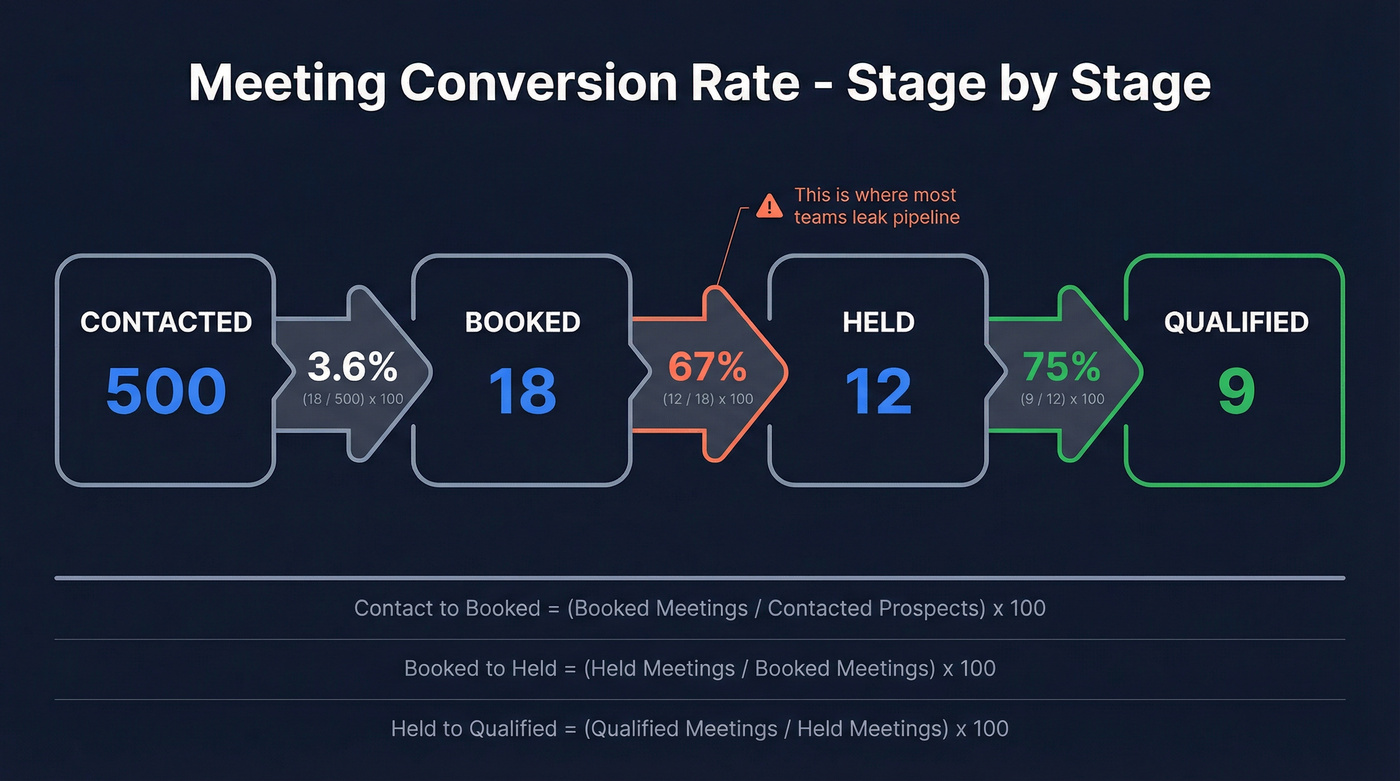
Booked -> Held: (Held meetings / Booked meetings) x 100
Held -> Qualified: (Qualified meetings / Held meetings) x 100
Here's a worked example. Your SDR contacts 500 prospects in a month, books 18 meetings, 12 actually happen, and 9 are qualified. That's a 3.6% contact-to-booked rate, a 67% show rate, and 75% held-to-qualified. All three numbers matter - applying this formula at each stage lets you pinpoint exactly where your funnel breaks instead of staring at a single blended number that tells you nothing actionable. (If you want a broader KPI view, map this into your overall funnel metrics.)
2026 Benchmarks
Blending inbound and outbound is how teams lie to themselves about pipeline health. Don't do it.
Inbound
| Metric | Range |
|---|---|
| High-intent demo request -> meeting | 75-80% |
| Qualified -> booked (B2B SaaS) | 62% median, 78% top 10% |
| Demo -> qualified stage | 60-70% healthy |
| Low-intent content leads -> meeting | 5-10% |
| Show rate | 80-85% |
| SDR volume | 20-25 meetings/mo |
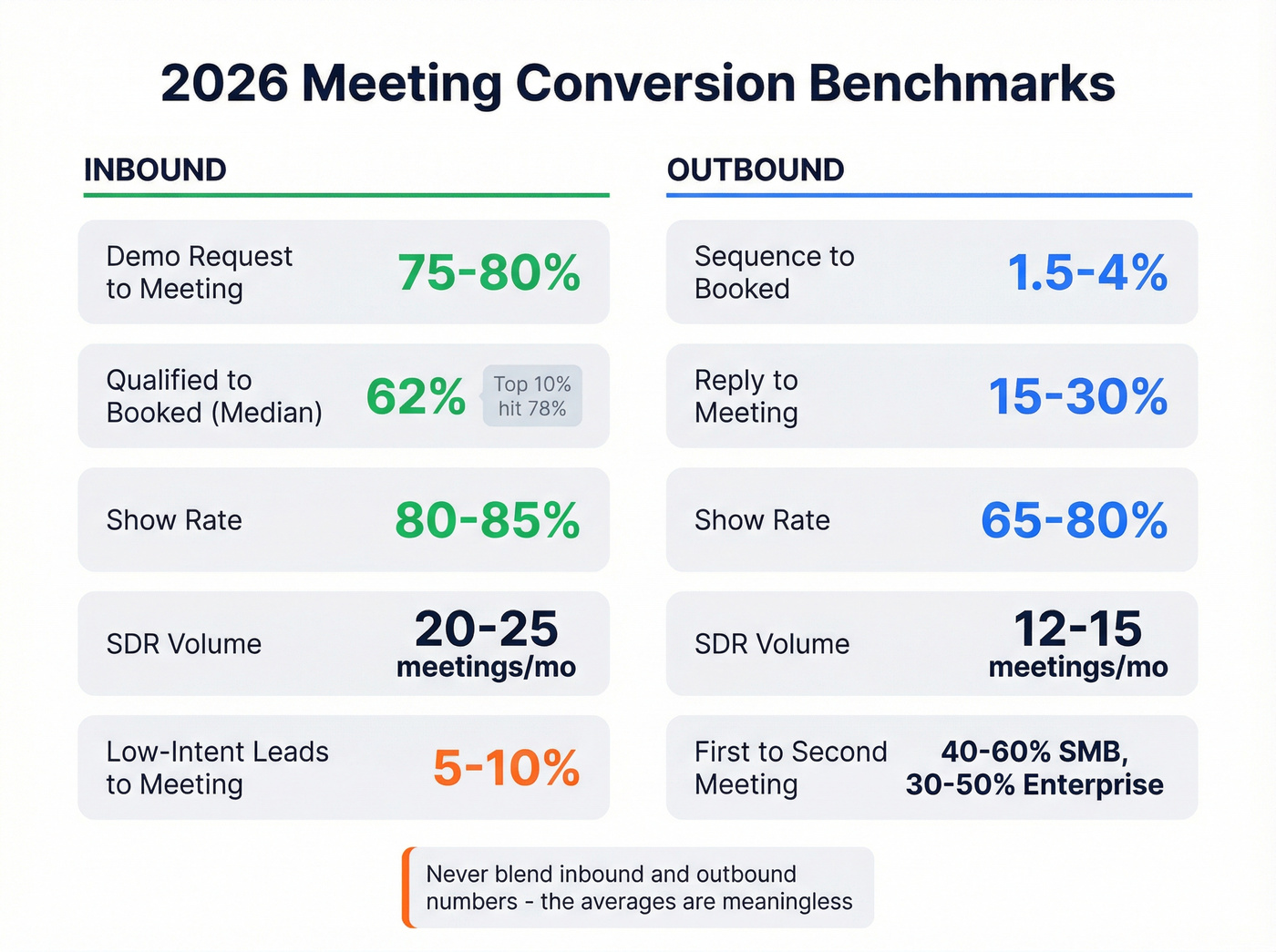
The gap between high-intent and low-intent is enormous. A demo request converts at 75-80%. An ebook download converts at 5-10%. If your inbound rate is 30%, you've got a mix of both, and the average is meaningless.
Outbound
| Metric | Range |
|---|---|
| Sequence -> booked meeting | 1.5-4% |
| Reply -> meeting | 15-30% |
| Booked -> attended | 67% |
| Show rate range | 65-80% |
| SDR volume | 12-15 meetings/mo |
That 1.5-4% sequence-to-meeting number shocks people, but it's real. Understanding conversion rates at each stage helps you set realistic targets instead of chasing a single vanity metric. This is also where better sequence management makes a measurable difference.
A data point no one else is tracking: first-to-second meeting conversion runs 40-60% in SMB/mid-market and 30-50% in enterprise, where more stakeholders slow things down. If your first meetings aren't advancing, the problem is usually qualification, not pitch quality. Tighten your lead scoring so reps stop booking the wrong profiles.
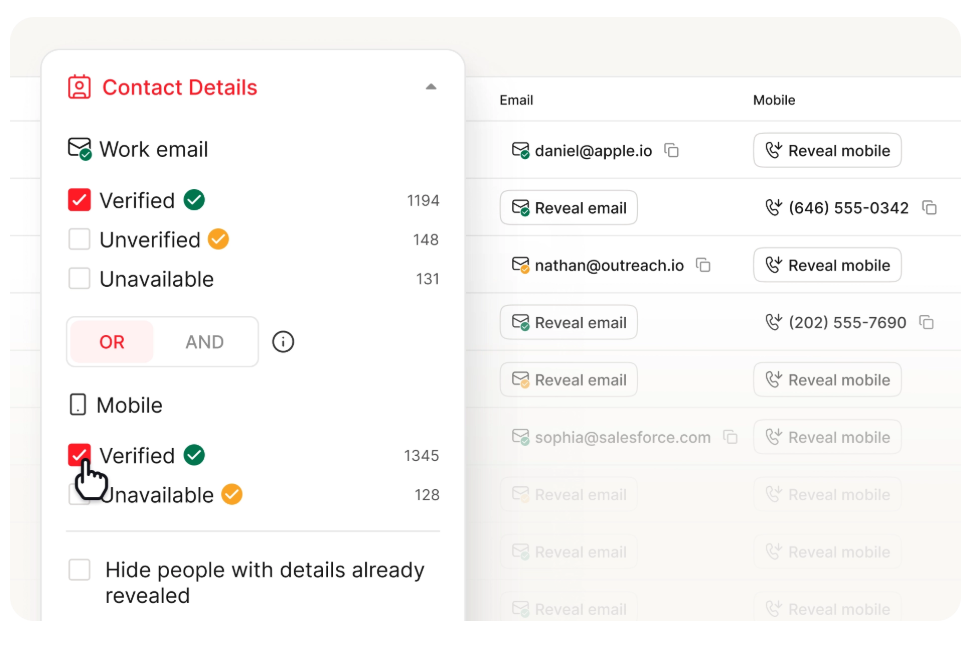

Your meeting conversion rate starts with deliverability. If emails bounce, sequences never reach prospects - and no amount of copy rewrites will fix that. Prospeo's 7-day data refresh and 98% email accuracy helped Meritt cut bounce rates from 35% to under 4% and triple connect rates to 20-25%.
Stop rewriting cold emails. Start fixing the data behind them.
Where the Funnel Leaks
Five failure points kill your meeting conversion rate before your pitch ever gets a chance.
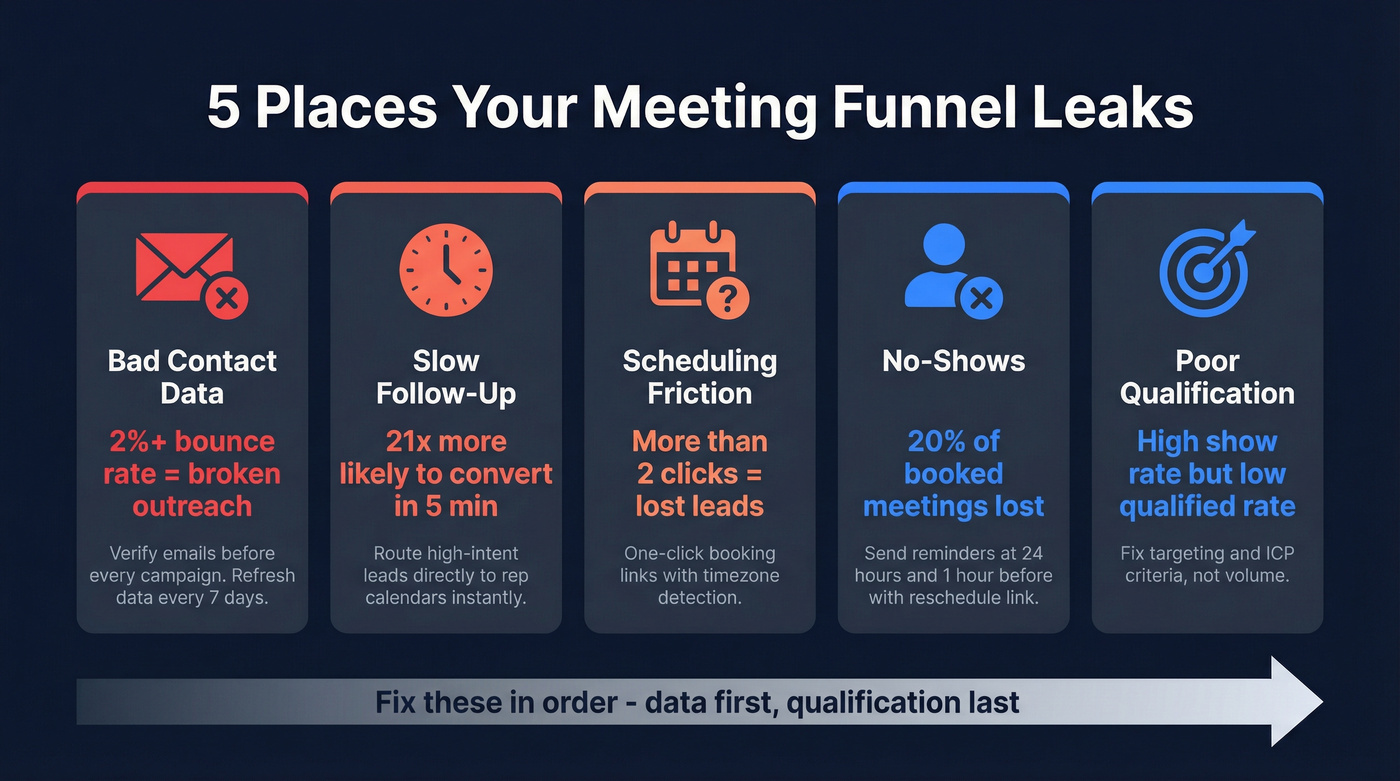
Bad contact data. If your bounce rate is above 2%, your outreach isn't arriving. We've seen this over and over - teams rewrite their sequences a dozen times when the real issue is 30% of their list hitting dead inboxes. Prospeo refreshes its database every 7 days and verifies emails in real time with 98% accuracy, which is how teams like Meritt cut bounce from 35% to under 4%. If you're diagnosing root causes, start with email bounce rate and then work backward into list quality.
Slow follow-up. Leads contacted within 5 minutes are 21x more likely to convert than those contacted after 30 minutes. Five minutes. Not five hours. If your reps need help here, standardize your sales follow-up templates.
Scheduling friction. Confusing calendar links, timezone mismatches, and back-and-forth emails add enough friction to kill a warm lead. If booking a meeting with your team requires more than two clicks, you're losing people.
No-shows. Without confirmation sequences at 24 hours and 1 hour before, you're leaving around 20% of booked meetings on the table. A simple sales meeting follow-up email system can lift attendance fast.
Poor qualification. A high booked-to-held ratio paired with a low held-to-qualified ratio means your SDRs are booking meetings with the wrong people. That's a targeting problem, not a volume problem. Rebuild your Ideal Customer Profile and enforce it in routing.
How to Improve Your Meeting Conversion Rate
Here's the thing: most teams rewrite their cold email for the 12th time when the real problem is 30% of their list is bouncing. Fix your data first. When Meritt switched to verified contact data, their bounce rate dropped from 35% to under 4% and connect rates tripled to 20-25%. That's not a messaging fix.
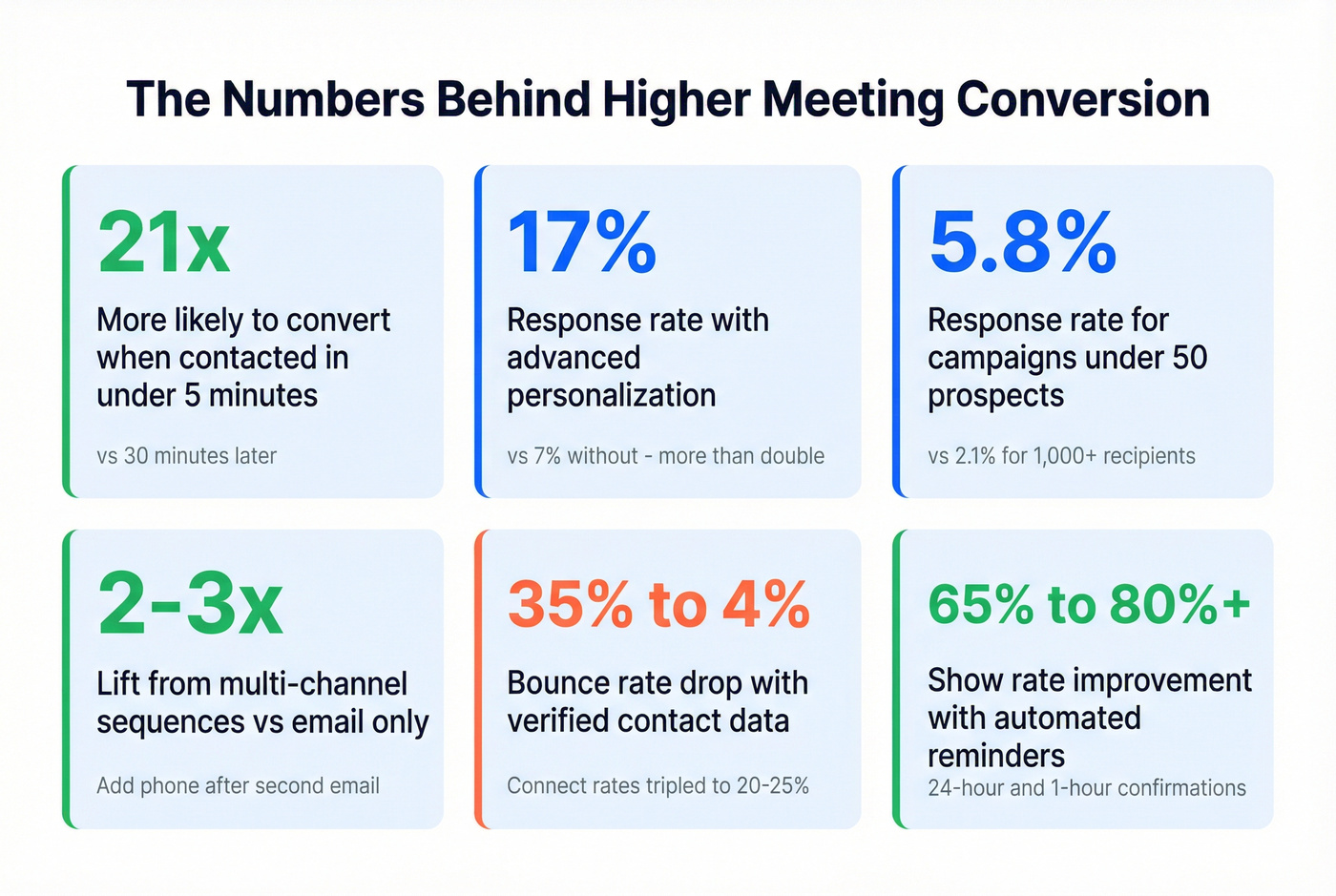
Respond to inbound in under 5 minutes. That 21x conversion lift isn't a typo. Route high-intent form fills directly to a rep's calendar with instant scheduling - tools like Chili Piper or RevenueHero handle this well.
Personalize beyond first name. Woodpecker's analysis of 20M cold emails found advanced personalization drives 17% response rates vs 7% without. More than double. If you need a system for this, use proven sales prospecting techniques instead of random “personalization hacks.”
Send smaller, targeted batches. Campaigns under 50 prospects get ~5.8% response rates vs ~2.1% for 1,000+ recipients. Spray-and-pray is dead. We've tested this ourselves - tighter lists with verified data consistently outperform large blasts, even when the copy is identical. If you're scaling safely, watch your email velocity as closely as your copy.
Go multi-channel. Multi-channel sequences outperform email-only by 2-3x. Adding a phone step after the second email is often the single highest-leverage change a team can make to their meeting-book rate. (If you're rebuilding your stack, start with a shortlist of SDR tools.)
Automate confirmations. Send reminders 24 hours and 1 hour before every meeting with a clear agenda and a one-click reschedule option. This alone can push your show rate from 65% to 80%+.
Skip the fancy AI-generated video messages for now. The Reddit consensus on r/sales is that they feel gimmicky and don't move the needle on show rates the way a simple, well-timed text reminder does.
Teams using Prospeo book 26% more meetings than ZoomInfo users and 35% more than Apollo users - because verified data means more emails land, more prospects pick up, and more meetings actually happen. At $0.01 per email with no contracts, the math is hard to argue with.
Send smaller batches to verified leads and watch your show rate climb.
How to Measure Correctly
The north-star metric for SDR managers isn't meetings booked - it's held meetings per rep hour. Everything else flows from that.
Define your denominator in plain English before you measure anything. "Contacted prospects" and "qualified leads" produce completely different conversion rates from the same data, and if your marketing team is using one definition while your SDR manager uses another, your weekly pipeline review is just two people arguing about different numbers. Write it down. Make everyone agree.
Track booked and held as distinct metrics. Booked measures intent. Held measures follow-through. You need both to diagnose whether you've got a no-show problem or a messaging problem.
Use 90-day cohorts for measurement windows. Shorter windows distort long-cycle deals, and longer windows let stale leads inflate your denominators. For teams selling into enterprise with 6+ month cycles, consider 120-day cohorts instead. To keep this aligned with revenue outcomes, tie it back to your broader sales conversion rate reporting.
FAQ
What's a good meeting conversion rate for outbound?
Expect 1.5-4% of sequences to produce a booked meeting, with 65-80% of those actually held. If your reply-to-meeting ratio is 15-30%, you're converting replies well - the bottleneck is volume, targeting, or data quality upstream.
How many meetings should an SDR book per month?
Outbound SDRs should target 12-15 qualified held meetings, with top performers hitting 18-20. Inbound reps typically manage 20-25. Always measure held meetings, not booked - the distinction reveals no-show problems that inflate reported performance.
How do I reduce meeting no-shows?
Send confirmation emails at 24 hours and 1 hour before, include calendar invites with clear agendas, and add a one-click reschedule link. Also verify contact data before outreach - if prospects aren't receiving your emails at valid addresses, engagement and show rates suffer from the start.