Startup Lead Generation: A 2026 Playbook With Real Numbers
Your investor asks "what's your pipeline look like?" and you've got 47 names in a spreadsheet - half of them personal Gmails. That's not a pipeline. That's a prayer. Nearly 80% of new leads never convert to sales, which means most startups aren't just bad at lead generation - they're generating the wrong leads entirely. This playbook fixes that with real numbers, real tool pricing, and a stage-based framework you can run this week.
The Quick Version
- Define your ICP using paying customer patterns, not guesses.
- Run outbound first for pipeline on demand, then layer inbound over 3-6 months.
- Stack: Prospeo for verified contact data, Instantly or Smartlead for email sequencing, HubSpot free CRM. Total: under $200/month.
The average B2B cost per lead is $84. You can beat that significantly with the right data and discipline.
Define Your ICP or Waste Your Budget
Most startup founders define their ICP as "mid-market SaaS companies." That's not an ICP - that's a category on Crunchbase.
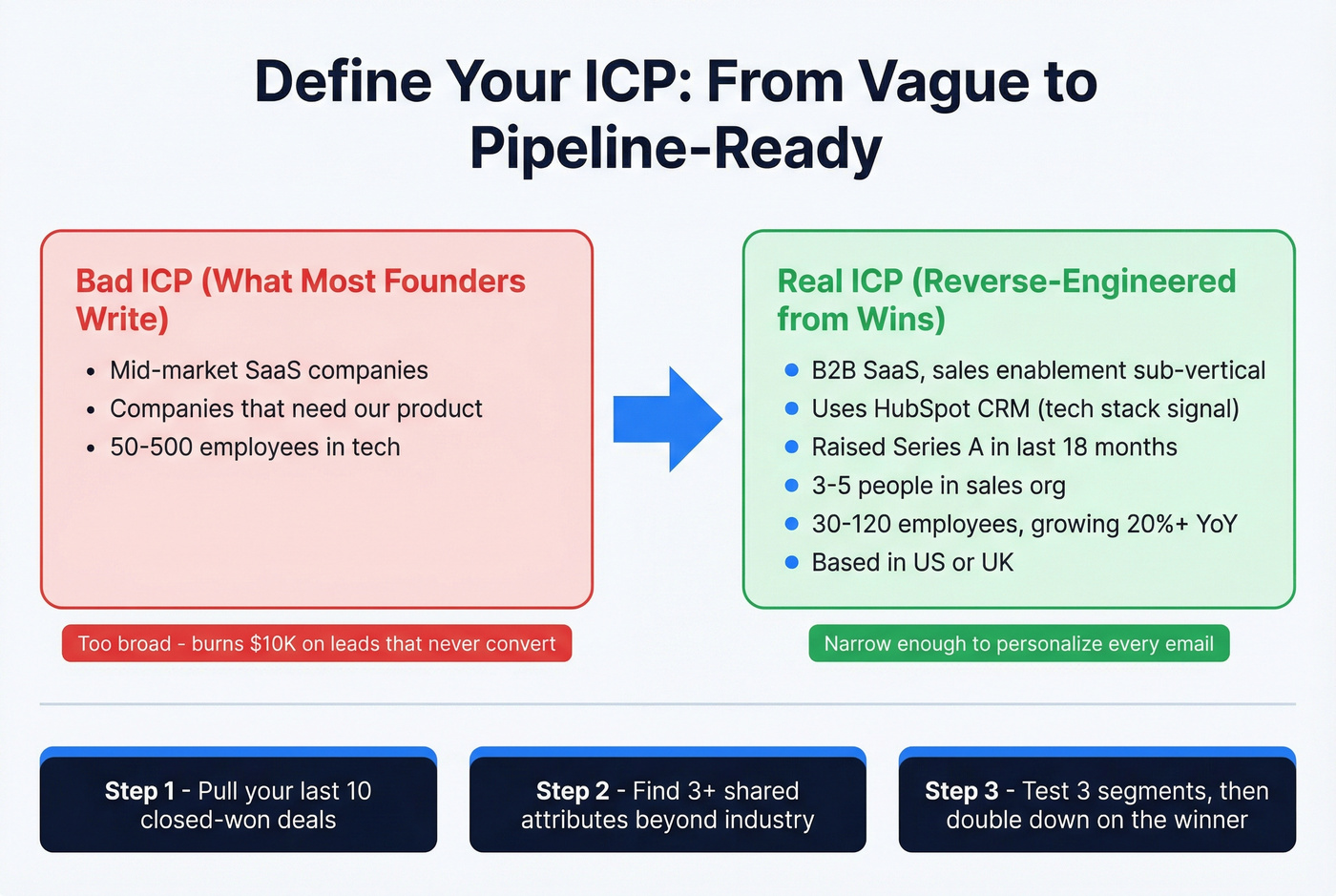
A real ICP goes deeper: sub-vertical, tech stack, funding stage, department makeup, headcount trajectory. In our experience, the best ICPs come from reverse-engineering your last 10 closed-won deals. What do those companies have in common beyond industry? Maybe they all use HubSpot, raised a Series A in the last 18 months, and have 3-5 people in their sales org.
Test at least three segments early. Build lookalike targeting from those patterns - geo, funding round, CRM/tech stack, employee count. Go narrow. You can always widen later, but going broad from day one is how startups burn $10K on leads that never convert.
If you want a tighter process for this, use an account qualification checklist before you build lists.
Outbound vs Inbound: What Comes First?
Outbound. Always outbound first.
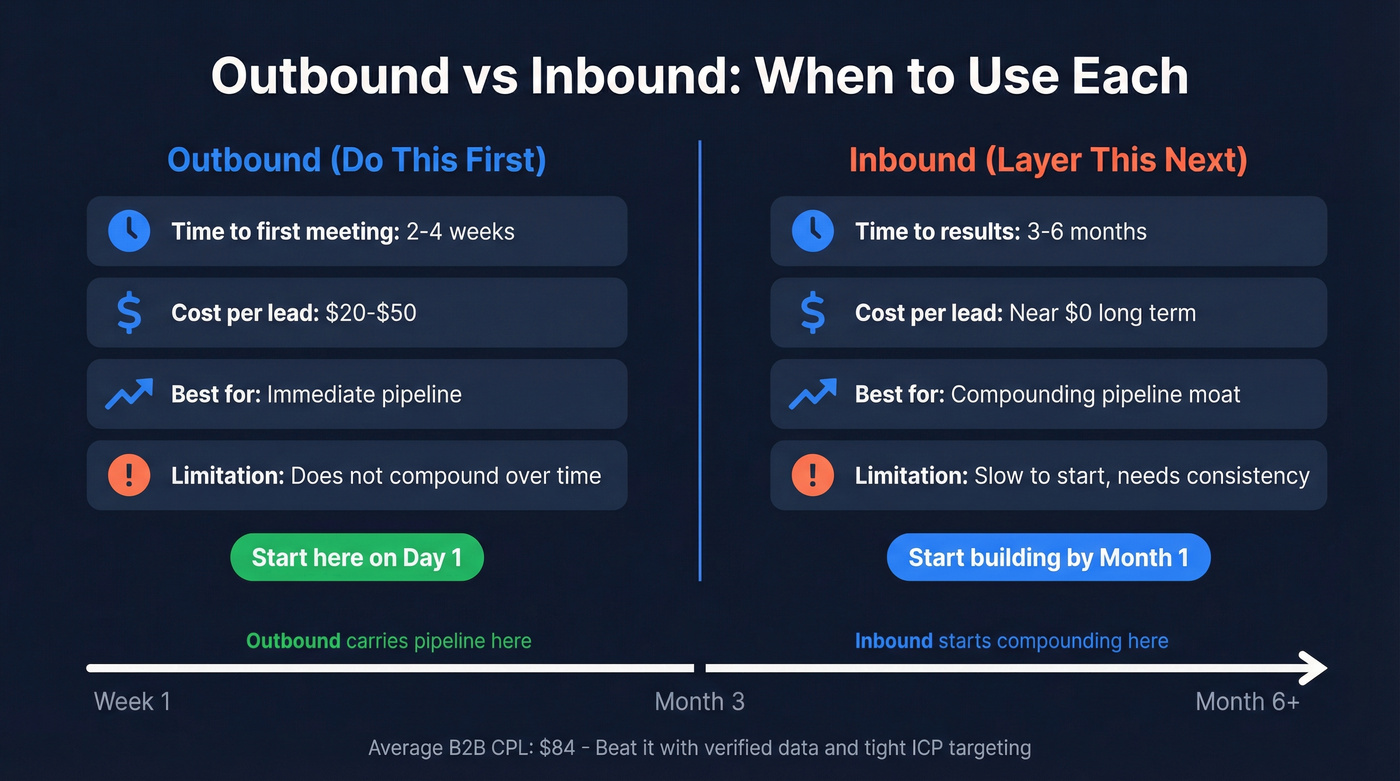
A founder can send 50 cold emails on Monday and start getting replies within 1-2 weeks. Inbound - SEO, content, founder-led posting - compounds over 3-6 months but builds a moat that outbound never will. You need both, but if you can only do one thing this week, send cold emails.
Average B2B CPL runs $84 across channels, but that masks huge variation: Google Ads averages $70.11, LinkedIn pushes past $110. Outbound with verified data and a tight ICP can come in around $20-$50 per lead. Target a LTV:CAC ratio of at least 3:1 - if you're below that, stop spending and fix your targeting before you scale anything.
If you need the math and benchmarks, here’s a deeper breakdown of CAC LTV ratio.

Meritt went from 35% bounce rate to under 4% and tripled their pipeline - same team, same volume, better data. Prospeo's 5-step verification catches bad addresses, spam traps, and catch-all domains before they tank your sender reputation. 98% email accuracy at $0.01/lead.
Stop blaming cold email. Fix your data in five minutes.
The Outbound Playbook
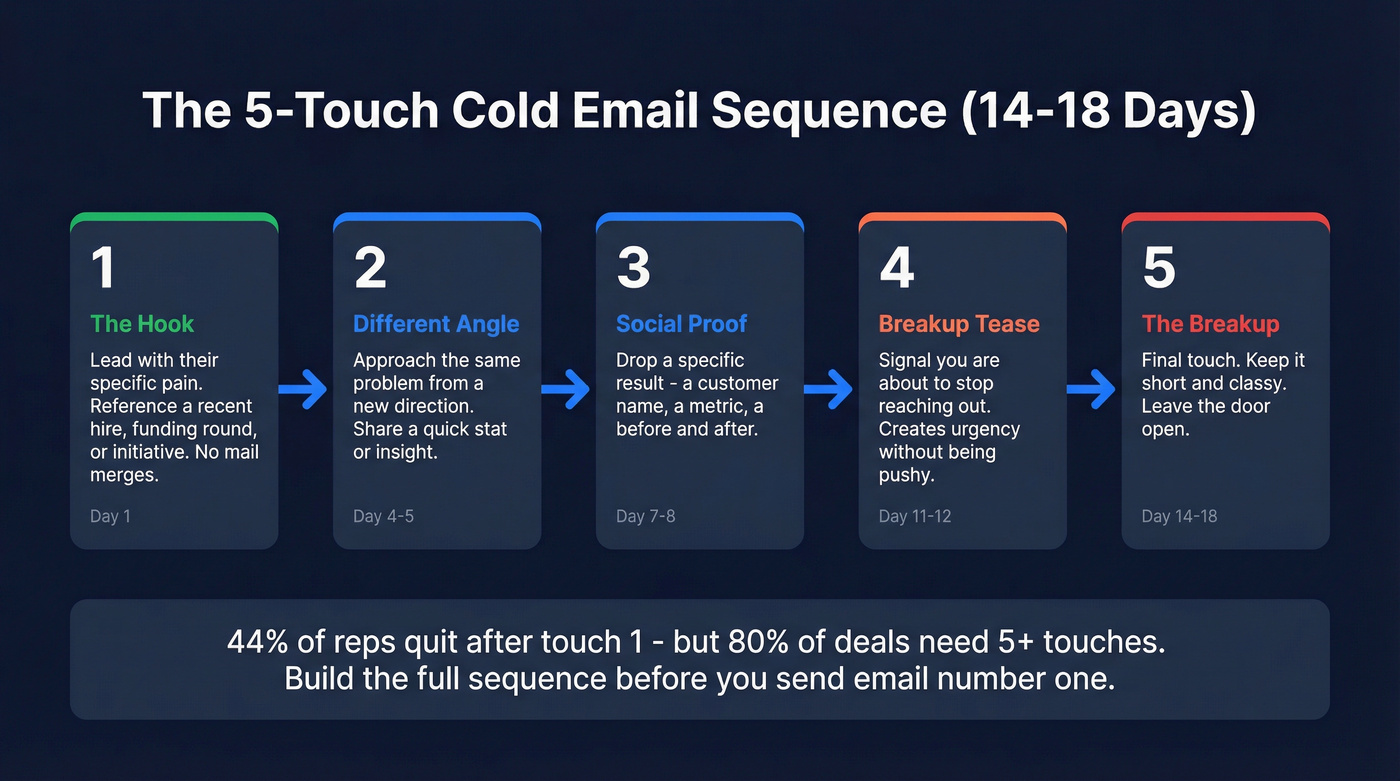
44% of reps give up after one follow-up, but 80% of deals require five or more touches. Persistence isn't optional. It's the entire game.
If you want a ready-made structure, start with a proven sales cadence example.
Cold Email That Actually Works
You don't need 14 strategies. You need 2-3 channels executed with discipline. 86% of B2B buyers respond to personalized outreach, which means the spray-and-pray era is dead.
And let's be honest - personalization doesn't mean "Hi {first_name}, I noticed your company {company_name}..." That's a mail merge. Reference a specific initiative, a recent hire, a funding round. Something that proves you spent 30 seconds understanding their world before hitting send.
For more angles that don’t sound templated, pull from these outreach email template patterns.
Build a 5-touch sequence over 14-18 days. First email is the hook. Second is a different angle. Third adds social proof. Fourth is a breakup tease. Fifth is the actual breakup. Most startups send one email, get no reply, and conclude "cold email doesn't work." Cold email works fine. One email doesn't.
Fix Your Data Before You Send
Here's the thing: we've seen this pattern dozens of times. A founder sends 500 cold emails from a fresh domain, 180 bounce, the domain tanks, and they get zero meetings. Then they blame the channel. The channel wasn't the problem - the data was.
Real-time email verification catches bad addresses before they hit your sequencer. Prospeo's 5-step verification process handles catch-all domains, spam traps, and honeypots at roughly $0.01 per lead. One customer, Meritt, took their bounce rate from 35% down to under 4% and tripled their pipeline in the process. Verify every email before you send. No exceptions.
If you’re comparing tools, start with these email checker tool benchmarks.
Skip this section if you're already running under a 5% bounce rate. For everyone else, this is the single highest-ROI fix you'll make.
Partnership Campaigns
A construction tech startup called MDxBlocks targeted the top 1,000 consulting companies in a complementary vertical and generated 88 leads in 7 weeks, averaging 1.5 high-quality leads per day. That's not a fluke - it's what happens when you find companies that sell to your ICP but don't compete with you.
Identify 3-5 of those companies. Co-create a resource, co-host a webinar, or just cross-refer. Partnerships are the most underrated lead gen channel for startups because they feel slow and unscalable. They're neither.
If you’re doing partner outreach, use a dedicated business partnership email structure.

Inbound on a Startup Budget
Buyers complete up to 80% of their decision-making before talking to sales. If you don't have content answering their questions during that 80%, you simply don't exist in their evaluation. Inbound takes 3-6 months to compound, so start now even while outbound is your primary engine.
Your first move is pillar content plus long-tail SEO - one deep guide targeting a problem your ICP searches for, broken into 5-8 supporting posts. This is your compounding asset. Pair that with founder-led posting 3-4 times per week on the platforms where your buyers hang out. Your personal network is your first distribution channel, and it costs nothing.
If you want examples you can model, see these inbound lead generation examples.
Don't sleep on referral programs either. A simple "give $50, get $50" referral incentive from happy customers often outperforms paid ads for early-stage startups. The consensus on r/startups and r/sales tends to agree - referrals convert at absurdly high rates compared to cold traffic, and they cost almost nothing to set up.
The Right Tool Stack
You don't need a $40K/year data platform. Here's what a lean prospecting stack actually costs:
| Category | Tool | Startup Price | Why |
|---|---|---|---|
| Data/Enrichment | Prospeo | Free-$0.01/lead | 98% accuracy, 300M+ profiles, no contract |
| Email Sequencing | Instantly | ~$30-$100/mo | Deliverability-focused |
| Sequencing (alt) | Smartlead | ~$39-$100/mo | Multi-inbox rotation |
| CRM | HubSpot | Free-$45/mo | Free tier is genuinely usable |
| Enrichment Workflows | Clay | Free tier + ~$100+/mo | Multi-source enrichment |
Total monthly cost: under $200. Compare that to ZoomInfo at $15-40K/year with annual contracts and modules you'll never touch.
If you’re still evaluating options, this roundup of startup prospecting tools is a good shortcut.

The free tier gives you 75 verified emails per month - enough to test your first ICP segment without spending a dollar. Stack Optimize used this kind of lean approach to build from $0 to $1M ARR while maintaining 94%+ deliverability across all client campaigns.
If deliverability is the bottleneck, follow an email deliverability checklist before you scale volume.
Enterprise tools to skip for now: ZoomInfo ($15-40K/year), Cognism ($1-3K/month, strong in Europe but overkill early), 6sense (enterprise intent pricing, $30K+/year). These make sense when you're scaling past 5+ outbound reps. Before that, they're budget killers.
Mistakes That Kill Early-Stage Pipeline
Chasing volume over intent. Lead costs jump from $40 to $300+ when you target low-intent audiences. Fewer, better-targeted leads always win.
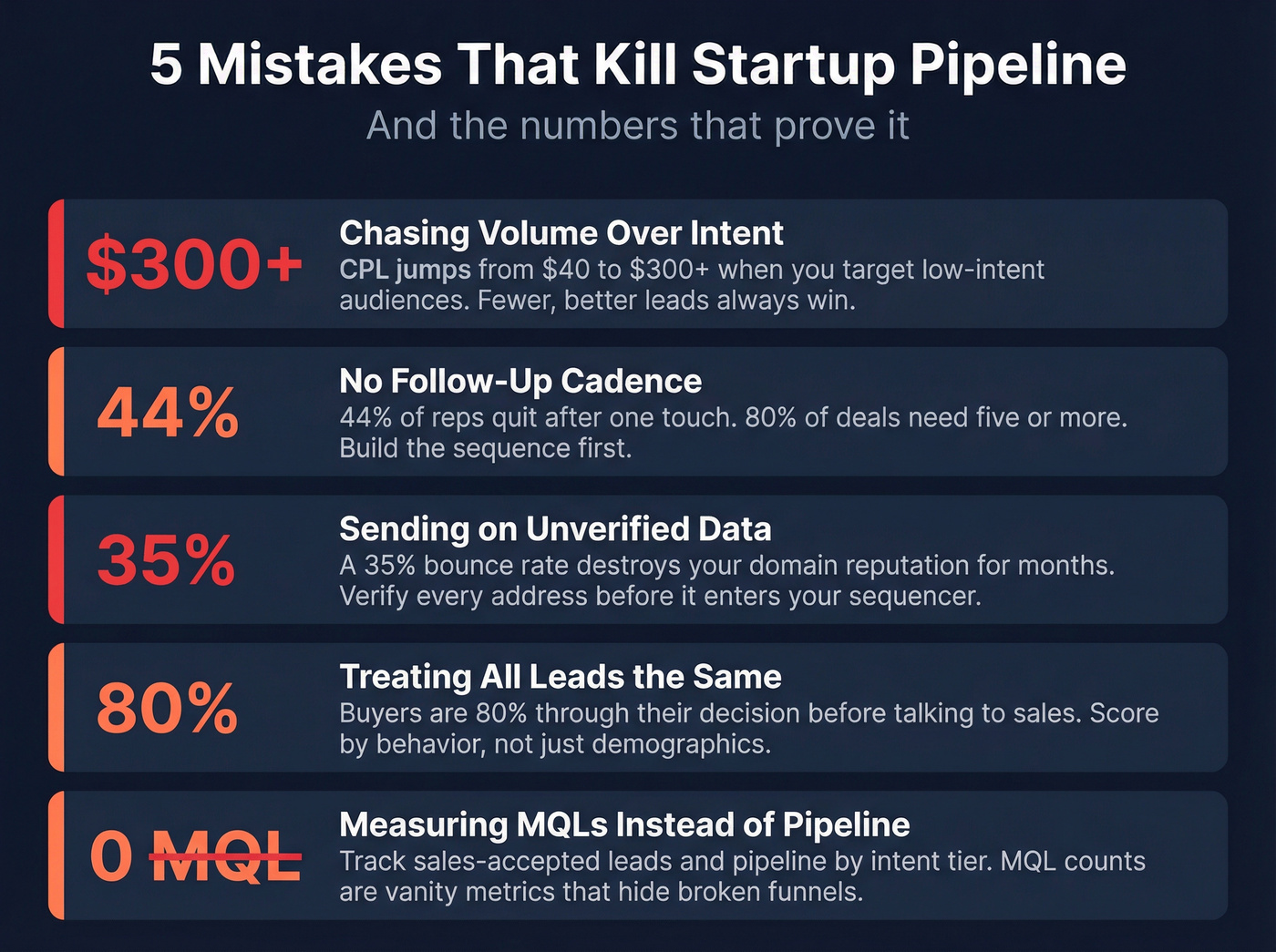
No follow-up cadence. 44% of reps quit after one touch. 80% of deals need five or more. Build the sequence before you send the first email.
Sending on unverified data. A 35% bounce rate doesn't just waste emails - it destroys your domain reputation for months. Fix data first, send second. (If you’re troubleshooting, start with what a hard bounce actually means.)
Treating all leads the same. A prospect who visited your pricing page three times isn't the same as someone who downloaded a whitepaper. Buyers are 80% through their decision before they talk to you - score by behavior, not just demographics.
Measuring MQLs instead of pipeline. Track sales-accepted leads and pipeline by intent tier. MQL counts are vanity metrics that hide broken funnels. I've watched startups celebrate hitting "500 MQLs this month" while their actual pipeline shrank. Don't be that team.
If you need a clean way to operationalize this, build a simple lead scoring system.
You don't need a $40K/year data platform to build pipeline. Prospeo gives you 300M+ profiles with 30+ filters - buyer intent, funding stage, tech stack, headcount growth - so you can nail your ICP from day one. Free tier includes 75 verified emails per month. No contracts, no sales calls.
Test your first ICP segment this week without spending a dollar.
FAQ
How much should a startup spend on lead generation?
Average B2B CPL is $84, but a lean outbound stack runs under $200/month total. Target a 3:1 LTV:CAC ratio - if you're below that, cut spend and fix targeting before scaling.
How long before outbound generates meetings?
With verified data and a well-defined ICP, expect first booked meetings within 2-4 weeks of launching sequences. Inbound takes 3-6 months to compound. Run both - outbound buys you time while inbound builds your moat.
Do I need a sales team to run outbound?
No. A single founder with a prospecting tool and an email sequencer can run outbound solo. Founder Led Sales grew their community from 47 to 1,000 members and landed five paid sponsors at $3,500/month each while cutting list-building from 15 hours to 2-3 hours per week. Hire reps when you've proven the playbook works.
What's the biggest startup lead generation mistake?
Sending cold emails on unverified data. A bounce rate above 10% tanks your sender reputation within days, killing deliverability for every future campaign. Verify every address before it enters your sequencer - it's far cheaper than rebuilding a burned domain.