

TAM vs ICP: Definitions, Formulas & How to Use Both
Your CEO presents a $2B TAM on the board deck. Meanwhile, your SDRs are cold-calling 10,000 accounts with a 2% close rate. That gap - between "how big is the opportunity" and "who should we actually sell to" - is where pipeline goes to die.
In 2026, 54% of companies report insufficient pipeline to hit revenue targets. Win rates across mid-market B2B have dropped 18%, and average deal values fell 21%. A lot of that damage traces back to one root cause: teams nail the TAM math and never translate it into a usable target list.
What Is TAM?
TAM - Total Addressable Market - is the total revenue opportunity if you captured 100% of the market. It's a ceiling, not a forecast.
TAM = total potential customers x ACV
Two approaches get you there. Top-down: start with a broad market number and filter. Take the global CRM market at $65B, narrow to North America (40% = $26B), then healthcare (15% = $3.9B), then cloud-only (70% = $2.73B). Bottom-up: count accounts directly. 45,000 mid-sized tech companies x $25K ACV = $1.125B.
Run both. If they align within roughly 15%, your assumptions are solid. If they're wildly different, something's off in your filters or your account count.
What Is an Ideal Customer Profile?
Your ICP describes the company most likely to buy, stay, and expand. It's not a persona - that's the individual. It's the account-level filter that tells reps where to spend their time.
A good ICP answers two questions: who's most likely to pick us over competitors, and who actually takes action when we reach out?
A mature ICP covers four attribute categories: firmographic (industry, headcount, revenue), technographic (tech stack, tools in use), behavioral (engagement patterns, content consumption), and situational (funding stage, hiring velocity, leadership changes). Don't forget the negative ICP - the companies you explicitly don't want. We've seen teams waste entire quarters working accounts that looked great on paper but had zero budget authority, all because nobody defined the "don't sell to" list.
The fastest way to build one:
- Identify your ~10 best customers
- Interview them for common traits
- Build a template from the patterns (use an Ideal Customer Profile Template to standardize it)
- Refine quarterly - this is where most teams fail
An ICP that doesn't evolve is just a stale slide.
Key Differences at a Glance
TAM is a fundraising number. ICP is a revenue number. They serve completely different audiences inside your go-to-market org.
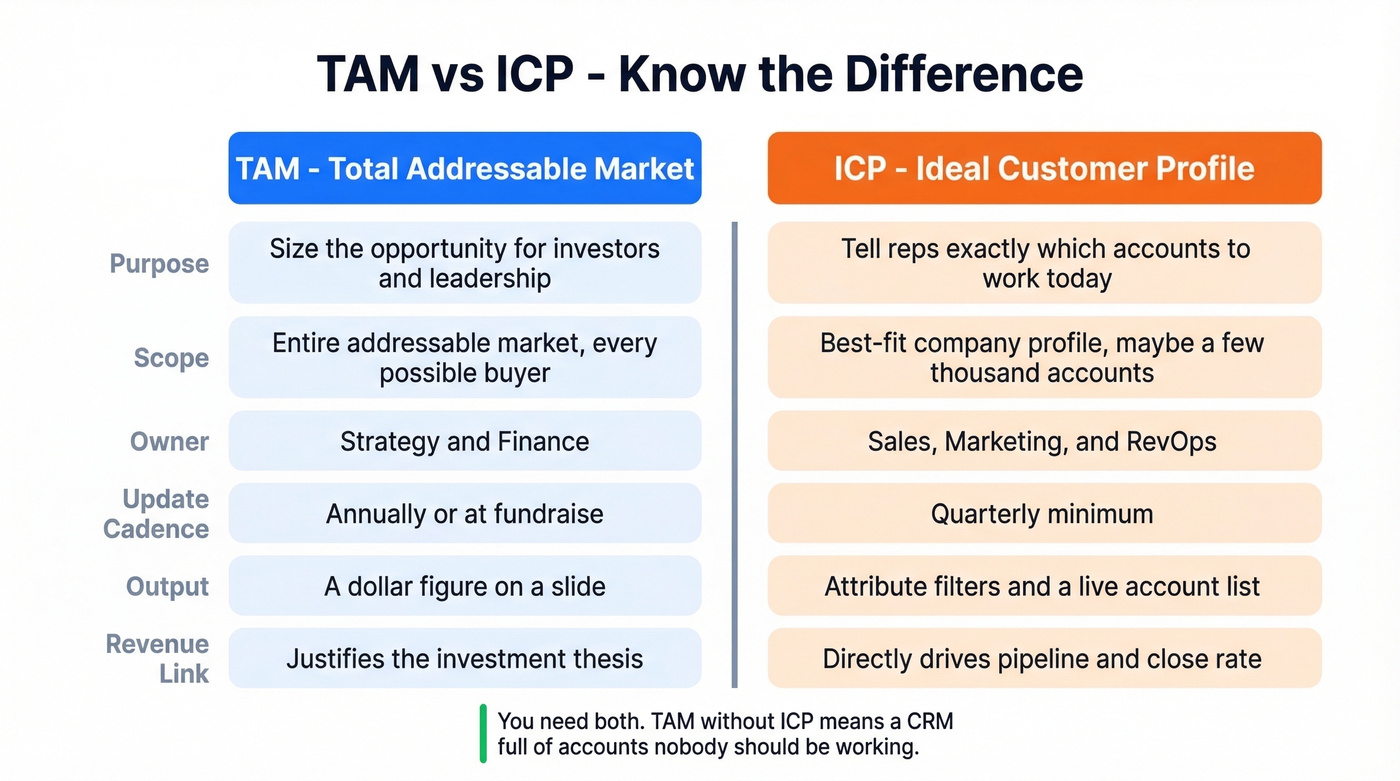
| Dimension | TAM | ICP |
|---|---|---|
| Purpose | Size the opportunity | Target the right buyers |
| Scope | Entire addressable market | Best-fit company profile |
| Owner | Strategy / Finance | Sales / Marketing / RevOps |
| Update cadence | Annually or at fundraise | Quarterly minimum |
| Output | Dollar figure | Attribute filter + account list |
| Revenue link | Justifies investment | Drives pipeline and close rate |
TAM tells investors the market is worth chasing. Your ICP tells reps which accounts to chase today. Confusing the two is how you end up with a CRM full of accounts nobody should be working.

Your ICP is only as useful as the contact data behind it. Prospeo's 30+ search filters - including technographics, intent data across 15,000 topics, and headcount growth signals - turn ICP criteria into verified account lists. With 98% email accuracy and a 7-day data refresh, your reps work current contacts, not stale CRM records.
Stop letting good ICP definitions die in a spreadsheet.
Where SAM and SOM Fit
Think of it as an onion. TAM is the outer layer - everyone who could theoretically buy. SAM (Serviceable Addressable Market) is the segment you can actually serve: SAM = target segment x ACV. SOM (Serviceable Obtainable Market) is what you'll realistically capture: SOM = (last year's revenue / last year's SAM) x this year's SAM.
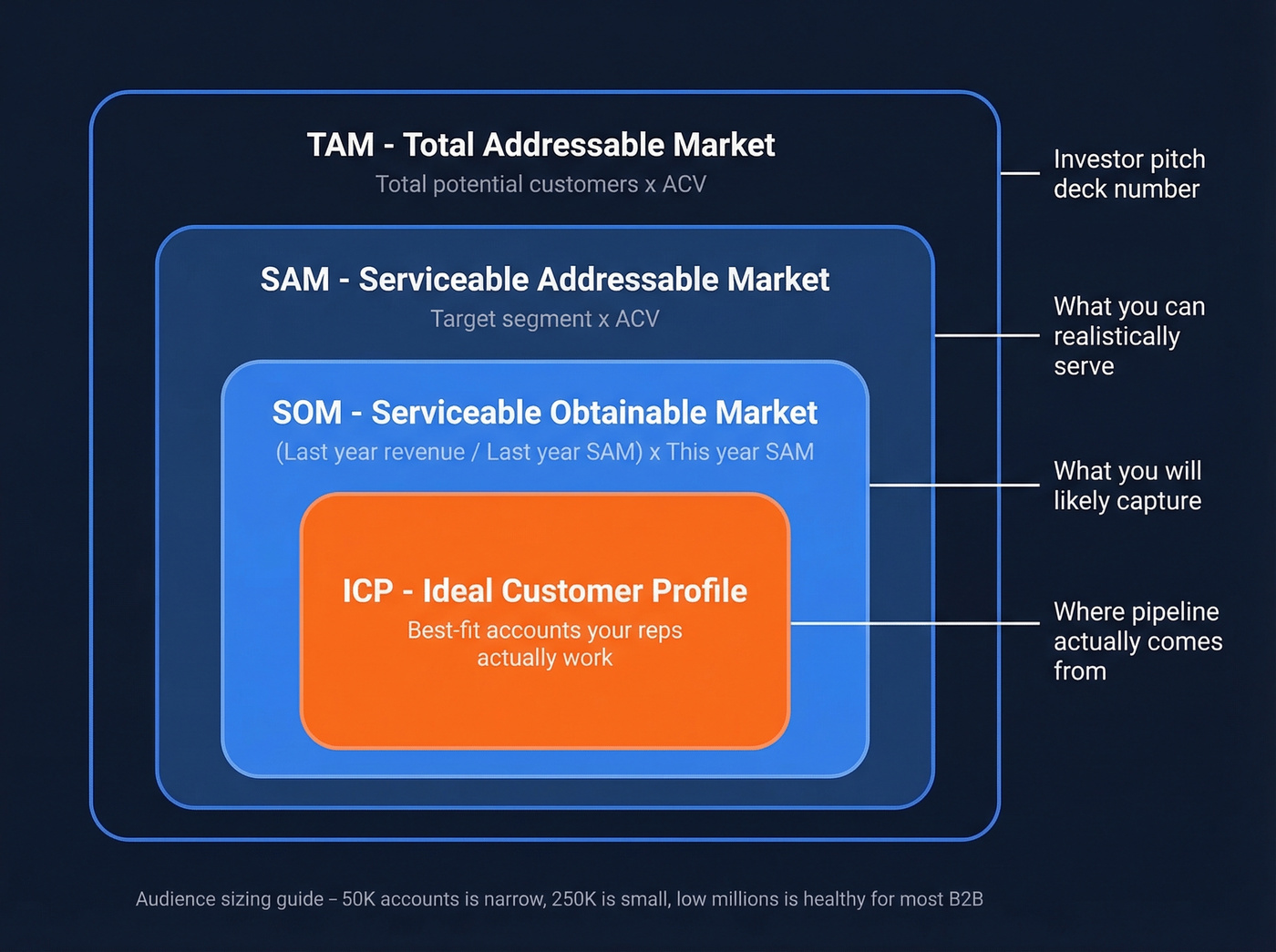
Your ICP lives inside SOM. It's the execution layer. Some frameworks like TCP (Target Customer Profile) go further by focusing on the overlap between your ICP and your current customer list, but for most teams, the TAM to SAM to SOM to ICP funnel is enough structure.
For audience sizing, 50K accounts is narrow, 250K is still small, and low millions is healthy for most B2B categories. If your TAM math produces 3,000 accounts, you don't have a market - you have a niche.
What Goes Wrong in Practice
Here's the thing: the #1 complaint on r/revops is that half the accounts in the CRM don't fit the ICP. TAM lives in a spreadsheet nobody updates. Lead scoring is either basic HubSpot rules nobody trusts or an enterprise intent platform like 6sense that runs $30K-$100K+/year and still feels like a black box. In our experience, CRM pollution is always worse than teams estimate.
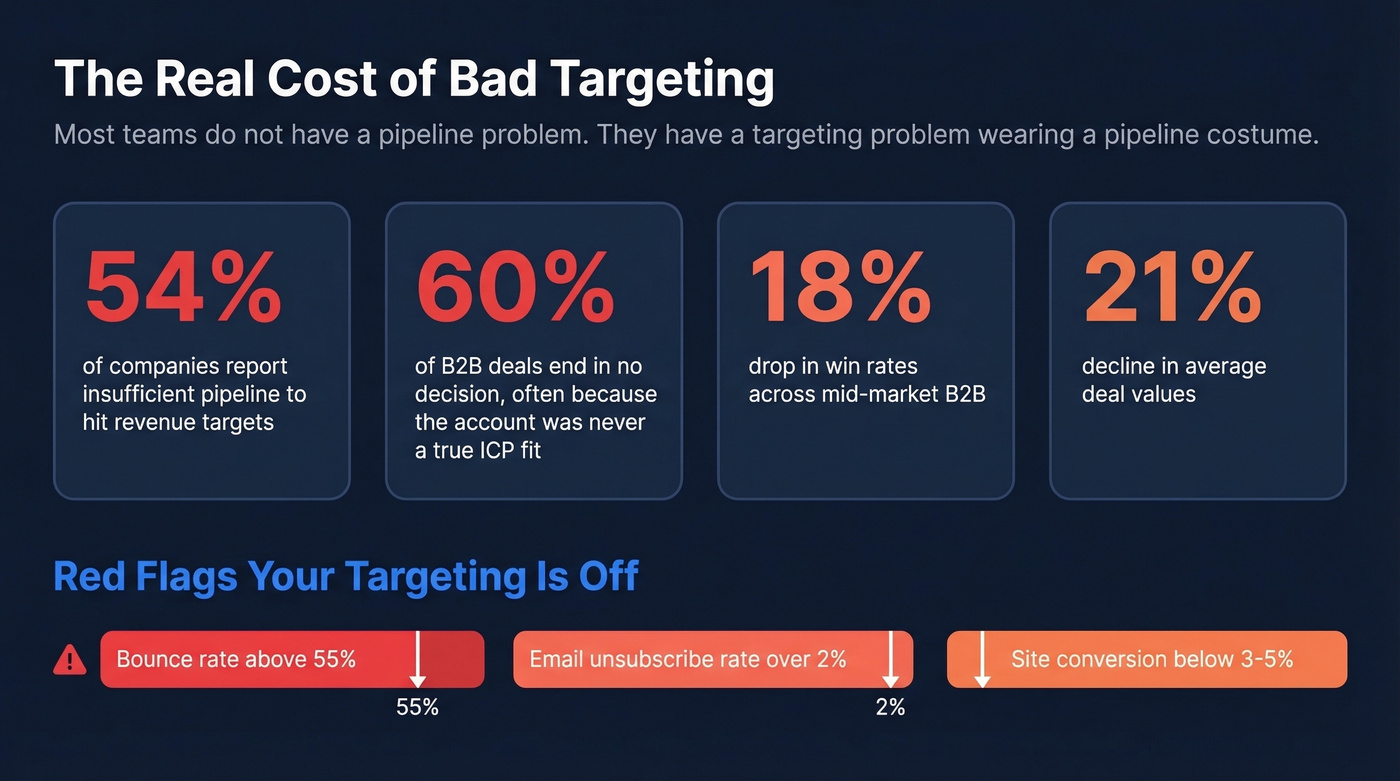
The downstream cost is brutal. Brent Adamson's research found that 60% of B2B deals end in "no decision" - often because the prospect was never a true ICP fit in the first place. You didn't lose to a competitor. You lost to indifference, because the account shouldn't have been in your pipeline.
Most teams don't have a pipeline generation problem. They have a targeting problem wearing a pipeline costume. Fix the ICP, and pipeline follows.
Watch for these red flags:
- Bounce rate above 55% signals audience mismatch (see Email Bounce Rate benchmarks and fixes)
- Email unsubscribe rates over 2%
- Site conversion below 3-5% (track the right funnel metrics)
If you're hitting those thresholds, the problem isn't your messaging or your outbound sequences. You're talking to the wrong companies.
How to Use Both Together
TAM sets the ceiling. ICP drives execution. And here's the feedback loop most teams miss: ICP wins expand your accessible TAM. When you close and retain the right accounts, you learn which adjacent segments convert - and your SAM grows organically.
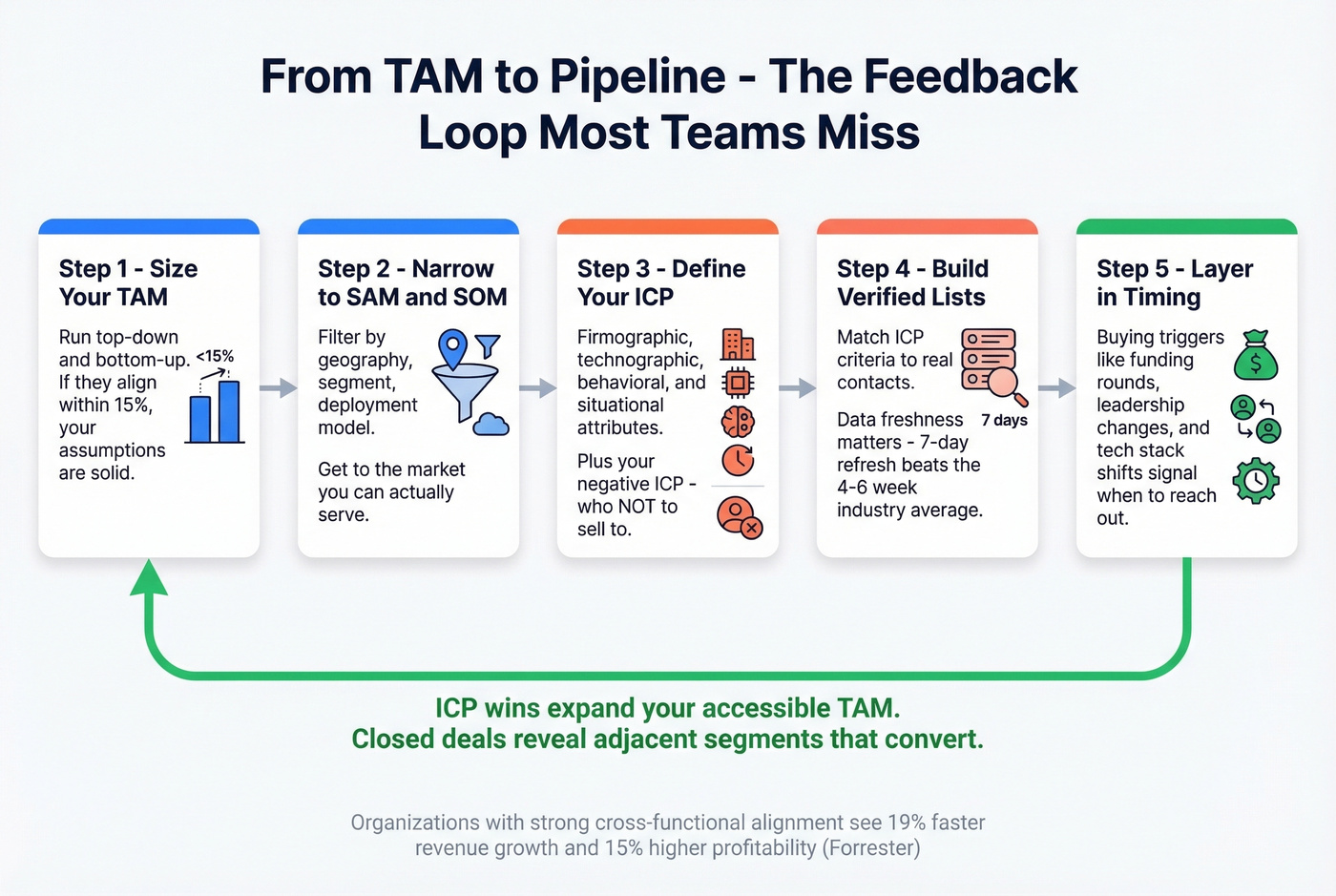
Forrester found that organizations with strong cross-functional alignment see 19% faster revenue growth and 15% higher profitability. But let's be honest - ten customer interviews and a spreadsheet will get you 80% of the way there. You don't need a $100K platform to define your ideal customer profile.
Where you do need tooling is the next step: turning ICP criteria into a verified contact list. Once you've defined the attributes - industry, headcount, tech stack, growth signals - tools like Prospeo let you match those criteria directly with 30+ search filters, including technographics and intent data across 15,000 topics. With 98% email accuracy and a 7-day data refresh, the list stays current instead of dying in a spreadsheet (more on data enrichment services if you need to fill gaps).
Once you've nailed the ICP, the next layer is timing. Buying triggers like funding rounds, leadership changes, or tech stack shifts signal when to reach out (see how to track sales triggers). Account-based marketing programs live and die by this sequencing: right company, right contact, right moment.
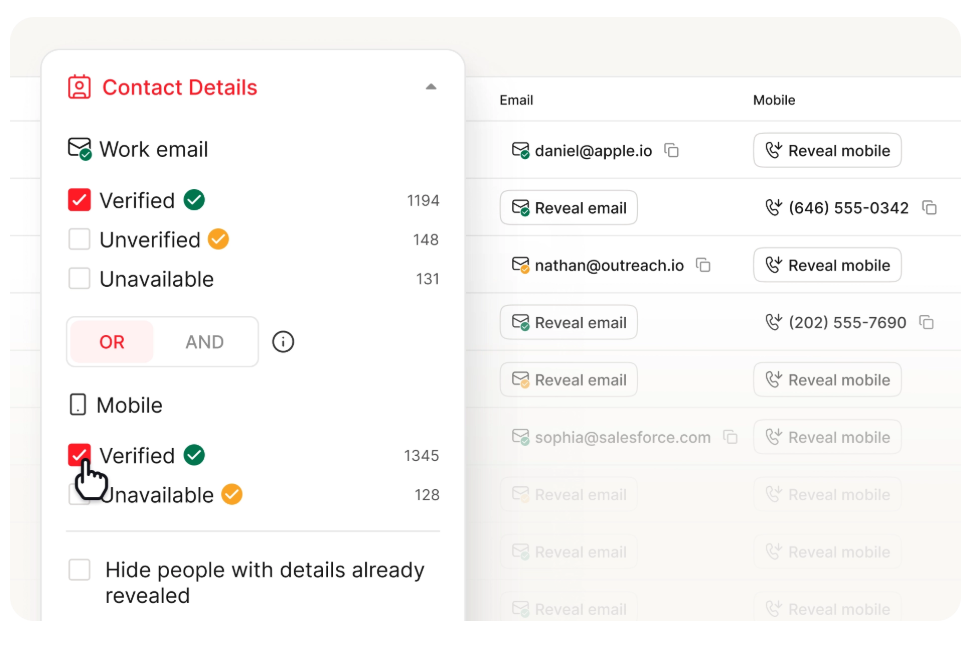
If 60% of deals end in 'no decision,' your targeting needs surgery, not more volume. Prospeo matches your ICP attributes to 300M+ profiles and returns verified emails at ~$0.01 each - so reps only work accounts that actually fit. No contracts, no annual lock-in.
Fix the targeting problem and pipeline fixes itself.
FAQ
What's the difference between TAM and ICP?
TAM is the total revenue opportunity if you captured every possible customer in your market. ICP is the profile of the company most likely to buy, stay, and expand. TAM sizes the market for investors and board decks; ICP tells your sales team which accounts to prioritize today. You need both - one without the other leaves money on the table.
Is ICP the same as buyer persona?
No. ICP describes the ideal company - firmographics, technographics, headcount, industry, revenue range. A buyer persona describes the individual decision-maker within that company: their title, pain points, and motivations. You need both. ICP for account targeting, persona for messaging and sequencing.
How often should you update your ICP?
Quarterly at minimum. Trigger a review whenever win rates drop below historical averages, sales cycles lengthen by 20%+, or churn spikes. These are signals your ICP has drifted from reality. Teams that go 12+ months without revisiting see predictable pipeline decay.
How do you build a prospect list from your ICP?
Define your ICP attributes, then use a B2B data platform to filter and export verified contacts. Data freshness is critical - stale lists kill deliverability. We've found that a 7-day refresh cycle makes a measurable difference compared to the 4-6 week industry average, especially for outbound campaigns where bounce rates directly impact domain reputation.