

The B2B Lead Generation Process: A 6-Step Playbook With Real Benchmarks (2026)
The b2b lead generation process breaks in the same spot for almost every team - and it's not where you think. The lead gen software market has ballooned to $7.4 billion, yet most pipelines still hemorrhage leads at the handoff between marketing and sales. B2B buyers now use 10 channels on average before making a purchase, and up to 80% of buying decisions happen before a rep is ever contacted. That means the process feeding your pipeline matters more than your closers' skills.
The industry benchmark for MQL-to-SQL conversion sits around 15%. That's 85% of marketing-qualified leads that never become sales-qualified. The fix isn't more leads. It's shared definitions, a real SLA, and contact data that doesn't bounce. Expect roughly $200 average CPL and plan around the reality that 80% of deals require 5+ touches. You don't need 15 tactics - you need a connected process your team can actually execute, with the right data at every stage.
Lead Types That Matter: MQL, SAL, SQL
Before building anything, get your vocabulary straight. Pipelines break because marketing and sales define "qualified" differently.
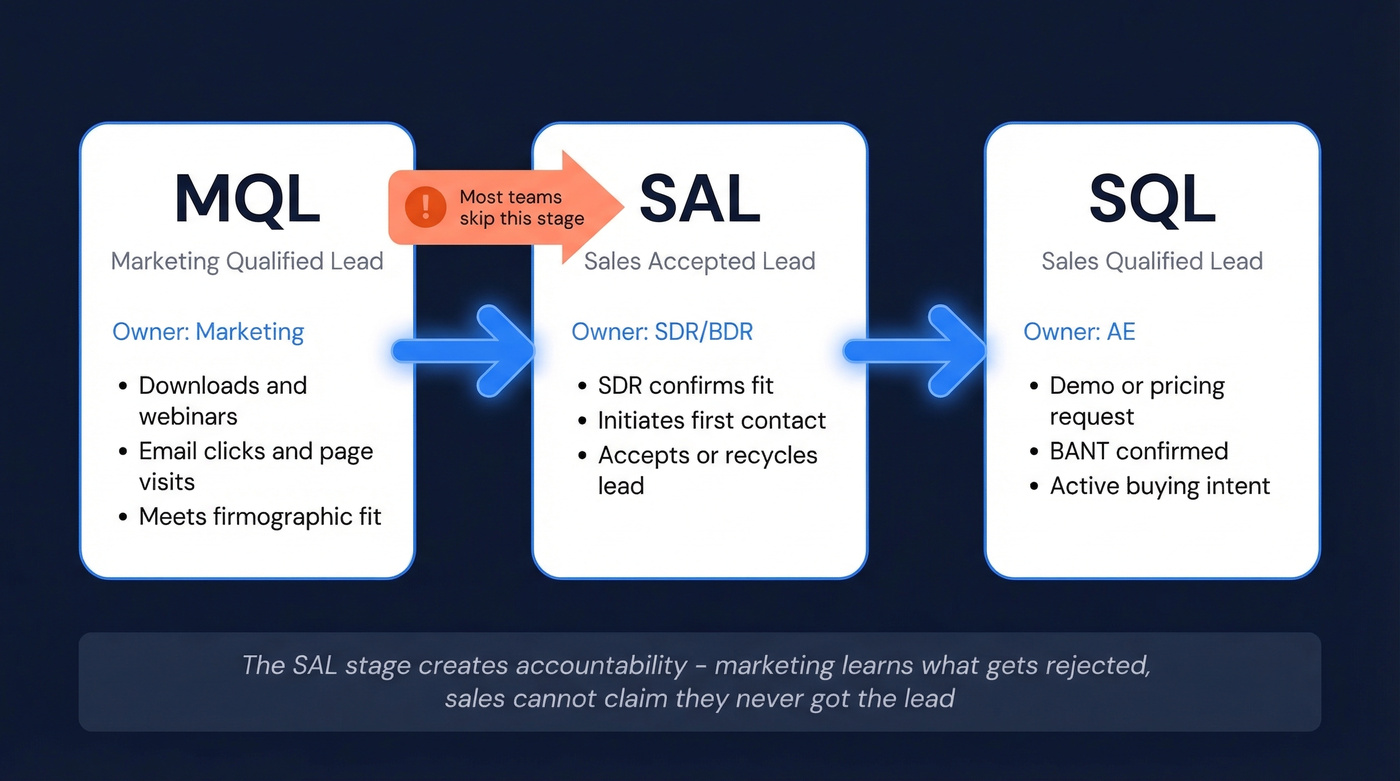
| Stage | Owner | Trigger Behaviors | Progression Criteria |
|---|---|---|---|
| MQL | Marketing | Downloads, webinars, email clicks, key page visits | Demographic/firmographic fit + engagement threshold |
| SAL | SDR/BDR | MQL accepted for outreach | SDR confirms fit, initiates contact, progresses or recycles |
| SQL | AE | Demo request, pricing inquiry, BANT confirmed | Buying intent + authority + timeline |
The SAL stage is the one most teams skip - and it's the stage that prevents the "your MQLs are junk" argument. When an SDR explicitly accepts or rejects a lead, you create accountability on both sides. Marketing learns what's getting rejected and why. Sales can't claim they never received the lead.
Ask any revenue operations lead what breaks their pipeline and you'll hear the same answer: nobody owns the space between MQL and SQL.
The 6 B2B Lead Gen Steps
Step 1: Define Your ICP
Your ideal customer profile isn't a persona document gathering dust in a Google Doc. It's a targeting filter that determines every number after it - conversion rates, CPL, pipeline velocity, close rates. Four pillars make an ICP useful: firmographics (industry, size, revenue, geography), technographics (tech stack signals that indicate fit), behavioral signals (website visits, content engagement), and intent signals (actively researching your category).
Your ICP also sets your conversion ceiling. B2B SaaS companies convert website visitors at roughly 1.1%. Manufacturing runs 2.2%. Legal services hit 7.4%. If you're in SaaS expecting 5% conversion rates, your forecasts are fiction.
Pull your last 50 closed-won deals, find the patterns, and validate with sales. Review quarterly - not once. If you need a starting point, use an ideal customer profile template with a scoring rubric.
Step 2: Build Your Target Account List
This is where most processes start leaking money. You define a great ICP, export 5,000 contacts, and 1,800 bounce on the first sequence. Your domain reputation tanks, deliverability craters, and your CPL skyrockets because the foundation was rotten.
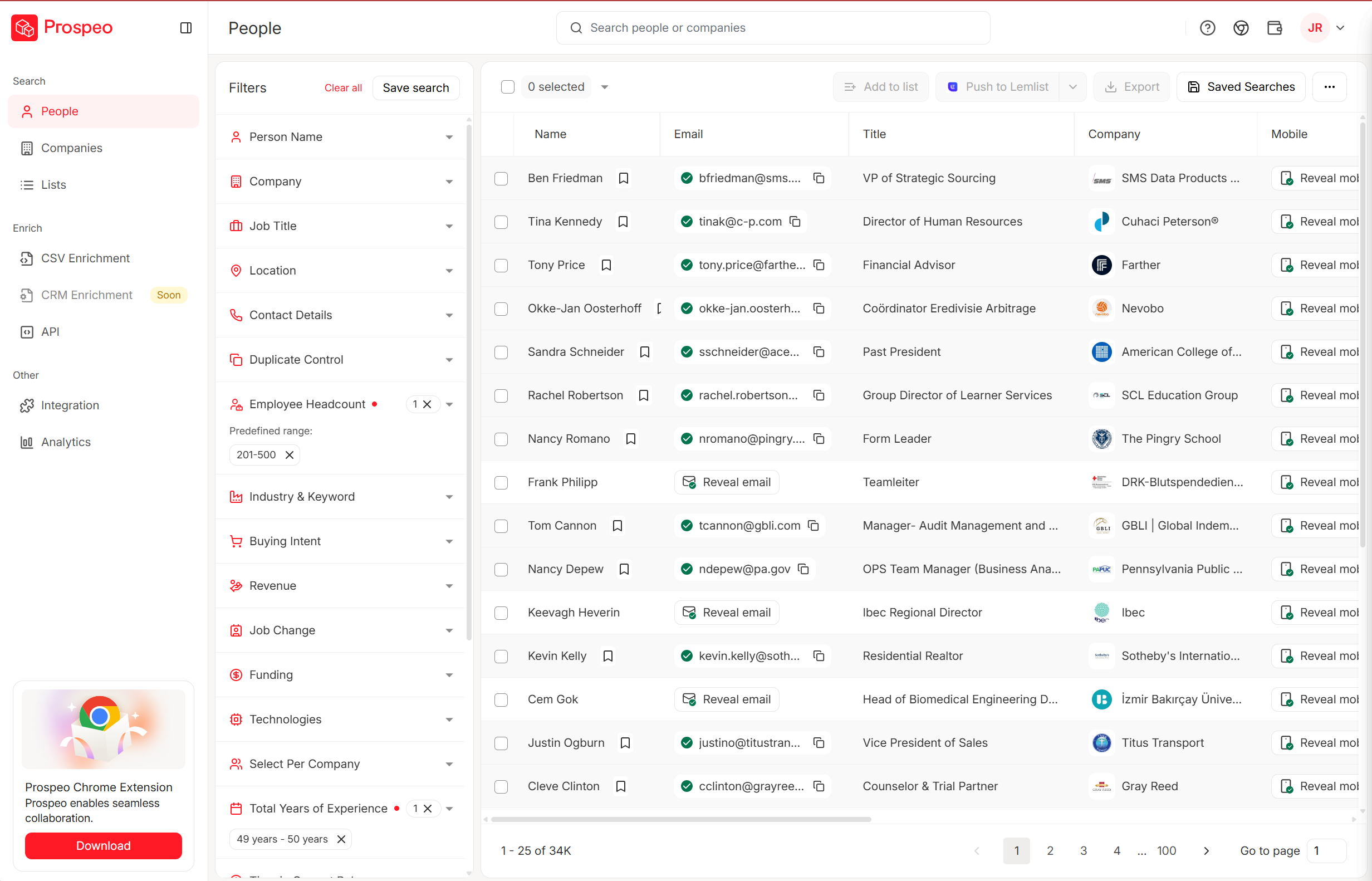
We've seen teams cut their required lead volume in half just by fixing data quality at this stage. Prospeo covers 300M+ professional profiles with 143M+ verified emails at 98% accuracy, refreshed every 7 days. One customer, Meritt, dropped their bounce rate from 35% to under 4% while tripling pipeline from $100K to $300K per week. Filter by your ICP criteria using 30+ search filters - buyer intent, technographics, job changes, headcount growth, funding - then export verified contacts and push them to your sequencer. (If you want to systematize this, see how to automate target account lists end-to-end.)
Step 3: Choose Your Channels
Pick three or four channels based on your ICP, budget, and timeline. Demand generation works best as a blend, and the channels you select shape the structure of your lead generation campaigns. If you're pressure-testing your stack, start with these outbound lead generation tools.
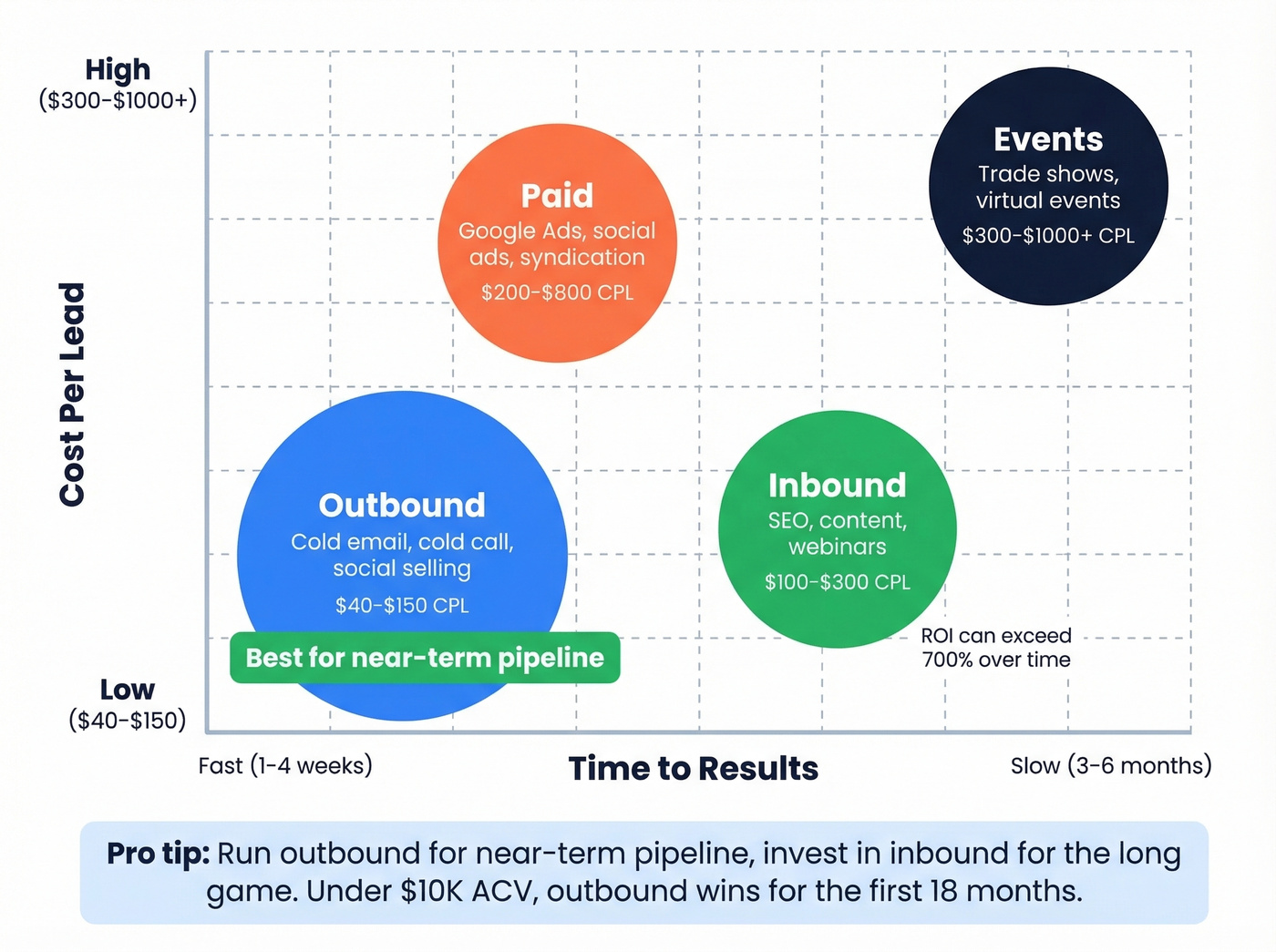
| Type | Examples | Typical CPL | Time to Results | Best For |
|---|---|---|---|---|
| Outbound | Cold email, cold call, social selling | $40-$150 | 2-4 weeks | Near-term pipeline, account-based plays |
| Inbound | SEO, content, webinars | $100-$300 | 3-6 months | Long-term cost efficiency, brand |
| Paid | Google Ads, social ads, content syndication | $200-$800 | 1-4 weeks | Scaling quickly, demo generation |
| Events | Trade shows, virtual events | $300-$1,000+ | Varies | Enterprise, relationship-driven sales |
Email marketing returns $36-$40 per $1 spent. SEO/content ROI can exceed 700%. But those are lagging returns - outbound gets pipeline moving in weeks. Most teams that hit their numbers run outbound for near-term pipeline and invest in inbound for the long game.
Here's the thing: if your deal sizes sit below $10K ACV, you probably don't need a 6-month inbound content engine. Outbound with clean data and a tight ICP will outperform content marketing for at least the first 18 months. We've watched teams burn six figures on blog posts that generate leads their sales team can't close, while a $200/month data tool and a solid cold email sequence fills pipeline in two weeks.
Step 4: Capture and Score Leads
Not all leads deserve the same response time. Scoring measures engagement; grading measures fit. You need both.
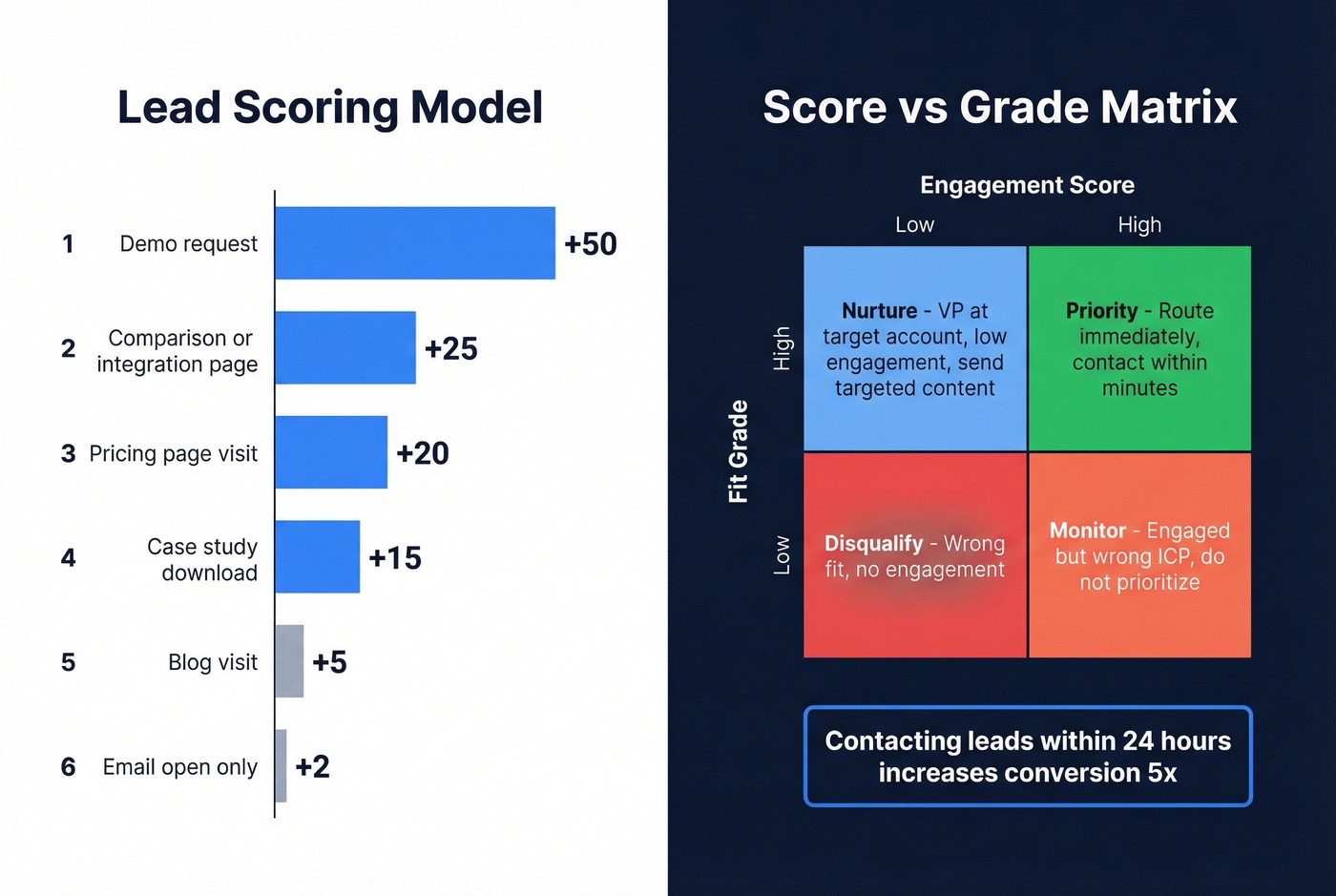
A lead who visits your pricing page three times but works at a 5-person company outside your ICP scores high but grades low. A VP of Engineering at a target account who downloaded one whitepaper grades high but scores low. Route intelligently using both dimensions.
Here's a practical scoring model that reflects real buyer intent:
- Demo request: +50 points
- Comparison/integration page: +25 points
- Pricing page visit: +20 points
- Case study download: +15 points
- Blog visit: +5 points
- Email open only: +2 points
AI-powered scoring models that weight real-time intent signals are replacing static point systems. If your scoring model doesn't adapt to behavior patterns automatically, it's already outdated. Contacting leads within 24 hours increases conversion 5x. Demo requests should be routed in minutes, not sitting in a queue. A pricing page visit combined with a case study download in the same session? That warrants outreach within an hour. For a deeper framework, use a dedicated lead scoring guide.
Step 5: Qualify and Hand Off
This is where pipelines go to die. 95% of salespeople say they receive low-quality leads from marketing. Marketing says sales doesn't follow up fast enough. Everyone's frustrated. Nobody's wrong - the system is broken.
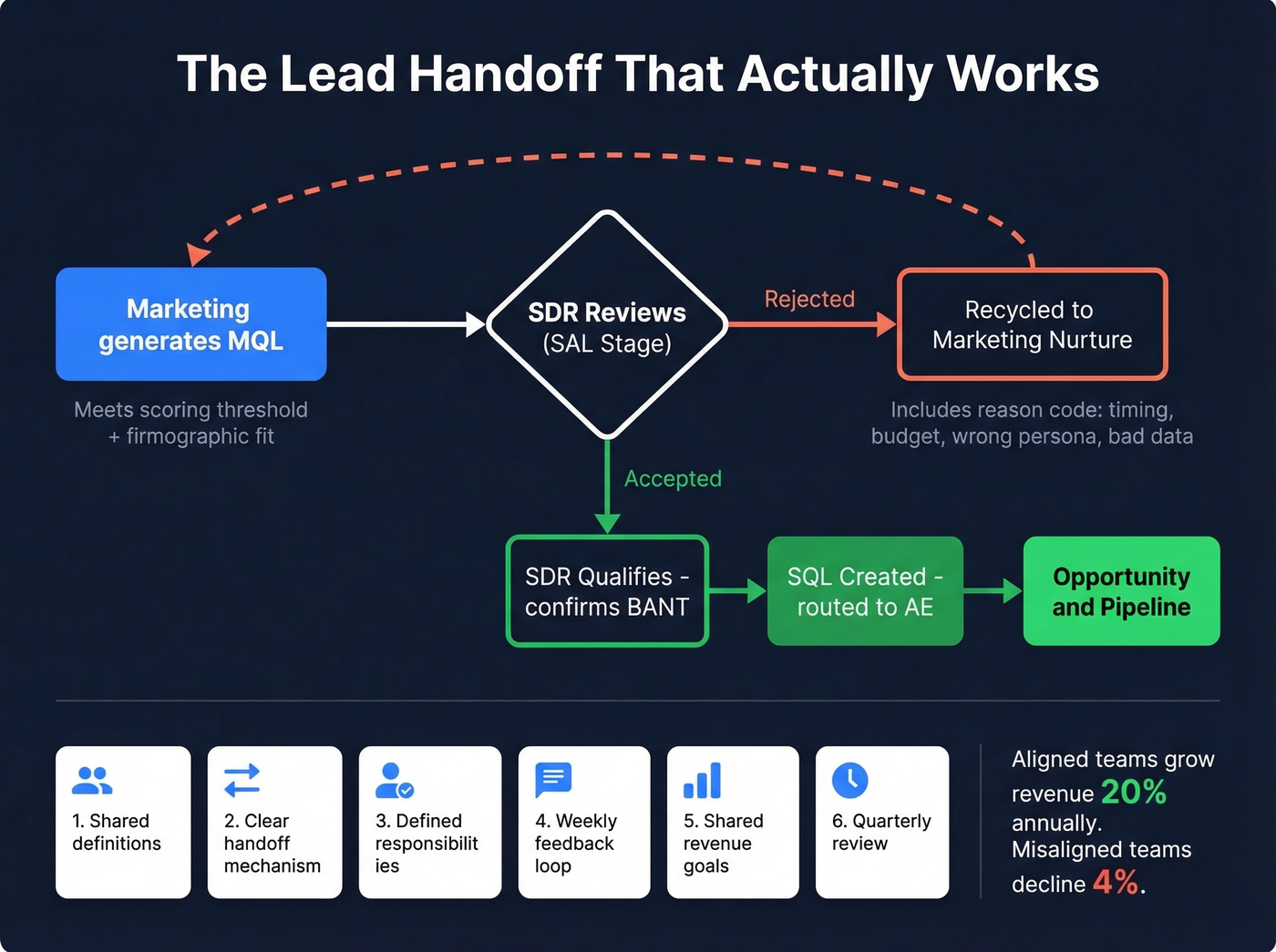
The fix is a marketing-sales SLA with six components:
- Shared definitions of what constitutes an MQL, SAL, and SQL
- A clear handoff mechanism through CRM stage changes or routing tools
- Defined responsibilities - engagement context marketing provides, response times sales commits to
- A weekly feedback loop where sales reports on lead quality
- Shared pipeline and revenue goals rather than siloed stage metrics
- Quarterly review cadence to refine thresholds
Organizations with strong sales-marketing alignment grow revenue 20% annually. Misaligned organizations decline 4%. That's not marginal - it's the gap between growth and contraction.
In our experience, the "VP of Sales says MQLs are junk" problem almost always traces back to a missing recycling path. Leads that don't convert at the SAL stage need to go back to marketing nurture with a reason code - not into a black hole. Build the recycling criteria explicitly, and fragmented attribution stops being a finger-pointing exercise. (If this is a recurring issue, map your lead generation workflow and assign owners per stage.)
Step 6: Nurture, Convert, and Measure
44% of reps give up after one follow-up. Meanwhile, 80% of deals require 5+ touches. Most teams are abandoning deals that would've closed with two more emails.
Build multi-touch, multi-channel cadences. Email alone isn't enough - layer in calls, social touches, and personalized content based on the engagement history flowing through your SLA. Track both marketing-sourced and marketing-influenced pipeline; single-touch attribution understates marketing's impact on deals that involve 5+ touches across the buyer journey.
Track KPIs by funnel stage:
| Funnel Stage | Key KPIs | What They Tell You |
|---|---|---|
| Top | CPL, conversion rate, volume by channel | Attracting the right people? |
| Mid | MQL-to-SQL rate, speed-to-lead | Handoff working? |
| Bottom | Opp-to-won rate, pipeline velocity, deal size | Sales closing efficiently? |
Marketing-sourced pipeline should contribute 30-60% of total revenue. Below 30% means marketing isn't generating enough pipeline. Above 60% means you're over-reliant on marketing and under-investing in outbound or partnerships. To keep reporting clean, standardize your funnel metrics across teams.

Step 2 is where most B2B lead generation processes bleed money - bad data, bounced emails, torched domains. Prospeo's 300M+ profiles with 98% email accuracy and 7-day refresh cycle mean your target account list actually connects. Meritt tripled pipeline to $300K/week after switching.
Stop losing deals to bad contact data at the top of your funnel.
Funnel Benchmarks for 2026
Let's work a real example using MarketJoy's funnel benchmarks:
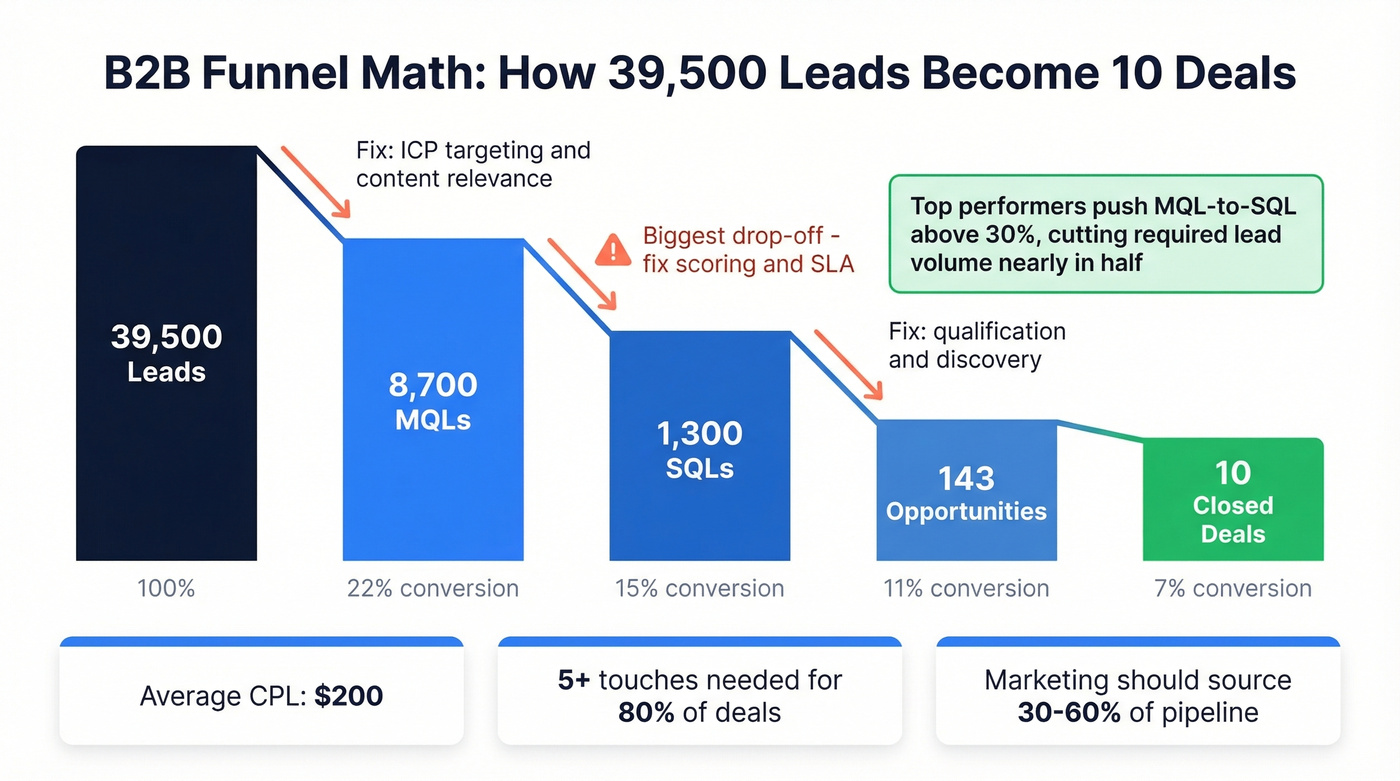
| Stage | Benchmark Rate | What to Fix If Below |
|---|---|---|
| Lead to MQL | 22% | ICP targeting, content relevance |
| MQL to SQL | 15% | Scoring model, SLA, handoff timing |
| SQL to Opportunity | 11% | Qualification criteria, discovery process |
| Opp to Closed-Won | 7% | Sales execution, pricing, competitive positioning |
If you need 10 closed deals per month at a 7% close rate, you need roughly 143 opportunities. At 11% SQL-to-Opp, that's about 1,300 SQLs. At 15% MQL-to-SQL, you need around 8,700 MQLs. At 22% lead-to-MQL, you're looking at roughly 39,500 leads entering the top of funnel.
The biggest drop-off is MQL-to-SQL. We've seen teams move that from 15% to 25% by tightening their scoring model and SLA - cutting required lead volume nearly in half. Top performers push MQL-to-SQL above 30%, but 15% is the realistic starting benchmark. Fix the handoff before you buy more top-of-funnel. For more context, compare against the average B2B lead conversion rate benchmarks.
5 Mistakes That Kill Your Campaigns
1. Chasing volume over intent. Targeting broad audiences without intent signals inflates lead costs from $40 to $300+. Shift KPIs from lead volume to SAL conversion and pipeline by intent tier.
2. Treating all leads the same. 79% of marketing leads never convert into sales. Sending every lead the same nurture sequence is prescribing the same medication to every patient. Segment by behavior and buyer journey stage.
3. Running outdated scoring models. Linear point scoring that weights whitepaper downloads the same as pricing page visits misses high-intent signals entirely. Audit quarterly - pricing, integration, and comparison page visits should carry 3-5x the weight of blog reads.
4. Dropping context at handoff. When an AE picks up a lead with zero engagement history, they're starting cold. Pass full engagement context into the CRM automatically - content consumed, intent signals, previous conversations. Manual routing delays compound the problem, so automate lead assignment and make sure high-intent leads never sit in a queue.
5. Building on bad contact data. If 35% of your emails bounce, every number after that collapses. Your deliverability tanks, your domain reputation suffers, and your CPL skyrockets. Verify before you send. Always. The consensus on r/sales is that bad data is the single fastest way to torch a new domain - and they're right. If you're troubleshooting, start with email bounce rate benchmarks and fixes.
Essential Tools by Process Step
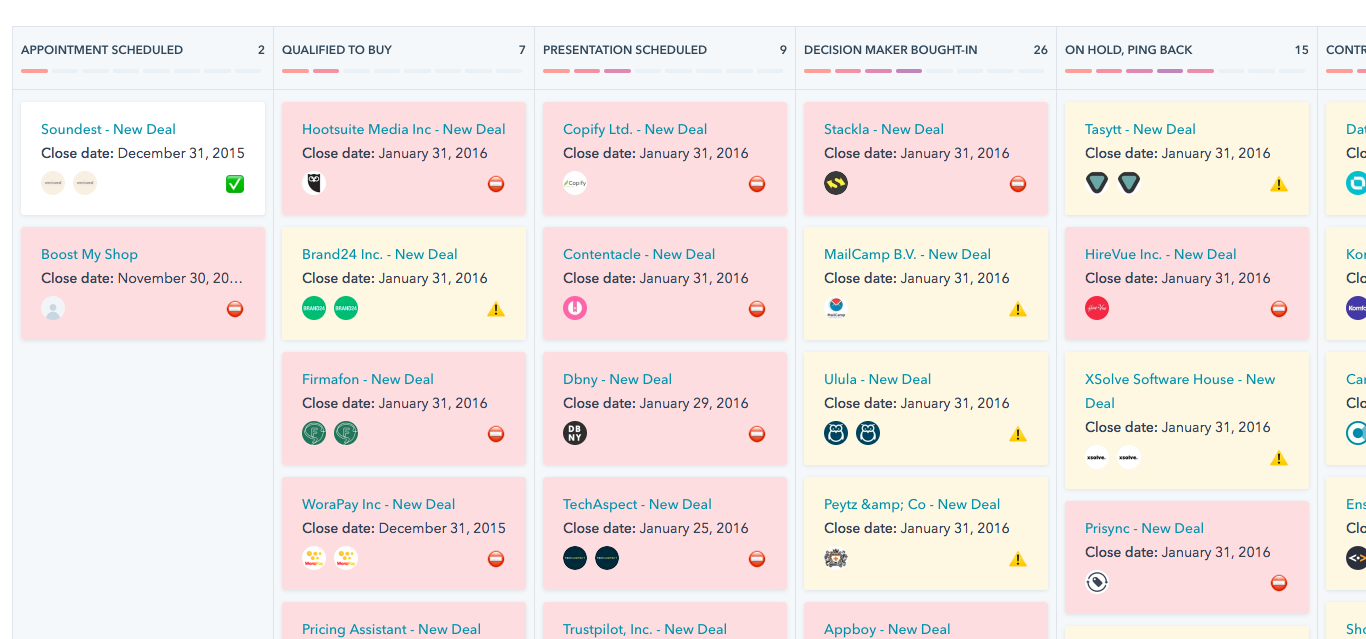
| Category | Tool | Starting Price | Key Capability |
|---|---|---|---|
| CRM | HubSpot | $15/month/user | Pipeline management, reporting |
| CRM | Salesforce | $25/user/month | Enterprise workflows, customization |
| Data & Enrichment | Prospeo | Free / ~$0.01/email | 98% email accuracy, 7-day refresh |
| Data & Enrichment | ZoomInfo | ~$15K-$40K/yr | Large US database, intent data |
| Data & Enrichment | Apollo | Free / $49-$99/mo | Prospecting + sequences combo |
| Sales Engagement | Outreach | ~$100-$150/user/mo | Multi-channel sequences |
| Sales Engagement | Smartlead | ~$39/mo | Cold email at scale |
| Sales Engagement | Instantly | ~$30/mo | Cold email at scale |
| Sales Engagement | Lemlist | ~$59/mo | Personalized cold outreach |
| Intent Data | Bombora | ~$25K-$50K/yr | Surge intent signals |
| Intent Data | 6sense | ~$30K-$100K+/yr | ABM + predictive intent |
| Routing | Chili Piper | ~$150/mo | Instant lead-to-meeting routing |
| Automation | Zapier | Free / $19.99/mo | Connect any tools in your stack |
| Automation | Make | Free / ~$9/mo | Workflow automation |
| Automation | Clay | ~$150-$500/mo | Waterfall enrichment workflows |
Skip the enterprise intent platforms if you're under $5M ARR. Bombora and 6sense are powerful, but the price tags don't make sense until you've got the foundational process running and enough pipeline volume to justify the spend. Start with clean contact data and a solid sequencer - that combination alone will outperform a $50K intent tool sitting on top of a broken handoff. If you're evaluating vendors, start with a shortlist of data enrichment services.
You just mapped a 6-step lead gen process - but none of it works if 35% of your emails bounce. Prospeo gives you 143M+ verified emails, 125M+ direct dials, and 30+ ICP filters including buyer intent and technographics, starting at $0.01 per email. No contracts.
Run the playbook with data that actually converts.
FAQ
What's the difference between MQL and SQL?
An MQL shows early interest through content engagement - marketing owns it. An SQL has demonstrated buying intent through demo requests or confirmed BANT fit and is ready for a sales conversation. The SAL stage between them is where an SDR validates before passing to an AE.
How long does this process take to produce results?
Outbound generates pipeline within 2-4 weeks with verified contact data. Inbound channels like SEO typically take 3-6 months to compound. Most teams run both in parallel - outbound for near-term pipeline, inbound for long-term cost efficiency.
What's a good MQL-to-SQL conversion rate?
The industry benchmark is around 15%. Top-performing teams push above 30% by tightening scoring models and implementing a formal marketing-sales SLA. Below 10% usually signals a broken handoff or overly broad MQL definition.
How much should B2B lead generation cost?
Average B2B CPL is roughly $200, while demo-request leads run $600-$800. Email marketing returns $36-$40 per $1 spent. Budget by working backward from closed deals needed, then use funnel math to calculate required volume at each stage.
What's the most affordable way to get accurate contact data?
Prospeo offers 75 free verified emails per month with 98% accuracy - enough for small teams running real outbound. Paid plans start at roughly $0.01 per email, compared to $1+ per lead on platforms like ZoomInfo. Apollo's free tier works too, though accuracy rates are lower at around 79%.