

7 Cold Calling Challenges Every Sales Team Faces in 2026
Cold calling success rates dropped from 4.82% to 2.3% in a single year - and 63% of organizations responded by increasing call volume. That's treating the symptom, not the disease.
Here's the thing: the cold calling challenges teams face today aren't about effort. They're about infrastructure. 57% of Director-level executives and VPs still prefer a phone call over any other channel. The phone works. But carrier algorithms, data decay, and compliance frameworks have shifted so dramatically that the fix isn't to abandon outbound calls for "warm" outreach. It's to fix the plumbing underneath them.
The 7 Biggest Obstacles for Cold Callers in 2026
Your Calls Get Flagged as Spam
The FCC's STIR/SHAKEN mandate means every outbound call passes through carrier analytics engines - Hiya for AT&T, TNS for Verizon, First Orion for T-Mobile - and each one scores your number in real time. Sales call blocks affect more than 95% of numbers labeled "Spam Likely," which simply never get answered. That's not a connect rate problem. That's an invisibility problem.
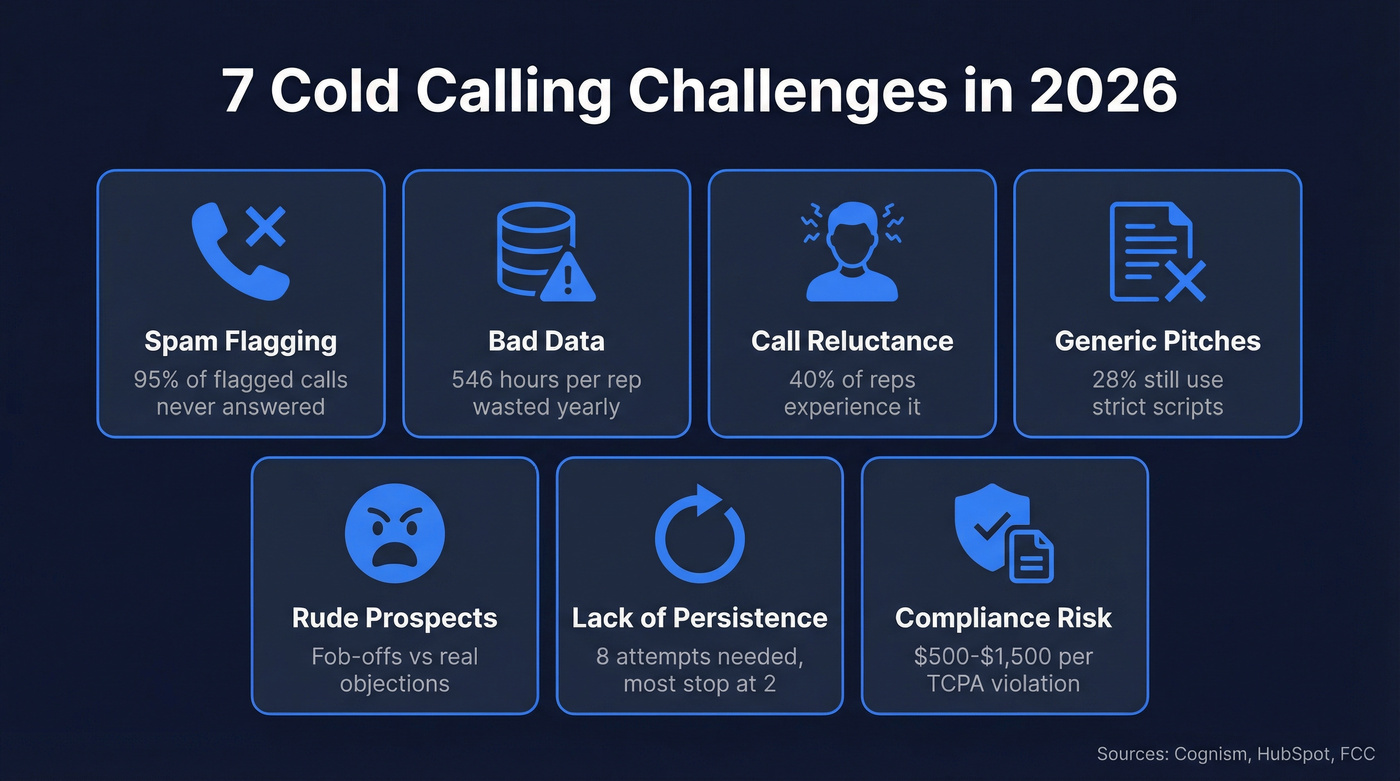
The algorithmic triggers are predictable: volume spikes, average call duration under 30 seconds, and neighbor spoofing patterns. 81% of businesses report lost revenue from spam flags, and once a number is burned, recovery takes weeks.
Keep calling patterns consistent. Register with the Free Caller Registry. Rotate numbers before they get flagged, not after. And if you're running a Salesforce dialer with BYOC architecture, check your attestation level - B-level attestation is a red flag to carriers.
Bad Data Wastes Everything
The biggest obstacle on most teams' lists isn't the script. It's the data. 62% of companies rely on contact information that's at least 20% incomplete, which translates to roughly 546 hours per rep per year wasted on wrong numbers and outdated titles. If your provider refreshes slowly, you're paying to dial yesterday's org chart.

We've watched teams pour money into dialers, coaching, and scripts while ignoring the fact that a third of their numbers were dead. Prospeo runs a 7-day data refresh cycle against the six-week industry average, with 98% email accuracy and 125M+ verified mobile numbers delivering a 30% pickup rate. When Meritt switched, their bounce rate dropped from 35% to under 4% and their connect rate tripled to 20-25%. Fix the data before you fix anything else.
If you want to quantify how fast lists go stale, start with data decay benchmarks and then build a simple CRM hygiene routine to keep it from creeping back in.
Call Reluctance Is Real
Ask any SDR what they dread most about Monday morning - it's the first dial. 40% of salespeople experience call reluctance at some point, and research attributed to Goodson and Dudley ties it to why 80% of new reps fail in their first year. Telling someone to "just pick up the phone" is about as useful as telling someone with stage fright to "just relax."
Set daily call goals that are achievable, not aspirational. Start each session with warmer prospects to build momentum. Role-play objections until responses are automatic - not once during onboarding, but weekly. Confidence comes from competence, not pep talks. (If this is a recurring issue, a dedicated cold calling mindset system helps.)

Call reluctance gets worse when reps keep hitting wrong numbers and voicemails. Prospeo's 125M+ verified mobile numbers deliver a 30% pickup rate - and refresh every 7 days so you're never dialing yesterday's org chart.
Fix the data and the confidence follows. Start free.
Generic Pitches Get Hung Up On
Only 28% of daily cold callers follow a strict script. The other 52% adapt significantly, and that adaptation is where calls succeed or die. The Sandler disarming opener remains one of the best frameworks we've seen in practice:
"Hi [Name]... I don't know if you'll find this relevant, but I work with [similar businesses] that often struggle with [pain]. Would it make sense to have a quick conversation?"
Before you dial, spend 2-3 minutes on prep. 61% of top callers use CRM data for research, and 59% check social profiles. You don't need a dossier. You need one relevant detail that proves you're not reading from a list.
To make that prep repeatable, use a lightweight pre call research checklist and keep your opener aligned with proven sales pitch opening patterns.
Handling Rude Prospects
There's a critical distinction between real objections and fob-offs. "We're locked into a contract until Q3" is real - it contains specific information. "Send me an email" is a polite exit disguised as interest. And sometimes the response isn't polite at all.
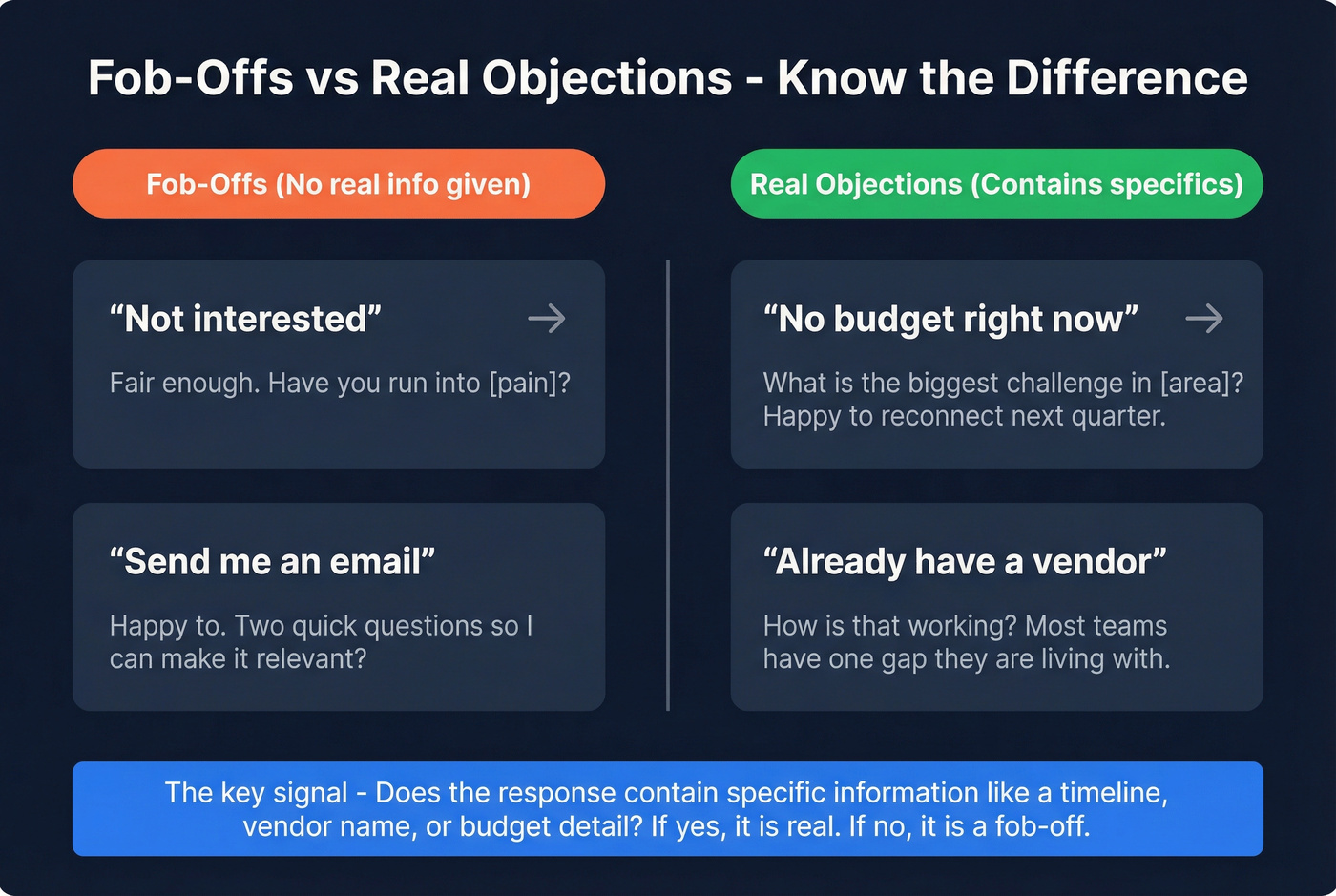
Hostile reactions are an inevitable part of outbound. How you handle them determines whether you spiral or stay sharp. The LARA framework handles both dismissive and aggressive reactions, but your responses should differ:
| Objection | Type | Response |
|---|---|---|
| "Not interested" | Fob-off | "Fair enough. Have you run into [pain]?" |
| "Send me an email" | Fob-off | "Happy to. Two quick questions so I can make it relevant?" |
| "No budget right now" | Real | "What's the biggest challenge in [area]? Happy to reconnect next quarter." |
| "Already have a vendor" | Real | "How's that working? Most teams have one gap they're living with." |
One thing we've noticed: reps who internalize rude responses tend to shorten their next few calls unconsciously, rushing through the opener to "get it over with." If that's happening on your team, build in a two-minute reset between calls. It sounds trivial. It isn't.
For a deeper system, standardize types of objections and train to handle them with curiosity.
Why Persistence Wins
It takes an average of 8 call attempts to reach a prospect. Most reps stop after 1-2. In our experience, the teams that hit 7+ touchpoints consistently outperform everyone else - not by a little, but dramatically. Persistence is the single biggest differentiator between average and top-performing SDRs. Not talent. Not scripts.
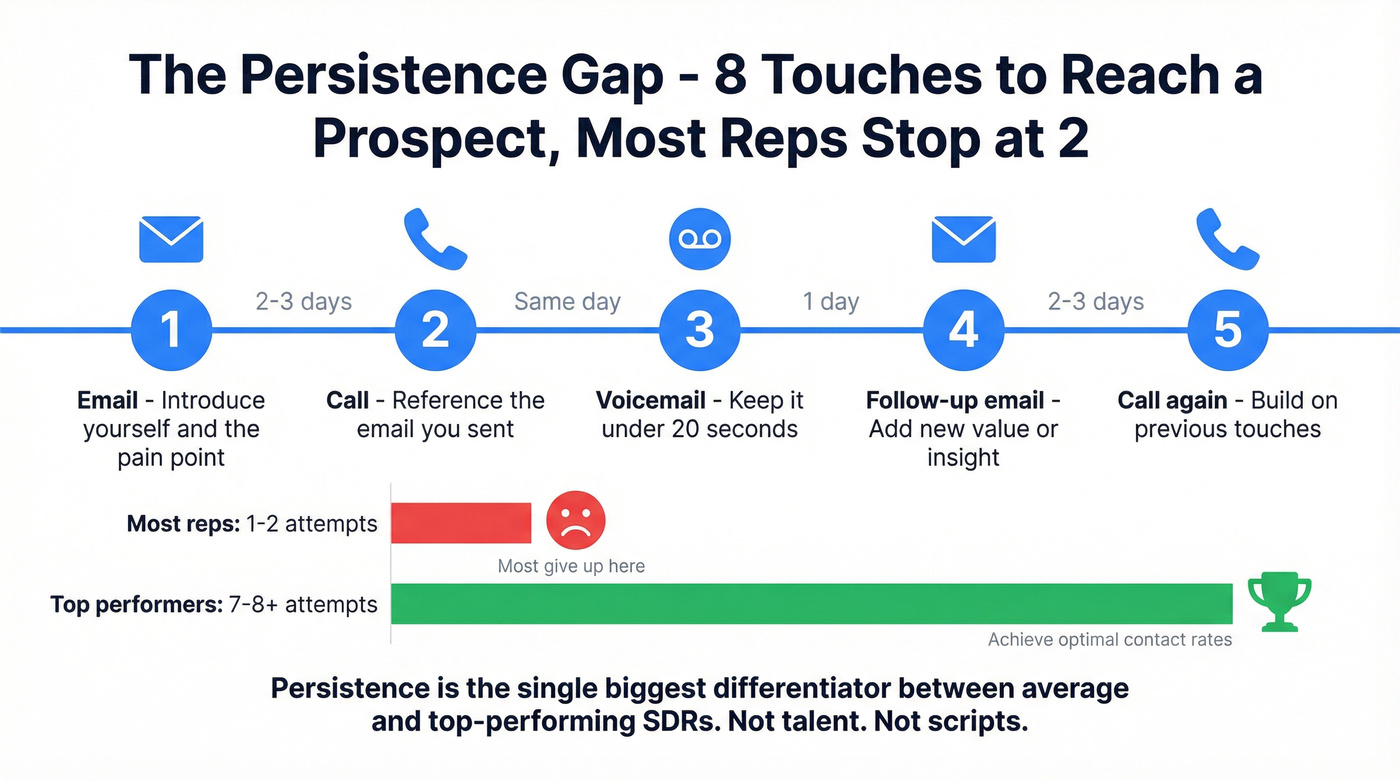
The sequence that works: email first, wait 2-3 days, call referencing the email, leave a voicemail, send a follow-up email. A cold call isn't a standalone event. It's one step in a multi-touch cadence that builds familiarity before you ever get someone live.
If you need a tighter operating rhythm, map this into a concrete sales cadence example and track it as an SDR follow-up strategy.
Compliance and Number Reputation
The DNC registry holds nearly 250M numbers. TCPA violations carry penalties of $500-$1,500 per call. Skip this section if your team already scrubs lists religiously - but if there's any doubt, tighten up now. Scrub against DNC lists before every campaign, maintain opt-out records, and monitor your number reputation weekly.
2026 Cold Calling Benchmarks
| Metric | Benchmark |
|---|---|
| Success rate | 2.3% average |
| Connect rate | 3-10% |
| Dials per connect | 18+ |
| Manual dialer talk time | 10-15 min/hr |
| Parallel dialer talk time | 40-50 min/hr |
| C-level phone preference | 57% |
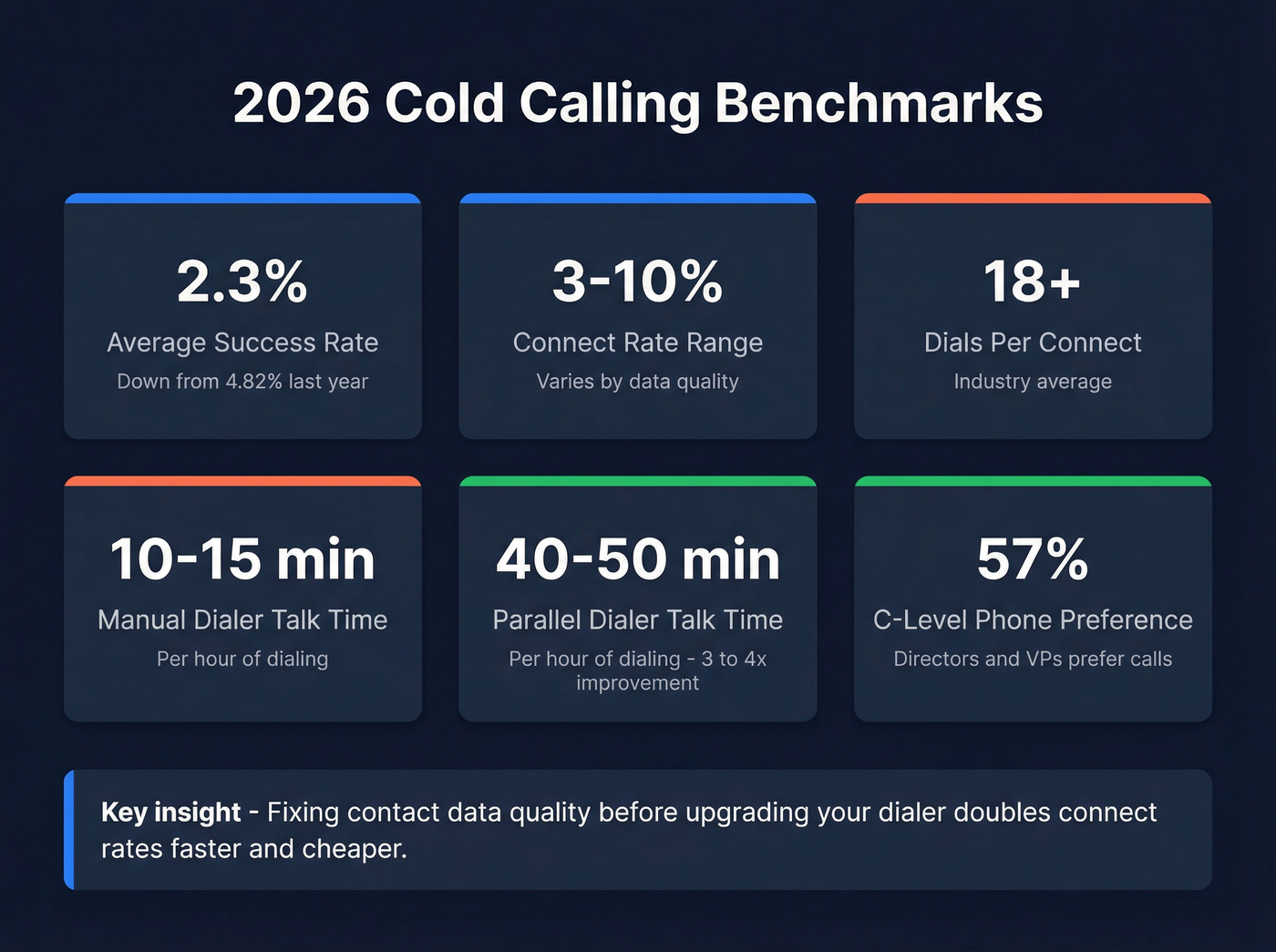
The parallel dialer gap matters, but a parallel dialer fed with bad numbers just burns through your number reputation faster. We've seen teams double their connect rate by switching to verified mobile data before upgrading their dialer. Data quality comes first. Always.
Let's be honest: if your average deal size is under five figures and your data is stale, you'll get more pipeline from fixing your contact database than from any new dialer, script framework, or AI tool combined.
Every cold calling challenge in this article gets harder with bad data. Meritt cut their bounce rate from 35% to under 4% and tripled their connect rate to 20-25% after switching to Prospeo. 98% email accuracy, 125M+ verified mobiles, $0.01 per lead. No contracts.
Stop compensating for stale data with more dials.
FAQ
What's a good cold call success rate in 2026?
The industry average is 2.3%. Well-targeted teams with verified data and tested scripts can hit 6-10%. Clean contact data and proper number reputation management are prerequisites - without both, volume alone won't move the needle.
How many cold calls should I make per day?
Most SDRs make 50-100 dials per day. With a parallel dialer, you can 3-5x live conversations without increasing raw dial count. Quality of data matters more than volume - Meritt tripled connect rates to 20-25% by fixing their contact data first.
How do I stop my calls from being flagged as spam?
Avoid sudden volume spikes, keep average call duration above 30 seconds, register with the Free Caller Registry, and rotate numbers before they get flagged. Consistent, natural calling patterns reduce spam labeling significantly - carriers penalize erratic behavior more than high volume.