Inbound Lead Qualification: The Practitioner's Playbook
Your webinar pulled 400 registrants. Marketing's celebrating. Then sales works the list and finds 30 real opportunities - and half go dark after the first call. 67% of sales are lost to poorly qualified leads, and the fix isn't a fancier framework. It's cleaner data and faster routing. Everything else is optimization on top of those two foundations.
What You Need (Quick Version)
- Define your ICP in writing. If it isn't documented, it doesn't exist.
- Enrich every inbound lead. A name and email aren't enough to score anything.
- Pick one framework. BANT for lower-ACV, high-velocity deals; MEDDIC for enterprise, multi-stakeholder deals. Don't overthink this.
- Set a 5-minute response SLA. Not a goal. An SLA.
Speed Kills Your Pipeline
The average B2B sales team takes 42 hours to respond to a new inbound lead. Forty-two hours. And 635 out of every 1,000 companies never respond at all. That's not a pipeline problem - it's an operational failure.
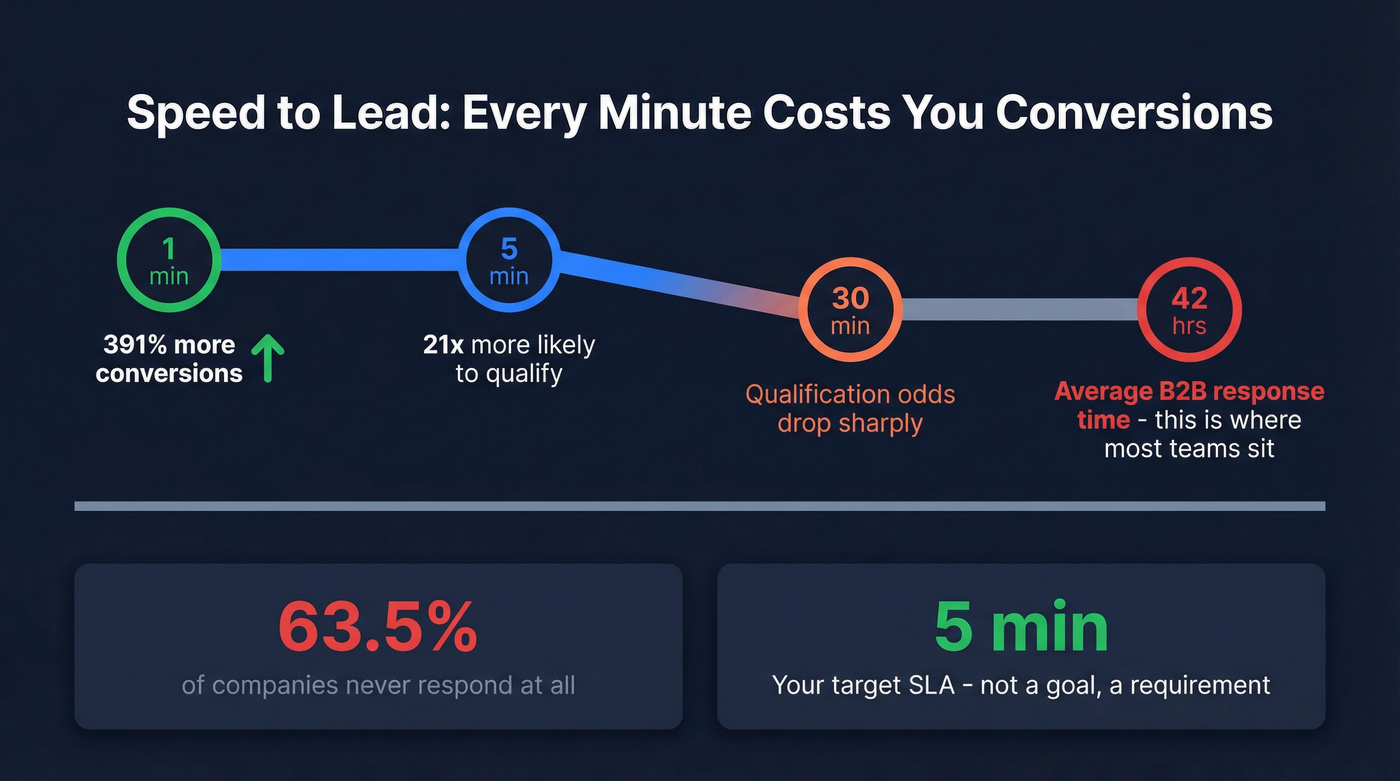
Responding in the first minute drives a 391% increase in conversions. Wait five minutes and you're still 21x more likely to qualify the lead than at 30 minutes. Ask any SDR manager what kills their pipeline and you'll hear the same answer: slow routing and garbage data.
| Segment | Avg Response Time |
|---|---|
| Telecom | 16 min |
| Small (1-300 employees) | 48 min |
| Large (2,501+) | 1 hr 28 min |
| Medium (301-2,500) | 1 hr 38 min |
| Healthcare | 2 hr 5 min |
If your team isn't responding within five minutes, nothing else in this article matters. Fix routing first.
The Qualification Process, Step by Step
Buyers complete up to 80% of their decision-making before talking to sales. By the time someone fills out your form, they've already done the research. Your job isn't to educate - it's to confirm fit and move fast.
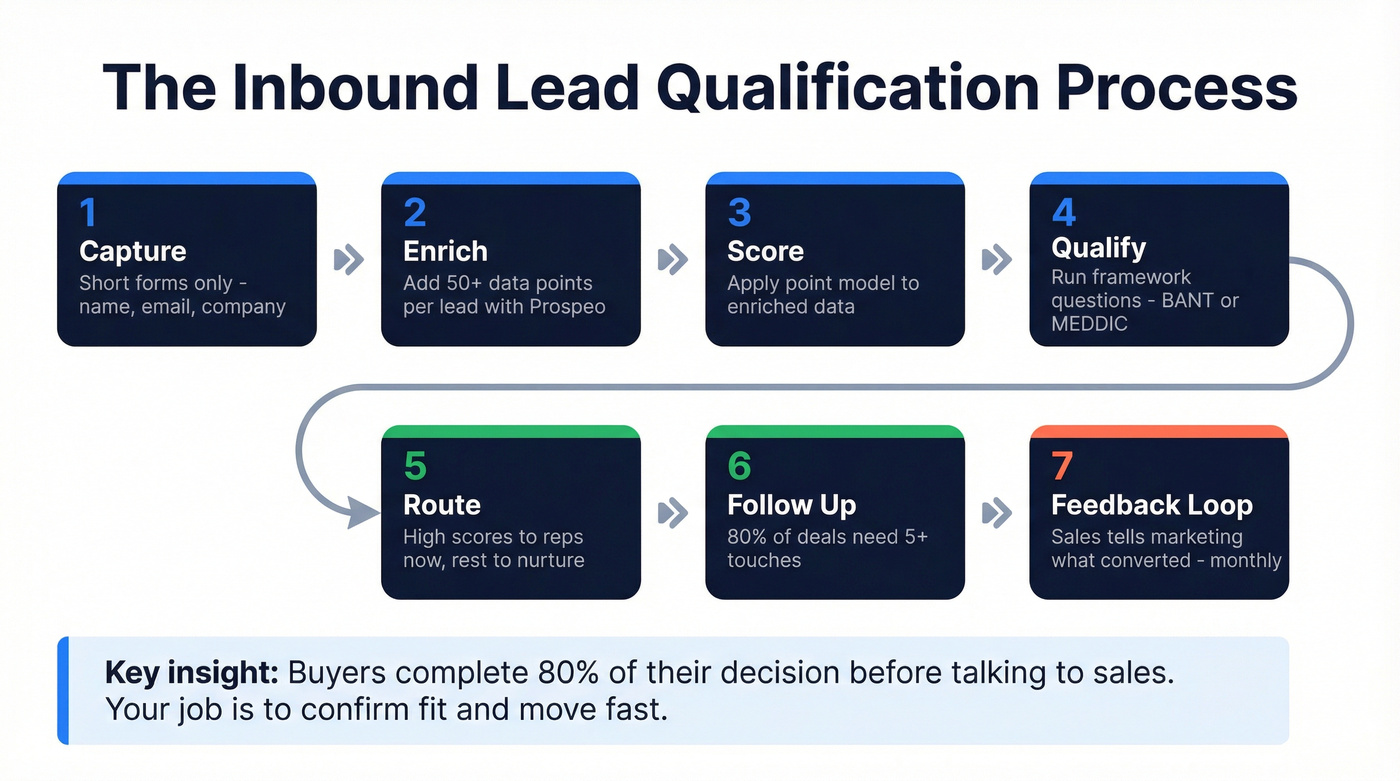
1. Capture. Keep forms short: name, email, company. Every field you add beyond three drops conversion rates measurably. Teams that cut from seven fields to three routinely see 2x more submissions without losing scoring quality, because enrichment fills the gaps afterward. The goal is to qualify leads from form submissions without forcing prospects through a 12-field interrogation that makes them bounce.
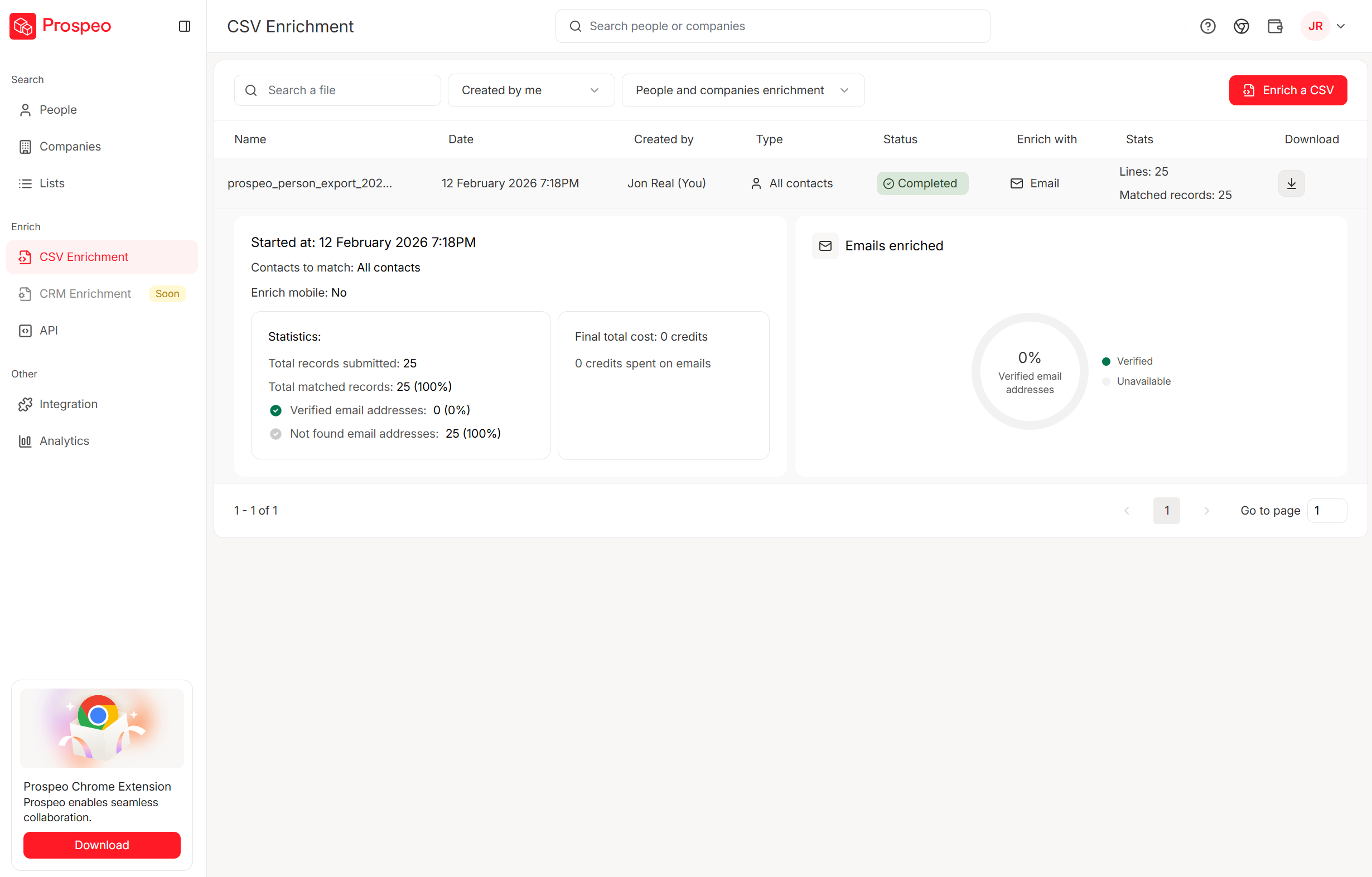
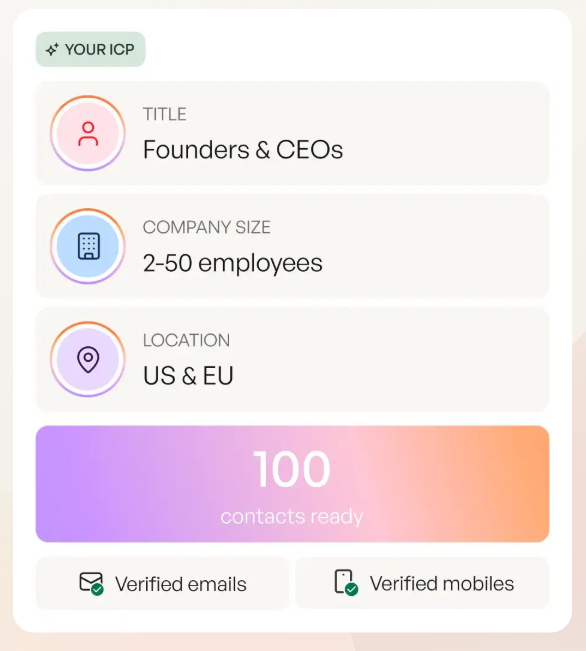
2. Enrich. This is the bridge between a form submission and a real scoring model. Run your leads through Prospeo's enrichment tool and get back complete profiles - job title, company size, technographics, and more - in minutes. An 83% match rate with 50+ data points per contact means your scoring model actually has something to work with.
3. Score. Apply your point model (next section) to the enriched data. No enrichment means half-empty fields and a scoring model running on guesswork. If you want a deeper build, use this guide on lead scoring.
4. Qualify. Run your framework questions - BANT, MEDDIC, whatever fits the deal size. If you need more options, see our lead qualification framework breakdown.
5. Route. High-scoring, sales-ready leads go to reps immediately. Everything else enters nurture. If routing is messy, fix Revenue Operations alignment before you tweak scoring weights.
6. Follow up. Persistently. 80% of deals need five or more touches. For a repeatable cadence, use a prospect follow up playbook.
7. Feedback loop. Sales tells marketing which leads converted and why. Monthly. Non-negotiable. Treat it like an Internal QBR, not a casual sync.
A Scoring Model You Can Steal
Here's the thing about lead scoring: without monthly recalibration, it's just astrology. Below is a starting rubric - steal it, adjust the weights, and revisit every 30 days.
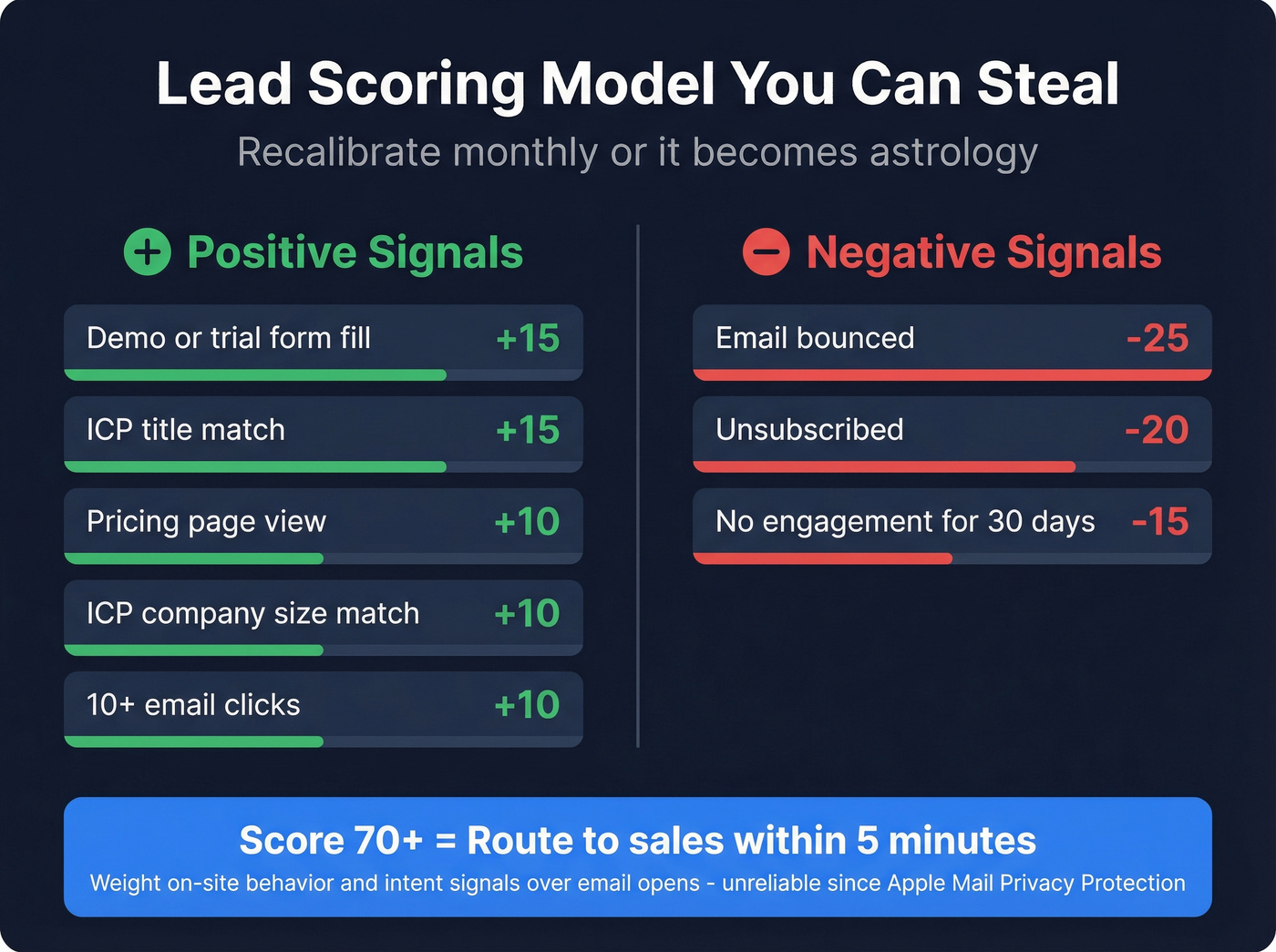
| Signal | Points |
|---|---|
| Pricing page view | +10 |
| Form fill (demo/trial) | +15 |
| 10+ email clicks | +10 |
| ICP title match | +15 |
| ICP company size match | +10 |
| Email bounced | -25 |
| Unsubscribed | -20 |
| No engagement (30 days) | -15 |
A score of 70+ should trigger urgency - that lead gets routed within minutes, not hours. Weight on-site behavior and buyer intent signals over email opens, which have been unreliable since Apple's Mail Privacy Protection rollout. If you want to formalize the negative side, add negative lead scoring rules.
In our experience, the recalibration cadence matters more than the initial model. Review which scored leads actually closed each month and adjust your thresholds accordingly. The difference between qualifying inbound leads well and wasting rep time often comes down to whether your scoring reflects current reality or last quarter's assumptions. If your inputs are decaying, start with data quality and CRM hygiene.

Your scoring model runs on data, not guesswork. Prospeo enriches inbound leads with 50+ data points - job title, company size, technographics - at an 83% match rate. At $0.01 per email, you stop routing half-empty records to reps.
Stop scoring leads with missing fields. Enrich them first.
Which Framework Fits Your Deal
Running MEDDIC on a $500/mo SaaS trial is a waste of everyone's time. Match the framework to the deal.
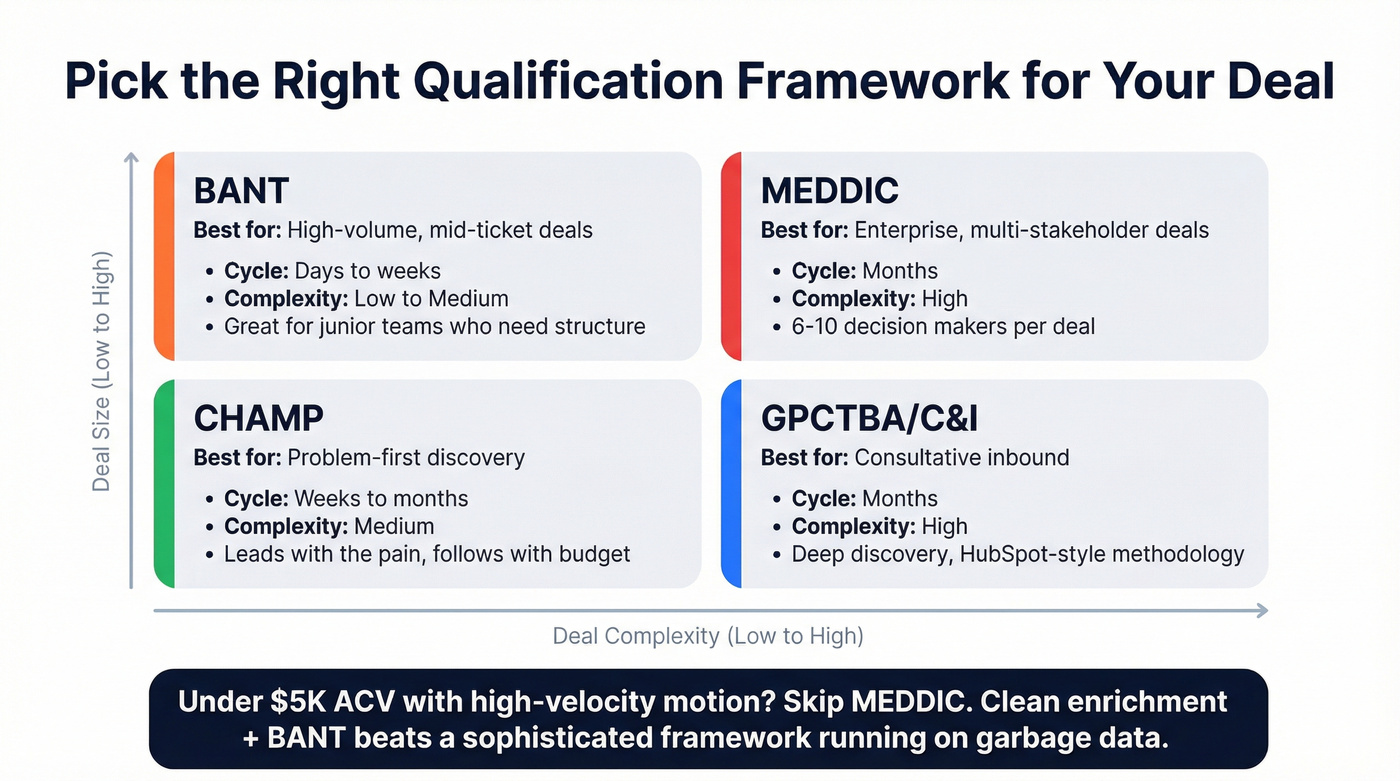
| Framework | Best For | Cycle Length | Complexity |
|---|---|---|---|
| BANT | High-volume, mid-ticket | Days to weeks | Low-Medium |
| CHAMP | Problem-first discovery | Weeks to months | Medium |
| MEDDIC | Enterprise, multi-stake | Months | High |
| GPCTBA/C&I | Consultative inbound | Months | High |
Enterprise buying groups now include 6-10 decision makers, and 86% of B2B purchases stall at some point. A junior team benefits from BANT's structure; experienced reps can handle MEDDIC's complexity. If you're choosing between variants, use this MEDDIC vs MEDDPICC guide. Here's how to modernize BANT so it doesn't sound like a 2005 cold call:
- Budget: "What investment range makes sense for this outcome?"
- Authority: "Who else will weigh in, and how do they prefer to be involved?"
- Need: "Which teams feel this pain most?"
- Timeline: "What must happen before a decision?"
Five Mistakes Killing Your Pipeline
1. Prioritizing volume over intent. Chasing every lead regardless of fit balloons cost-per-lead from $40 to $300+. Fewer, better leads always win. If you need a decision rule, use a lead quality vs quantity framework.
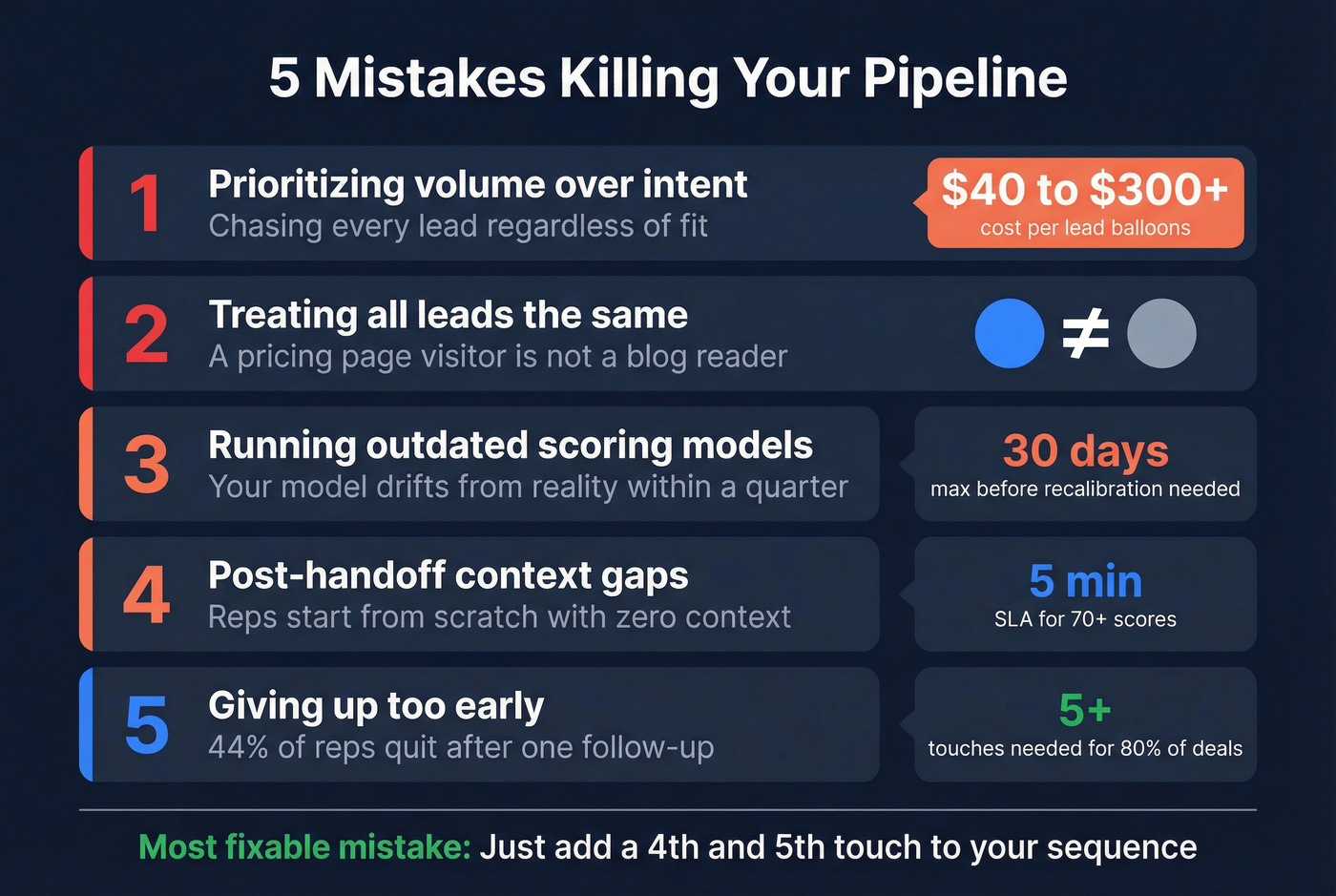
2. Treating all leads the same. A pricing page visitor and a blog reader aren't the same lead. Route them differently. This is where behavioral segmentation pays for itself.
3. Running outdated scoring models. Your model drifts from reality within a quarter if nobody recalibrates it. Signals that predicted closed-won six months ago are noise today. Combine recalibration with enrichment so your model isn't working with stale job titles and half-empty fields.
4. Post-handoff context gaps. When marketing passes a lead with zero context, reps start from scratch. Build a mini SLA:
- Response time: 5 minutes for 70+ scores
- Acceptance criteria: What makes a lead sales-ready
- Feedback cadence: Weekly sync, monthly scoring review
- Escalation path: What happens when leads sit untouched
5. Giving up too early. 44% of reps quit after one follow-up, but 80% of deals need five or more touches. This is the most fixable mistake on the list. Persistence isn't annoying - it's the job. We've seen teams double their conversion rate just by adding a fourth and fifth touch to their sequence.
The AI Layer
AI SDRs are the default first responder at high-velocity inbound teams now. The workflow: enrich the lead instantly, score it, run conversational qualification with contextual personalization based on the page that triggered the lead, and book the meeting - all before a human touches it. If you're building this stack, start with AI lead qualification.
A demo request at 11 PM Friday gets a response in seconds, not Monday morning. If you're not automating first response, you're losing to someone who is.
Let's be honest: most teams over-invest in frameworks and under-invest in data quality. If your deal size is under $5K and your motion is high-velocity, skip MEDDIC entirely. A clean enrichment workflow plus BANT will outperform a sophisticated framework running on garbage inputs every single time.
Stale data is the #1 reason scoring models drift. Prospeo refreshes every record on a 7-day cycle - not the 6-week industry average - so your ICP match scores reflect reality, not last quarter's org charts. 98% email accuracy means fewer bounces tanking your sender reputation.
Recalibrate your model monthly. Refresh your data weekly.
Inbound Lead Qualification FAQ
What's the difference between an MQL and an SQL?
An MQL meets marketing's criteria - downloaded content, visited the pricing page, fits ICP demographics. An SQL has been vetted by sales with confirmed budget, authority, need, and timeline. The gap between them is where most pipeline leaks happen, usually caused by weak enrichment or missing handoff context.
How often should I recalibrate my scoring model?
Monthly at minimum. Review which scored leads actually converted, adjust point values, and retire signals that no longer correlate with closed deals. Email opens are the first thing to downweight - they've been unreliable since Apple's Mail Privacy Protection rollout.
Can a small team qualify leads at scale?
Yes. Combine short forms with automated enrichment that returns 50+ data points per contact, apply a scoring model to prioritize, and route only high-scoring leads to human reps. A two-person team can qualify hundreds of inbound leads per week this way without burning out.